
On this page
Start here
Quick answer
If a Miele refrigerator door will not close, first remove anything protruding into the door path and check the shelves, drawers, and seal. Then look for a seal out of its groove, ice buildup, or an installation gap that prevents the door from sitting squarely. Do not force the door; persistent misalignment, damage, or a seal that will not seat needs Miele Service.
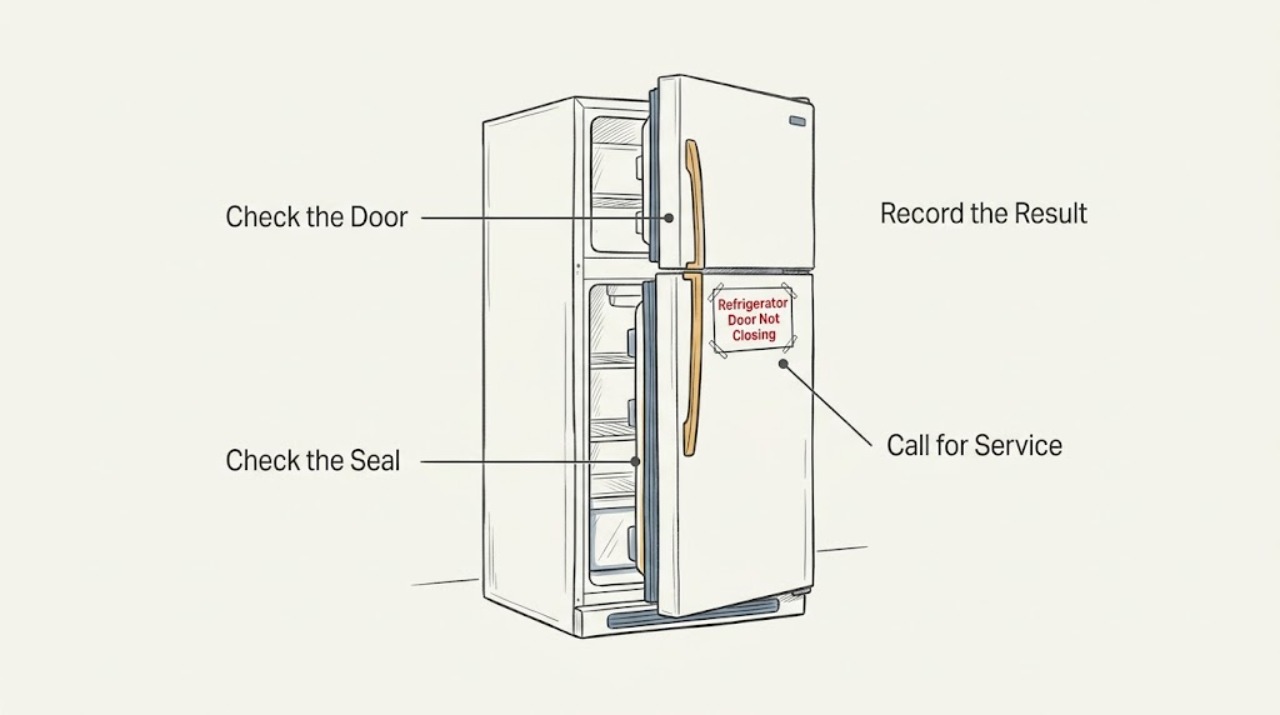
Work through in order
Diagnostic checks
Use only checks that match the exact appliance or system and its official guide.
-
Check 1
Open the refrigerator and check shelves, drawers, bottles, and food packages for anything protruding into the closing path; close the door gently after clearing it.
Expected result: The door closes evenly after an obstruction is removed, or the gap remains.
Next step: Rearrange the load so it does not press the door and confirm that the seal contacts the cabinet around the full perimeter.
Why this matters
Why: A storage obstruction can mimic a door or hinge failure; a persistent gap requires the seal/alignment checks.
-
Check 2
Inspect the magnetic door seal for a section out of its groove, bulging, torn material, or ice/condensation preventing it from lying flat.
Expected result: The seal is displaced/damaged or it is flat and intact.
Next step: Reseat only a loose section as the model manual permits; use Miele Service for a torn seal or a seal that will not sit flat.
Why this matters
Why: Miele says a seal out of its groove or damaged seal can prevent a tight closure and increase condensation.
-
Check 3
Check whether the appliance is level and whether a cabinet front or surrounding installation leaves the door rubbing or unable to reach the frame.
Expected result: The unit rocks, the gap is uneven, or the cabinet front is too close; or the installation appears square.
Next step: Do not force built-in adjustments. Use the installation instructions or an installer/service technician for alignment changes.
Why this matters
Why: Miele identifies installation position and cabinet-front clearance as causes of a door that cannot close tightly.
-
Check 4
Look for ice or condensation around the frame and note whether the door closes only when lifted or pushed hard.
Expected result: Ice/condensation is present, or the door binds despite a clear path and flat seal.
Next step: Keep the door closed as far as it will safely go, protect food if the seal is open, and arrange Miele Service; do not disassemble hinges.
Why this matters
Why: Persistent binding can indicate alignment, hinge, or structural hardware rather than a user-load issue.
Use your observations
Decision map
Find the observation that best matches what you see, then follow the next safe action.
-
PATH 01Next step
What you see
The door closes normally after a shelf, drawer, or package is moved
Do this next
Keep the door path clear and verify a continuous seal.
-
PATH 02Next step
What you see
The seal is out of its groove or visibly damaged
Do this next
Follow the model instructions for a safe reseat or arrange a genuine model-specific seal/service.
-
PATH 03Next step
What you see
The gap is uneven, the cabinet front rubs, or the door binds without an obstruction
Do this next
Arrange an installer or Miele Service and do not force the door.
Helpful context
Understand the symptom
Find the obstruction before blaming the hinge
A loose seal, ice or condensation, cabinet-front clearance, and a shelf or drawer can all leave a visible gap. The size and location of the gap tell you whether to inspect storage, the seal, or installation.
Only after diagnosis
Potential parts
- refrigerator door seal
Only consider a seal after confirming it is damaged or cannot be reseated and the door path/alignment are clear.
Verify the exact refrigerator model before ordering or fitting a seal.
When checks do not resolve it
Need a professional?
Call Miele Service for a torn or persistently displaced seal, hinge/alignment binding, cabinet interference, water damage, or a door that must be forced closed.
Common questions
FAQ
Can ice around the seal stop a Miele refrigerator door closing?
Yes. Inspect for ice, a seal out of its groove, or a damaged seal that no longer lies flat. Do not force the door or use sharp tools.
What if a built-in refrigerator door rubs the cabinet?
Installation position or cabinet-front clearance may be preventing closure. Use the installation instructions or arrange an installer/service visit.
Read the exact guide
Official sources
- Condensation forming on freezer compartmentMiele USA · Cabinet-front clearance, installation position, and warm-air gap
- Ice deposits in refrigeration applianceMiele USA · Seal groove, seal damage, flat contact, and service escalation
Community feedback
Share a repair observation
Share a plain-text repair observation. Accepted observations are published automatically; this page may take a moment to update.