
On this page
Start here
Quick answer
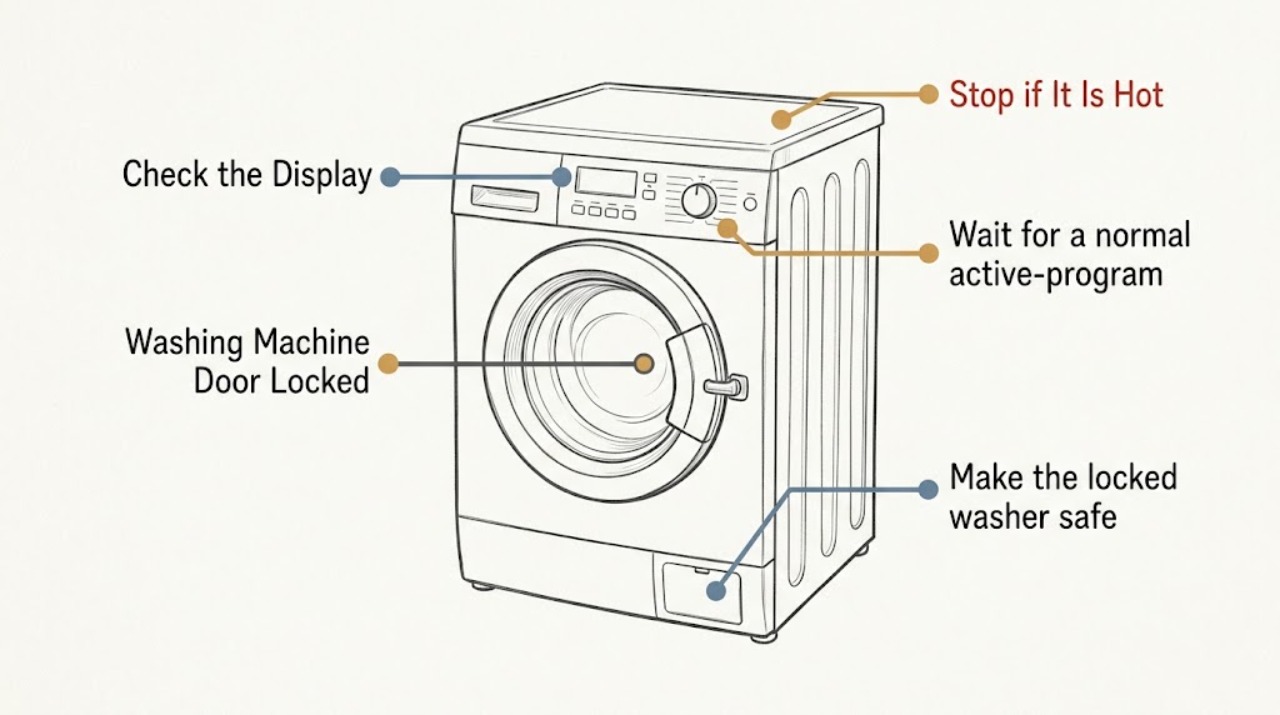
A Miele washing-machine door can remain locked normally while a program is active, during the anti-crease phase, or while the water is still too hot. If the drum contains water, the washer may be waiting for a drain step or may have a blocked drain. Check the display, selected program, temperature, and whether the drum is still moving; use the model's documented cancel or drain procedure and wait for the lock to release. If the display reports a door-release or lock fault, or the lock stays on after a cool, empty, completed program, perform only the single model-approved power reset and arrange Miele service if it returns. Never pry the door, defeat the lock, reach into a moving drum, or open a filter with hot or uncontrolled water. Stop immediately for a leak near electricity, smoke, burning odor, sparks, or unsafe hot water.
Work through in order
Diagnostic checks
Use only checks that match the exact appliance or system and its official guide.
-
Make the locked washer safe
Stop touching the door and look for a leak, water on the floor, hot water, smoke, burning odor, sparks, a damaged cord, or an unsafe wet area. Do not stand in water to reach the plug or controls. If there is an active hazard, keep people away and obtain qualified appliance or electrical help from a safe location.
Expected result: The tub is hot or full, water is leaking or near electrical parts, the floor is unsafe, smoke or sparks are present, or the washer is dry and stable.
Next step: For any hazard, leave the washer off and arrange appropriate emergency, electrical, plumbing, or appliance help. If safe, continue by recording the display and program state.
Stop if: Stop for water near electricity, uncontrolled leakage, unsafe heat, smoke, burning odor, sparks, or a damaged cord.
Why this matters
Why: The lock cannot be safely investigated until flood, heat, fire, and electrical risks are excluded.
-
Read the display and identify the exact model
Record the complete display message or fault code, model number, program, and whether the machine is front-loading or top-loading. Note whether the drum is moving, whether a lock symbol or safety-lock message is shown, and whether the cycle is still counting or displaying completion.
Expected result: The display indicates an active program, anti-crease, safety lock, a drain or door-release fault, or a technical fault; alternatively, it shows completion with no fault.
Next step: Use the matching branch below and the exact operating instructions. Do not apply a button sequence from another Miele model.
Stop if: Do not clear or ignore a recurring fault, force a lock symbol, or open the cabinet to identify the mechanism.
Why this matters
Why: Miele uses different messages for a normal program lock, a control or safety lock, and a technical door-release failure; model identity is required before interpreting a code.
-
Wait for a normal active-program or anti-crease lock
If the program is still active or the anti-crease phase is displayed, leave the door closed and wait for the documented phase to end. Do not interrupt a moving drum or try to pull the door open. If the model offers an Add Laundry or Start/Stop procedure, use only the sequence in its operating instructions.
Expected result: The program ends, the drum stops, and the lock symbol goes out; or the lock remains after completion with no water, heat, or fault shown.
Next step: When the lock releases, open normally. If it remains locked after the documented end state, continue to the temperature, drain, and safety-lock checks rather than forcing it.
Stop if: Do not pry the door, defeat the lock, or reach into the drum while it moves.
Why this matters
Why: Miele says the door is locked during an active program and can remain locked while anti-crease turns the drum intermittently after the cycle.
-
Rule out water temperature and residual water
Look through the door if possible and note whether water remains in the drum or the wash was hot. Do not open a filter or drain hose while the water may be hot or uncontrolled. Use the model's documented cancel, drain, or cooling procedure and wait for the lock indicator to release.
Expected result: Water remains, the drum is hot, the door will not open after a canceled hot program, or the drum is empty and cool.
Next step: For water or heat, allow the documented cooling or drain process to complete. If the drum remains full or the drain does not run, stop and arrange service; if empty and cool, check the control-lock branch.
Stop if: Do not open the door against resistance, drain hot water onto the floor, or open the pump filter without the exact model's safe water procedure.
Why this matters
Why: Miele keeps the door locked to prevent access to hot water or a full drum; a drain fault can also keep the lock engaged.
-
Check the Miele safety or control lock
If the display says Locked or shows a safety-lock indicator while the machine is otherwise empty, cool, and stable, use the exact model instructions to deactivate the lock. Depending on the model, this may involve holding Start/Stop or selecting Safety lock off; do not guess from a different control panel.
Expected result: The safety-lock message clears and the door unlocks, or the lock remains and the display reports a technical or door-release fault.
Next step: If the control lock clears, open the door normally. If the door remains locked or a fault appears, use the technical-fault branch and arrange service rather than bypassing the lock.
Stop if: Do not enter an unknown PIN, pry the door, insert tools, or defeat a safety lock.
Why this matters
Why: Miele documents an electronic safety lock that can prevent control changes and is distinct from a door lock held by heat, water, or an active cycle.
-
Use the drain and door-release branch carefully
If water remains or a drain indicator is shown, inspect only the external drain hose and household drain for an obvious kink or backup with power off and the floor dry. Do not tilt the washer. For a front-loader, use a pump-filter or emergency-release procedure only if the exact operating instructions identify it and the water is cool and controllable; top-load models may use a different procedure.
Expected result: The external drain is blocked, the washer cannot pump water, a model-specific filter contains debris, or the drain path is clear but the door remains locked.
Next step: Correct only an accessible external hose or drain issue. If the drain remains blocked, the pump is silent or harsh, or the door stays locked, keep the machine off and call Miele service.
Stop if: Do not open a full or hot filter, force an emergency release, reach into the pump, or remove panels.
Why this matters
Why: A locked door can be a consequence of water that has not drained; Miele's fault guidance directs the user to the manual for emergency release and drain access rather than a universal method.
-
Perform one documented reset for a technical door fault
If the display reports a door-release or technical fault and there is no water, heat, smoke, leak, or electrical hazard, follow Miele's model-specific power-disconnect and reset instruction once. Do not repeatedly cycle power, run another wash, or use the reset to bypass the lock.
Expected result: The fault clears and the door unlocks, or the same fault, lock, or unresponsive control returns.
Next step: If the fault returns, leave the washer off and book Miele service. If the door remains locked with water or heat present, do not attempt another reset or release.
Stop if: Do not reset during a leak, hot-water condition, smoke, burning odor, sparks, or electrical damage; never bypass the interlock.
Why this matters
Why: Miele documents a power reset for some technical door-release faults, but a returning fault indicates service is required and may need an emergency-release procedure from the manual.
-
Prepare the correct service handoff
Keep the washer out of service if the door remains locked after the safe checks. Provide Miele service with the exact model, front-load or top-load type, complete display text, program and stage, water or temperature state, drain behavior, safety-lock state, recent power interruption, and any leak, smoke, odor, or electrical event. Do not remove the lock or replace a part yourself.
Expected result: The door-release fault returns, the lock mechanism is jammed, water cannot drain, or opening the door would require force or disassembly.
Next step: Request qualified Miele appliance service and follow the exact manual's emergency-release instructions only if a technician or manual confirms the water is safe and the procedure applies.
Stop if: Do not pry, drill, bypass, or electrically test the lock; stop for any active flood, heat, smoke, burning odor, or electrical hazard.
Why this matters
Why: The remaining causes may involve the lock assembly, drain pump, pressure or temperature sensing, control, or wiring and require model-specific diagnosis.
Use your observations
Decision map
Find the observation that best matches what you see, then follow the next safe action.
-
PATH 01Next step
What you see
The washer is leaking, water is near electricity, water is hot or uncontrolled, smoke, burning odor, sparks, or a damaged cord is present.
Do this next
Stop, keep people away, and obtain appropriate emergency, electrical, plumbing, or appliance help. Do not touch the plug or force the door.
-
PATH 02Next step
What you see
A normal program or anti-crease phase is active and the drum is moving or intermittently turning.
Do this next
Wait for the documented end state and allow the lock to release; use only the model's Add Laundry or Start/Stop procedure.
-
PATH 03Next step
What you see
The drum is hot or contains water after cancellation or completion.
Do this next
Follow the exact model's cooling or drain procedure and wait. Do not open the door or filter against resistance.
-
PATH 04Next step
What you see
The display shows Locked or a safety-lock indicator while the washer is empty, cool, and stable.
Do this next
Deactivate the safety lock only with the exact model instructions; never guess a button sequence or bypass the interlock.
-
PATH 05Next step
What you see
A drain indicator, full drum, external drain backup, or pump fault is present.
Do this next
Inspect only accessible external drainage and use a model-specific filter procedure if applicable and safe; arrange service for persistent drain failure.
-
PATH 06Next step
What you see
A door-release or technical fault returns after the single documented reset, or the lock remains with an empty cool drum.
Do this next
Keep the machine out of service and request qualified Miele service; do not pry or bypass the lock.
Helpful context
Understand the symptom
A locked Miele door is often a safety state rather than a failed latch. The washer may be protecting you from a moving drum, hot water, or a full tub. Identify the exact model and whether it is a front-loader or top-loader before using a button sequence; display wording and emergency-release access vary by model.
Do not pull the door by force, insert a tool into the lock, bypass an interlock, or open the pump filter with a hot or full tub. If water is near the cord or outlet, keep clear and isolate power only from a dry, safe location.
When checks do not resolve it
Need a professional?
Request qualified Miele service when the door remains locked after the program, cooling, drain, and model-specific safety-lock steps; a door-release or technical fault returns; water cannot drain; the lock mechanism is jammed; or diagnosis would require a panel, pump, pressure system, wiring, or emergency-release access not documented for the model. Stop and obtain appropriate emergency or electrical help for hot or uncontrolled water, a leak near electricity, smoke, burning odor, sparks, or damaged wiring.
Common questions
FAQ
Why is my Miele washing-machine door locked after the cycle?
The anti-crease phase, residual heat, water in the drum, or a drain fault can keep it locked. Wait for the documented end state, cooling, or drain procedure; do not force the door. A returning lock or door-release fault needs Miele service.
What does Locked mean on a Miele washer?
It may mean the electronic safety lock is active rather than that the door mechanism has failed. If the washer is empty, cool, and stable, use only the exact model instructions to deactivate the safety lock; never guess or bypass it.
Can standing water keep a Miele washer door locked?
Yes. Miele keeps the door locked when water has not drained or may be too hot. Inspect only the accessible external drain, and use a filter or emergency-release procedure only when the exact manual identifies it and the water is safe to control.
Should I pull open a Miele washer door that is locked?
No. Do not pry, insert tools, or bypass the interlock. A moving drum, hot water, or a full tub can make forced opening dangerous. Follow the model manual or arrange Miele service.
When should I call Miele about a locked washer door?
Call when the lock or door-release fault returns, the drum will not drain, the door stays locked after an empty cool completed program, or safe access would require force or disassembly. Stop immediately for leaks near electricity, smoke, burning odor, sparks, or unsafe hot water.
Read the exact guide
Official sources
- LockedMiele USA · Official Miele USA support guidance for models displaying Locked.
- Fault F35 or door releaseMiele USA · Official Miele USA support guidance for models showing the stated fault or door-release condition.
- Locked indicator light lights upMiele USA · Official Miele USA support guidance for models with the stated indicator.
- Canceling a programMiele USA · Official Miele USA support guidance; controls vary by model family.
- Operating and Installation InstructionsMiele USA · Official Miele operating manual for a documented washer model family; the installed model manual controls.
- The door of the washing machine is lockedMiele USA · Official Miele USA support guidance; exact model instructions control display and release behavior.
Community feedback
Share a repair observation
Share a plain-text repair observation. Accepted observations are published automatically; this page may take a moment to update.