
On this page
Start here
Quick answer
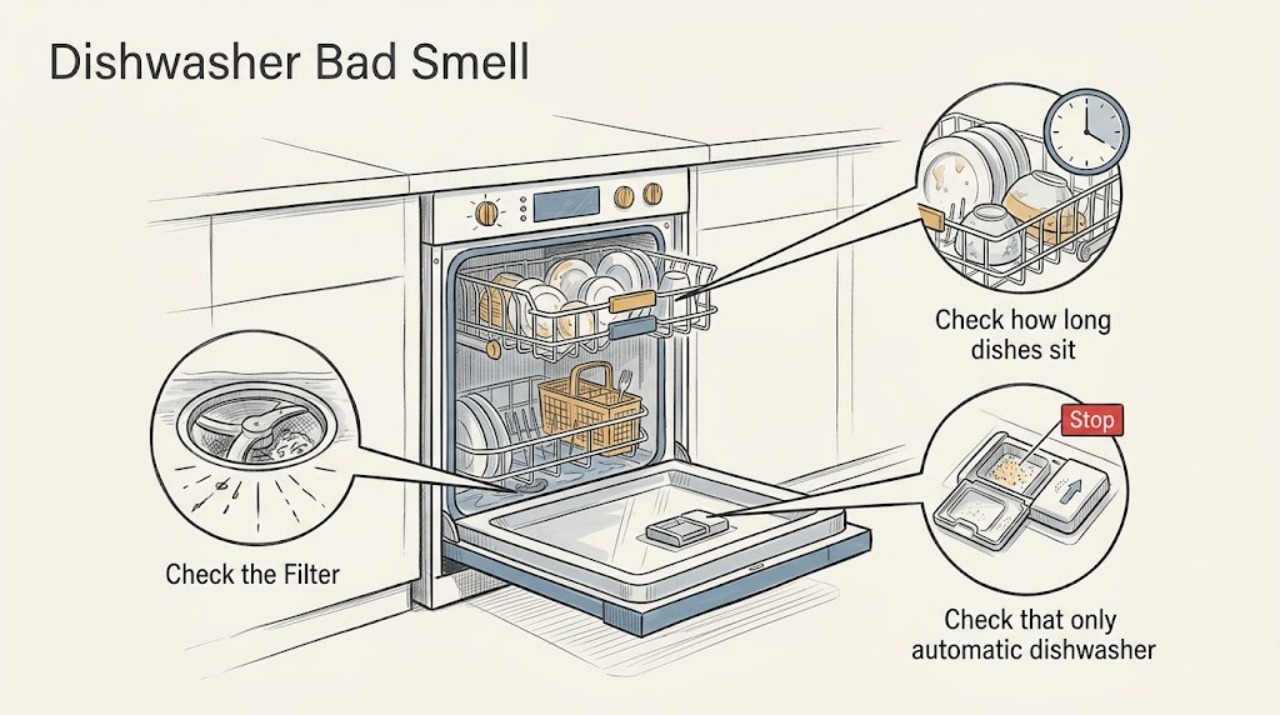
For a bad smell in a Roper dishwasher, first check whether water remains after a completed cycle, whether food debris is accessible in the filter/sump area, and whether dishes sit for several days between washes. The Roper use-and-care guide recommends rinse cycles when loads are delayed, fresh automatic-dishwasher detergent, and model instructions for cleaning. Do not mix cleaners or remove panels to chase an odor.
Before you begin
Safety first
- Do not touch the heating element, mix cleaning chemicals, remove panels, or work on live plumbing/electrical parts.
Work through in order
Diagnostic checks
Use only checks that match the exact appliance or system and its official guide.
-
Check 1
After a complete cycle, inspect the tub for standing water and look only at the accessible filter/sump area for food residue; keep hands away from the heating element.
Expected result: Water remains or residue is visible, or the tub is empty and accessible area is clear.
Next step: Clean only the accessible area as the manual permits and stop if water does not drain.
Why this matters
Why: Standing water or residue can retain odor; an empty clear tub shifts attention to detergent, wash frequency, venting, or a model-specific issue.
-
Check 2
Check how long dishes sit between washes and run a rinse cycle when the guide permits if a full load cannot be washed promptly.
Expected result: Dishes sit for two or three days, or loads are washed promptly.
Next step: Use a rinse cycle as directed and monitor whether the smell changes.
Why this matters
Why: The Roper guide identifies infrequent washing as an odor condition and suggests rinse cycles until a full load is ready.
-
Check 3
Check that only automatic dishwasher detergent is used, that it is fresh and lump-free, and that no hand soap or laundry detergent was added.
Expected result: Wrong/old detergent or excess suds are present, or detergent use matches the manual.
Next step: Replace unsuitable detergent and do not add multiple chemicals to the same cycle.
Why this matters
Why: The guide warns that non-dishwasher detergents can create excess suds and buildup; a persistent odor with correct detergent points elsewhere.
-
Check 4
If the odor began after installation, note whether it resembles new plastic; otherwise run only the manual's documented cleaning/rinse procedure and observe the next completed cycle.
Expected result: The smell is new-plastic and fading, or it is sewage/food-like and persistent.
Next step: Stop if water backs up, leaks, or the odor persists despite the documented procedure.
Why this matters
Why: The Roper guide distinguishes a new-plastic smell from ongoing odor; persistent odor after basic checks may involve drainage or service.
Use your observations
Decision map
Find the observation that best matches what you see, then follow the next safe action.
-
PATH 01Next step
What you see
Odor improves after a rinse cycle for a delayed load
Do this next
Use a rinse cycle when necessary and maintain regular cleaning.
Why this path and its safety boundary
Why it matters: Stagnant food residue between washes was supported.
-
PATH 02Next step
What you see
Standing water or food residue remains after a completed cycle
Do this next
Follow the exact manual's accessible cleaning steps and request service if water remains.
Why this path and its safety boundary
Why it matters: A drainage or accessible filter/sump issue is more likely.
-
PATH 03Next step
What you see
Persistent odor remains with an empty tub, correct detergent, and normal drainage
Do this next
Contact Roper service; do not pour unapproved chemicals or open panels.
Why this path and its safety boundary
Why it matters: A hidden drain, vent, or appliance issue cannot be safely diagnosed from odor alone.
Helpful context
Understand the symptom
Find whether the smell is trapped water or the load
An odor after a completed, dry cycle differs from odor with standing water or a new plastic smell. Record the water level and timing before adding any cleaner.
When checks do not resolve it
Need a professional?
Stop if water backs up, leaks, or smells electrical/burned; otherwise use only model-documented accessible cleaning.
Safety scope: Do not touch the heating element, mix cleaning chemicals, remove panels, or work on live plumbing/electrical parts.
Have this ready
- Provide the model, odor type/timing, water level after cycle, filter/residue observation, detergent, wash frequency, and leak/backup status.
Common questions
FAQ
Why does a Roper dishwasher smell when dishes wait several days?
The Roper guide recommends running a rinse cycle once or twice a day until there is a full load. That helps distinguish stagnant load odor from a drainage fault.
Can I use laundry detergent to clean a Roper dishwasher?
No. Use automatic dishwasher detergent only; other detergents can create excessive suds and buildup. Follow the model guide for any cleaning rinse.
Read the exact guide
Official sources
- Use & Care GuideRoper Home Appliances / Whirlpool Corporation · Roper dishwasher odor, rinse-cycle, detergent, drainage, cleaning, and safety guidance
Community feedback
Share a repair observation
Share a plain-text repair observation. Accepted observations are published automatically; this page may take a moment to update.