
On this page
Start here
Quick answer
First identify the smell before running the Roper dryer again. A mild oily or new-heating-element odor can occur during the first cycle, while paint, stain, varnish, detergent residue, damp laundry, or a dirty lint path can transfer or create other odors. Let the area and dryer cool, inspect only user-accessible parts, clean the lint screen and drum as the model guide allows, and correct a restricted exhaust path. Stop immediately for a sharp burning or electrical odor, smoke, sparks, unusually hot controls or plug, abnormal heat, or a gas or exhaust odor. For a gas dryer with a gas smell, leave the area without operating switches or flames and contact the gas utility or emergency service from a safe location; do not restart the dryer to test it.
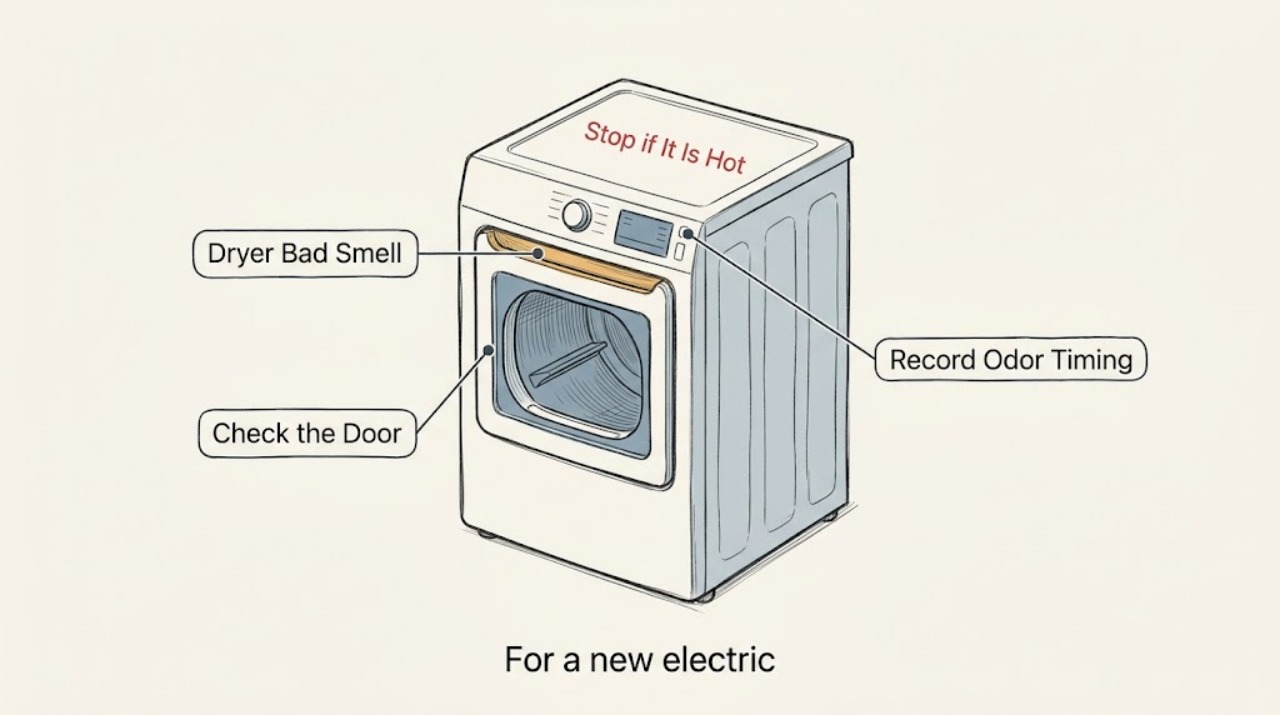
Work through in order
Diagnostic checks
Use only checks that match the exact appliance or system and its official guide.
-
Check 1
Stop the cycle, keep the dryer door closed, and classify the smell from a safe position without leaning into the drum: mild new-appliance or oily odor, paint/stain/varnish or solvent odor, musty or sour damp-laundry odor, hot lint or fabric odor, sharp burning/electrical odor, smoke or sparks, or gas/exhaust odor.
Expected result: The odor is mild and limited to a new dryer or the load, or it is sharp, worsening, accompanied by heat/smoke/sparks, or identifiable as gas or exhaust.
Next step: For smoke, sparks, sharp burning odor, unusually hot controls or plug, or any gas/exhaust odor, stop using the dryer and follow the matching emergency branch. Otherwise continue with the timing and source check.
Stop if: Do not restart or open panels when there is smoke, sparking, a sharp burning/electrical smell, abnormal heat, a hot or damaged plug/cord, or gas/exhaust odor.
Why this matters
Why: The first group supports a low-risk identification and cleaning path; the second group is a stop condition rather than an invitation to repeat the cycle.
-
Check 2
Confirm the Roper model from the rating label and whether it is electric or gas. Use Roper Owner Support to retrieve the exact manual, then compare the odor timing with the manual's troubleshooting section. Do not remove the cabinet or attempt to inspect wiring, a burner, or a gas connection.
Expected result: The smell occurred only during the first use of a new electric dryer, began after a move or repair, or does not match the model guide; the fuel type is also confirmed.
Next step: If it is the documented first-use electric-element odor and there are no stop symptoms, follow the manual's limited first-use procedure once. If the smell is unexplained, recurrent, or the model cannot be identified, leave the dryer off and arrange qualified service.
Stop if: Do not substitute instructions from another model or run an undocumented test cycle when the fuel type or source of the smell is uncertain.
Why this matters
Why: Roper manuals and controls differ by model and fuel type. A first-use heating-element smell can be temporary on electric models, while the same assumption is unsafe for a gas odor or an established burning smell.
-
Check 3
For a new electric Roper dryer only, and only after the safety screen is clear, follow the exact model guide. If it permits a first-use run, use the empty-drum procedure for the stated short interval with the area ventilated and remain present; stop at once if the odor becomes sharp, smoke appears, or the dryer becomes unusually hot.
Expected result: The mild odor fades after the permitted first-use procedure, or it persists, intensifies, transfers to laundry, or is accompanied by smoke or abnormal heat.
Next step: If the odor fades and no abnormal symptom occurs, wash and dry a normal load according to the manual. If it persists or changes character, stop using the dryer and provide the timing and symptom record to qualified service.
Stop if: Do not use this branch for a gas odor, a used dryer with a new burning smell, or any smoke, spark, or hot-electrical symptom.
Why this matters
Why: Roper and Whirlpool support material describe a new electric heating element as a possible temporary odor source. That explanation does not cover persistent burning, smoke, or electrical symptoms.
-
Check 4
If the smell is musty, sour, detergent-like, or tied to one load, remove the laundry once the drum is cool and check whether clothes sat damp, were exposed to paint or finishing fumes, or contain a spill. Ventilate the room; after outside fumes are gone, rewash affected clothes. With power isolated only when the area is dry and safe, clean the drum and lint screen using the exact manual procedure.
Expected result: The odor follows damp or contaminated laundry and is absent from the cool, clean drum, or it remains in the drum or returns with an otherwise clean load.
Next step: If the odor was load-specific, correct the laundry source and use the proper cycle. If it remains in the dryer, proceed to the lint and vent check; do not add cleaners or fragrances that the manual does not approve.
Stop if: Stop cleaning and leave the dryer off if the drum is hot, wet around electrical controls, smoke or burning odor appears, or the smell suggests gas or exhaust.
Why this matters
Why: Damp clothes can develop mildew, and paint, stain, varnish, detergent, or fabric-softener residue can create or transfer odors. An odor remaining in the appliance needs an airflow and service assessment rather than repeated high-heat cycles.
-
Check 5
With the dryer cool and not running, clean the lint screen as directed and inspect the screen for detergent or fabric-softener residue. From outside the appliance, look for a crushed or kinked visible vent, lint at the exhaust hood, blocked clearance around the dryer, or weak airflow at the hood; do not run a cycle solely to test airflow if a burning smell or overheating is present.
Expected result: The screen is coated or damaged, lint is visible at the hood, the vent is crushed or obstructed, airflow is weak, or the external path is clear.
Next step: Clean or replace user-serviceable items only as the exact manual permits; have the full vent cleaned by a qualified provider when the path is obstructed or inaccessible. If the external path is clear but odor persists, stop and request appliance service.
Stop if: Do not operate with a loose, damaged, blocked, or missing lint screen, and do not reach inside the cabinet or vent with tools.
Why this matters
Why: Residue can restrict the screen, and a blocked or crushed exhaust reduces airflow and can trap heat and odor. A damaged, missing, or loose screen is not safe to bypass.
-
Check 6
If the Roper dryer is gas, treat any gas or exhaust-like odor as an emergency: do not operate the dryer, lights, switches, phones, or flames in the area; leave immediately and contact the gas utility or emergency service from outside or another safe location. Do not move the dryer or loosen a connector to look for the source.
Expected result: The odor is present near the appliance, grows during operation, or is accompanied by headache, dizziness, hissing, soot, or abnormal flame; or no gas-like symptom is present and the earlier classification was mistaken.
Next step: For any gas or exhaust concern, remain out of the area until it is declared safe and then arrange qualified appliance or gas service. If the smell is clearly non-gas, return only to the applicable cool, external lint/vent checks.
Stop if: Never restart to confirm a gas smell, use a flame or electrical device to find a leak, or disconnect the gas line as a user test.
Why this matters
Why: Gas odor is not a normal dryer smell. CPSC guidance says to leave and avoid electrical switching or flames; inspection and leak repair require qualified responders.
-
Check 7
If the smell is sharp burning, electrical, or hot lint; if smoke, sparks, a hot plug, repeated breaker trips, abnormal drum heat, or a failed thermal event occurred; or if safe external cleaning did not resolve the odor, record the smell type, when it starts, load, cycle, fuel type, and visible symptoms and arrange qualified Roper appliance service.
Expected result: The symptom is repeatable or leaves scorch/soot, or it disappears completely after a documented low-risk cleaning and no safety symptom returns.
Next step: Keep the dryer off for the persistent or hazardous outcome and give the technician the model and symptom record. Resume normal use only when the odor is gone and the manual's normal checks are satisfied.
Stop if: Do not remove panels, probe live parts, bypass a safety device, replace an unconfirmed component, or continue test cycles after a hazardous symptom.
Why this matters
Why: Persistent or heat/electrical-related odor can involve components or airflow that cannot be safely diagnosed from the user-accessible side. A one-time residue or load odor that is gone is a different outcome.
Use your observations
Decision map
Find the observation that best matches what you see, then follow the next safe action.
-
PATH 01Safety boundary
What you see
The dryer is new, electric, and has only a mild temporary heating-element or oily odor with no smoke, sparks, abnormal heat, or electrical symptom.
Do this next
Follow the exact model's limited first-use procedure once, remain present, and stop if the smell becomes sharp or any safety symptom appears.
Why this path and its safety boundary
Safety stop: Do not normalize the odor; use the load, lint/vent, gas, or service branch that matches the observed symptom.
-
PATH 02Safety boundary
What you see
The odor began after painting, staining, varnishing, cleaning, or another chemical event in the dryer area.
Do this next
Ventilate until the fumes are gone, then rewash affected laundry before drying it again; keep the dryer off if fumes remain.
Why this path and its safety boundary
Safety stop: Continue with the damp-load and appliance-source checks rather than assuming an environmental cause.
-
PATH 03Safety boundary
What you see
The smell is musty or sour and follows laundry that sat damp or a visibly soiled load.
Do this next
Treat the laundry source, clean the cool drum and screen as the manual allows, and check the vent if the smell remains.
Why this path and its safety boundary
Safety stop: A smell from the dryer itself needs the lint/airflow and service path.
-
PATH 04Safety boundary
What you see
The lint screen is damaged, missing, blocked by residue, or the visible exhaust path is crushed, obstructed, or weak.
Do this next
Keep the dryer off, correct only user-serviceable items allowed by the model guide, and arrange qualified vent cleaning when the path is inaccessible.
Why this path and its safety boundary
Safety stop: A persistent odor without an airflow finding should be evaluated by qualified appliance service.
-
PATH 05Safety boundary
What you see
There is a sharp burning/electrical odor, smoke, sparks, a hot plug, repeated breaker trip, scorch mark, or abnormal heat.
Do this next
Stop immediately, isolate power only from a safe position if that can be done without approaching the hazard, and keep the dryer off for qualified service.
Why this path and its safety boundary
Safety stop: Continue only with cool, external checks matched to the odor classification.
-
PATH 06Safety boundary
What you see
The dryer is gas and the odor could be gas or exhaust rather than laundry or lint.
Do this next
Leave immediately without operating switches, flames, or phones in the area; contact the gas utility or emergency service from a safe location and do not restart.
Why this path and its safety boundary
Safety stop: Use the appropriate electric/new-unit, laundry, airflow, or qualified-service branch.
-
PATH 07Safety boundary
What you see
The odor disappears after a permitted low-risk cleaning or load correction and does not return during normal use.
Do this next
Document what corrected it, keep the lint screen installed and clean, and monitor the next loads without adding unapproved chemicals.
Why this path and its safety boundary
Safety stop: Keep the dryer off and arrange qualified service; do not use repeated cycles to locate an internal fault.
Helpful context
Understand the symptom
Odor character and timing matter more than the word "bad." A slight temporary smell on a new electric dryer can come from the heating element, but a smell that begins after a spill, renovation, wet load, restricted airflow, or an electrical event needs a different path. Never use a burning, smoke, spark, or gas symptom as a reason to perform another test cycle.
Roper publishes model-specific manuals through its Owner Support library. Confirm whether the dryer is electric or gas and use the guide for the exact model before changing a cycle or attempting any maintenance. User-level checks stop at the lint screen, drum, door area, visible vent connection, controls, and outside exhaust hood; cabinet, burner, wiring, motor, and sealed gas work belong to qualified service.
A lint screen that is blocked or missing can increase heat and damage risk, and a crushed or obstructed exhaust can trap heat and odors. Keep the area around the dryer clear, do not operate without the correctly installed screen, and escalate when the vent needs internal cleaning or the smell remains after the safe external checks.
When checks do not resolve it
Need a professional?
Provide the model, electric or gas type, odor description, when it starts, cycle and load, whether the smell is in the room or laundry, vent observations, and any smoke, heat, spark, scorch, or breaker event. Gas odor is an emergency safety matter and must be handled from outside the area.
Have this ready
- Have the Roper model and serial information, purchase or installation timing, exact odor description, first-use or recurring status, affected loads, cycle and temperature, lint-screen and vent observations, and any visible damage or safety event ready for the service provider.
Common questions
FAQ
Is a smell from a new Roper dryer normal?
A mild temporary odor can come from a new electric heating element during first use. Confirm the exact model guide and use its limited first-use procedure only when there is no smoke, spark, sharp burning odor, abnormal heat, or electrical symptom. A gas odor is never normalized as new-appliance odor.
Why does my Roper dryer smell musty?
Laundry left damp can develop mildew, and residue in the drum or lint screen can hold odors. Remove the load when cool, rewash affected clothing, and clean the drum and screen only as the exact Roper guide allows. If the odor remains in the appliance, check the vent externally and arrange service if needed.
Can a blocked dryer vent cause a bad smell?
Yes. A clogged screen, crushed vent, blocked exhaust hood, or poor airflow can trap heat and lint-related odor. Keep the dryer off if overheating or burning odor is present, inspect only accessible external areas, and use qualified vent cleaning for the inaccessible path.
What should I do if my gas Roper dryer smells like gas?
Do not restart it or operate lights, switches, phones, or flames in the area. Leave immediately and contact the gas utility or emergency service from outside or another safe location. Do not move the dryer or loosen a gas connector to investigate.
When is a Roper dryer smell unsafe?
Stop using it for a sharp burning or electrical smell, smoke, sparks, a hot plug or cord, scorch marks, abnormal heat, repeated breaker trips, or any gas or exhaust odor. Keep it off and arrange qualified service, using emergency gas-safety steps when a gas odor is suspected.
Read the exact guide
Official sources
- CPSC Guide to Home Wiring HazardsU.S. Consumer Product Safety Commission · Government electrical-safety guidance for deciding when a hot, sparking, smoking, or damaged power connection needs immediate stop and qualified evaluation.
- How to Check Venting - Product Help | WhirlpoolWhirlpool Product Help · Official external venting guidance for dryer airflow; model installation instructions and a qualified vent provider control inaccessible work.
- Cleaning the Dryer DrumWhirlpool Product Help · Official dryer-care guidance for drum and lint-path cleaning; the Roper manual controls the exact model procedure.
- Owner SupportRoper Appliances · Official Roper owner-support library for identifying the exact dryer manual and service path.
- gasU.S. Consumer Product Safety Commission · Government gas-safety guidance applicable to suspected gas odors around a gas appliance; local emergency instructions also apply.
- Removing Odors or Smells - Dryer - Product Help | WhirlpoolWhirlpool Product Help · Manufacturer support guidance for Whirlpool-built dryer odor mechanisms; use the Roper model guide for model-specific controls.
- Use and Care Guide – RGD4516FWRoper Appliances · Official Roper guide for the RGD4516FW family; use the exact model guide when the appliance differs.
Community feedback
Share a repair observation
Share a plain-text repair observation. Accepted observations are published automatically; this page may take a moment to update.