
On this page
Start here
Quick answer
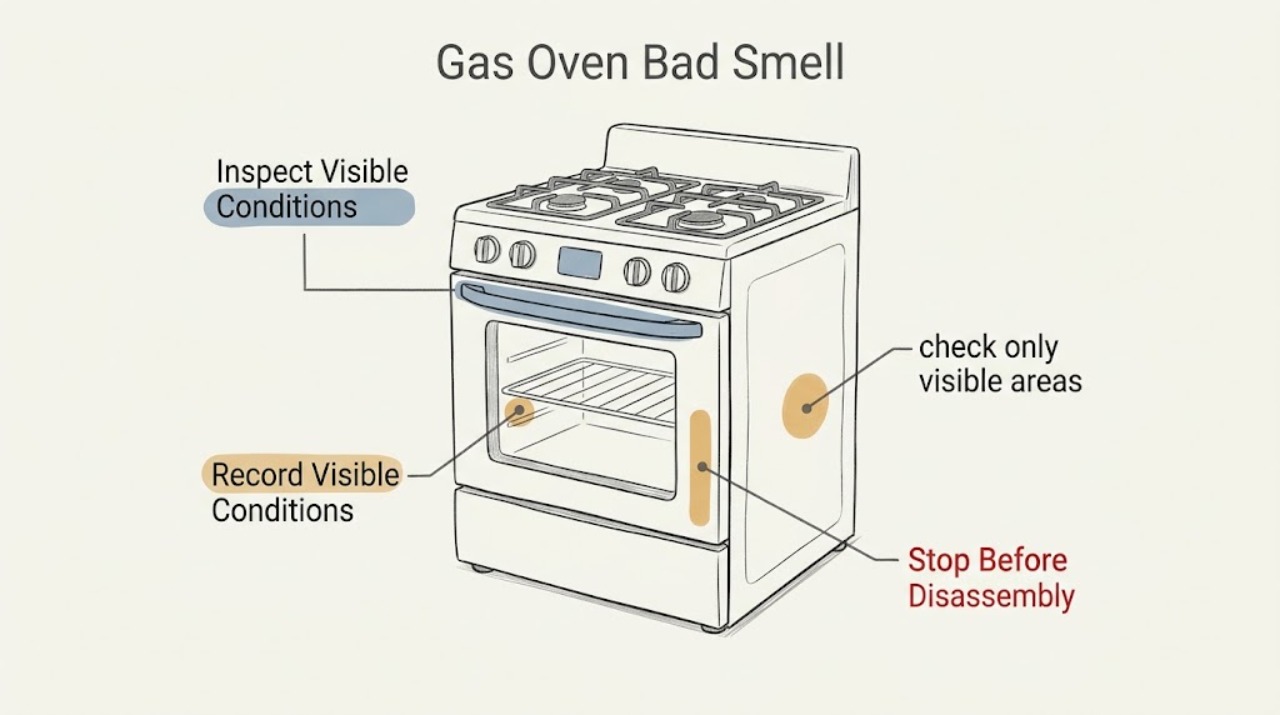
Treat a gas-like smell from a Samsung gas oven as a gas-safety question before treating it as an oven-cleaning issue. If the odor is strong, persistent, spreading, accompanied by a hissing sound, abnormal flame, smoke, headache, dizziness, or an alarm, do not operate the range, switches, or flames: leave the area and contact gas or emergency help from a safe location. A faint odor only during first use can come from packaging or protective manufacturing residue, and Samsung says residue, self-cleaning, and spills can also create odor or smoke. Only after the area is safe and the model manual supports it should you inspect visible residue and arrange a first-use conditioning cycle with ventilation.
Work through in order
Diagnostic checks
Use only checks that match the exact appliance or system and its official guide.
-
Check 1
If the smell is strong, persistent, present when the oven is off, spreading beyond the appliance, or accompanied by hissing, abnormal flame, smoke, an alarm, headache, dizziness, or nausea, stop using the range and leave the area immediately. Do not operate lights, switches, plugs, phones, or flames inside the affected area.
Expected result: The odor has emergency features, or it is a weak, brief odor linked to a known first-use, self-cleaning, or cooking event.
Next step: For emergency features, stay out and contact local gas emergency help or emergency responders from a safe location. Do not return to test the oven until professionals say it is safe. Only the clearly non-emergency branch may continue.
Why this matters
Why: Emergency features make a possible gas release or unsafe combustion more important than identifying the odor source at home.
-
Check 2
From a safe, unheated position, record whether the odor began on the first use after installation, during self-cleaning, after food spilled, during ordinary baking, or while the oven and cooktop were both off. Record the model number without moving the range or touching gas connections.
Expected result: The odor has one clear trigger and fades when that trigger ends, or it has no clear trigger and returns between uses.
Next step: Continue only if there is no emergency feature and the appliance is cool and safe. An unexplained or returning smell is a stop-and-service result, not a reason to repeat ignition.
Why this matters
Why: A clear first-use, self-cleaning, or spill trigger is consistent with Samsung's odor guidance; an unexplained or returning odor needs professional assessment.
-
Check 3
If the oven is new and the smell was faint and limited to initial use, check only visible areas for leftover plastic, ties, cardboard, or packing material after the appliance is cool and isolated from use. Do not remove panels or reach near burners, igniters, wiring, or gas fittings.
Expected result: Packing material or residue is visible, or the oven cavity is clear and the smell remains unexplained.
Next step: Remove only clearly accessible packing material as the model instructions allow. If anything is trapped, melted, near a burner, or uncertain, stop and request service; do not run a burn-in cycle to investigate.
Why this matters
Why: Samsung identifies packaging and protective oil as possible first-use sources, but a clear cavity does not prove that a gas odor is harmless.
-
Check 4
For a cool oven with no suspected gas release, look through the door at the cavity floor, racks, and visible surfaces for a food spill or heavy grease residue. Do not scrape hot residue, spray cleaner into burner openings, or use a cleaning cycle while a gas-like odor or smoke remains unexplained.
Expected result: A recent spill or residue is visible, or the clean cavity does not explain the odor.
Next step: After the oven is fully cool and safe, follow the exact Samsung manual for ordinary surface cleaning. If the smell returns without a spill or becomes gas-like, stop use and request professional service.
Why this matters
Why: Samsung says a spill can burn and cause odor or smoke during normal use; unexplained odor from a clean oven should be handled through support.
-
Check 5
Without relighting the oven to diagnose it, note any visible cooktop flame behavior only from a safe distance during normal use that was already known to be safe: steady blue versus yellow, lazy, distorted, oversized, lifting, or uneven flame. Do not touch a burner, adjust gas pressure, or disassemble the burner.
Expected result: The flame is abnormal, a burner does not light normally, or the flame is steady and the odor still occurs.
Next step: Stop use and arrange qualified gas or Samsung service for an abnormal flame or persistent odor. Do not conduct a leak test or repeat ignition; a steady flame does not clear an unexplained oven odor.
Why this matters
Why: Samsung identifies abnormal flame shape or color as a gas-range issue involving cleanliness, assembly, or gas pressure; the correct cause is model-dependent and not a household pressure adjustment.
-
Check 6
If and only if the oven is confirmed new, the smell was faint and limited to first use, all packaging is removed, there is no gas-like odor while off, and the Samsung model instructions authorize conditioning, arrange ventilation and follow that exact first-use procedure. Stay nearby and stop at once for gas smell, smoke that increases, abnormal flame, alarm, or symptoms.
Expected result: The odor clears under the documented first-use procedure, or it persists, returns, or changes character.
Next step: If it does not clear, turn the appliance off, stop testing, and request Samsung support or qualified gas service. Never repeat the cycle to force the odor away.
Why this matters
Why: A first-use residue explanation is supported only when the odor follows that narrow pattern and clears; persistence or change requires service rather than another cycle.
Use your observations
Decision map
Find the observation that best matches what you see, then follow the next safe action.
-
PATH 01Next step
What you see
Strong or persistent gas-like odor, odor while off, hissing, abnormal combustion, smoke that worsens, alarm, or illness symptoms
Do this next
Leave immediately, avoid switches, equipment, flames, and indoor calls, and contact local gas emergency help or emergency responders from a safe location. Keep the range out of service until cleared.
-
PATH 02Next step
What you see
Faint odor only on the first use of a new oven, with all packing removed and no emergency feature
Do this next
Use only the model-authorized first-use conditioning guidance with ventilation and supervision. Stop if the odor persists, returns when off, or changes to a gas-like or burning-plastic smell.
-
PATH 03Next step
What you see
Smoke or odor follows self-cleaning
Do this next
Stop and ventilate as the model guidance requires, keep people and sensitive birds away from fumes, and wait for the oven to cool. Persistent or unusually strong odor requires service.
-
PATH 04Next step
What you see
Odor follows a visible cooking spill or heavy residue during ordinary use
Do this next
Let the oven cool fully, then follow the exact Samsung manual for safe cleaning. Do not clean or run a cleaning cycle while a possible gas release or unexplained smoke remains.
-
PATH 05Next step
What you see
Abnormal flame, repeated ignition issue, or odor from a clean oven with no clear trigger
Do this next
Stop operating the gas appliance and arrange qualified gas or Samsung service. Do not adjust pressure, open gas components, move the range, or test for a leak.
Helpful context
Understand the symptom
Safety comes before odor identification
Do not light the oven again to see whether the smell clears. A faint first-use odor and a dangerous gas release can be described with similar words, so the deciding features are strength, persistence, location, timing, flame behavior, and any physical symptoms. If gas is suspected, leave without operating electrical switches or flames and contact the local gas emergency service or emergency responders from a safe location.
Odors Samsung identifies as potentially expected
Samsung's oven guidance separates first use, self-cleaning, and ordinary cooking. A new oven can have a faint gas-like odor from packaging and protective oil; self-cleaning can produce smoke and unusual odor; and a spill in a normally used oven can burn and smell. These explanations apply only when the odor matches the event and there is no sign of a gas release, abnormal combustion, smoke that is worsening, or an electrical fault.
Do not generalize gas-range parts across models
Samsung sells multiple range types and models, and the controls, burner arrangement, and installation differ. Do not remove a panel, move the range to inspect a connector, adjust a regulator, or attempt a leak test. Record the full model number and let the model guide determine what a qualified technician should inspect.
When a service visit is the right answer
If the odor returns after a safe first-use or spill explanation is ruled out, or it occurs with an empty, clean oven, stop using the appliance and request Samsung service or a qualified gas professional. Report when it happens, whether the cooktop is affected, what the flame looks like, and whether there is smoke, an alarm, or a symptom.
Safety boundary
Stop conditions
- If gas is suspected, leave immediately and do not operate switches, electrical equipment, flames, or indoor phones; contact help from a safe location.
- Stop for smoke that increases, a burning or melted-plastic smell, abnormal flame, delayed ignition, an alarm, headache, dizziness, nausea, or any concern about carbon monoxide.
- Do not repeat ignition, run a burn-in or cleaning cycle, adjust gas pressure, move the range, or search for a leak when the odor is unexplained.
- Do not remove panels, handle wiring, disconnect gas fittings, or test a connector. These areas require qualified service.
- Keep the oven out of use when a clean cavity has a returning odor or when a first-use explanation does not make the smell fade.
Only after diagnosis
Potential parts
- burner or igniter assembly
Consider a component only after qualified diagnosis links abnormal ignition or flame behavior to that assembly rather than to supply, setup, residue, or another cause.
Confirm the full Samsung model and fuel configuration with official fit information; do not order from the odor alone. - gas regulator or control component
Consider this category only when a qualified gas-appliance professional confirms a supply or control fault and identifies the exact model-specific component.
Gas components require model and fuel verification by qualified service; the user should not adjust or replace them as an odor check.
When checks do not resolve it
Need a professional?
Contact local gas emergency help or emergency responders immediately from a safe location for a suspected gas release, strong or persistent gas-like smell, hissing, abnormal combustion, smoke, alarm, or illness symptoms. Arrange Samsung support or qualified gas-appliance service for an unexplained returning odor, abnormal flame, failed ignition, odor from a clean oven, or any condition requiring gas-system, burner, regulator, igniter, wiring, or internal inspection.
Have this ready
- Provide the complete model number, fuel type, when the odor begins, whether the cooktop is affected, the odor description, flame observations, recent installation or cleaning, and any alarm or smoke observation. Do not include an indoor contact number in the article.
Common questions
FAQ
Why does my new Samsung gas oven smell like gas?
Samsung says a faint gas-like odor during first use can come from packaging and protective manufacturing residue. This explanation applies only when the odor is brief and clearly limited to first use, with no odor while off, abnormal flame, smoke that worsens, or other emergency sign.
What should I do if I smell gas when the Samsung oven is off?
Treat it as a possible gas release: leave immediately, do not operate electrical switches or flames, and contact local gas emergency help or emergency responders from a safe location. Do not return to test the range until cleared.
Can a food spill cause a bad oven smell?
Yes. Samsung says a spill or residue can burn during ordinary cooking and create odor or smoke. Let the oven cool and follow the exact model cleaning guidance, but do not use that explanation when the odor is gas-like, unexplained, or present while off.
Is odor during self-cleaning normal?
Smoke and unusual odor can occur during self-cleaning because residue is burned off, but ventilation and the model's safety instructions are required. Stop and request service if the odor is unusually strong, persists after cooling, or resembles a gas release or electrical burning.
What does a yellow or uneven flame mean?
Samsung identifies abnormal flame shape or color as a gas-range issue that may involve burner cleanliness, assembly, or gas pressure. Stop if the flame is unsafe or the odor persists and use qualified gas or Samsung service instead of adjusting the appliance yourself.
Can I run the oven longer to burn away the smell?
Only a narrow, documented first-use procedure may apply after all packing is removed and a gas release has been ruled out. Do not run another cycle when the odor is unexplained, returns while off, becomes strong, or comes with smoke, abnormal flame, or symptoms.
Read the exact guide
Official sources
- Odor or smoke from Samsung ovenSamsung Support · Samsung oven and range odor or smoke; exact model instructions take precedence
- Certain Older Gas Connectors May Be DangerousU.S. Consumer Product Safety Commission · General U.S. gas-appliance emergency response; local emergency instructions also apply
- Flame issues on Samsung gas cooktop or rangeSamsung Support · Samsung gas range flame observations; exact model and fuel configuration take precedence
- Home Appliance Terms and ConditionsSamsung Support · Samsung home appliance safety boundaries; follow the exact product manual and local requirements
Community feedback
Share a repair observation
Share a plain-text repair observation. Accepted observations are published automatically; this page may take a moment to update.