
On this page
Start here
Quick answer
When a Samsung refrigerator makes ice but will not dispense it, diagnose the dispenser path separately from ice production. Check for fused ice, a blocked chute, Child Lock, an incorrectly seated bucket, and whether the auger runs. Do not force a jammed bucket; if the bucket and controls are correct but the auger or door harness still fails, stop and arrange service.
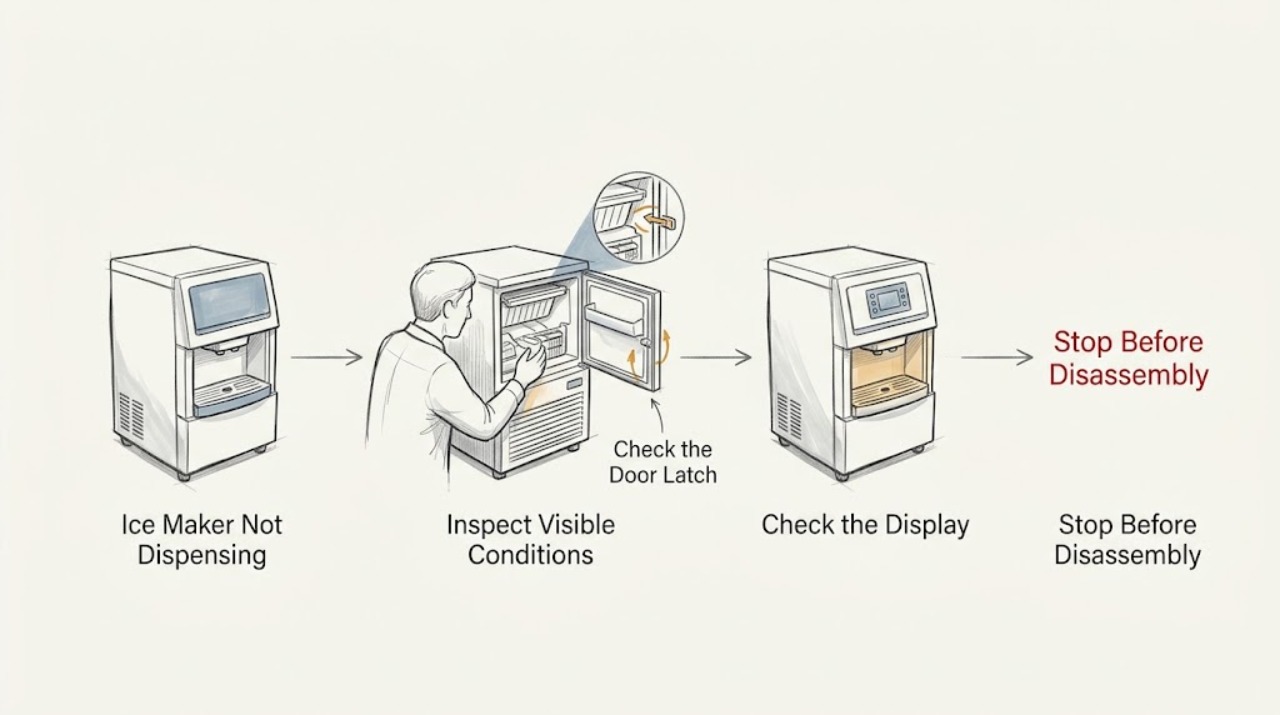
Work through in order
Diagnostic checks
Use only checks that match the exact appliance or system and its official guide.
-
Check 1
Open the ice bucket and check whether it contains loose cubes, a solid clump, or no ice; also look at the chute for visible ice fragments.
Expected result: The bucket is empty, cubes are fused together, or ice is packed at the exit.
Next step: If cubes are fused, empty the bucket and allow a fresh batch; if the exit is blocked, clear only accessible loose ice and make the bucket completely dry before reinstalling it.
Why this matters
Why: An empty bucket points back to ice production, while fused cubes or a packed exit can physically block dispensing even when the maker works.
-
Check 2
Check the refrigerator display for Child Lock or Dispenser Lock, then select ice and press the dispenser lever once while listening for the auger motor.
Expected result: A lock icon is lit, or the panel is unlocked but there is no auger sound.
Next step: Disable the lock using the model's control-panel or manual instructions and retest; do not open electrical panels if the motor remains silent.
Why this matters
Why: A lock disables the dispenser; no motor sound with an unlocked control shifts suspicion to the dispenser control, wiring, or drive system rather than the ice cubes.
-
Check 3
Remove and reinstall the ice bucket according to the model's handle or latch, checking that it clicks fully into place and that the rear drive connection is aligned.
Expected result: The bucket does not click or the auger can be heard but no ice exits; after reseating, dispensing either returns or remains blocked.
Next step: Align the rear of the bucket and retest once; if it will not latch or dispensing still fails, use the model manual and request service rather than forcing the assembly.
Why this matters
Why: A bucket that is not fully seated may leave the motor sounding normal while the drive cannot push ice forward.
-
Check 4
If the refrigerator has never dispensed since a door was reattached, have the door-harness connection checked against the model manual; on RS27T or RS22T models, confirm the two water lines were not cross-connected.
Expected result: The failure began immediately after door work or installation, or it began without any such event.
Next step: Use only the manual's accessible connection guidance; if the harness or lines need opening, stop and arrange qualified service.
Why this matters
Why: A post-installation failure makes a harness or line-connection issue more plausible; an unrelated onset keeps a jammed bucket or dispenser mechanism in focus.
Use your observations
Decision map
Find the observation that best matches what you see, then follow the next safe action.
-
PATH 01Next step
What you see
There is no ice in the bucket, but the dispenser controls respond.
Do this next
Switch to the Samsung ice-making checks for freezer temperature, Ice Off status, water supply, and the maker test.
Why this path and its safety boundary
Why it matters: The dispenser may be operating normally while the separate ice-production path is empty.
-
PATH 02Next step
What you see
The bucket contains fused cubes or the exit is packed, and the auger sounds when dispensing is requested.
Do this next
Empty the bucket, clear only accessible ice, dry it thoroughly, reseat it, and allow fresh cubes before retesting.
Why this path and its safety boundary
Why it matters: A physical ice blockage is more likely than a failed motor.
-
PATH 03Next step
What you see
The lock is off, the bucket clicks into place, and the auger is silent or the failure started after door reassembly.
Do this next
Stop repeated tests and arrange Samsung or qualified appliance service; do not disassemble the powered dispenser.
Why this path and its safety boundary
Why it matters: A control, wiring, or dispenser drive fault is more likely than a cube jam.
Helpful context
Understand the symptom
Separate making ice from dispensing it
Ice in the bucket means the ice-maker production problem is not the first suspect. The dispenser still depends on loose cubes, a clear exit, an engaged bucket, an unlocked control, and a connected drive path.
When checks do not resolve it
Need a professional?
Stop using the dispenser and request service if the bucket will not latch, the auger stays silent after the lock and seating checks, the door harness needs access, there is damaged wiring, or the issue persists after one safe retest.
Common questions
FAQ
Why can I hear the Samsung ice dispenser but get no ice?
A partly seated bucket or fused cubes can let the motor sound normal while the ice cannot move. Empty and dry the bucket, clear accessible ice at the exit, reseat it until it clicks, and arrange service if the drive still does not dispense.
Does a Samsung ice maker that is not dispensing always need a new ice maker?
No. First determine whether ice exists in the bucket. A lock, clumped ice, blocked chute, or bucket seating issue is a different dispenser-path problem from making ice.
Read the exact guide
Official sources
- Samsung ice maker is not workingSamsung · Samsung refrigerator ice-maker versus dispenser distinction and ice-maker operation
- Issues with Samsung refrigerator ice dispensersSamsung · Samsung refrigerator ice dispenser lock, bucket, chute, auger, and wiring checks
Community feedback
Share a repair observation
Share a plain-text repair observation. Accepted observations are published automatically; this page may take a moment to update.