
On this page
Start here
Quick answer
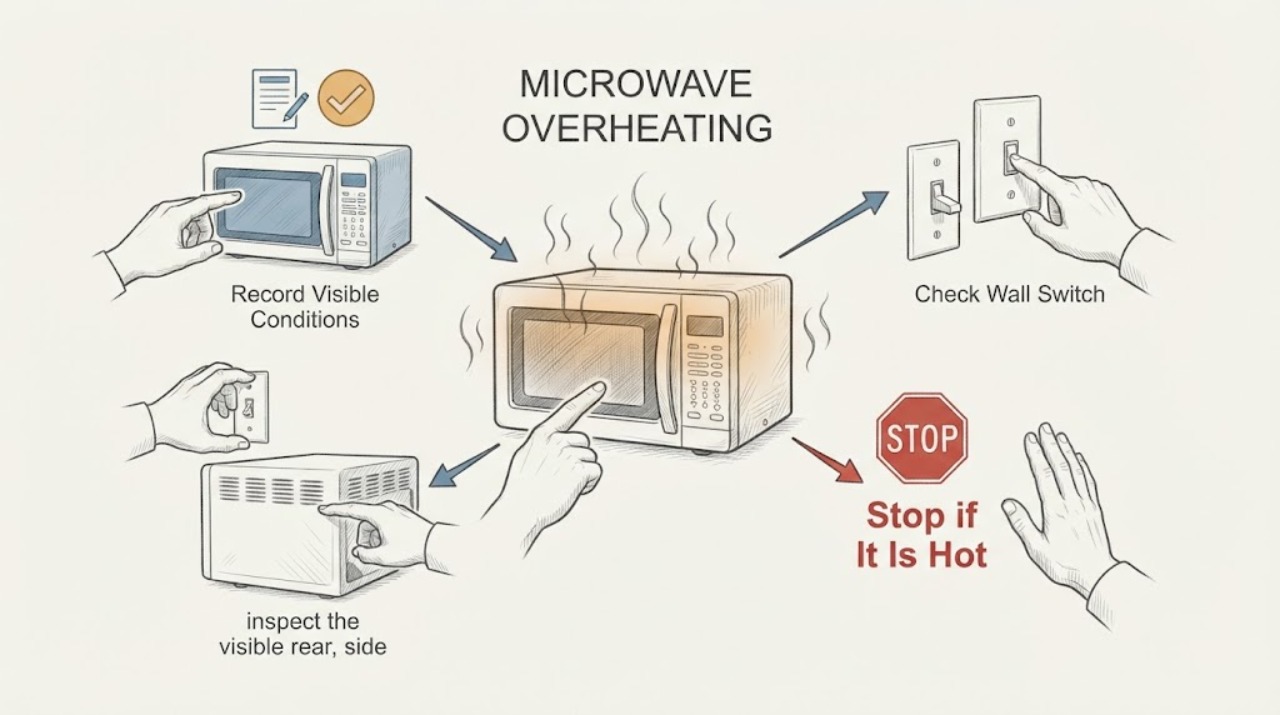
First separate normal heat from an unsafe overheating symptom. A Sharp convection or grill microwave can have a hot exterior and a cooling fan after a heating mode, while a microwave that smokes, sparks, smells burnt, overheats while idle, trips power, or becomes hotter than the model manual describes should be stopped. With the oven off and cool, check that its vents and installation clearances are not blocked, remove grease or food residue from the cavity and waveguide-cover area with the approved gentle cleaning method, and confirm that the turntable and support are installed. Never run the oven empty, heat oil for deep frying, use damaged door seals, or open the cabinet. If smoke or fire occurs, keep the door closed, turn the oven off, disconnect power if it is safe to do so, and arrange Sharp-authorized service.
Work through in order
Diagnostic checks
Use only checks that match the exact appliance or system and its official guide.
-
Check 1
From outside the oven, identify what is hot and when: the cabinet or door, the cavity, the food or liquid, or the plug and surrounding outlet. Record whether the selected mode was microwave, grill, convection, roast, or another model-specific mode, and note any fan noise, smoke, burning odor, sparks, or breaker trip.
Expected result: Only the exterior is warm after grill or convection use; the food or liquid is excessively hot; grease or paper is smoking; the plug or cabinet is unusually hot; or the oven overheats while idle or during ordinary microwave use.
Next step: If there is smoke, fire, arcing, or electrical heat, stop and follow the safety stop below. If the heat is limited to a documented grill or convection cycle, let the oven cool and use the exact manual before any further test.
Why this matters
Why: Sharp says convection and grill models can become hot and may run a cooling fan after use. Heat accompanied by smoke, arcing, burning odor, electrical symptoms, or an idle oven is not explained by normal post-cooking warmth.
-
Check 2
If smoke, flame, or a strong burning smell is present, keep the microwave door closed, turn the oven off, and disconnect the power cord or switch off the circuit only if you can do so without reaching through smoke or touching a damaged cord. Do not open the door to inspect a burning load and do not restart the oven.
Expected result: The smoke or flame stops with the door closed and power isolated, or the oven continues to smoke, smell burnt, spark, or show heat damage.
Next step: Leave the oven disconnected and arrange Sharp-authorized service. If there is an ongoing fire or immediate danger, leave the area and contact local emergency services; do not attempt an internal repair.
Why this matters
Why: Sharp's safety instructions use the closed door to contain a cavity fire and require the appliance to be taken out of service when it is damaged or not working properly. Continued smoke or heat indicates an active safety or electrical fault.
-
Check 3
With the oven unplugged and fully cool, inspect the visible rear, side, and top ventilation openings and the installation space. Remove loose dust or objects that are blocking an opening, and compare the placement with the clearance in the exact model manual. Keep the oven away from heat, steam, and splashing water.
Expected result: An opening is covered, the oven is pressed against a wall or cabinet beyond the manual's allowance, or the vents and installation space are clear.
Next step: Correct only a loose external obstruction or safe placement issue, following the model manual. Do not remove panels or probe the openings; if overheating returns with clear ventilation, stop use and request service.
Why this matters
Why: Sharp states that blocked vents can make an oven overheat and eventually fail, and that heat or steam near the oven can damage parts. Clear ventilation makes an installation restriction less likely but does not rule out an internal fault.
-
Check 4
When the cavity is cool and power is disconnected, look for spilled grease, baked-on food, paper, plastic, foil, metal twist ties, or residue around the door sealing surfaces and waveguide-cover area. Clean only with the soft, damp, non-abrasive method specified by the manual; do not remove the waveguide cover or use abrasive pads.
Expected result: Grease or food residue is present, combustible material or metal is visible, the waveguide cover or door seal appears damaged, or the cavity is clean and the safety surfaces look intact.
Next step: Remove loose items and clean residue only after the oven is cool. Do not use the microwave if the door, hinges, latches, sealing surfaces, or waveguide cover are damaged; arrange service instead.
Why this matters
Why: Sharp warns that grease or fat left in the cavity can overheat, smoke, or catch fire, and that metal or damaged door-sealing parts can create arcing or exposure hazards. A clean, intact cavity makes residue or cookware misuse less likely.
-
Check 5
Review the load and cookware against the exact Sharp manual before using the oven again. Confirm that the glass tray and rotating support are in place, food is present, containers are vented rather than sealed, and no oil or fat is being heated for deep frying. Do not repeat a cycle that already caused smoke, arcing, or abnormal heat merely to see whether it happens again.
Expected result: The oven was empty, the tray or support was missing, a sealed container or metal item was used, a low-moisture or very small load was overheated, or the load and cookware followed the manual.
Next step: Discard or safely handle any overheated food or liquid according to the model's food-safety guidance, and correct the load method before normal use. If the oven itself became abnormally hot or the symptom repeats with a compliant load, leave it off and call service.
Why this matters
Why: Sharp identifies empty operation, sealed containers, unsuitable metal or paper, overcooking, and deep-frying as unsafe or damaging conditions. A compliant load with repeated overheating shifts attention toward the appliance rather than the food setup.
-
Check 6
If the microwave has a grill or convection function, compare the heat and fan behavior with the exact manual after the oven has cooled. Note whether the exterior warmth occurs only during or shortly after that mode, whether the cooling fan runs, and whether the display shows a fault or the oven stays hot while idle.
Expected result: Warmth is limited to a documented grill or convection cycle and the fan runs as described, or the oven stays unusually hot after cooling time, heats in the wrong mode, shows a fault, or has smoke or odor.
Next step: Treat documented post-cycle warmth as normal and follow the model's cool-down instructions. For persistent, wrong-mode, or fault-associated heat, stop use and arrange qualified Sharp service.
Why this matters
Why: Sharp describes exterior warmth and cooling-fan operation as expected on some combination models. Heat outside the documented mode or with a safety symptom is a control, fan, ventilation, or electrical concern that the user should not diagnose internally.
Use your observations
Decision map
Find the observation that best matches what you see, then follow the next safe action.
-
PATH 01Next step
What you see
The cabinet is warm only after a documented grill or convection cycle, the cooling fan behaves as described, and there is no smoke, odor, arcing, damage, or electrical symptom.
Do this next
Let the oven cool naturally and use the exact model manual for the mode's normal behavior. Do not cover vents or run another cycle until the oven is cool.
Why this path and its safety boundary
Why it matters: The observation is consistent with normal heat from a combination microwave rather than an overheating failure.
-
PATH 02Next step
What you see
Vents are blocked, the oven is installed too close to a wall or heat source, or grease and food residue are visible in the cavity, with no door or waveguide-cover damage.
Do this next
Disconnect power, correct the accessible installation or residue issue using the model-approved method, and resume use only if there was no severe overheating or smoke. Stop and request service if the symptom returns.
Why this path and its safety boundary
Why it matters: A ventilation or residue condition is a supported explanation for excess heat and is more likely than an unconfirmed electronic failure.
-
PATH 03Next step
What you see
The food or liquid overheated, or the oven was empty, used with an unsuitable container, or run beyond the food or package instruction, while the appliance itself has no smoke or electrical damage.
Do this next
Stop using that load and follow the exact manual for safe containers, moisture, and standing time. Do not deep-fry oil or repeat an overheating event; request service if the oven itself overheats with a compliant load.
Why this path and its safety boundary
Why it matters: The load or cooking method can account for the excessive food temperature, but it does not prove the oven is safe if the cavity or controls also became abnormally hot.
-
PATH 04Next step
What you see
There is smoke, flame, arcing, burning odor, a damaged door or seal, repeated breaker tripping, heat while idle, or persistent overheating after the external checks.
Do this next
Keep the oven off and disconnected if safe, do not open the cabinet or defeat an interlock, and arrange Sharp-authorized service. Use emergency services for an active fire or immediate danger.
Why this path and its safety boundary
Why it matters: The result indicates a fire, interlock, electrical, control, fan, or other internal safety issue that cannot be confirmed through user-level checks.
Helpful context
Understand the symptom
The word overheating can describe several different observations: a hot exterior after convection or grill cooking, food or liquid becoming dangerously hot, grease smoking inside the cavity, or the appliance itself becoming abnormally hot. Sharp's instructions treat those situations differently. Record what became hot, which cooking mode was selected, whether the fan ran, and whether there was smoke, odor, arcing, or a tripped breaker before deciding whether any further use is safe.
Sharp microwave models differ in ventilation, grill or convection features, clearances, and controls. Use the complete model number to find the matching manual. The checks below stay external and user-safe; a microwave's high-voltage and interlock areas require qualified service, even when the visible symptom appears simple.
Only after diagnosis
Potential parts
- waveguide cover
Consider this category only if the exact model manual or a qualified technician confirms that the cover is damaged or missing. Grease, smoke, or an overheating symptom alone does not establish that this part needs replacement.
Confirm the complete Sharp model and approved service information before ordering. Do not remove or replace the cover while the oven is connected or without the model procedure. - door seal or interlock assembly
Consider this category only after service diagnosis identifies damaged sealing surfaces, a latch or interlock fault, or another documented safety-part failure.
Microwave door and interlock parts are safety-critical and model-specific. Do not bypass, adjust, or substitute them; use Sharp-authorized service.
When checks do not resolve it
Need a professional?
Stop using the microwave and request Sharp-authorized service when it smokes, sparks, smells burnt, trips power, overheats while idle, operates in the wrong mode, has a damaged door, latch, seal, waveguide cover, cord, or plug, or continues to overheat after vents, residue, and load conditions are corrected. Never open the cabinet, defeat an interlock, or attempt a high-voltage or sealed internal repair.
Common questions
FAQ
Is it normal for a Sharp convection microwave to feel hot outside?
Sharp says combination models can become hot during convection or grill operation and may run a cooling fan afterward. Heat with smoke, burning odor, arcing, damaged parts, electrical symptoms, or heat while idle is not normal; stop using the oven and arrange service.
What can make a Sharp microwave cavity overheat or smoke?
Sharp warns that blocked ventilation, grease or fat left in the cavity, empty operation, unsuitable containers or metal items, overcooking, and deep-frying oil can cause overheating, smoke, fire, or damage. Correct only visible, model-approved conditions after the oven is cool and disconnected.
What should I do if my Sharp microwave sparks or catches fire?
Keep the door closed, turn the oven off, and disconnect power or switch off the circuit only if you can do so safely. Do not open the door, restart the oven, or repair it yourself. Leave it out of service and contact Sharp-authorized service; contact emergency services for an active fire or immediate danger.
Read the exact guide
Official sources
- R-820BK/BW Operation ManualSharp USA · Sharp R-820BK and R-820BW models; service boundary is applicable to microwave high-voltage and safety systems generally.
- R-309Y Microwave Oven Operation ManualSharp USA · Sharp R-309Y model manual; safety principles are relevant to Sharp microwaves, but controls and clearances must be confirmed by exact model.
- R-820BC | R-820JS Operation Manual and CookbookSharp USA · Sharp R-820BC and R-820JS combination models; mode behavior and clearances vary by model.
- Support | Business & Consumer Products | SHARPSharp USA · Sharp USA consumer home-appliance support; availability and service routes depend on location and model.
Community feedback
Share a repair observation
Share a plain-text repair observation. Accepted observations are published automatically; this page may take a moment to update.