
On this page
Start here
Quick answer
A bad smell from a Siemens washing machine is usually traced to damp residue in the door seal, detergent drawer, drum, or drain path rather than a part that should be replaced immediately. First separate a musty or sewage-like smell from a burning or electrical smell. For a musty smell, remove laundry promptly, wipe and dry accessible rubber and dispenser surfaces, use the model's approved drum-clean or maintenance program, and leave the door and drawer slightly open afterward. Check the drain hose and detergent amount against the exact manual. Stop using the washer for a burning smell, smoke, unusual heat, leaking water near electrics, or any damaged connection, and request qualified service.
Before you begin
Safety first
- Do not open panels, work around wet electrics, touch hot water or concealed components, or use chemical combinations. Smoke, fire, arcing, major leakage, or immediate danger requires emergency safety action before appliance service.
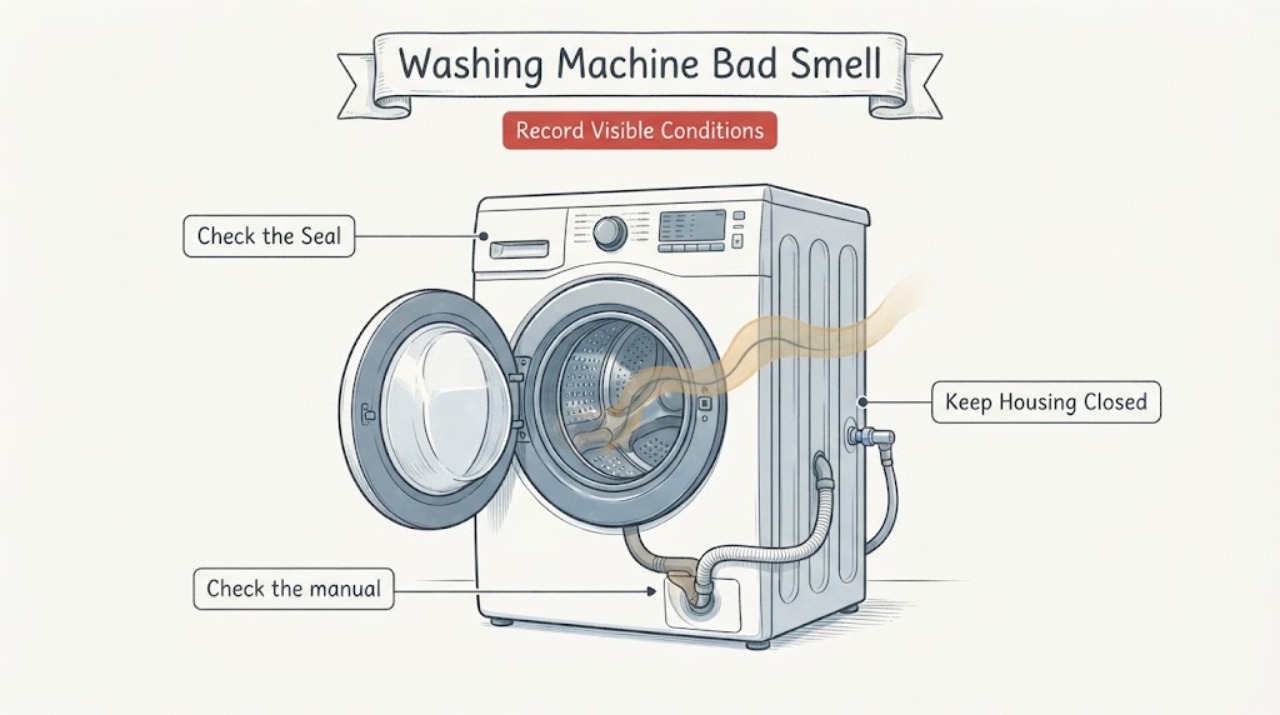
Work through in order
Diagnostic checks
Use only checks that match the exact appliance or system and its official guide.
-
Check 1
With the washer stopped, identify whether the smell is musty or sour, sewage-like, detergent or chemical, or burning or electrical; record whether it comes from the drum, door seal, drawer, drain area, plug, or rear of the machine without touching hot or wet electrical parts.
Expected result: The odor is limited to damp residue, follows the drain area, or is sharp, burning, chemical, smoky, or accompanied by heat, smoke, leaking water, or a damaged connection.
Next step: Use the matching branch below. Stop immediately for a burning or electrical smell, smoke, heat, active leak near electrics, or damaged power connection; otherwise continue only with dry, low-risk checks.
Why this matters
Why: Musty and sewage-like smells can follow cleaning, moisture, or drain-routing paths. Burning, smoke, unusual heat, or a wet electrical area can indicate a safety fault and must not be treated as routine maintenance.
-
Check 2
For a musty smell, remove all laundry after the washer is still, then inspect the visible door seal, drum opening, and detergent drawer for lint, residue, trapped objects, or standing moisture; wipe accessible surfaces with a soft cloth and dry them.
Expected result: Residue or moisture is visible in the seal or drawer, the drawer is clean but the drum smells, or mold-like growth or damage is present.
Next step: Clean only accessible surfaces using the model manual's method. Do not scrape rubber with an abrasive tool or flood a dispenser that contains electronics. Damaged seal material or persistent growth needs service guidance.
Why this matters
Why: Siemens identifies dirt buildup and mold in a door seal as possible sources of persistent drum odor, and its cleaning guidance explains that detergent or softener residue can remain in the drawer and housing.
-
Check 3
Check the manual for a Drum Clean, maintenance, or equivalent empty program; when the manual permits it, run that program with the approved cleaner or detergent and no laundry, then let it complete without adding other chemicals.
Expected result: The model has an approved maintenance program and the odor improves, the program is unavailable, or the smell remains after a correctly completed program.
Next step: Repeat maintenance only at the interval and with the product stated by the manual. If the odor remains, do not escalate chemicals or run endless hot cycles; inspect the drain path and arrange service if needed.
Why this matters
Why: Siemens recommends periodic high-temperature maintenance to limit odor-producing residue, but the program, temperature, and product must match the model and region. A persistent smell after correct maintenance is evidence for another source or a service issue.
-
Check 4
Review the detergent and softener amount against the Siemens manual and product instructions; inspect the drawer and its housing for buildup, then clean and dry the drawer only as the model allows, keeping any connector or electronic section dry.
Expected result: The drawer is overfilled, residue is present, the wrong product or excess product was used, or the drawer and housing are clean while the smell persists.
Next step: Use the smallest model- and product-approved amount, clean the drawer safely, and leave it slightly open after use. Do not mix cleaners or immerse a dispenser component that the manual excludes.
Why this matters
Why: Residue can retain moisture and create odor. Siemens notes that drawer construction differs, including models with i-Dos components that must not be immersed or exposed to water at their connector.
-
Check 5
If the smell is sewage-like or strongest near the drain, inspect the visible drain hose and standpipe connection for a kink, an airtight fit, slipping, or an installation route that does not match the manual; do not open the cabinet or loosen a wet connection.
Expected result: The drain hose is visibly kinked, too deeply inserted, airtight, loose, damaged, or the route looks correct but odor and return water persist.
Next step: Correct only a plainly visible external routing issue allowed by the manual, with the machine off and the area dry. If the hose is damaged, water returns, or the smell persists, request service or qualified plumbing help.
Why this matters
Why: Incorrect drain routing can allow waste water or odor to return, while a damaged or concealed drain fault cannot be safely diagnosed by repeated wash cycles.
-
Check 6
After cleaning, remove damp laundry promptly, wipe accessible moisture from the seal and drawer, and leave the door and dispenser slightly open when the room and appliance are safe; observe whether the smell returns between washes.
Expected result: The smell fades and does not return, returns after the next wash, or is joined by a leak, unusual noise, heat, smoke, or a new electrical odor.
Next step: Continue the manual's maintenance routine only when the odor is ordinary and the washer is safe. Stop and request service for recurring odor with leakage, heat, smoke, electrical odor, or other abnormal operation.
Why this matters
Why: Drying and ventilation can prevent residual moisture from sustaining odor. A rapid return despite correct care suggests retained residue, drain return, a leak, or another model-specific fault.
-
Check 7
If the smell is burning, electrical, melted plastic, or chemical, stop the washer and use only a safe normal isolation method from a dry location; do not restart it to identify the source or open panels.
Expected result: The odor stops after isolation, smoke or heat remains, the power connection is damaged, or water is near the electrical connection.
Next step: Keep people away and request qualified electrical or appliance service. If there is smoke, fire, immediate danger, or a large water release, use the appropriate emergency response before appliance service.
Why this matters
Why: These signs can involve a motor, wiring, control, heater, detergent reaction, or external connection and cannot be safely distinguished by a consumer smell test.
Use your observations
Decision map
Find the observation that best matches what you see, then follow the next safe action.
-
PATH 01Next step
What you see
The smell is musty or damp and residue or moisture is visible in the seal, drawer, or drum.
Do this next
Arrange qualified service and follow the exact model guidance.
Why this path and its safety boundary
Why it matters: Clean and dry accessible areas using the model instructions, then run one approved empty maintenance program if available. Do not mix products.
-
PATH 02Next step
What you see
The smell is sewage-like or strongest at the drain.
Do this next
Arrange qualified service and follow the exact model guidance.
Why this path and its safety boundary
Why it matters: Check only visible drain-hose routing and the standpipe connection. If odor, return water, or a damaged hose remains, request qualified service or plumbing help.
-
PATH 03Next step
What you see
The smell is detergent or chemical and the drawer contains buildup or an excessive product amount was used.
Do this next
Arrange qualified service and follow the exact model guidance.
Why this path and its safety boundary
Why it matters: Clean the drawer according to the manual, reduce product to the approved amount, and do not combine cleaners. Persistent odor needs service guidance.
-
PATH 04Next step
What you see
The odor improves after one correct empty maintenance cycle and no safety symptom is present.
Do this next
Arrange qualified service and follow the exact model guidance.
Why this path and its safety boundary
Why it matters: Adopt the model's maintenance and drying routine. Remove laundry promptly and leave the door or drawer slightly open when safe.
-
PATH 05Next step
What you see
The smell returns quickly after correct cleaning or is accompanied by a leak, unusual noise, or poor draining.
Do this next
Arrange qualified service and follow the exact model guidance.
Why this path and its safety boundary
Why it matters: Stop repeated cleaning cycles and request a model-specific inspection of the drain path, seal, pump, heating, or control system.
-
PATH 06Next step
What you see
The smell is burning, electrical, smoky, melted-plastic, or otherwise sharp, or the plug or outlet is hot.
Do this next
Arrange qualified service and follow the exact model guidance.
Why this path and its safety boundary
Why it matters: Stop immediately and isolate only by a safe normal method from a dry location. Do not restart, open panels, or touch wet electrical equipment.
-
PATH 07Next step
What you see
A dispenser with electronic components needs cleaning.
Do this next
Arrange qualified service and follow the exact model guidance.
Why this path and its safety boundary
Why it matters: Follow the exact manual and keep the connector and electronic section dry. If the manual does not describe the procedure, request service rather than improvising.
-
PATH 08Next step
What you see
No accessible source explains the smell, or mold, seal, hose, or electrical parts appear damaged.
Do this next
Arrange qualified service and follow the exact model guidance.
Why this path and its safety boundary
Why it matters: Leave the washer unused and give service the model, odor description, timing, visible water or residue, and maintenance already attempted.
Helpful context
Understand the symptom
Classify the smell before cleaning
A musty, sour, or damp-cloth smell commonly points to retained moisture and residue in a warm, closed washer. A sewage-like smell can point to drain-hose routing or return water. A sharp burning, melted-plastic, or electrical smell is a stop condition, not a cleaning problem. Do not keep running cycles to compare a hazardous smell.
Model instructions control the cleaning method
Siemens washing machines differ in programs, dispensers, filters, seals, and descaling requirements. Use the manual for the exact model before choosing a drum-clean program or chemical. Never combine bleach, descaler, detergent, acids, or other cleaners, and never pour a product into a compartment that the manual does not specify.
Drying prevents the smell returning
After a completed wash, remove damp laundry, wipe accessible moisture from the seal and drawer, and leave the door and dispenser slightly open when safe. This lets residual water evaporate. A smell that returns quickly despite correct cleaning, or a smell linked to a leak or drain fault, needs a model-specific service assessment.
Safety boundary
Stop conditions
- Stop immediately for burning or electrical odor, melted plastic, smoke, unusual heat, a hot plug or outlet, arcing, or repeated breaker trips.
- Stop for active leakage, standing water near electrical equipment, a damaged hose, or water that may be hot.
- Do not open the cabinet, touch concealed wiring, flood an electronic dispenser, or run repeated hot cycles to chase a persistent odor.
- Never mix bleach, descaler, detergent, acids, or other cleaning products; use only the model-approved method.
Only after diagnosis
Potential parts
- door seal or detergent drawer component
Consider only when the exact model inspection finds a damaged seal or dispenser component that retains water or residue after safe cleaning.
Confirm the complete model and Siemens documentation before selecting any part. - drain pump or drain hose
Consider only after visible routing and cleaning checks leave a persistent drain return, poor draining, or leak that qualified diagnosis links to this path.
Confirm model-specific construction and fit; do not choose a pump or hose from odor alone. - heater, motor, or control component
Consider only after qualified inspection connects a recurring burning odor or abnormal operation to a specific internal component.
Do not attempt internal electrical diagnosis; confirm the full model and approved service procedure.
When checks do not resolve it
Need a professional?
Use qualified service for recurring or unexplained odor, damaged seal or hose, persistent drain or leak symptoms, suspected pump, heater, motor, wiring, or control fault, or any burning or electrical smell.
Safety scope: Do not open panels, work around wet electrics, touch hot water or concealed components, or use chemical combinations. Smoke, fire, arcing, major leakage, or immediate danger requires emergency safety action before appliance service.
Common questions
FAQ
Why does my Siemens washing machine smell musty?
Damp residue in the drum, door seal, detergent drawer, or drain path can retain odor. Clean and dry accessible surfaces, use the exact model's approved maintenance program, and leave the door and drawer slightly open when safe.
How often should I run a Siemens washing-machine maintenance wash?
Follow the exact model manual and Siemens regional guidance for the program, temperature, product, and interval. Do not substitute a different chemical or combine cleaners to make the cycle stronger.
Can the detergent drawer cause a bad smell?
Yes. Detergent or softener residue can remain in the drawer and housing. Clean and dry it using the model instructions, and keep any i-Dos connector or electronic section dry.
When is a washing-machine smell a safety problem?
Stop for a burning or electrical smell, melted plastic, smoke, unusual heat, a hot connection, arcing, active leakage near electrics, or repeated breaker trips. Do not restart to identify the source; request qualified help.
Read the exact guide
Official sources
- Washing machine is not draining waterSiemens Home Appliances · Siemens washing-machine drain, pump, hose, and leakage checks
- How to clean the detergent drawer | Siemens Home AppliancesSiemens Home Appliances · Siemens washing-machine detergent-drawer residue, drying, i-Dos caution, and model manual guidance
- Washing machine: Clothes smell badSiemens Home Appliances · Siemens washing-machine odor causes, maintenance wash, door-seal residue, and service guidance
- Support for Siemens washing machines | Siemens Home AppliancesSiemens Home Appliances · Siemens washing-machine troubleshooting categories, manuals, and repair support
- How to maintain, clean and descale a washing machine.Siemens Home Appliances · Siemens washing-machine maintenance washes, cleaning products, drying, and model manual guidance
Community feedback
Share a repair observation
Share a plain-text repair observation. Accepted observations are published automatically; this page may take a moment to update.