
On this page
Start here
Quick answer
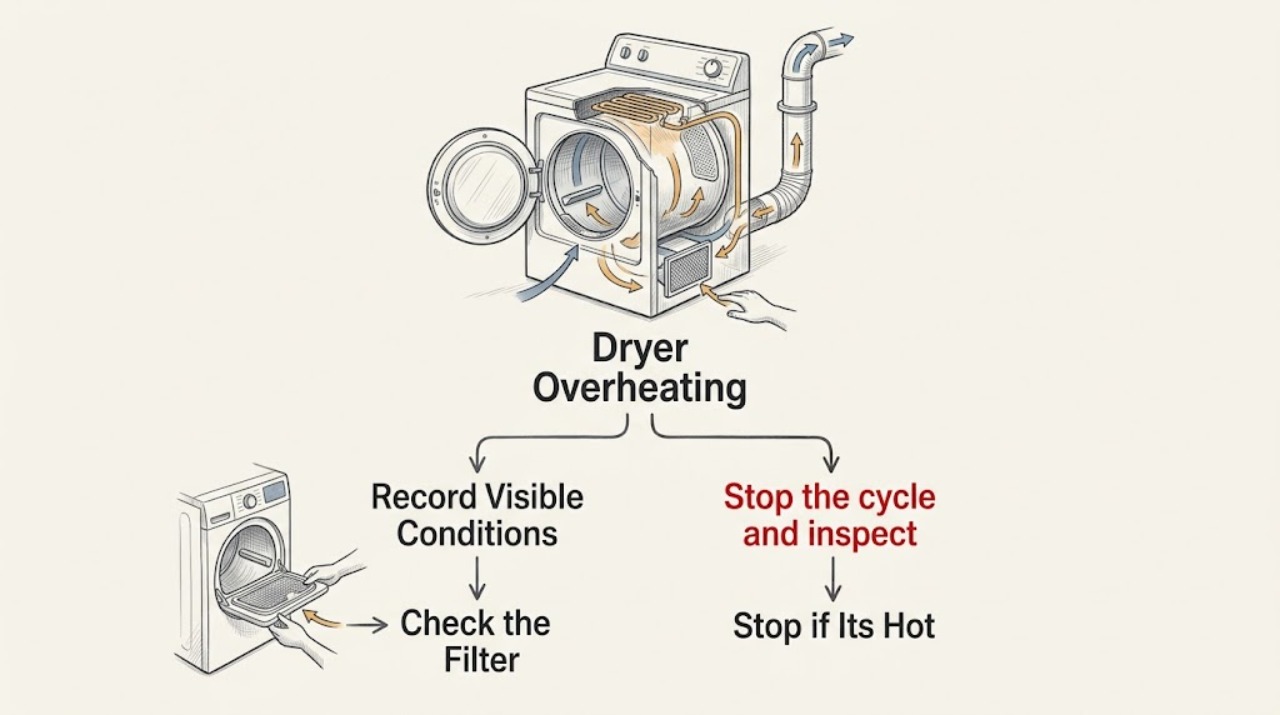
Stop a Speed Queen dryer immediately if smoke, a burning or melting smell, scorched fabric, gas odor, an unusually hot cabinet, uncontrolled heat, sparks, or a repeated breaker trip appears. A warm cabinet or hot exhaust during a normal heated phase can be expected, but excessive heat is often associated with a blocked lint filter or exhaust path, a crushed hose, an obstructed exterior hood, an overloaded or unsuitable load, or an incorrect heat setting. First record the model and whether it is electric or gas, then with the dryer off and cool clean and replace the lint filter, inspect the accessible exhaust route and hood, check the cycle and temperature selection, and confirm the load is suitable and not packed tightly. For electric dryers, the applicable supply and both protective devices may matter; for gas dryers, the equipment and main gas valves must be open, but gas parts are not a user adjustment. If the overheating returns, a protection code repeats, or any hazard was present, remove the dryer from use and arrange qualified service rather than opening panels or repeatedly resetting protection.
Work through in order
Diagnostic checks
Use only checks that match the exact appliance or system and its official guide.
-
Check 1
Stop the cycle and inspect from a safe position for smoke, a burning or melting smell, scorched clothing, gas odor or hissing, sparks or arcing, a hot or discolored cord, a cabinet that remains dangerously hot, or a breaker that has tripped again.
Expected result: Any smoke, odor, scorching, gas warning, arcing, electrical heat damage, uncontrolled heat, or repeated trip is present.
Next step: Stop using the dryer. For suspected gas, leave immediately without operating switches or creating a flame and contact local gas or emergency services from outside. For smoke, arcing, or electrical damage, keep clear and arrange qualified help.
Stop if: Do not restart, open panels, touch wet or damaged electrical parts, or keep resetting a breaker or thermal protection.
Why this matters
Why: This is a fire, gas, shock, or thermal-control hazard, not a lint or cycle-setting adjustment.
-
Check 2
Record the full model and serial number, product class, and whether the dryer is electric or gas; note which cycle and temperature were selected and whether the heat is present during Heating, Cooling, or an extended phase.
Expected result: The identity and phase are known, or the dryer is stacked, commercial, or otherwise not covered by the guide being consulted.
Next step: Use the exact model's manual and installation information before interpreting a code or supply requirement. If the product class is uncertain, limit checks to safety, load, filter, and visible exhaust observations and provide the identity to service.
Why this matters
Why: Speed Queen manuals and heat paths differ by model, fuel, and product class. A normal cooling phase or a model-specific option can be mistaken for uncontrolled heat.
-
Check 3
With the dryer off and cool, remove lint from the filter and reinstall it correctly; inspect the accessible exhaust hose for a kink, crushing, or disconnection and look outside for a hood flap that is blocked or cannot move freely.
Expected result: The filter or visible exhaust path is obstructed, or the path is clear but the cabinet and clothing still overheat.
Next step: Correct only a loose, visible obstruction with the dryer disconnected as the manual directs, then stop if overheating returns. Arrange qualified exhaust or appliance service when internal cleaning or measurement is needed.
Stop if: Do not run without the lint filter, reach into the exhaust housing, remove panels, or use a heated cycle to test a suspected blockage.
Why this matters
Why: Restricted air movement can hold heat in the dryer and raise fire risk. A clear external path does not rule out lint or a fault inside the cabinet.
-
Check 4
Check the load and controls: remove items that are unsuitable for tumble drying, avoid packing the drum tightly, and confirm that the selected cycle and temperature are not an unintended high-heat or extended setting; ensure the door closes and stops tumbling when opened.
Expected result: The load is overloaded or unsuitable, a high or extended setting was selected, the door does not close or stop the drum, or the selections and door operate normally.
Next step: Correct only the load or setting and observe one supervised cycle if no hazard has occurred. If the door safety behavior is abnormal or heat remains excessive, remove the dryer from use and request service.
Stop if: Do not dry items contaminated with flammable oils or solvents, bypass the door switch, or operate a dryer with missing guards.
Why this matters
Why: Load size, fabric, and cycle selection can make clothing appear overheated, while a door safety fault or uncontrolled tumbling is a service condition.
-
Check 5
For an electric model only, inspect the accessible breaker or fuses once and compare the supply with the exact installation guide; for a gas model only, confirm the accessible equipment and main gas valves are open without moving the dryer or touching gas tubing.
Expected result: A protective device is open, a gas valve is closed, the supply appears normal, or the dryer overheats despite a normal supply state.
Next step: Make at most one safe correction when there is no odor, damage, heat hazard, or repeated trip. If a breaker trips again, gas supply is uncertain, or heat remains excessive, leave the dryer off and arrange qualified service.
Stop if: Do not test live terminals, change wiring, move the gas dryer, adjust valves or regulators, or relight a gas component.
Why this matters
Why: Electric and gas dryers use different heating supplies, and a supply observation cannot identify an internal thermal, control, or burner fault.
-
Check 6
After the filter, exhaust, load, and setting checks, observe one short supervised cycle only if no hazard occurred; note whether heat cycles off during Cooling, whether the cabinet and load remain abnormally hot, and whether an error or thermal-protection display appears.
Expected result: Heat reduces normally, the dryer remains excessively hot, a code recurs, or the load or cabinet shows heat damage.
Next step: Stop immediately for persistent excessive heat, a code, scorching, smoke, or unusual electrical behavior. Remove the dryer from use and provide the complete observation record to qualified service.
Stop if: Do not run repeated test cycles or reset a protection device to keep using an overheating dryer.
Why this matters
Why: Normal cooling supports a setting or airflow explanation. Persistent heat, a recurring code, or damage points toward a thermal control, sensor, heating, airflow, or motor fault that cannot be identified safely from outside.
-
Check 7
If the exact manual documents a user reset for a code or thermal condition, perform that reset once only after the dryer is off and cool, then compare the next safe observation with the original; do not reset an internal device unless the manual explicitly makes it a user step.
Expected result: The code clears and heat behaves normally, or the code or overheating returns.
Next step: If the condition returns, remove the dryer from use and arrange qualified service. Include the model, fuel type, phase, load, airflow checks, code, and reset result.
Stop if: Do not repeatedly reset thermal protection, bypass a safety device, or continue operating with heat damage or abnormal odor.
Why this matters
Why: A single documented reset may clear a transient state, but a recurring condition indicates an unresolved fault and should not be masked.
Use your observations
Decision map
Find the observation that best matches what you see, then follow the next safe action.
-
PATH 01Next step
What you see
Smoke, scorching, burning smell, gas odor, arcing, uncontrolled heat, wet electrical parts, or a repeated breaker trip
Do this next
Stop immediately. Leave for suspected gas without operating switches and seek gas or emergency help from outside; otherwise keep clear and obtain qualified appliance or electrical service.
-
PATH 02Next step
What you see
The cabinet is warm only during Heating and cools normally during Cooling without damage
Do this next
Review the exact cycle, temperature, load, and airflow requirements; do not assume a warm cabinet alone means a fault.
-
PATH 03Next step
What you see
The lint filter, exhaust hose, or exterior hood is blocked or kinked
Do this next
Correct only the accessible obstruction with the dryer off and cool. If heat remains excessive or internal cleaning is needed, stop and call qualified service.
-
PATH 04Next step
What you see
The load is too large, unsuitable, or using an unintended high or extended heat setting
Do this next
Remove unsuitable items, reduce the load, select a model-approved setting, and observe only one supervised cycle if no hazard occurred.
-
PATH 05Next step
What you see
Electric supply protection is open or gas supply is not confirmed
Do this next
Follow the exact installation guide for one safe accessible check. Do not test live wiring or adjust gas components; persistent supply problems require qualified service.
-
PATH 06Next step
What you see
Overheating, heat damage, or a thermal or control code returns after the documented one-time reset
Do this next
Remove the dryer from use and arrange service with the model, serial, fuel type, code, phase, load, airflow observations, and reset result.
Helpful context
Understand the symptom
Warm is not the same as overheating
The cabinet, drum, and exhaust can become warm during a normal heated phase, while a cooling phase should reduce heat. A cabinet that is too hot to approach, clothing with scorched marks, heat that does not cycle off, or a repeated thermal or electrical fault is not a normal operating observation. Speed Queen has both electric and gas dryer families and different residential, stacked, and commercial controls, so use the exact model's guide for limits and codes.
The safe user boundary
The checks below stop at the control panel, door, load, lint filter, accessible hose and exterior hood, and a safe inspection of the household supply. Tool-based disassembly, thermal-device replacement, live electrical testing, burner or gas-valve work, and internal exhaust cleaning belong to qualified service. Never use a dryer that smokes, has missing guards, or operates with its door open.
Only after diagnosis
Potential parts
- limit thermostat or thermal cutoff
Only consider this category after qualified testing confirms a thermal-control fault and airflow has been evaluated; overheating alone does not prove the device failed.
Confirm the exact model, fuel type, and approved fit information before ordering; never bypass thermal protection. - temperature sensor
Only consider this category when model-specific diagnostics or qualified testing identifies a temperature-feedback fault rather than a load or exhaust restriction.
Confirm exact model compatibility and have internal electrical work performed by qualified personnel. - heating element or gas burner component
Only consider the applicable category after confirming electric or gas fuel and qualified diagnosis identifies a heating component fault.
Electric and gas heating parts are not interchangeable; confirm the full model and approved fit information before service. - blower or exhaust component
Only consider this category if qualified diagnosis finds inadequate internal airflow after the accessible filter, hose, and hood checks are clear.
Confirm exact model compatibility; internal exhaust and blower work should be performed by qualified service personnel.
When checks do not resolve it
Need a professional?
Have this ready
- The full model and serial numbers, residential/stacked/commercial class, electric or gas type, selected cycle and temperature, load description, phase when heat appears, filter and exhaust observations, code, and the result of any single documented reset.
Common questions
FAQ
Is a warm Speed Queen dryer cabinet always overheating?
No. Warmth during a heated phase can be normal, but a cabinet or load that remains excessively hot, scorched clothing, smoke, burning smell, or failure to cool is not. Check the model's cycle, load, filter, and accessible exhaust path once, then stop if heat remains excessive.
Can a blocked vent make a Speed Queen dryer overheat?
Restricted airflow from a dirty filter, kinked hose, or blocked exterior hood can hold heat and increase fire risk. Clean the accessible filter and inspect the visible route with the dryer off and cool; internal cleaning or recurring heat requires qualified service.
When should I stop using a Speed Queen dryer?
Stop for smoke, scorching, burning or gas smell, abnormal flame or heat, arcing, wet electrical parts, uncontrolled heating, damaged guards, or a repeated breaker trip. Do not keep resetting protection or run another test cycle; arrange qualified service.
Read the exact guide
Official sources
- Speed Queen | Manuals & DownloadsSpeed Queen by Alliance Laundry Systems · Official documentation portal; model number is required and residential and commercial products have separate document paths.
- CPSC Urges Flood Victims to Take Steps to Prevent CO Poisoning, Electrocution, Explosion and FiresU.S. Consumer Product Safety Commission · General safety guidance: do not touch wet plugged-in equipment and leave immediately if gas is smelled or heard leaking.
- User's GuideSpeed Queen by Alliance Laundry Systems · Model-specific guide covering a particular electric/gas residential dryer family; do not generalize its limits or controls to another platform.
- Dryers: ADEE8B – ADGE8BSpeed Queen by Alliance Laundry Systems · Model-family product page demonstrating that Speed Queen dryer fuel type and features vary by model.
Community feedback
Share a repair observation
Share a plain-text repair observation. Accepted observations are published automatically; this page may take a moment to update.