
On this page
Start here
Quick answer
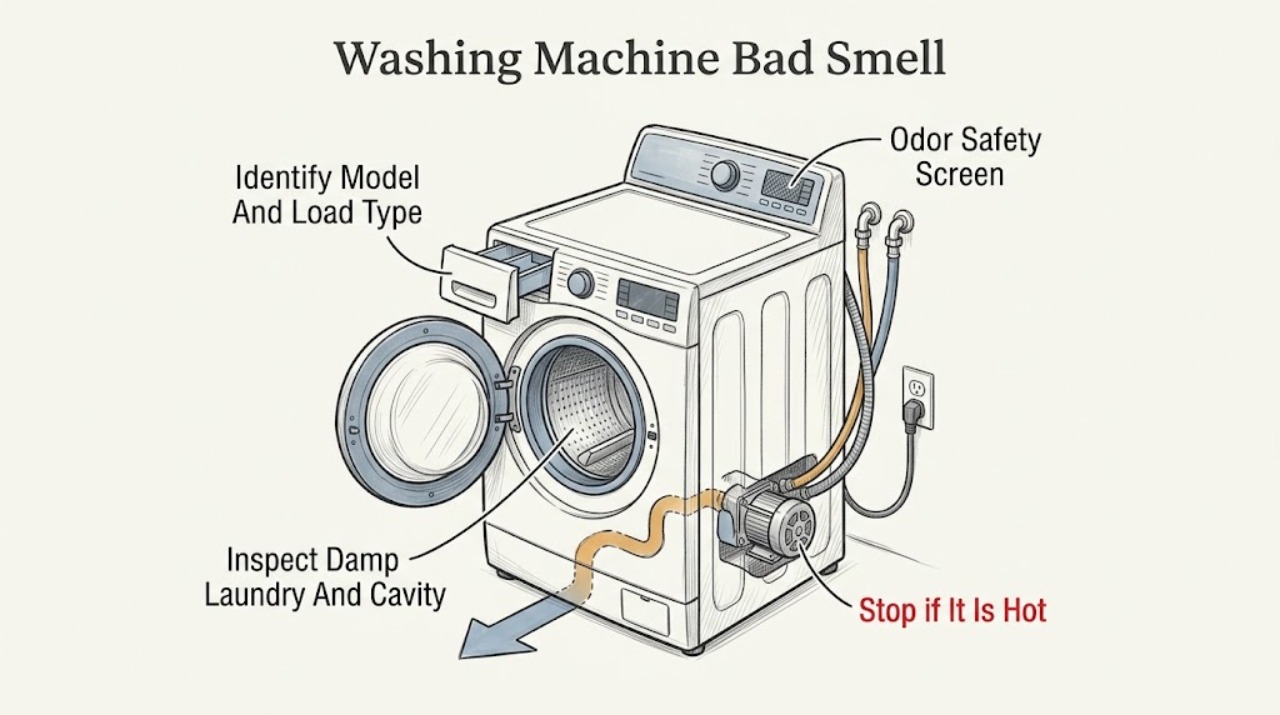
First classify the odor instead of adding more cleaner. A musty or sour smell usually points to moisture, detergent or fabric-softener residue, lint, or a damp door gasket, dispenser, tub, or laundry load. A drain or sewage-like smell changes the check toward the drain hose, standpipe, trap, or a washer that is not emptying correctly. A burning-plastic, electrical, hot-rubber, smoke, or ozone-like smell is a stop condition: stop the cycle, keep away from smoke or water, isolate power only from a dry safe position, and arrange qualified service. Record the Speed Queen model and whether it is top-load or front-load, then inspect only cool, accessible surfaces, the gasket, dispenser, tub, hoses, and drain area. Use the matching manual for any clean-tub or bleach procedure; never mix cleaning chemicals. Leave the lid or door and dispenser open to dry after use. If odor returns after one model-approved cleaning and drying cycle, or there is water on the floor, a damaged hose, abnormal noise, overheating, repeated trips, or any electrical odor, stop using the washer and arrange service.
Work through in order
Diagnostic checks
Use only checks that match the exact appliance or system and its official guide.
-
Check 1
Stop the cycle and stand in a well-ventilated, dry area; look at the Speed Queen washer, plug, receptacle, floor, hoses, and controls without opening panels or leaning into a running machine.
Expected result: Record whether the odor is musty or sour, drain-like, detergent or chemical, hot rubber, burning plastic, electrical or ozone-like, or accompanied by smoke, sparks, unusual heat, a wet connection, a leak, or a breaker trip.
Next step: For a hazardous odor, stop using the washer, isolate power only from a dry safe position when possible, keep away from smoke or water, and arrange qualified appliance or electrical service. Otherwise continue after the appliance is stopped and cool.
Stop if: Do not operate a smoking, sparking, overheated, leaking, or electrically odorous washer, and do not touch a wet plug or outlet.
Why this matters
Why: Musty or residue odors can allow cool external cleaning checks. Burning, electrical, smoky, hot, or wet conditions can make continued operation unsafe and are not a tub-cleaning diagnosis.
-
Check 2
Read the complete Speed Queen model number from the rating plate and identify whether the washer is top-load or front-load; note whether the smell is from the empty machine, the clothing, the dispenser, the door gasket, or the drain area.
Expected result: Record the model, configuration, programme and stage when the odor appeared, whether the load was left damp, whether the panel showed a code, and whether standing water remained after the cycle.
Next step: Open the matching Speed Queen manual or owner support material and use only the procedure for that model; keep the exact odor and timing for service if the smell is not clearly a cool residue odor.
Stop if: Do not apply a front-load clean-cycle instruction to a top-load model, assume every model accepts the same chemical, or infer a failed part from odor alone.
Why this matters
Why: A front-load gasket and dispenser, a top-load tub rim or agitator dispenser, and a drain or standpipe can hold different residues. The model number controls the safe cleaning and drain procedure.
-
Check 3
With the washer off and cool, remove damp laundry and inspect the accessible tub or drum, door glass, lid area, gasket lip, dispenser, and upper tub rim for visible residue, lint, trapped items, or stagnant water.
Expected result: Record whether the odor is strongest at the gasket, dispenser, tub rim, agitator area, or laundry; whether a film or residue is visible; and whether water remains in the drum or basket.
Next step: Wipe or rinse only accessible surfaces using the model manual's approved method. If water remains unexpectedly or the odor is not confined to residue, continue to the drain and leak checks rather than adding cleaner.
Stop if: Do not reach into a moving drum, remove panels, scrape a gasket with a sharp tool, or use a chemical on a surface the manual does not identify.
Why this matters
Why: Speed Queen links musty odors with a wet interior and identifies detergent, softener, lint, and mineral residue as places that can accumulate. Standing water or an odor strongest at the drain path points to a different branch.
-
Check 4
For a front-load washer, gently inspect the accessible folds of the door gasket and the dispenser drawer after the washer is off and cool; for a top-load washer, inspect the tub rim, lid area, and any accessible fabric-softener or detergent dispenser without dismantling it.
Expected result: Record whether residue, lint, a trapped small item, mildew-like buildup, a torn gasket, a loose seal, or a damaged dispenser is present, and whether the cabinet or floor is wet.
Next step: Clean only the accessible part with the model-approved method and dry it. If a seal, dispenser, cabinet, or floor is wet or damaged, stop using the washer and arrange service.
Stop if: Do not stretch, cut, glue, or remove the gasket; do not force the dispenser; stop for any water on the floor or damage around the seal.
Why this matters
Why: Residue in a gasket or dispenser can create a musty odor, while a torn seal, loose fitting, or water on the floor changes the issue to a leak or service concern. Speed Queen's public care guidance treats front-load gasket and top-load dispenser cleaning differently.
-
Check 5
Review the detergent, softener, bleach, and other laundry products used in the last several loads against the Speed Queen model manual and the product labels; check whether too much product or an incompatible product was used.
Expected result: Record excess suds, a sticky or perfumed film, undissolved product, a new cleaner, a chemical odor, or a load that was left wet in the washer or hamper.
Next step: Stop adding unapproved products, ventilate the area, and follow the model manual's rinse or cleaning instruction only when no safety hazard is present. If a strong chemical odor persists, arrange service or appropriate safety advice.
Stop if: Never mix bleach, vinegar, peroxide, descaler, ammonia, or other cleaners, and do not pour chemicals into a machine while another chemical remains in it.
Why this matters
Why: Speed Queen notes that detergent and fabric-softener residue can accumulate and support odor-causing bacteria; excess or incompatible product can leave more residue. Chemical odor after an unapproved combination is not a reason to add another cleaner.
-
Check 6
Without running a new cycle, locate whether the drain-like smell is strongest at the washer, drain hose connection, standpipe, floor drain, or laundry-room drain; note whether the washer leaves water behind or drains slowly.
Expected result: Record standing water, slow emptying, a drain hose that is visibly kinked or displaced, a wet connection, odor rising from the household drain, or no drain symptom at all.
Next step: If the odor is clearly from the household drain, arrange plumbing assessment. If the washer retains water or the accessible hose is compromised, stop the appliance and use the model manual or qualified service for the drain path.
Stop if: Do not disconnect a wet or pressurized hose, reach into a pump, remove an access panel, or run a cycle with a leak or standing water near electricity.
Why this matters
Why: An odor at the household drain can be an upstream plumbing issue; residual washer water or a hose or pump symptom points toward the appliance drain path. A wet connection or floor leak is a service boundary, not a deodorizing task.
-
Check 7
From a dry, safe position, inspect the visible fill hoses, drain hose, hose connections, cabinet base, and floor for cracks, blisters, abrasion, kinks, fresh water, or residue; do not pull the washer out to inspect concealed areas.
Expected result: Record whether any hose is damaged or wet, water is present on the floor, the drain connection is loose or displaced, or all accessible connections are dry and intact.
Next step: If a hose or floor is wet, stop use, close the water supply if safely accessible, isolate power only from a dry safe position, and arrange qualified service. If dry, continue to the model-approved cleaning check.
Stop if: Do not move the washer through water, loosen a pressurized connection, operate with a damaged hose, or ignore any water on the floor.
Why this matters
Why: A deteriorated hose can create moisture that feeds odor and can cause flooding. Speed Queen's guide says to check hoses and drains and to call for service for water of any amount on the floor.
-
Check 8
Only when the washer is dry, intact, free of electrical or burning odor, and the exact model manual allows it, run one empty clean-tub, sanitize, rinse, or other approved maintenance programme using only the specified product and amount.
Expected result: Record whether the programme completes without a leak, abnormal sound, code, overheating, or chemical odor, and whether the empty washer still smells after it cools and dries.
Next step: After completion, leave the lid or door and dispenser open to dry. If the odor persists or any new symptom appears, stop cleaning cycles and arrange model-specific service.
Stop if: Do not use a cleaning cycle to test a burning, electrical, chemical, leaking, or overheated washer, and do not combine products in the same cycle.
Why this matters
Why: A completed approved maintenance cycle with a fading musty odor supports residue or moisture as the likely cause. A returning odor, remaining water, fault code, leak, or abnormal operation points to a drain, seal, pump, or other service issue.
-
Check 9
After a normal cycle and after the approved cleaning cycle has cooled, remove laundry promptly, wipe only the accessible gasket, dispenser, tub rim, or lid area, and leave the door or lid and dispenser open slightly so air can circulate.
Expected result: Record whether the washer dries between uses, whether damp laundry or residue returns, and whether the odor is absent when the machine is empty but returns with a particular load or product.
Next step: Keep damp clothes ventilated before washing, follow the model's detergent amount, and maintain the prescribed cleaning interval. If the empty washer still smells or the smell returns quickly, arrange service.
Stop if: Do not leave a leaking, damaged, hot, or electrically odorous washer open and operating, and do not mask a persistent odor with fragrance.
Why this matters
Why: Speed Queen says a damp closed washer can develop musty smells and recommends leaving the door or lid and dispenser open; an odor that follows one product or damp load may be coming from laundry or detergent rather than a mechanical fault.
-
Check 10
Prepare a service record with the complete Speed Queen model, top-load or front-load configuration, odor description, first location, cycle and stage, detergent or cleaner history, water state, hose and floor observations, codes, and any heat, noise, or electrical symptom.
Expected result: The odor returns after one approved cleaning and drying cycle, comes from a concealed area, accompanies retained water or a leak, or is burning, electrical, smoky, hot-rubber, chemical, or otherwise abnormal.
Next step: Keep the washer out of use and arrange qualified Speed Queen appliance service; arrange plumbing assessment when the odor originates in the household drain, and electrical assessment when the connection or household protection is involved.
Stop if: Do not remove panels, reach into the pump or motor, make energized measurements, repeatedly run hot cycles, or substitute parts based only on odor.
Why this matters
Why: Persistent or hazardous odor can involve concealed residue, a drain or pump, seal, hose, motor, bearing, wiring, control, or another appliance fault that cannot be identified safely by smell alone.
Use your observations
Decision map
Find the observation that best matches what you see, then follow the next safe action.
-
PATH 01Safety boundary
What you see
The odor is burning plastic, hot rubber, electrical, ozone-like, smoky, or accompanied by smoke, sparks, unusual heat, or a protection trip.
Do this next
Stop the cycle, isolate power only from a dry safe position when possible, keep clear, and arrange qualified appliance or electrical service.
Why this path and its safety boundary
Why it matters: This is a safety issue, not a residue-cleaning issue.
Safety stop: Do not restart, sniff for the source, touch a hot or wet connection, or repeatedly reset protection.
-
PATH 02Safety boundary
What you see
The smell is musty, sour, or damp and is strongest at the cool gasket, dispenser, tub rim, agitator area, or damp laundry, with no leak or electrical warning.
Do this next
Clean accessible areas and run one model-approved empty maintenance cycle if the manual allows it, then dry the washer with the lid or door and dispenser open.
Why this path and its safety boundary
Why it matters: Moisture, detergent or softener residue, lint, or microbial buildup is plausible.
Safety stop: Stop if water reaches the floor, the odor becomes chemical or burning, or the smell persists after the approved cycle.
-
PATH 03Safety boundary
What you see
The smell is drain-like or sewage-like and is strongest at the hose, standpipe, floor drain, or washer base, or the washer retains water or drains slowly.
Do this next
Record the location and water state. Arrange plumbing assessment for a household-drain odor; use the model manual or qualified appliance service for retained water, pump, or hose symptoms.
Why this path and its safety boundary
Why it matters: The household drain or appliance drain path may be involved; deodorizing the tub alone will not locate the cause.
Safety stop: Do not disconnect wet hoses, reach into the pump, move the washer through water, or run it with a leak.
-
PATH 04Safety boundary
What you see
The odor began after bleach, vinegar, peroxide, descaler, detergent, softener, or another cleaning product was used.
Do this next
Stop adding products, ventilate the area, preserve the product labels and sequence, and follow only the model manual's safe rinse or service guidance.
Why this path and its safety boundary
Why it matters: Residue, an incompatible product, or a chemical combination may be present; adding another chemical can worsen the hazard.
Safety stop: Never mix cleaners, pour a second product into the washer to neutralize the first, or operate if fumes irritate breathing or eyes.
-
PATH 05Safety boundary
What you see
The empty, cool washer has little or no odor, but a smell returns only with damp loads, a particular detergent, softener, or clothing type.
Do this next
Ventilate damp clothes before placing them in a hamper, review product amount and suitability, and compare an empty approved rinse or maintenance result without changing several products at once.
Why this path and its safety boundary
Why it matters: The source may be damp laundry storage, product residue, or fabric odor rather than a washer component.
Safety stop: Stop if the smell is burning, chemical, or electrical, or if the machine develops water, heat, noise, or protection symptoms.
-
PATH 06Safety boundary
What you see
A hose, gasket, dispenser, cabinet, base, or floor is wet, or any water is found on the floor.
Do this next
Stop use, close the water supply if safely accessible, isolate power only from a dry safe position, and arrange qualified service.
Why this path and its safety boundary
Why it matters: Speed Queen treats water on the floor as a service trigger; moisture can also create odor and a shock or flood hazard.
Safety stop: Do not run a cleaning cycle, move the washer through water, or loosen a wet pressurized connection.
-
PATH 07Safety boundary
What you see
One model-approved cleaning or rinse cycle completes safely and the odor fades after the washer and accessible surfaces dry.
Do this next
Follow the manual's maintenance interval, use the correct detergent amount, remove damp laundry promptly, and leave the lid or door and dispenser open to dry.
Why this path and its safety boundary
Why it matters: Residue or retained moisture was likely contributing, but prevention remains necessary.
Safety stop: Stop if the odor quickly returns, changes character, or is joined by water, heat, abnormal sound, or electrical symptoms.
-
PATH 08Safety boundary
What you see
The smell persists after accessible cleaning and drying, returns quickly, comes from behind the cabinet, or is accompanied by retained water, noise, overheating, a code, or a damaged part.
Do this next
Keep the washer out of use and arrange model-specific Speed Queen appliance service with the recorded evidence.
Why this path and its safety boundary
Why it matters: A concealed drain, pump, seal, hose, motor, bearing, or electrical fault remains possible.
Safety stop: Do not open panels, enter service mode, make energized measurements, or guess a replacement part from odor alone.
Helpful context
Understand the symptom
Classify the smell before cleaning
Musty, sour, or damp-cloth odor usually follows moisture and residue left in the tub, gasket, dispenser, or laundry. A drain or sewage-like odor is a different clue: look for slow emptying, standing water, a hose or standpipe problem, or odor coming from the drain rather than the washer. Burning plastic, hot rubber, electrical, ozone, smoke, or a sharp solvent odor is not a cleaning problem. Stop the washer and use the safety branch. Do not sniff inside a running machine or lean over hot water.
Speed Queen models need model-specific care
Speed Queen has both top-load and front-load washers, and controls, gasket access, dispenser design, clean cycles, and approved products vary. Record the complete model number and use the matching manual before applying bleach, vinegar, a tub-clean cycle, or a drain procedure. Speed Queen's own care guidance says front-load and top-load machines have different places where residue can accumulate, so do not treat a model-independent recipe as a repair instruction.
Drying prevents a repeat musty smell
After a normal cycle has finished, leave the top-load lid or front-load door slightly open and allow the dispenser to dry. Wipe accessible residue from the door glass, gasket lip, tub rim, dispenser, or agitator area only as the manual allows. Use one approved cleaning method at a time. Never combine bleach, vinegar, peroxide, descaler, or another cleaner in the same container or cycle, and never use a chemical that the model manual does not authorize.
When smell means service
A smell that is electrical, burning, smoky, hot, or accompanied by a hot plug, damaged cord, water on the floor, abnormal noise, overheating, or a repeated breaker trip is a safety boundary. A persistent musty or drain odor after the accessible cleaning and drying checks can indicate concealed residue, a drain or pump problem, a leaking hose, or another fault. Preserve the model number, odor description, timing, water state, and any code for qualified service rather than repeatedly running hotter cycles.
Safety boundary
Stop conditions
- Stop immediately for smoke, visible sparks, burning plastic, hot rubber, electrical or ozone-like odor, a hot or discolored plug, damaged cord, or a repeated breaker or protection trip.
- Stop for water on the floor, a wet plug or outlet, a leaking hose, water near controls, or standing water that cannot be handled safely; isolate power only from a dry safe position.
- Do not remove panels, reach into the pump, motor, wiring, or moving drum, make energized internal measurements, or bypass a door or lid safety device.
- Never mix bleach, vinegar, peroxide, descaler, ammonia, detergent, or other cleaners, and do not add a second product to neutralize the first.
- Do not repeatedly run hot cycles, use a cleaning programme to investigate a burning or chemical odor, or substitute a part based only on smell.
Only after diagnosis
Potential parts
- door gasket or lid seal
Consider only when the exact model has a damaged or leaking seal and qualified diagnosis links it to the odor or water symptom.
Confirm the complete model number and manufacturer fit information; do not stretch, glue, or bypass a seal. - dispenser assembly
Consider only when the model-specific dispenser is cracked, cannot be cleaned or seated correctly, or is confirmed as the residue or leak source.
Confirm top-load or front-load configuration and exact model before selecting a dispenser. - drain hose or pump assembly
Consider only when retained water, a drain-time odor, a visible hose defect, or qualified diagnosis identifies the appliance drain path.
Verify the exact model and diagnosis; do not open a pump or disconnect a wet hose as a first check. - fill hose assembly
Consider only when an accessible fill hose shows deterioration or a qualified diagnosis identifies it as the leak or moisture source.
Confirm model, connection type, and safe water-isolation procedure before selecting or changing a hose.
When checks do not resolve it
Need a professional?
Arrange Speed Queen appliance service when a bad smell is burning, electrical, smoky, hot-rubber, chemical, or persistent; when it returns after one model-approved cleaning and drying cycle; or when it accompanies water on the floor, retained water, abnormal noise, overheating, a damaged hose or gasket, a code, or a protection trip. Arrange plumbing assessment when the odor clearly comes from the household drain and electrical assessment for a failed or repeatedly tripping household connection.
Common questions
FAQ
Why does my Speed Queen washer smell musty?
Moisture, detergent or softener residue, lint, and damp laundry can contribute to a musty smell. With the washer off and cool, inspect the accessible gasket, dispenser, tub or drum, and lid area, then use only the model-approved cleaning method and leave the door or lid and dispenser open to dry.
Why does my Speed Queen washer smell like a drain?
Locate whether the odor is strongest at the washer, drain hose, standpipe, floor drain, or retained water. A household-drain odor needs plumbing assessment; retained water or a washer drain symptom needs model-specific appliance service. Do not disconnect wet hoses or run a leaking machine.
Should I use bleach or vinegar to remove a Speed Queen washer smell?
Only use a product and amount that the exact model manual permits, and use one method at a time. Never mix bleach, vinegar, peroxide, descaler, ammonia, detergent, or another cleaner. Stop for fumes, a chemical odor, water, heat, or an electrical symptom.
Why do my clothes smell bad but my empty Speed Queen washer does not?
Damp clothing stored without airflow, excessive detergent, softener residue, or the fabric itself can contribute. Keep damp laundry ventilated, review the product amount and model guidance, and compare an approved rinse or maintenance result without changing several products at once.
When is a bad smell from a Speed Queen washer dangerous?
Treat burning plastic, hot rubber, electrical or ozone-like odor, smoke, sparks, unusual heat, a damaged cord, water on the floor, or a repeated protection trip as an immediate stop. Isolate power only from a dry safe position when possible and arrange qualified appliance or electrical service.
Read the exact guide
Official sources
- Spring Cleaning Your Washing MachineSpeed Queen · Speed Queen washers when selecting accessible cleaning surfaces by top-load or front-load configuration
- User’s GuideSpeed Queen · Use as a model reference for front-load care and safety boundaries while confirming the user's exact Speed Queen model
- Clothes Stink After Washing? Try These Tips for Cleaner-smelling LaundrySpeed Queen · Speed Queen laundry when distinguishing clothing or product odor from an empty-washer odor
- How to Clean Your Washer So You’re Not Put in a SpinSpeed Queen · Speed Queen washers when distinguishing moisture and residue odors and choosing an approved model-specific cleaning path
- How to Properly Care for Your Top Load WasherSpeed Queen · Top-load Speed Queen washers when checking tub-rim residue, drying, and visible hose deterioration
- SupportSpeed Queen · Speed Queen washers when the exact model manual or qualified service path is needed
Community feedback
Share a repair observation
Share a plain-text repair observation. Accepted observations are published automatically; this page may take a moment to update.