
On this page
Start here
Quick answer
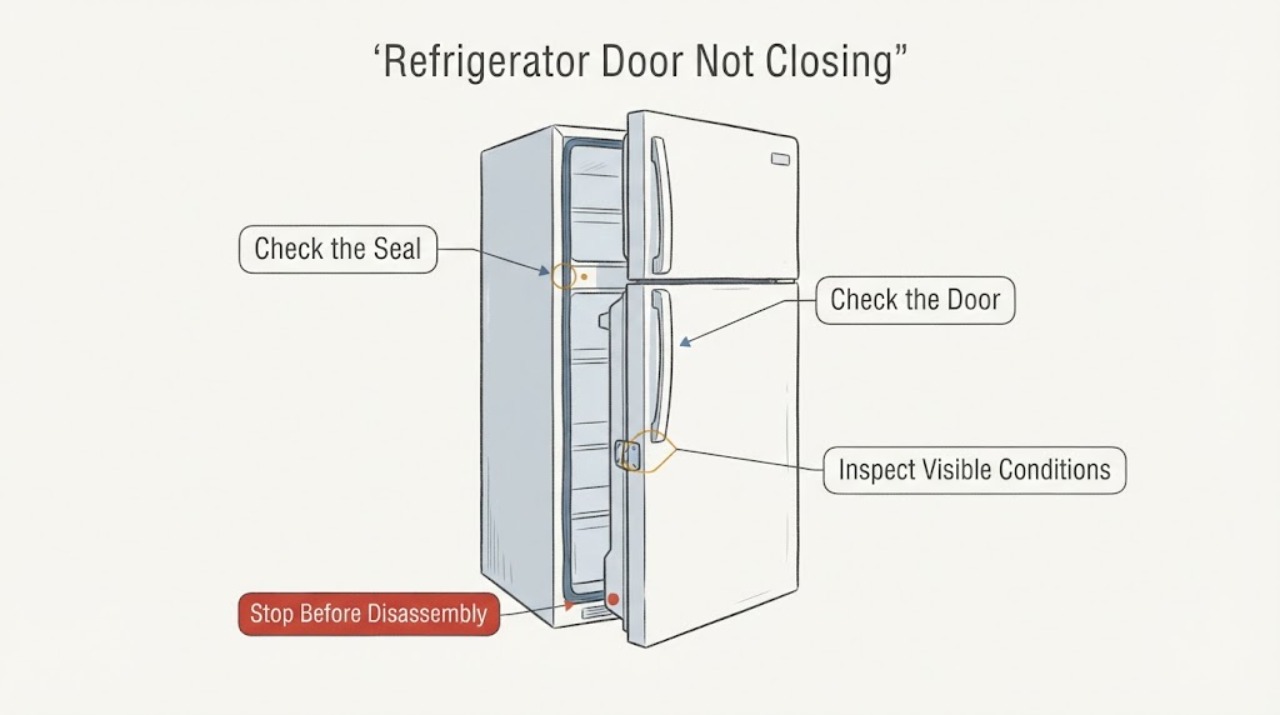
If a Tappan refrigerator door will not close, first identify the exact model and refrigerator style, then remove any shelf, bin, package, or ice that is holding the door open. Inspect the visible gasket for dirt, a gap, warping, or displacement and wipe it with a soft cloth and warm soapy water. Check that the cabinet is stable and that the door is not visibly sagging or rubbing; door alignment steps vary by side-by-side, French-door, and top-freezer designs, so use the exact model guide before touching an adjustment screw or hinge. Close the door once and check that it stays shut and seals evenly. If the gasket or hinge is damaged, the door remains misaligned after accessible checks, the cabinet rocks, or the refrigerator cannot maintain temperature, stop forcing the door and arrange qualified appliance service with the model and serial information.
Work through in order
Diagnostic checks
Use only checks that match the exact appliance or system and its official guide.
-
Check 1
Record the complete Tappan model and serial information and identify the door style from the front: top-freezer, side-by-side, French door, or another configuration. Look at the upper and lower corners of the door and note whether it hits the cabinet, another door, a drawer, or the floor before the gasket contacts.
Expected result: The model and door style are known, or the door style and exact model remain uncertain; the door rubs at one corner, or it is stopped by something inside.
Next step: Use the exact model guide for the configuration before attempting any alignment. If the door style or model cannot be identified, continue only with the accessible obstruction and gasket checks.
Why this matters
Why: Tappan sells more than one refrigerator configuration, and official refrigerator alignment procedures differ by style. A one-corner rub or a door that stops before the gasket reaches the cabinet makes alignment or an obstruction more likely than a simple dirty seal, but it does not identify a replacement hinge or adjustment part.
-
Check 2
Open the door only as far as needed and inspect the shelves, door bins, drawers, packages, and tall containers around the closing edge. Remove or reposition only an accessible item that clearly projects into the door path, then close the door without pushing harder than normal.
Expected result: A shelf, bin, food package, drawer, or ice buildup was blocking the door, or the opening is clear but the door still stops or springs back.
Next step: Leave the door closed after a successful repositioning and watch for a repeat. If it still will not close, do not force the handle or remove hardware; continue with the gasket and alignment observations.
Why this matters
Why: The official refrigerator door guidance identifies items blocking the door as a direct cause of incomplete closure. If the opening is clear and the symptom remains, an obstruction alone is less likely; the gasket, alignment, hinge, cabinet stability, or door assembly needs consideration.
-
Check 3
Inspect the full visible gasket or rubber seal for food residue, dirt, a fold, tear, gap, or a section pulled out of its channel. Wipe the gasket with a soft cloth and warm soapy water, wring excess water from the cloth near controls, and let the seal sit evenly before closing the door.
Expected result: The gasket was dirty or folded and now lies evenly, a tear or permanent deformation is visible, or the gasket appears clean and continuous but the door still will not seal.
Next step: Close the door normally once after cleaning and check the perimeter for an even contact. Arrange service for a damaged or displaced gasket, and do not glue, cut, heat, or stretch it into shape.
Why this matters
Why: The official door guidance says a dirty gasket can prevent proper closure, while the not-cooling guidance says a non-sealing door can cause unstable temperature. Cleaning can address surface contamination; a torn, warped, displaced, or still-gapped seal needs model-specific service rather than an improvised replacement.
-
Check 4
With the door closed normally, check whether it sits level with adjacent doors or cabinet edges, rubs at one corner, or swings open because the refrigerator or floor is visibly unstable. Do not move a built-in refrigerator or remove toe grilles, hinge covers, set screws, or hinge hardware just to test alignment.
Expected result: The door is visibly low or high, the cabinet rocks, the door rubs only at one point, or the door and cabinet appear aligned but the gasket still leaves a gap.
Next step: Use the exact Tappan model installation or use-and-care guide for any permitted leveling or alignment step. If hardware is loose, damaged, inaccessible, or the cabinet is unstable, stop and arrange qualified appliance or installation service.
Why this matters
Why: A shifted door or unstable installation can keep the seal from meeting evenly. The official alignment guide applies adjustment instructions only to listed configurations and requires model-specific hardware steps; an apparently aligned door with a persistent gap leaves a gasket or door-frame fault possible.
-
Check 5
After one safe correction, close the door and make a light seal check around the perimeter. If the exact model's support guide permits it, close the door on a small paper strip at several points and feel for some resistance while pulling; do not treat this as a substitute for the model manual or a service diagnosis.
Expected result: The paper has some resistance around the perimeter, slips out easily at one or more locations, or the door will not remain closed long enough to perform the check.
Next step: Record the exact locations with weak resistance and arrange service if the result is uneven or the door will not stay closed. Keep the refrigerator door closed as much as possible until the seal is repaired.
Why this matters
Why: The official refrigerator guidance uses paper resistance as an indication of seal strength. Consistent resistance makes a gross gasket gap less likely; easy release or an unstable door supports a sealing or alignment problem but does not identify whether the gasket, hinge, frame, or cabinet is at fault.
-
Check 6
Check the consequence of the open door without repeatedly testing it: note frost or condensation near the opening, a door-ajar alarm, food warming, or an unstable refrigerator temperature. If the unit was installed recently, record the installation date and whether the door was level from the start.
Expected result: The door has been open long enough to affect temperature, frost or condensation is present, an alarm is active, the issue began after installation, or the refrigerator remains at normal temperature despite the closing complaint.
Next step: Move perishable food if the compartment is no longer safely cold, keep the door closed, and arrange service for a persistent closure or temperature problem. Give the technician the door style, weak-seal locations, frost or alarm pattern, and installation history.
Why this matters
Why: A door that does not seal can let warm air enter and make temperature unstable; an installation-related alignment issue may need the installer or service provider. Normal temperature does not make a visibly loose or damaged door safe to ignore because the seal can worsen.
Use your observations
Decision map
Find the observation that best matches what you see, then follow the next safe action.
-
PATH 01Next step
What you see
A shelf, bin, package, drawer, or visible ice is directly blocking the closing edge, and the door closes normally after that accessible obstruction is moved.
Do this next
Leave the door closed and verify that the gasket contacts evenly. Arrange service if the door again stops, springs back, or leaves a gap with the interior clear.
Why this path and its safety boundary
Why it matters: The immediate cause is an obstruction rather than confirmed hinge or gasket failure, although a repeat obstruction or new gap needs another check.
-
PATH 02Next step
What you see
The gasket is dirty or folded, and after gentle cleaning it lies flat and the door seals evenly around the perimeter.
Do this next
Monitor the next normal door closure without slamming it. If any section remains loose, the gasket pulls out again, or temperature becomes unstable, request service.
Why this path and its safety boundary
Why it matters: Surface contamination or a temporary fold was a plausible cause, and the seal observation improved after the owner-level correction.
-
PATH 03Next step
What you see
The door is visibly sagging, rubs at one corner, the cabinet rocks, or a side-by-side or French-door alignment is needed.
Do this next
Use the exact Tappan guide or arrange qualified appliance or installation service. Do not remove set screws, hinge covers, or hinges based on a procedure for a different refrigerator style.
Why this path and its safety boundary
Why it matters: Alignment or installation is more likely than a simple dirty gasket, but the adjustment method depends on the refrigerator configuration and exact model.
-
PATH 04Next step
What you see
The opening is clear, the gasket is clean but torn, warped, displaced, or easy to pull away from the cabinet at one or more points, and the door does not stay sealed.
Do this next
Keep the door closed as much as possible and arrange service with the exact model and weak-seal locations. Do not glue, cut, heat, stretch, or order a gasket without model confirmation.
Why this path and its safety boundary
Why it matters: The evidence supports a sealing-path problem, but it does not establish whether the gasket, door frame, hinge, or cabinet needs replacement or adjustment.
-
PATH 05Next step
What you see
The door remains unable to close after accessible obstruction and gasket checks, or the refrigerator has frost, condensation, a door-ajar alarm, or worsening food temperature.
Do this next
Stop forcing or repeatedly opening the door, protect perishable food, and arrange qualified appliance service. Seek prompt help for broken glass, exposed hardware, water near electrical parts, smoke, or a burning odor.
Why this path and its safety boundary
Why it matters: The remaining fault may involve door alignment, hinge or frame damage, installation, or the refrigerator's cooling consequence; continued use can worsen the seal and temperature problem.
Helpful context
Understand the symptom
A door that will not close is usually decided by what prevents the final seal: a container or bin in the way, a dirty or distorted gasket, a door that has shifted, or an installation or cabinet-level problem. The exact repair cannot be chosen from the symptom alone. Tappan's current product page includes a top-freezer refrigerator, but the assigned topic has no model, so use the visible checks first and keep model-specific hinge work for the correct guide.
Do not slam the door, pry the gasket, or remove a hinge to make it close. If the door cannot stay shut, move perishable food to a safe cold location and limit repeated opening while arranging service; a poor seal can also create unstable refrigerator temperature.
When checks do not resolve it
Need a professional?
Qualified appliance service should inspect a Tappan refrigerator when the door remains misaligned, the gasket is torn or displaced, hinge or frame damage is visible, the cabinet is unstable, or the door cannot seal after the accessible checks. Provide the exact model and serial information, refrigerator configuration, obstruction and gasket observations, and any temperature or frost symptom.
Common questions
FAQ
Why will my Tappan refrigerator door not stay closed?
Check for a shelf, bin, package, drawer, or ice obstruction, then clean and inspect the visible gasket. If the door rubs, sags, or has an uneven gap, use the exact model guide for alignment or arrange service rather than forcing the hinge.
Can a dirty gasket keep a Tappan refrigerator door from closing?
Yes. Official refrigerator guidance says a dirty gasket can prevent proper closure. Wipe it with a soft cloth and warm soapy water, then check for a continuing gap, tear, fold, or displacement.
Should I adjust the hinges myself?
Only use an adjustment step that the exact model guide assigns to your refrigerator configuration. Published alignment instructions differ for side-by-side and French-door designs, and an unknown model should be serviced rather than adjusted from a different appliance procedure.
Read the exact guide
Official sources
- Refrigerators / Freezer - Frost Build UpElectrolux · Official refrigerator frost guidance related to door gasket, door closure, ice chute, and airflow
- Refrigerators - Not CoolingElectrolux · Official refrigerator guidance for warm or not-cooling conditions caused by door closure and sealing
- Where can I find my model and serial number?Electrolux · Official refrigerator model-number location guidance for top-freezer, French-door, and side-by-side configurations
- Refrigerators - How to align doorsElectrolux · Official refrigerator door-alignment guidance for side-by-side, French-door, and four-door configurations
- Refrigerator Clean and Care GuideElectrolux · Official refrigerator gasket cleaning and care guidance
- Products – Tappan AppliancesTappan Appliances · Tappan current appliance product identity, including its 17.6 Cu. Ft. Top Freezer Refrigerator
- Refrigerator Door IssuesElectrolux · Official refrigerator guidance for doors that do not close completely
Community feedback
Share a repair observation
Share a plain-text repair observation. Accepted observations are published automatically; this page may take a moment to update.