
On this page
Start here
Quick answer
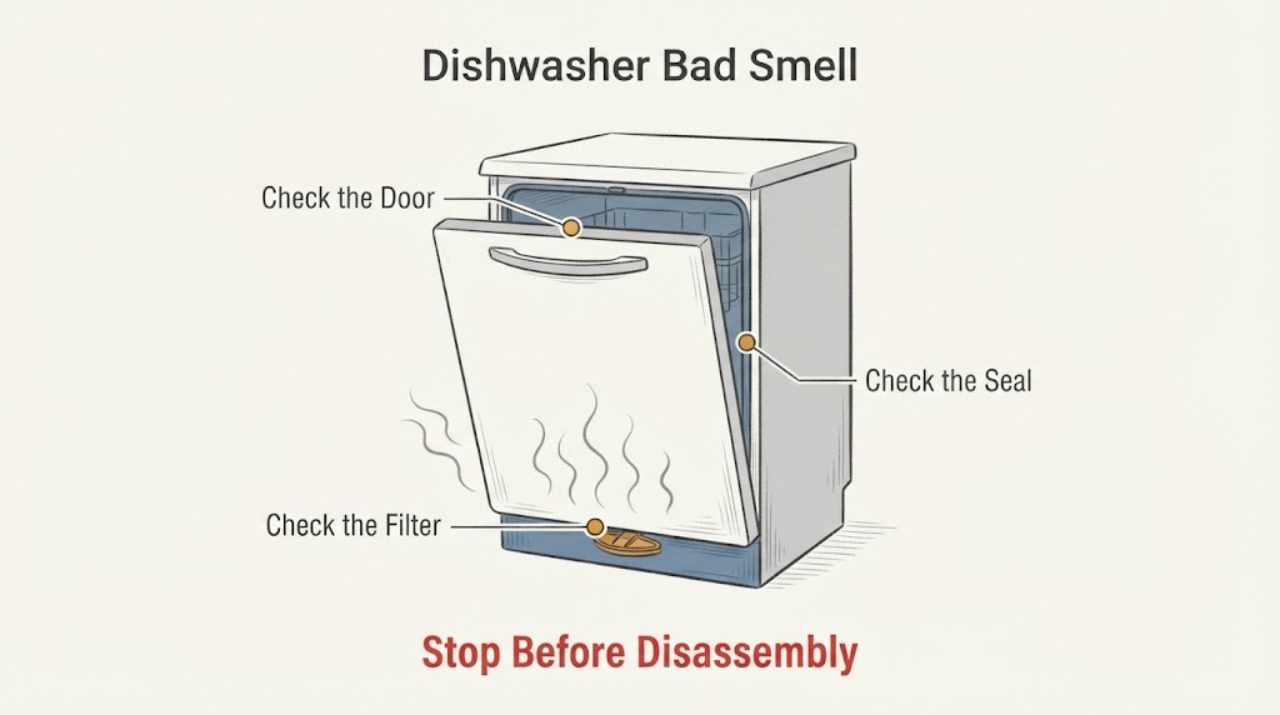
A bad smell from a Thermador dishwasher usually needs the food, filter, seal, and residual-water paths separated. With the dishwasher empty and power off as the manual requires, clean the filter and accessible bottom area, wipe food particles from the door seal, verify the last cycle fully drained, and use only dishwasher cleaner or the model-approved descaling procedure. If odor returns with standing water, a blocked drain hose, sewage odor from the connection, smoke, burning smell, or a leak, stop the appliance and arrange authorized service.
Work through in order
Diagnostic checks
Use only checks that match the exact appliance or system and its official guide.
-
Check 1
Note when the smell appears and inspect the empty tub from the doorway: after a completed cycle, only when the door is closed, with visible food, or together with standing water or a leak. Confirm the selected cycle ended rather than being interrupted.
Expected result: Odor is strongest at the filter or seal, standing water remains, or the odor is chemical, sewage-like, burning, or accompanied by smoke.
Next step: Continue only for a normal food or residual-water odor. Stop for smoke, burning, electrical odor, or an active leak and arrange service.
Why this matters
Why: A localized food smell favors cleaning; standing water makes incomplete drainage more likely. Chemical or burning odors are not a routine food-residue symptom.
-
Check 2
Turn the dishwasher off, allow hot surfaces to cool, and remove and rinse the filter exactly as the owner manual shows. Brush away loose food from the accessible bottom area; do not reach into a pump opening or remove a cover unless the manual specifically documents it.
Expected result: Food, grease, or a coated filter is found, or the filter and bottom area are clean.
Next step: Rinse and reinstall the filter securely, then continue with the seal and drain checks. Do not run the dishwasher with the filter omitted.
Why this matters
Why: Residue at the filter or tub bottom can create odor and interfere with drainage. A clean filter shifts attention to the door seal, residual water, detergent, or drain hose.
-
Check 3
Wipe food particles from the door seal and its mating surface with a damp cloth, then check the lower door edge and condensation-vent area for residue or blockage. Inspect the detergent and rinse-aid dispensers for spilled product without mixing cleaners.
Expected result: Residue is removed and the smell improves, the vent is blocked, or the seal and dispensers are clean but odor remains.
Next step: Keep the vent clear and dry the seal. Continue to the drain check if the smell returns after the next completed cycle.
Why this matters
Why: Residue at the seal or a blocked vent can retain odor and moisture. A clean front edge makes residual water or the drain path more likely.
-
Check 4
Verify that the tub is empty of standing water after a cycle. If the manual documents a CANCEL/DRAIN program, run it only with the door latched and observe whether water leaves through the installed drain path. Check the visible air gap or disposal connection for blockage without disconnecting plumbing under the sink.
Expected result: Water drains fully, water remains, the air gap or disposal connection is blocked, or the drain hose is inaccessible or obstructed.
Next step: Clear only an obvious accessible sink-side blockage and retest once. Arrange authorized service for a blocked/inaccessible hose, pump work, or recurring standing water.
Why this matters
Why: Complete drainage reduces the likelihood that stagnant water is causing the smell. Remaining water points to a filter, pump, hose, air-gap, or installation problem; Thermador routes drain-hose obstruction to authorized service.
-
Check 5
For a clean, empty machine with no leak or electrical hazard, run only the Thermador-recommended dishwasher-cleaner or model-approved descaling cycle. Do not substitute dish soap, bleach, mixed chemicals, or a cleaner that the manual does not approve; observe the next completed drain.
Expected result: The odor clears and stays absent, returns with standing water, or persists despite clean surfaces and complete drainage.
Next step: Use authorized service for recurring odor, drain faults, leaks, or an odor from wiring or the pump area.
Why this matters
Why: Improvement after approved cleaning supports grease, food, or scale residue. Recurrence with drainage or a persistent odor after the documented care cycle needs diagnosis rather than more chemicals.
Use your observations
Decision map
Find the observation that best matches what you see, then follow the next safe action.
-
PATH 01Next step
What you see
The smell is localized to food residue at the filter or door seal and improves after the documented cleaning, with no water left in the tub.
Do this next
Keep the filter and seal clean and run an occasional pre-rinse or approved cleaner cycle as the manual allows.
Why this path and its safety boundary
Why it matters: Accessible residue is more likely than a drain or electrical fault.
-
PATH 02Next step
What you see
Standing water remains after a completed cycle or returns after a CANCEL/DRAIN attempt.
Do this next
Check only the accessible sink-side path; arrange authorized service for the drain hose, pump, or recurring water.
Why this path and its safety boundary
Why it matters: An incomplete drain path, pump, hose, air gap, or disposal connection is more likely than surface odor alone.
-
PATH 03Next step
What you see
The smell is chemical, sewage-like, burning, or accompanied by smoke, sparking, unusual heat, or a leak.
Do this next
Stop the cycle, disconnect power or close the water supply only when safe, ventilate the area, and contact qualified or authorized service.
Why this path and its safety boundary
Why it matters: The symptom has a safety or plumbing concern outside routine dishwasher cleaning.
-
PATH 04Next step
What you see
The filter, seal, vent, and drain are clean and complete, but the odor returns after one approved cleaner or descaling cycle.
Do this next
Stop repeated chemical cycles and arrange model-specific Thermador service with the odor timing and completed checks.
Why this path and its safety boundary
Why it matters: Residue may be hidden in a hose, pump, heater, or installation path, or a component may be overheating; the symptom does not identify the failed part.
Helpful context
Understand the symptom
The useful distinction is where the odor remains after the dishwasher is empty and dry. Food residue at the filter or door seal points to accessible cleaning; standing water after a completed cycle points to drainage; a smell that appears only when hot may involve detergent, rinse aid, or a service issue. Do not mask a persistent odor with fragrance products.
Thermador controls, filters, drain layouts, and softener features vary by model. Use the complete model manual for filter removal, drain activation, cleaner compatibility, and any error indication before reaching below the filter or disconnecting a hose.
Only after diagnosis
Potential parts
- dishwasher filter
Consider a filter only if the exact manual or service confirms it is damaged or cannot be cleaned and seated correctly.
Match the complete Thermador model; odor alone does not establish filter fit or failure. - drain hose or pump component
Consider this class only after authorized service confirms a blocked, damaged, or failed drain path following the filter and accessible connection checks.
Drain routing and pump access vary by model; do not order or disconnect components from odor alone.
When checks do not resolve it
Need a professional?
Contact Thermador authorized service when standing water or odor returns after the filter, seal, accessible drain, and one approved cleaning cycle; when a drain hose or pump needs access; or when smoke, burning odor, leaks, or unusual heat are present. Provide the model, cycle timing, odor description, water level, and checks completed.
Common questions
FAQ
Is a small amount of water around the Thermador dishwasher filter normal?
Thermador says a small amount of water around the filter can be normal. Water that pools in the tub, remains after a completed cycle, or returns with a bad smell needs a drain-path check.
Can I use dish soap to remove a Thermador dishwasher smell?
No. Thermador says to use dishwasher detergent, and its care guidance provides dishwasher-cleaner and model-specific descaling procedures. Dish soap can create suds and leakage.
Why does the smell return after I clean the filter?
Check the door seal, residual water, air gap or disposal connection, and drain hose. Thermador lists food at the seal, incomplete drainage, and an obstructed drain hose as separate odor paths.
Should I keep running cleaner cycles if the smell persists?
No. Use one model-approved cleaning or descaling cycle. A recurring odor, standing water, leak, or burning smell needs service rather than repeated chemical treatment.
Read the exact guide
Official sources
- Cleaning & CareThermador · Opened official Thermador care page; cleaner and softener applicability varies by model manual.
- Appliance FeaturesThermador · Opened official Thermador dishwasher support page; controls and filter access remain model-specific.
- TroubleshootingThermador · Opened official Thermador troubleshooting page; use the owner manual for exact drain and pump access.
Community feedback
Share a repair observation
Share a plain-text repair observation. Accepted observations are published automatically; this page may take a moment to update.