
On this page
Start here
Quick answer
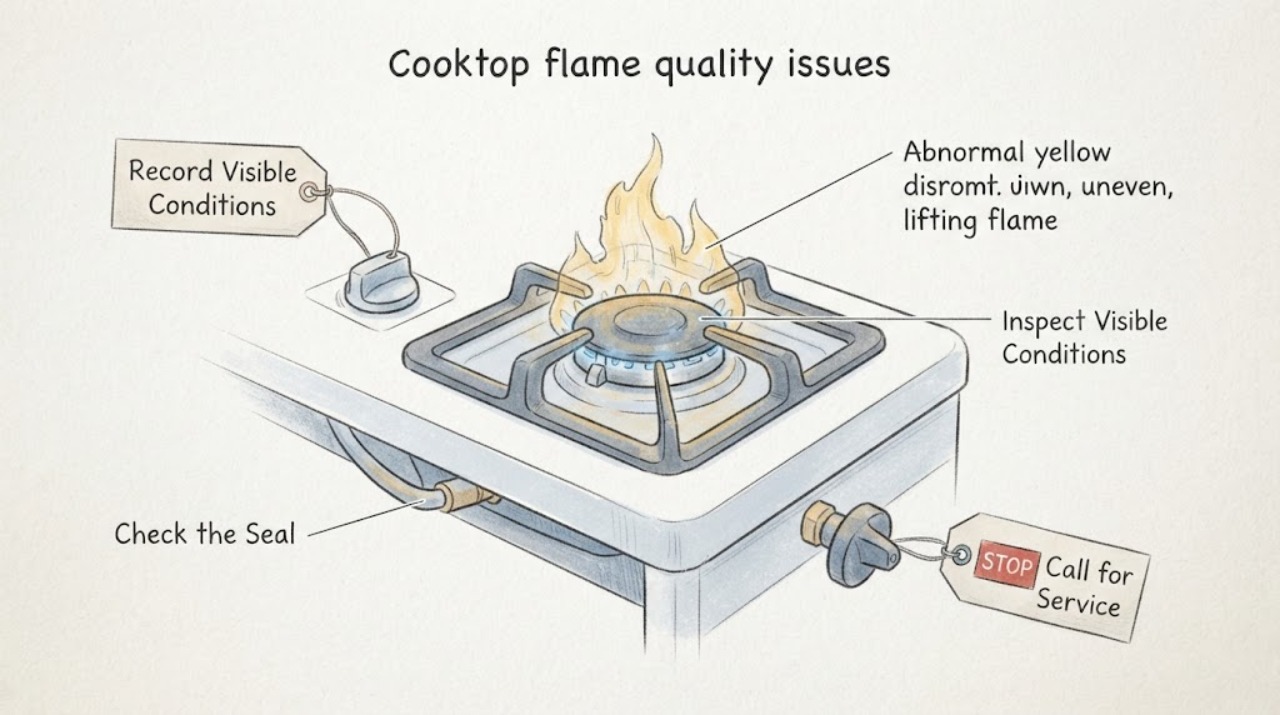
Flame-quality troubleshooting applies to a Viking gas cooktop, not an electric or induction model. A healthy flame should be stable and predominantly blue; a yellow, large, distorted, noisy, or lifting flame is not a reason to adjust the gas path yourself. With the controls OFF and the burner completely cool, identify the exact model and gas type, then inspect from above for a cap that is not seated or visible ports blocked by residue. Clean and dry only the accessible cap, burner head, and ports as the matching Viking manual permits, and align the cap and head before one test. If every burner changed after installation, conversion, or service, or if sparking continues after ignition, suspect a gas-type, air-shutter, grounding, polarity, or installation issue and call qualified service. If you smell gas, do not try to light the appliance: leave the area and contact the gas supplier or emergency service from a safe location.
Work through in order
Diagnostic checks
Use only checks that match the exact appliance or system and its official guide.
-
Check 1
Confirm that the appliance is a Viking gas cooktop and record the complete model, serial or rating-plate details, market, and whether the label specifies natural gas or LP/propane. With all controls OFF, note whether the flame issue affects one burner or every burner and whether it is yellow, lifting, noisy, large, or uneven.
Expected result: The unit is a gas cooktop with one abnormal burner, several abnormal burners, or a different electric/induction platform; the fuel type is clear or uncertain.
Next step: Continue only for a confirmed Viking gas cooktop. If the fuel type, model, or platform is uncertain, use the exact Viking manual or qualified service before making a code- or adjustment-specific decision.
Stop if: Do not remove the cooktop, alter an orifice or air shutter, or continue testing if there is gas odor, smoke, soot, visible damage, or an uncontrolled flame.
Why this matters
Why: A gas flame diagnosis depends on the burner platform and fuel type. A single-burner pattern points toward local cap/head/port conditions, while an all-burner pattern raises a shared supply, conversion, or installation question. Electric and induction units do not use this flame path.
-
Check 2
After the burner and grate have cooled completely, look from above to see whether the affected burner cap and burner head are level and seated in their locating tabs, and whether visible ports have obvious food or spill residue. Do not remove sealed gas fittings or touch an igniter while hot.
Expected result: The cap/head is misaligned, ports are visibly obstructed, the burner is wet after cleaning, or the parts appear correctly positioned and dry.
Next step: Correct only an obvious cap/head position and follow the matching manual's cool-surface cleaning method. Dry all parts thoroughly before one normal test; if the flame remains abnormal, stop and arrange service.
Stop if: Do not enlarge or distort ports, use metal knives or abrasive tools on the burner base, spray liquid into controls, or clean while hot.
Why this matters
Why: The Viking manual says cap cleanliness helps prevent improper ignition and uneven flames, requires careful tab alignment, and identifies clogged ports as a cause of a large, distorted, or yellow flame. A dry, correctly assembled burner that remains abnormal needs more than a surface adjustment.
-
Check 3
With no gas odor and the burner parts dry, make one normal ignition and observe the flame briefly at the setting allowed by the manual. Keep a suitable pan on the burner, keep the flame within the pan's bottom edge, and note whether it is stable and blue or remains yellow, noisy, lifting, or distorted.
Expected result: The flame becomes stable and blue after the external correction, or it remains abnormal or goes out.
Next step: Use the cooktop only when the flame is stable and the exact manual permits it. For a persistent abnormal flame, turn the burner OFF and arrange qualified gas-appliance service.
Stop if: Do not leave the burner unattended, allow flames to extend beyond the pan, relight repeatedly, or continue if the flame is unstable or produces heavy soot.
Why this matters
Why: A corrected one-burner flame is consistent with a cap, head, moisture, or visible-port condition. A flame that remains abnormal or lifts away from the ports is not localized by appearance alone and may involve gas type, air supply, or adjustment.
-
Check 4
Compare the same flame pattern on another burner only after the first control is OFF and there is no gas odor. Record whether all burners changed together, whether the issue began after installation, gas conversion, cleaning, or a power event, and whether the igniters keep clicking after a flame is established.
Expected result: Only one burner is abnormal, every burner is abnormal, the issue began after installation or conversion, or clicking continues after ignition.
Next step: For an all-burner or post-installation issue, leave adjustments to a qualified installer or gas technician. For continuous sparking, turn controls OFF and arrange service rather than testing the ignition wiring.
Stop if: Do not adjust air shutters, regulator settings, gas valves, wiring, grounding, or polarity yourself.
Why this matters
Why: One-burner failure favors a local burner condition; an all-burner change or post-installation change raises gas type, regulator/air adjustment, supply, grounding, or polarity concerns. The VGC5 manual treats continuous sparking after ignition as a separate electrical/igniter condition.
-
Check 5
If the flame remains abnormal, prepare a service record with the model, fuel type, affected burner(s), photos taken only from a safe distance, cap/port cleaning result, onset after installation or spill, whether all burners match, and any odor, soot, clicking, or flame-out behavior.
Expected result: The flame-quality problem recurs after the one external check, a fuel-type or installation mismatch is possible, or any gas-safety symptom is present.
Next step: Book an authorized Viking or qualified gas-appliance service visit. If gas odor persists, shut off the main gas supply if safe, leave the area, and contact the gas supplier or emergency service from a safe location.
Stop if: Do not use the cooktop with persistent gas odor, uncontrolled flame, visible soot, smoke, or repeated ignition failures, and do not dismantle the appliance.
Why this matters
Why: The Viking manual's troubleshooting table can narrow the service handoff to gas supply, port blockage, gas type, air shutter, igniter moisture/dirt, grounding, or polarity, but it does not make those internal or gas adjustments safe for an unqualified user.
Use your observations
Decision map
Find the observation that best matches what you see, then follow the next safe action.
-
PATH 01Next step
What you see
Only one burner is abnormal, its cap or head was visibly misaligned or wet, and the flame becomes stable and blue after the cooktop cools and the accessible parts are correctly cleaned and dried.
Do this next
Keep the burner parts correctly aligned and dry. Arrange service if the same burner becomes yellow, distorted, noisy, or unstable again.
Why this path and its safety boundary
Why it matters: This result is consistent with a local cap, head, moisture, or port condition rather than a proven whole-cooktop gas conversion fault.
-
PATH 02Next step
What you see
Every burner shows the same yellow, large, distorted, noisy, or lifting pattern, especially after installation, relocation, or natural-gas/LP conversion.
Do this next
Stop using the cooktop and have the installation, fuel type, supply, and model-specific adjustment checked by a qualified gas professional. Do not adjust the gas path yourself.
Why this path and its safety boundary
Why it matters: A shared gas type, supply, air-shutter, regulator, or installation issue is more likely than one clogged burner port. The selected VGC5 manual does not authorize transferring its adjustment details to another Viking model.
-
PATH 03Next step
What you see
The burners ignite but sparking continues after the flame is established, or the igniters are wet or dirty after a spill or cleaning.
Do this next
Turn the controls OFF, allow the appliance to cool and dry, and arrange qualified appliance or electrical service if sparking continues. Do not open the ignition circuit.
Why this path and its safety boundary
Why it matters: The VGC5 troubleshooting table links continuous sparking to grounding, polarity, wet or dirty igniters, or related ignition conditions; it is not simply a flame-color adjustment.
-
PATH 04Next step
What you see
There is an unburned-gas odor, the flame is uncontrolled or repeatedly goes out, or smoke, soot, arcing, or visible damage is present.
Do this next
Do not try to light the appliance or operate electrical switches. If safe, shut off the main gas supply, leave the area, and contact the gas supplier or emergency service from a safe location; obtain qualified service before use.
Why this path and its safety boundary
Why it matters: This is an immediate gas or fire-safety boundary, not a user cleaning or flame-adjustment branch.
-
PATH 05Next step
What you see
The unit is electric or induction, or the model and fuel type cannot be matched to the opened Viking gas guidance.
Do this next
Stop this gas-specific path and use the exact model manual or qualified service route for the electric or induction symptom.
Why this path and its safety boundary
Why it matters: A gas flame-quality interpretation cannot be transferred to another platform or an unidentified Viking control generation.
Helpful context
Understand the symptom
First classify the flame pattern
The opened Viking VGC5 professional built-in gas-cooktop manual describes surface burners with automatic electric ignition and specifies a stable, blue flame as the normal target. A flame that is yellow, large, distorted, or unstable is a gas-combustion or burner-condition issue, not an electric-element or induction-cookware problem. Because Viking has multiple cooktop families and gas configurations, use the exact manual for the model and fuel type shown on the rating plate.
Why one burner versus every burner matters
If one burner is abnormal after a spill or cleaning, a cap, burner-head alignment, or visible port obstruction is more plausible. If every burner is affected, the selected Viking manual and installation record become more important because the opened VGC5 troubleshooting table includes gas-supply, gas-type, air-shutter, grounding, and polarity causes. Those adjustments and electrical checks are professional work; do not copy a dimension or adjustment from another Viking model.
When checks do not resolve it
Need a professional?
Have this ready
- Provide the exact Viking model and serial details, natural-gas or LP/propane identification, affected burners, flame pattern, onset, recent cleaning or spill, cap/port result, whether all burners match, and any clicking or gas-odor event.
Common questions
FAQ
What color should a Viking gas-cooktop flame be?
The opened Viking VGC5 manual describes a properly adjusted burner as blue and stable. A persistent yellow, large, distorted, noisy, or lifting flame needs qualified diagnosis rather than an adjustment copied from another model.
Why are all Viking cooktop flames yellow or uneven?
The VGC5 troubleshooting table lists clogged ports, the wrong gas type, and air-shutter adjustment for a large, distorted, or yellow flame. Because those checks can involve gas installation and adjustment, turn the controls off and use a qualified gas professional.
What should I do if a Viking burner keeps clicking after it lights?
Turn the control off and stop testing if clicking continues. Viking lists grounding, polarity, and wet or dirty igniters among possible causes; persistent sparking requires qualified appliance or electrical service.
Read the exact guide
Official sources
- Use & Care Professional Built-in Gas Cooktops VGC5Viking Range, LLC · Official Viking gas-cooktop manual opened for VGC5-specific flame, ignition, cleaning, troubleshooting, and gas-safety evidence. Its adjustment details and thresholds must not be generalized to an unidentified Viking model.
Community feedback
Share a repair observation
Share a plain-text repair observation. Accepted observations are published automatically; this page may take a moment to update.