
On this page
Start here
Quick answer
A Viking dishwasher that keeps running may be waiting for a drain, fill, or cycle condition rather than having a simple power-button problem. Check whether the Start or Power indicator is flashing, whether the tub is draining, whether the door is securely closed, and whether a fault pattern is displayed. Use the exact model manual to cancel or reset once; if the pump continues, water remains, the unit leaks, or a fault returns, leave it off and arrange qualified service.
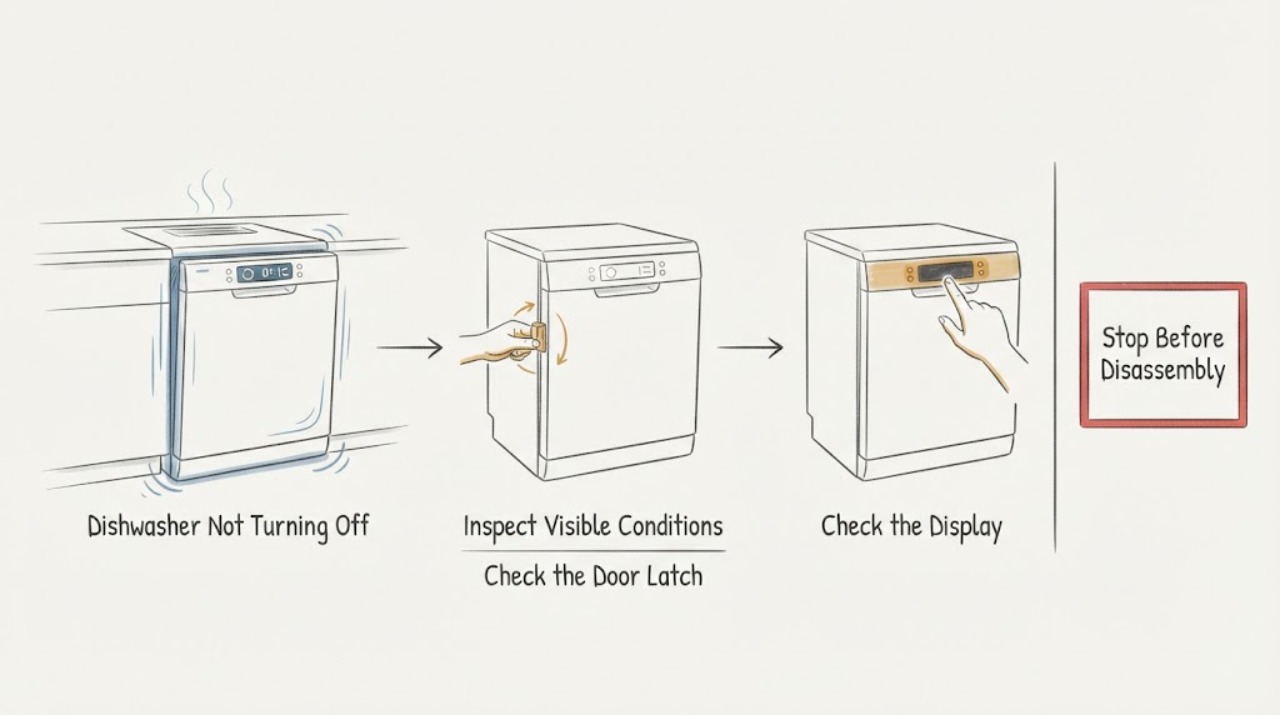
Work through in order
Diagnostic checks
Use only checks that match the exact appliance or system and its official guide.
-
Check 1
Observe the sound and controls for one minute without opening panels: note whether the unit is filling, washing, draining, drying, or showing a flashing Start/Power light, and record any displayed or light-coded fault.
Expected result: The pump runs continuously, water enters continuously, a cycle indicator flashes, or the dishwasher is quiet while only the display remains on.
Next step: If water is entering or the unit leaks, turn off the nearby water supply and power when safe and arrange service. Otherwise continue with the visible door and drain checks.
Why this matters
Why: The symptom points toward a drain or fill condition, an interrupted cycle/fault state, or a control/display issue; the sound alone does not identify a failed part.
-
Check 2
Close the door firmly and verify that no rack, dish, or gasket is preventing the latch from engaging; check only the visible door edge and controls.
Expected result: The door was ajar or obstructed, or it latches correctly but the dishwasher continues the same operation.
Next step: Remove only the visible obstruction and observe one normal stop/cancel attempt. If the door latches and the unit still will not stop, do not disassemble it.
Why this matters
Why: A door that is not securely closed can interrupt or repeat a programme, while a correctly latched door keeps drain, fill, circulation, or control faults possible.
-
Check 3
Use the exact Viking manual's cancel or reset instruction once, then watch whether the running sound ends and whether the Start/Power indicators return to their idle state.
Expected result: The reset ends the cycle, the pump keeps running, or the same fault lights/code return immediately.
Next step: For a clean reset, run no further test until the manual permits it. For persistent running or a returning fault, record the model and fault pattern and request service.
Why this matters
Why: A successful reset supports an interrupted control state; repeated running or a returning fault indicates a condition the reset did not clear.
-
Check 4
After power is safely off, inspect the visible tub for standing water and the accessible filter and drain-hose area for obvious food soil or a kink; do not remove the drain pump cover or touch wiring.
Expected result: Water remains, the filter is visibly blocked, the hose is kinked, or the tub is empty and unobstructed.
Next step: Clean only the user-removable filter as the manual directs and correct a visible hose kink. If water remains, the pump will not stop, or the cause is not visible, leave the dishwasher off for service.
Why this matters
Why: Standing water or a visible restriction makes a drain path more likely, while an empty tub leaves control, pump, sensor, or valve causes unresolved.
Use your observations
Decision map
Find the observation that best matches what you see, then follow the next safe action.
-
PATH 01Next step
What you see
The dishwasher stops after the model-specific cancel/reset procedure and has no leak, standing water, or returning fault indication.
Do this next
Follow the manual's restart guidance and monitor the next cycle; stop use if the symptom returns.
Why this path and its safety boundary
Why it matters: An interrupted cycle or transient control state is more likely than a continuously failed component.
-
PATH 02Next step
What you see
The drain pump runs continuously with standing water, a drain fault, or a kinked/blocked visible path.
Do this next
Correct only a visible filter or hose issue. Leave the unit off and arrange service if water remains or pumping continues.
Why this path and its safety boundary
Why it matters: A drain restriction or drain-system fault is more likely; the reset did not resolve the condition.
-
PATH 03Next step
What you see
Water continues entering, the dishwasher leaks, a breaker trips, or a fault pattern returns immediately.
Do this next
Shut off water and power when safe, keep the dishwasher out of service, and contact qualified service with the model and recorded pattern.
Why this path and its safety boundary
Why it matters: A fill, safety, electrical, or control fault is possible and cannot be safely isolated from the controls alone.
Helpful context
Understand the symptom
First identify what is still running: a wash motor, drain pump, inlet fill, fan, display, or only an indicator. A short drain or dry fan sound at the end of a cycle is different from continuous filling, repeated pumping, a flashing fault pattern, or water that remains in the tub.
Viking manuals describe cancelling a programme with the Start or Start/Pause control and give separate checks for door position, water supply, drain hose, filters, and fault lights. The button sequence and fault meanings vary by series, so use the manual for the model on the rating label.
Do not reach into a moving pump, remove panels, or keep restarting a dishwasher that leaks, smells hot, trips a breaker, or will not stop filling. Those symptoms need qualified appliance service.
When checks do not resolve it
Need a professional?
Stop using the dishwasher and arrange qualified service for continuous filling, a leak, smoke or burning odor, repeated breaker trips, a pump that will not stop, standing water after a safe visible check, or a fault pattern that returns after the model-specific reset.
Common questions
FAQ
Why does a Viking dishwasher keep running after the cycle seems finished?
Check whether it is draining or drying and whether a Start/Power indicator is flashing. Use the exact model manual's cancel/reset procedure once; continuous pumping, filling, standing water, or a returning fault needs service.
Can I keep pressing cancel until it stops?
Use the documented cancel/reset procedure once and observe the result. Repeated resets can hide a drain, fill, safety, or control fault, so leave it off if the condition returns.
Read the exact guide
Official sources
- Viking Use & Care ManualViking Range, LLC · Viking dishwasher fault indicators and user-level drain/fill checks
- Viking Use & Care ManualViking Range, LLC · Viking built-in dishwasher operation, cancellation, and user troubleshooting
Community feedback
Share a repair observation
Share a plain-text repair observation. Accepted observations are published automatically; this page may take a moment to update.