
On this page
Start here
Quick answer
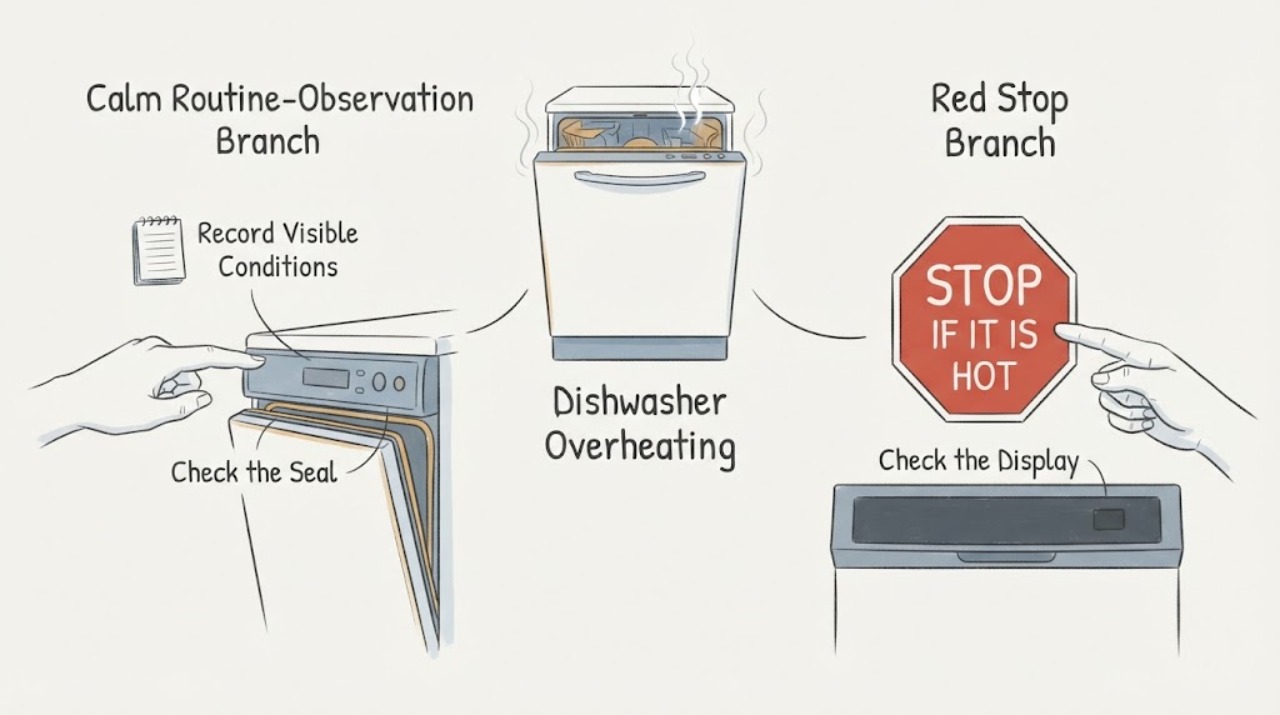
Steam, a hot tub, or warm dishes can be normal on Whirlpool high-temperature, sanitize, and heated-dry options. First record the selected options and whether the heat is only during wash/dry. Cancel high-temp options, let the dishwasher cool, and inspect the door, vent, and display without touching the element. If plastic melts, the tub remains dangerously hot after power is off, a fault code appears, or a breaker trips, stop using the dishwasher and arrange service.
Work through in order
Diagnostic checks
Use only checks that match the exact appliance or system and its official guide.
-
Check 1
Record the cycle and options, especially Hi Temp, Sani-Rinse/Sanitize, Heavy, and Heat Dry. Let the load cool before opening fully.
Expected result: Steam and heat occur only on a selected high-temperature/dry cycle, or the same heat occurs on Normal with options off.
Next step: Run one Normal cycle with high-temp and heated-dry options off only if the door, tub, and wiring appear safe.
Why this matters
Why: Option-limited heat can be expected. Heat on every cycle or after cancellation shifts attention to a control, sensor, or heater fault.
-
Check 2
Inspect the upper door vent, gasket, and rack loading with power off and the unit cool. Keep plastic away from the heater and do not block the vent.
Expected result: A vent or gasket is blocked/damaged, plastic is touching the heater, or the interior is clear.
Next step: Correct only accessible loading/vent conditions; replace damaged seal only after exact-model confirmation.
Why this matters
Why: Blocked vent or contact can concentrate heat and damage items. A clear interior with excessive heat is less likely to be a loading issue.
-
Check 3
Check the display for a flashing Sanitized light, fault code, incomplete cycle, or control response after the unit cools. Do not touch the heating element.
Expected result: A sanitize indicator reports temperature not achieved, a fault returns, or no code appears.
Next step: Stop repeated cycles when abnormal heat or codes recur and contact service.
Why this matters
Why: A failed sanitize result can reflect incoming water or heater control and is different from overheating; a recurring fault needs diagnosis.
-
Check 4
After one safe option/loading correction, run a short supervised cycle and note whether the door, tub, and nearby cabinetry become abnormally hot or smell burnt.
Expected result: Heat is normal and limited to the selected phase, or plastic damage/burning odor/abnormal heat appears.
Next step: Cancel, isolate power only when safe, and request Whirlpool service for abnormal heat.
Why this matters
Why: Phase-limited warmth supports normal operation. Damage or heat outside the documented phase indicates a safety fault.
Use your observations
Decision map
Find the observation that best matches what you see, then follow the next safe action.
-
PATH 01Next step
What you see
Steam and hot dishes occur only with Sani-Rinse/Hi Temp/Heat Dry and no damage or odor is present.
Do this next
Use the model manual and choose Normal or lower-heat options if appropriate.
Why this path and its safety boundary
Why it matters: The selected high-temperature phase is the leading explanation.
-
PATH 02Next step
What you see
Heat remains excessive on Normal with high-temp options off, or continues after the cycle should be cool.
Do this next
Stop using the dishwasher and arrange model-specific service.
Why this path and its safety boundary
Why it matters: Sensor, heater, relay, or control regulation is more likely.
-
PATH 03Next step
What you see
Plastic melts, smoke/burning odor appears, or nearby cabinetry or wiring is hot.
Do this next
Disconnect power from a dry safe location and obtain qualified service.
Why this path and its safety boundary
Why it matters: Potential thermal or electrical damage is a stop condition.
Helpful context
Understand the symptom
“Overheating” may mean expected hot water/steam, a selected sanitize or heated-dry option, or heat that continues when no heat option is selected. Record cycle, options, display, odor, and damaged items before changing settings.
Whirlpool cycle names and heating designs vary. Use the exact model manual for option behavior and do not open the tub base or electrical cover.
Only after diagnosis
Potential parts
- heating element or temperature sensor
Consider only after service confirms abnormal heating for the complete model.
Overheating symptom alone does not establish part fit. - door vent or gasket
Consider only when a documented obstruction or damaged seal is found.
Confirm model and vent/gasket design before ordering.
When checks do not resolve it
Need a professional?
Contact Whirlpool service when abnormal heat occurs with options off, a fault recurs, plastic or cabinetry is damaged, or temperature regulation requires opening the appliance. Provide model, cycle/options, display, and damage evidence.
Common questions
FAQ
Is steam from a Whirlpool dishwasher always overheating?
No. Whirlpool documents hotter water and longer time for sanitize options, and heated drying can create steam. Persistent heat on Normal or damage needs service.
Should I turn on Sanitize to test the heater?
No. First document the current options and use the exact manual. A supervised Normal cycle with high-temperature options off is a safer comparison only when there is no damage or safety symptom.
Why is the Sanitized light flashing?
A Whirlpool guide says it can indicate the sanitize temperature was not achieved; that is a heating-result issue, not proof of overheating. Recurrent results need model-specific diagnosis.
Read the exact guide
Official sources
- Using the dishwasher sanitize cycle to kill 99.999% of food soil bacteriaWhirlpool · Official Whirlpool dishwasher guidance; options and temperatures vary by model.
- Use & Care GuideWhirlpool · Official Whirlpool dishwasher guide; exact cycle names vary by model.
Community feedback
Share a repair observation
Share a plain-text repair observation. Accepted observations are published automatically; this page may take a moment to update.