
On this page
Start here
Quick answer
Treat a Whirlpool gas-oven smell as a possible gas leak until the timing and safety status are clear. If the smell is strong, persists after the appliance is off, is accompanied by hissing, delayed ignition, an abnormal flame, smoke, dizziness, or a carbon-monoxide alarm, do not try to troubleshoot: leave immediately, avoid switches and ignition sources, and contact the gas utility or emergency services from a safe location. A brief faint odor during a normal preheat can occur as gas ignites, but it should fade promptly; a recurring or unexplained odor still requires qualified service. Do not remove panels, move the range, search for a leak, or keep relighting the oven.
Before you begin
Safety first
- Keep the oven off for any unresolved odor. Do not operate electrical switches or devices inside during a suspected gas leak, do not move the range, and do not perform internal gas or electrical work.
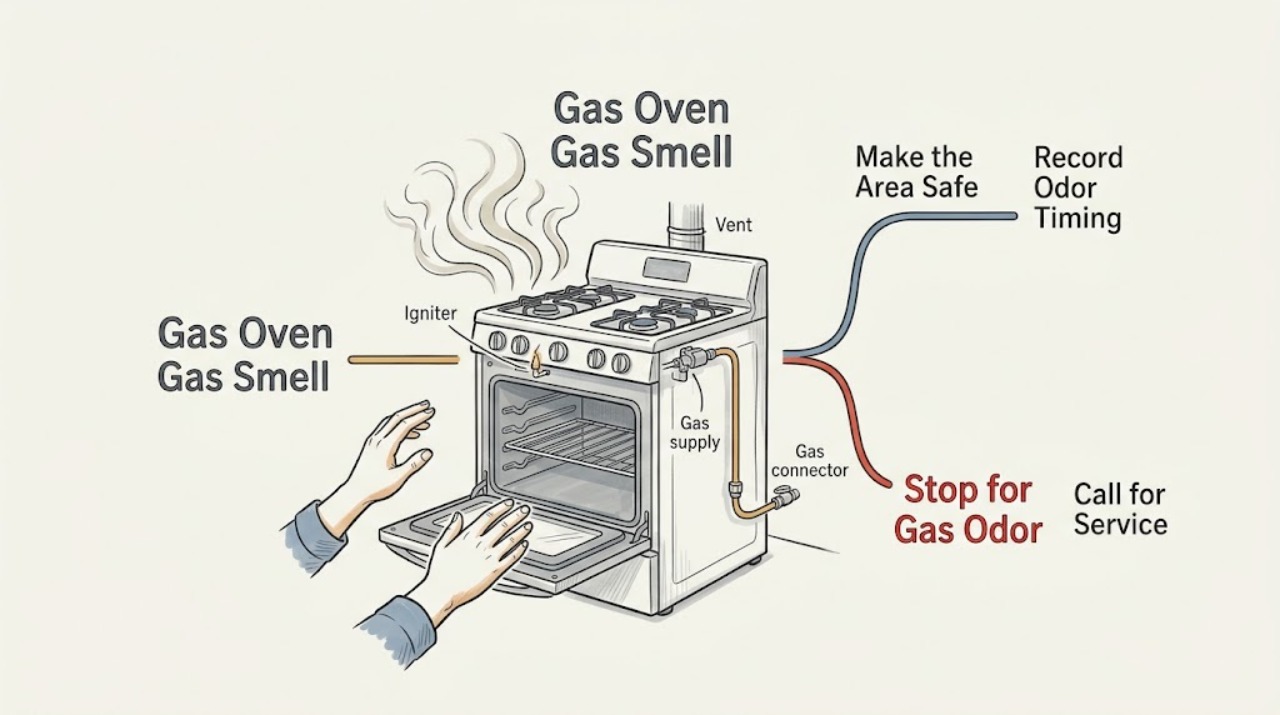
Work through in order
Diagnostic checks
Use only checks that match the exact appliance or system and its official guide.
-
Check 1
If you smell gas now, stop all oven and cooktop controls without searching for the source, leave the building, and contact the gas utility or emergency services from outside or another safe location. Do not operate switches, ignite a flame, use a device inside, or re-enter to inspect.
Expected result: A strong, continuing, or unexplained odor; hissing; visible flame outside the intended burner; or symptoms such as dizziness or headache confirms that this is not a routine odor check.
Next step: Remain out until the gas utility, fire service, or other qualified responder declares the area safe. Do not attempt an ignition test or appliance repair before that clearance.
Why this matters
Why: Whirlpool and the U.S. Consumer Product Safety Commission treat suspected gas odor as an emergency requiring immediate exit and professional response, not homeowner leak tracing.
-
Check 2
Only after a qualified responder has cleared the area, record the odor timing without deliberately recreating it: oven preheat, burner ignition, oven off, after cooking, or after a power interruption. Also record whether the odor faded, whether there was hissing or a pop, and whether the model is gas-only or dual-fuel.
Expected result: A brief faint odor limited to ignition is different from odor while off, a persistent smell, delayed ignition, hissing, or an abnormal flame. A gas smell after the controls are off is not normal to dismiss as preheat odor.
Next step: Give the timing and exact model to qualified service. Do not repeat the ignition or preheat cycle to see whether the smell returns.
Why this matters
Why: Whirlpool says a quick whiff may occur as a gas oven preheats, but says an oven should not smell like gas when off and directs immediate action if a leak is suspected.
-
Check 3
After the area is cleared, inspect only from a safe distance for signs that can be reported to the technician: soot or discoloration, an unusual flame reported by a responder, a damaged control, a blocked oven vent, food residue, foil or a liner on the oven bottom, and any visible damage to the door or connector. Do not move the range or remove a panel.
Expected result: Food residue, foil, or a new-appliance coating can create an odor or smoke during heating, but a damaged connector, persistent odor, abnormal combustion, or evidence of gas outside the intended ignition sequence is a service or emergency condition.
Next step: Keep the oven off and give the observations to qualified service. Do not clean, scrape, relight, or move the appliance if any gas concern remains.
Why this matters
Why: Whirlpool links non-gas odors to residue, liners, coatings, and new parts, while its safety instructions warn that a gas leak cannot be safely diagnosed by moving or opening the appliance.
-
Check 4
If the odor was determined to be non-gas residue or a new-oven smell by a safe professional assessment, follow the exact Whirlpool model instructions for a cool-cavity cleanup and ventilation. Remove only visible packaging or food residue when the oven is off and cool; do not cover the bottom with foil or obstruct vents.
Expected result: A residue or new-part odor should reduce after the approved cool cleaning and model-directed first-use process. Odor that persists, returns while the oven is off, or appears with hissing, delayed ignition, smoke, or flame is not a cleaning result.
Next step: Stop and leave the area for any renewed gas concern. For a non-gas odor that remains after the manual-approved process, arrange appliance service rather than running a hotter cycle or using unapproved cleaners.
Why this matters
Why: Whirlpool's odor guidance distinguishes first-use and food-residue odors from suspected gas leaks and warns that liners can trap residue or affect airflow.
-
Check 5
Provide the technician with the model number, fuel type, odor location if it was safely observed from outside the hazard, when the controls were last used, any gas-utility or emergency findings, and whether a carbon-monoxide alarm or symptoms occurred. Do not provide a diagnosis based only on the odor name.
Expected result: A complete timeline can separate preheat ignition behavior from an odor while off, delayed ignition, vent or residue odor, or an external gas-line concern. Missing model or timing information leaves multiple paths open.
Next step: Keep the oven out of service until the qualified professional clears it. If any emergency sign returns, repeat the evacuation path rather than collecting more observations.
Why this matters
Why: Whirlpool directs owners to use model-specific manuals and professional service, and its gas-safety material requires qualified installation and service.
Use your observations
Decision map
Find the observation that best matches what you see, then follow the next safe action.
-
PATH 01Next step
What you see
The odor is strong, persistent, present while the oven is off, or accompanied by hissing, a pop, abnormal flame, smoke, or illness.
Do this next
Leave immediately, avoid switches, flames, and devices inside, and contact the gas utility or emergency services from a safe location. Do not troubleshoot or re-enter until cleared.
Why this path and its safety boundary
Why it matters: Treat it as a suspected gas leak or combustion emergency.
-
PATH 02Next step
What you see
A faint odor occurs only briefly during a normal preheat and a qualified responder has found no leak or unsafe condition.
Do this next
Record the model and timing, do not repeat the cycle solely to smell it again, and ask qualified service if the odor is recurring, stronger, or does not fade.
Why this path and its safety boundary
Why it matters: Whirlpool describes a brief ignition odor as possible on some gas ovens, but model and installation conditions still matter.
-
PATH 03Next step
What you see
The odor is a smoky or greasy smell during heating, with no gas odor and no emergency signs after professional clearance.
Do this next
When cool, follow the exact Whirlpool cleaning and first-use instructions; do not line the oven bottom or obstruct vents. Service the oven if the odor persists.
Why this path and its safety boundary
Why it matters: Food residue, new-part coatings, packaging, a liner, or blocked airflow may be involved.
-
PATH 04Next step
What you see
The oven has no smell, but a carbon-monoxide alarm sounds or occupants have compatible symptoms.
Do this next
Leave for fresh air and seek emergency help. Do not use the gas oven or attempt to diagnose combustion indoors.
Why this path and its safety boundary
Why it matters: Treat this as a carbon-monoxide emergency regardless of whether the oven appears to start.
-
PATH 05Next step
What you see
The odor returns after a qualified clearance or the technician finds a gas, ignition, connector, vent, or control concern.
Do this next
Keep the gas appliance off, follow the gas utility or qualified service instructions, and do not move or open the appliance to inspect it yourself.
Why this path and its safety boundary
Why it matters: The oven remains out of service until the underlying issue is repaired and cleared.
Helpful context
Understand the symptom
A gas smell is a safety decision before it is a repair diagnosis
The useful distinction is when the odor occurs and whether it fades: a brief, faint odor during ignition may be described in Whirlpool guidance, while gas smell when the oven is off, a smell that persists, or any odor with hissing or delayed ignition must be treated as a possible leak. You do not need to identify the failed component before leaving. Only after the gas utility or emergency responder says the area is safe should a qualified appliance professional diagnose the oven.
Immediate emergency path
Do not light the oven or another appliance, touch electrical switches, operate a fan, use a device inside the building, or move the range when gas may be present. Leave people and pets, then contact the gas utility or emergency services from a safe location. If a carbon-monoxide alarm sounds or anyone has headache, dizziness, weakness, nausea, confusion, or breathing trouble, leave immediately and seek emergency help.
Safety boundary
Stop conditions
- If gas odor is strong, persistent, present while the oven is off, or accompanied by hissing, delayed ignition, abnormal flame, smoke, or a pop, leave immediately and contact the gas utility or emergency services from a safe location.
- Do not light any appliance, touch electrical switches, operate a fan, use a device inside the building, or re-enter to find the leak while gas may be present.
- Stop for a carbon-monoxide alarm or headache, dizziness, weakness, nausea, confusion, or breathing trouble; leave for fresh air and seek emergency help.
- Do not move the range, open panels, remove a gas connector, inspect an igniter, search for a leak, or relight the oven after a failed ignition.
- Do not keep running an oven to burn off an odor unless a qualified responder has ruled out gas and the exact model instructions support the procedure.
Only after diagnosis
Potential parts
- gas oven igniter or ignition assembly
Consider this category only after a qualified diagnosis links delayed or failed ignition to the exact model's ignition assembly and the gas system is declared safe.
Confirm the full model and fuel configuration; do not infer a failed igniter from an odor alone. - gas valve or regulator assembly
Consider this category only when qualified service confirms a gas-control fault after safety isolation and model-specific diagnosis.
Gas components require qualified installation and exact model fit; do not attempt replacement or adjustment yourself. - oven door seal or vent component
Consider this category only when a qualified assessment identifies a model-specific seal or vent issue after ruling out gas-line and ignition hazards.
Do not block, alter, or replace a vent or seal based only on smell; use exact model documentation and service diagnosis.
When checks do not resolve it
Need a professional?
Contact qualified Whirlpool appliance service for any recurring or unexplained gas odor, odor while the oven is off, delayed ignition, failed ignition, abnormal flame, suspected connector or vent issue, or odor that remains after an approved first-use or cool-cleaning process. For strong or persistent odor, hissing, smoke, fire, carbon-monoxide alarm, or symptoms, leave immediately and contact the gas utility or emergency services from a safe location.
Safety scope: Keep the oven off for any unresolved odor. Do not operate electrical switches or devices inside during a suspected gas leak, do not move the range, and do not perform internal gas or electrical work.
Common questions
FAQ
Is a brief gas smell during Whirlpool oven preheat normal?
Whirlpool says a brief, faint odor can occur as gas ignites during preheat, but it should fade promptly. Odor while the oven is off, a persistent smell, hissing, delayed ignition, abnormal flame, smoke, or symptoms requires immediate evacuation and gas or emergency service.
What should I do if my Whirlpool gas oven smells like gas when it is off?
Do not search for the leak or operate switches. Leave immediately and contact the gas utility or emergency services from a safe location. Do not relight or use the oven until qualified responders clear it.
Can food residue or foil cause a Whirlpool oven odor?
Whirlpool says food residue, new parts, coatings, or a liner can produce non-gas odors during heating. Only after gas danger has been ruled out, follow the exact model cleaning and ventilation instructions and do not block vents or line the oven bottom.
Read the exact guide
Official sources
- RANGE SAFETYWhirlpool · Use for Whirlpool gas-range safety principles; exact model manual and local gas-emergency instructions control.
- Carbon Monoxide Poisoning BasicsCenters for Disease Control and Prevention · General combustion-safety guidance; it does not replace gas-appliance service or local emergency response.
- Why Does My Oven Smell Like Gas? | WhirlpoolWhirlpool · General Whirlpool guidance; exact appliance model, fuel system, installation, and local emergency procedures take precedence.
- Certain Older Gas Connectors May Be DangerousU.S. Consumer Product Safety Commission · General gas-appliance safety guidance; it is not a model-specific repair procedure.
- Odors or Smells - Range - Product Help | WhirlpoolWhirlpool Product Help · Use for supported Whirlpool ranges; model-specific cleaning controls and fuel safety instructions vary.
Community feedback
Share a repair observation
Share a plain-text repair observation. Accepted observations are published automatically; this page may take a moment to update.