
On this page
Start here
Quick answer
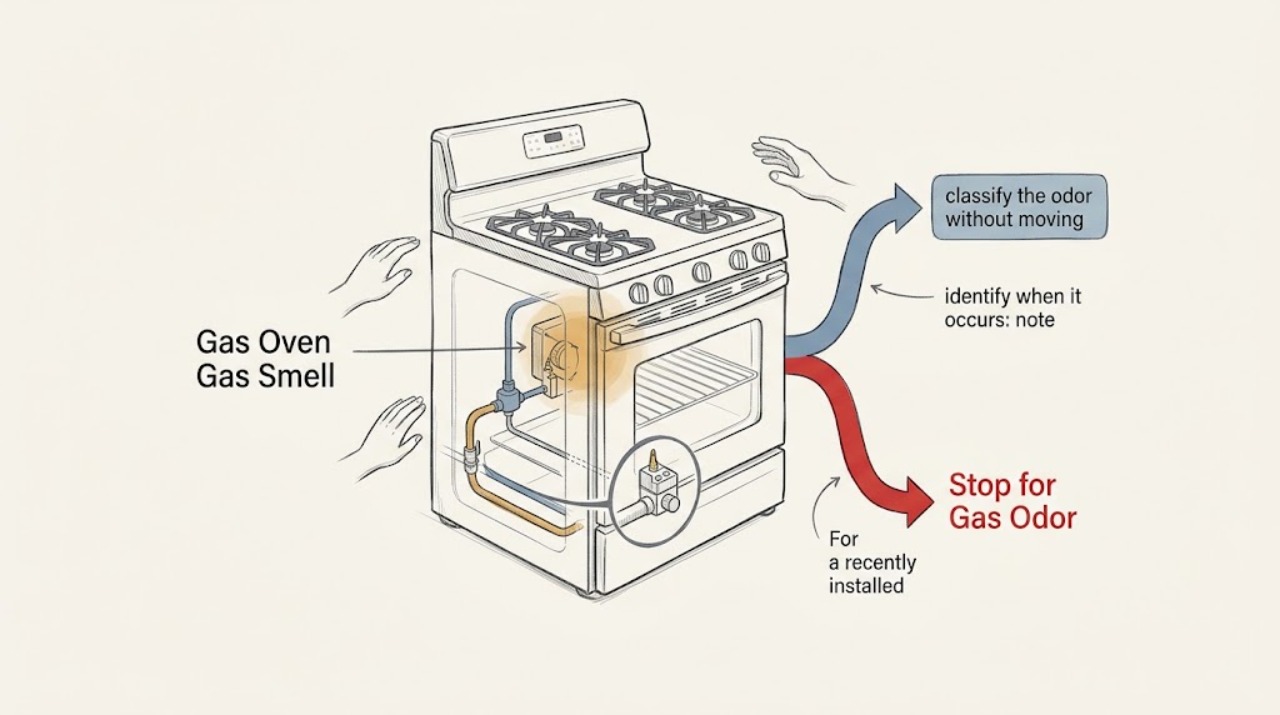
Treat a rotten-egg or unburned-gas smell as an emergency: leave the area, avoid electrical switches and flames, and call the gas supplier from outside. A faint odor only during the first start that quickly disappears can be normal combustion odor, while a new-oven smell from parts or insulation can fade over the first few uses. If the odor persists, occurs when the oven is off, returns unexpectedly, or is accompanied by a bang, flame problem, or other abnormal operation, stop using the oven and arrange professional service.
Work through in order
Diagnostic checks
Use only checks that match the exact appliance or system and its official guide.
-
Check 1
From a safe location, classify the odor without moving closer to investigate: if it is a strong rotten-egg or unburned-gas smell, treat it as a gas emergency rather than an oven troubleshooting symptom.
Expected result: The odor is strong, rotten-egg-like, accompanied by hissing, or present even though the oven is not operating.
Next step: Leave the area. Do not touch electrical switches, use a phone inside, operate the oven, or create a flame. From outside, contact the gas supplier or emergency services and do not return until cleared.
Why this matters
Why: GE identifies unburned gas or a gas/rotten-egg smell as abnormal and potentially hazardous.
-
Check 2
If there was no emergency-type odor, identify when it occurs: note whether the smell appears only at the first start of the oven and then fades as the burner runs, without repeated odor while the appliance is off.
Expected result: The smell is slight, limited to the first start, and disappears as the oven heats.
Next step: Do not keep restarting the oven to test it. If the odor persists, becomes stronger, returns on later starts, or occurs while the oven is off, stop use and follow the service or emergency branch.
Why this matters
Why: GE describes a slight initial odor from combustion as normal when it goes away within the early heating period.
-
Check 3
For a recently installed or new oven, separate a temporary manufacturing odor from a gas odor: with the appliance off and cool, recall whether the smell is more like heated new materials and occurs during the first few uses rather than like rotten eggs.
Expected result: The odor resembles new parts or insulation and is limited to the first few uses; it is not an unburned-gas smell.
Next step: Allow the appliance to cool between normal use and monitor whether the odor diminishes. Stop and use the gas-emergency branch if the odor changes to rotten egg/unburned gas or is present while the oven is off.
Why this matters
Why: GE says smoke or odor from new oven parts, insulation, or shipping materials can occur during the first few uses and should dissipate.
-
Check 4
Once no gas odor is present and the oven is off and cool, review the event without opening gas connections: check whether the oven had a delayed ignition, boom, door movement, control that was hard to turn, or a flame that stayed unusually yellow or orange.
Expected result: Any delayed ignition, boom, door movement, difficult control, or persistently abnormal flame is reported.
Next step: Keep the oven out of service and arrange a qualified appliance or gas professional. Do not remove panels, adjust burners, or attempt to relight a pilot or burner to confirm the fault.
Why this matters
Why: These are abnormal operation signs that require service rather than repeated user testing; a boom can indicate delayed ignition, and GE flags abnormal flame or control behavior for service.
-
Check 5
Check the timing and recurrence from the user-facing controls only: record whether the smell happened during ignition, after the burner went out, during a self-clean cycle, or with the oven idle, and whether it repeats on separate uses.
Expected result: The odor recurs, appears with the oven idle, or cannot be tied to a brief normal start-up or new-oven event.
Next step: Stop operating the oven. If the smell is gas-like, leave and call the gas supplier from outside; if it is not gas-like but still abnormal, arrange professional service and provide the timing notes.
Why this matters
Why: An unexplained or recurring odor does not have the normal short start-up pattern and may require inspection of the gas supply, ignition, burner, or controls.
-
Check 6
After any professional clearance or repair, confirm only the safe user-level result: the oven should operate without an unburned-gas smell, a delayed-ignition boom, or a recurring unexplained odor.
Expected result: The gas smell, abnormal ignition, or recurring odor remains after service or returns during normal use.
Next step: Stop using the oven again and contact the servicing professional or gas supplier according to the type of odor. Do not bypass the safety concern by ventilating and continuing to cook.
Why this matters
Why: The underlying condition has not been resolved, so further operation could recreate the unsafe symptom.
Use your observations
Decision map
Find the observation that best matches what you see, then follow the next safe action.
-
PATH 01Next step
What you see
Rotten-egg/unburned-gas odor, hissing, or gas smell while the oven is off
Do this next
Evacuate, avoid switches/phones/flames inside, call the gas supplier or emergency services from outside, and wait for clearance.
-
PATH 02Next step
What you see
Slight odor only during the first start that fades as the oven heats
Do this next
This can match GE's normal combustion-odor description; monitor without repeated test starts and escalate if it persists or changes.
-
PATH 03Next step
What you see
New oven has a temporary heated-material odor during its first few uses, with no gas-like smell
Do this next
Allow the odor to dissipate during normal use and cooling; if it does not diminish or becomes gas-like, stop and seek service or gas-supplier help.
-
PATH 04Next step
What you see
Delayed ignition, boom, door movement, difficult control, or persistently yellow/orange flame
Do this next
Stop using the oven and arrange qualified service; do not adjust or disassemble gas components.
-
PATH 05Next step
What you see
Recurring or unexplained odor that does not fit a brief first-start or new-oven pattern
Do this next
Keep the oven off. Use the emergency gas branch if the odor is gas-like; otherwise arrange professional appliance service.
Helpful context
Understand the symptom
Start with the safety decision
Do not begin by relighting the oven or testing a suspected leak. The useful first distinction is whether the smell resembles unburned gas, whether it is present while the oven is off, and whether it is limited to a brief first-start odor. GE describes unburned gas as a rotten-egg-like smell and says it is not normal in the home.
Three odors are easy to confuse
A brief smell when a gas oven first starts may come from combustion and should fade as the oven heats. A new oven can also have a temporary parts or insulation odor during its first few uses. Those descriptions do not make an ongoing rotten-egg smell safe: use the emergency branch whenever the odor suggests unburned gas or appears without a normal start-up explanation.
What a technician needs to know
Record whether the smell happened during ignition, while the oven was off, or after a recent installation or conversion. Note any hissing, delayed ignition, boom, door movement, unusual flame color, or control problem without disassembling the range. This information helps the service professional choose the safe inspection path.
Safety boundary
Stop conditions
- Stop immediately and leave if the odor resembles rotten eggs or unburned gas, is present while the oven is off, or is accompanied by hissing.
- Do not operate electrical switches, use a phone inside, light a flame, relight a burner, or restart the oven to test a suspected gas leak.
- Stop using the oven and call a qualified professional for delayed ignition, a boom, door movement, abnormal flame, difficult controls, or a persistent unexplained odor.
When checks do not resolve it
Need a professional?
Call the gas supplier or emergency services from outside for a gas-like or rotten-egg odor. For a non-emergency but persistent odor or abnormal ignition, arrange qualified appliance or gas service and keep the oven off until inspected.
Common questions
FAQ
Is a smell when a GE gas oven first starts always a gas leak?
No. GE says a slight odor during the first start can be combustion odor that fades as the oven heats, and a new oven can have a temporary parts or insulation odor. A rotten-egg or unburned-gas smell, an odor while the oven is off, or a persistent or recurring smell must be treated as unsafe rather than normal.
What should I do if my GE gas oven smells like rotten eggs?
Leave the area, avoid electrical switches, flames, and phones inside, and call the gas supplier or emergency services from outside. Do not return or operate the oven until the area and appliance are cleared.
Should I keep using the oven if the smell goes away?
Only a brief slight first-start odor that matches GE's normal combustion description is potentially normal. If the odor was gas-like, returned, occurred with the oven off, or came with delayed ignition or another abnormal sign, keep the oven off and obtain the appropriate gas-supplier or professional-service help.
Read the exact guide
Official sources
- Range & Wall Oven - Smoke and Odor from a New OvenGE Appliances · GE new ranges and wall ovens
- Gas Range - What is Normal Operation vs What Requires ServiceGE Appliances · GE gas range normal-operation and service boundaries
- Gas Range - Gas OdorsGE Appliances · GE gas ranges and gas ovens
Community feedback
Share a repair observation
Share a plain-text repair observation. Accepted observations are published automatically; this page may take a moment to update.