
GE appliance guidance
GE Gas Oven Repair Guides
Troubleshooting and repair guidance for published GE Gas Oven problems, symptoms, and maintenance questions.
Published GE Gas Oven guides
Choose the guide whose symptom or condition most closely matches what you are seeing.
-
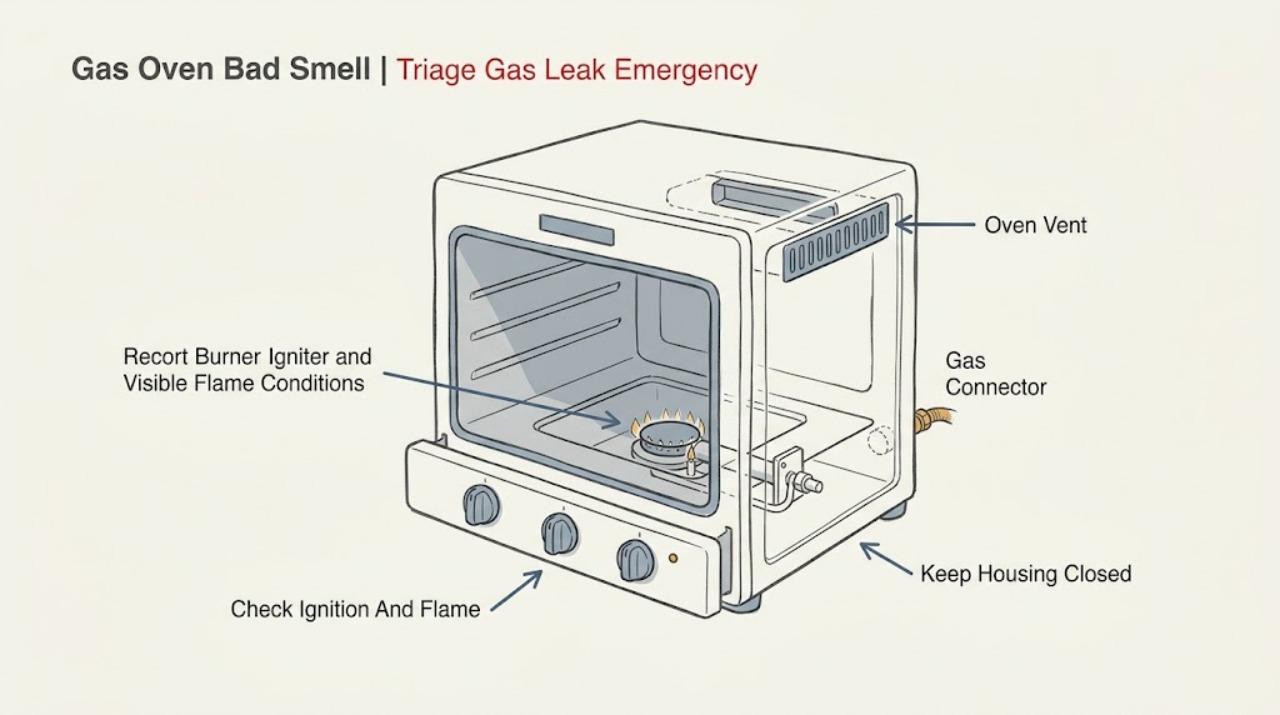
GE Gas Oven Bad Smell: Tell Combustion Odor from a Gas Leak
A brief unusual odor when a GE gas oven first starts can be combustion odor, and a new oven can also smell during its first few uses as new parts and insulation heat. A rotten-egg or sulfur-like smell, odor that remains after the burner is operating, a boom or delayed ignition, an unstable flame, or smoke is not a normal troubleshooting situation.
-
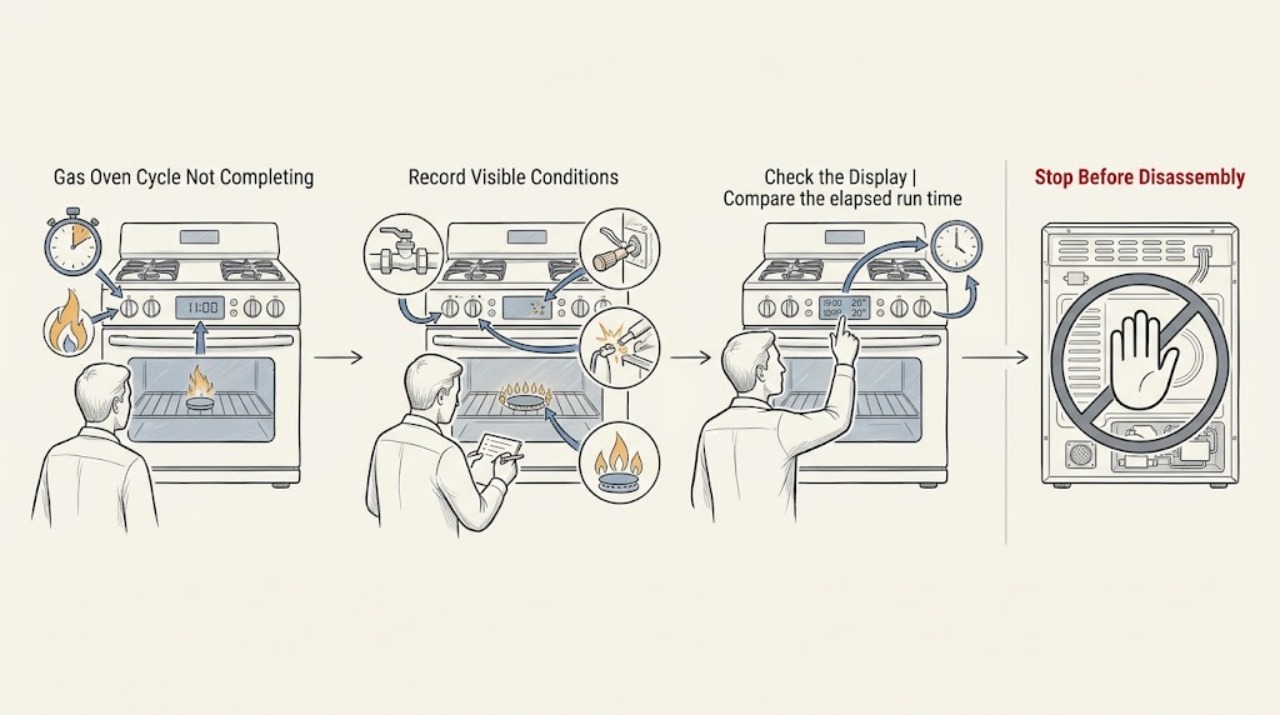
Ge Gas Oven Cycle Not Completing
First determine whether the oven is actually ending the cooking program or simply cycling its burner normally to hold temperature. Check whether Cook Time, Time Bake, Delay Bake, or another automatic stop was set, and confirm the clock and controls match the model's instructions.
-
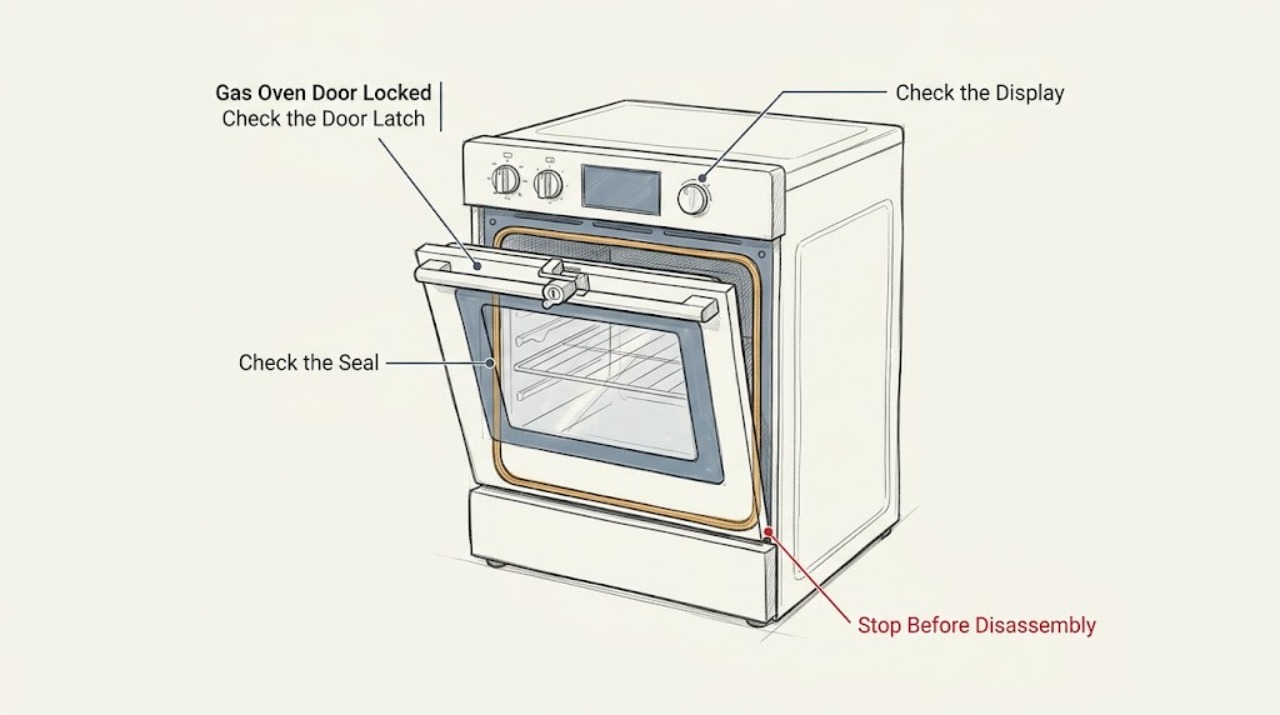
GE Gas Oven Door Locked: Cool It, Reset the Latch, and Know When to Stop
A GE gas oven door can remain locked normally during Self-Clean or while the oven is still hot. Turn the oven off, keep the door closed, and let it cool to room temperature before trying the model's normal unlatch action.
-
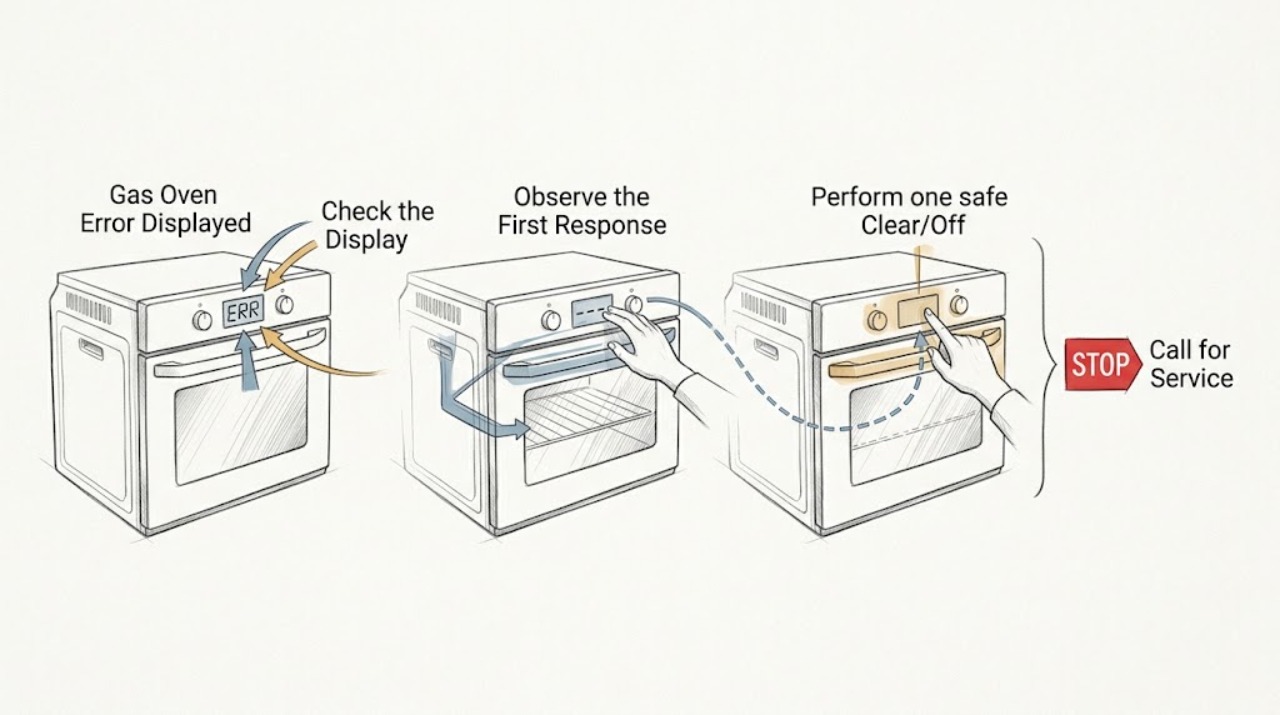
GE Gas Oven Error Displayed: Identify the Code Before Resetting
When a GE gas oven displays an error, record the exact letters, numbers, and symbols before touching the controls. A function code that starts with F, a keypanel or control message, LOC or LOC DOOR, ERR, OFF, or a power-related message can have a different meaning.
-
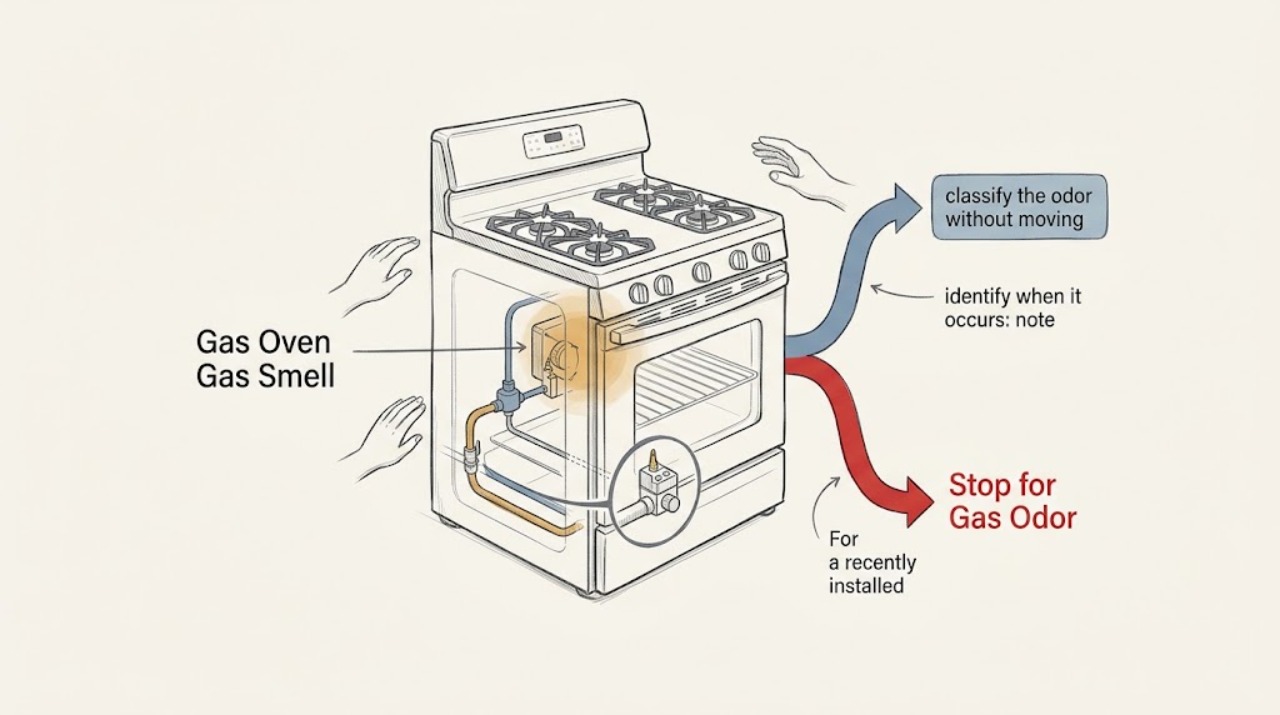
GE Gas Oven Gas Smell: What It Means and When to Stop
Treat a rotten-egg or unburned-gas smell as an emergency: leave the area, avoid electrical switches and flames, and call the gas supplier from outside. A faint odor only during the first start that quickly disappears can be normal combustion odor, while a new-oven smell from parts or insulation can fade over the first few uses.
-
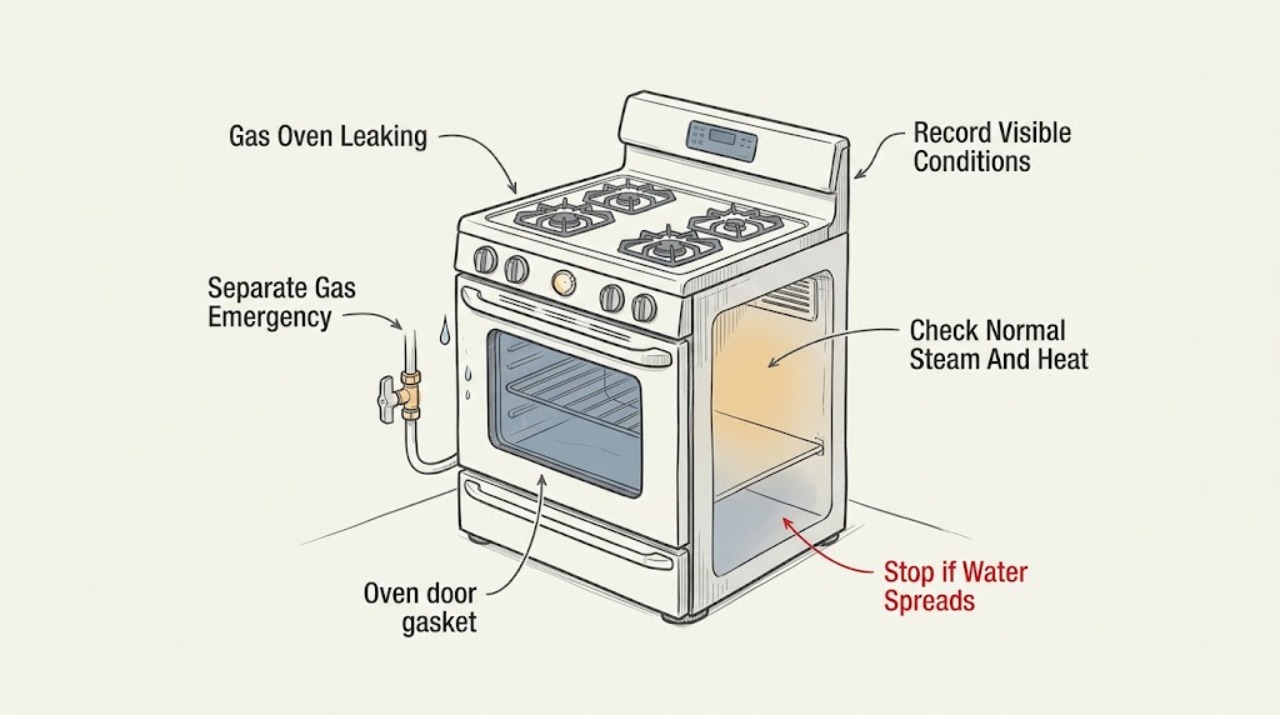
Ge Gas Oven Leaking
First identify what is leaking. A rotten-egg or unburned-gas odor, a hiss, or a suspected leak at the range means leave immediately, do not operate lights, switches, appliances, or a phone inside, and contact the gas supplier or emergency services from outside; do not move the range to inspect its connector.
-
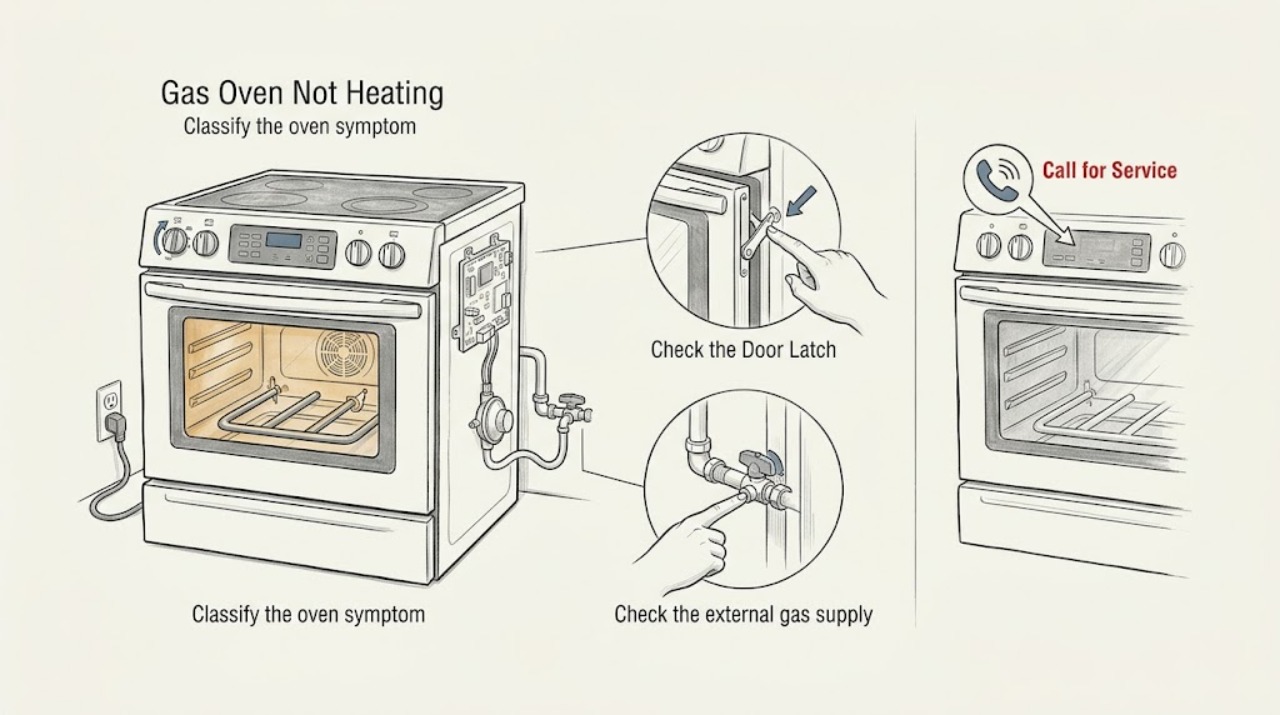
GE Gas Oven Not Heating: Check Settings, Power, Gas Supply, and Ignition Safely
If a GE gas oven is not heating, first confirm that the issue is in the oven rather than the surface burners: GE notes that burners can work while the oven does not. With no gas odor or other hazard, verify the Bake or Broil setting, temperature control, power connection or breaker, and any self-clean latch or model-specific mode.
-
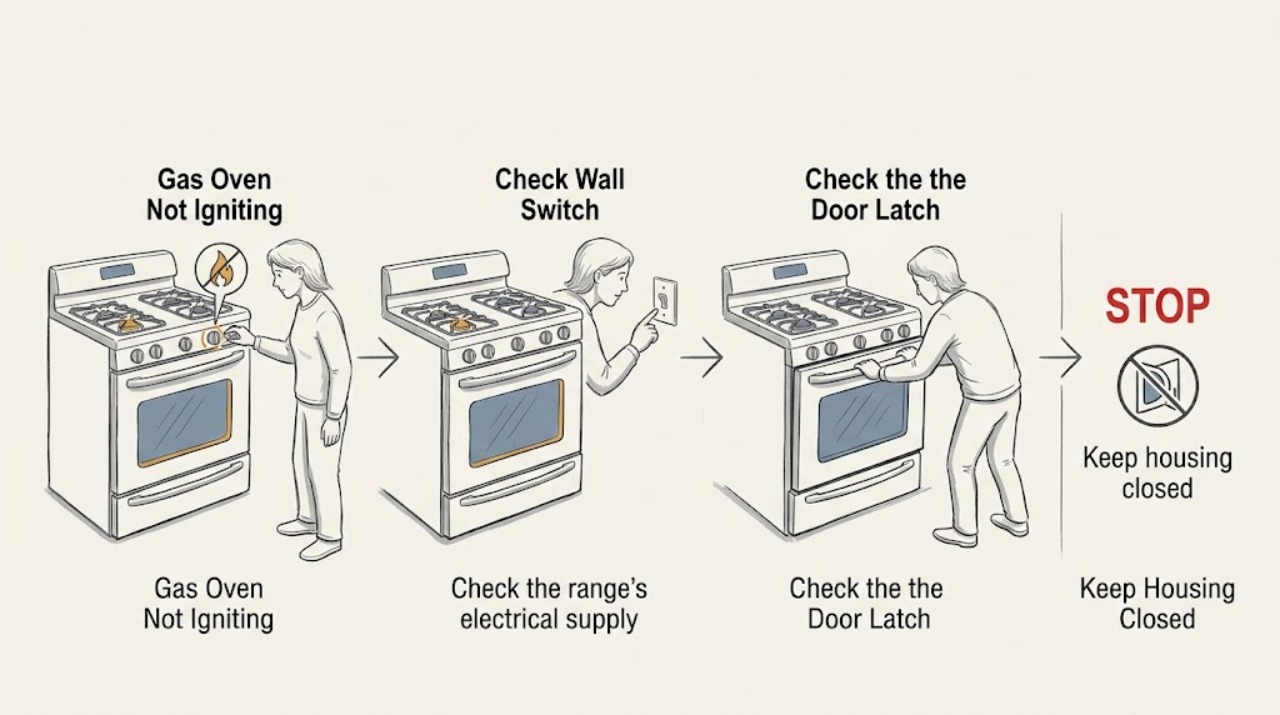
GE Gas Oven Not Igniting: Safe Checks Before Service
A GE gas oven that will not ignite usually needs one of a few checks: confirm Bake or Broil is selected correctly, verify the range has electrical power and gas supply, and observe whether the oven's glow-bar igniter becomes visibly hot. If there is any smell of unburned gas, do not keep trying to ignite the oven, use a flame, or operate electrical controls; leave the area and contact the gas utility or emergency service from a safe location.
-
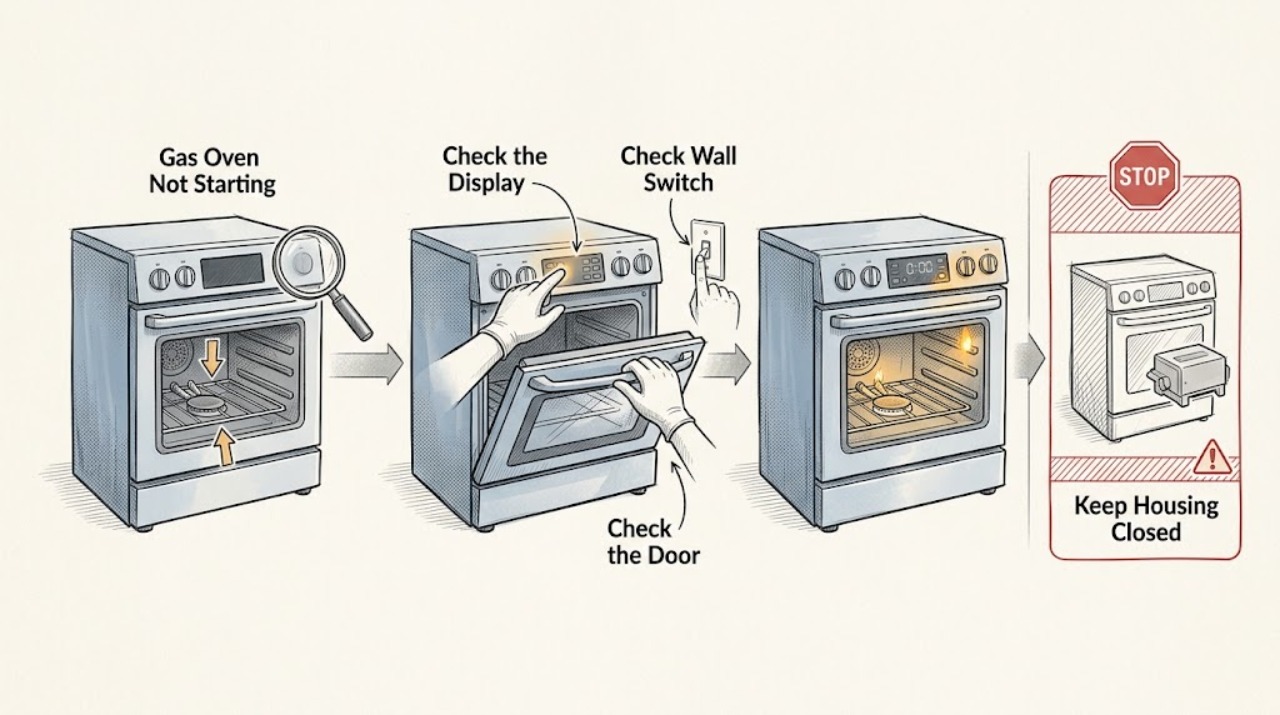
GE Gas Oven Not Starting: Check the Start Sequence
A GE gas oven that is not starting should be classified by what happens after you request Bake or Broil: does the control accept the command, does the oven have electrical power, and does the Glo-Bar begin to glow? Select the function and temperature and press Start on electronic controls, then make one normal start attempt.
-
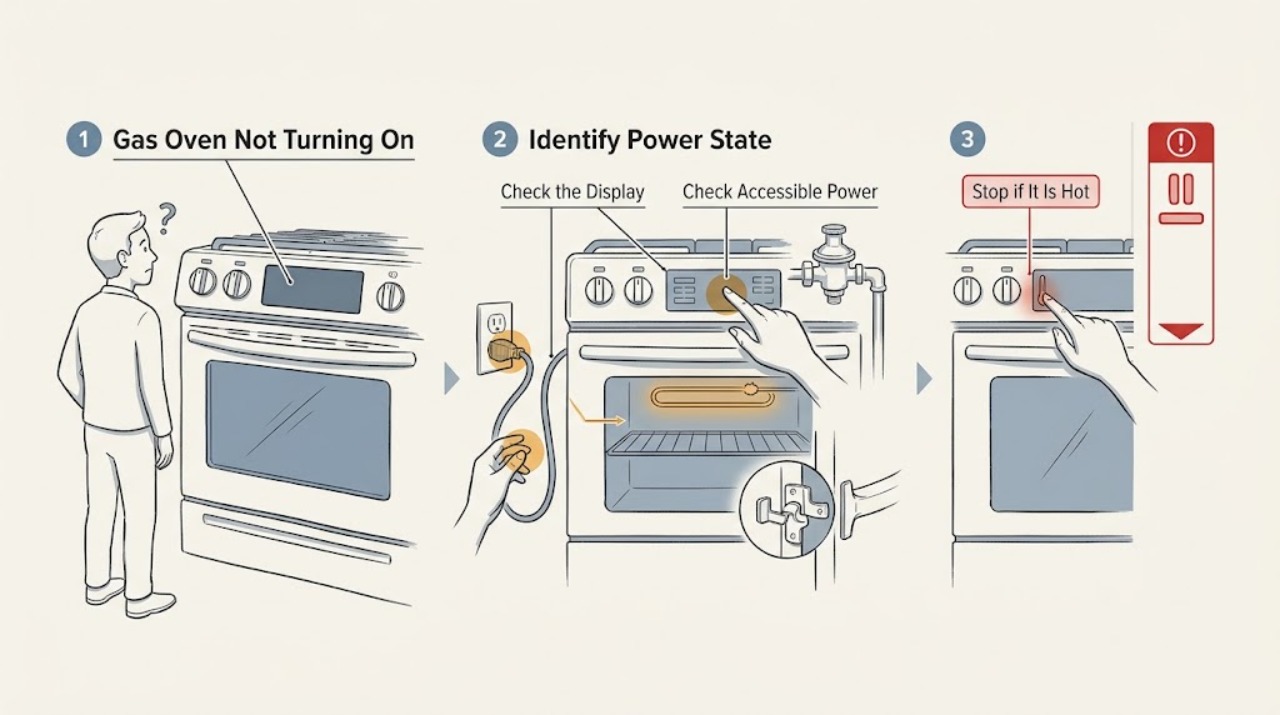
GE Gas Oven Not Turning On: Check Controls, Power, Gas, and Ignition Safely
First confirm that the gas oven is set to Bake or Broil and that the Start command was accepted, then check the accessible breaker or fuse, the fully seated range plug where applicable, the gas shutoff, and any self-clean latch or Sabbath-mode state described by the exact Owner's Manual.
-
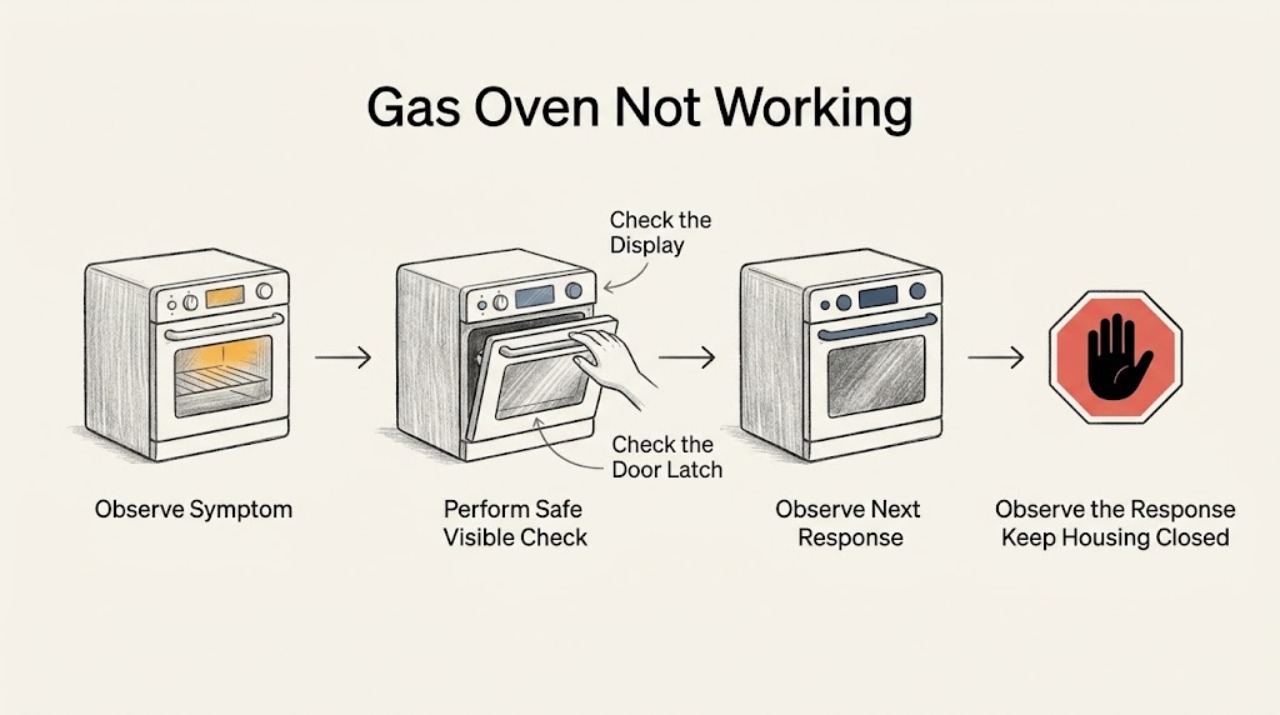
GE Gas Oven Not Working: Classify the Symptom Before Testing
“Not working” can describe several different GE gas-oven states, and each one needs a different next check. Before trying to start it again, stop for a gas or rotten-egg odor, hissing, smoke, an abnormal flame, a boom, or any uncertainty about unburned gas.
-
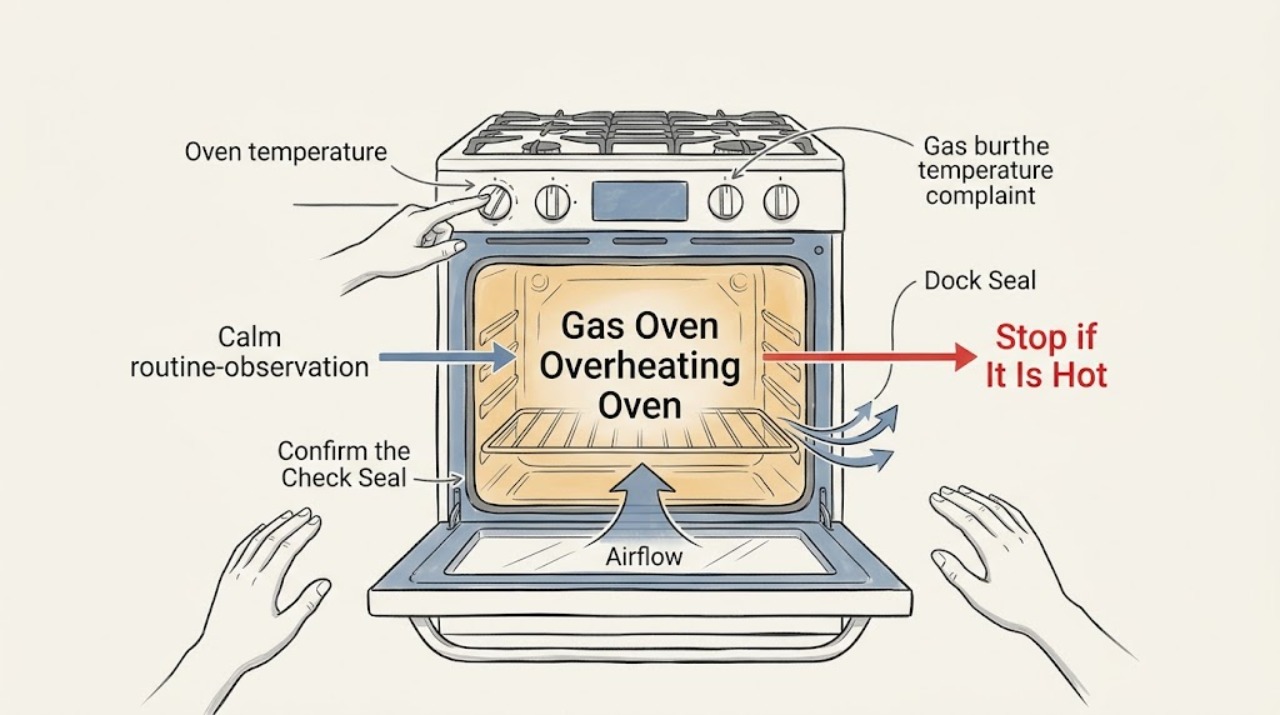
GE Gas Oven Overheating: Safe Checks Before Service
Stop using a GE gas oven immediately if you smell gas, see an unusually large or unstable flame, see smoke or fire, or the oven is heating with the control off. Leave a building with a suspected gas leak and call the gas supplier or emergency services from a safe location; do not operate switches or the appliance.
-
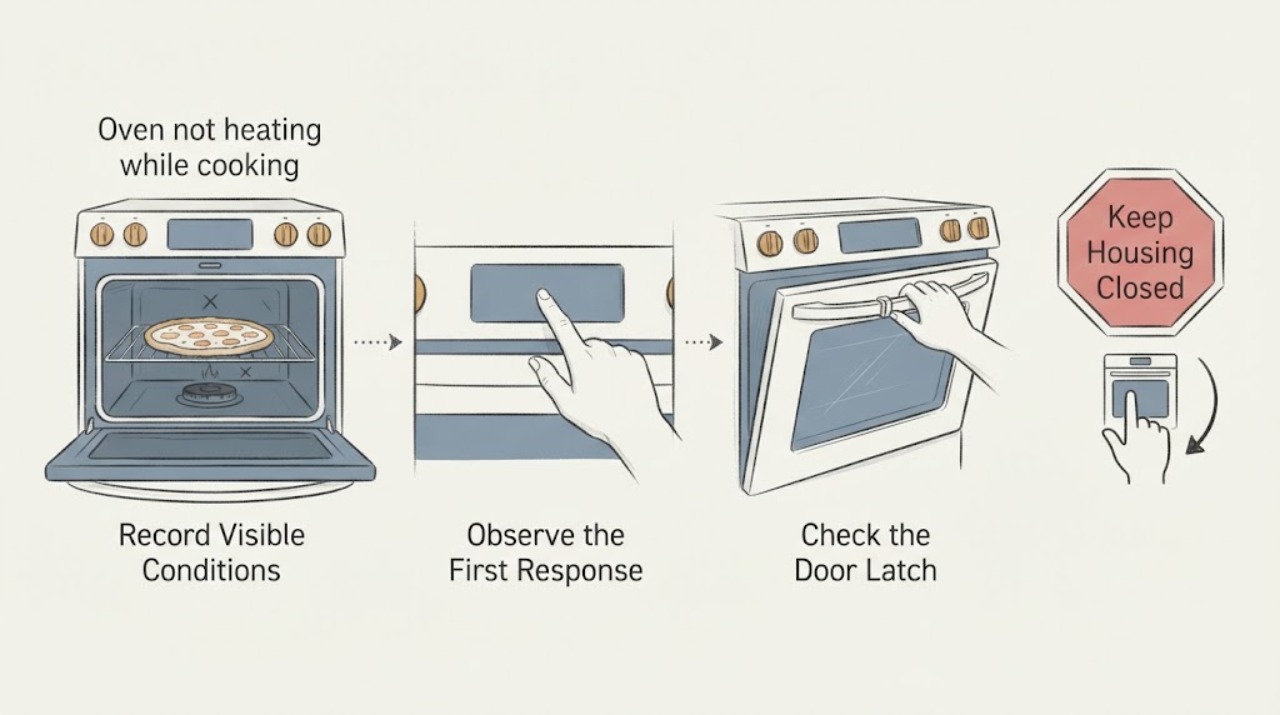
GE JGB905BEF2BB oven not heating while cooking pizza at high temperature
For the GE JGB905BEF2BB, a pizza that stays cold or takes far too long at a high setting is not automatically a failed oven. First separate a cooking/setup issue from an ignition or temperature-control problem: fully preheat before loading the pizza, confirm Bake rather than an unintended mode, keep the rack, pan or stone, and door seal clear, and note whether the oven actually reaches temperature before the problem occurs.