
On this page
Start here
Quick answer
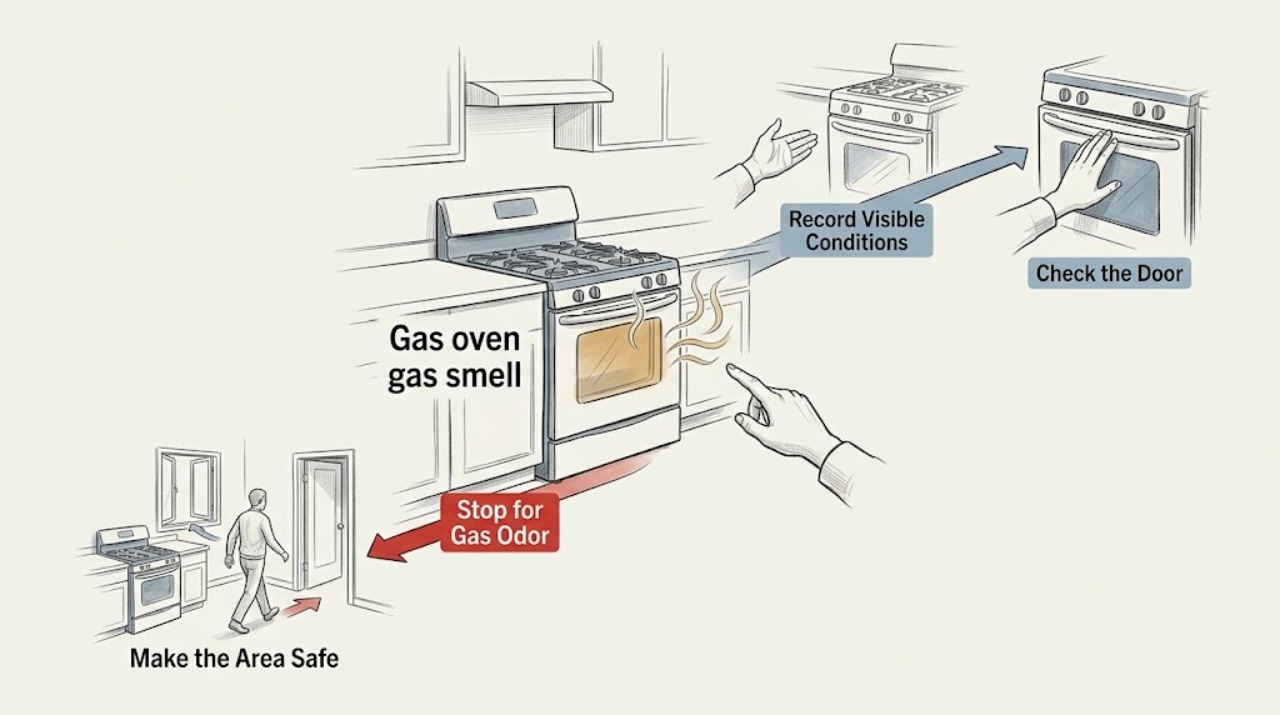
Treat a gas smell from an oven as a possible leak or unburned gas, not as a normal repair symptom. Do not light anything, operate switches, use a phone inside, move the appliance, or search for the leak. If a control or gas shutoff is reachable without crossing the odor area, turn it off; otherwise leave immediately, warn others from outside, and contact the gas utility or emergency services from a safe location. A brief odor during a normal ignition can occur on some appliances, but an excessive, persistent, unexplained, or off-cycle smell, an oven that fails to ignite, a delayed bang, unusual flame, smoke, or a carbon-monoxide alarm requires the oven to remain out of service. Never use a gas oven to heat the home.
Work through in order
Diagnostic checks
Use only checks that match the exact appliance or system and its official guide.
-
Check 1
If gas odor is present now, do not light a match, smoke, start an engine, operate a light or appliance switch, use a phone inside, or use the oven. If the oven control or gas shutoff is safely reachable without entering the odor area, turn it off; otherwise leave without stopping to inspect.
Expected result: A rotten-egg or similar odor, hissing or roaring, an odor that is strong or persistent, or an odor with an unlit oven is a possible gas leak. Smoke, flame, or a carbon-monoxide alarm increases the immediate danger.
Next step: Leave the building, warn others from a safe position, and contact the gas utility or emergency services from outside or another location well away from the odor. Do not re-enter or restart the oven until qualified responders say it is safe.
Why this matters
Why: An ignition source can ignite airborne gas, and unburned fuel can accumulate when an oven fails to light. The source cannot be safely located by a household inspection.
-
Check 2
Only after the building or area has been declared safe, record whether the odor was present with the oven off, during startup, after a failed ignition, during bake or broil, or near the rear connection; do not recreate the odor or move the appliance.
Expected result: An odor with the oven off or after failed ignition is more concerning than a brief odor limited to a normal ignition and fully clearing. A smell near the connection or after movement may involve the supply side.
Next step: Keep the oven out of service and give the record to the gas utility or qualified appliance professional. Do not inspect the connector, remove a panel, or run another cycle.
Why this matters
Why: Timing and location help a professional separate appliance ignition, combustion, connector, and wider supply concerns without another gas release.
-
Check 3
When safe to document from outside the hazard area, note whether the oven ignited, whether there was a delayed bang or door movement, whether the flame was abnormal, and whether smoke, soot, or an unusual sound appeared; do not open the door to check a suspected delayed ignition.
Expected result: An oven that releases gas without promptly igniting, pops or moves the door, smokes, or shows an abnormal flame has a combustion or ignition warning, not a routine cooking odor.
Next step: Leave the oven off and request gas-safety assessment and qualified appliance service. Do not repeat ignition or attempt to clear the gas by running the oven.
Why this matters
Why: Delayed ignition can allow fuel to accumulate and create a burn, fire, or explosion hazard when ignition occurs or the door is opened.
-
Check 4
After the area is confirmed safe, identify the oven model and fuel configuration from the rating label or records without moving the appliance or removing a cover; record whether it is a gas range, gas wall oven, or dual-fuel unit.
Expected result: Fuel configuration, model, and installation history affect the permitted ignition, venting, and service procedure. An appliance may have different gas and electrical controls even when the symptom is simply an odor.
Next step: Give the model, fuel type, odor timing, and installation or movement history to the gas utility and qualified service provider. Do not adjust gas pressure, conversion parts, or venting.
Why this matters
Why: Exact identity prevents applying an electric-oven or unrelated burner procedure to a gas appliance and keeps service focused on the correct guide.
-
Check 5
From a safe location, record whether another gas appliance also has an odor, whether the odor persists after a safe appliance shutoff, whether a carbon-monoxide alarm is active, and whether anyone has headache, dizziness, nausea, confusion, or breathing difficulty; do not re-enter to compare appliances.
Expected result: A smell affecting multiple appliances or persisting after an appliance is isolated suggests an upstream or building gas issue. Carbon monoxide is odorless, so symptoms or an alarm can exist without a gas smell.
Next step: Stay outside and contact emergency or gas-safety help for an active odor, alarm, or symptoms. For an appliance-specific issue after clearance, keep the oven off and arrange qualified repair.
Why this matters
Why: Scope separates an appliance-specific repair from a wider gas emergency, while health symptoms or an alarm require immediate evacuation and emergency help.
-
Check 6
Prepare a service handoff with the model and fuel type, odor timing and location, oven state, ignition result, flame or smoke observations, sounds, alarm or health symptoms, recent movement or installation, and whether a safe shutoff changed the odor; keep the oven unused.
Expected result: The record distinguishes an off-cycle supply odor, a failed or delayed ignition, abnormal combustion, a connector concern, and a wider gas or venting event without asking the user to perform another test.
Next step: Use the gas utility or emergency responders for an active or unexplained odor, then arrange qualified appliance service once the area is safe. Do not return the oven to service until cleared.
Why this matters
Why: Gas and combustion faults require trained diagnosis; opening the appliance, changing a gas setting, or moving the unit can add risk.
Use your observations
Decision map
Find the observation that best matches what you see, then follow the next safe action.
-
PATH 01Next step
What you see
Gas odor is present with the oven off, is strong or persistent, remains after a safe shutoff, or is accompanied by hissing, smoke, flame, or an alarm.
Do this next
Arrange qualified service and follow the exact model guidance.
Why this path and its safety boundary
Why it matters: Treat it as an emergency: avoid switches, phones, flames, and engines inside; leave immediately, warn others from outside, and contact the gas utility or emergency services from a safe location. Do not re-enter or search for the leak.
-
PATH 02Next step
What you see
The odor follows a failed ignition, delayed bang, door movement, soot, smoke, or abnormal flame.
Do this next
Arrange qualified service and follow the exact model guidance.
Why this path and its safety boundary
Why it matters: Keep the gas oven off and request gas-safety assessment and qualified appliance service. Do not repeat ignition, open the door to inspect, or run the oven to clear the smell.
-
PATH 03Next step
What you see
After professional clearance, a faint odor was limited to a normal ignition and fully disappeared, with no failed ignition or abnormal combustion.
Do this next
Arrange qualified service and follow the exact model guidance.
Why this path and its safety boundary
Why it matters: Do not normalize an unexplained recurrence. Record the event and stop use if the odor increases, persists, returns when off, or is paired with any abnormal sound or flame; arrange service.
-
PATH 04Next step
What you see
A carbon-monoxide alarm is active or anyone has headache, dizziness, nausea, confusion, breathing difficulty, or other concerning symptoms.
Do this next
Arrange qualified service and follow the exact model guidance.
Why this path and its safety boundary
Why it matters: Leave immediately and seek emergency help from outside. Do not use the oven or re-enter to investigate; carbon monoxide cannot be detected by smell.
-
PATH 05Next step
What you see
The odor affects another gas appliance or the building after an oven shutoff.
Do this next
Arrange qualified service and follow the exact model guidance.
Why this path and its safety boundary
Why it matters: Treat it as an upstream or building gas-supply event. Stay outside and contact the gas utility or emergency responders; do not move or test the oven.
Helpful context
Understand the symptom
A gas odor can be caused by unburned fuel, a supply connection, a burner or ignitor that did not light, or abnormal combustion. The odor alone cannot identify which part is responsible. Do not open the oven, pull it away from the wall, test with a flame, or keep starting it to compare the smell.
Some gas-burning appliances can produce a brief odor around ignition, but that narrow situation does not make a strong, persistent, unexplained, or off-cycle smell safe. Carbon monoxide has no smell, so headache, dizziness, nausea, confusion, or an active alarm must be treated separately as an urgent combustion-safety event.
Safety boundary
Stop conditions
- Stop immediately for any strong, persistent, unexplained, or off-cycle gas odor, failed ignition, hissing, delayed bang, door movement, abnormal flame, smoke, soot, carbon-monoxide alarm, physical symptoms, or fire.
- Do not light a match, smoke, use a flame, start an engine, operate electrical switches or phones inside the hazard area, search for the leak, move the appliance, inspect the connector, manually relight the oven, or repeatedly restart it.
- Leave the building and contact the gas utility or emergency services from a safe location. Do not re-enter or return the oven to service until qualified responders or a professional confirms safety.
Common questions
FAQ
Is a gas smell from an oven ever normal?
A brief odor can occur around ignition on some gas appliances, but a strong, persistent, unexplained, off-cycle, or failed-ignition odor is not safe to normalize. Leave, avoid ignition sources, and seek gas-safety help from outside.
What should I do if my gas oven smells but the flame is not lit?
Do not retry it, use a flame, operate switches, or look for the leak. If safe without entering the odor area, turn the control or gas supply off, leave, and contact the gas utility or emergency services from a safe location.
Can I open the oven door to let gas out?
Do not open the oven to investigate a suspected gas release or delayed ignition. Leave the area and seek qualified gas-safety help; opening or restarting the appliance can expose you to accumulated fuel or abnormal combustion.
Read the exact guide
Official sources
- Certain Older Gas Connectors May Be DangerousU.S. Consumer Product Safety Commission · Gas-appliance connector movement and leak safety
- Protect Your Family from Carbon Monoxide PoisoningU.S. Consumer Product Safety Commission · Gas oven combustion, carbon-monoxide symptoms, alarms, and safe-use boundaries
- Recognizing and Responding to Pipeline EmergenciesPipeline and Hazardous Materials Safety Administration · Natural-gas odor emergency actions and ignition-source avoidance
- Utility Disruptions: Gas Supply DisruptionsNew York City Emergency Management · Household gas odor evacuation, no-switch guidance, and carbon-monoxide context
- Gas Range Delayed Ignitions - Tests and Examinations of RangesU.S. Consumer Product Safety Commission · Gas oven delayed ignition and accumulated-fuel hazards
Community feedback
Share a repair observation
Share a plain-text repair observation. Accepted observations are published automatically; this page may take a moment to update.