
Brand-independent appliance guidance
General Gas Oven Repair Guides
Brand-independent troubleshooting and repair guidance for common gas oven problems and maintenance questions.
General gas oven guides
Use these guides when the problem is not limited to a specific manufacturer.
-
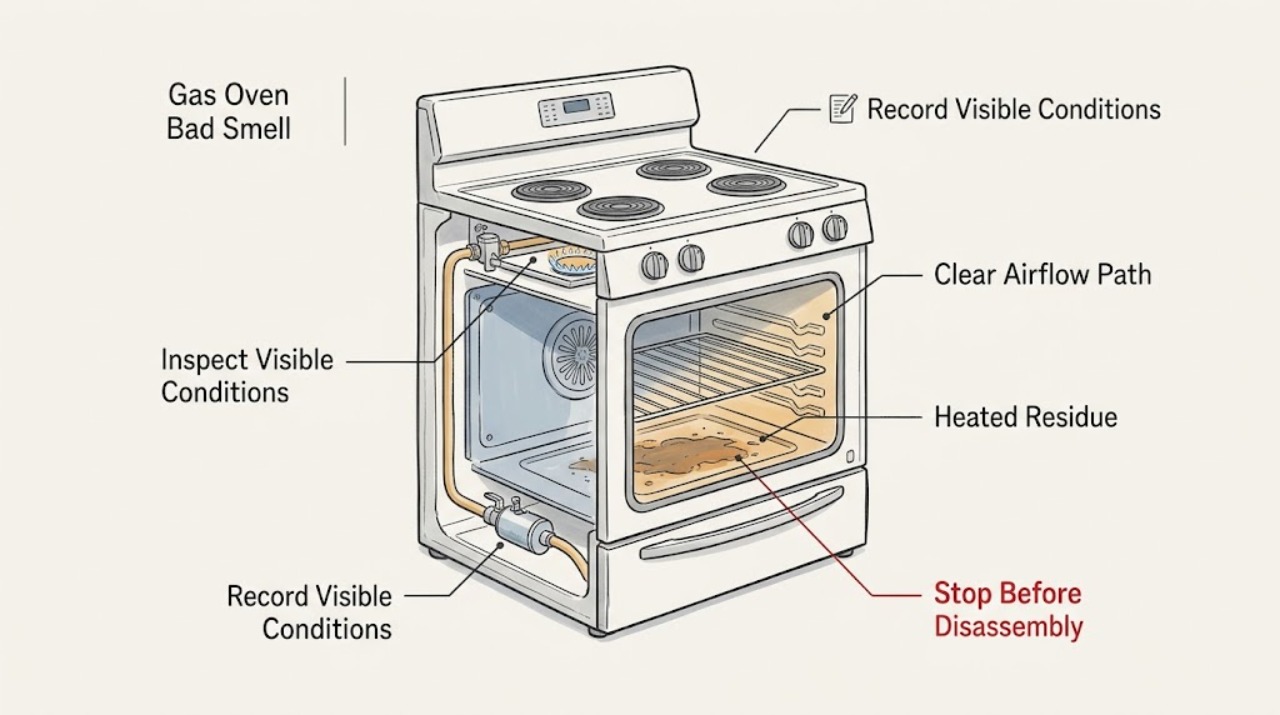
Gas Oven Bad Smell: Tell Gas, Combustion, and Food Odors Apart Safely
Treat an unknown or persistent gas-oven smell as a possible gas or combustion emergency until it is safely ruled out. If the odor is strong or continues when the oven is off, or you hear hissing, see an abnormal flame or smoke, or a carbon-monoxide alarm sounds, do not light anything, operate electrical switches, use a phone inside, search for the leak, or keep troubleshooting.
-
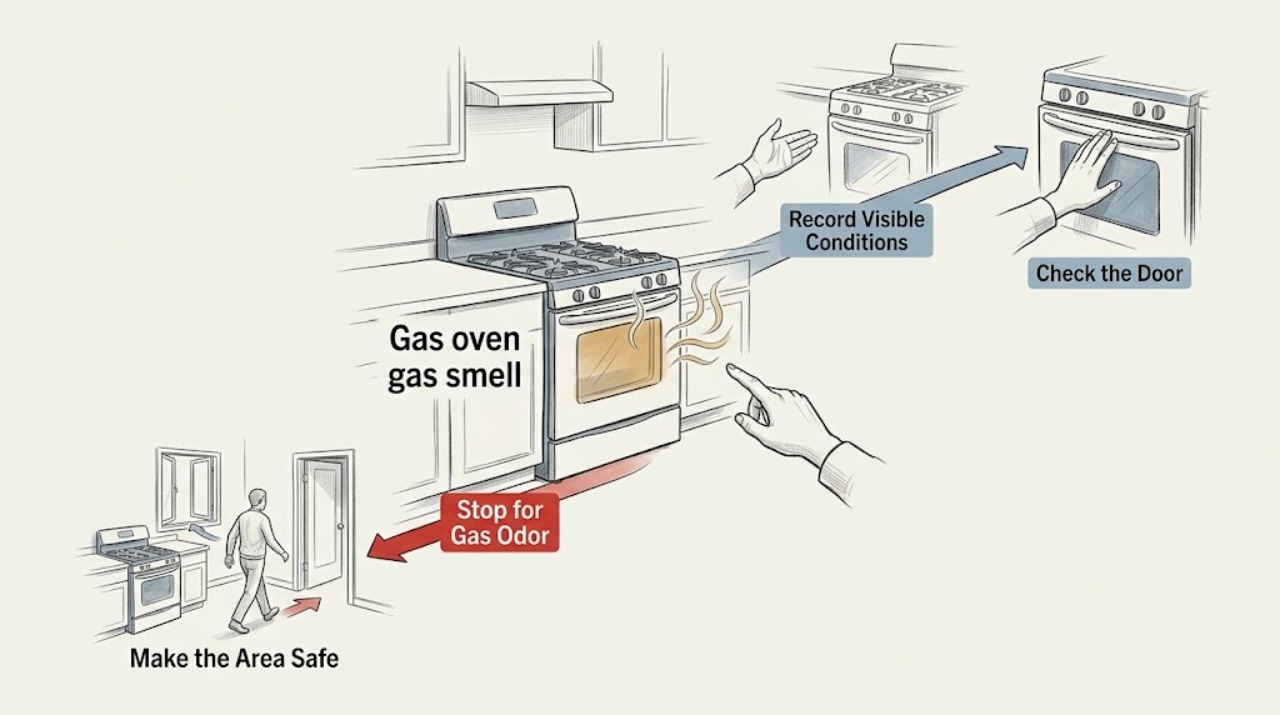
Gas oven gas smell: leave safely before troubleshooting
Treat a gas smell from an oven as a possible leak or unburned gas, not as a normal repair symptom. Do not light anything, operate switches, use a phone inside, move the appliance, or search for the leak.
-
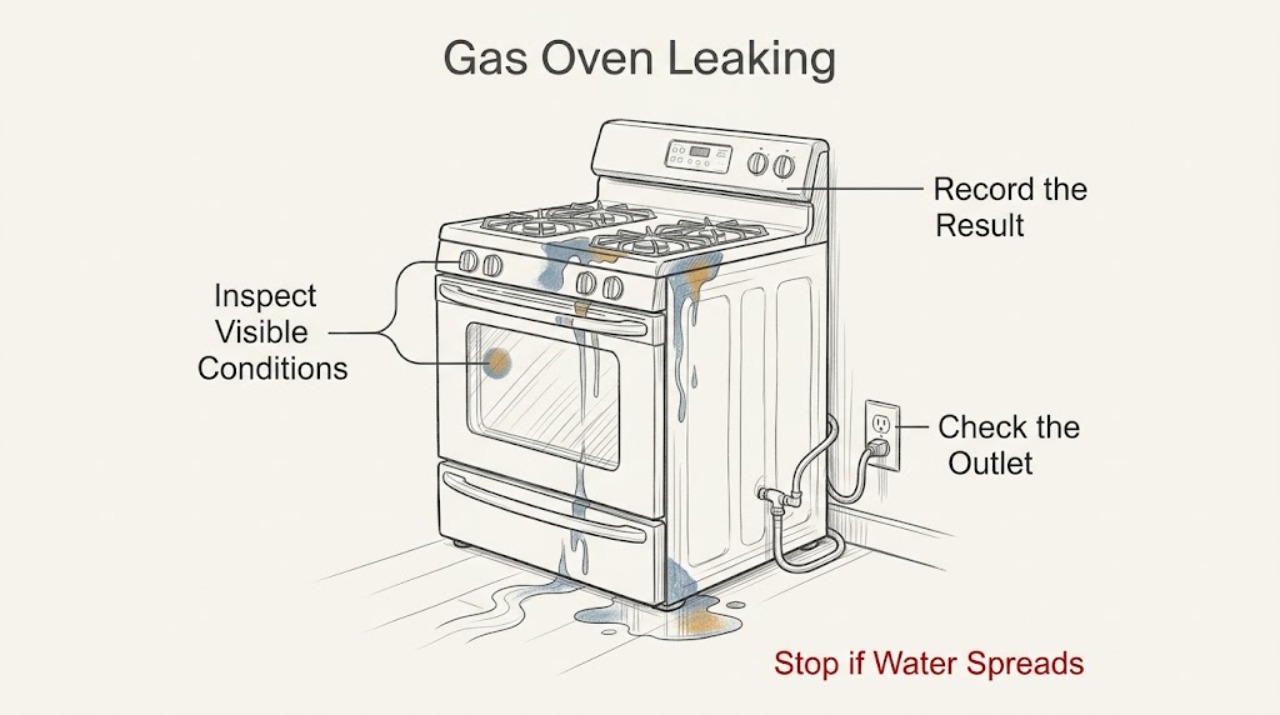
Gas Oven Leaking: Separate Gas, Liquid, Steam, and Door-Seal Risks
Treat a gas-oven leak as a safety triage problem, not a part-replacement problem. If you smell gas, hear hissing, see an abnormal flame, or suspect unburned gas, leave immediately without operating switches, flames, or a phone inside; contact the gas utility or emergency services from a safe location.
-
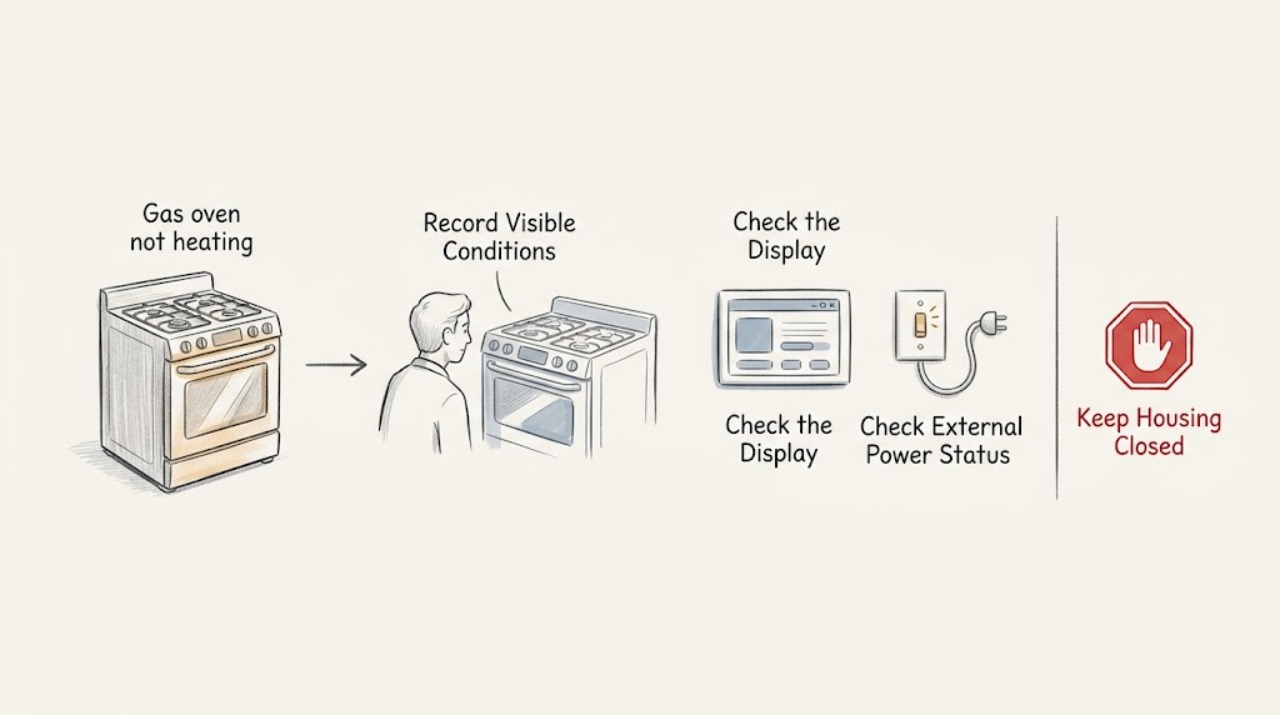
Gas oven not heating: check the controls and ignition safely
A gas oven that is not heating may be in the wrong mode, waiting for preheat, without electrical power, without gas supply, or unable to complete its ignition sequence. First record the model, display or error, selected mode, and whether the oven is cold, warming slowly, or heating unevenly.
-
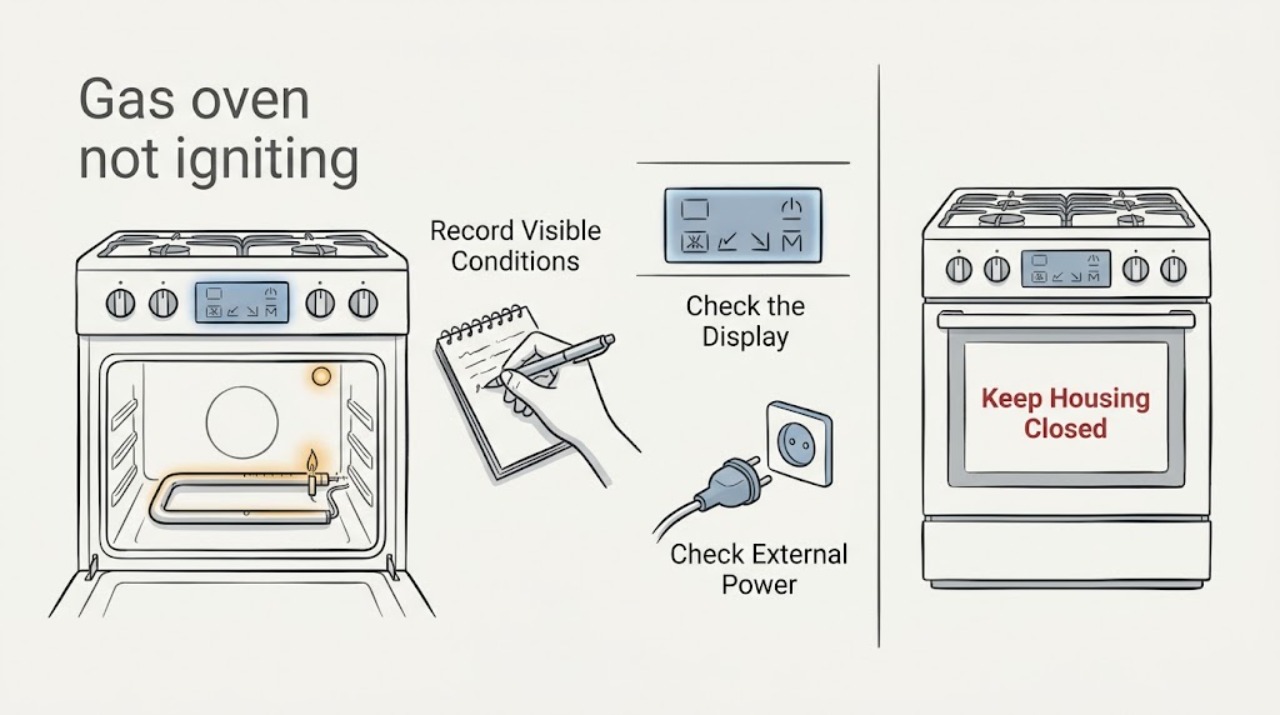
Gas oven not igniting: separate power, gas supply, and ignition faults safely
If a gas oven will not ignite, first record the model, display or error, selected mode, and whether the controls respond. A gas oven still needs a safe electrical supply for its controls and ignition, and the oven can be affected by a wider gas-supply interruption, a mode or door condition, an ignitor, a valve, a control, or a safety fault.
-
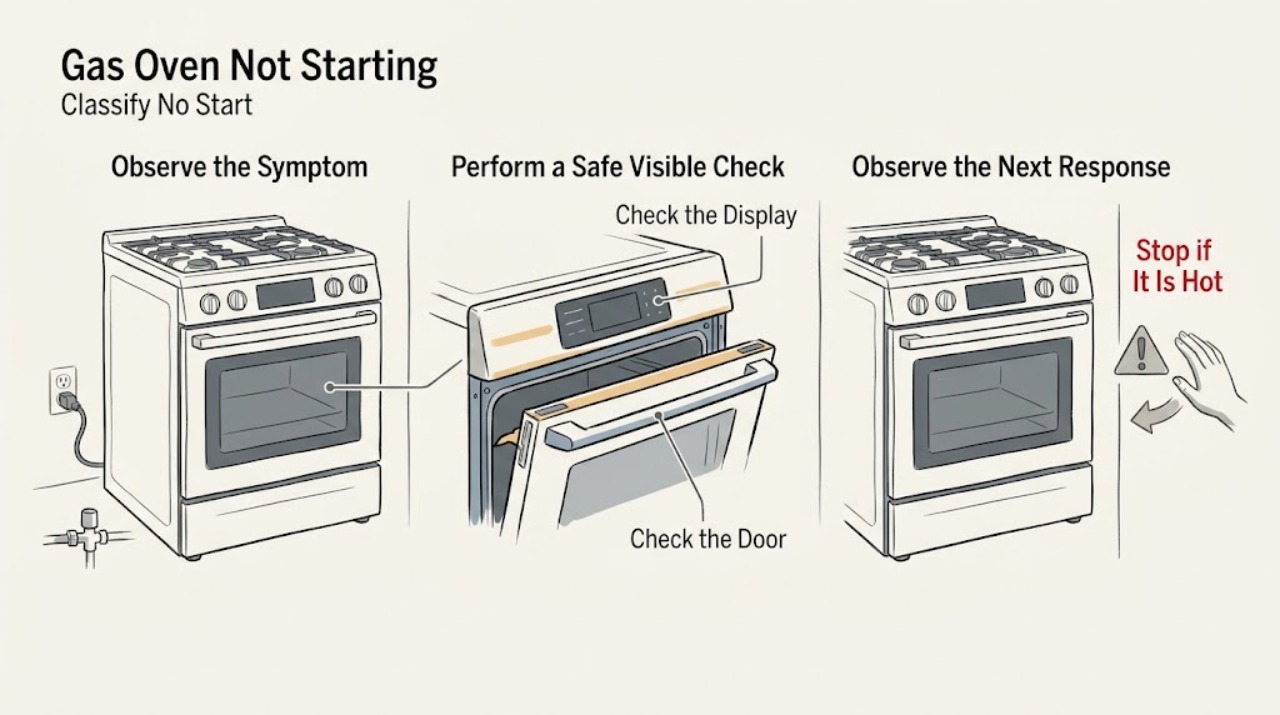
Gas Oven Not Starting: Safe Checks for Power, Controls, and Ignition
A gas oven that will not start can have a blank or locked control, a delayed-start or demo setting, a door or mode issue, a missing electrical supply, a closed gas shutoff, or an ignition fault. First record the exact model, fuel arrangement, display state, selected mode, and whether the surface burners work.
-
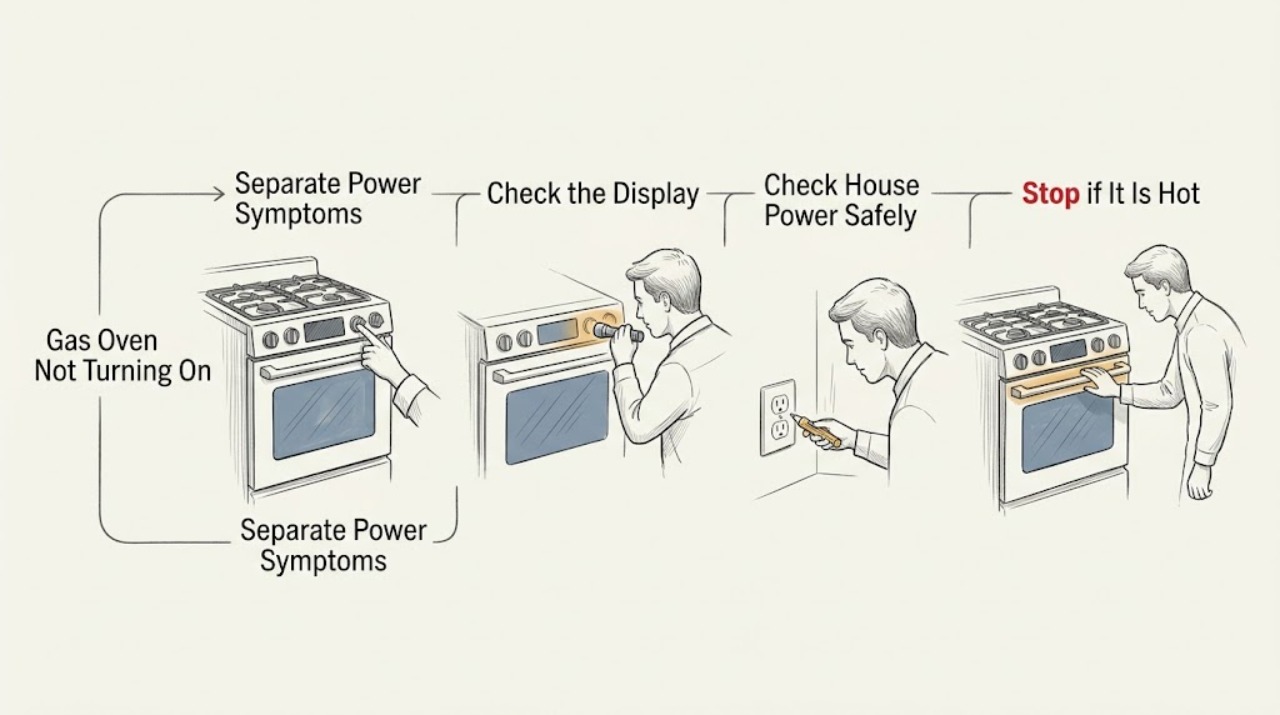
Gas Oven Not Turning On: Safe Checks Before Service
First separate a gas oven with no display or no electrical response from one that has power but will not start a cooking cycle. From a safe position, confirm the selected Bake or Broil mode, a closed door, the visible breaker or outlet condition, and the model's documented gas shutoff and control-lock state.
-
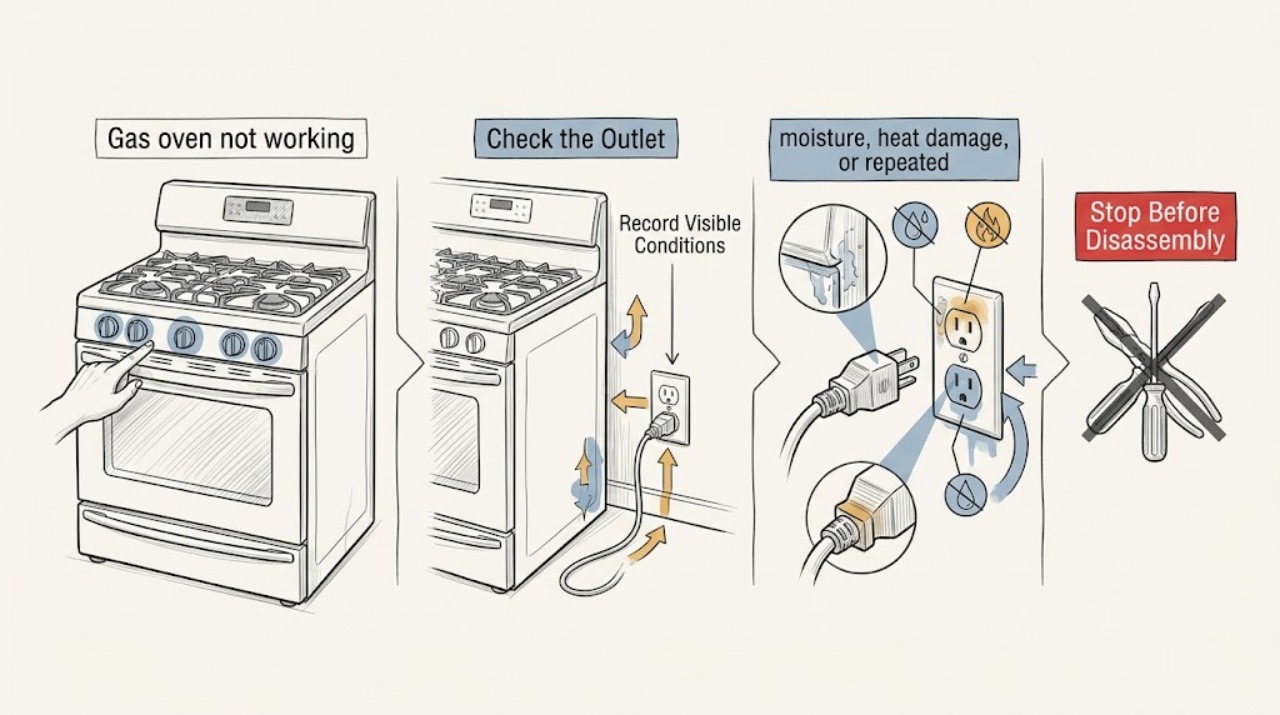
Gas oven not working: safe checks before service
First separate a completely dead oven from an oven that has power but will not start, ignite, or heat. If you smell gas, hear a delayed bang, see smoke or an abnormal flame, notice arcing, or a carbon-monoxide alarm sounds, stop using the oven, leave the hazard area, and contact gas or emergency help from a safe location; do not test for a leak or try another ignition.
-
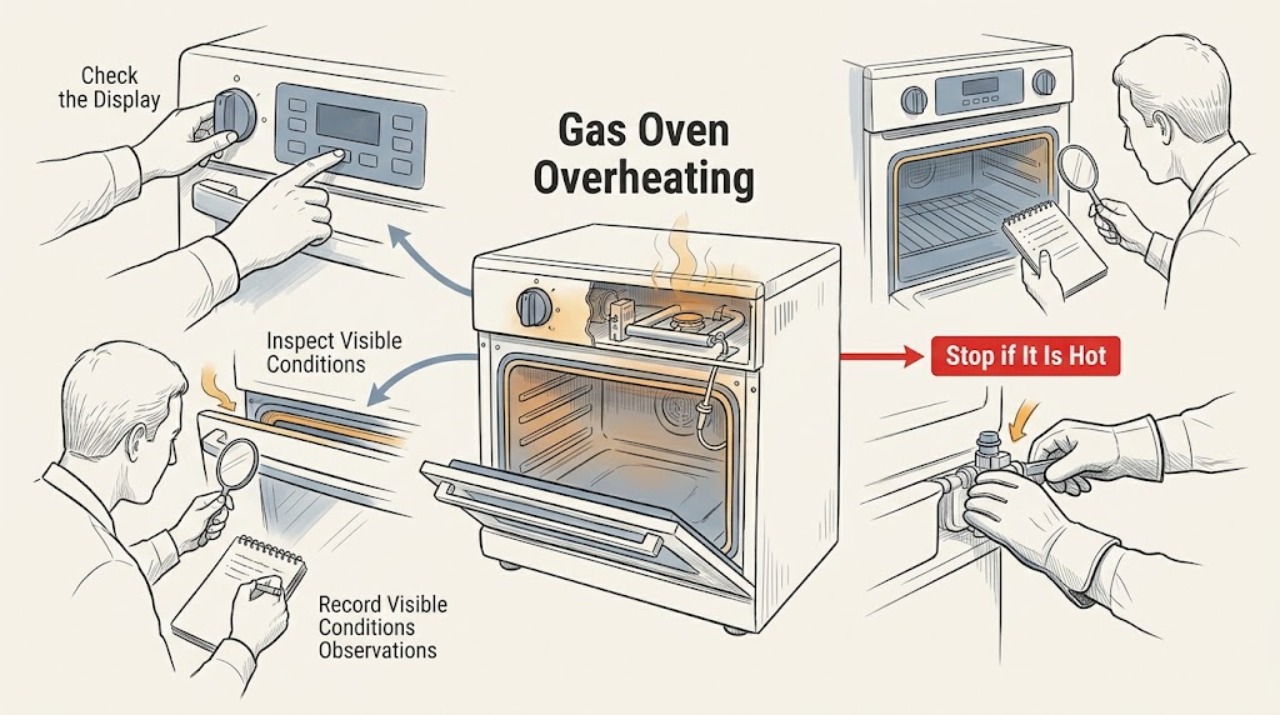
Gas Oven Overheating
First distinguish normal gas-oven heat cycling from a true overheat. An oven can feel hotter near the vent or cycle the burner while it regulates, but food burning, a temperature that keeps rising, a burner that stays on after the set point, an abnormal flame, smoke, a gas odor, or a carbon-monoxide alarm is not a calibration problem.
-
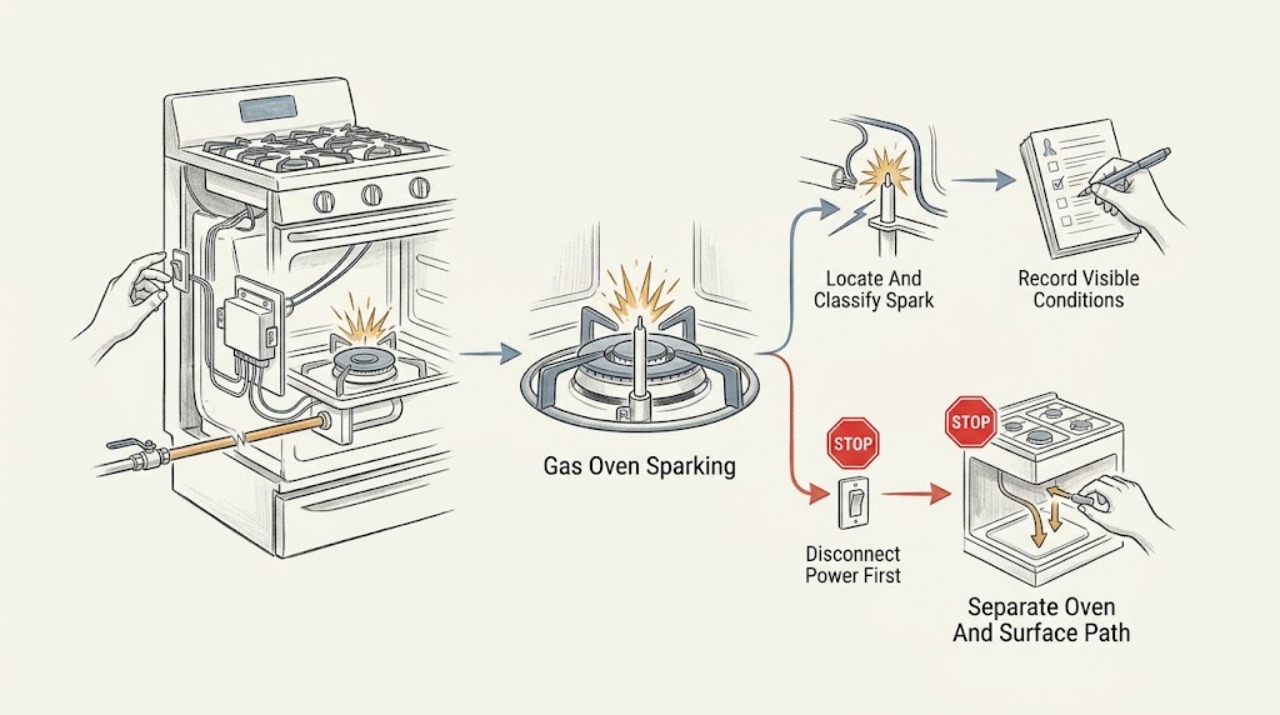
Gas Oven Sparking: Tell Normal Ignition From an Unsafe Arc
A gas oven may make a brief, controlled spark while its ignition system is starting, but a spark that continues without a stable flame, jumps outside the intended ignition point, appears behind the control panel, or occurs with gas odor is not a user repair. First identify the exact model, whether the spark is at the oven burner or elsewhere, whether it happens only during a normal start, and whether the flame follows promptly and normally.