
On this page
Start here
Quick answer
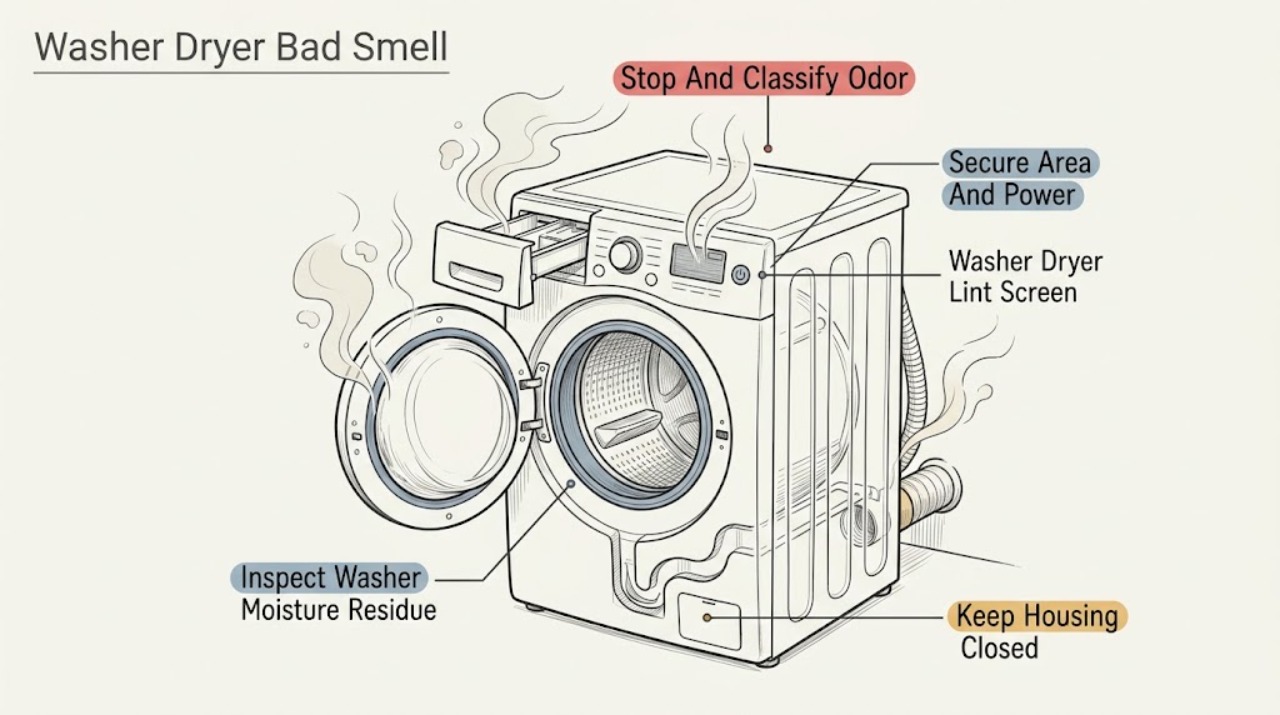
First identify which half of the appliance smells. A musty, sour, or drain-like odor from the washer side usually comes from retained moisture, residue, a door seal or dispenser that is not drying, or a drain path that holds dirty water. A hot, burning, electrical, smoky, or fuel-like odor from the dryer side is a stop condition: end the cycle, keep the appliance off, clear the area, and use qualified service; if gas is suspected, leave without operating switches or phones in the area and call the gas supplier or fire department from a safe location. For an ordinary washer odor, remove laundry promptly, wipe accessible moisture, leave the door ajar, and run the model's Clean Washer cycle exactly as its manual specifies. Use only the cleaner method allowed by that model; never mix an affresh tablet, bleach, detergent, vinegar, ammonia, or another chemical. For the dryer, let it cool, clean the lint screen and accessible drum only with power disconnected, and check visible airflow and vent conditions. Do not run the appliance again if the smell is hot or burning, the cabinet or outlet is unusually hot, there is smoke, arcing, a repeated breaker trip, a gas odor, or an oil/solvent-contaminated load.
Before you begin
Safety first
- Keep the appliance off for smoke, burning/electrical odor, gas odor, overheating, sparks, repeated breaker trips, active leaks, or contaminated loads. Do not open live panels, bypass safety devices, use flammable solvents, mix chemicals, or work in pooled water. For suspected gas, evacuate and call the gas supplier or fire department from a safe location.
Work through in order
Diagnostic checks
Use only checks that match the exact appliance or system and its official guide.
-
Check 1
Stop the current cycle from a safe position, remove no hot or contaminated item by hand, and identify whether the smell is strongest at the washer drum/door/dispenser, the dryer drum/lint path, the drain area, or the room. Note whether it is musty, sour, sewer-like, hot, burning, smoky, electrical, or gas-like.
Expected result: The odor is ordinary damp or residue odor on the washer side, a drain odor with standing water, a hot/burning or smoky dryer odor, a gas-like odor, or the source cannot be safely localized.
Next step: Follow the matching branch below. Keep the appliance off if the smell is hot, smoky, electrical, gas-like, worsening, or not safely identifiable.
Stop if: Do not restart a cycle, sniff inside a hot drum, touch a hot outlet or cabinet, or use a phone or electrical switch near a suspected gas leak.
Why this matters
Why: Damp washer odors can be investigated with cleaning and drying steps. Dryer burning, smoke, gas, or an unknown hazardous odor needs the appliance to remain off and may need immediate emergency or qualified service response.
-
Check 2
If there is smoke, sparking, a hot cord or outlet, a repeated breaker trip, or an electrical smell, keep people away and use the home's electrical disconnect only from a dry safe location; if there is a gas odor, do not touch switches, light appliances, or use a phone in the area—leave first.
Expected result: The hazard stops after the appliance is left off, smoke or heat continues, a breaker trips again, or a gas odor remains or is suspected.
Next step: For smoke or fire, leave and call emergency services from outside. For gas, call the gas supplier or fire department from a neighbor's phone or another safe location. Otherwise arrange qualified appliance/electrical service before re-energizing the machine.
Stop if: Do not reset a repeatedly tripping breaker, open a panel, unplug through pooled water, or return to a suspected gas leak to inspect it.
Why this matters
Why: An appliance odor with heat, arcing, smoke, or repeat trips can indicate fire or shock risk. A gas odor requires the gas-safety response, not a dryer reset or ventilation experiment.
-
Check 3
With the washer empty, cool, and safe, inspect the accessible door glass, gasket folds, drum lip, detergent dispenser, and nearby floor. Wipe only accessible moisture or residue with a clean cloth and leave the door slightly open to dry.
Expected result: Moisture, slime, lint, detergent residue, a trapped item, or a clean and dry interior is found; note whether the odor is strongest at the seal or dispenser.
Next step: For accessible washer residue, use the Clean Washer procedure in the exact model manual. For standing water, a blocked drain, or a concealed source, follow the drain branch and keep the machine out of service until safe.
Stop if: Do not reach into a moving or hot machine, remove the door seal, spray chemicals into controls, or mix cleaning products.
Why this matters
Why: Retained moisture and product residue can support a musty odor. A dry interior with a drain odor or odor returning immediately shifts attention to drainage or a concealed fault.
-
Check 4
For a washer-side musty odor only, remove all items and run the model's Clean Washer cycle exactly as documented. If the manual calls for an affresh tablet, place one tablet in the drum rather than the dispenser; add no detergent or other cleaner. For an all-in-one model, do not substitute liquid chlorine bleach unless the exact manual explicitly permits it.
Expected result: The odor improves after the documented cycle, the cycle is interrupted, the tablet or cleaner was placed incorrectly, or the odor remains or returns quickly.
Next step: Repeat only at the interval and with the product specified by the model manual. If odor persists, stop experimenting and arrange service; leave the door ajar and remove loads promptly meanwhile.
Stop if: Never combine an affresh tablet, bleach, detergent, vinegar, ammonia, or other chemicals; do not use liquid chlorine bleach in an all-in-one when Whirlpool's guidance prohibits it.
Why this matters
Why: A successful cleaning cycle supports a moisture/residue cause. An interrupted cycle may need the model's documented rinse procedure. Persistent or recurring odor suggests retained water, drainage, seal, dispenser, venting, or a service fault rather than a need for stronger chemicals.
-
Check 5
If the odor is sewer-like or water remains after a cycle, check only the visible drain path and the exact model manual for an accessible pump filter. If the manual provides that procedure and the floor is dry, use a shallow pan, drain the specified hose, remove the filter as directed, clear lint, rinse it, and reinstall it fully; otherwise do not open the appliance.
Expected result: The drain filter contains lint or debris, the hose or household drain is slow/backing up, no filter is listed for the model, or water leaks while the access area is opened.
Next step: Correct only the documented filter-cleaning step, then verify that the area is dry and the odor improves. Call a plumber or appliance technician for backups, leaks, hidden water, or recurrence.
Stop if: Do not force the filter, remove a hose under pressure, work in pooled water, move a stacked unit, or run repeated tests to reproduce a leak.
Why this matters
Why: Debris can retain dirty water and create an odor, but a blocked household drain, hidden leak, or unlisted filter is a plumbing or appliance-service issue. A leak or wet electrical area makes further access unsafe.
-
Check 6
For a non-hazardous residue or musty dryer odor only, wait until the dryer is cool, disconnect power safely, clean the lint screen as the manual directs, remove accessible lint, and inspect the visible vent and exhaust hood for restriction. If the drum needs cleaning, use only the mild, nonflammable method specified by Whirlpool and dry it completely before use.
Expected result: The screen is blocked or coated with residue, lint is present around the screen or vent, airflow is weak, the vent is crushed/obstructed, or the smell is hot/burning or returns immediately.
Next step: Restore the screen only when it is clean, dry, undamaged, and firmly seated. Have the vent and dryer evaluated if airflow is poor, drying takes much longer, the cabinet overheats, or the odor returns.
Stop if: Do not run with a missing, loose, damaged, or blocked lint screen; do not vacuum or clean a hot machine, use flammable solvents, or open the cabinet.
Why this matters
Why: Lint and residue can hold odors; restricted airflow can increase drying heat and fire risk. A burning or recurring odor is evidence for service, not permission to keep cleaning or testing.
-
Check 7
Identify what was in the load and what has been used near the appliance. Separate ordinary damp laundry from items exposed to oil, gasoline, dry-cleaning solvent, stain remover, paint, varnish, or another flammable or irritating substance; ventilate only from a safe location.
Expected result: The load or nearby room contains solvent/oil/flammable contamination, chemical fumes, paint or varnish odor, or only ordinary clean laundry.
Next step: Keep contaminated items out of the dryer and follow the product manufacturer's handling instructions. Do not mix stain removers or use solvents in the washer; arrange service if the appliance itself smells hot or chemical after the load is removed.
Stop if: Do not dry oil- or solvent-contaminated fabrics, mix ammonia with chlorine bleach, or add a chemical to mask the odor.
Why this matters
Why: Contaminated fabrics can remain a dryer fire risk, while nearby coatings can produce an odor when heated. Ordinary laundry with a persistent hot odor still requires a dryer safety diagnosis.
-
Check 8
After a permitted washer cleaning or a cool, dry, model-approved dryer cleaning, make at most one supervised empty or ordinary-load check only when no stop condition occurred. Record which side smelled, when it appeared, airflow, display messages, load type, and whether it returned.
Expected result: The odor is gone, improves but returns, is still present immediately, or any heat, smoke, spark, gas, water, or breaker symptom appears.
Next step: Keep the affected side off and arrange qualified appliance service; involve a plumber, electrician, or gas professional according to the observed path. Provide the model number and the written observations rather than guessing a replacement part.
Stop if: Do not continue cycles, bypass safety devices, open live panels, or replace a heater, motor, valve, or gas part without model-specific qualified diagnosis.
Why this matters
Why: An odor that returns after the correct low-risk maintenance suggests a concealed residue, drain/seal issue, vent restriction, heating/gas/electrical fault, or a component requiring diagnosis. Safety symptoms override any apparent improvement.
Use your observations
Decision map
Find the observation that best matches what you see, then follow the next safe action.
-
PATH 01Safety boundary
What you see
The odor is earthy, sour, damp, or musty and is strongest at the washer drum, door seal, or dispenser, with no heat, smoke, gas, or electrical hazard.
Do this next
Remove laundry, wipe accessible moisture, leave the door ajar, and run the model-specific Clean Washer cycle with one permitted cleaner method only.
Why this path and its safety boundary
Why it matters: Retained moisture and detergent residue are plausible causes.
Safety stop: Do not mix cleaners or use a bleach procedure that the exact all-in-one manual does not permit.
-
PATH 02Safety boundary
What you see
The washer smells like a drain or sewer, retains water, drains slowly, or has visible standing water.
Do this next
Use the exact model's safe drain-filter procedure only if provided and the area is dry; otherwise keep the machine off and call appliance or plumbing service.
Why this path and its safety boundary
Why it matters: Dirty water may be retained in an accessible filter, hose, seal, or household drain.
Safety stop: Do not work in pooled water, force an access panel, or run another cycle against a backed-up drain.
-
PATH 03Safety boundary
What you see
The dryer has only a mild, fading odor from a genuinely new appliance or ordinary residue, with no smoke, hot cabinet, gas odor, sparks, or poor airflow.
Do this next
Follow the exact manual, ventilate as directed, clean the cool dryer and lint screen with power disconnected, and stop if the odor persists or worsens.
Why this path and its safety boundary
Why it matters: Whirlpool says a new dryer can have a temporary semi-burning or oily smell; lint, softener, and detergent residue can also hold odors.
Safety stop: Do not use a new-appliance explanation for smoke, strong burning odor, overheating, gas, or a contaminated load.
-
PATH 04Safety boundary
What you see
The dryer smells hot, scorched, electrical, or smoky, or the cabinet, cord, outlet, or laundry is unusually hot.
Do this next
End the cycle, keep the dryer off, leave the area if smoke or fire is present, and arrange qualified appliance/vent/electrical service.
Why this path and its safety boundary
Why it matters: Lint, airflow restriction, a heating or electrical fault, or another fire hazard may be present.
Safety stop: Do not restart, reset a tripping breaker repeatedly, open panels, or continue cleaning while the machine is hot.
-
PATH 05Safety boundary
What you see
A gas-like odor is present near a gas dryer, whether or not the dryer is running.
Do this next
Do not light anything or operate a switch, evacuate everyone, then call the gas supplier or fire department from a neighbor's phone or another safe location.
Why this path and its safety boundary
Why it matters: A suspected gas leak is an immediate fire and explosion hazard; odor cannot safely establish that the area is clear.
Safety stop: Do not return to inspect the dryer, use a phone in the area, or attempt to relight or repair the appliance.
-
PATH 06Safety boundary
What you see
The smell follows oil, gasoline, solvent, dry-cleaning fluid, paint, varnish, stain treatment, or mixed cleaning products.
Do this next
Keep the load out of the dryer, ventilate only from a safe location, and follow the relevant product and appliance safety instructions or call qualified help.
Why this path and its safety boundary
Why it matters: The fabric or room may be flammable or irritating, and adding heat or another chemical can increase risk.
Safety stop: Do not dry contaminated items, mix ammonia and bleach, or put dry-cleaning solvent directly into the washer.
-
PATH 07Safety boundary
What you see
The correct model-specific cleaning and drying steps do not remove the smell, or it returns quickly.
Do this next
Keep the affected side out of service and provide a qualified technician with the model, odor location, timing, load, airflow, and any display or breaker symptoms.
Why this path and its safety boundary
Why it matters: A concealed drain, seal, residue, vent, heating, gas, electrical, or control issue may remain.
Safety stop: Do not keep adding cleaner, repeat hazardous tests, or infer a failed part from the odor alone.
Helpful context
Understand the symptom
Classify the smell before cleaning anything
The same stacked appliance can have two unrelated odor sources. A damp, earthy, sour, or drain-like smell that is strongest around the washer drum, gasket, dispenser, or drain filter points to retained water or residue. A hot plastic, electrical, scorched lint, smoke, or fuel-like smell from the dryer is not a routine cleaning problem. Stop the dryer and do not keep testing it to locate the source. A gas odor is an evacuation issue even when the dryer is not running, because smell alone cannot reliably establish how much gas is present.
The low-risk washer odor path
Once the washer is empty and there is no electrical, smoke, or chemical hazard, inspect only accessible surfaces. Remove a wet load, wipe the door glass and door seal, check the dispenser for residue, and leave the door slightly open between cycles. Whirlpool's Clean Washer guidance uses a washer-cleaning tablet in the drum and says not to add detergent or other chemicals during that cycle. Follow the exact manual for the appliance: the all-in-one guidance specifically says not to use liquid chlorine bleach, so do not transfer a bleach procedure from a separate washer model to an all-in-one unit.
Drain odor and standing water need a separate branch
If the smell is sewer-like or the washer retains water after a cycle, look from a dry, safe position for visible standing water, a slow household drain, or a drain hose problem. Some Whirlpool all-in-one models provide a drain pump filter behind a lower front access area, but access and procedure vary. Use the model manual, a broad shallow pan, and the appliance's own drain hose only when the area is dry and there is no active leak or electrical concern. If the filter is not listed for the model, the drain backs up, or water is hidden inside the cabinet, stop and arrange service rather than forcing an access panel.
Treat the dryer as a fire-safety system
A dryer odor can be caused by lint or residue, but lint is combustible and restricted airflow can increase heat. After the dryer has cooled and power is safely disconnected, clean the lint screen as the manual directs, remove accessible lint, and inspect the visible vent and exhaust hood for obstruction. Do not run with a damaged, blocked, loose, or missing screen. If the odor is burning, returns immediately, is accompanied by a hot cabinet, smoke, sparks, poor airflow, or unusually long drying, leave the dryer off and have the appliance and vent evaluated by qualified service.
Do not make a chemical or contaminated-load odor worse
Never combine washer cleaner, chlorine bleach, detergent, vinegar, ammonia, or other products in an attempt to neutralize an odor. Whirlpool also warns against putting dry-cleaning solvents directly into the washer; treated fabrics should be rinsed and air-dried before washing. Oil- or gasoline-contaminated items can remain a dryer fire risk even after a wash. Remove the load from heat, ventilate from a safe location, and follow the product's or appliance manufacturer's disposal and cleaning directions instead of improvising a chemical treatment.
A new-appliance smell is limited and conditional
Whirlpool notes that a new gas or electric dryer can have a temporary semi-burning or oily odor during initial use. That explanation applies only when the appliance is genuinely new, the smell is mild and fading, and there is no smoke, sparking, gas odor, overheating, abnormal noise, or contaminated load. Use the exact owner's manual and ventilation instructions. A strong, persistent, or worsening smell is not normal break-in evidence; stop using the dryer and arrange service.
When checks do not resolve it
Need a professional?
Safety scope: Keep the appliance off for smoke, burning/electrical odor, gas odor, overheating, sparks, repeated breaker trips, active leaks, or contaminated loads. Do not open live panels, bypass safety devices, use flammable solvents, mix chemicals, or work in pooled water. For suspected gas, evacuate and call the gas supplier or fire department from a safe location.
Common questions
FAQ
Is a musty smell from a Whirlpool washer-dryer usually the washer or the dryer?
It is usually the washer side when the smell is damp, sour, or strongest at the drum, door seal, dispenser, or drain. A dryer-side hot, burning, smoky, electrical, or gas-like smell is a safety stop, not routine washer cleaning.
Can I use bleach and washer cleaner together?
No. Use only the single cleaner method and amount permitted by the exact model manual. Whirlpool says not to add detergent or other chemicals during the Clean Washer cycle; its all-in-one guidance specifically says not to use liquid chlorine bleach.
Why does the washer smell like a drain after it finishes?
Retained water or residue in an accessible drain filter, hose, seal, dispenser, or household drain can produce a drain-like odor. Check only the visible path and the model manual; a backup, leak, hidden water, or recurring odor needs appliance or plumbing service.
Is a burning smell from a new Whirlpool dryer normal?
Whirlpool notes that a new dryer can have a temporary mild oily or semi-burning odor during first use, but that explanation does not cover smoke, sparks, a hot cabinet or outlet, gas odor, overheating, poor airflow, contaminated laundry, or a persistent or worsening smell.
What should I do if the dryer smells like gas?
Do not light anything, touch electrical switches, use a phone in the area, or try to run or inspect the dryer. Clear everyone from the area and call the gas supplier or fire department from a neighbor's phone or another safe location.
Can oil- or solvent-treated clothes go in the dryer after washing?
Do not assume washing makes them safe for heat. Keep oil-, gasoline-, or solvent-contaminated items out of the dryer and follow the relevant product and appliance safety instructions. Whirlpool also warns against putting dry-cleaning solvents directly in the washer.
When should a Whirlpool technician inspect a bad smell?
Arrange service when the odor returns after the model-specific cleaning, the source is hidden, the washer retains water, dryer airflow is poor, or there is burning, smoke, overheating, sparking, a hot outlet, repeated breaker trips, gas odor, or a contaminated load.
Read the exact guide
Official sources
- Removing Stains from FabricsWhirlpool Product Help · Whirlpool washer and laundry handling precautions for stain products and dry-cleaning solvents.
- Cleaning the Drain Pump Filter - All-In-One Washer DryerWhirlpool Product Help · Only models with the documented accessible drain-pump filter and a dry, safe work area.
- Removing Odors or Smells - DryerWhirlpool Product Help · Whirlpool electric and gas dryer odor guidance; model manual controls.
- GAS DRYER OWNER'S MANUALWhirlpool · Whirlpool gas dryers covered by the owner's manual; exact model manual and local emergency guidance control.
- Cleaning the Dryer DrumWhirlpool Product Help · Whirlpool dryer cleaning and lint/vent safety; follow the exact model instructions.
- Removing Odors and Smells - All-In-One Washer DryerWhirlpool Product Help · Whirlpool all-in-one washer-dryer models; instructions vary by model.
- Removing Odors from the Interior of a WasherWhirlpool Product Help · General Whirlpool washer cleaning; use the exact model manual where instructions differ.
Community feedback
Share a repair observation
Share a plain-text repair observation. Accepted observations are published automatically; this page may take a moment to update.