
On this page
Start here
Quick answer
A Wolf gas oven can cycle its burner on and off to maintain temperature, so a changing flame or preheat indicator does not automatically mean it is failing. First use the correct mode and cavity, allow a complete preheat with the door closed, and record whether the oven recovers heat between cycles. If preheat completes but the cavity remains cold, food consistently takes much longer, raising the setting does not improve performance, or ignition is delayed, stop using the oven and arrange Factory Certified Service. Any gas odor without normal ignition, abnormal flame, smoke, or a bang is a safety stop.
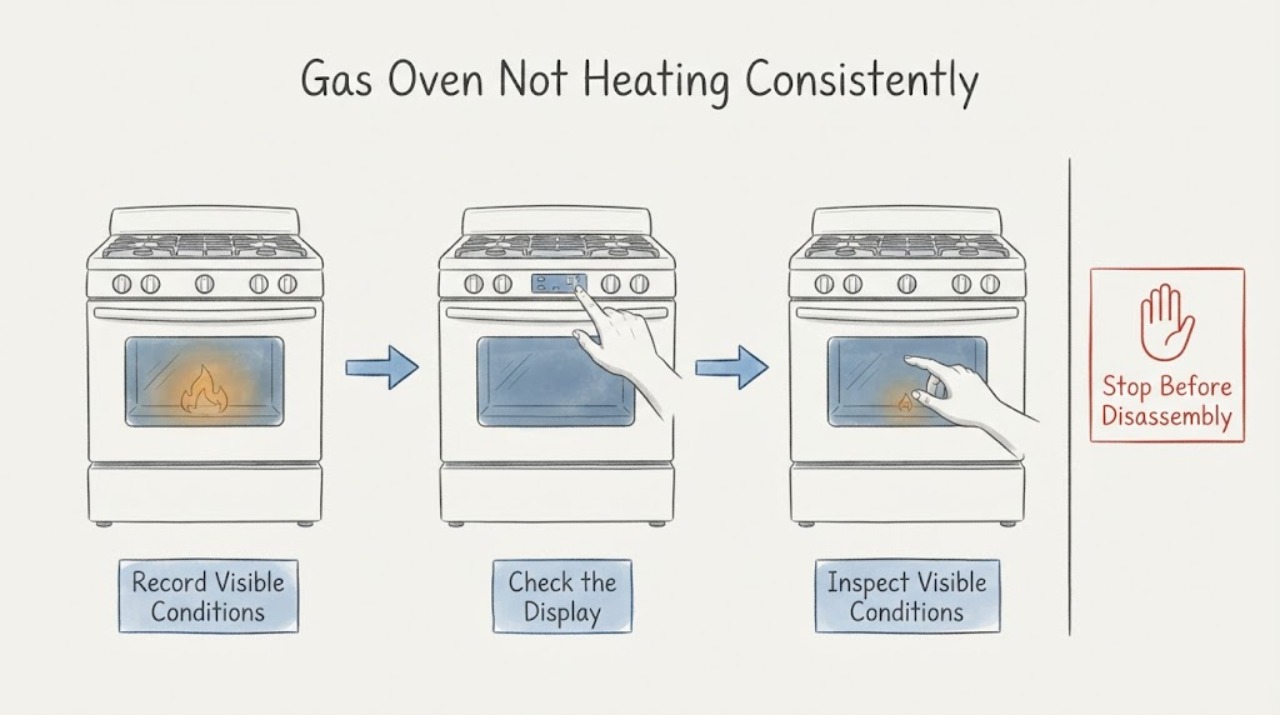
Work through in order
Diagnostic checks
Use only checks that match the exact appliance or system and its official guide.
-
Check 1
Record the exact oven cavity, mode, temperature setting, preheat-indicator behavior, door openings, ignition sounds, and the point at which the food or cavity seems underheated.
Expected result: The oven may heat, cycle, and recover; remain cold; complete preheat without enough heat; or show no indicator or a repeated flashing pattern.
Next step: Use the same mode and a full-preheat test only when there is no gas odor, smoke, abnormal flame, bang, or other hazard. Stop immediately when any hazard is present.
Why this matters
Why: A recoverable cycle can be normal thermostat control, while a completed preheat with a cold cavity or a missing heat request points toward a control, ignition, or temperature problem.
-
Check 2
With the oven cool and no hazard sign, verify that the correct gas-oven cavity, selector, and temperature control are being used, then allow the oven to complete its documented preheat without repeatedly opening the door.
Expected result: The wrong cavity or mode may have been selected, the preheat may complete normally, or the oven may never reach the preheat state.
Next step: Correct only a clearly mismatched control setting. If the correct mode still does not reach temperature, record the result and stop further testing for service.
Why this matters
Why: Wolf says preheating is important for cooking performance and that the selected mode and oven controls determine the heat request. An incomplete preheat can look like inconsistent heating.
-
Check 3
During one supervised, properly preheated test, observe whether the preheat indicator cycles and whether heat returns after the indicator turns off. Listen only from outside the closed oven for the normal burner response.
Expected result: The indicator may cycle with heat recovery, remain off, flash rapidly, or show completed preheat while the cavity remains cold.
Next step: If the oven does not recover heat or the indicator behavior is abnormal, leave the oven off and arrange qualified service. Do not open the gas path or attempt a manual ignition.
Why this matters
Why: Wolf describes indicator cycling as the thermostat calling for heat to maintain temperature. A repeated abnormal indicator pattern or completed preheat without heat is not explained by ordinary cycling.
-
Check 4
Compare the result with a repeatable cooking test after full preheat, keeping the door closed and using the recipe's stated rack, pan, and food preparation rather than changing several variables at once.
Expected result: The result may normalize when preheat and door use are controlled, or food may still take much longer, remain unevenly cooked, or show no improvement when the setting is raised.
Next step: Stop trying to compensate with repeated temperature increases. Record the repeatable result and contact Wolf Factory Certified Service when the issue persists.
Why this matters
Why: A normalized result supports a preheat or cooking-condition explanation. Persistent underheating after the documented technique is more consistent with a service issue.
-
Check 5
Prepare a service handoff with the Wolf model and serial information, cavity, mode, setting, preheat state, timing, indicator pattern, door use, food result, ignition sound, and any error or gas symptom.
Expected result: The record may show normal cycling, failure to reach preheat, completed preheat with a cold cavity, delayed or absent ignition, or a combustion warning.
Next step: Arrange Factory Certified Service for persistent underheating or abnormal control behavior. Use gas or emergency help from a safe location first for odor, smoke, an abnormal flame, or suspected combustion danger.
Why this matters
Why: These observations help service distinguish normal temperature control from an ignition, gas, sensor, thermostat, or control problem without guessing at a component.
Use your observations
Decision map
Find the observation that best matches what you see, then follow the next safe action.
-
PATH 01Next step
What you see
The oven reaches preheat, the indicator cycles on and off, heat returns between cycles, and repeatable cooking is normal when the door stays closed.
Do this next
Continue using the model's preheat and cooking guidance. Arrange service only if the pattern changes or performance becomes persistently poor.
Why this path and its safety boundary
Why it matters: This pattern matches Wolf's normal thermostat cycling to maintain the set temperature rather than proving inconsistent heating.
-
PATH 02Next step
What you see
Food is underdone only when preheat was incomplete, the door was opened repeatedly, or the pan and preparation differed from the recipe guidance.
Do this next
Repeat one controlled, fully preheated test with the door closed and the recommended cooking setup. Stop compensating with repeated temperature changes.
Why this path and its safety boundary
Why it matters: The test conditions can explain the result without establishing an appliance fault.
-
PATH 03Next step
What you see
Preheat shows completed but the cavity is still cold, food consistently takes much longer, cooking remains uneven after correct technique, or raising the setting does not improve performance.
Do this next
Leave the oven off and arrange Factory Certified Service. Do not open the burner or attempt to identify a failed valve, ignitor, sensor, or thermostat yourself.
Why this path and its safety boundary
Why it matters: Wolf identifies these as persistent temperature-performance symptoms requiring professional diagnosis.
-
PATH 04Next step
What you see
The burner fails to ignite normally, ignition is delayed, gas odor remains without ignition, or there is an abnormal flame, smoke, bang, or suspected combustion problem.
Do this next
Turn the control OFF if safe, do not use a flame or electrical switch to investigate, leave the area when necessary, and contact gas or emergency professionals from a safe location.
Why this path and its safety boundary
Why it matters: This is a gas or combustion safety condition, not an ordinary thermostat cycle.
Helpful context
Understand the symptom
What consistent heating should look like
Wolf ovens do not hold the burner at one continuous output. The thermostat or temperature sensors can let the cavity rise above the setting, pause heat, and call for heat again after the temperature falls. The preheat indicator can therefore turn on and off during cooking. A brief fluctuation with heat returning is different from a cavity that never reaches temperature or food that remains underdone across repeat, properly preheated tests.
Give the oven a fair preheat test
Select the intended gas-oven mode and cavity, set the temperature using the model controls, and allow the preheat indication to complete before judging the result. Keep the door closed during the test; opening it repeatedly changes the heat load and can make a healthy oven appear inconsistent. Use the same mode and a repeatable simple test so that a recipe, pan, rack position, or door-opening pattern is not mistaken for an appliance fault.
Use the indicator as a heat-demand clue
When the preheat indicator is on, Wolf says the oven is calling for heat. In a gas range, a sound may be heard when the burner ignites, and the indicator can cycle as the thermostat maintains the set temperature. If the indicator behaves normally and the cavity recovers heat, cycling is expected. If it flashes repeatedly, never calls for heat, or preheat completes while the oven remains cold, record the pattern and arrange service rather than calibrating or replacing a part yourself.
Separate cooking technique from underheating
Wolf lists incomplete preheat, opening the door too often or too long, foil around food, and pan choice among reasons food may be underdone. Correct those variables before deciding the oven is unstable. If food still takes significantly longer than the recipe or past experience, remains unevenly cooked after following the instructions, or does not improve when the setting is raised, the result meets Wolf's service boundary.
Keep gas faults outside the user test
Do not remove the burner, adjust a regulator, manually light the oven, or inspect an internal valve or ignitor. Stop immediately for gas odor without ignition, delayed ignition, an unusual flame, smoke, a boom, or another combustion warning. Turn the control OFF if this can be done without approaching the hazard, leave the area when necessary, and contact gas or emergency help from a safe location.
When checks do not resolve it
Need a professional?
Arrange Wolf Factory Certified Service when the oven does not reach or hold useful heat after a full preheat and controlled test, preheat completes while the cavity remains cold, food remains substantially slow or uneven despite correct technique, or the indicator behaves abnormally. Stop immediately for gas odor without ignition, delayed ignition, an abnormal flame, smoke, a bang, or suspected combustion danger; use gas or emergency help from a safe location.
Common questions
FAQ
Is it normal for a Wolf gas oven to turn the burner on and off?
Yes, temperature control cycles are expected. Wolf explains that the thermostat or sensors turn heat off after the oven rises above the setting and call for heat again after it cools. The preheat indicator can also cycle while maintaining temperature.
How can I tell normal cycling from a Wolf oven that is not heating consistently?
Allow a complete preheat with the door closed and use a repeatable test. Normal cycling should recover heat and produce a usable result. A completed preheat with a cold cavity, persistently slow or uneven cooking, or no improvement after raising the setting needs service.
Can I keep testing if I smell gas while the oven is not heating?
No. Wolf directs users to discontinue use when gas odor is present without ignition. Turn the control OFF if safe, avoid flames and electrical switches near the hazard, leave if necessary, and contact gas or emergency help from a safe location.
Read the exact guide
Official sources
- Wolf Oven Does Not Get Hot EnoughSub-Zero, Wolf, and Cove · Official Wolf guidance for incomplete preheat, door-opening effects, and when persistent undercooking should be referred for service.
- Wolf Oven Temperature IssueSub-Zero, Wolf, and Cove · Official Wolf guidance for temperature cycling, measurement limits, completed preheat with a cold oven, and persistent underheating or uneven cooking.
- Oven Preheat Indicator LightSub-Zero, Wolf, and Cove · Official Wolf guidance for the preheat indicator's heat-demand meaning and its normal cycling during temperature maintenance on gas ranges.
- Wolf Oven PreheatSub-Zero, Wolf, and Cove · Official Wolf guidance for allowing full preheat and recognizing product, oven-size, fuel, and mode effects on preheat behavior.
- Gas Oven Bake Burner Not WorkingSub-Zero, Wolf, and Cove · Official Wolf gas-oven guidance for ignition timing, preheat response, delayed ignition, gas odor without ignition, and Factory Certified Service.
Community feedback
Share a repair observation
Share a plain-text repair observation. Accepted observations are published automatically; this page may take a moment to update.