
Wolf appliance guidance
Wolf Gas Oven Repair Guides
Troubleshooting and repair guidance for published Wolf Gas Oven problems, symptoms, and maintenance questions.
Published Wolf Gas Oven guides
Choose the guide whose symptom or condition most closely matches what you are seeing.
-
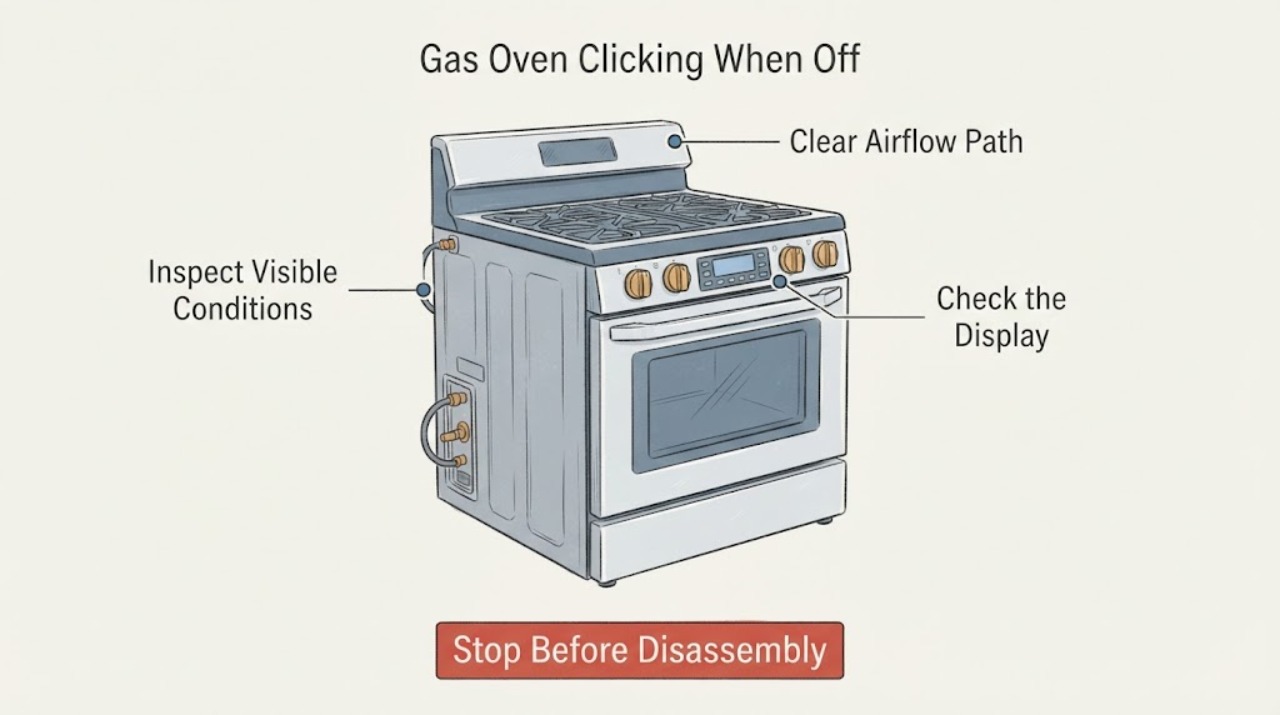
Wolf Gas Oven Clicking When Off: Identify the Sound Safely
A Wolf gas oven can make a soft fan or airflow sound after it is turned off while the cooling system brings the appliance down to a safe temperature. First identify whether the sound is a fading fan or a sharp electrical click or spark, and confirm that every oven and surface-burner control is fully OFF.
-
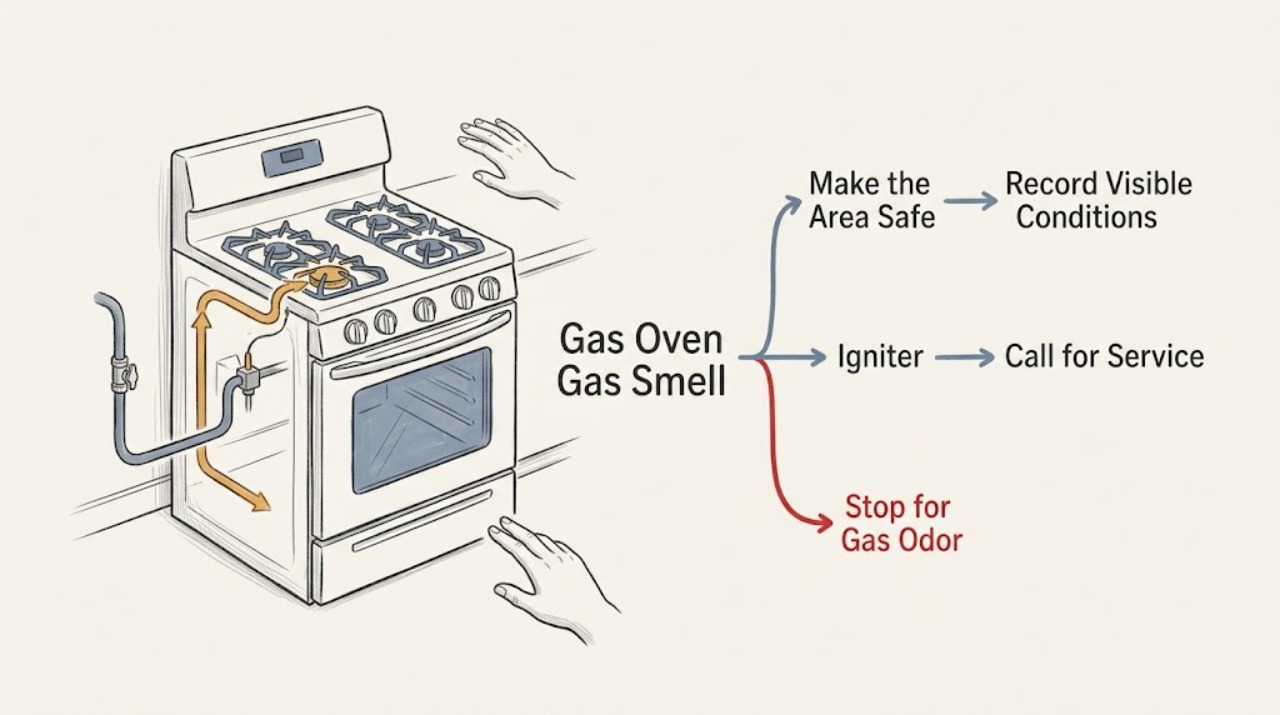
Wolf Gas Oven Gas Smell: Stop Safely and Choose the Next Call
If a Wolf gas oven smells strongly of gas, the odor persists, the burner did not ignite, ignition was delayed, or a carbon-monoxide alarm is active, stop using the oven immediately. Do not light anything, operate electrical switches or a phone in the odor area, move the range, search for a leak, or relight the burner to test it.
-
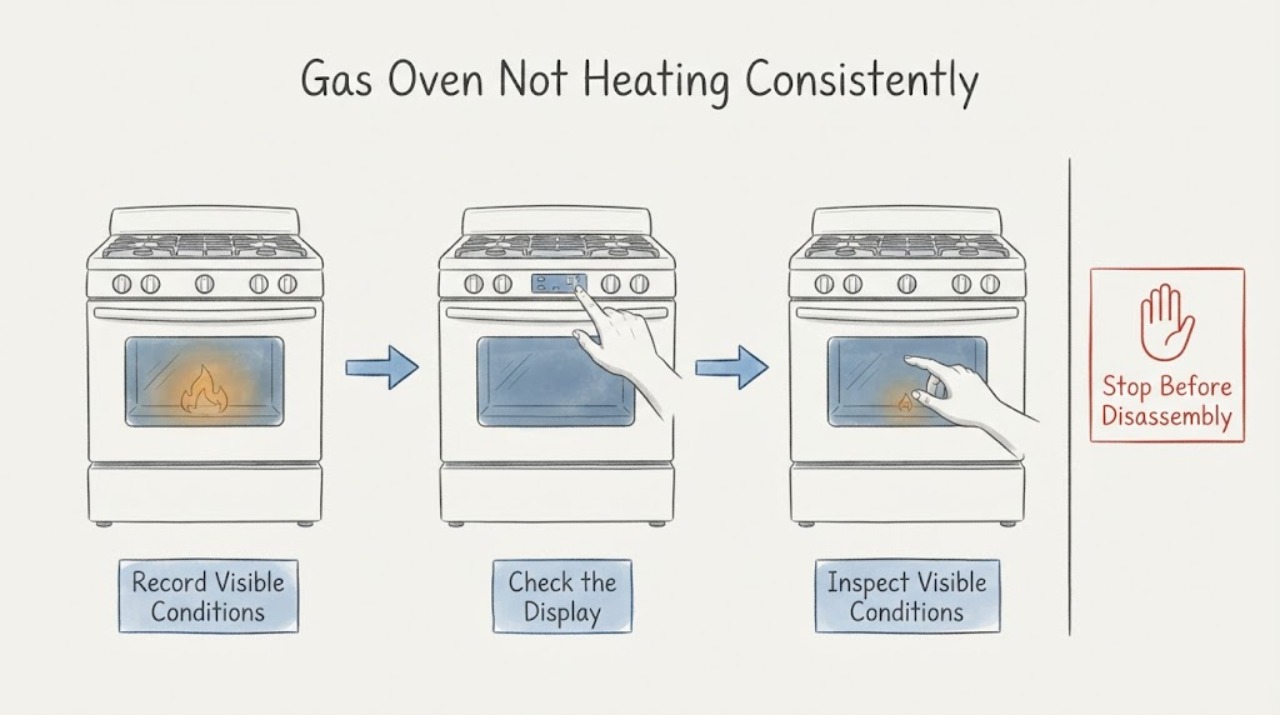
Wolf Gas Oven Not Heating Consistently: Separate Cycling From a Fault
A Wolf gas oven can cycle its burner on and off to maintain temperature, so a changing flame or preheat indicator does not automatically mean it is failing. First use the correct mode and cavity, allow a complete preheat with the door closed, and record whether the oven recovers heat between cycles.
-
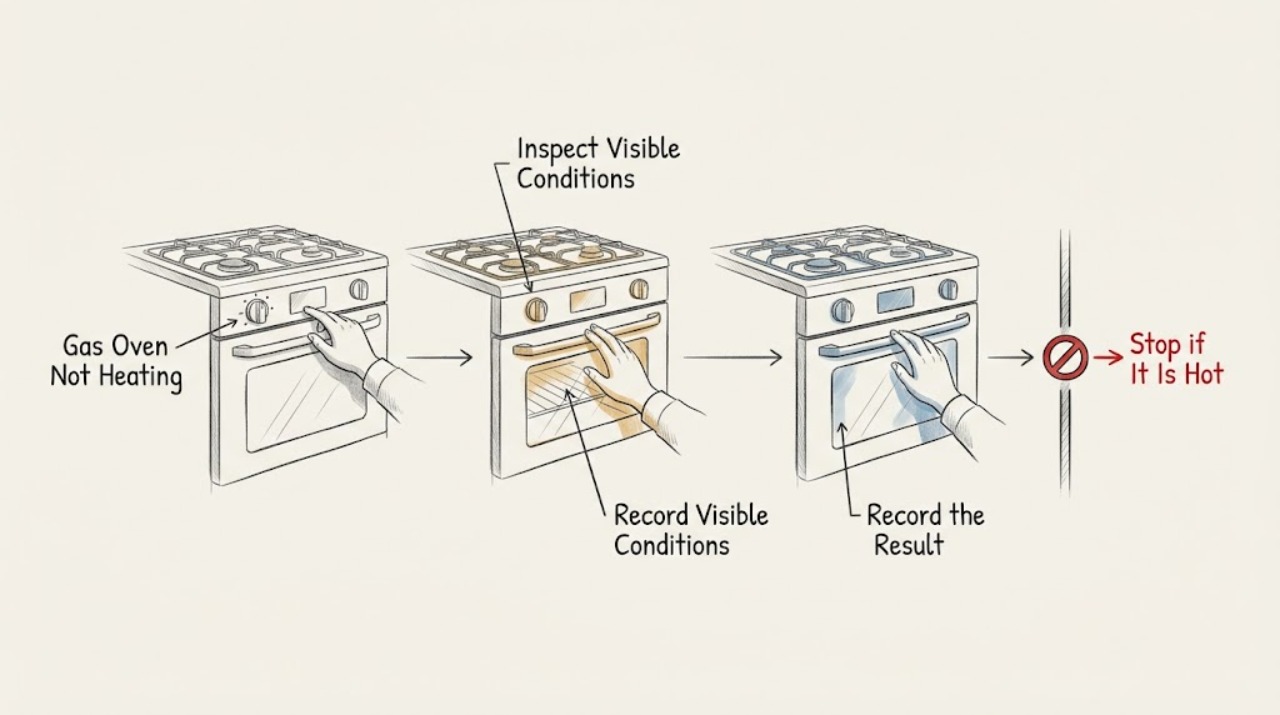
Wolf Gas Oven Not Heating: Safe Checks Before Service
If a Wolf gas oven is not heating, first stop for gas odor, delayed ignition, a boom, an abnormal flame, smoke, carbon-monoxide concern, arcing, or a breaker trip. Otherwise record the exact model and display, confirm the oven is in the intended mode and has electrical power, and allow the model's normal preheat period.
-
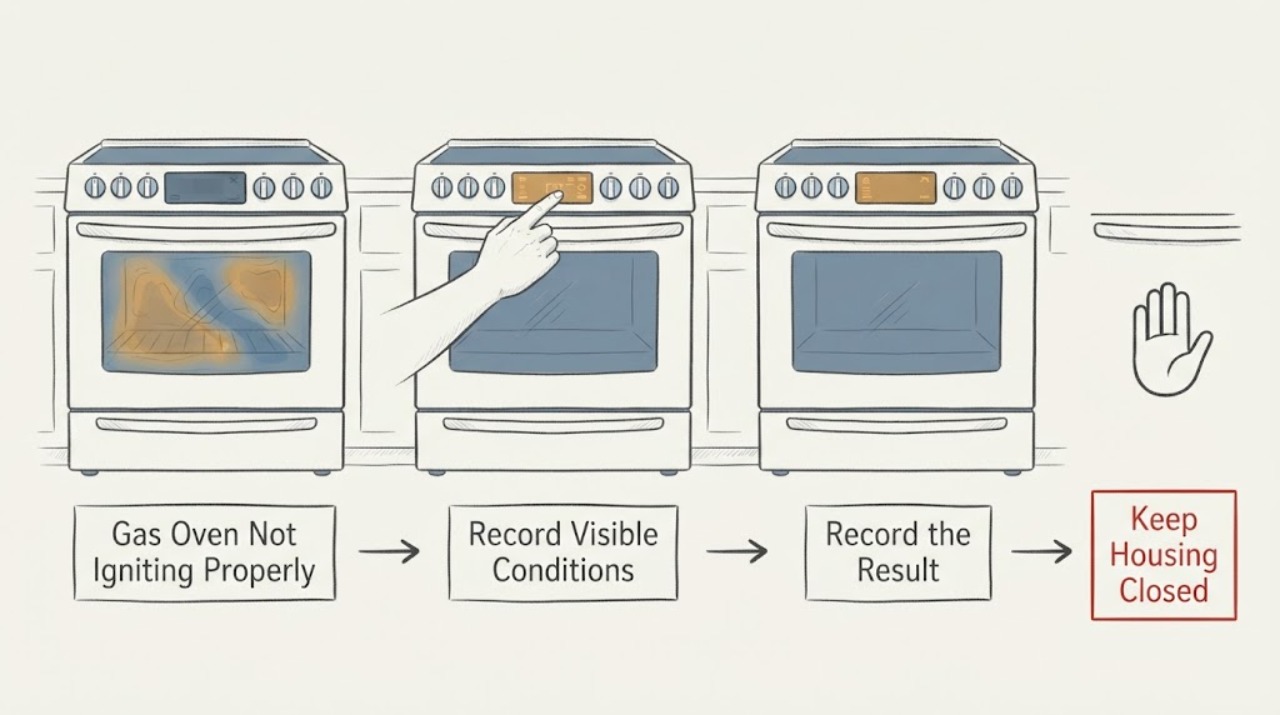
Wolf Gas Oven Not Igniting Properly or Cooking Unevenly
Treat this Wolf gas-oven complaint as two linked but different observations: a burner that does not ignite or ignites late is a gas and ignition safety branch, while an oven that ignites but cooks unevenly is first a preheat, rack, pan, foil, or cooking-mode check. Do not retry if you smell gas, hear a delayed bang, see an abnormal flame, or hear continuous clicking without ignition.
-
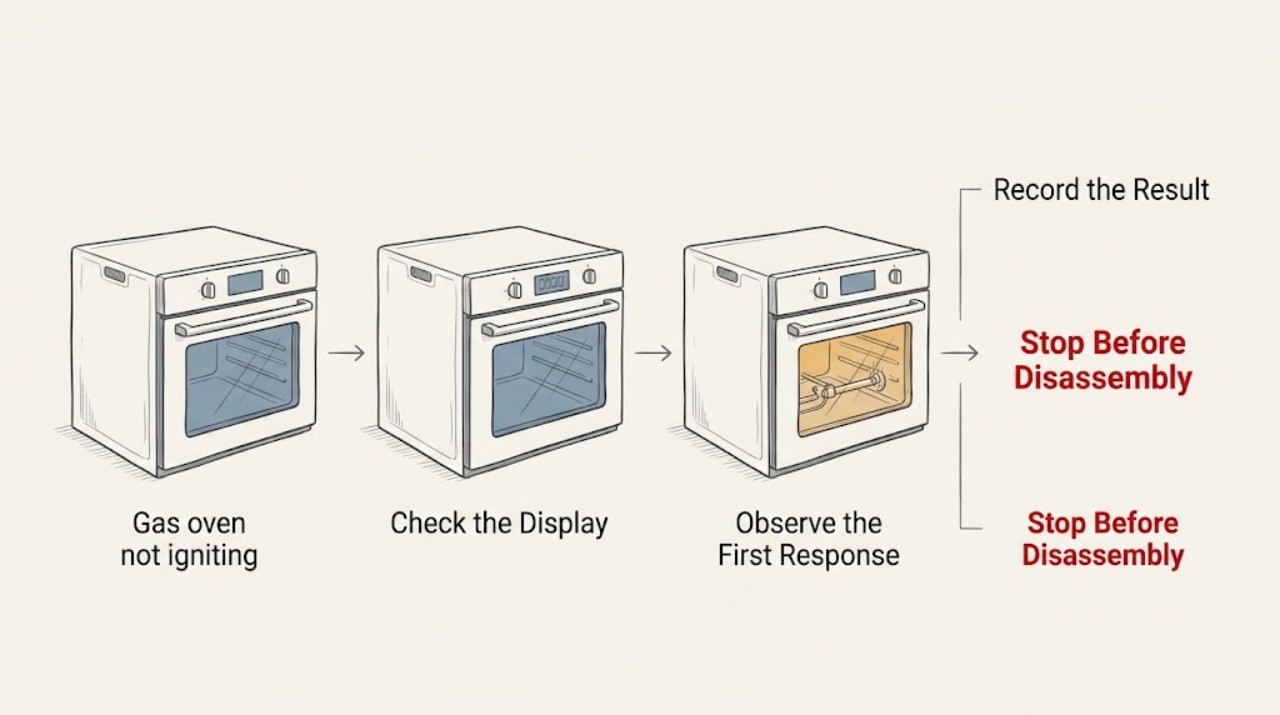
Wolf gas oven not igniting: safe checks before service
Do not keep trying to light a Wolf gas oven if you smell gas, hear a delayed bang, see an unusual flame, or the ignitor clicks without ignition. Turn the control off, leave the area if the odor is strong or persistent, and contact gas or emergency help from a safe location; do not test for a leak, use a flame, or open the gas path.
-
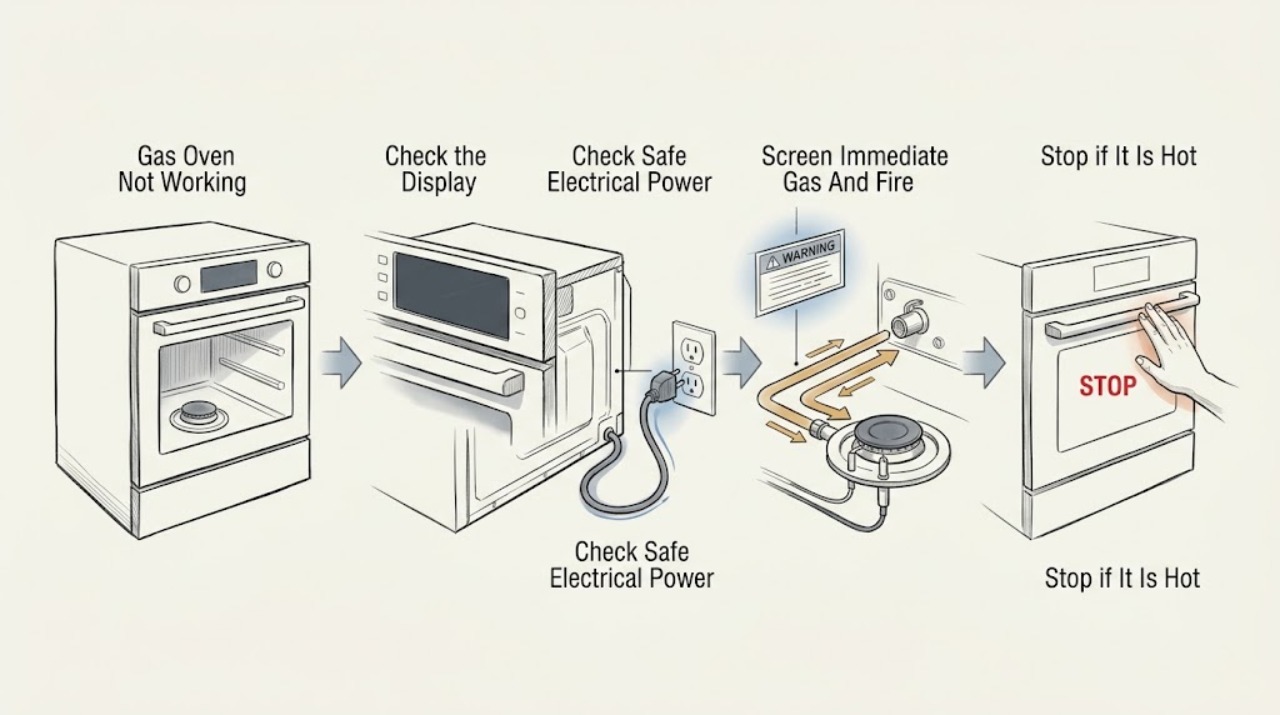
Wolf Gas Oven Not Working: Check Power, Controls, and Ignition Safely
A Wolf gas oven that is not working needs both electrical power for its controls and igniter and an appropriate gas supply. First decide whether the display is dark, a control or door state prevents a start, the oven calls for heat but does not ignite, or it ignites but does not heat normally.
-
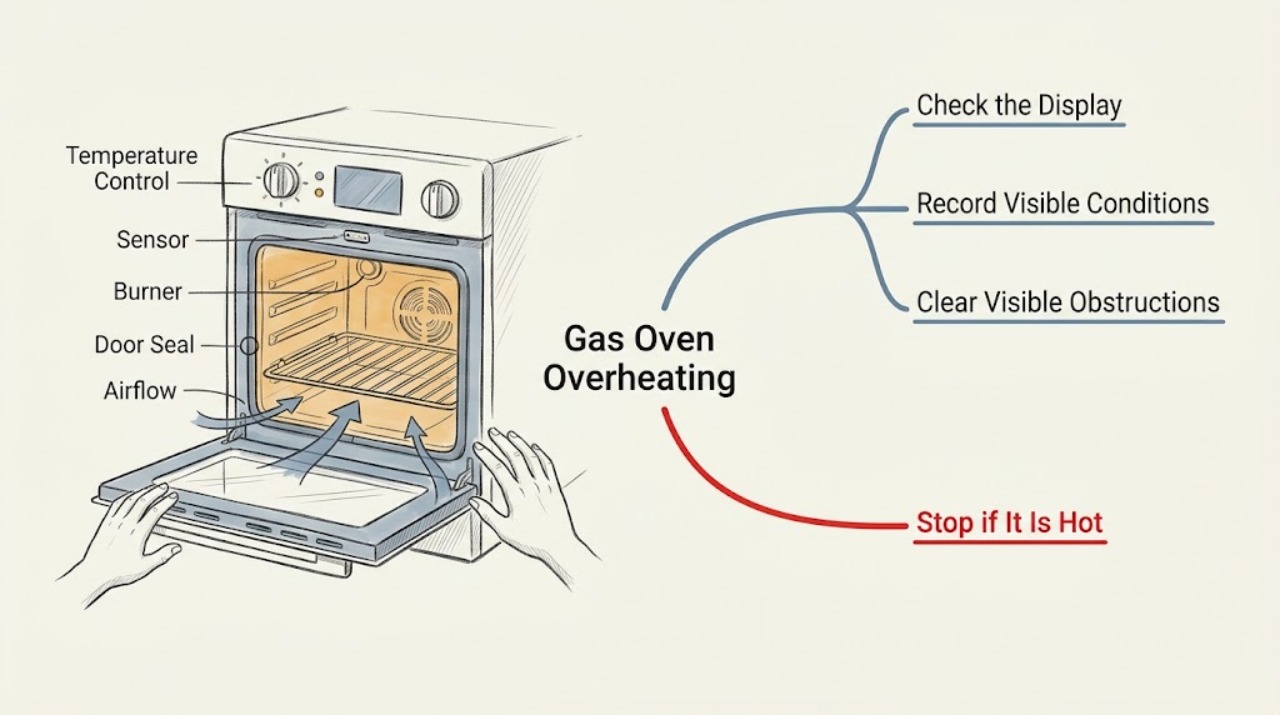
Wolf Gas Oven Overheating: Separate Normal Cycling from a Safety Fault
A Wolf gas oven can feel hotter than its setpoint while it cycles, and food can cook hot because of the selected mode, rack position, pan material, or temperature setting. That is different from continuous heating after the control is off, an abnormal flame, smoke, a carbon-monoxide alarm, a gas odor, a burning odor, or surfaces becoming dangerously hot.
-
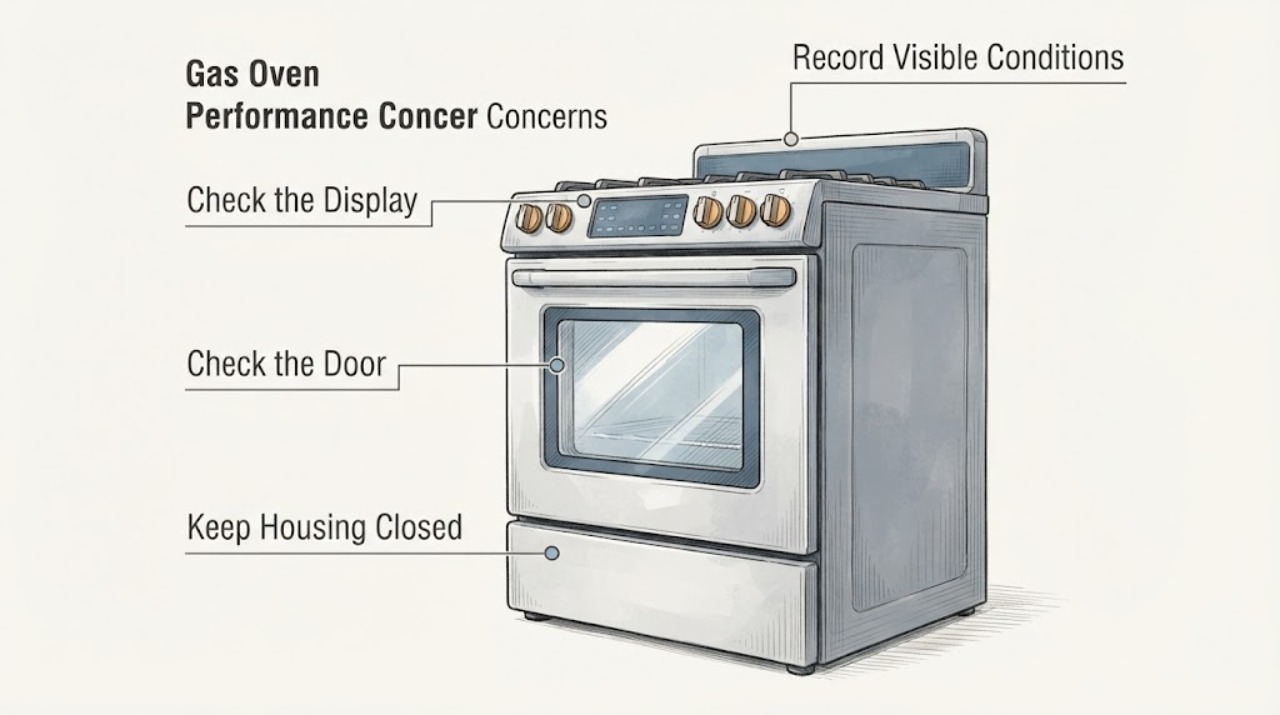
Wolf Gas Oven Performance Concerns: Check Preheat and Cooking Setup First
If a Wolf gas oven lights but cooks too slowly, runs too hot or cool, or browns unevenly, first separate a setup problem from a heating failure: use the exact cooking mode and temperature, allow the oven to finish preheating, keep the door closed, and check the rack and pan arrangement.