
On this page
Start here
Quick answer
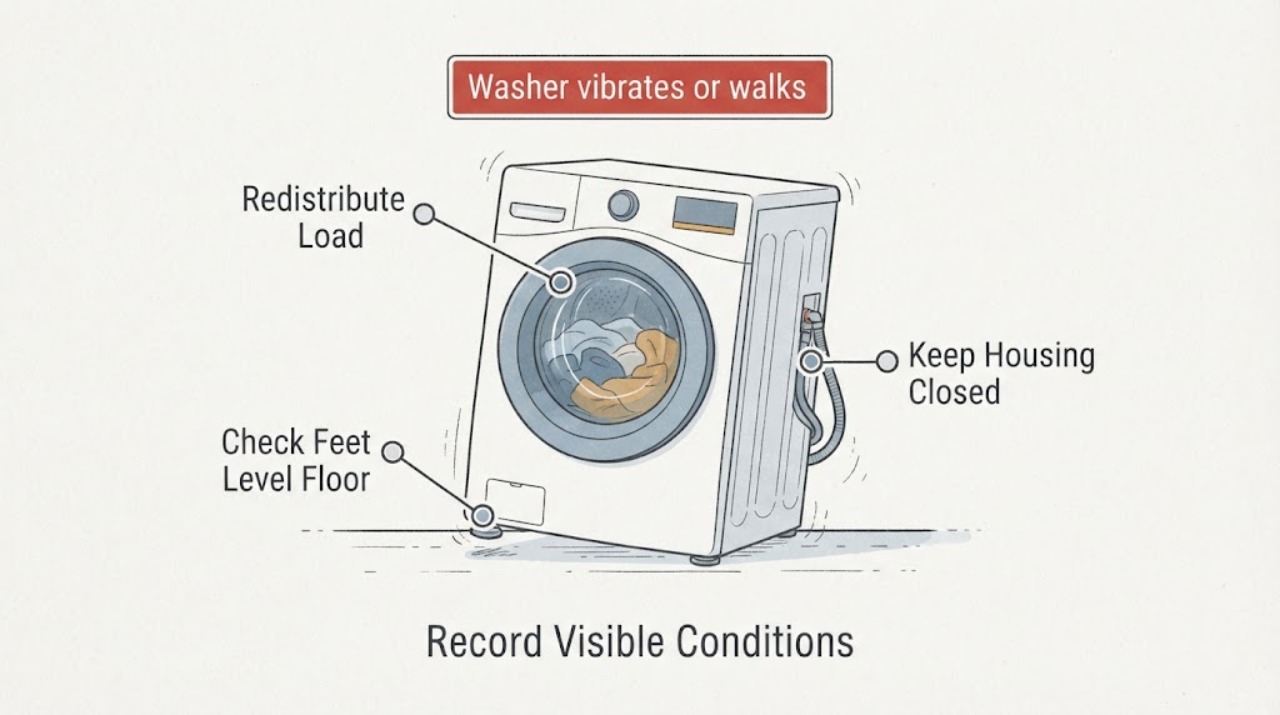
A Whirlpool washer that shakes or walks most often needs the load, installation, or floor checked before an internal part is blamed. Stop the cycle if it is moving violently. With the basket fully stopped, redistribute a bunched or single heavy item, check that the washer is level and all four feet contact the floor, and make sure nothing is leaning against the cabinet. For a front-load model, confirm the shipping bolts and other transport materials were removed after installation or moving; do not assume this applies to a top-load design. Secure accessible hoses only as the model instructions allow. If the movement returns with a balanced load and firm, level installation, or there is a leak, harsh noise, damaged cord, or electrical warning, keep the washer off and arrange qualified service.
Before you begin
Safety first
- This article supports ordinary-access observation and exact model installation checks only. Do not reach into moving parts, hold or tip the washer, slide it through a wet area, loosen pressurized hoses, remove unidentified hardware, open panels, bypass safety controls, or test live electrical components.
Work through in order
Diagnostic checks
Use only checks that match the exact appliance or system and its official guide.
-
Check 1
Stop the Whirlpool washer if it walks or shakes, wait for all motion to end, and record the model number, phase, load type, noise, and whether movement began after installation or relocation.
Expected result: Note fill versus agitation versus spin timing, movement distance, basket or cabinet contact, errors, leaks, and whether the appliance is hot or produces an electrical or burning odor.
Next step: Photograph the model label and surrounding installation from a dry, safe position; continue only if the washer is stable and free of smoke, leak, heat, or electrical warning.
Stop if: Stop for violent movement, water near electrical parts, smoke, burning or electrical odor, sparking, a hot plug, damaged cord, or a harsh metal-on-metal sound.
Why this matters
Why: Spin-only movement with wet or bunched laundry points first toward balance or installation; fill-phase contact may be a hose or nearby-object issue. Movement with a safety symptom is not a load-adjustment task.
-
Check 2
With the washer fully stopped and the lid or door safely open, inspect whether clothing is bunched to one side, tightly packed, a single absorbent item, or a bulky item in an unsuitable cycle.
Expected result: Record whether the tub is visibly off-center, heavy items are wrapped together, movement occurs only as spin rises, or the same movement appears with a balanced smaller load.
Next step: Redistribute or reduce the load according to the model guide, use the designated bulky cycle when applicable, and perform one supervised verification only.
Stop if: Do not reach into a moving basket, add water to stabilize the load, overload the machine, or continue if it walks or strikes objects.
Why this matters
Why: Whirlpool says an uneven load can create movement, noise, vibration, and reduced spin, and that bulky or single absorbent items can be difficult to balance. A corrected load that still walks points to installation, floor, or hardware.
-
Check 3
With the washer stopped, gently rock it diagonally from a safe position and check that all four feet make firm contact; compare level and foot-lock instructions with the exact manual.
Expected result: Record rocking, a visibly sloped cabinet, loose foot hardware, a flexing or sagging floor, or a pedestal or drain pan that changes foot contact.
Next step: Adjust feet and locking hardware only as the model installation procedure directs; arrange service if the floor, pedestal, or machine cannot be stabilized.
Stop if: Do not climb on, tip, slide, wedge, or hold the washer during a cycle; stop if it threatens surrounding fixtures.
Why this matters
Why: Whirlpool says an unlevel washer or feet that do not contact the floor can unbalance the load and cause excessive vibration, especially during spin. A firm, level installation makes an internal or load-independent fault more likely if movement persists.
-
Check 4
If the Whirlpool washer is front-load and the symptom began after delivery, installation, or moving, compare the rear of the appliance with the exact installation guide to verify transport bolts and required shipping materials were removed.
Expected result: Record whether a bolt, spacer, brace, or other documented transport part remains, or whether all required materials were removed and the movement continues.
Next step: Follow the exact manual or have a qualified installer remove documented shipping hardware; do not disassemble the cabinet or operate until installation is complete.
Stop if: Do not pull the washer forward, loosen unidentified hardware, reach behind it in a wet area, or run another cycle with suspected shipping bolts installed.
Why this matters
Why: Whirlpool says shipping bolts stabilize the suspension during transport and leaving them installed can cause excessive vibration and noise. This check is design- and model-specific and does not prove the suspension is good.
-
Check 5
From a dry, safe position, inspect whether the drain or inlet hose, a strap, or an object beside the washer can touch the cabinet during the phase that produces the noise.
Expected result: Note a bang only during fill or drain, a hose moving against the rear cabinet, a broom or rack leaning on the appliance, or a cabinet that physically changes position independent of contact.
Next step: Move only loose nearby objects and secure accessible hoses with the model-supplied method; arrange plumbing or appliance service for damaged hoses, leaks, or continued movement.
Stop if: Do not loosen pressurized connections, pull the appliance into a wet area, or enter a space where the cord or outlet may be wet.
Why this matters
Why: Whirlpool says hoses and nearby household items can strike the cabinet or transmit vibration. Removing a contact source can stop a noise but cannot clear walking caused by an unstable load, floor, or internal problem.
-
Check 6
For a top-load Whirlpool washer, compare a bulky or large load with the exact cycle and loading instructions, keeping the basket stopped before rearranging items.
Expected result: Record whether a comforter, rug, blanket, or single absorbent article floats, wraps, sits to one side, or causes vibration only in a particular cycle.
Next step: Follow garment care labels and the model cycle guide, load similar items as directed, and verify once under supervision.
Stop if: Do not wash an item that the care label or model excludes, add water to force engagement, or continue a violently shaking cycle.
Why this matters
Why: Whirlpool says bulky-cycle choice, heavy items, and a single absorbent article can create uneven distribution; its top-load guidance also says some basket movement is normal. A machine that walks on ordinary balanced loads needs a different branch.
-
Check 7
After one safe correction to load, level, shipping hardware, or external contact, run one supervised model-approved cycle or spin phase while staying clear of the moving washer.
Expected result: Record whether the washer remains in place, all feet stay planted, the same phase triggers movement, and any leak, noise, error, odor, heat, or breaker symptom returns.
Next step: Keep the model, phase, load, correction, floor and foot observations, and recording for qualified appliance service.
Stop if: Stop immediately for violent movement, leak, smoke, burning odor, electrical symptom, harsh noise, or recurrence after the correction.
Why this matters
Why: A stable result supports the corrected external condition but does not prove internal suspension, tub, motor, or drive parts are sound. A repeat walk with a balanced load and correct installation requires diagnosis.
Use your observations
Decision map
Find the observation that best matches what you see, then follow the next safe action.
-
PATH 01Safety boundary
What you see
Walking or strong vibration begins during spin with a bunched, single heavy, bulky, or tightly packed load, while the washer is otherwise stable and dry.
Do this next
Stop, redistribute or reduce the load, follow the model's bulky-item instructions, and verify once; service the washer if the same pattern persists on balanced loads.
Why this path and its safety boundary
Why it matters: Load distribution or cycle suitability is more likely than a failed suspension or drive component.
Safety stop: Do not hold the washer in place or continue a cycle that strikes surrounding objects.
-
PATH 02Safety boundary
What you see
The cabinet rocks when stopped, one or more feet do not contact the floor, the floor flexes, or the machine is not level.
Do this next
Use the exact installation procedure to adjust and lock the feet and address an unsuitable floor or pedestal; request service when stability cannot be restored.
Why this path and its safety boundary
Why it matters: Installation stability is more likely than a load-only issue.
Safety stop: Do not wedge, tip, slide, or operate a washer that is unstable.
-
PATH 03Safety boundary
What you see
A front-load washer began walking after installation or moving and its documented transport bolts or shipping materials may still be installed.
Do this next
Stop use and follow the exact manual or qualified installer procedure for removal and installation completion.
Why this path and its safety boundary
Why it matters: Transport hardware or incomplete installation is more likely than a random load imbalance.
Safety stop: Do not remove unidentified hardware or run the washer with suspected shipping bolts still fitted.
-
PATH 04Safety boundary
What you see
The sound is a bang or rattle during fill, drain, or spin and a hose or nearby object visibly contacts the cabinet, while the cabinet itself stays planted.
Do this next
Remove loose nearby objects and secure accessible hoses only as the model instructions allow; service a damaged hose or persistent cabinet movement.
Why this path and its safety boundary
Why it matters: External contact or hose movement is more likely than the washer walking across the floor.
Safety stop: Do not loosen pressurized connections or inspect from a wet position.
-
PATH 05Safety boundary
What you see
The basket moves freely within its intended operating range, the washer stays planted, the load is suitable, and there is no unusual noise, leak, or safety symptom.
Do this next
Monitor the appliance and use the exact model guide; arrange service if motion increases, changes phase, or leaves the floor position.
Why this path and its safety boundary
Why it matters: Some basket movement can be normal and is different from a cabinet that walks or strikes objects.
Safety stop: Do not normalize movement that becomes violent or damages surrounding objects.
-
PATH 06Safety boundary
What you see
Walking continues with a balanced load and correct level, feet, floor, shipping hardware, and hose setup, or movement is paired with a leak, harsh noise, heat, odor, breaker trip, or damaged cord.
Do this next
Keep the washer off, isolate water or power only from a dry safe location when appropriate, and arrange qualified appliance service or plumbing service for a water-system issue.
Why this path and its safety boundary
Why it matters: An internal suspension, tub, motor, drive, control, installation, or safety fault requires diagnosis.
Safety stop: Do not open panels, test live parts, lubricate hidden components, or keep running cycles to reproduce the fault.
Helpful context
Understand the symptom
Stop the movement and classify when it happens
A small amount of basket motion can be part of operation, but a cabinet that walks, strikes nearby objects, or shakes violently is not a normal condition to ignore. Note whether the movement occurs during fill, agitation, drain, or spin; whether it began after installation or moving; whether the basket contains one heavy or bulky item; and whether the washer leaks or makes a new harsh noise.
Check the load without chasing it
Whirlpool says an uneven load can create basket movement, noise, vibration, and reduced spin, and its guidance for large or heavy items warns that a single absorbent item can be difficult to balance. Stop fully, spread clothing evenly according to the model design, and use a suitable cycle for bulky items. Never hold a moving appliance in place.
Verify feet, level, and floor
All four feet should contact a solid floor and the washer should be level in the directions specified by the installation instructions. Whirlpool recommends a gentle diagonal rock check with the washer stopped. A flexing or sagging floor, drain pan, pedestal, or loose foot can make a correctly distributed load unstable.
Treat shipping hardware as a front-load installation check
For a front-load Whirlpool washer, transport bolts stabilize the internal suspension during shipping and must be removed before use. Whirlpool says leaving them in place can cause excessive vibration and noise. Confirm with the exact installation guide rather than reaching behind the machine or removing hardware by guesswork.
Separate hose noise from cabinet movement
Fill and drain hoses can strike the rear cabinet and transmit vibration. From a dry, accessible position, observe whether the hose or a nearby broom, rack, or other object touches the washer during the problem phase. Secure or reposition only what the model instructions permit; persistent cabinet movement after external checks needs service.
Safety boundary
Stop conditions
- Stop for violent walking, the tub or cabinet striking nearby objects, a leak, smoke, burning or electrical odor, sparking, a hot plug or outlet, or a damaged cord.
- Do not reach into a moving basket, hold the washer in place, climb on it, or continue a cycle that threatens people, walls, cabinets, or plumbing.
- Do not tip or slide the washer, loosen pressurized hoses, or inspect behind it from a wet or unstable position.
- Do not remove shipping bolts or other hardware unless the exact installation instructions identify them and the appliance can be safely accessed.
- Do not transfer top-load loading rules or front-load shipping-bolt and foot procedures to another Whirlpool design; use the complete model manual.
- After one safe external correction and supervised verification, arrange service if the washer still walks, movement is unexplained, or any leak, noise, heat, odor, or electrical symptom returns.
Only after diagnosis
Potential parts
- leveling foot or foot hardware
Consider this category only when the exact installation check confirms a damaged foot or locking component that prevents firm contact after normal adjustment.
Confirm the complete Whirlpool model, foot geometry, locking hardware, and installation procedure; do not use a generic wedge as a repair. - front-load shipping hardware or installation kit
Shipping bolts are not a routine replacement for a vibrating washer; consider this category only when the exact front-load installation documentation identifies missing or damaged transport hardware after moving.
Confirm the complete model and the documented transport hardware; do not operate with bolts installed or substitute unidentified hardware. - suspension, tub, motor, or drive component
Consider this category only after a qualified diagnosis finds persistent walking with a suitable load and correct installation, and links it to a specific internal component.
Confirm the complete Whirlpool model, component position, mechanical and electrical specifications, and exact repair procedure before selecting any part.
When checks do not resolve it
Need a professional?
Arrange qualified Whirlpool appliance service when a balanced load, correct level and foot contact, applicable shipping-hardware check, and hose/contact check do not stop walking or vibration, or when the washer leaks, makes a harsh noise, damages itself, or has a safety symptom. Use plumbing service when the movement or noise comes from household piping or a leak at the water connection.
Safety scope: This article supports ordinary-access observation and exact model installation checks only. Do not reach into moving parts, hold or tip the washer, slide it through a wet area, loosen pressurized hoses, remove unidentified hardware, open panels, bypass safety controls, or test live electrical components.
Common questions
FAQ
Why is my Whirlpool washer walking during spin?
Start with the load and installation: a bunched or single heavy item, bulky cycle mismatch, unlevel washer, feet not firmly contacting the floor, or a flexing floor can all contribute. For a front-load model, also confirm shipping materials were removed. Stop violent movement rather than holding the washer.
Is some Whirlpool washer basket movement normal?
Whirlpool says some basket movement within its intended range can be normal. A cabinet that walks across the floor, strikes nearby objects, shakes violently, leaks, or develops a new harsh sound is a different condition and should be stopped and checked.
Should I add towels to balance a Whirlpool washer?
Follow the exact model and garment-care guidance. A single bulky or absorbent item can be hard to balance, but adding items indiscriminately can overload the washer or create another imbalance. Stop fully before redistributing anything.
Could shipping bolts make a Whirlpool washer vibrate?
Yes, for applicable front-load models. Whirlpool says transport bolts stabilize the suspension during shipping and leaving them installed can cause excessive vibration and noise. Confirm the exact installation guide and do not remove unidentified hardware by guesswork.
Can a drain or inlet hose make a Whirlpool washer sound like it is shaking?
Yes. Whirlpool says hoses can strike the rear cabinet or transmit vibration, especially during fill or drain. Observe from a dry position and secure only with the model-approved method; cabinet movement that persists after this check needs service.
When should I call for Whirlpool washer vibration service?
Call for service when a balanced load, correct level and foot contact, applicable shipping-hardware check, and hose check do not stop walking, or when there is a leak, harsh noise, damaged cord, heat, burning odor, breaker trip, or repeated violent movement.
Read the exact guide
Official sources
- Vibration - Washing Multiple Items - Product Help | WhirlpoolWhirlpool Corporation · Official Whirlpool top-load guidance; cycle and loading rules vary by model and garment care label.
- Knocking or Thumping - Noise - Product Help | WhirlpoolWhirlpool Corporation · Official Whirlpool top-load guidance; load and foot checks should be matched to the exact model.
- Washer Walking and/or Vibrating - Front Load Washer - Product Help | WhirlpoolWhirlpool Corporation · Official Whirlpool front-load guidance; shipping-bolt and foot checks do not automatically apply to top-load models.
Community feedback
Share a repair observation
Share a plain-text repair observation. Accepted observations are published automatically; this page may take a moment to update.