
Repair problem
Vibrates Or Walks Troubleshooting Guides
Published FixGraph guidance for diagnosing and responding to vibrates or walks.
Matching published guides
Choose a guide that matches the service, equipment, and conditions you are seeing.
-
Amana washer vibrates or walks: What to Check and What to Do Next
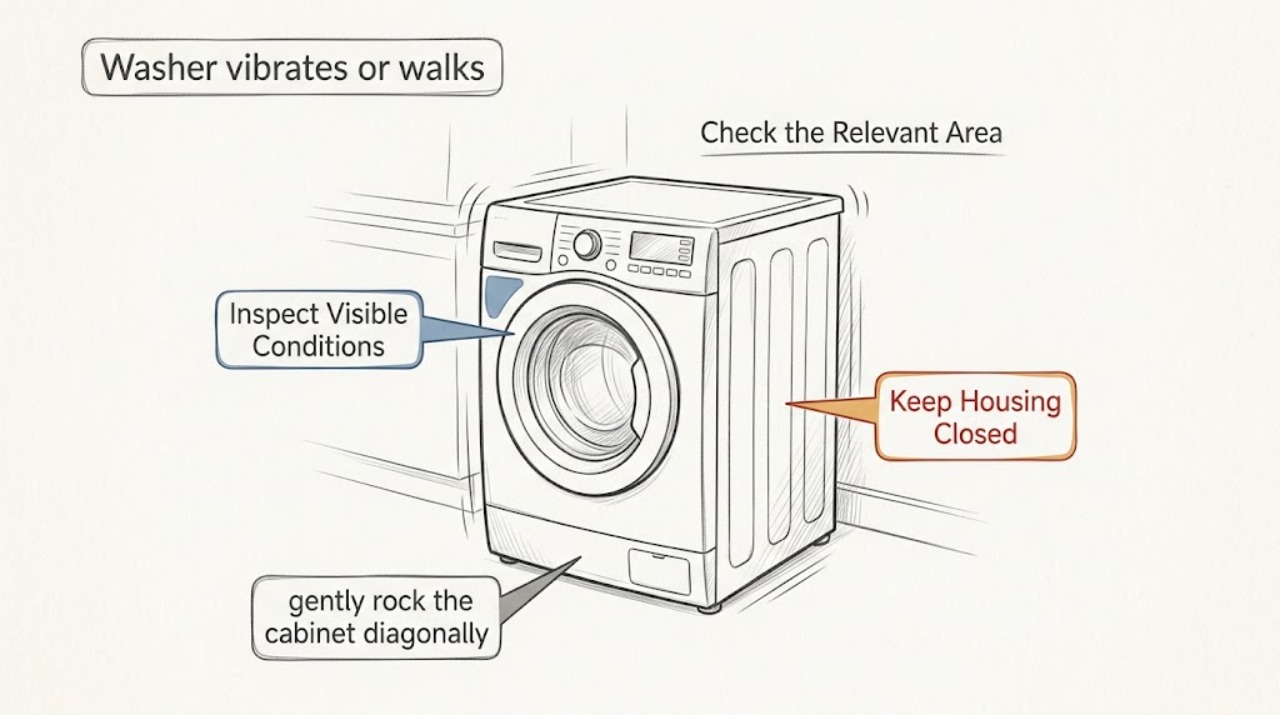
An Amana washer that vibrates or walks is most often reacting to an unbalanced or overloaded load, a single bulky item, an unlevel floor or foot, loose pedestal hardware, or front-load shipping materials that were not removed. Stop the cycle and keep clear of the moving basket, then identify whether movement appears only during spin and whether the machine rocks when stopped.
-
Electrolux washer vibrates or walks: What to Check and What to Do Next
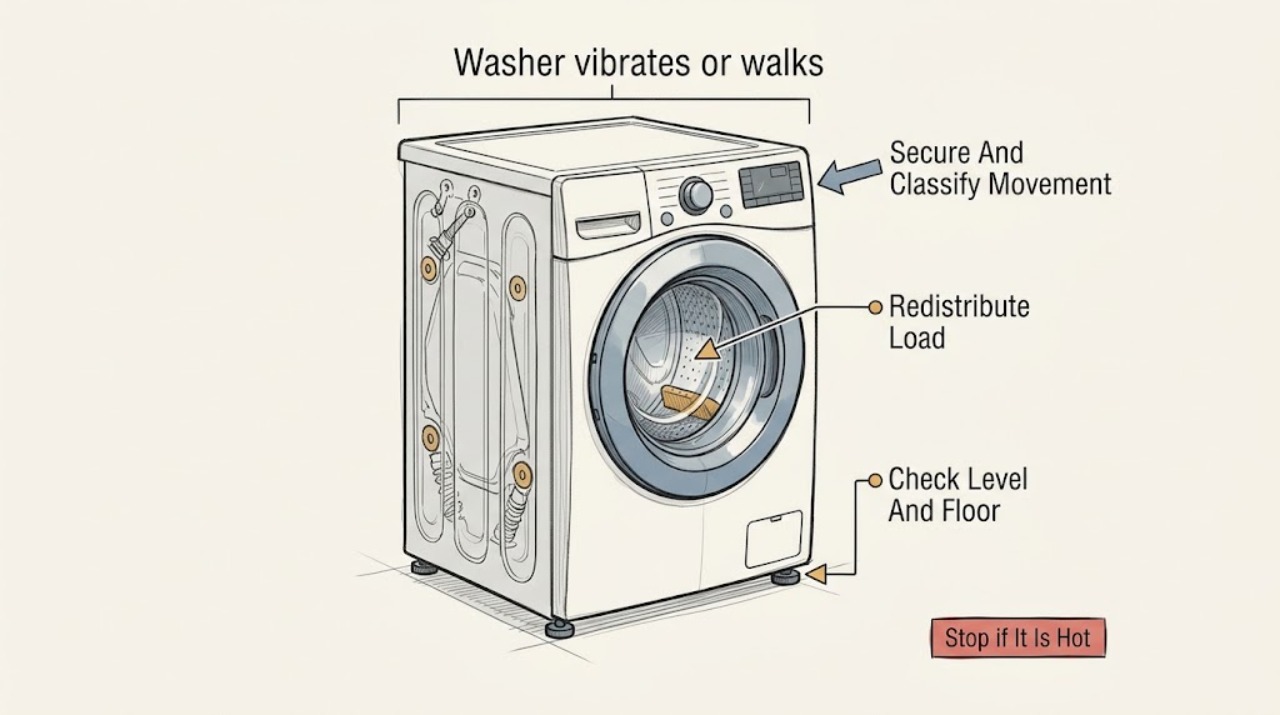
Stop an Electrolux washer that walks toward its hoses, wall, or electrical connections. After all motion stops, first separate an uneven or bulky load from an installation problem: redistribute the load, check that every foot rests firmly on a solid level floor, and for a recently installed front-load machine verify that shipping materials and bolts were removed.
-
GE Washer Vibrates or Walks: What to Check and What to Do Next
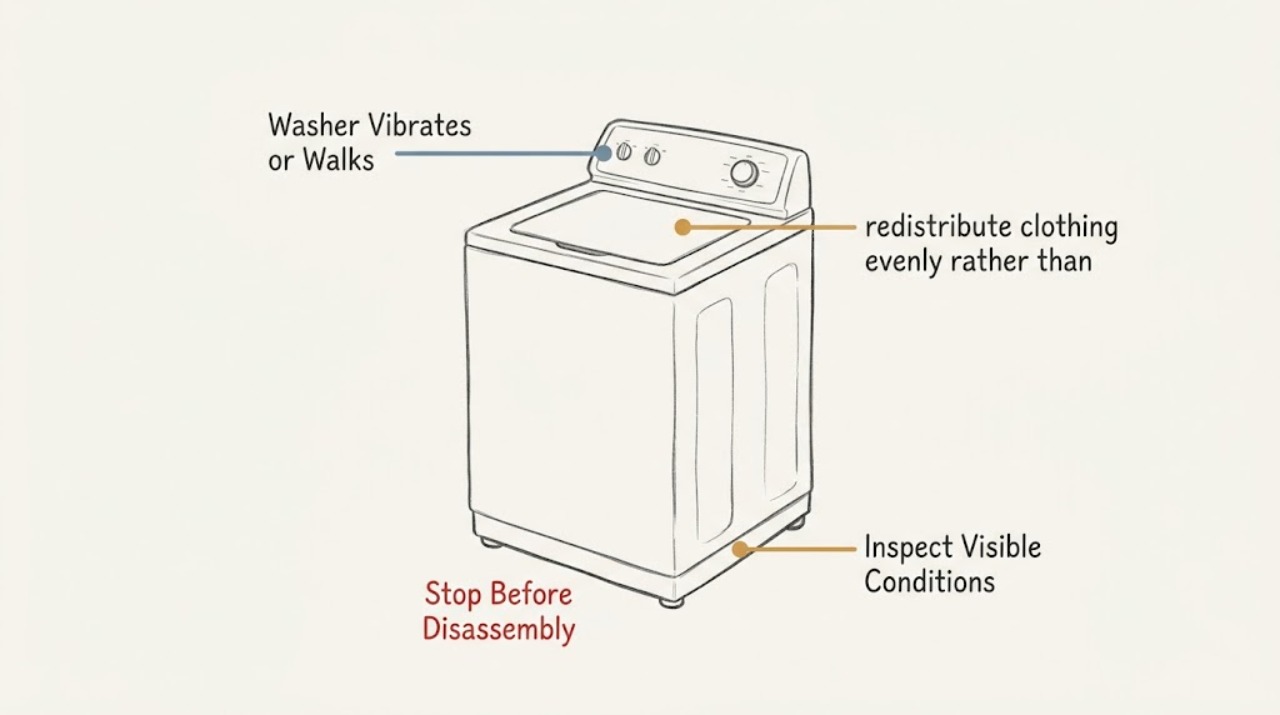
A GE washer that vibrates or walks most often needs its load, level, legs, floor, or installation checked before an internal part is blamed. Stop the cycle, wait for the basket to stop, and redistribute a bunched or single heavy load.
-
Hotpoint Washer Vibrates or Walks: What to Check and What to Do Next
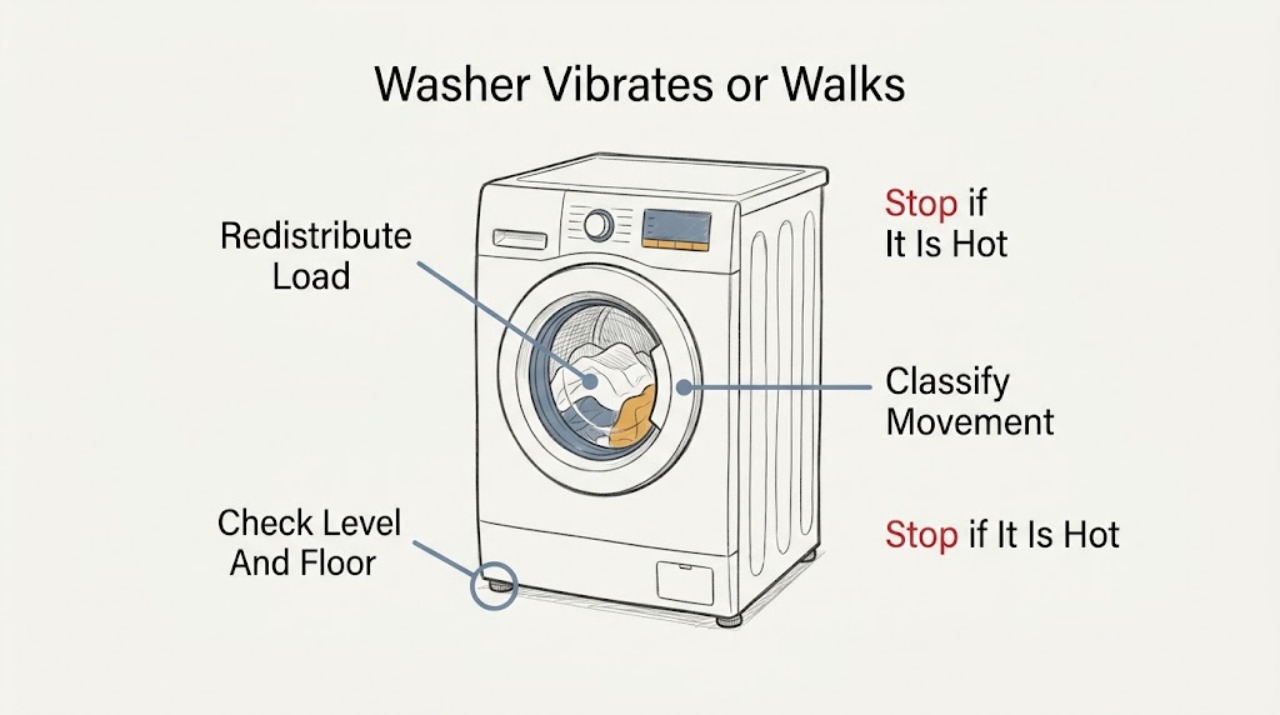
If a Hotpoint washer vibrates or walks, stop the cycle and first note whether the movement occurs during fill, agitation, drain, or spin, and whether the tub is empty or carrying a single, bulky, or tangled load. Redistribute the laundry, check from outside that the washer is level on a solid floor, and look for an object or drain hose striking the cabinet.
-
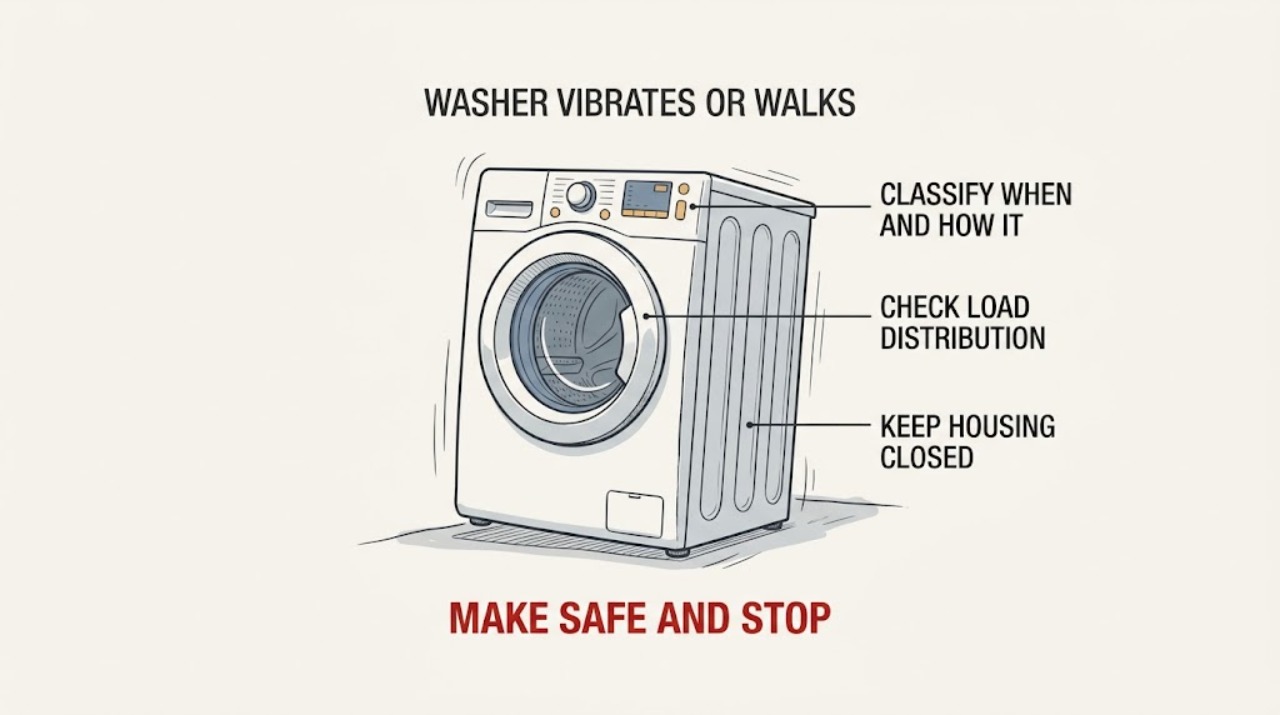
Kenmore Washer Vibrates or Walks: Check the Load and Installation Safely
A Kenmore washer that vibrates or walks usually needs its symptom separated into a load problem, an installation or floor problem, or a washer-side fault. A single heavy or bulky item, clothes gathered to one side, an unstable floor, an extended or unlocked leveling foot, a hose or cabinet contacting the wall, or transport hardware left in place can create movement.
-
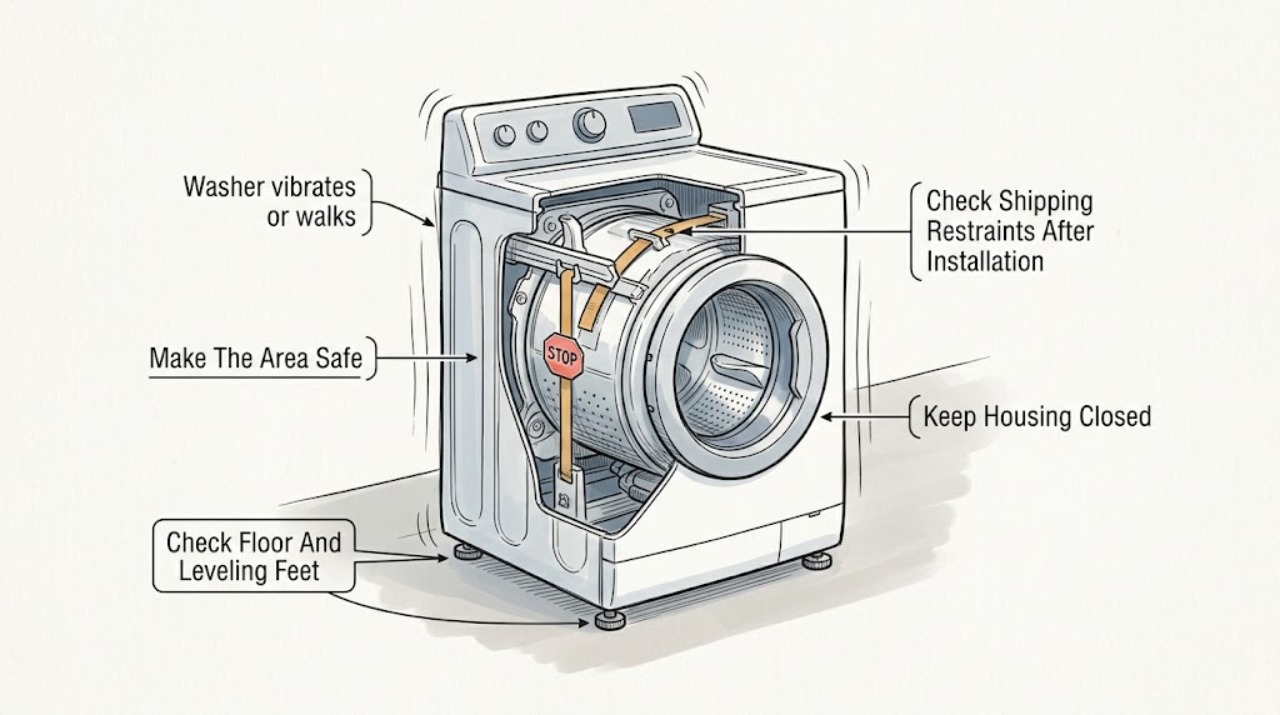
LG washer vibrates or walks: What to Check and What to Do Next
An LG washer that vibrates or walks is most often reacting to an unbalanced load, an unleveled or slippery installation, or shipping restraints left in place after installation. Stop the cycle if the machine is moving violently, and do not reach into a moving drum.
-
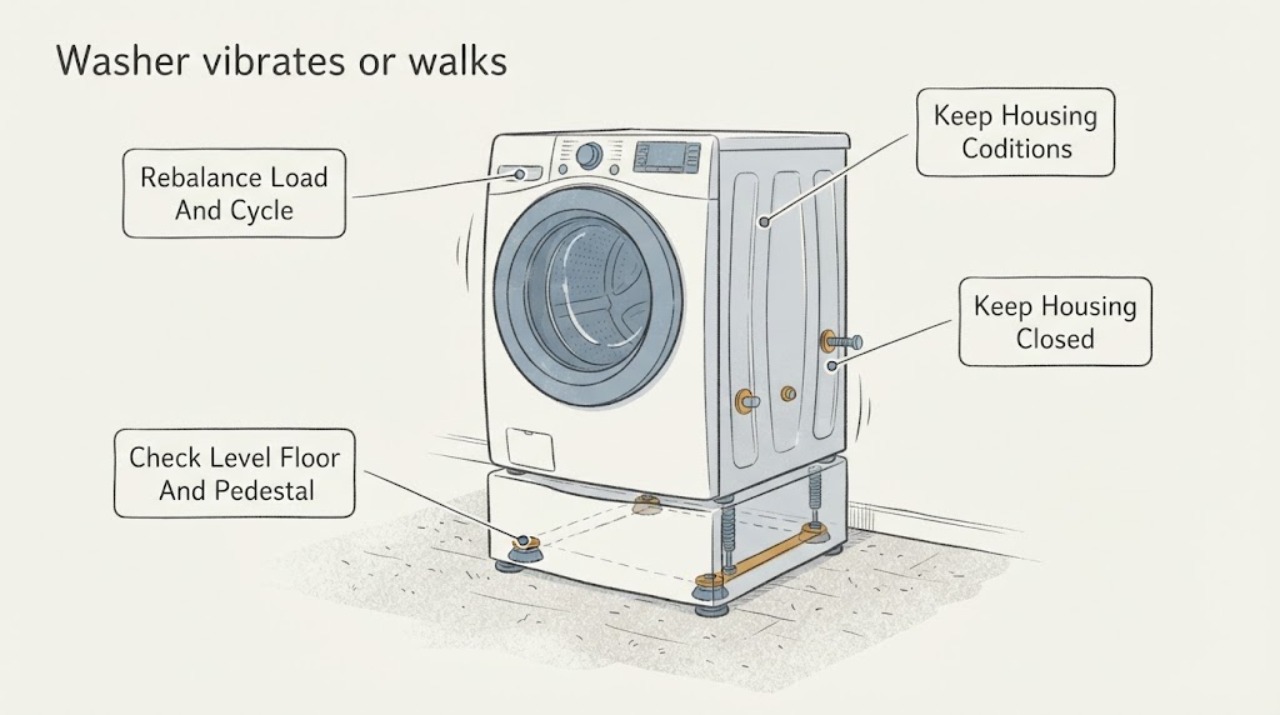
Samsung washer vibrates or walks: What to Check and What to Do Next
First note whether the Samsung washer vibrates only during normal weight sensing or spins, and whether it actually walks, bangs, or leaves the cabinet. Stop it before reaching into the tub, then check for an overloaded, tangled, very small, or single bulky load and redistribute it when the basket has stopped.
-
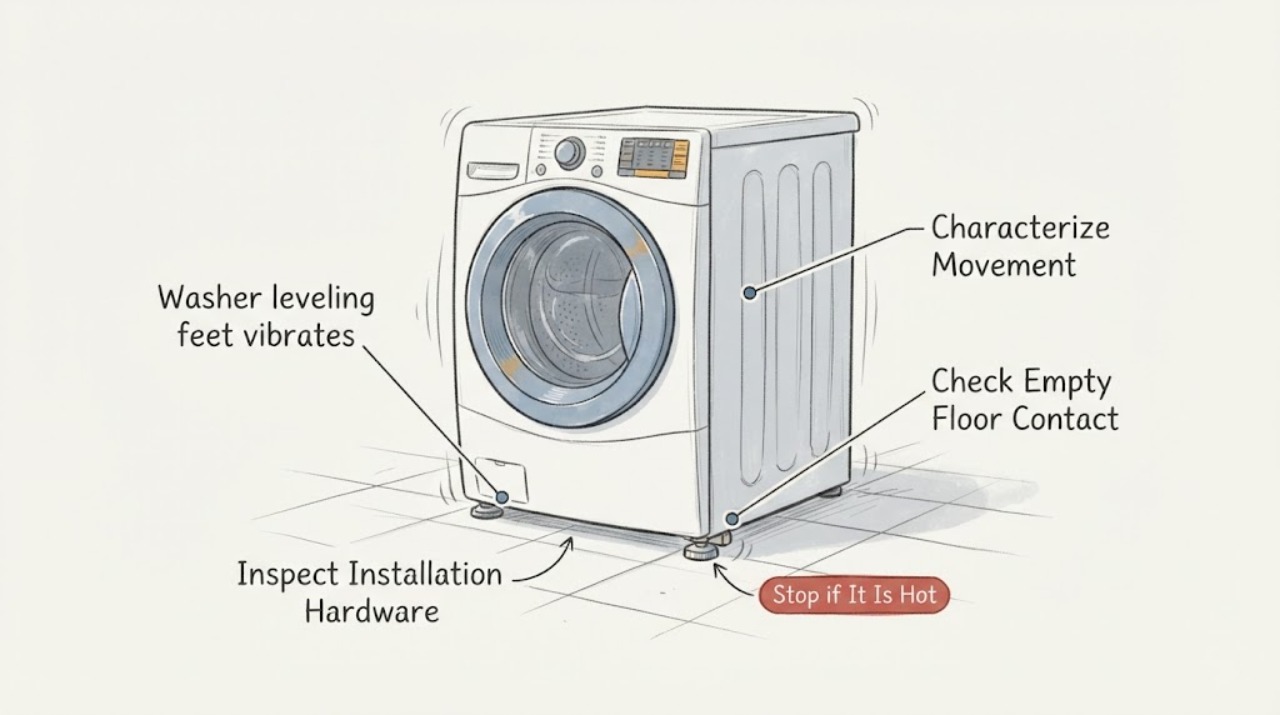
Washer leveling feet vibrates or walks: What to Check and What to Do Next
A washer that vibrates or walks often has one or more leveling feet not firmly contacting the floor, a loose foot lock nut, or a floor that flexes or lets the appliance slide. An unbalanced load, shipping bolts left in place after installation, a pedestal or riser issue, and a hose or cabinet touching a wall can produce similar movement.
-
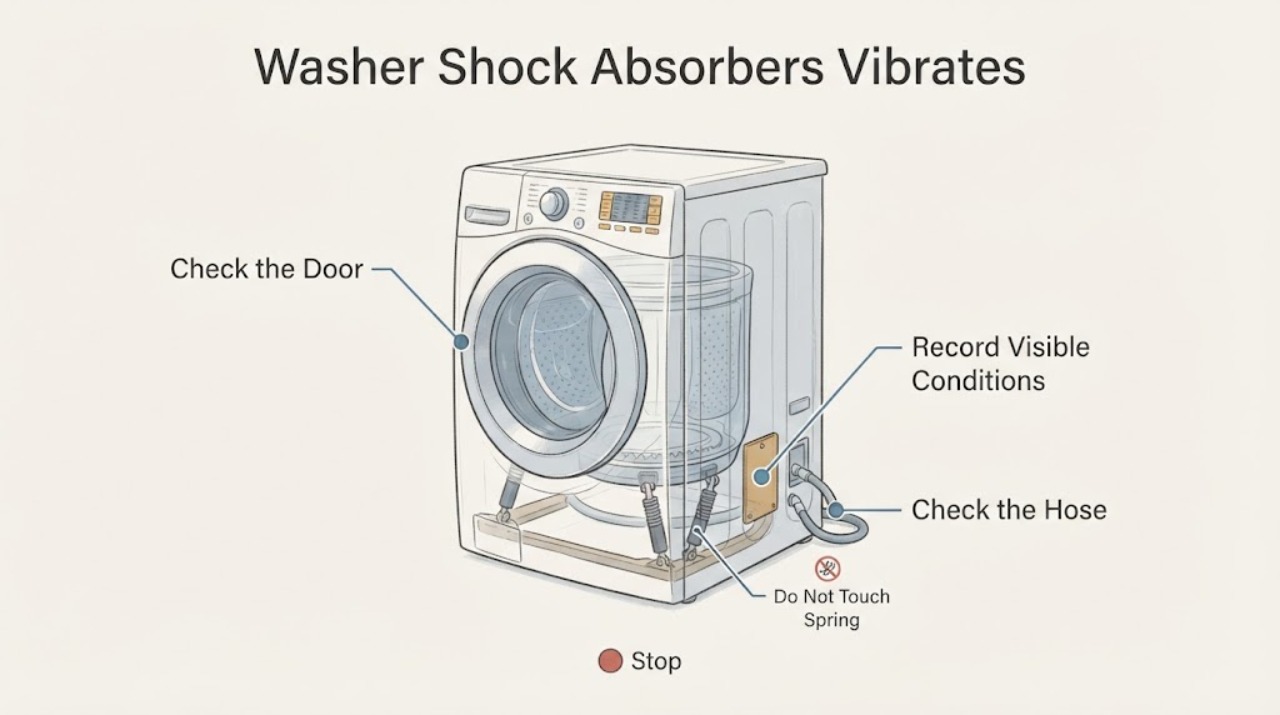
Washer Shock Absorbers Vibrates or Walks: What to Check and What to Do Next
A washer that vibrates or walks during spin may have an unbalanced load, an unstable or unlevel floor, retained shipping hardware, or a hose or nearby object striking the cabinet. Worn shock absorbers, suspension mounts, springs, or other drum-support parts are more likely when the washer is stable and clear but still moves or bangs with a balanced or empty test.
-
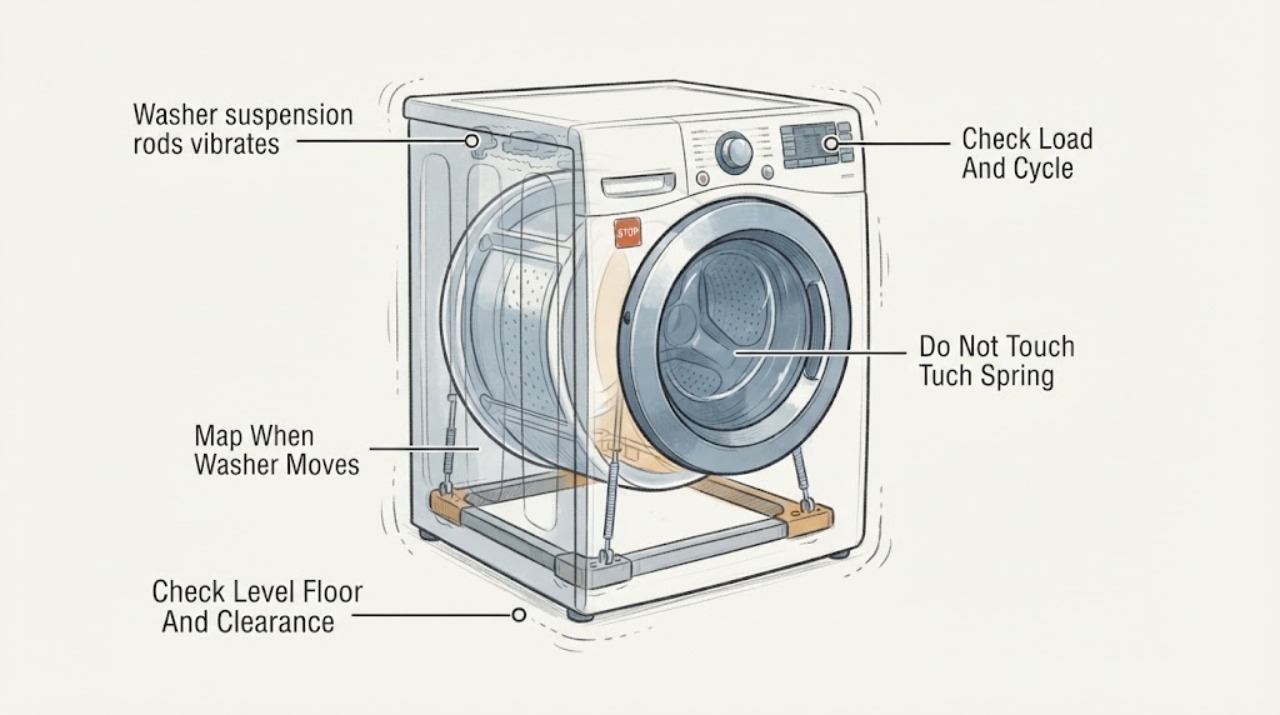
Washer suspension rods vibrates or walks: What to Check and What to Do Next
Suspension rods can contribute to a washer that vibrates or walks, but load balance, leveling, a flexible floor, shipping material left after installation, and loose installation hardware are common look-alikes. First stop the cycle and note whether movement occurs only with one load or with an empty tub.
-
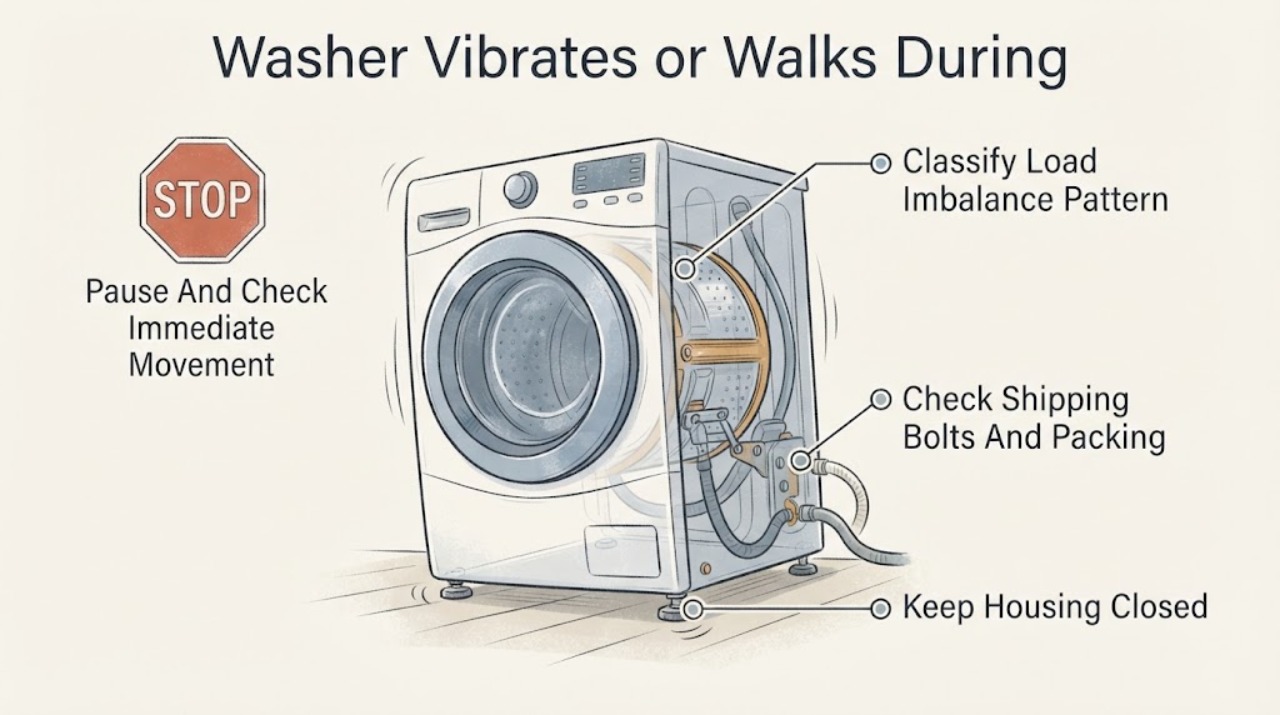
Washer Vibrates or Walks During Spin: What to Check Next
A washer that vibrates or walks during spin is usually responding to an unbalanced load, an unlevel or unstable installation, shipping hardware left in place after installation, or contact with a hose, wall, shelf, or cabinet. Pause the machine and keep clear of the moving tub.
-
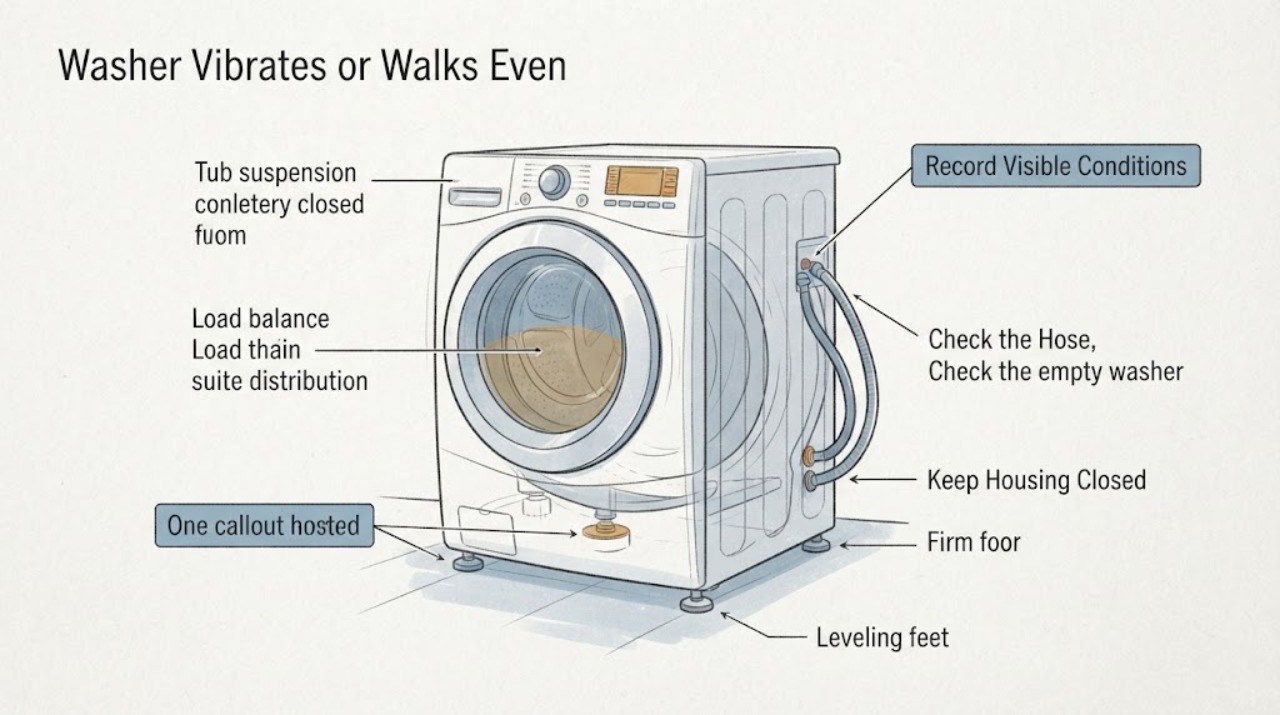
Washer Vibrates or Walks Even Though the Floor Is Firm: What to Check and What to Do Next
A firm floor does not rule out a washer that walks. The machine can still move when one or more feet are not firmly locked to the floor, the surface is slippery, the load is tangled or concentrated, shipping bolts or packing material remain, a pedestal is not secured, or an internal suspension or drive problem is developing.
-
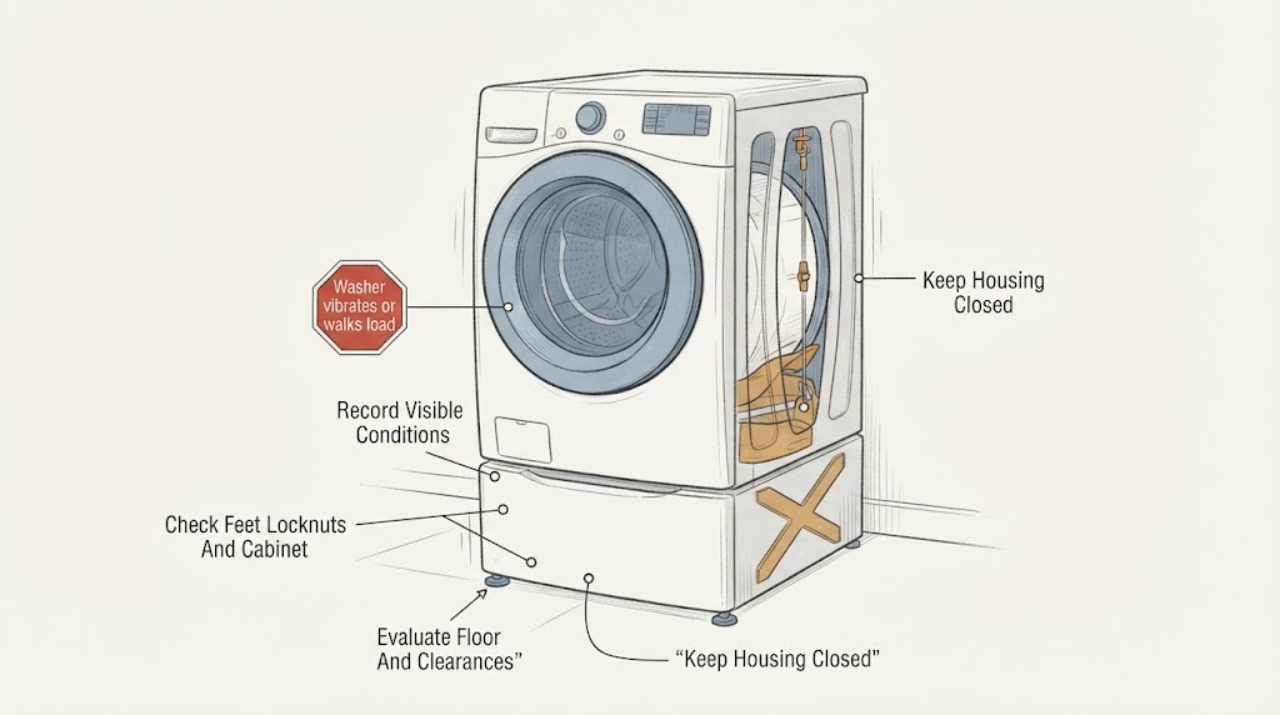
Washer vibrates or walks load is balanced: What to Check and What to Do Next
When a washer still vibrates or walks with a balanced load, check the installation before assuming the tub or motor has failed. Stop the cycle if the cabinet is moving sharply, striking a wall, pulling a hose, or making a new grinding sound.
-
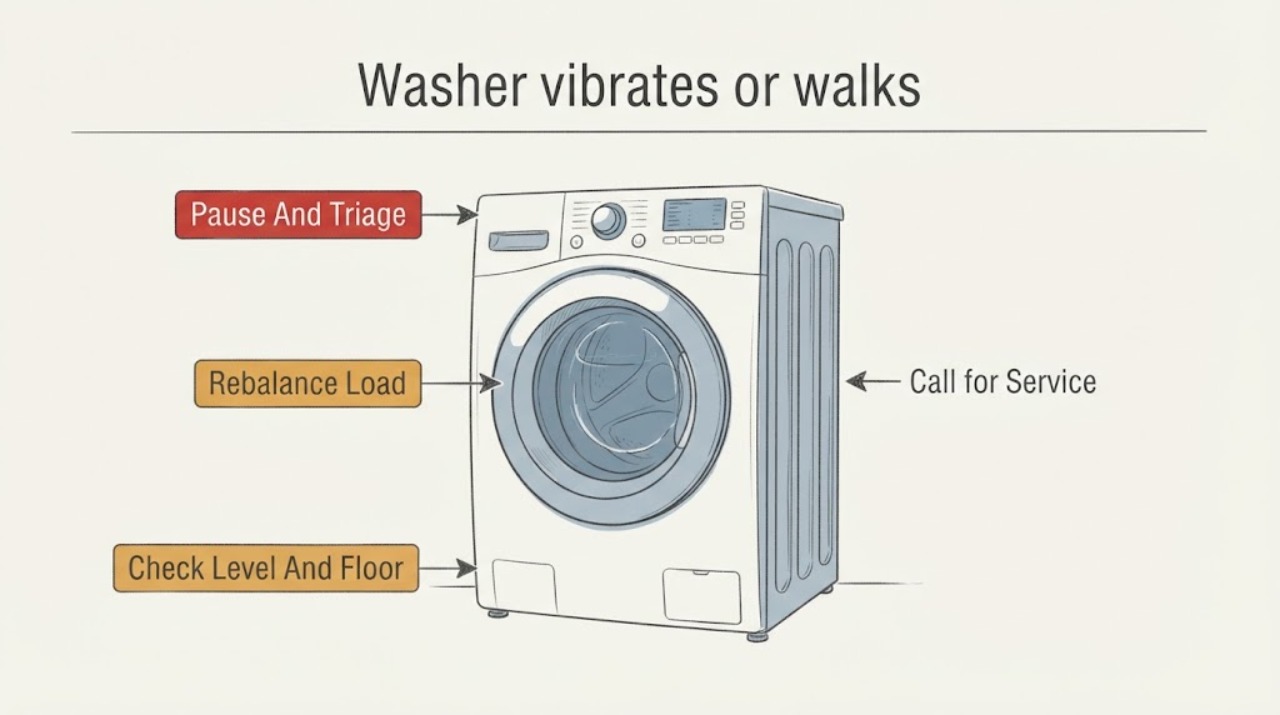
Washer vibrates or walks: What to Check and What to Do Next
A washer that vibrates during spin may have an uneven load, an overloaded or single bulky item, loose contact at one or more feet, an uneven or flexible floor, or shipping hardware that was not removed after installation. Pause the cycle, wait for the drum to stop, and correct only a clearly accessible condition described by the model manual.
-
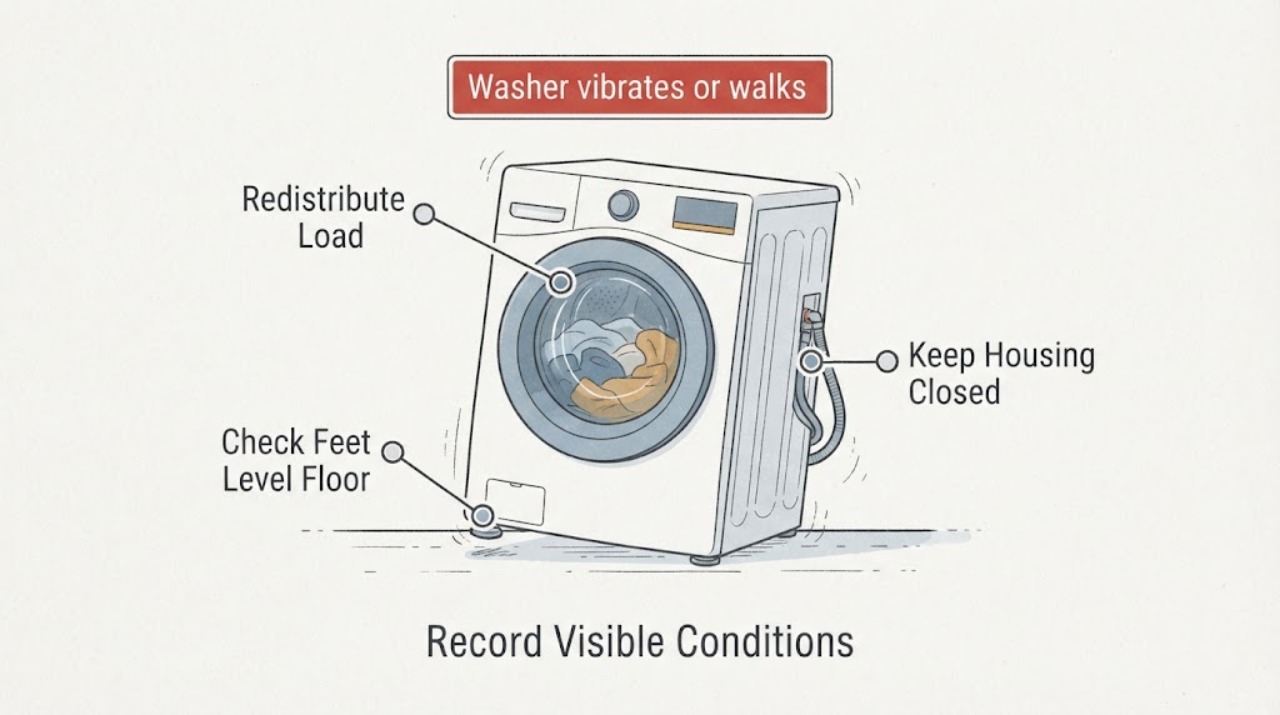
Whirlpool washer vibrates or walks: What to Check and What to Do Next
A Whirlpool washer that shakes or walks most often needs the load, installation, or floor checked before an internal part is blamed. Stop the cycle if it is moving violently.