
On this page
Start here
Quick answer
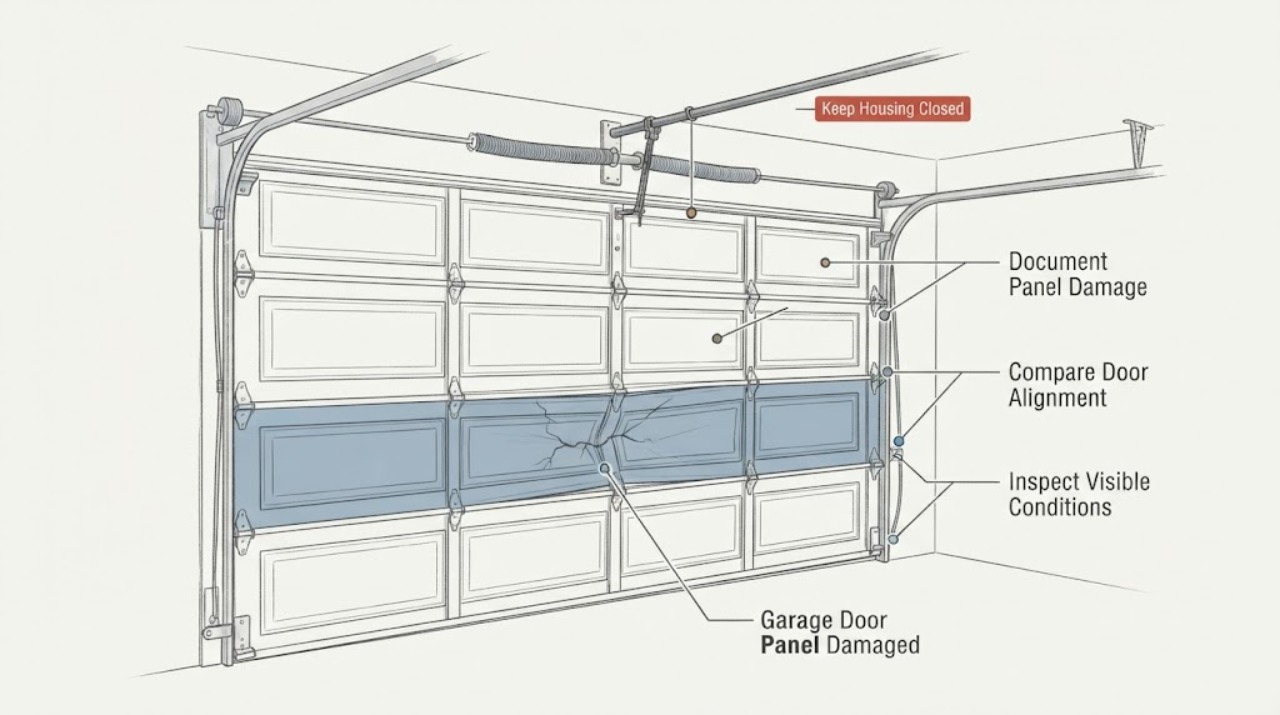
Do not keep operating a Wayne Dalton garage door with a bent, cracked, separated, or loose panel until the door and its connected hardware have been assessed. From a safe position, document the damage, compare the affected section with the others, and look without touching for a crooked door, binding, damaged hinges or tracks, frayed cables, a spring gap, or a door that is unusually heavy or drops. A single isolated panel may be repairable or replaceable, but the exact Wayne Dalton door and panel style must be matched and hidden damage to springs, rails, hinges, cables, or balance must be ruled out. Keep people and vehicles clear and arrange qualified garage-door service when the panel is structurally distorted, the door does not travel normally, or any tensioned hardware is involved.
Before you begin
Safety first
- The professional should determine whether the work is limited to a matched panel or section, includes alignment or hardware repair, or warrants whole-door replacement after inspecting the door and counterbalance system.
Work through in order
Diagnostic checks
Use only checks that match the exact appliance or system and its official guide.
-
Check 1
With the garage door closed and the area clear, photograph the damaged section from inside and outside only where ordinary safe access allows; do not touch loose metal, glass, or a panel that is under load.
Expected result: Classify what is visible as a surface scratch or dent, a crack or puncture, a bowed or folded section, separated joints, a loose section, broken window material, or damage that cannot be seen safely.
Next step: Keep the door unused when the section is distorted, loose, sharp, or broken, and give the dated photos and damage history to a garage-door professional.
Stop if: Stop immediately for falling material, exposed sharp edges, broken glass, a panel that shifts, or any need to climb, pull, pry, or hold the door.
Why this matters
Why: A surface-only mark with a stable section supports a cosmetic or isolated-panel assessment. A crack, puncture, bow, separation, loose section, or inaccessible area may affect the section's strength and requires a broader inspection before movement.
-
Check 2
From a safe position, compare the damaged section with the adjacent sections and observe the closed-door seams, side gaps, hinges, and visible track relationship without raising or lowering the door.
Expected result: Note whether the panel remains square and flush, a seam is open, one side is lower, rollers appear out of the track, the door is visibly crooked, or the damage blocks a safe view.
Next step: Treat misalignment, a separated seam, or an uncertain track condition as a stop-use finding and request professional inspection rather than trying to straighten the section.
Stop if: Do not push the panel, pull a roller back into a track, loosen hinges, bend metal, or operate the door to see whether it clears.
Why this matters
Why: A flush, square panel with intact-looking seams makes isolated panel damage more plausible. A shifted seam, unequal side gap, crooked section, or track relationship suggests alignment or hardware damage in addition to the panel.
-
Check 3
From the floor and outside the door's travel path, visually inspect accessible springs or the counterbalance enclosure, cables, hinges, rollers, and tracks for obvious damage; do not touch or adjust any component.
Expected result: Record a frayed or slack cable, a visible spring gap, bent hinge or track, displaced roller, loose-looking connection, unusual gap, or no obvious related damage.
Next step: If any related-hardware sign is present, keep the door and opener unused, keep people clear, and arrange qualified service for a complete inspection.
Stop if: Never unwind or replace a spring, pull a cable, remove a bottom bracket, adjust a hinge or track, or place hands near tensioned hardware.
Why this matters
Why: A damaged panel with no visible related-hardware sign may still need professional confirmation, but a cable, spring, hinge, roller, or track abnormality makes a simple panel-only repair less likely. Wayne Dalton says high tension and balance problems can make the door heavy, jerky, crooked, or prone to dropping.
-
Check 4
Without starting another opener cycle, record what happened immediately before and after the panel was damaged and what the door did on its last known operation.
Expected result: Note an impact, storm, or attempted lift; whether the door was smooth or jerky, unusually noisy, heavy, crooked, unable to stay open, stopped partway, or made a loud bang; and whether the opener strained or reversed unexpectedly.
Next step: Do not repeat the operation to confirm the symptom. Include this history in the service request and keep the door isolated when travel or balance was abnormal.
Stop if: Stop and keep the area clear for a door that drops, slams, binds, stalls, moves crookedly, or cannot remain safely in position.
Why this matters
Why: An impact followed by a door that still sat square and traveled normally points toward a more localized panel assessment. A loud bang, heavy or jerky travel, dropping, opener strain, or abnormal reversal suggests counterbalance, alignment, or safety-system involvement rather than a cosmetic panel issue.
-
Check 5
From safe access, collect the Wayne Dalton nameplate or paperwork and photograph the whole door, damaged section, section position, visible window pattern, finish, and approximate opening and section dimensions; do not remove a panel to find an identifier.
Expected result: The model or product identity is clear; only the brand is known; or the door has an unusual style, windows, insulation, or multiple damaged sections that cannot be identified confidently.
Next step: Send the identification photos and measurements to a qualified Wayne Dalton garage-door service provider and ask for a panel-match and whole-system assessment before ordering anything.
Stop if: Do not remove the damaged section, climb on the door, lift it to read hidden markings, or order a generic panel based only on appearance.
Why this matters
Why: Clear identity lets a professional use Wayne Dalton's panel-selection guides and determine whether a matching section is available. Brand-only or ambiguous information is not enough to claim fitment, and multiple or older-looking damaged sections may make a full-door assessment more appropriate.
Use your observations
Decision map
Find the observation that best matches what you see, then follow the next safe action.
-
PATH 01Next step
What you see
The damage is limited to a shallow surface mark or small dent; the section remains square, seams and side gaps look normal, and no related hardware or abnormal travel is reported.
Do this next
Arrange a routine panel or finish assessment and avoid abrasive repair, repainting, or drilling until the correct material and finish are confirmed.
Why this path and its safety boundary
Why it matters: A cosmetic or isolated panel repair is more plausible than a counterbalance or alignment failure, but the finish and section strength still need a model-specific decision.
-
PATH 02Next step
What you see
One section is dented, cracked, or punctured, but the door is square at rest, surrounding hinges and tracks show no obvious damage, and the last operation was normal.
Do this next
Request a professional panel-match inspection with the photos and model information; keep the door unused if the section is loose or its travel is uncertain.
Why this path and its safety boundary
Why it matters: A replacement section may be possible, but the damage is not proven to be panel-only and the exact Wayne Dalton identity, section position, dimensions, windows, and finish must be matched.
-
PATH 03Next step
What you see
The panel is bowed or separated, the door is crooked, a side gap or seam is unequal, a roller or track looks displaced, or the door binds, stalls, or moves unevenly.
Do this next
Keep the door and opener unused, block access to the travel area, and arrange prompt qualified garage-door inspection.
Why this path and its safety boundary
Why it matters: Panel damage is likely accompanied by alignment or hardware stress, so replacing only the visible section could leave the door unsafe or damage the new section.
-
PATH 04Next step
What you see
A spring gap, frayed or slack cable, unusually heavy or jerky movement, a door that drops or will not stay open, a loud bang, or opener strain accompanies the panel damage.
Do this next
Keep everyone clear, do not manually lift or operate the door, and arrange qualified service for a full spring, cable, balance, and door inspection.
Why this path and its safety boundary
Why it matters: A counterbalance or tensioned-hardware problem is more likely than an isolated panel defect. Wayne Dalton warns that springs are high-tension components and that continued use can injure people or damage other parts.
-
PATH 05Next step
What you see
The door has dropped or slammed, the opener has strained or behaved unpredictably, or its required safety reversal is known to fail.
Do this next
Keep people and vehicles away, do not keep resetting or cycling the opener, and request urgent professional inspection of the door, counterbalance, opener, and safety features.
Why this path and its safety boundary
Why it matters: This is a safety-system and door-condition concern, not a panel replacement decision. A damaged or unbalanced door can make opener operation hazardous, and a failed reversal requires the opener to remain out of service.
-
PATH 06Next step
What you see
Several sections are damaged, the door identity or panel match is uncertain, or the door is old enough that a single replacement would leave other deterioration unaddressed.
Do this next
Ask a qualified provider to compare a properly matched section repair with whole-door replacement after inspecting the complete door and hardware.
Why this path and its safety boundary
Why it matters: A full-door or broader system assessment may be more appropriate than ordering one section. Wayne Dalton notes that matching and hidden damage can change the repair-versus-replacement decision.
Helpful context
Understand the symptom
Separate surface damage from a door that is no longer safe to move
A scratch or shallow cosmetic mark is a different decision from a crushed section, crack, separated joint, bent edge, broken window, or panel that has shifted in its track. Panel damage can change how the sections meet and can load hinges, rollers, cables, tracks, and the counterbalance system. The appearance alone cannot show whether those parts were damaged behind or beside the panel, so document first and avoid repeated opener cycles while the condition is uncertain.
A replacement panel must be identified, not guessed
A Wayne Dalton replacement section has to match the door's model, section position, dimensions, construction, window arrangement, finish, and any applicable design requirements. Wayne Dalton's support area provides panel-selection guides and installation instructions; use those documents to identify the door, not a generic picture or a similar-looking panel. A technician can confirm whether the existing section can be matched and whether the surrounding structure is sound.
Springs and balance turn a panel problem into a service boundary
A damaged panel may coincide with a door that is heavy, crooked, jerky, unusually noisy, or unable to remain open. Wayne Dalton describes these as signs that balance or spring support may be wrong and warns that springs store high tension. Do not adjust springs, cables, hinges, brackets, or tracks to make a damaged door move; keep the area clear and let a qualified technician inspect and balance the complete system.
Safety boundary
Stop conditions
- Do not operate a door with a loose, bowed, separated, falling, or sharp-edged panel, broken glass, a crooked path, binding, or an unknown track condition.
- Do not adjust, disconnect, unwind, replace, or remove springs, cables, bottom brackets, hinges, rollers, tracks, or counterbalance components.
- Keep children, pets, people, and vehicles out of the door's travel area when the panel or hardware is damaged.
- Stop and request qualified garage-door service for a door that is heavy, jerky, loud, dropping, unable to stay open, or associated with opener strain or failed safety reversal.
Only after diagnosis
Potential parts
- replacement garage door panel or section
Consider this only after a qualified inspection confirms that the damage is limited to a replaceable section and identifies the exact door model, section position, dimensions, construction, window pattern, finish, and surrounding hardware condition.
Do not assume a similar-looking Wayne Dalton section fits. Confirm the exact door identity and all fitment and design requirements with Wayne Dalton documentation or the service provider before ordering.
When checks do not resolve it
Need a professional?
Request prompt inspection for structural panel damage or any abnormal travel. Treat a dropping door, exposed tensioned hardware, failed safety reversal, broken glass, or a blocked essential opening as urgent.
Safety scope: The professional should determine whether the work is limited to a matched panel or section, includes alignment or hardware repair, or warrants whole-door replacement after inspecting the door and counterbalance system.
Have this ready
- Dated photos of the whole door, damaged section, seams, side gaps, and visible hardware
- Wayne Dalton model or nameplate information, section position, window pattern, finish, and approximate dimensions
- Impact, weather, or storm history and the last known normal or abnormal operation
- Any loud bang, heavy or jerky travel, dropping, opener strain, or safety-reversal concern
- A clear statement that the door has been kept unused when alignment, balance, or hardware was uncertain
Common questions
FAQ
Can a Wayne Dalton garage door panel be replaced by itself?
Sometimes. A single section can be a reasonable repair when the damage is isolated and the door and hardware remain sound, but a professional must confirm the exact model, section position, dimensions, windows, finish, and hidden damage before a replacement is ordered.
Should I keep using the garage door if only one panel is dented?
Do not keep cycling it when the panel is bowed, cracked, loose, separated, sharp, or associated with crooked, binding, heavy, jerky, or dropping movement. Even a seemingly local impact can damage hinges, tracks, cables, springs, or balance.
What signs mean the damage is more than a panel problem?
A crooked door, unequal gaps, separated seams, displaced rollers, bent tracks or hinges, a frayed cable, a spring gap, a loud bang, unusual heaviness, jerky travel, opener strain, dropping, or failure to stay open all call for a complete professional inspection.
Can I straighten the panel or adjust the garage-door track myself?
Do not pry or straighten a loaded panel and do not adjust tracks, hinges, cables, bottom brackets, or springs. These parts affect the door's alignment and counterbalance; keep the area clear and use qualified garage-door service.
What should I send a technician before requesting a Wayne Dalton panel?
Send photos of the whole door and damaged section, the model or nameplate if safely visible, section position, window pattern, finish, approximate dimensions, and a description of the impact and last known operation. Ask for a panel-match and whole-system assessment before ordering.
Read the exact guide
Official sources
- Repair vs Replace: What to Do with a Damaged Garage Door PanelWayne Dalton Sales & Service · Supports separating panel repair from whole-door replacement, checking for hidden spring, rail, and hinge damage, matching the manufacturer and panel, and obtaining a professional inspection.
- Publication - 523 Non-Reversing Automatic Garage Door Openers Are a HazardU.S. Consumer Product Safety Commission · Supports keeping a door out of service when its required reversal fails and recognizing that an unbalanced door can fall or crash and needs professional service.
- When Garage Door Balance Problems Signal the Need for Expert ServiceWayne Dalton Sales & Service · Supports recognizing heavy, crooked, jerky, noisy, or dropping movement as a possible balance issue and avoiding untrained spring or cable adjustments.
- Garage Door Spring ReplacementWayne Dalton Sales & Service · Supports stopping use for heavy, jerky, loud, dropping, or non-opening doors and leaving spring, cable, and balance work to trained professionals.
- Frequently Asked Questions About Garage DoorsWayne Dalton · Supports directing readers to the manufacturer's panel selection guides and installation instructions when identifying a replacement section.
Community feedback
Share a repair observation
Share a plain-text repair observation. Accepted observations are published automatically; this page may take a moment to update.