
Repair service
Garage Doors Guides
Garage door repair, adjustment, and maintenance.
Published garage doors guides
Choose the guide that best matches the service and problem you are seeing.
-
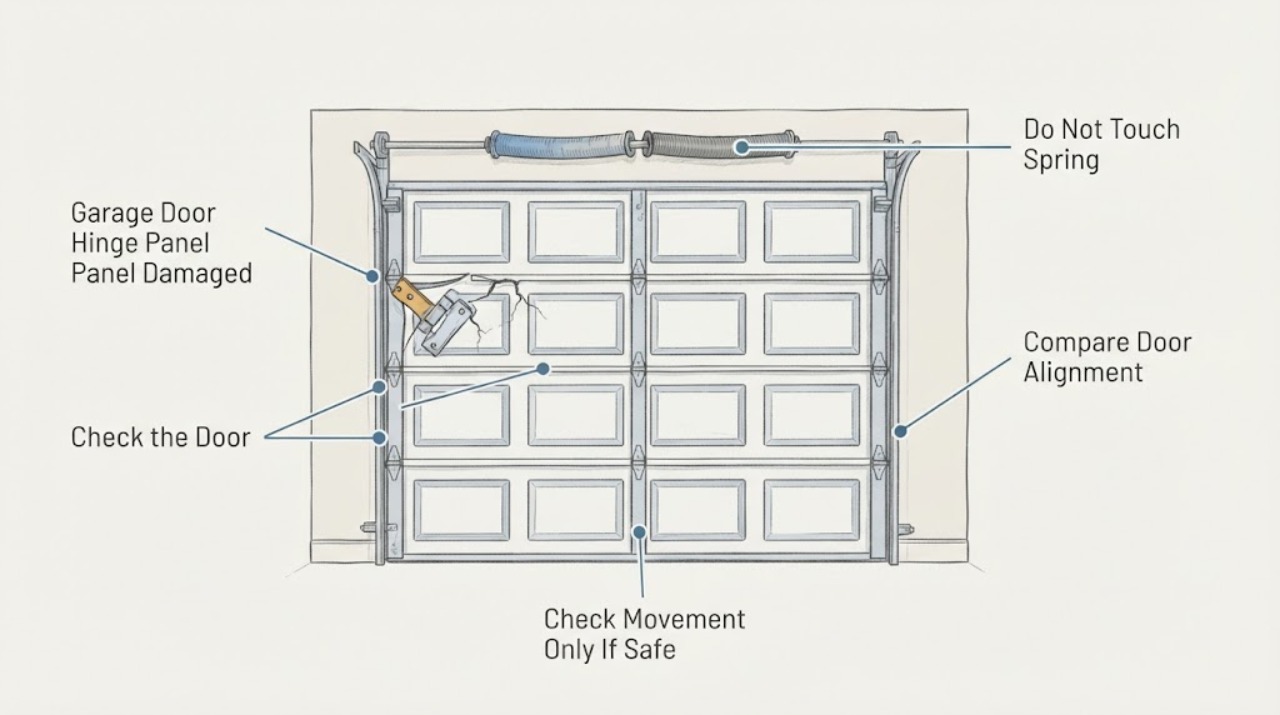
Amarr Garage Door Hinge Panel Damaged: What to Check and What to Do Next
Treat a damaged Amarr door panel and hinge as a garage-door-system problem, not just a cosmetic repair. From a safe position with the door closed, photograph the panel, hinge, rollers, tracks, cables, springs, and opener, and note whether the damage is a shallow finish mark, a dent or crack, a bent or pulled hinge, a separated section, or a door that no longer moves, closes, or balances normally.
-
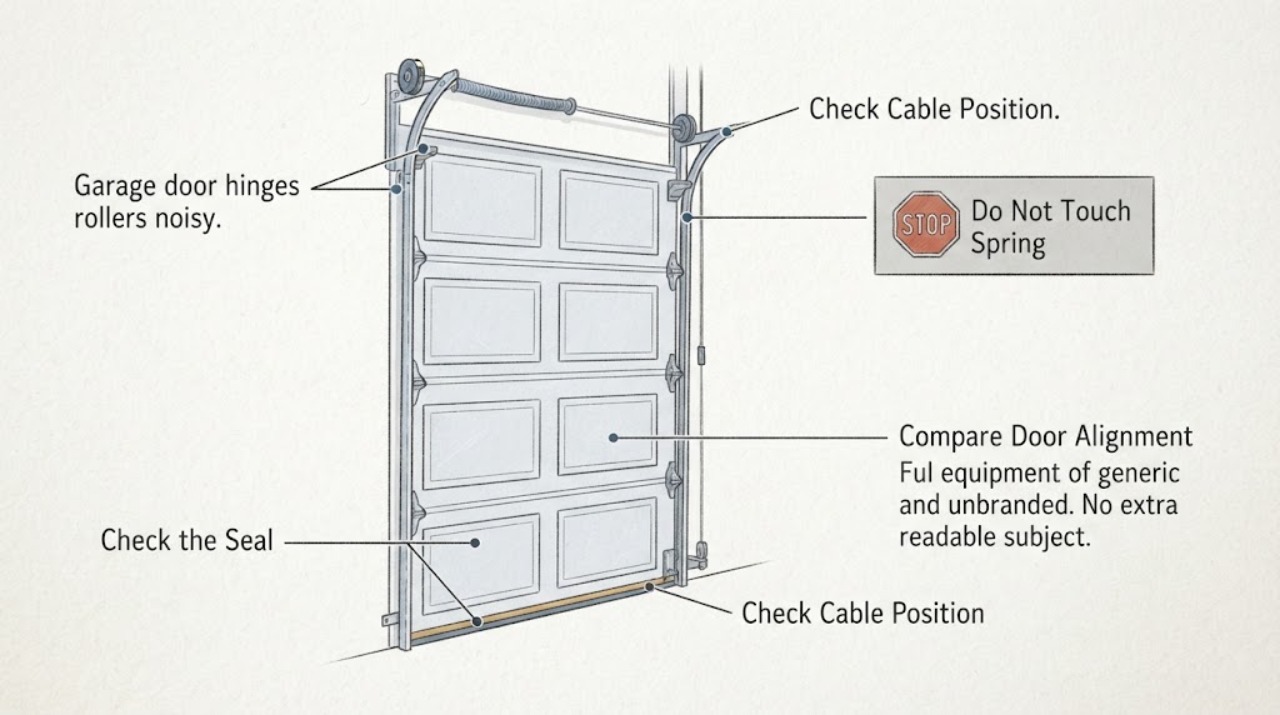
Amarr garage door hinges rollers noisy: What to Check and What to Do Next
Noisy Amarr garage-door hinges or rollers are often caused by dry moving joints, debris or misalignment in the tracks, worn rollers, loose hardware, or a door that is out of balance. First stop the door if the noise includes a snap, grinding with jerking, a cable coming off, a broken spring, scraping metal, or uneven movement.
-
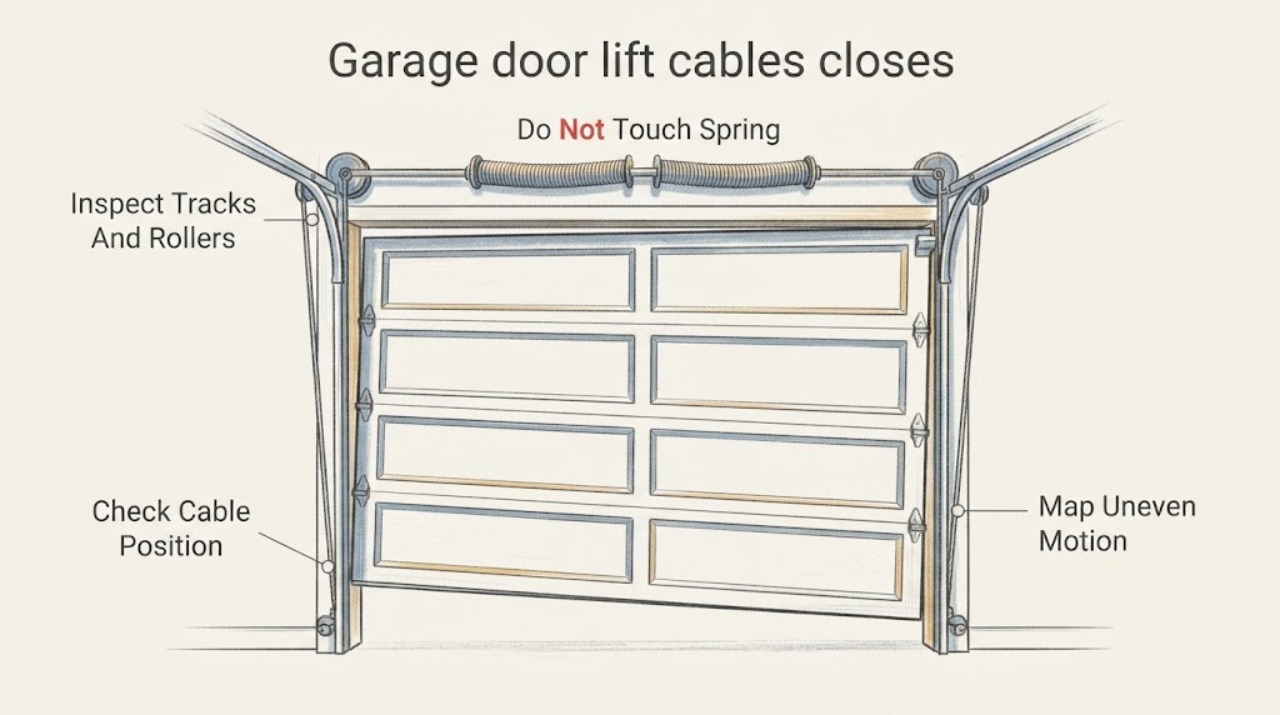
Amarr garage door lift cables closes unevenly: What to Check and What to Do Next
An Amarr garage door that closes with one side leading, sagging, scraping, or leaving an uneven gap can have a lift-cable, drum, roller, track, spring-balance, or opener problem. From the floor, stop repeated cycles and look for a frayed, slack, crossed, or off-drum cable, a visibly damaged track or roller, a crooked door, or an obstruction at the photo eyes.
-
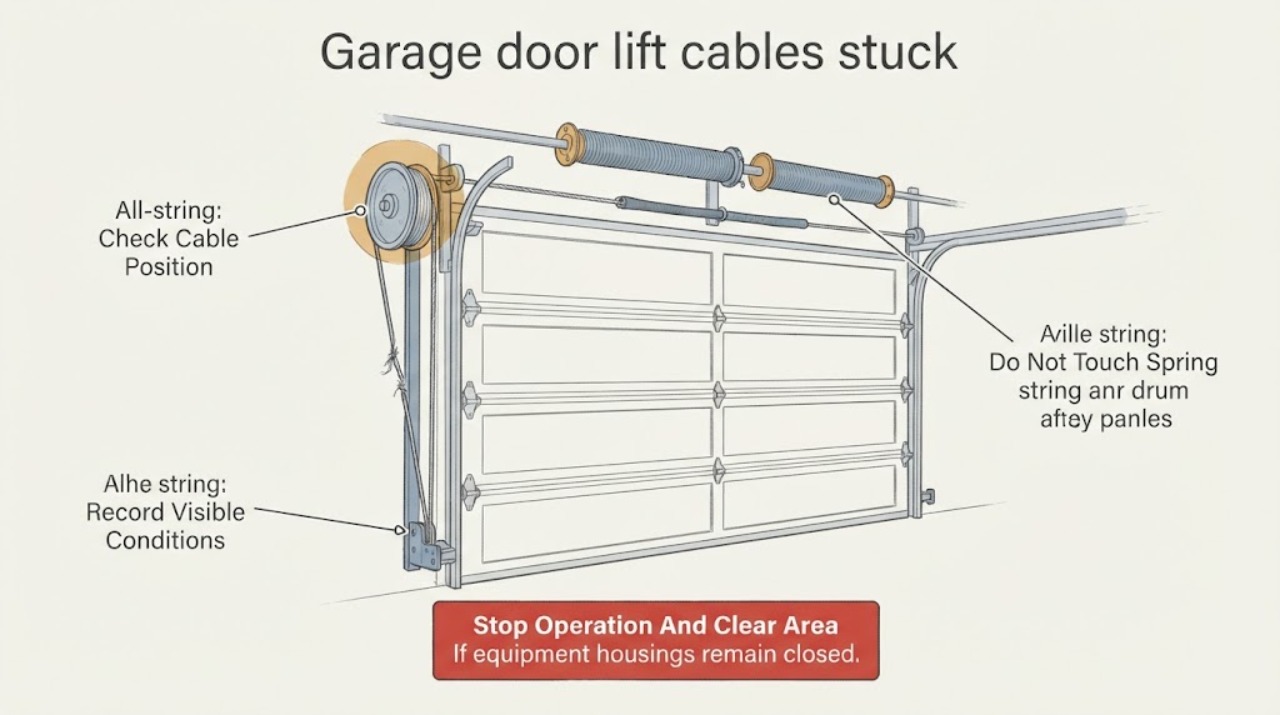
Amarr garage door lift cables stuck: What to Check and What to Do Next
Do not run the opener, pull the cable, move the door, loosen a red fastener, or attempt to rewind or replace a lift cable. Amarr says not to operate a door when a cable has jumped off the drum and to call a qualified garage-door technician; its safety material also says visible cable wear or fraying requires professional service.
-
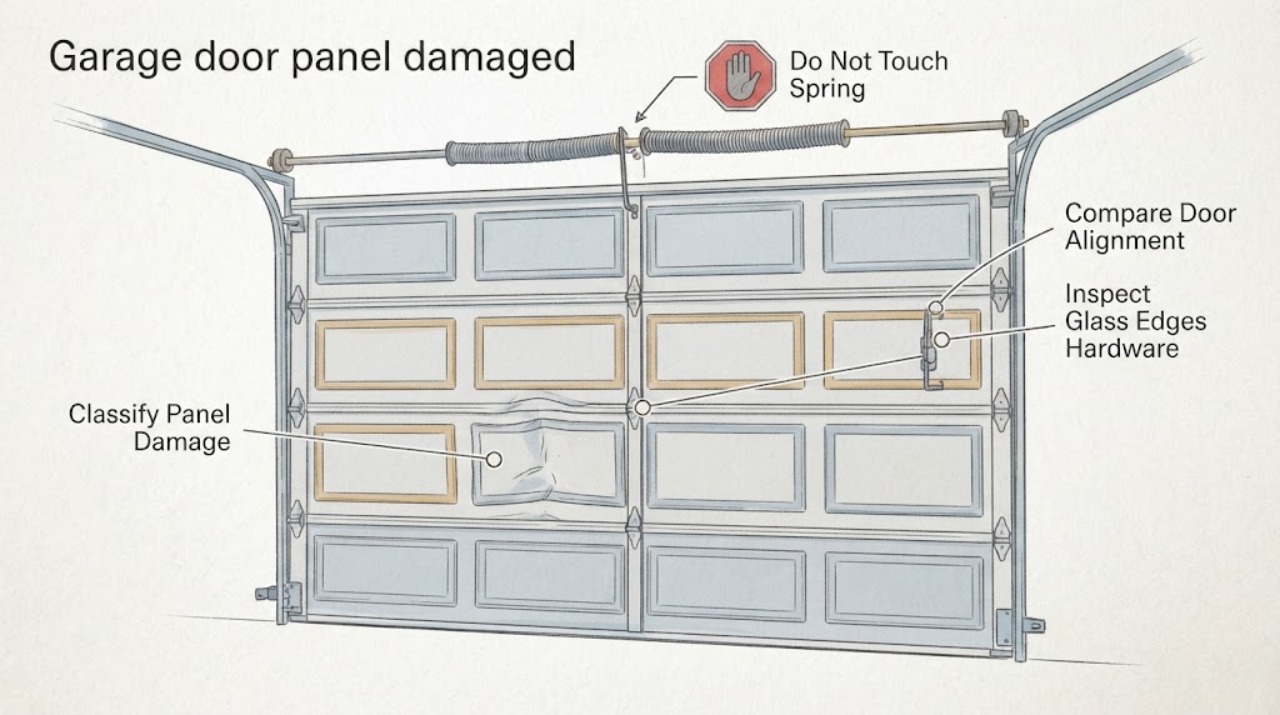
Amarr garage door panel damaged: What to Check and What to Do Next
A damaged Amarr garage door panel is not automatically a whole-door replacement. First leave the door stationary and use safe, exterior observations to classify a cosmetic dent, a crack or bend, a shifted section, damaged glass or edge, or a hinge, roller, track, spring, or cable concern.
-
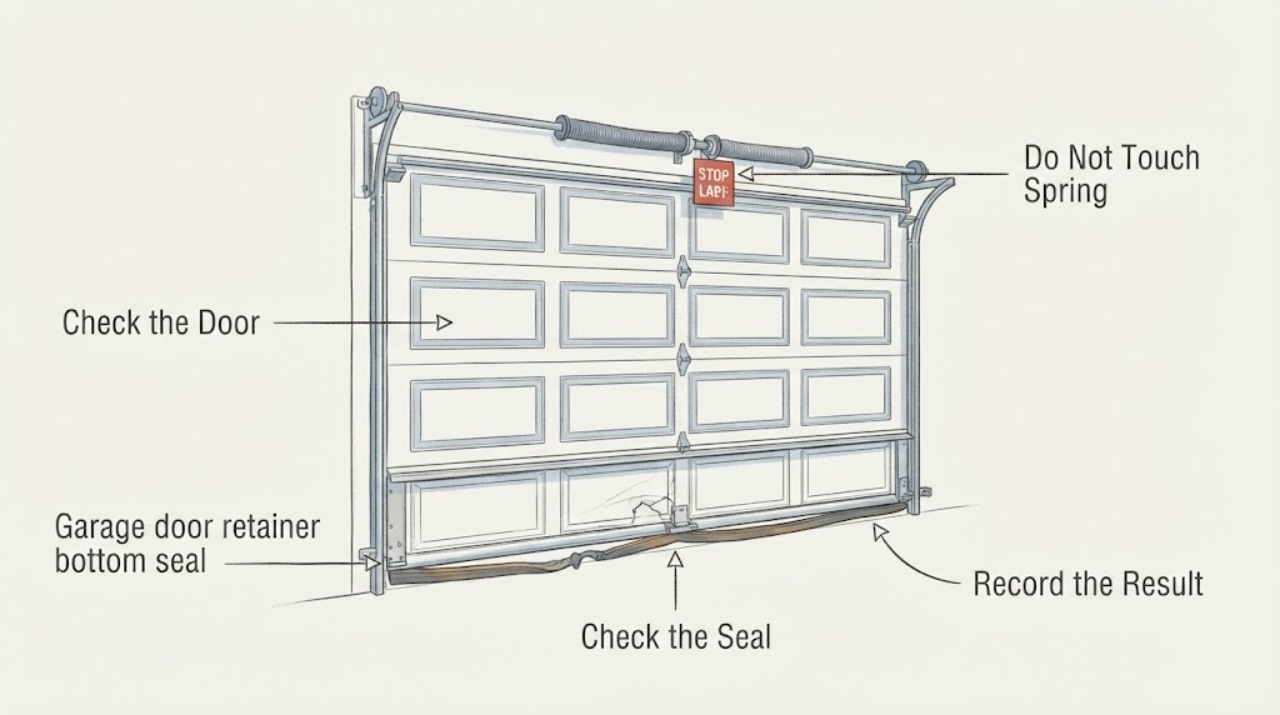
Amarr garage door retainer bottom seal damaged: What to Check and What to Do Next
On an Amarr garage door, the bottom seal sits in or against a retainer at the lower door section. A seal that is cracked, stiff, split, disintegrating, pulled out, or leaving a gap may be replaceable, but a bent or detached retainer, damaged bottom section, loose fasteners, crooked door, cable problem, or spring issue changes the repair and safety risk.
-
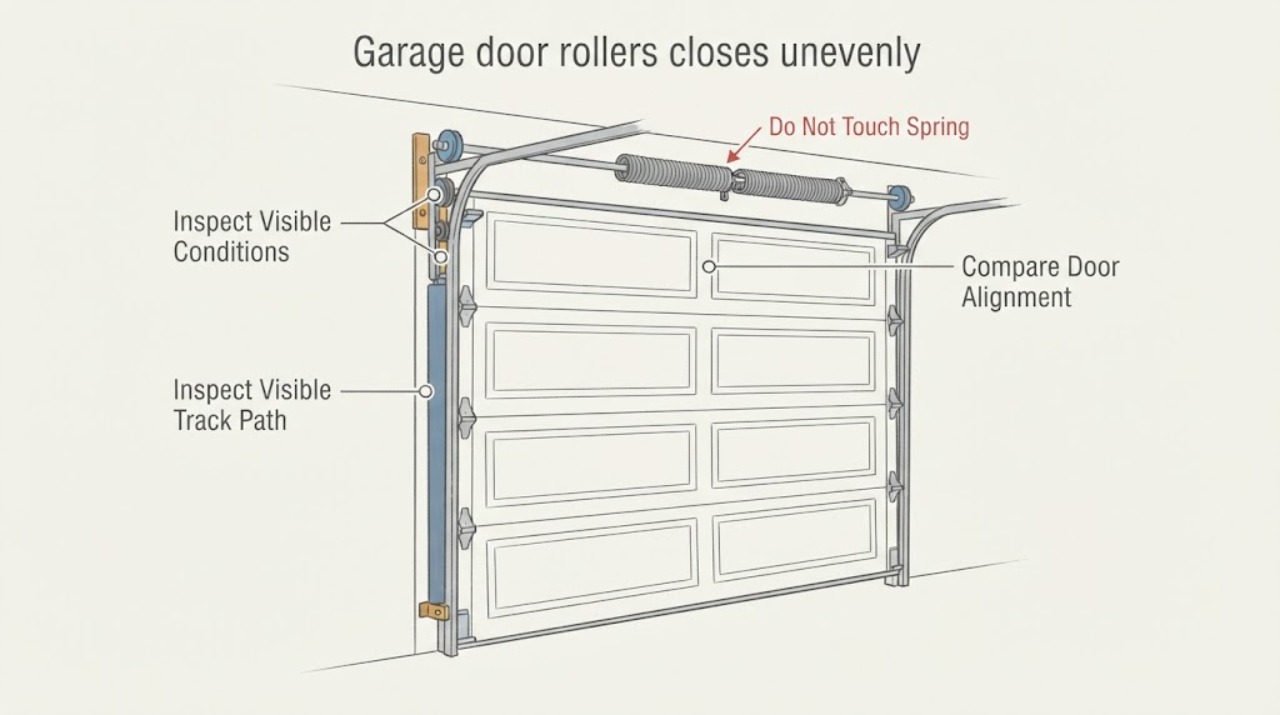
Amarr garage door rollers closes unevenly: What to Check and What to Do Next
An Amarr garage door that closes unevenly may have a damaged or misaligned roller, debris or damage in one track, loose hinge or mounting hardware, a balance or spring problem, or an opener or photo-eye issue that is being mistaken for a roller fault. Watch one complete movement from a safe position and note which side leads, where the door rubs, and whether the door itself is crooked or the opener merely reverses.
-
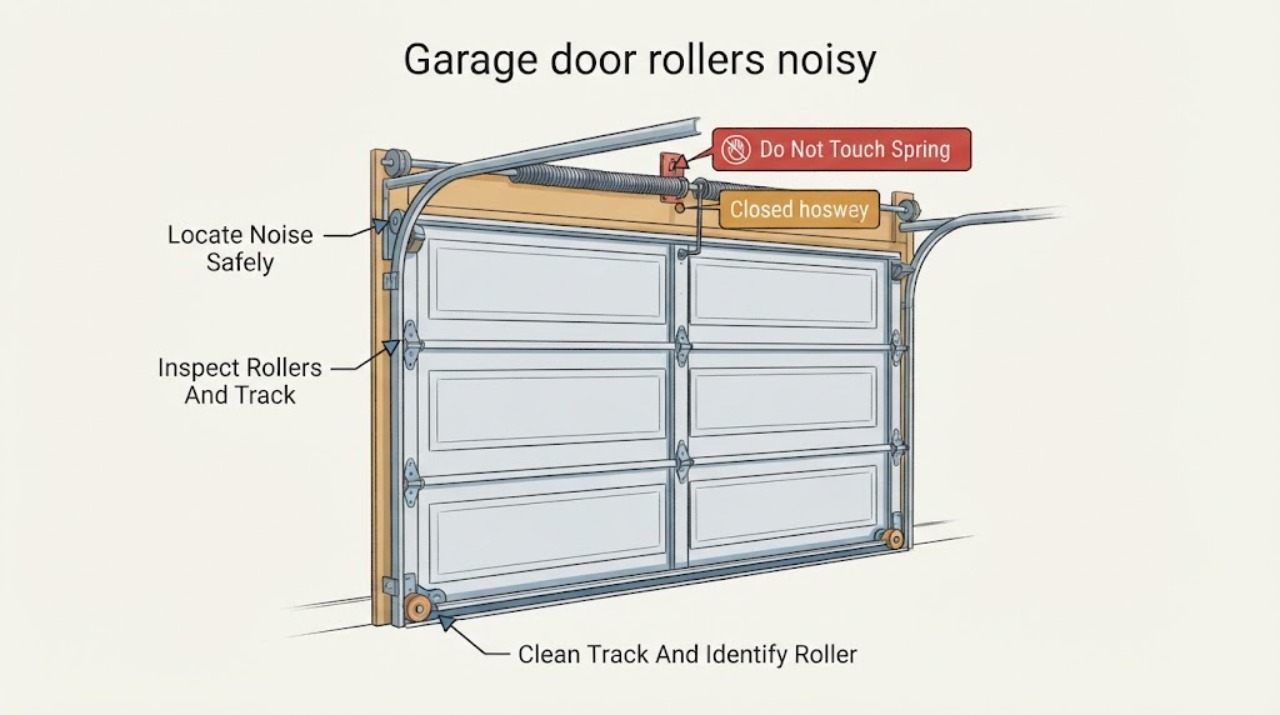
Amarr garage door rollers noisy: What to Check and What to Do Next
A noisy Amarr garage door is often caused by friction, dirt, a worn roller, loose hardware, a track problem, or an opener that is transmitting noise. With the door closed and stationary, note where the sound starts, inspect the rollers, hinges, track, cables, springs, and fasteners without touching tensioned parts, and clean the track with a damp cloth.
-
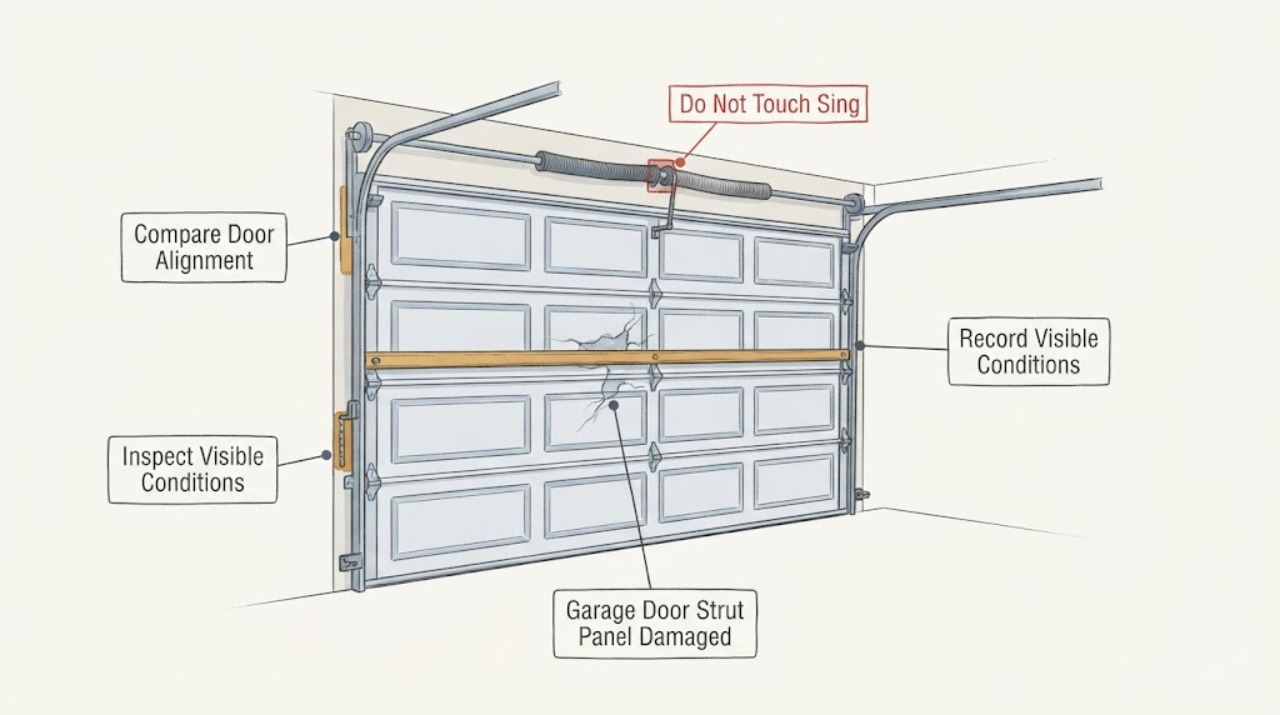
Amarr Garage Door Strut Panel Damaged: What to Check and What to Do Next
A damaged Amarr garage-door panel or strut should be treated as a door-system problem, not just a cosmetic dent. Keep people and vehicles clear, stop using the opener if the door is bent, out of square, rubbing, sagging, or making a new sound, and inspect only from a safe stationary position.
-
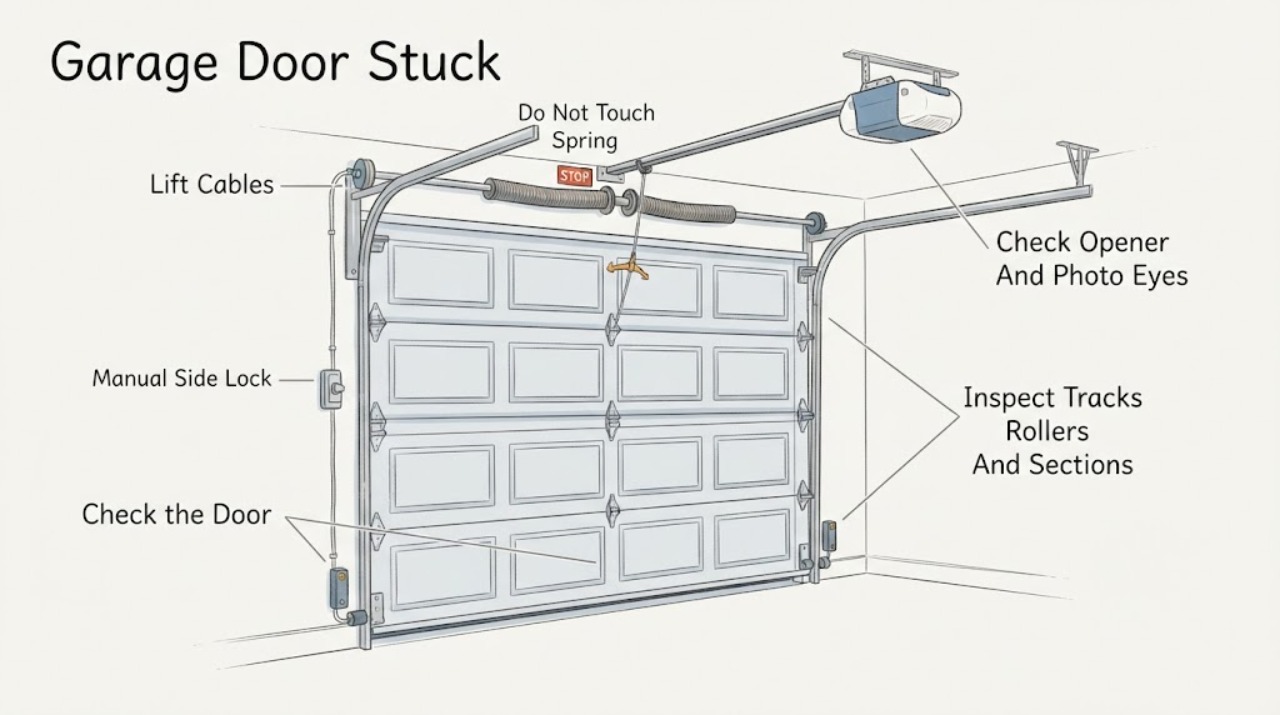
Amarr garage door stuck: What to Check and What to Do Next
Treat a stuck Amarr garage door as a heavy moving-door and counterbalance hazard before treating it as an opener problem. Keep people, pets, vehicles and fingers away from the door's travel path, and do not stand beneath an open or partly open door.
-
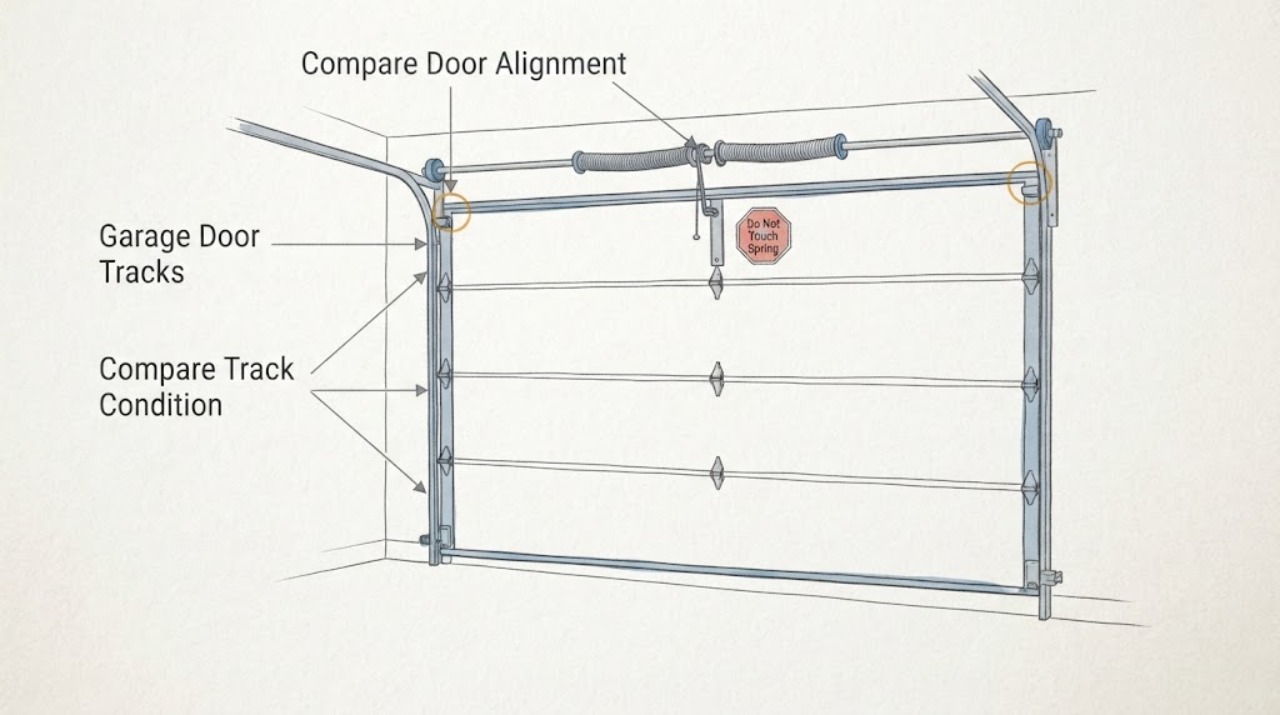
Amarr Garage Door Tracks: Door Closes Unevenly — What to Check and What to Do Next
An Amarr garage door that closes unevenly may have a visible track obstruction, damaged or misaligned track, worn roller or hinge, an out-of-balance door, or a spring, cable, or opener problem. Do not assume the track is the only cause.
-
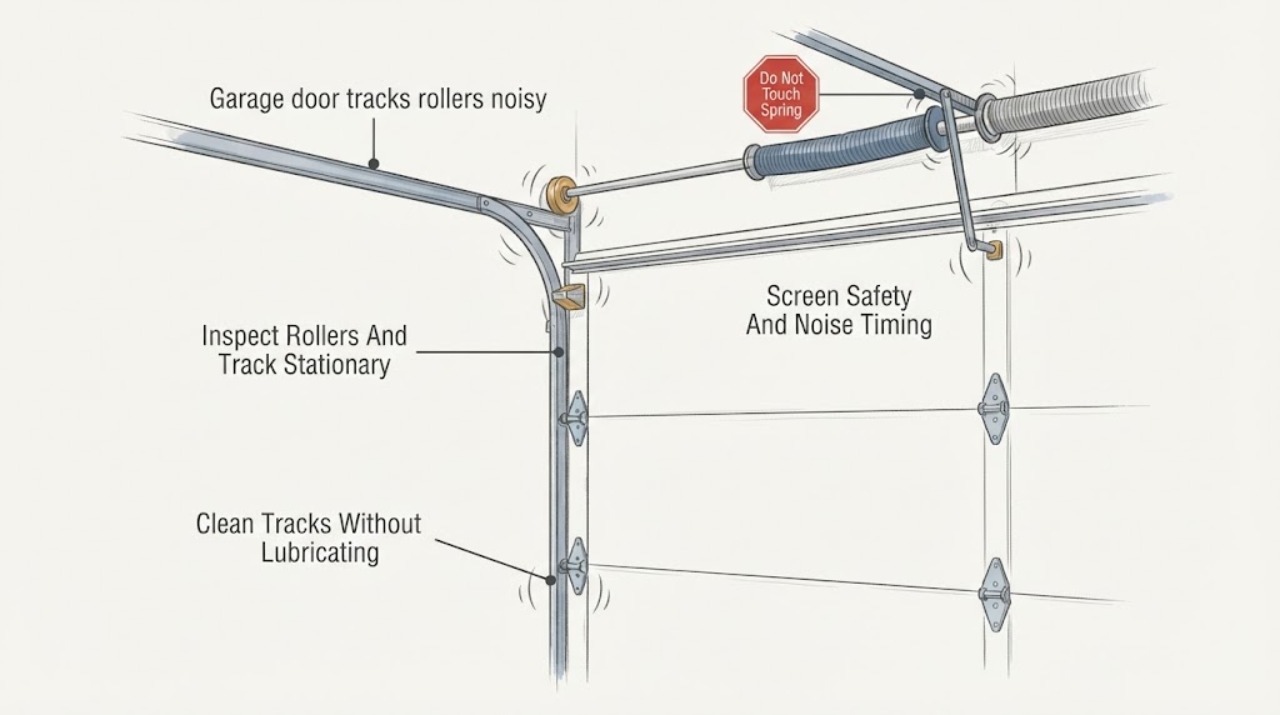
Amarr garage door tracks rollers noisy: What to Check and What to Do Next
Keep people and vehicles clear and watch the closed door from a safe position to identify when the noise occurs: at one track location, throughout travel, only during the opener's operation, or near springs and cables. Amarr says springs, rollers, and hinges can squeak with normal use, while dirt or debris in rollers, loose hardware, track misalignment, and damaged rollers can create excessive noise or jerky movement.
-
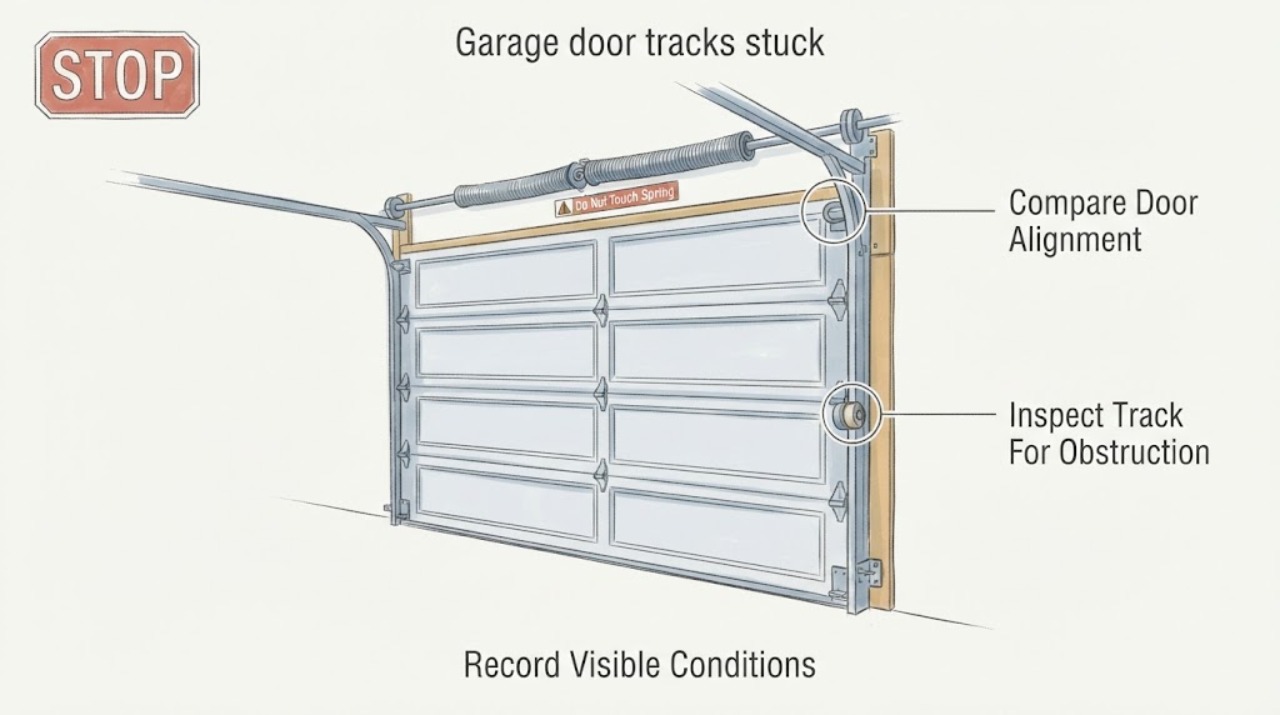
Amarr garage door tracks stuck: What to Check and What to Do Next
If an Amarr garage door is stuck in its tracks, stop pressing the opener and keep people, pets, and vehicles clear. With the door closed and stable, inspect both tracks for pebbles, dirt, a bent or loose rail, and a roller that is out of the track; look for a crooked panel, rubbing edge, loose hinge, damaged cable, or broken spring.
-
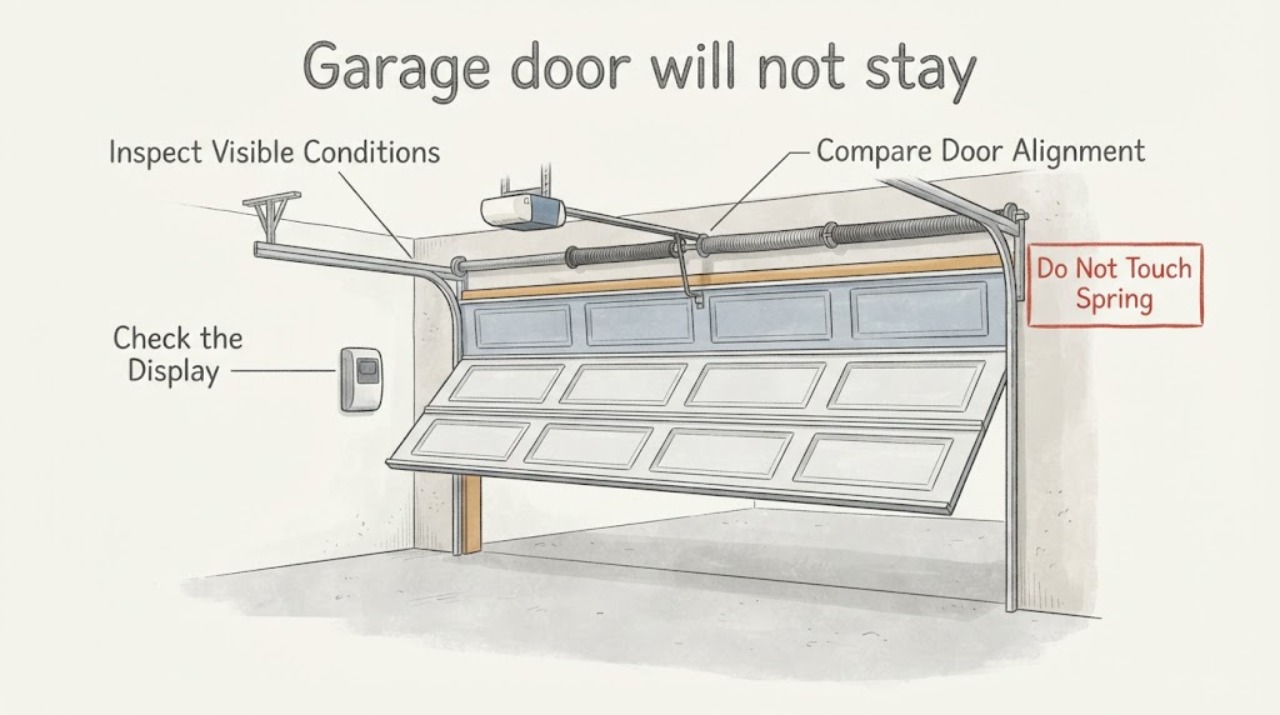
Amarr garage door will not stay open: What to Check and What to Do Next
An Amarr garage door that drops or closes instead of staying open is commonly out of balance, but a binding track, damaged cable or spring, or an opener setting can create a similar symptom. Keep people and vehicles out of the door's path.
-
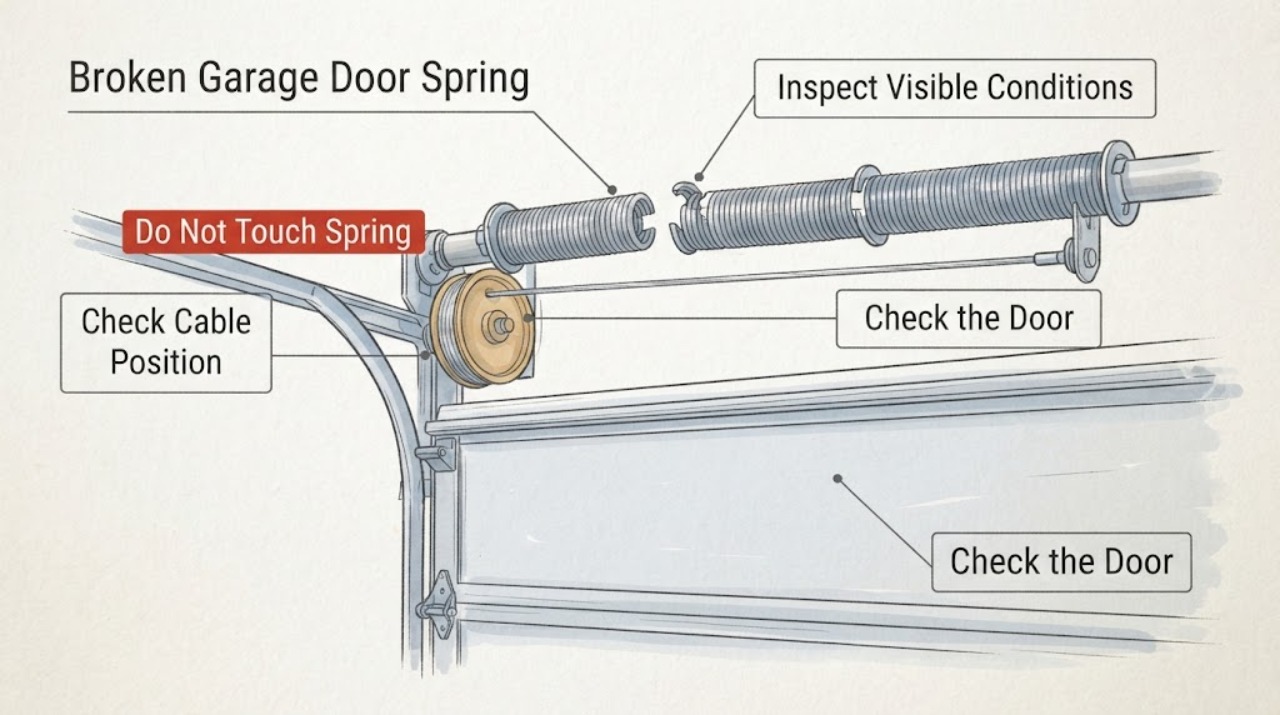
Broken Garage Door Spring: Safe Checks and the Professional Repair Boundary
A broken garage-door spring removes the counterbalance that carries the door's weight, so the door may be unusually heavy, crooked, stuck, or unsafe to move. From the floor, look for a gap or separation in the torsion spring above the door, a stretched or broken extension spring along the track, a loose or frayed lift cable, and a door that is partly open or tilted.
-
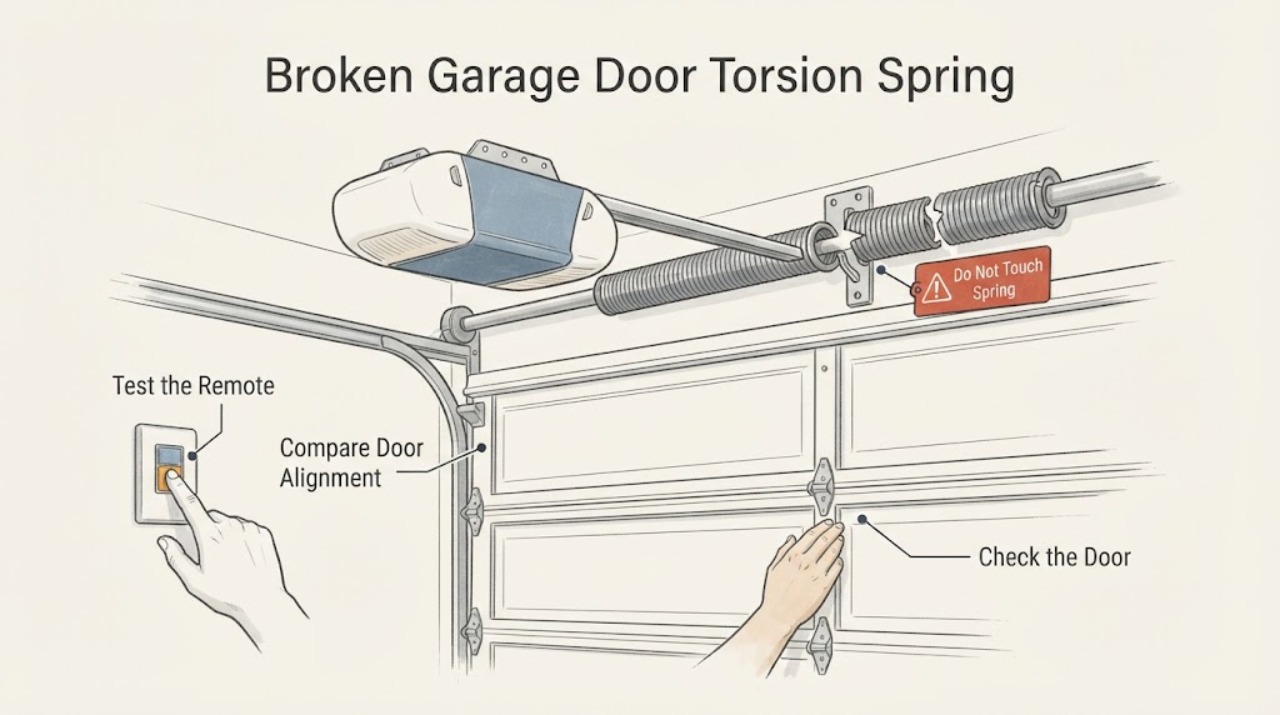
Broken Garage Door Torsion Spring: Emergency Release and Safety Protocol
A broken torsion spring makes a garage door dangerously heavy and can leave cables, tracks, panels, and the opener carrying loads they were not meant to handle. Do not operate the opener, pull the emergency release, lift the door, wind or unwind a spring, or adjust cables and brackets as a DIY repair.
-
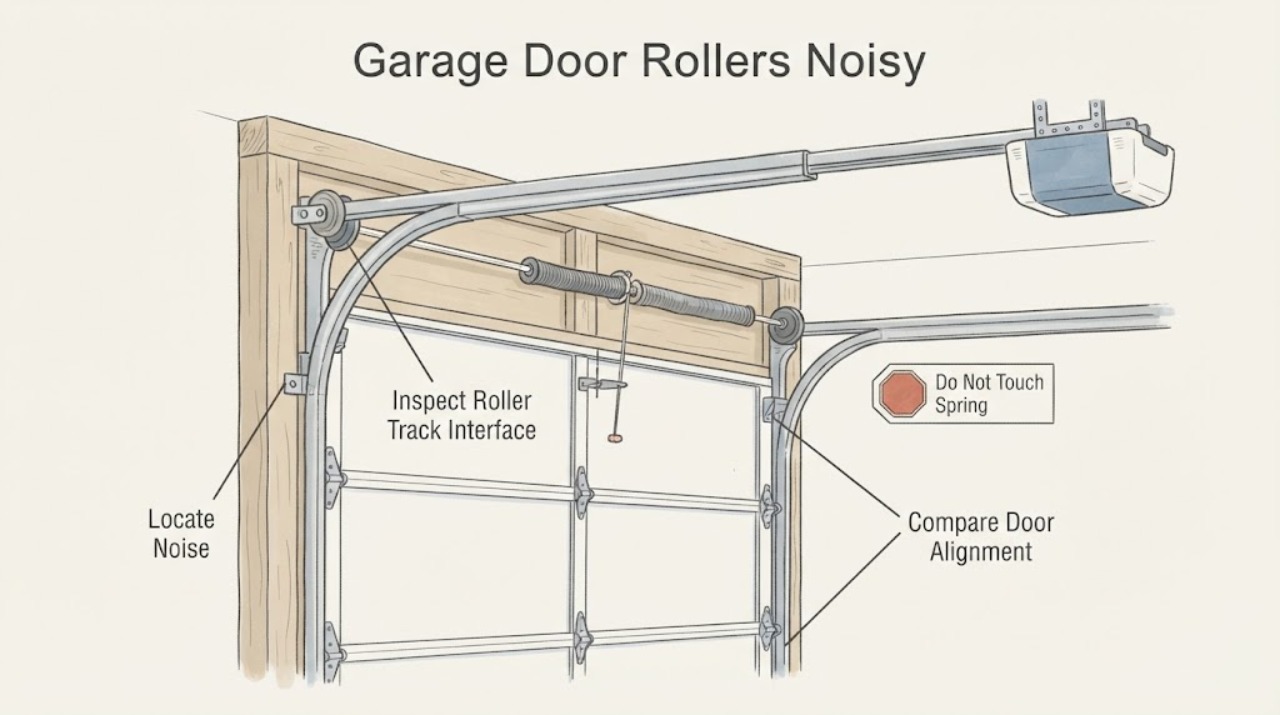
C.H.I. Garage Door Rollers Noisy: What to Check and What to Do Next
A noisy C.H.I. garage door is not automatically a bad roller.
-
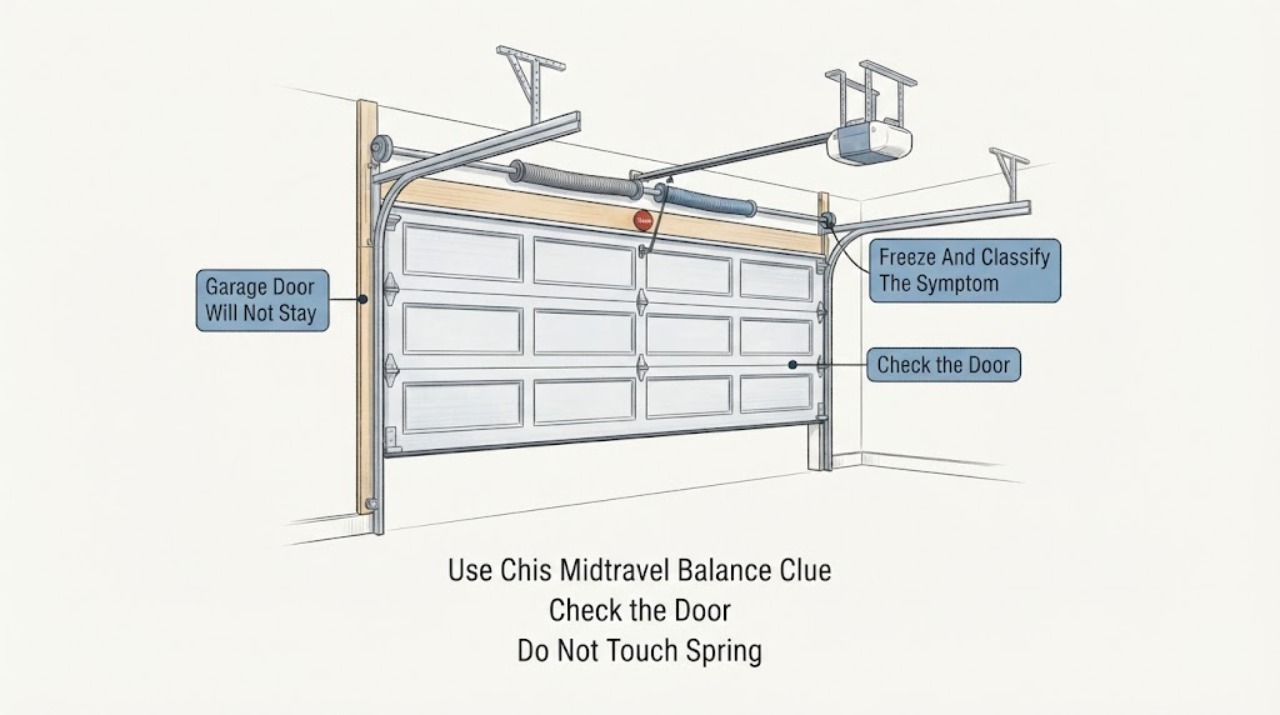
C.H.I. Garage Door Will Not Stay Open: Use the Balance Clue and Get the Right Service
Treat a C.H.I. garage door that drops, sags, or closes after opening as a safety problem until its balance and hardware are checked.
-
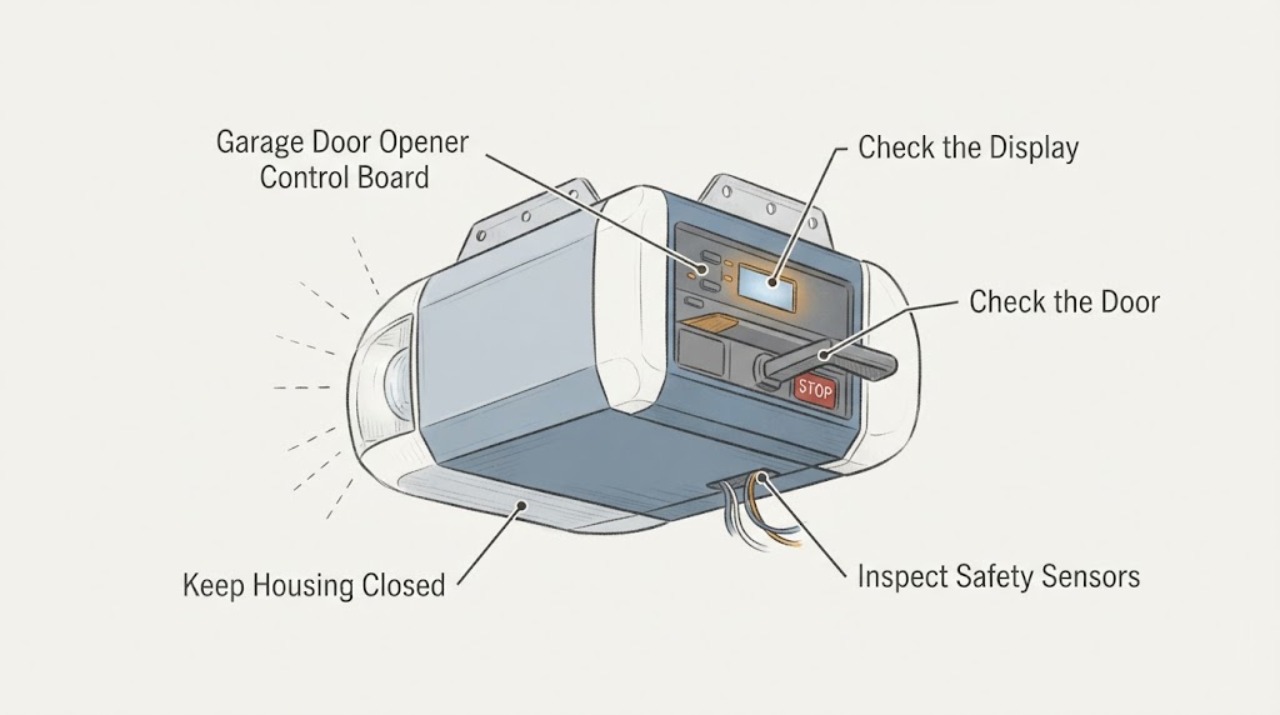
Chamberlain Garage Door Opener Control Board Light Blinking: What to Check and What to Do Next
A blinking light on a Chamberlain garage door opener does not by itself prove that the control board has failed. First identify which indicator is blinking: the diagnostic LED beside the Learn button, the UP/DOWN arrows, the wall control LED or screen, or the opener work light.
-
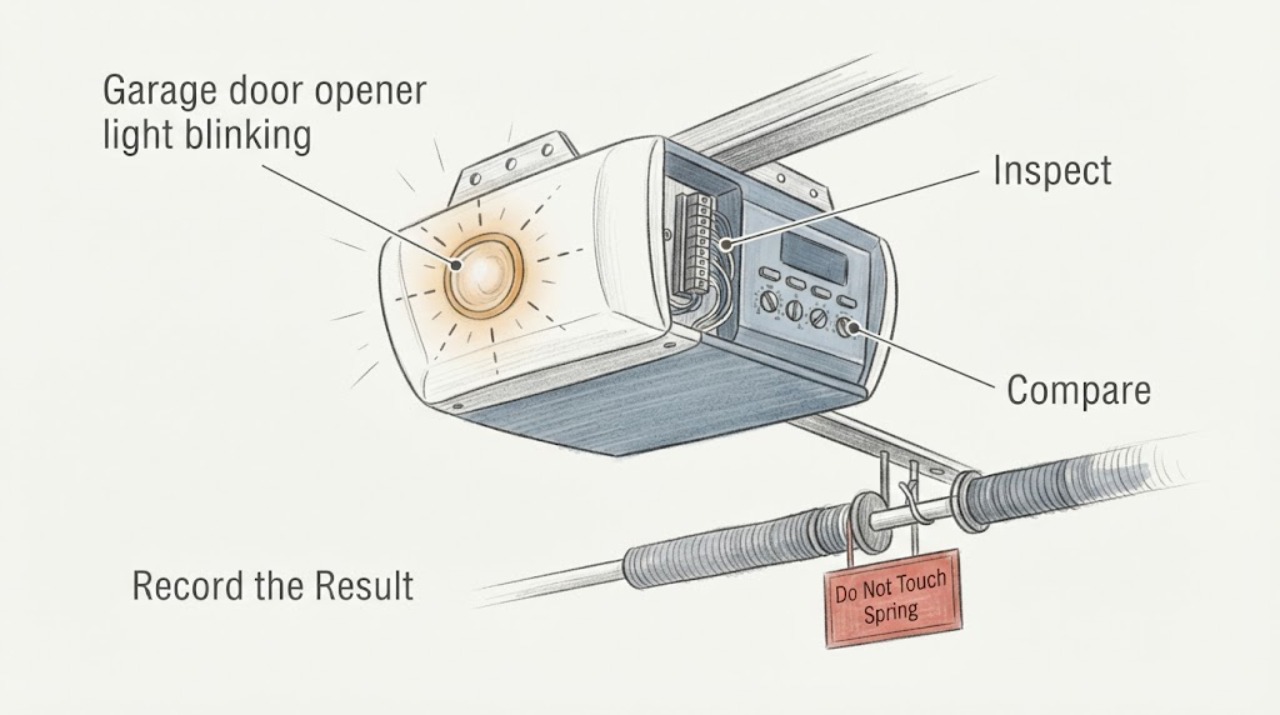
Chamberlain garage door opener light blinking: What to Check and What to Do Next
For a Chamberlain garage door opener whose light is blinking, first note whether the door also refuses to close and how many flashes repeat. Chamberlain’s support guidance links 10 flashes with a safety-reversing-sensor issue when the door will not close, and 2 flashes with the LOCK button on a door control.
-
Chamberlain garage door opener photo eye sensors light blinking: What to Check and What to Do Next
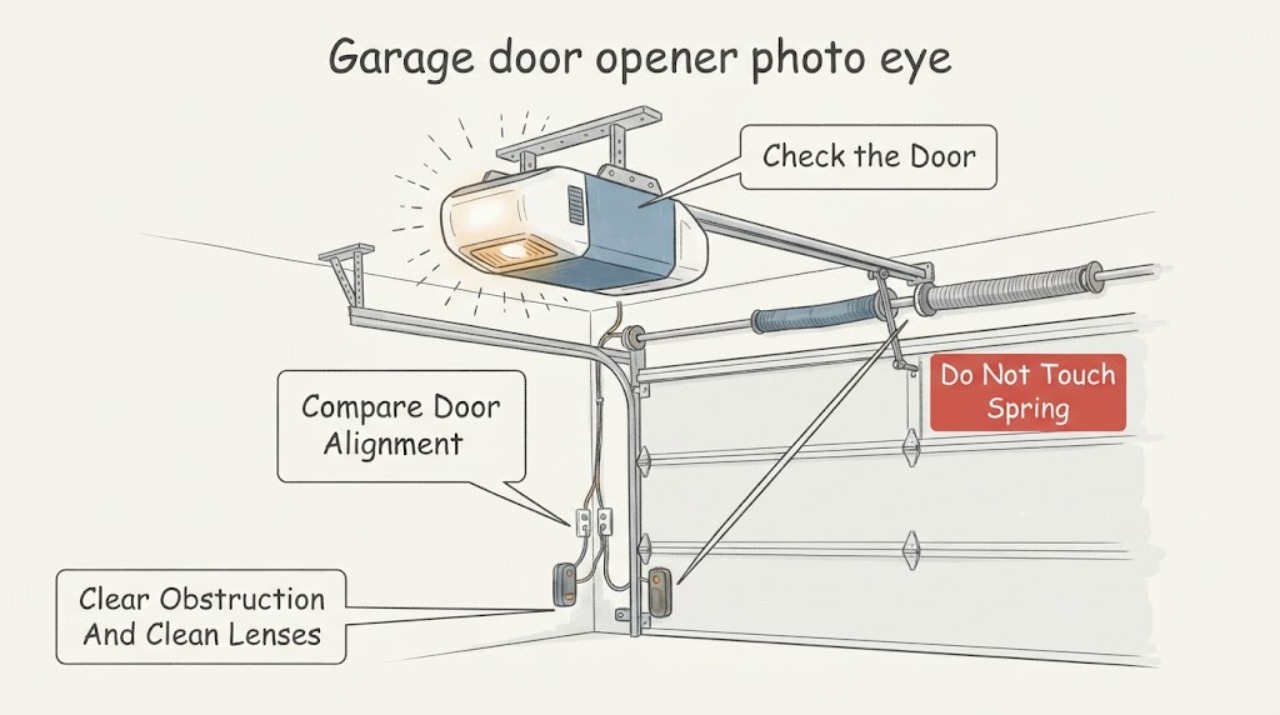
Blinking photo-eye sensor lights usually mean the safety beam is weak, blocked, misaligned, affected by sunlight, or interrupted by a wire or sensor fault. First distinguish the small LEDs on the two sensors from the opener's overhead light: Chamberlain documentation says the opener lights can flash when the safety reversing sensors are not connected or aligned, while sensor LEDs show the condition at the beam.
-
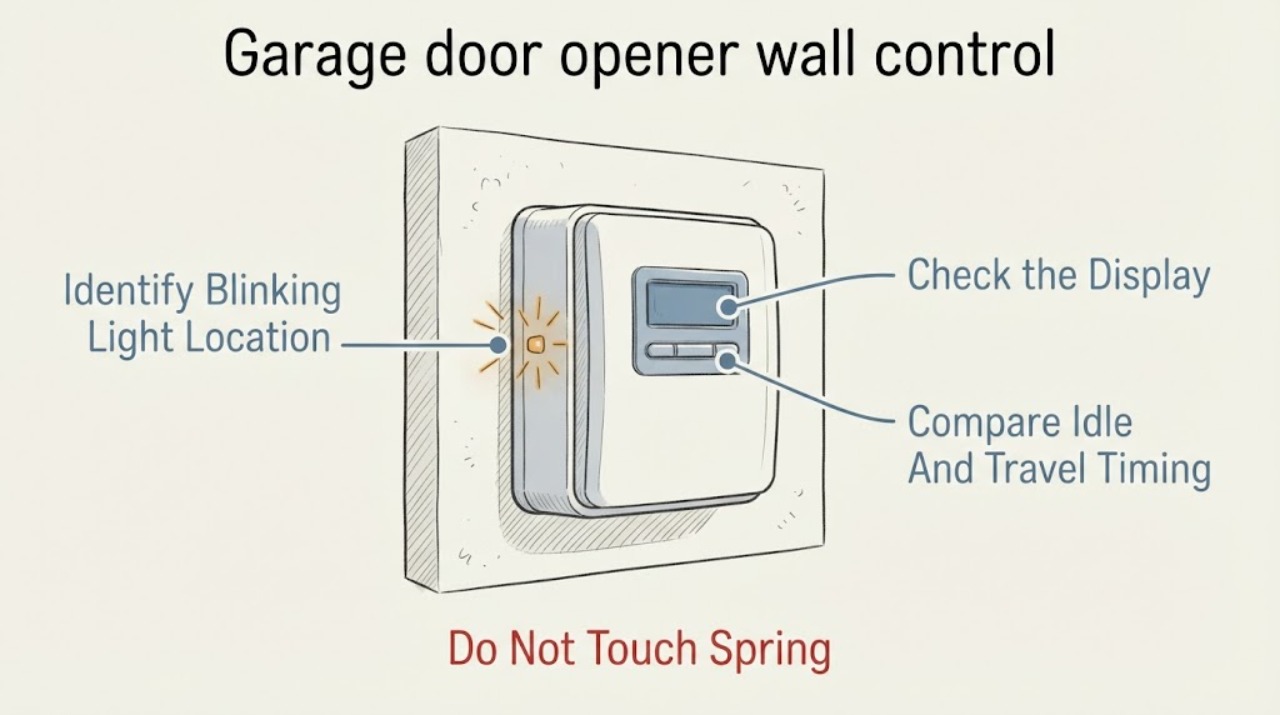
Chamberlain garage door opener wall control light blinking: What to Check and What to Do Next
First identify which light is blinking. On a Chamberlain wall control, a continuously flashing indicator commonly means the Lock feature is enabled; the wall button may still operate the door while remotes are ignored.
-
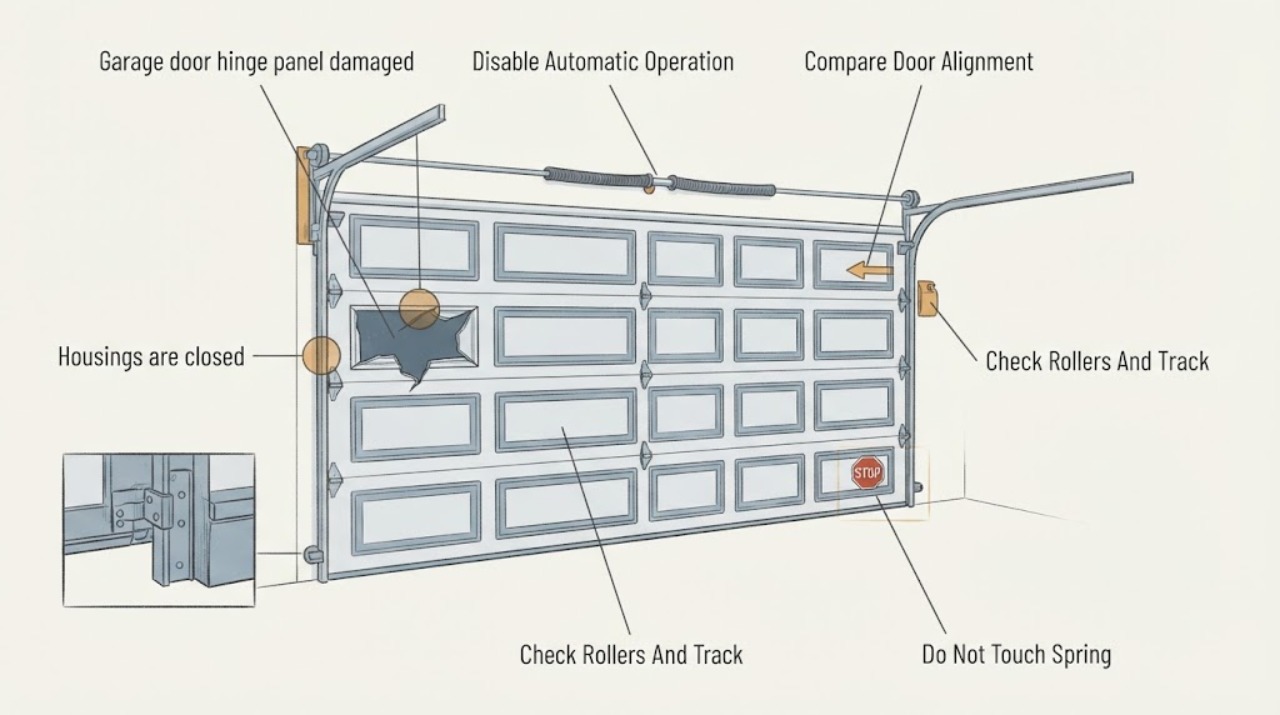
Chi garage door hinge panel damaged: What to Check and What to Do Next
If a C.H.I. garage door panel or its hinge area is damaged, stop automatic operation and keep people, vehicles, and fingers away from the moving sections.
-
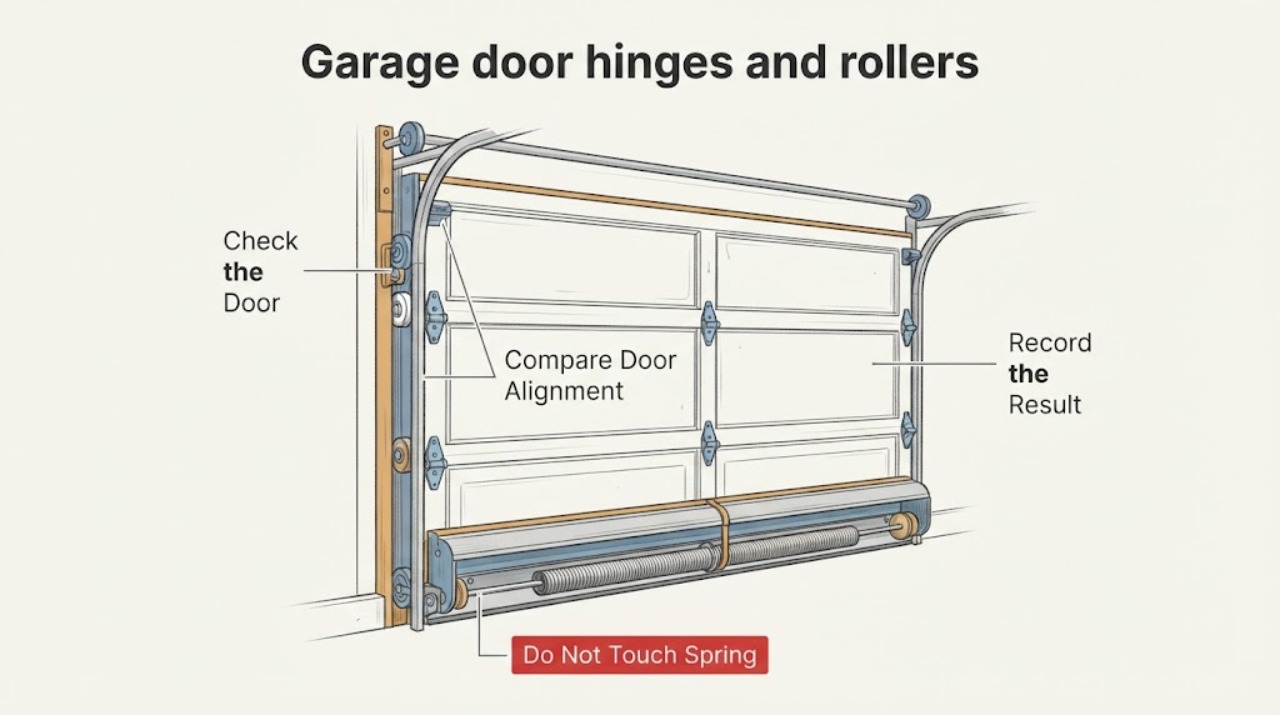
CHI garage door hinges and rollers noisy: What to Check and What to Do Next
A noisy CHI garage door is often narrowed by whether the sound follows the moving door, one hinge or roller location, the track, or the opener. With the door closed and people and vehicles clear, listen from a safe position and inspect only visible hinges, roller wheels, track edges, hardware, and debris; do not reach into a track, remove a roller or hinge, loosen brackets, or work on springs, cables, drums, or the opener.
-
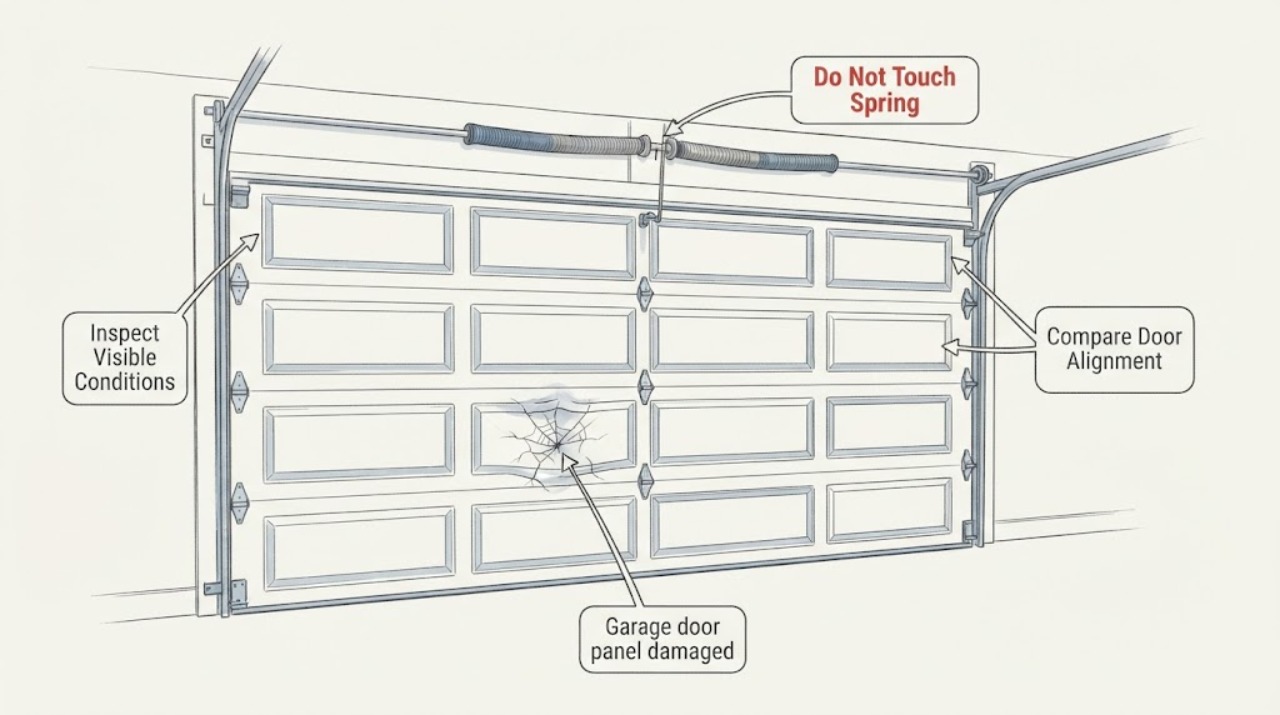
Chi garage door panel damaged: What to Check and What to Do Next
Do not run a C.H.I. garage door that is bent, cracked, separating, tilted, binding, has pulled hardware, broken glass, or an abnormal spring or cable.
-
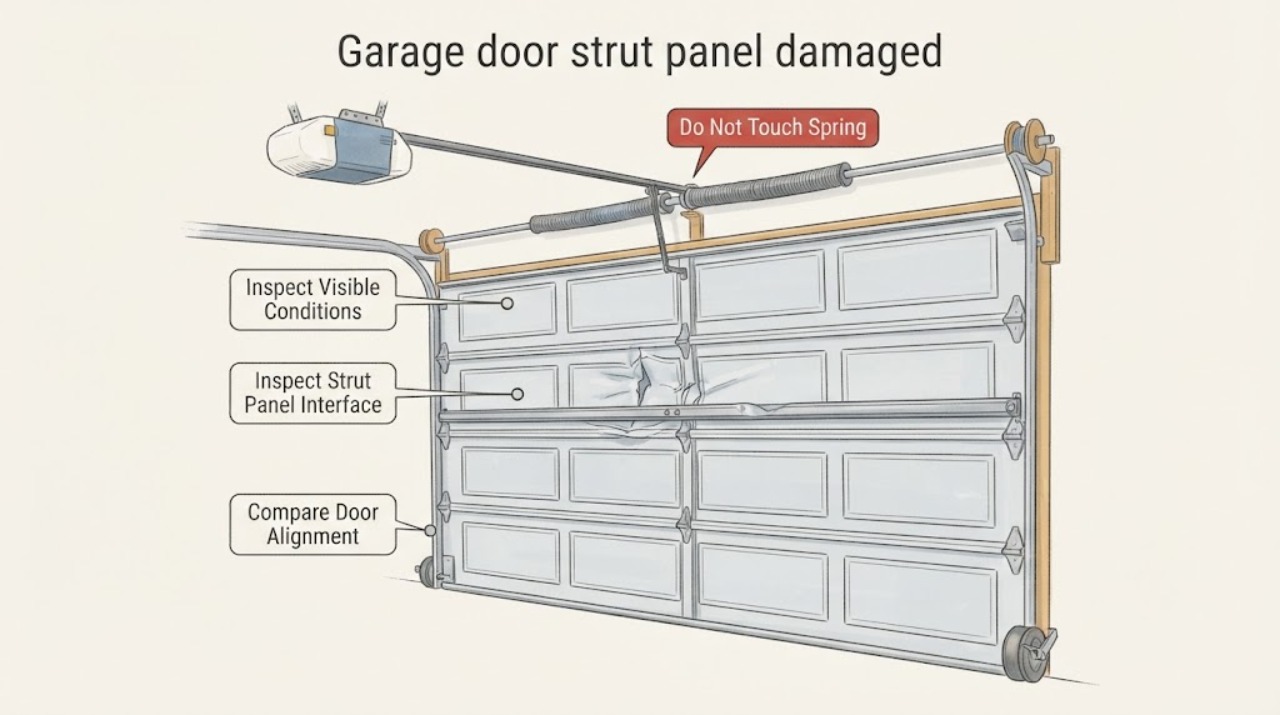
Chi garage door strut panel damaged: What to Check and What to Do Next
A damaged strut or garage-door panel on a C.H.I. door can change how the section carries its weight and how the opener pulls it, but a bent panel, hinge, track, roller, spring, or cable can look similar.
-
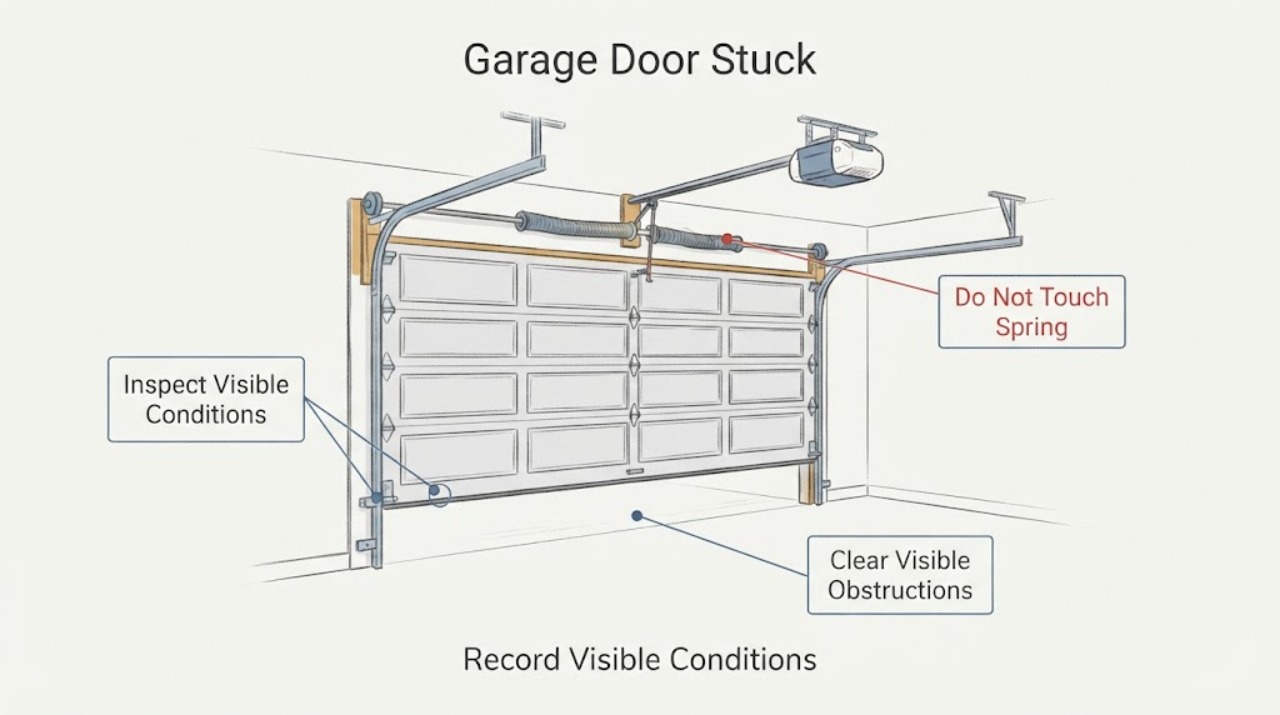
CHI Garage Door Stuck: What to Check and What to Do Next
A stuck CHI garage door can be obstructed, bound in its tracks, out of balance, or affected by the opener or its safety system. First note whether the door is fully closed, partly open, crooked, or under visible strain, and keep people, pets, and vehicles out of the travel area.
-
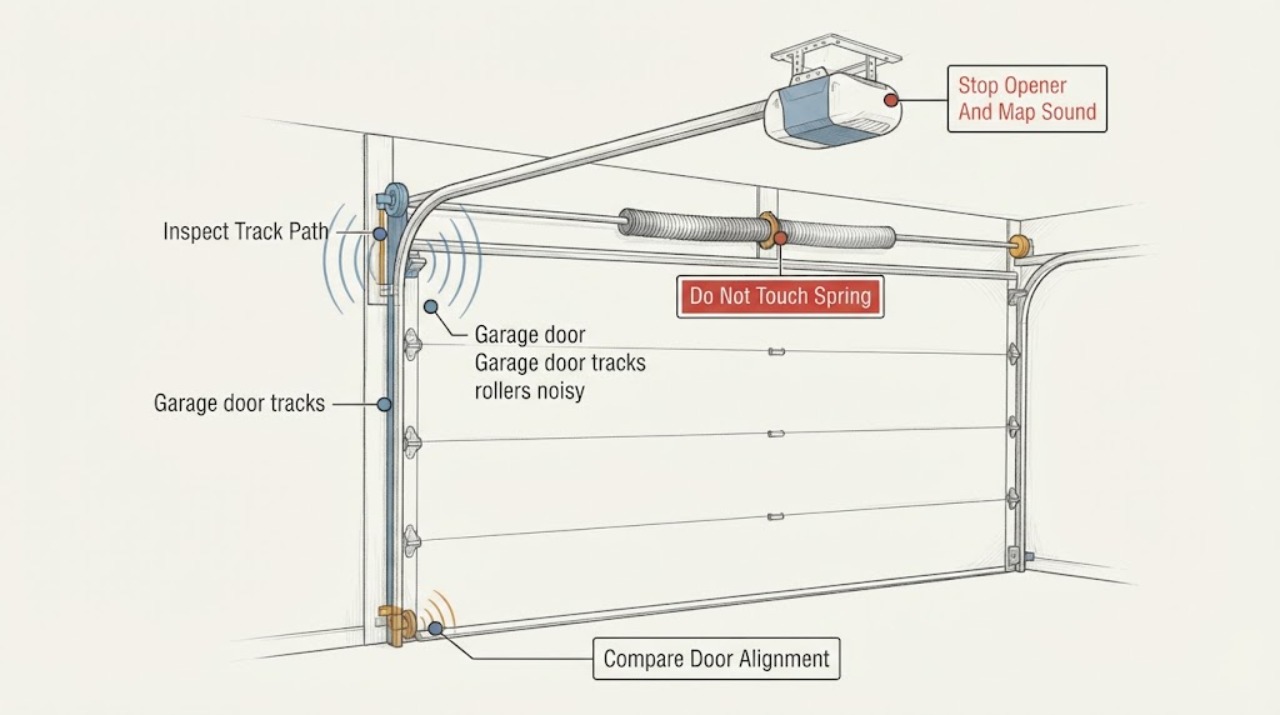
Chi garage door tracks rollers noisy: What to Check and What to Do Next
If your C.H.I. garage door rollers or tracks are noisy, first identify whether the sound is a squeak, rattle, scrape, grinding noise, or a bang and whether it follows one roller, one track side, the hinges, or the opener.
-
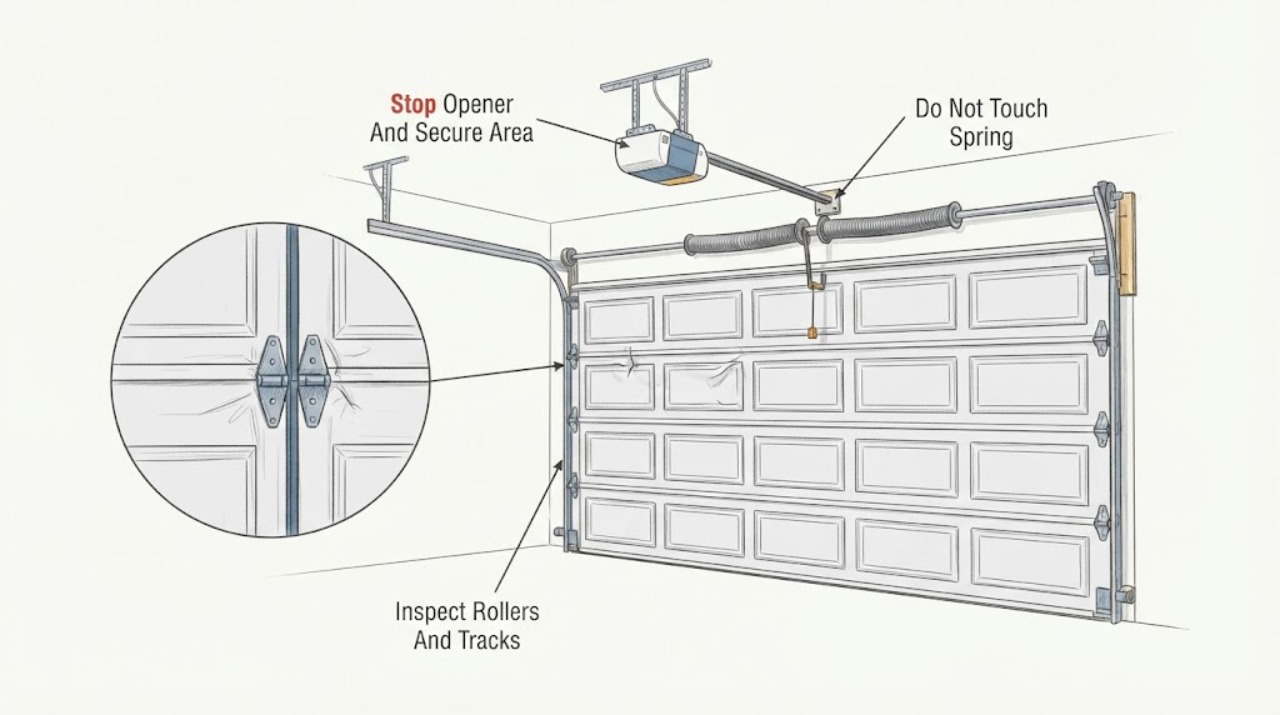
Clopay garage door hinge panel damaged: What to Check and What to Do Next
If a Clopay garage door panel or its hinge area is damaged, stop automatic operation and keep people, pets, and vehicles away from the moving sections. With the door closed and stable, photograph the dent, crease, cracked panel, bent hinge, pulled fastener, displaced roller, track, cable, spring, and any sharp edge.
-
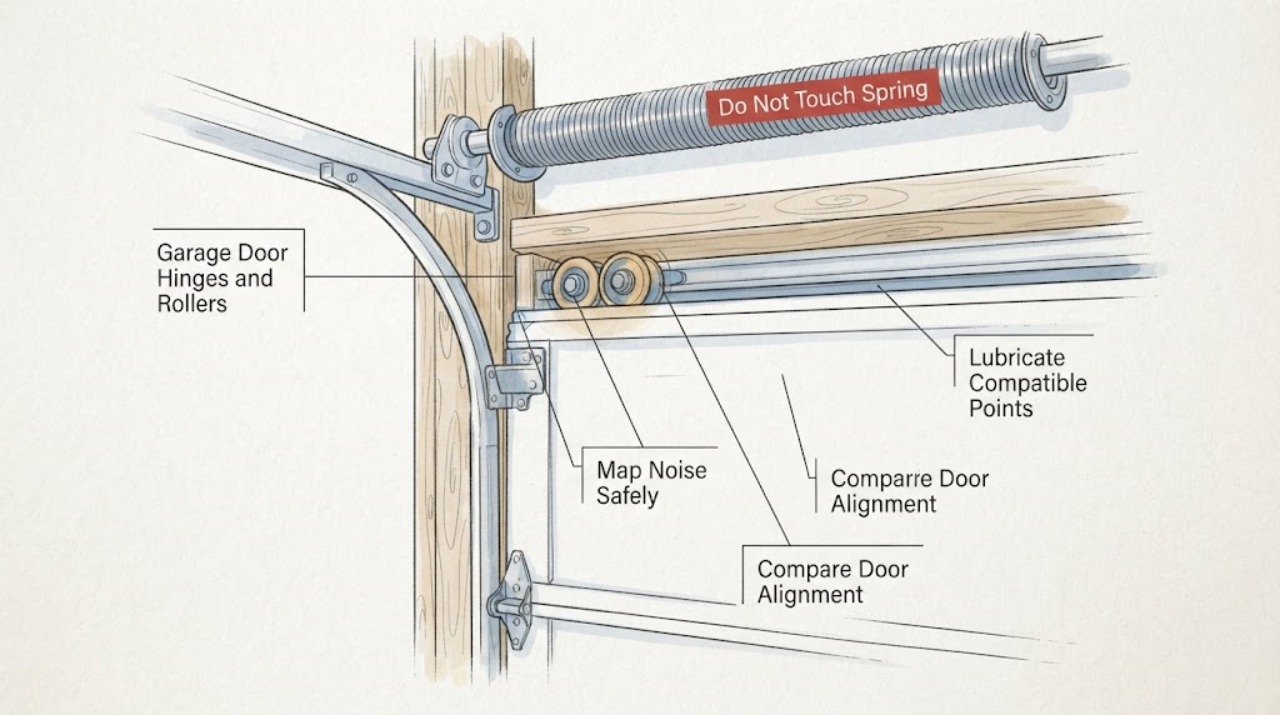
Clopay Garage Door Hinges and Rollers Noisy: What to Check and What to Do Next
A noisy Clopay garage door often has friction, wear, or looseness at the rollers, hinge pins, hardware, or track alignment, but first identify whether the sound comes from the door or the opener. Watch and listen from a safe position with the door closed or during a normal supervised cycle; never put hands between sections or near rollers, springs, cables, or brackets.
-
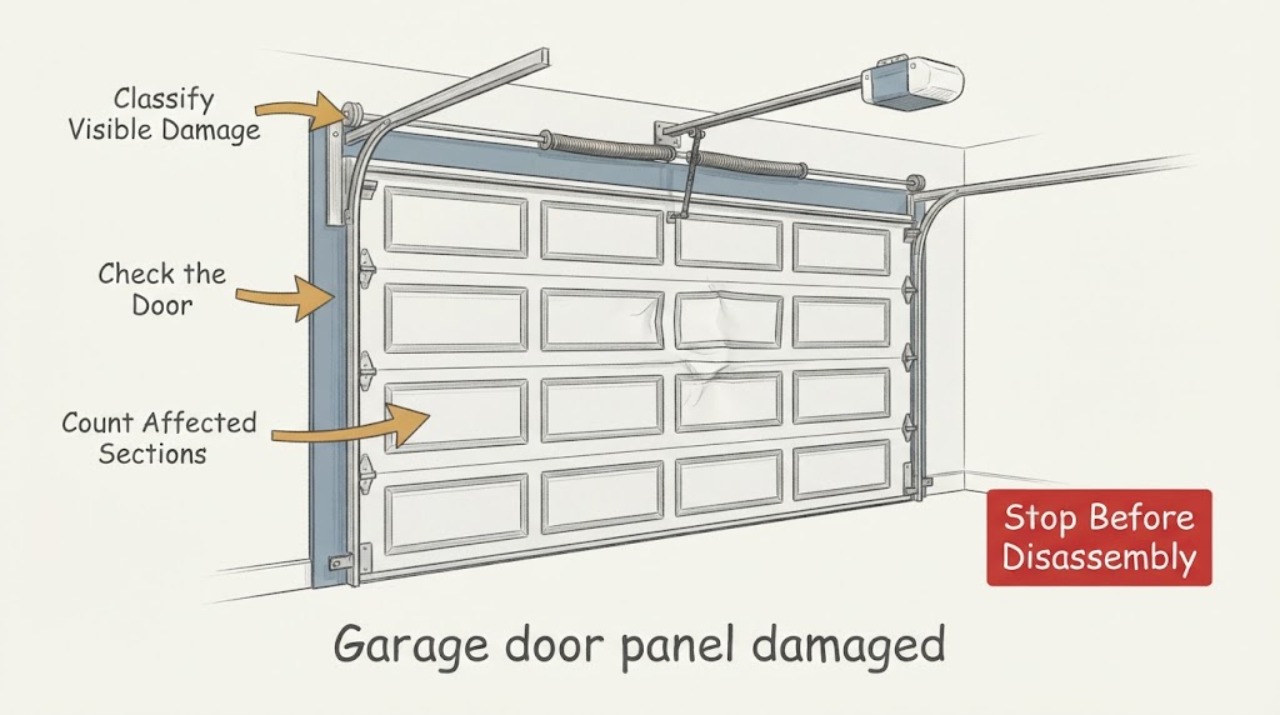
Clopay garage door panel damaged: What to Check and What to Do Next
Start by deciding whether the damage is a light surface mark, a localized dent in one section, or damage that has bent the panel, frame, track, hinges, cables, or springs. Clopay allows some minor touch-ups according to the door collection's care instructions, but it recommends professional evaluation for major damage and strongly recommends a garage-door professional for replacing door sections.
-
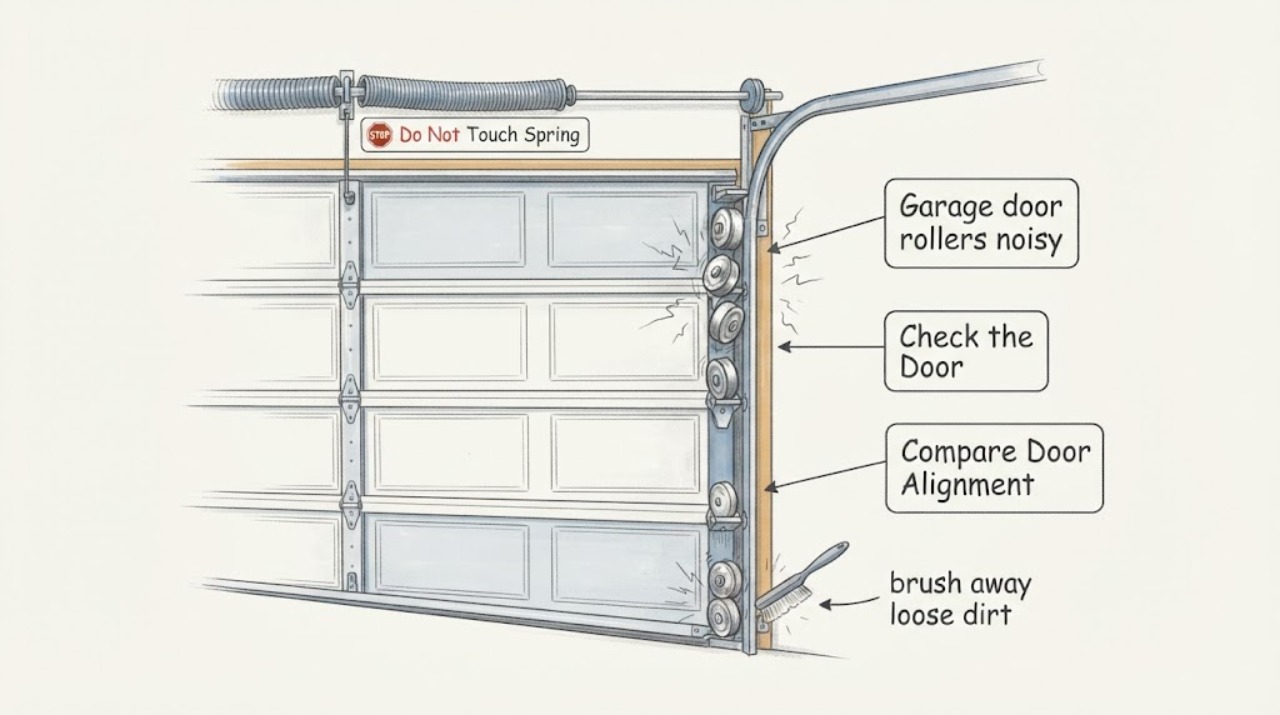
Clopay garage door rollers noisy: What to Check and What to Do Next
Noisy rollers on a Clopay garage door are often related to dirt, inadequate lubrication on rollers that require it, a worn or damaged roller, or a track or door alignment problem. Watch and listen from a safe position while the door moves: note whether the sound follows one roller, comes from a bent or dirty track, or appears with shaking, jerking, heavy movement, or an uneven door.
-
Clopay garage door strut panel damaged: What to Check and What to Do Next
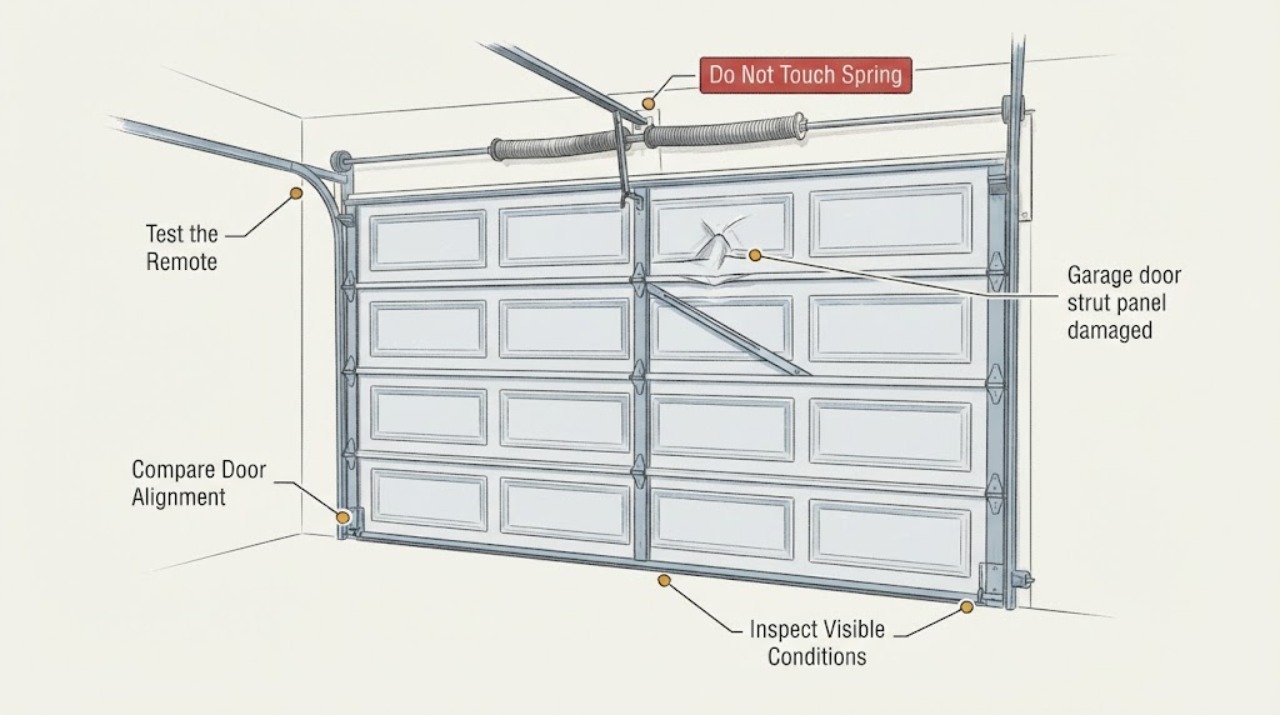
A damaged strut or garage-door panel is structural damage, not just a cosmetic dent. Clopay defines a strut as a horizontal reinforcement member that adds rigidity and helps prevent a section from sagging or bowing, so a bent strut, torn fastener area, cracked panel, separated hinge, or distorted section can change the door's balance and track load.
-
Clopay garage door stuck: What to Check and What to Do Next
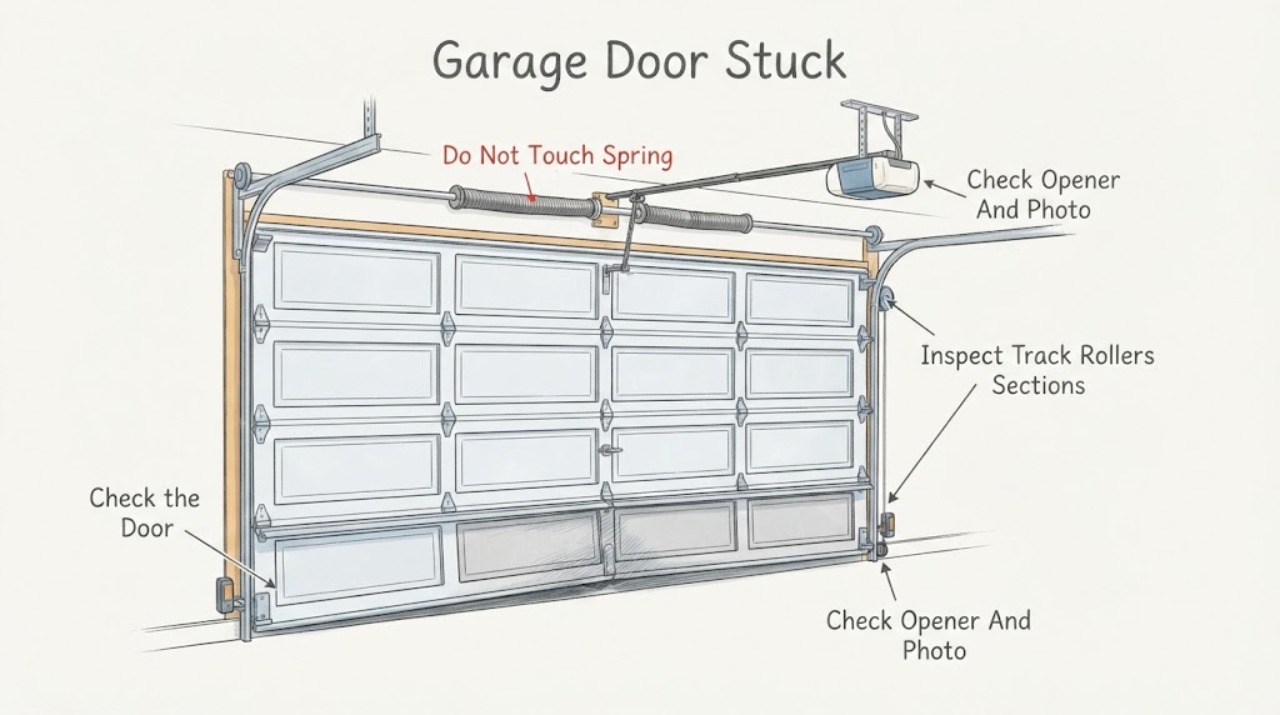
Treat a stuck Clopay garage door as a heavy moving-door and counterbalance hazard before assuming the opener is at fault. Keep people, pets, vehicles and fingers out of the travel path and do not stand below a partly open door.
-
Clopay garage door tracks rollers noisy: What to Check and What to Do Next
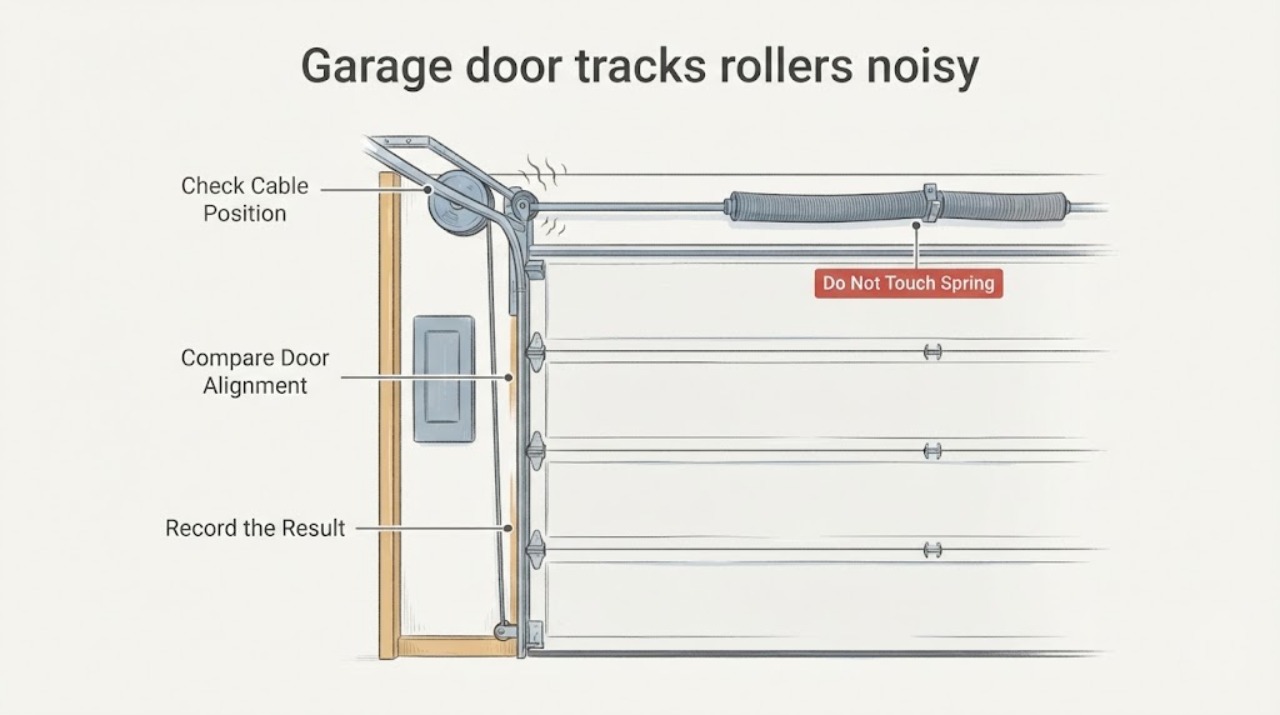
Noisy rollers or tracks on a Clopay garage door can result from dirt, a dry roller bearing, worn or damaged rollers, loose hardware, a bent or misaligned track, an unbalanced door, or an opener or spring problem that is being heard through the track. First keep people and vehicles out of the travel path, listen from a safe position to locate the sound, and inspect the closed door for debris, rubbing marks, roller gaps, cracks, displacement, or frayed cables.
-
Clopay Garage Door Will Not Stay Open: What to Check and What to Do Next
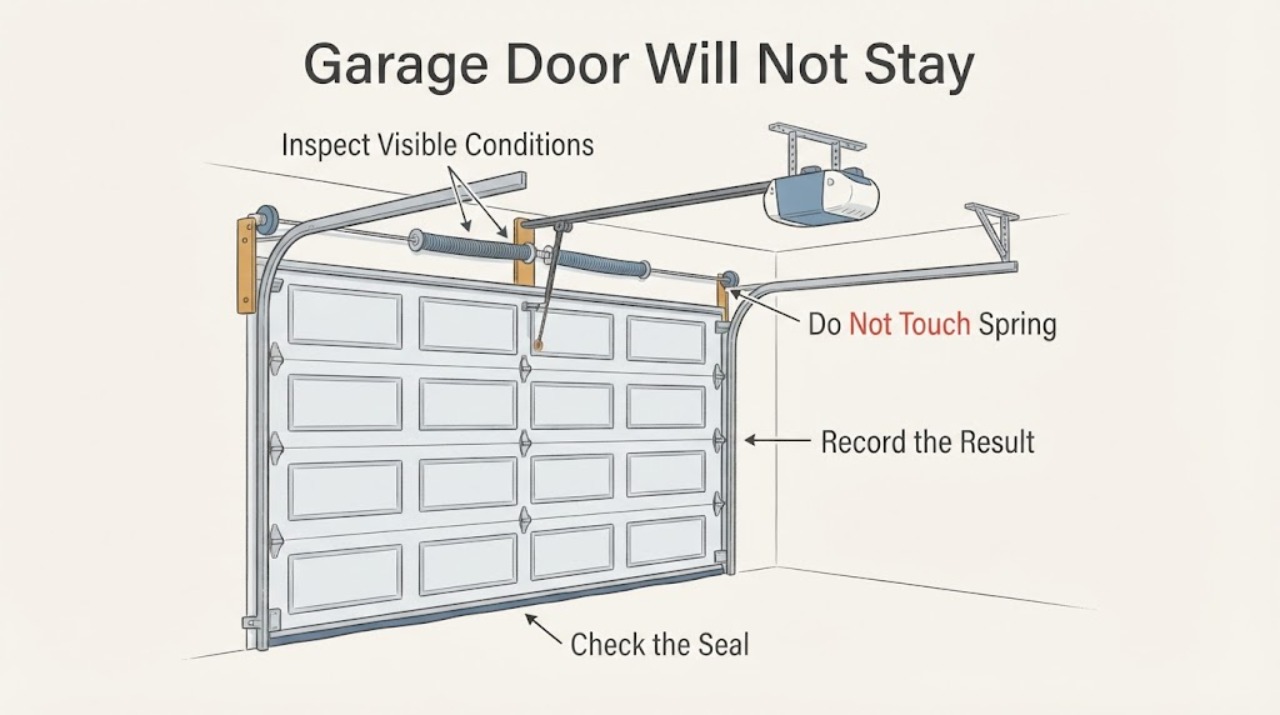
A Clopay garage door that rises and then falls, or will not remain open halfway, is often out of balance rather than suffering from a simple remote or sensor fault. Springs counterbalance the door, and a broken, weak, or misadjusted spring or cable can make the door heavy, uneven, or unsafe.
-
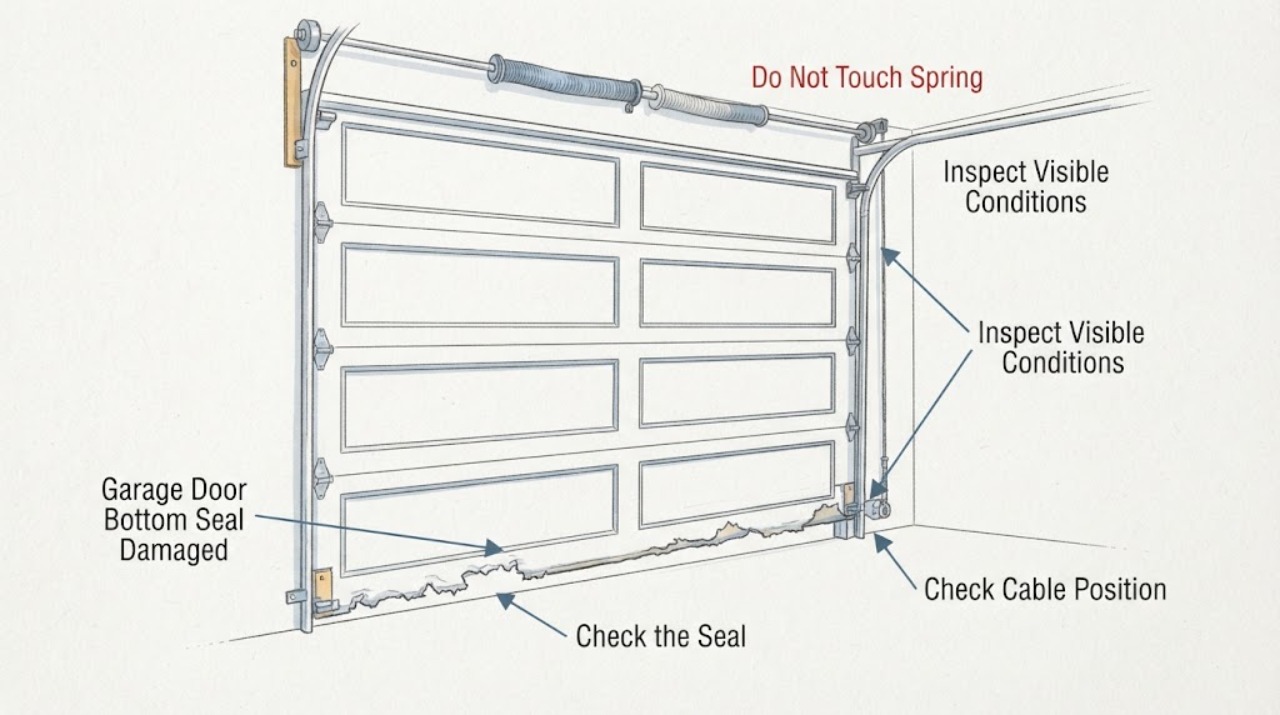
Garage door bottom seal damaged: What to Check and What to Do Next
A cracked, flattened, torn, or missing garage-door bottom seal can let in water, drafts, dirt, and pests, but a visible gap is not always a seal-only problem. First inspect the closed door and surrounding floor from a safe position, then document the seal profile, retainer, threshold, and any uneven closing.
-
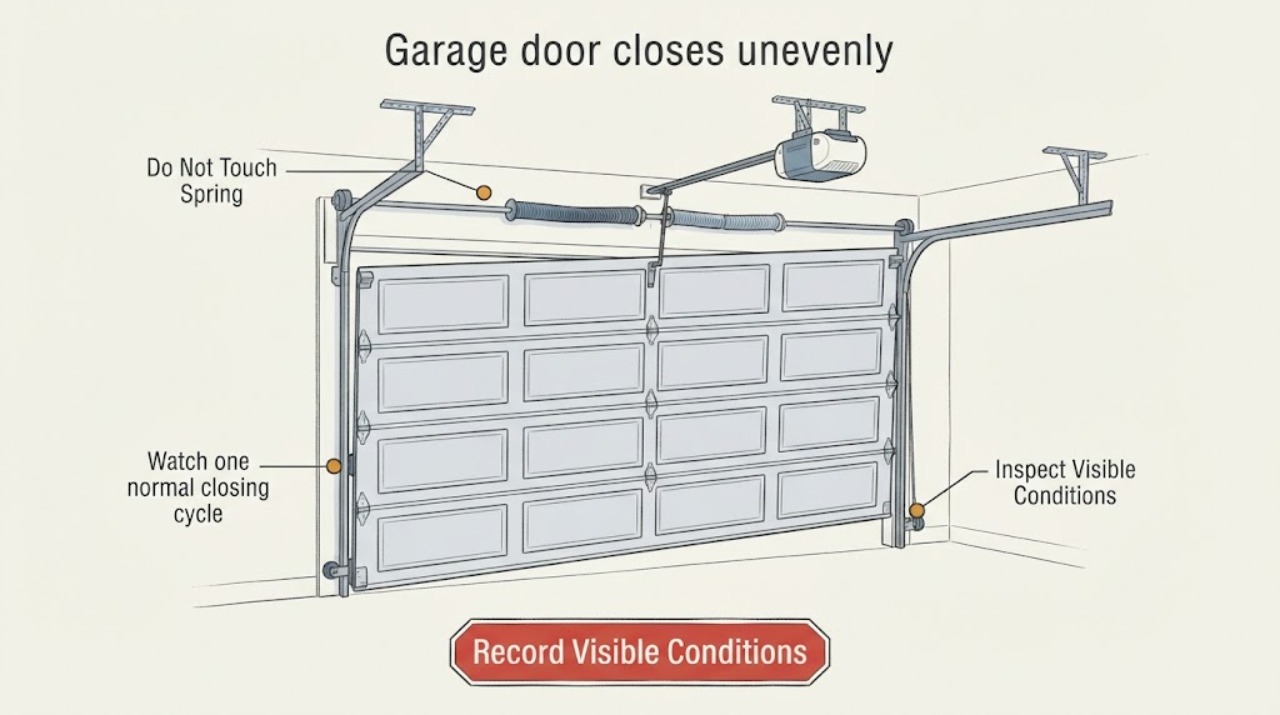
Garage door closes unevenly: What to Check and What to Do Next
Treat an unevenly closing garage door as a high-tension safety issue. From outside the door's path, observe one ordinary cycle only if the door currently moves without obvious danger, then note whether the panels tilt, bind, jerk, stop, or reverse.
-
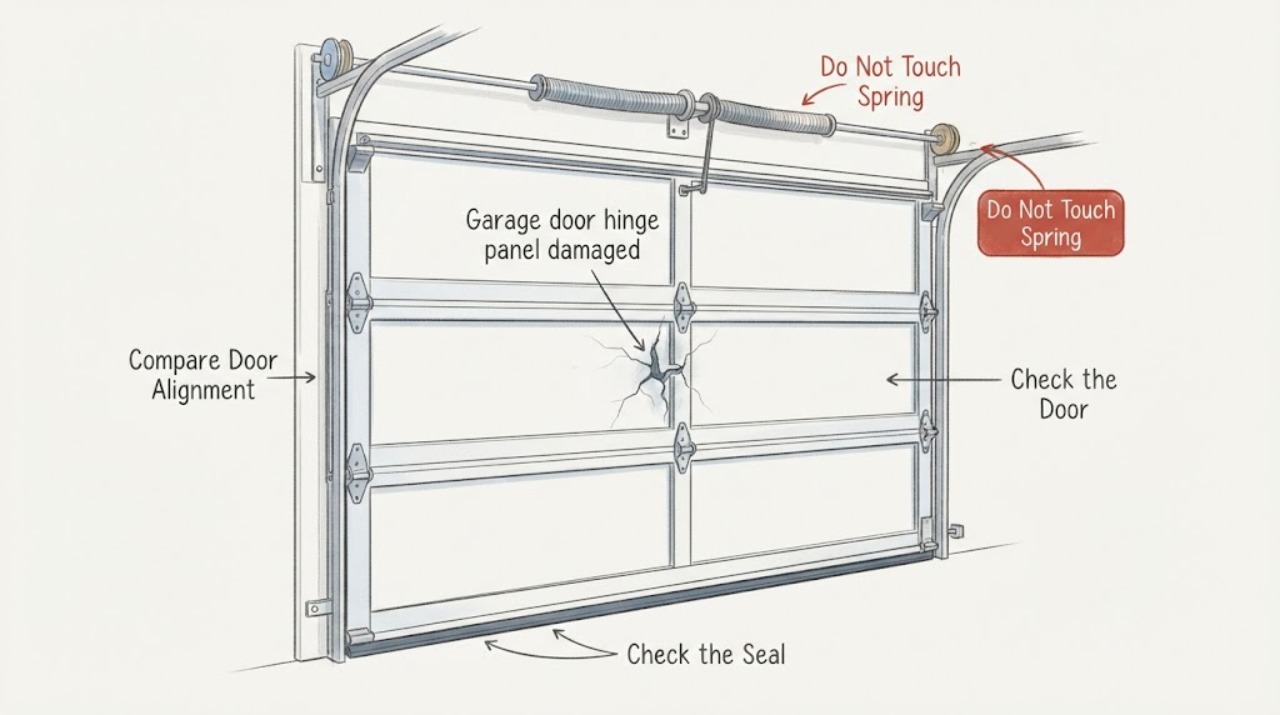
Garage door hinge panel damaged: What to Check and What to Do Next
A damaged garage-door panel or hinge can change the load and alignment of the entire moving door. Do not run the opener, force a binding door, touch springs or cables, loosen hinge fasteners, or try to straighten a panel.
-
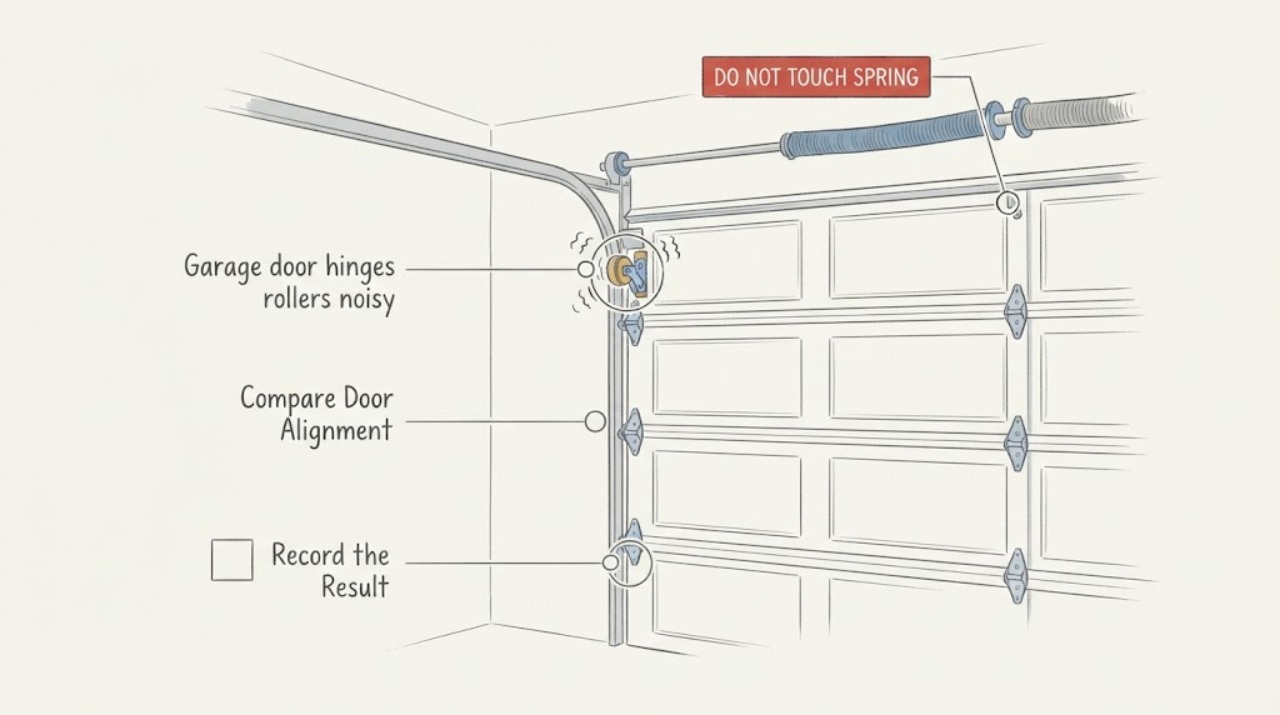
Garage door hinges rollers noisy: What to Check and What to Do Next
A noisy sectional garage door often needs the sound localized before anyone considers lubrication or a part. With the door closed and from a safe position, look for damaged hinges, rollers, panels, or a visibly obstructed track, then note whether the sound is a squeak, scrape, rattle, pop, or grinding noise and where it occurs.
-
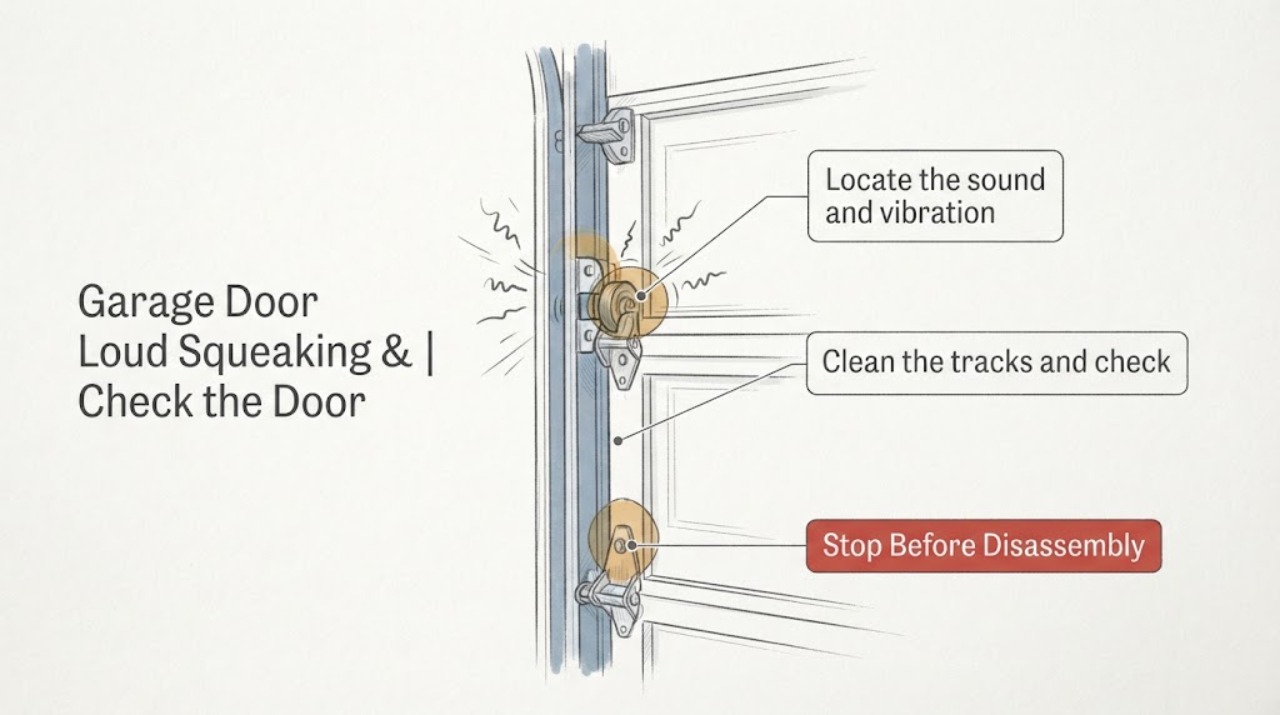
Garage Door Loud Squeaking & Vibration: Nylon Roller Upgrade & Track Tuning
Loud squeaking and vibration usually come from dry or worn rollers and hinges, loose hardware, debris, or a track that is bent or out of alignment. With the door closed, inspect for damage first; clean the tracks without lubricating the track itself, tighten only accessible loose hardware, and lubricate the hinge pivots and compatible metal roller bearings with a garage-door lubricant.
-
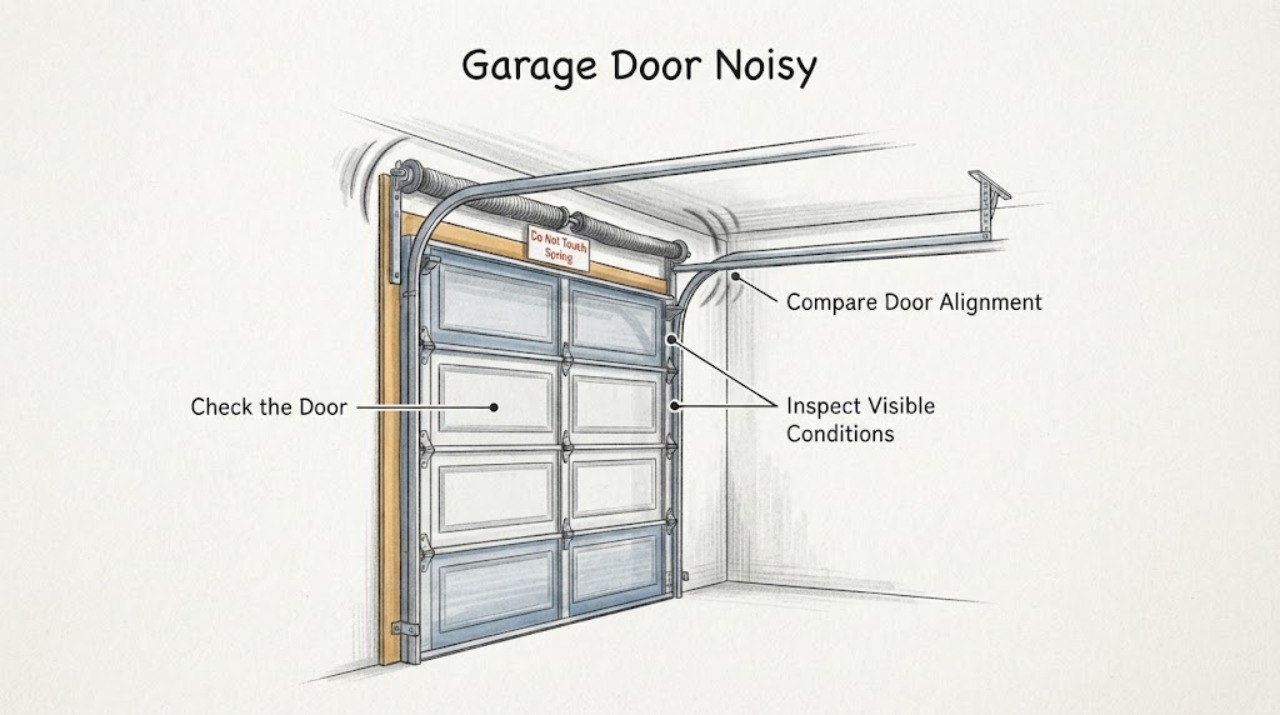
Garage Door Noisy
A noisy garage door is often caused by debris or damage in the track, worn or loose rollers and hinges, an unbalanced door, loose opener hardware, or a slack chain, belt, or carriage. With the door closed, disconnect the opener before inspecting the track, rollers, hinges, and fasteners.
-
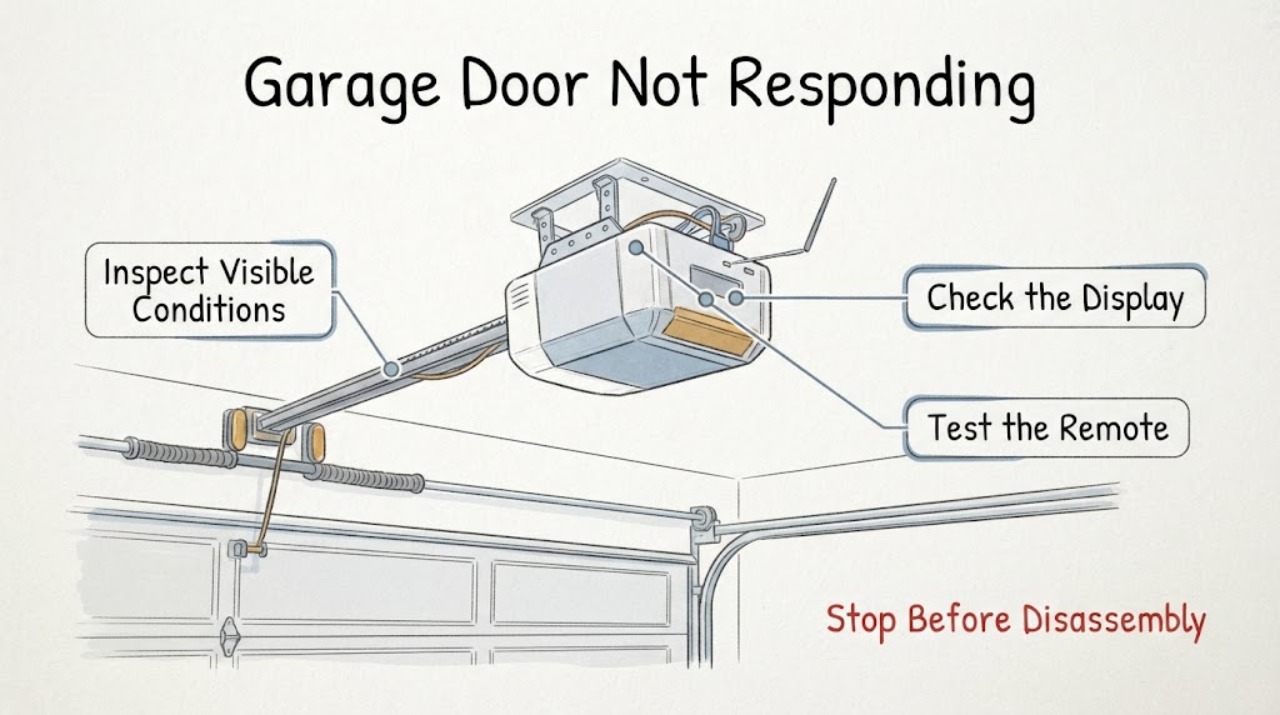
Garage Door Not Responding
When a garage door is not responding, first keep everyone clear of the door and separate a control problem from a door or track problem. Check whether the opener has power, whether the wall control responds, whether the remote battery is usable, and whether the door path and photo-eye area are visibly blocked.
-
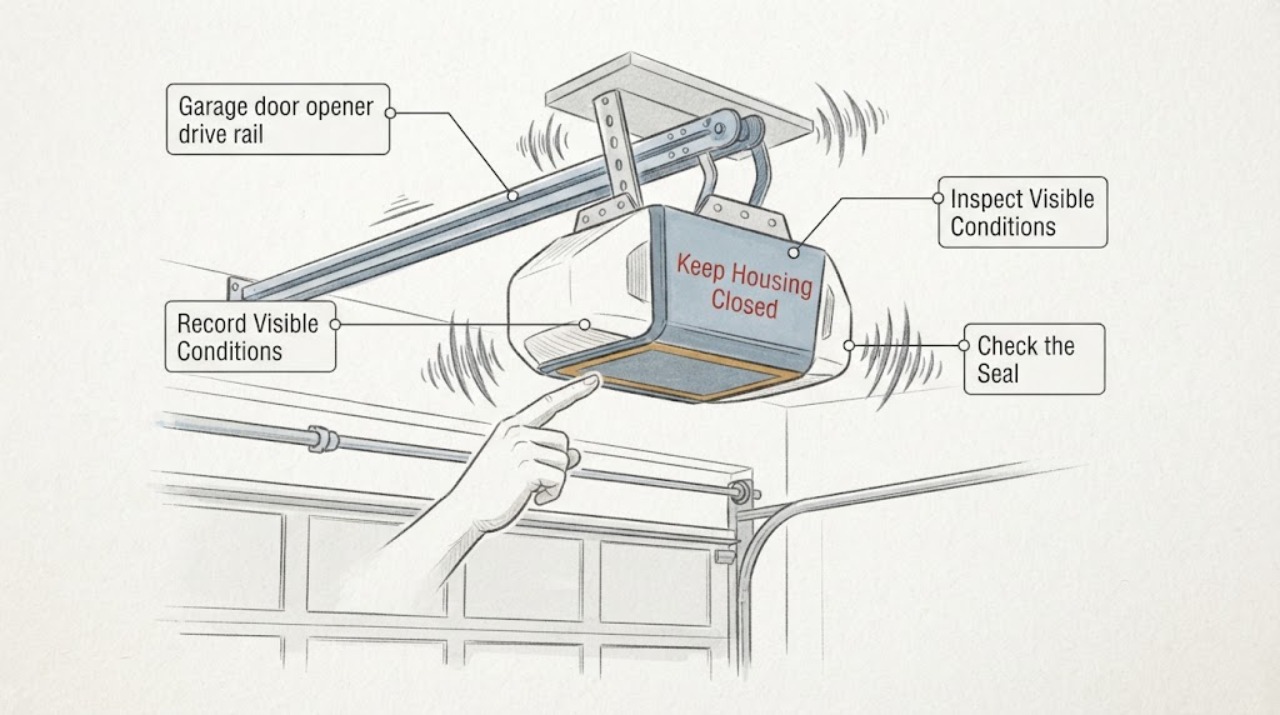
Garage door opener drive rail making loud noise: What to Check and What to Do Next
A drive rail that suddenly becomes loud should not be treated as normal. Do not keep cycling the door if the sound is grinding or scraping, the door is unbalanced, binds, jumps its path, stalls, or moves unevenly.
-
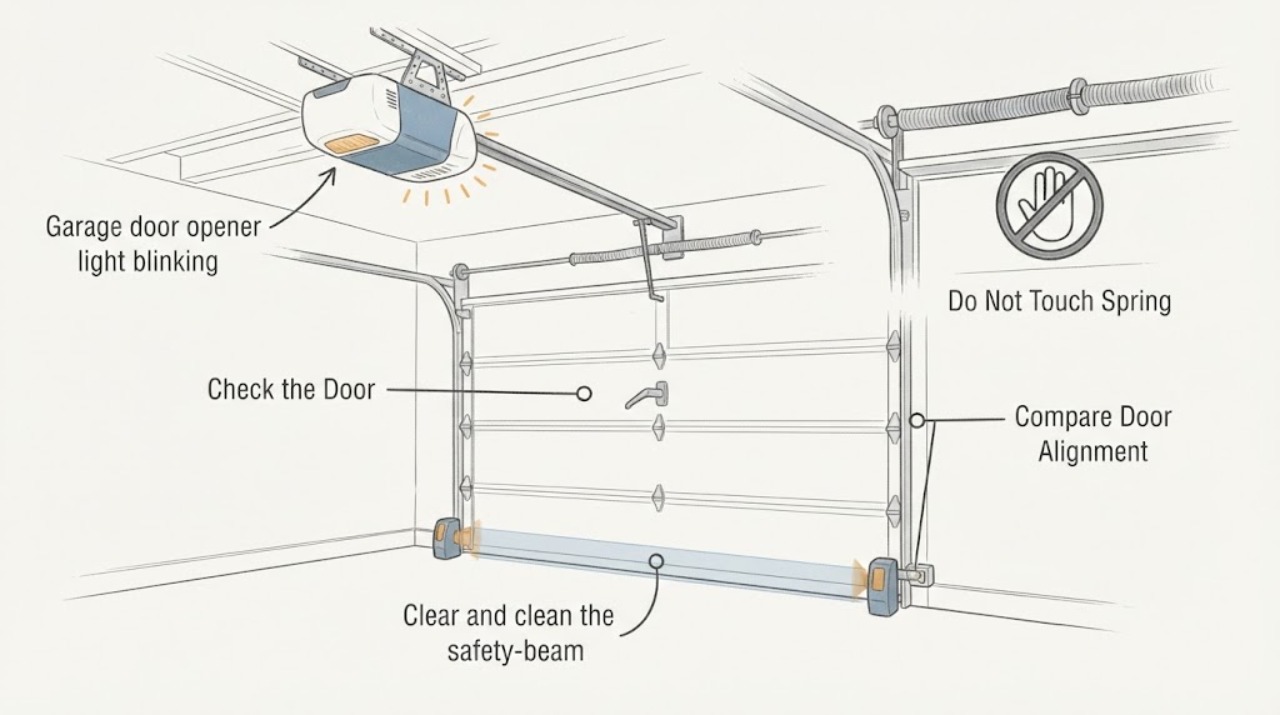
Garage door opener light blinking: What to Check and What to Do Next
A blinking opener light usually means the opener is reporting a condition rather than simply illuminating the garage. First distinguish the opener's main lamp from the small LEDs on the safety sensors, then check for an obstruction, dirty or misaligned photo eyes, visible sensor-wire damage, or a door that is binding.
-
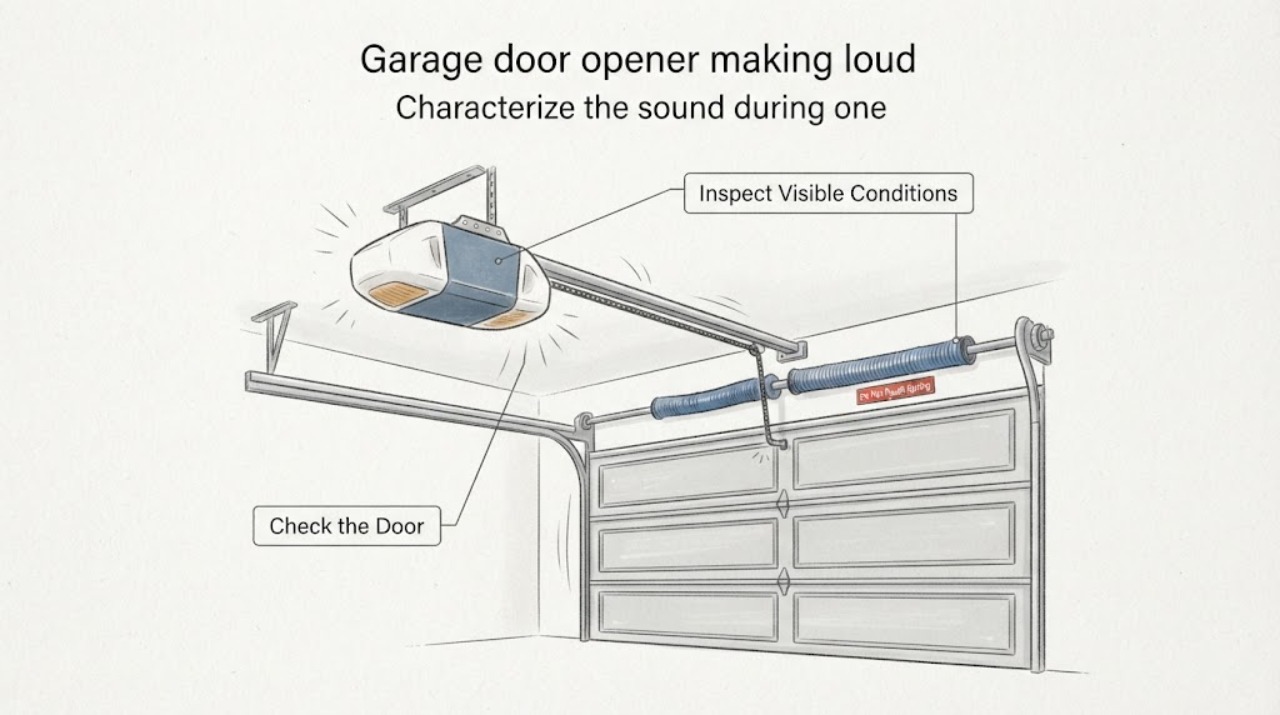
Garage door opener making loud noise occurs under load: What to Check and What to Do Next
If a garage-door opener becomes loud only when it is lifting or lowering the door, stop repeated cycles and observe from the side, with the full door in view and no one in its path. Note whether the sound is grinding, popping, scraping, rattling, or a steady vibration, and whether the door jerks, binds, moves unevenly, or stops.
-
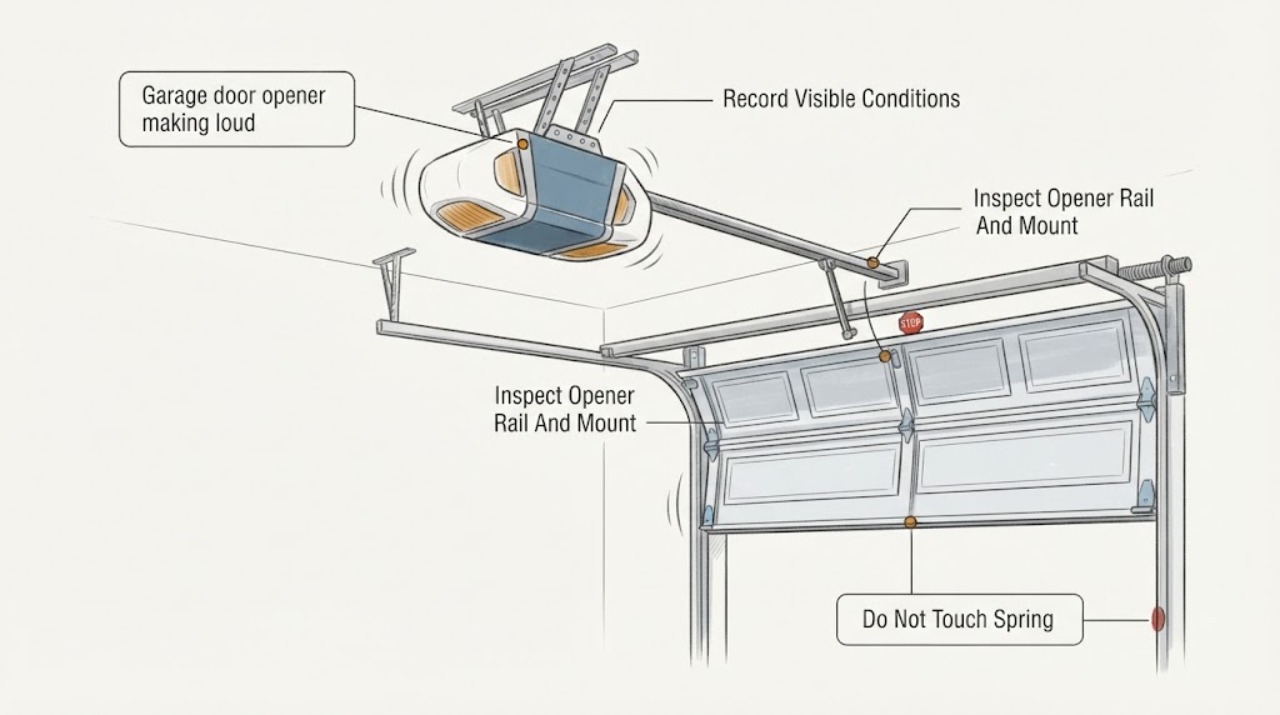
Garage door opener making loud noise moves or stalls: What to Check and What to Do Next
A loud garage-door opener that moves the door only partway, stalls, or reverses can be reacting to a door-path or hardware problem, an opener-drive problem, or a safety-sensor/control issue. From a standing position, make one safe observation of the sound and movement, inspect the visible path and opener mounting without touching moving hardware, and note both photo-eye indicators and which control was used.
-
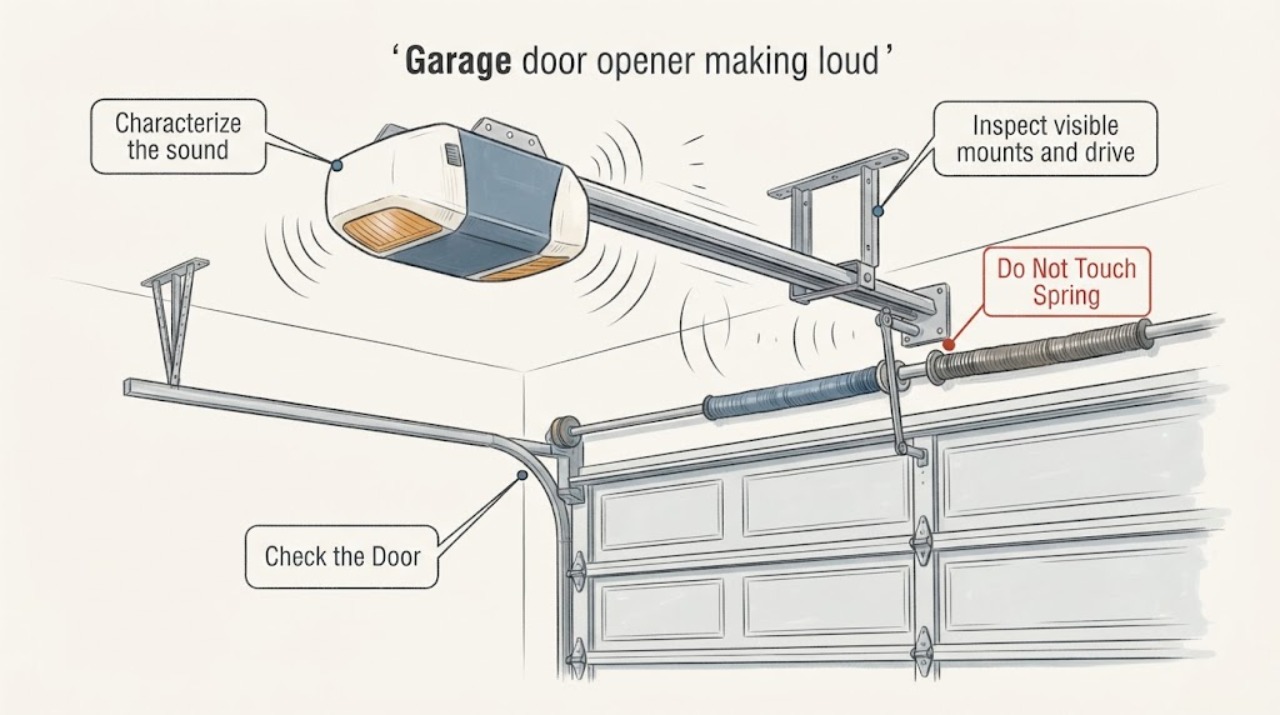
Garage door opener making loud noise: What to Check and What to Do Next
A new loud noise from a garage door opener is a safety clue, not just an annoyance. From the floor, note whether the sound is grinding, scraping, rattling, squeaking, or a low hum, and whether the door moves smoothly.