
Repair service
Garage Doors Guides – Page 2
Garage door repair, adjustment, and maintenance.
Published garage doors guides
Choose the guide that best matches the service and problem you are seeing.
-
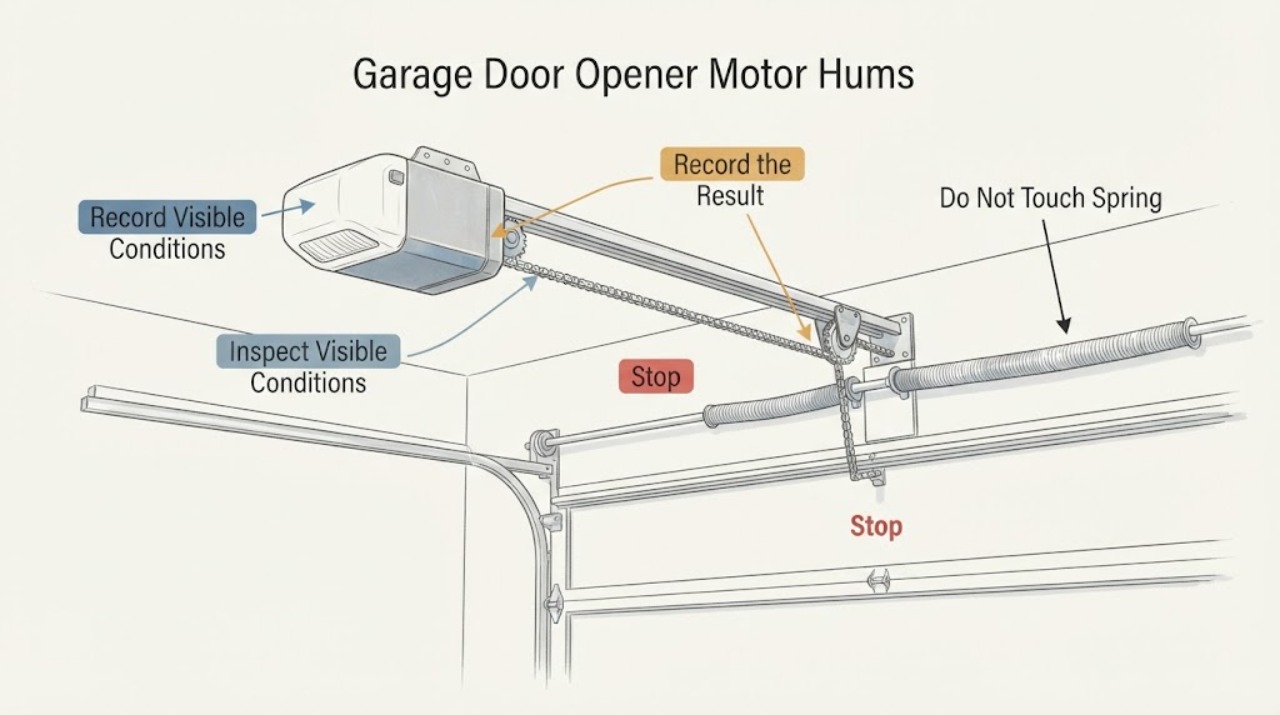
Garage Door Opener Motor Hums but Chain Trolley Does Not Move: Drive-Gear Checks
A garage door opener motor that hums while the chain and trolley stay still may have a stripped drive gear or sprocket, but the same symptom can come from a locked or binding door, broken spring, disconnected trolley, or another opener fault.
-
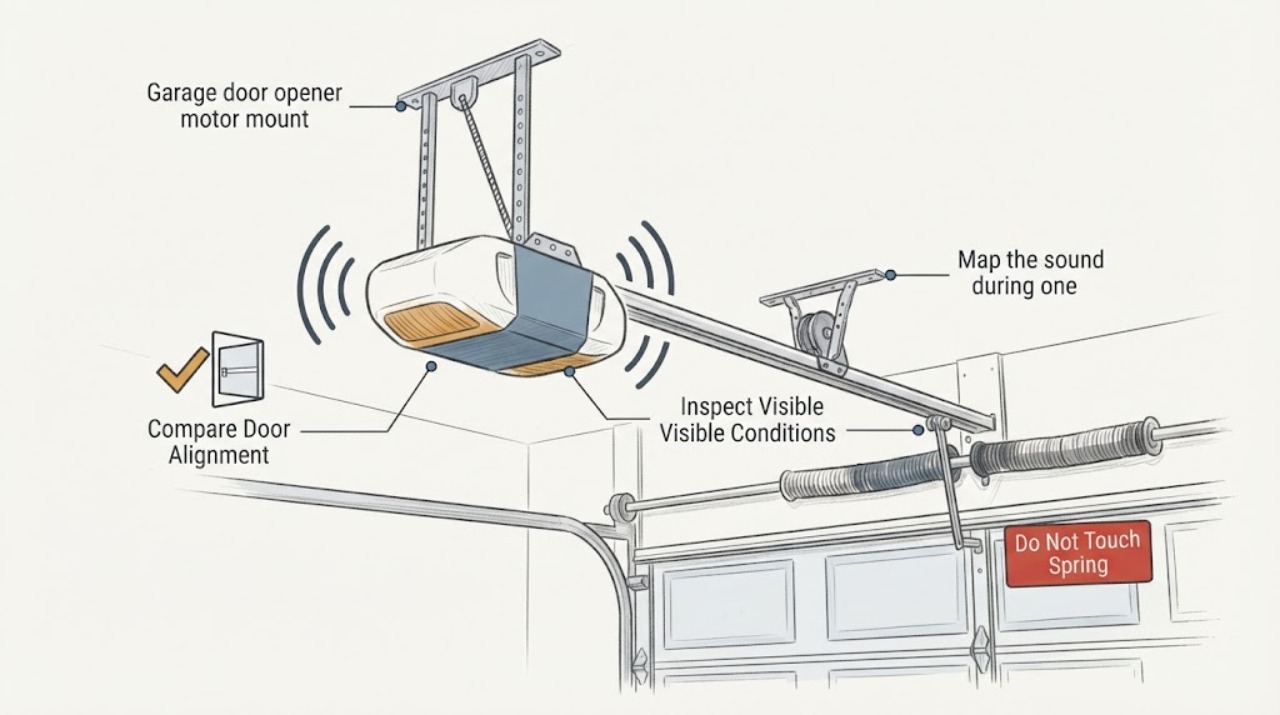
Garage door opener motor mount making loud noise: What to Check and What to Do Next
A loud garage-door opener may be transmitting vibration through its motor mount, but the same sound can come from the drive, rail, door hardware, or an unbalanced door. From a safe position on the garage floor, listen during one normal cycle, note where the sound starts, observe visible movement of the opener or support, and watch whether the door travels smoothly and stays aligned.
-
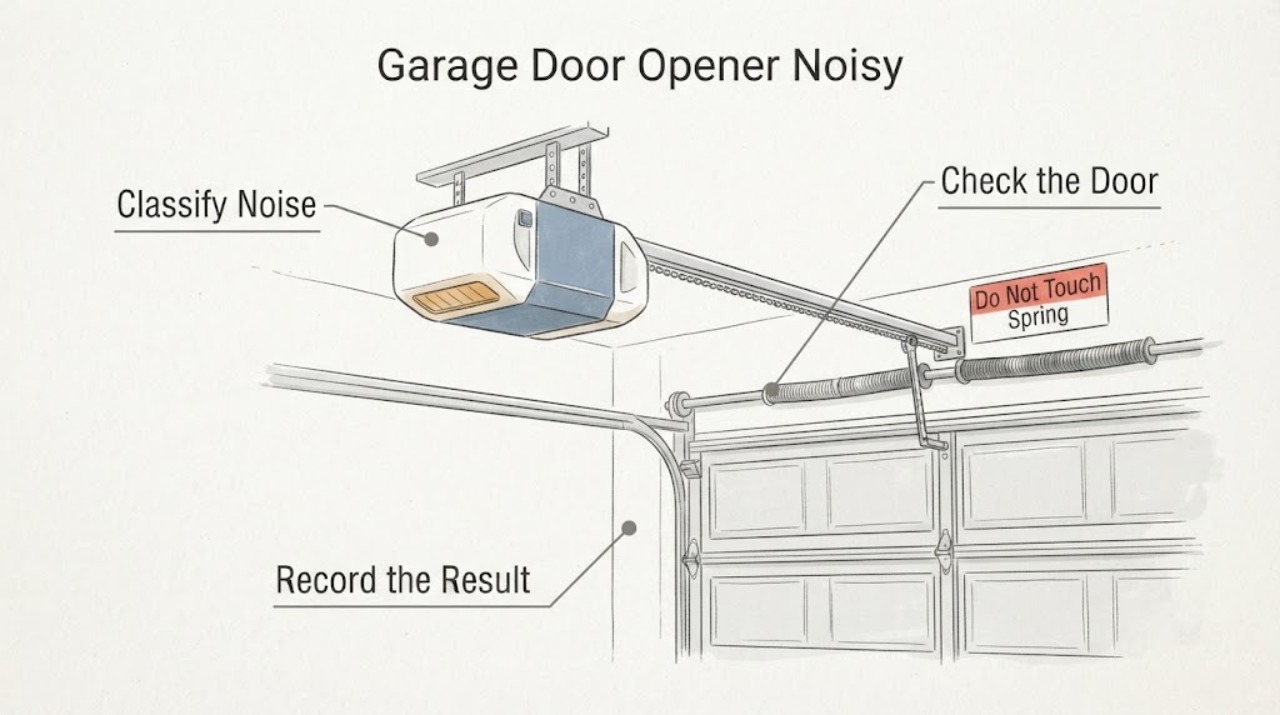
Garage Door Opener Noisy: What to Check and What to Do Next
A noisy garage door opener is not always an opener-motor problem: the door, rollers, hinges, track, mounting, and chain, belt, or screw drive can all transmit sound. From a safe position, record whether the sound is a squeak, rattle, grinding, slapping, or vibration and whether it happens only while the door moves.
-
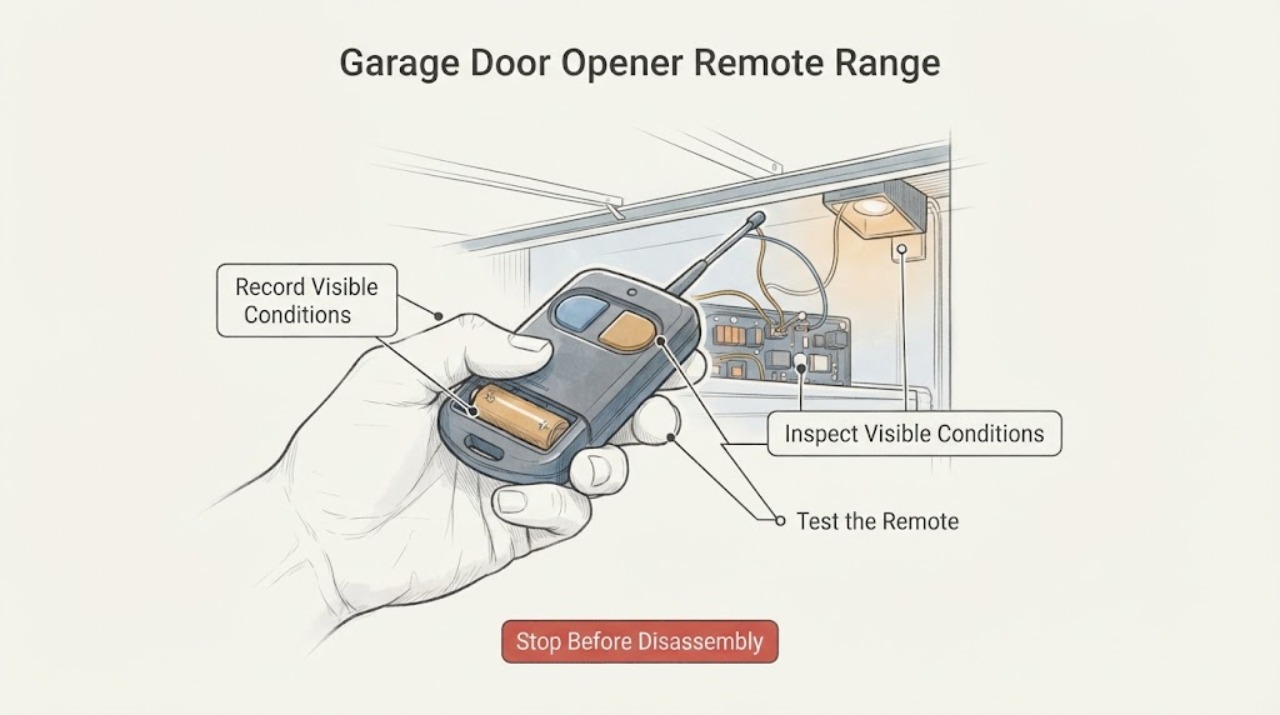
Garage Door Opener Remote Range Short: RF Interference and Antenna Wire
A garage-door opener remote that works only at short range is commonly affected by a weak remote battery, an antenna wire that is hidden or not hanging as intended, or radio-frequency interference from a bulb or nearby electronic device. First record whether the wall control still works and whether one remote or every remote is affected.
-
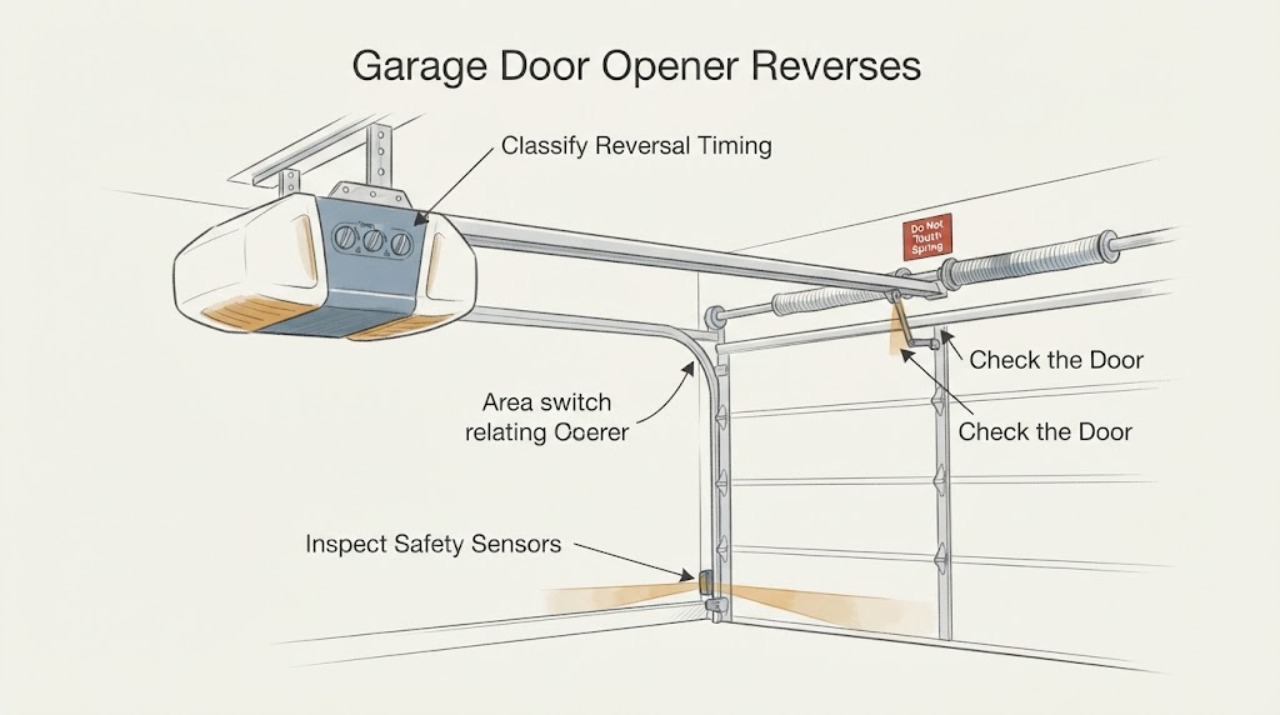
Garage Door Opener Reverses: Check Sensors, Door Resistance, and the Switch Path
When a garage door opener reverses, first keep people and vehicles clear and note exactly when it reverses: immediately during closing, after touching the floor, after a few inches, or only when a control switch is used. From a safe standing position, inspect the door path and the two safety-reversing sensor indicators; the sensors must be connected, aligned, unobstructed, and showing the normal steady indicators for the opener design.
-
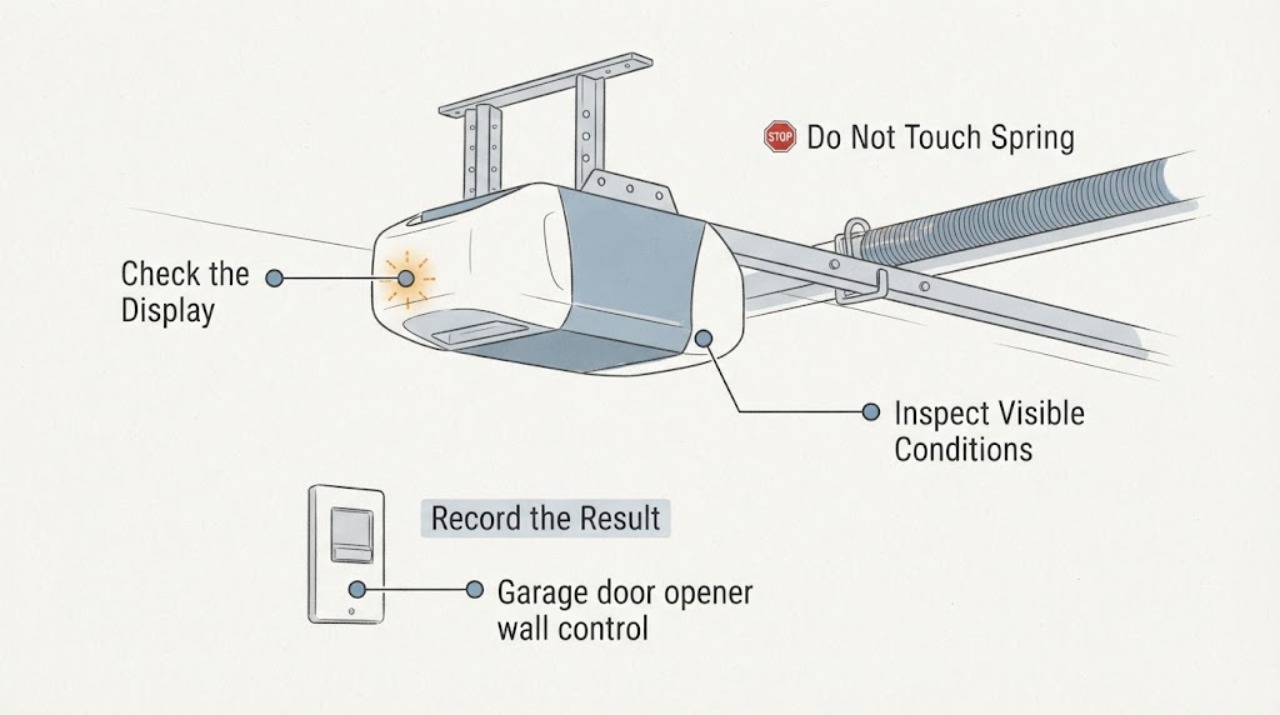
Garage door opener wall control light blinking: What to Check and What to Do Next
First confirm that the blinking indicator is on the wall control itself, not the opener’s powerhead or the photo-eye sensors. The meaning varies by brand and wall-control series: for some Genie wired consoles, the normal door-button backlight should be on and an unlit control can indicate Sure-Lock or a wiring issue; other controls use their own status or diagnostic patterns.
-
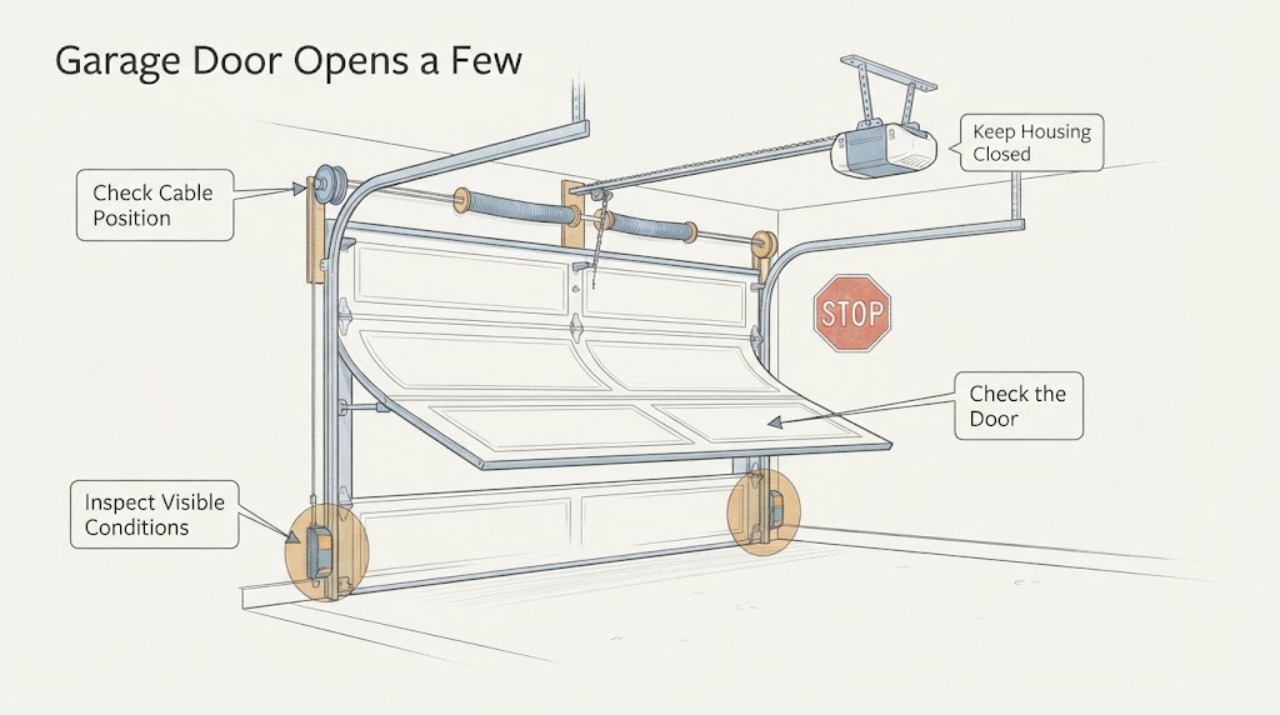
Garage Door Opens a Few Inches and Reverses: Safe Checks
If a garage door rises only a few inches and then reverses, keep people, pets, and vehicles clear and stop repeated cycles. First observe whether the door itself binds, tilts, or shows damaged springs or cables, or whether the opener stops with a diagnostic light or code.
-
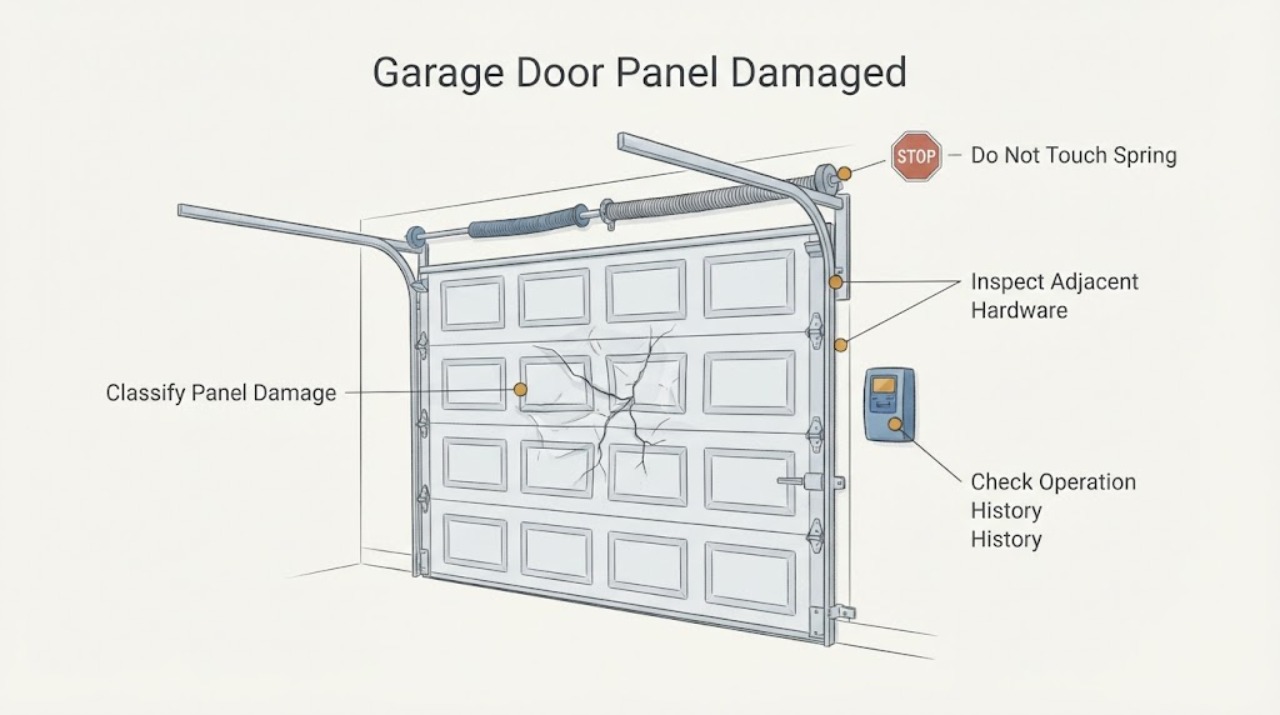
Garage Door Panel Damaged: Dented or Cracked? What to Check and What to Do Next
A shallow dent in one garage-door section may be cosmetic, but a crack, crease, buckle, separation, sharp edge, or damage near hinges, tracks, cables, or the bottom section can affect the door's weight and movement. Photograph the closed door, inspect only from a safe position, and identify the exact door model and damaged section.
-
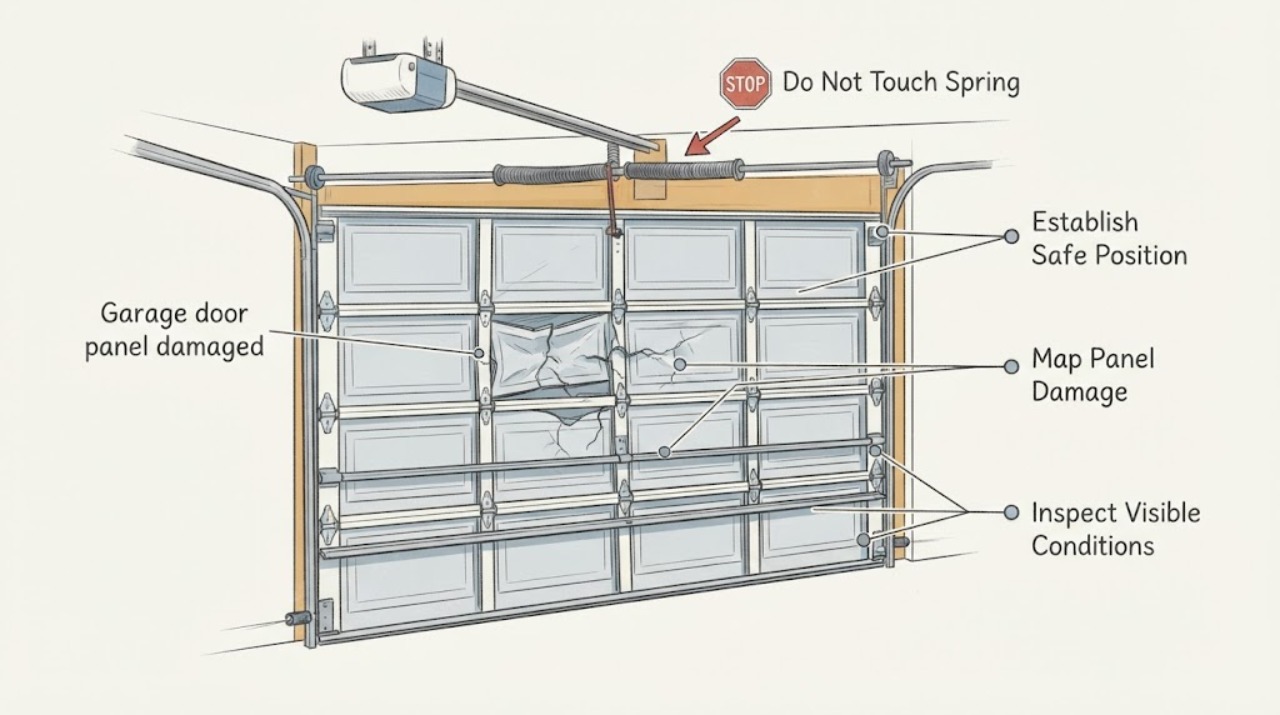
Garage door panel damaged: What to Check and What to Do Next
Treat a damaged garage door panel as a safety and system-assessment issue before treating it as a cosmetic repair. Keep the door in its current position if it is binding, sagging, displaced, cracked through, or otherwise visibly unsafe, and keep people, vehicles, and objects away from its path.
-
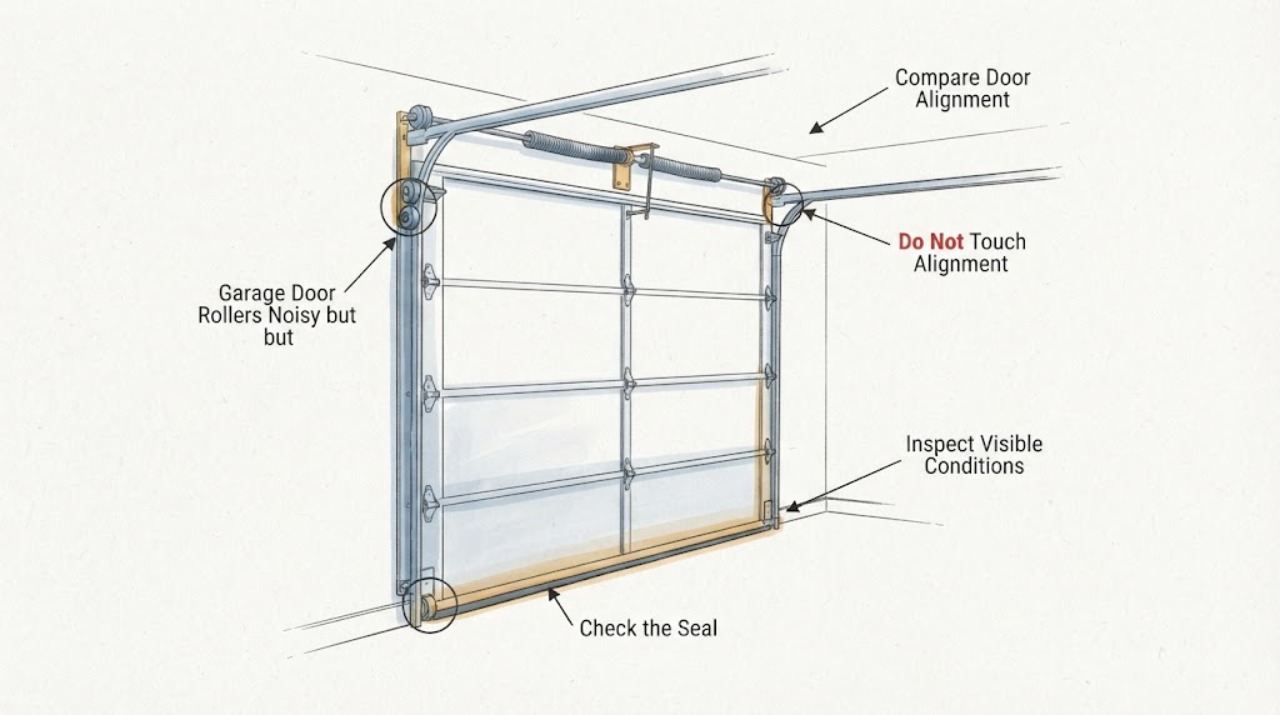
Garage Door Rollers Noisy but the Door Remains Balanced: What to Check
A balanced garage door with noisy rollers usually calls for a component-by-component check, not a spring adjustment. With the door closed, first identify whether the sound follows one roller, a hinge, or one point on the track.
-
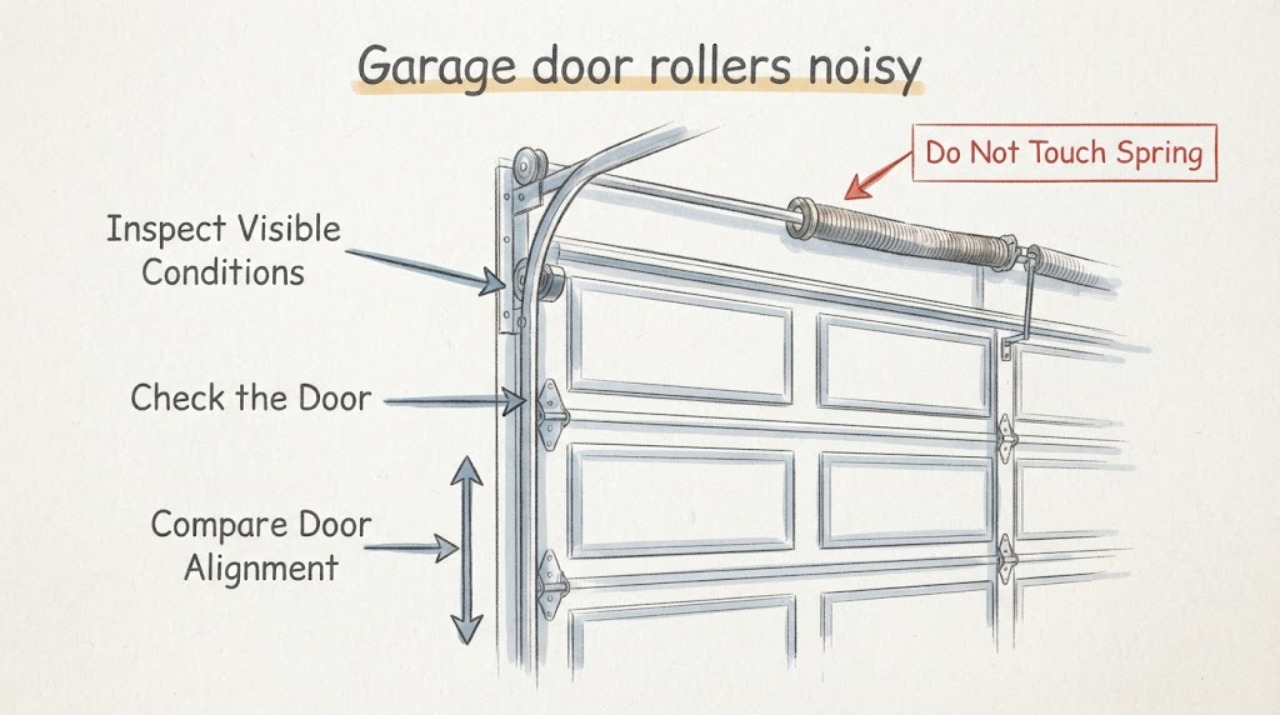
Garage door rollers noisy: What to Check and What to Do Next
Noisy garage-door rollers are not always a roller failure: the sound may come from a worn or cracked roller, a hinge, track alignment, loose hardware, or the opener. From a safe distance, identify where the sound occurs and whether the door moves smoothly during one normal cycle.
-
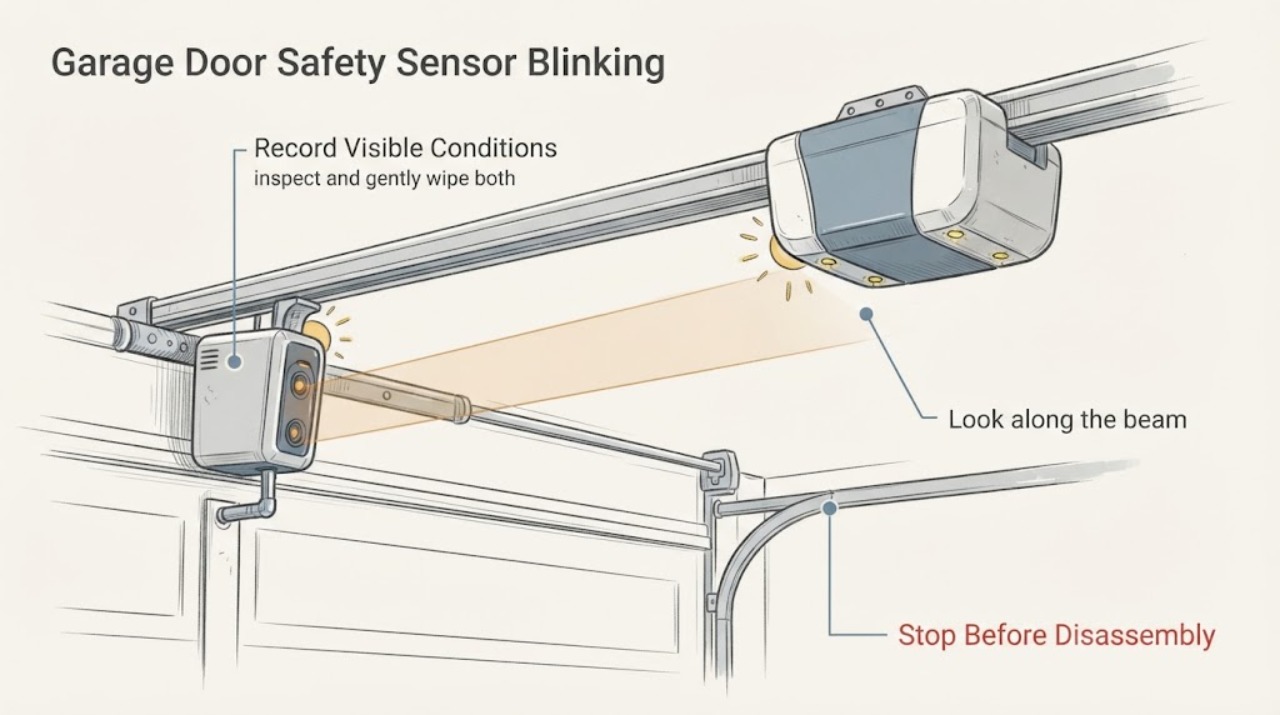
Garage Door Safety Sensor Blinking: Fix Alignment and Sunlight Interference
A blinking yellow, amber, or other safety-eye indicator usually means the opener is not receiving a clean, aligned photo-eye beam, but LED colors and blink patterns vary by manufacturer. Keep people, vehicles, and objects clear of the moving door, then check the lenses, the beam path, sensor alignment, mounting height, visible wiring, and direct sunlight.
-
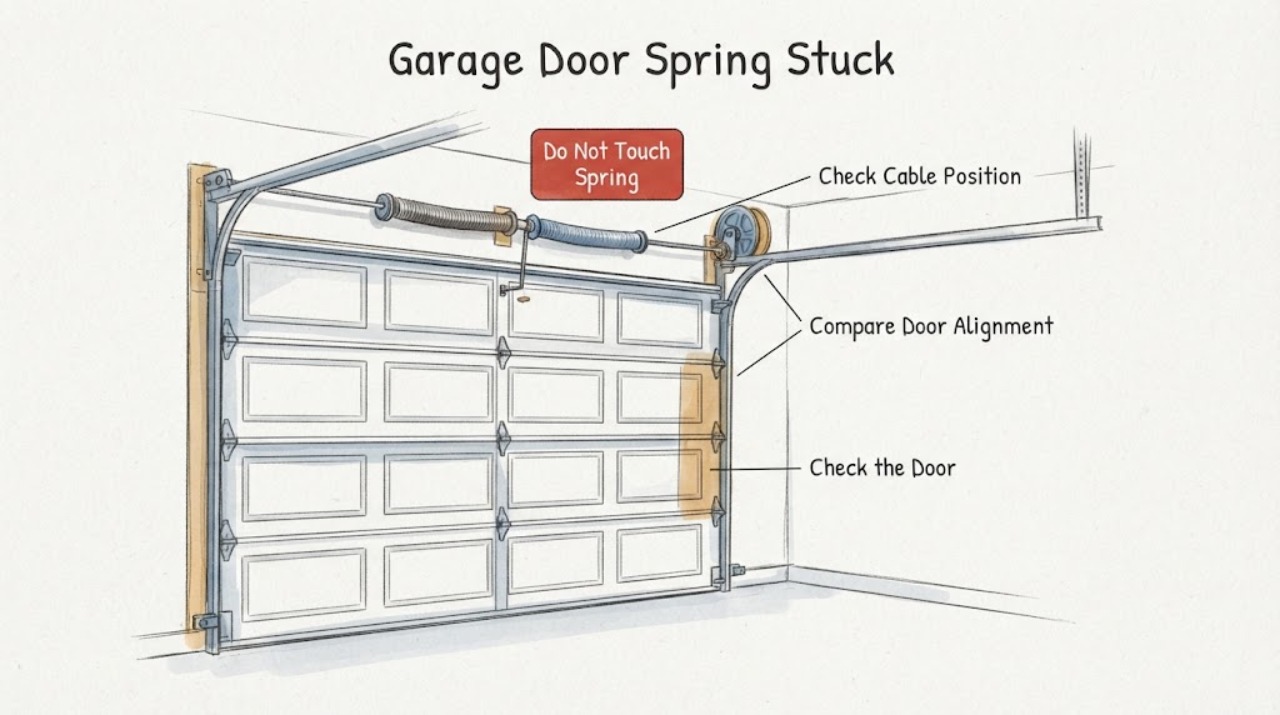
Garage Door Spring Stuck: Safe Checks and When to Stop
A garage door spring that looks stuck, or a door that stops or feels stuck, is not a safe adjustment problem for a homeowner. Springs, bottom brackets, cables, and related supports can carry high or extreme tension.
-
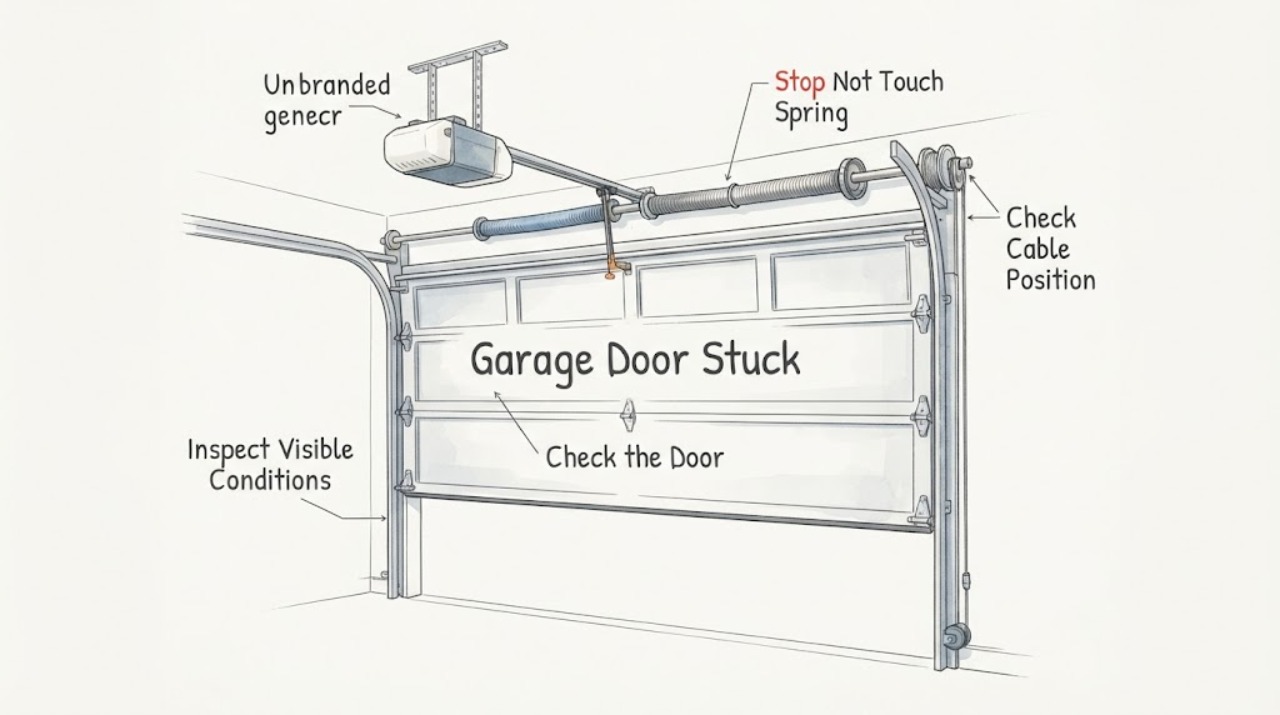
Garage Door Stuck: What to Check Safely and When to Stop
A stuck garage door may be blocked in the travel path, binding in a track, stopped by the opener's safety system, or made dangerously heavy by a broken spring, loose cable, or other counterbalance failure. From outside the travel path, note whether the door is fully closed, partly open, or crooked; look for visible obstructions, track damage, hanging cables, or a separated spring; and observe the opener and safety-sensor indicators without touching tensioned hardware.
-
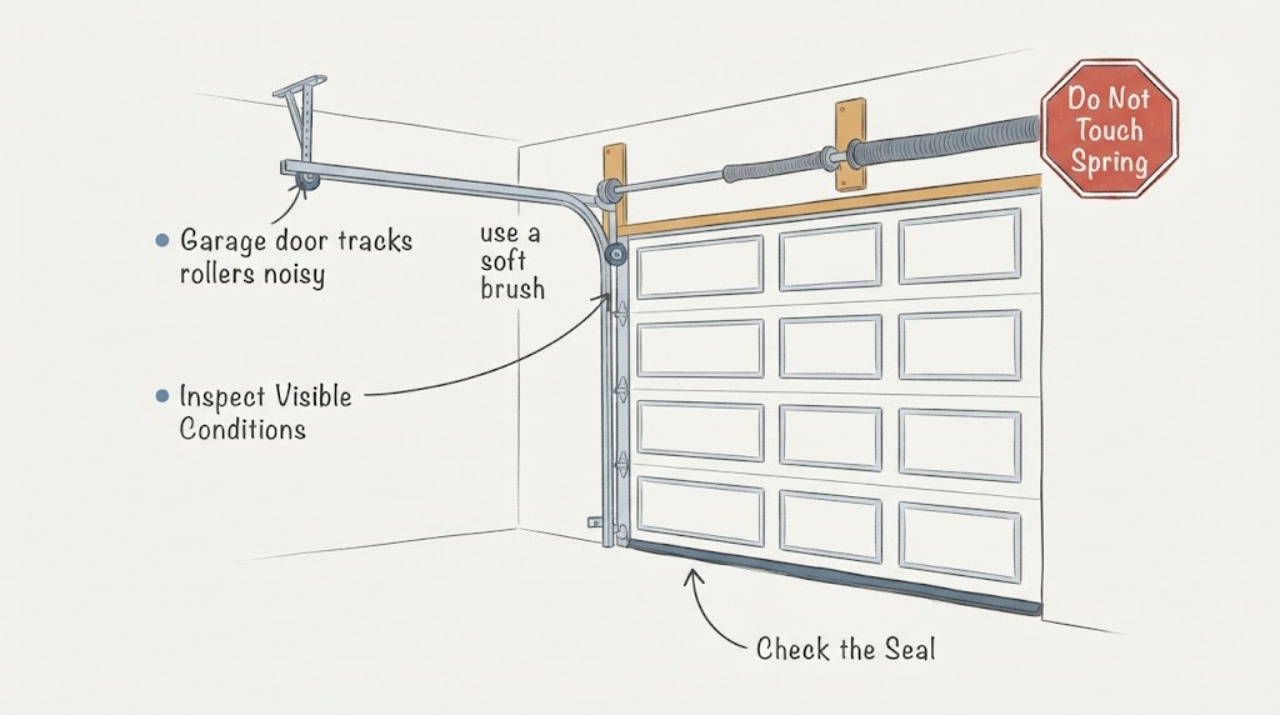
Garage door tracks rollers noisy: What to Check and What to Do Next
Noisy garage-door tracks or rollers can come from surface debris, a dry or worn roller, loose visible hardware, or a track that is bent or out of alignment. From a safe position, observe where the sound occurs, inspect only what is visible from the floor, and clean accessible track surfaces without reaching into the track.
-
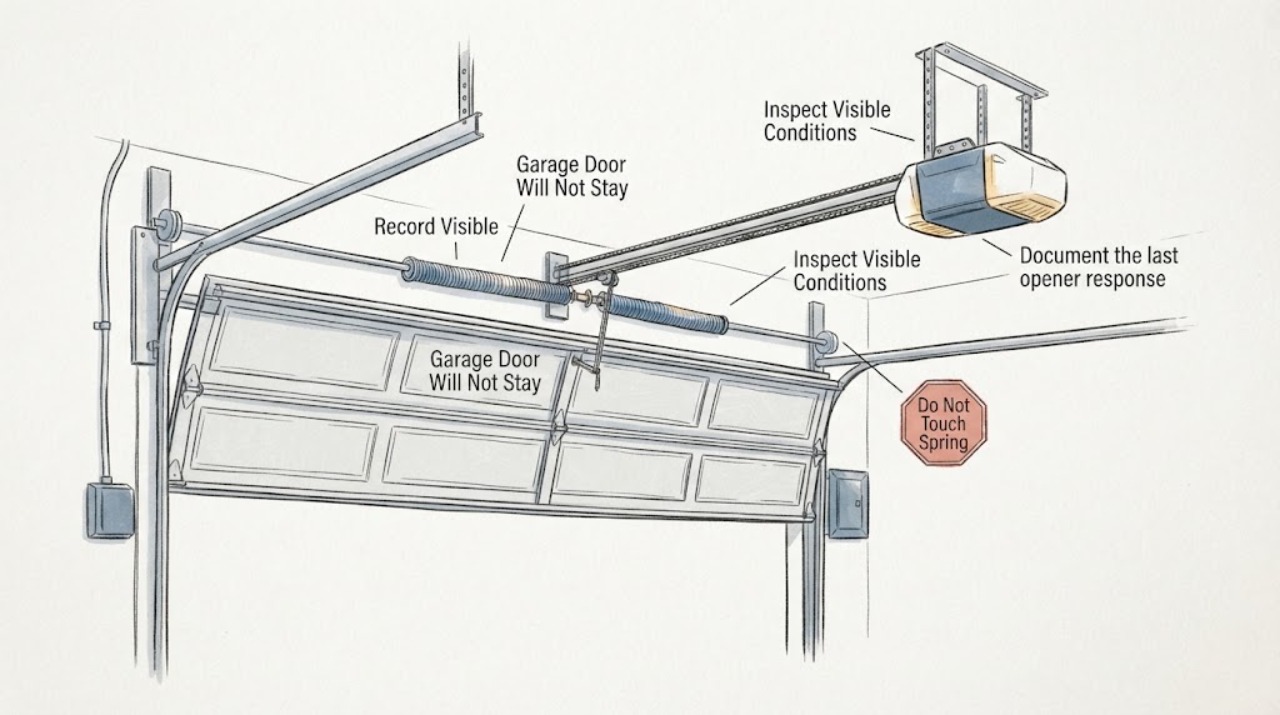
Garage door will not stay open: What to Check and What to Do Next
A garage door that falls, drifts, or will not remain open is a safety and counterbalance warning, not a good DIY adjustment. Keep people, pets, and vehicles away from the door and do not stand under it.
-
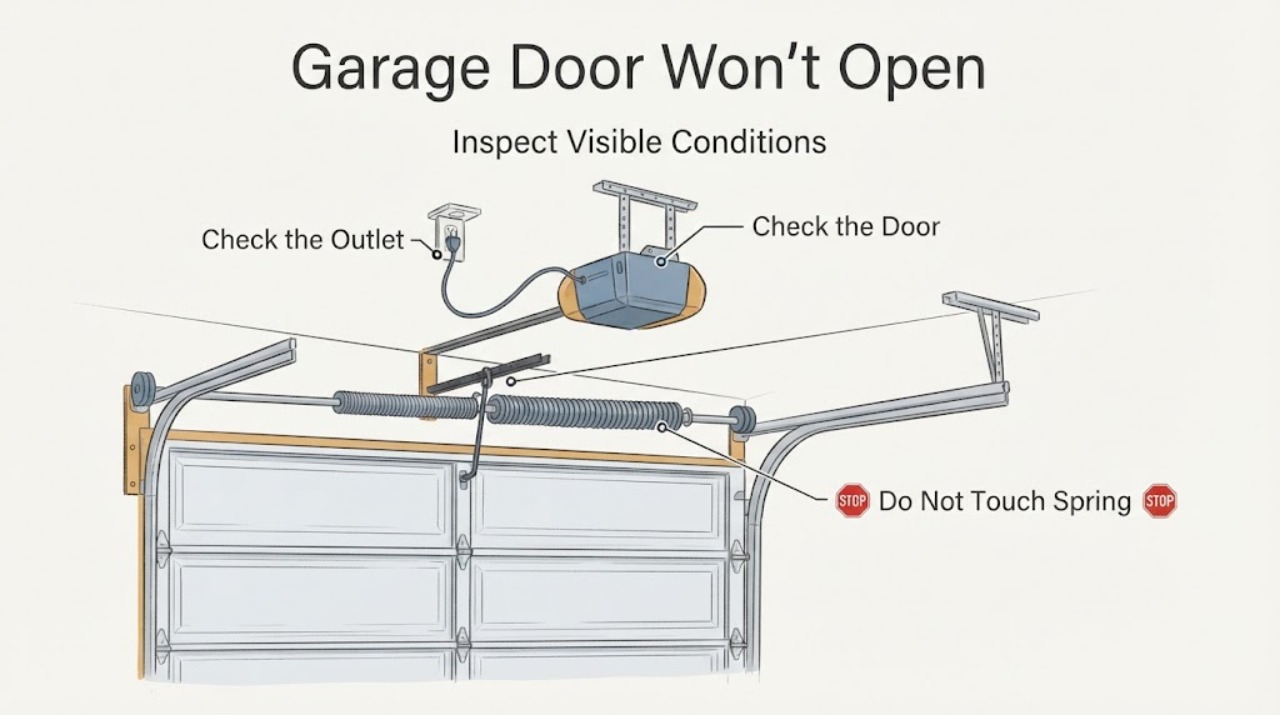
Garage Door Won't Open: Check the Opener, Door Path, and Spring Safely
Start by separating an opener or control problem from a door or spring problem. Check the remote battery and wall control, confirm the opener has power, and watch what the door does when you make one normal request.
-
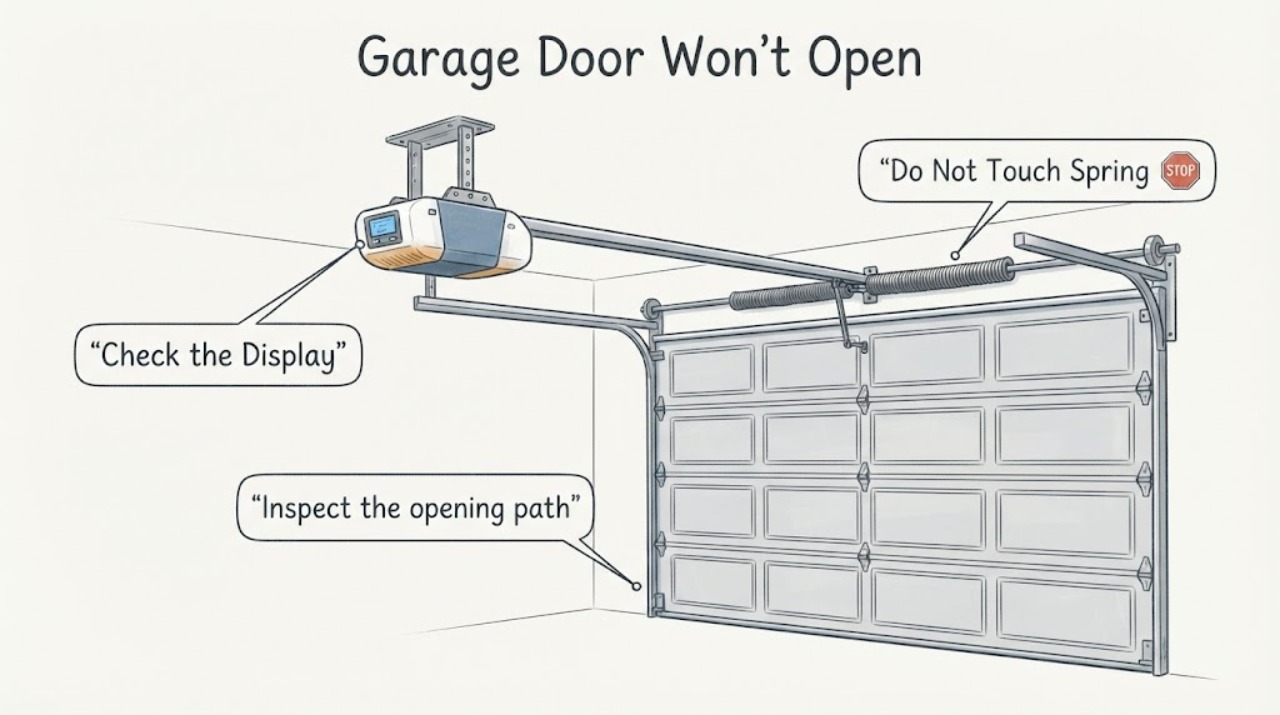
Garage Door Won't Open: What to Check Safely Before Calling for Repair
Start with safe observations: check whether the opener has power and responds to the wall control or remote, look for a blocked photo-eye path or door track from the ground, and watch for a broken spring, loose cable, or door that is visibly off track. A door that is heavy, crooked, jammed, or supported by damaged springs or cables should stay closed and be handled by a trained garage-door professional.
-
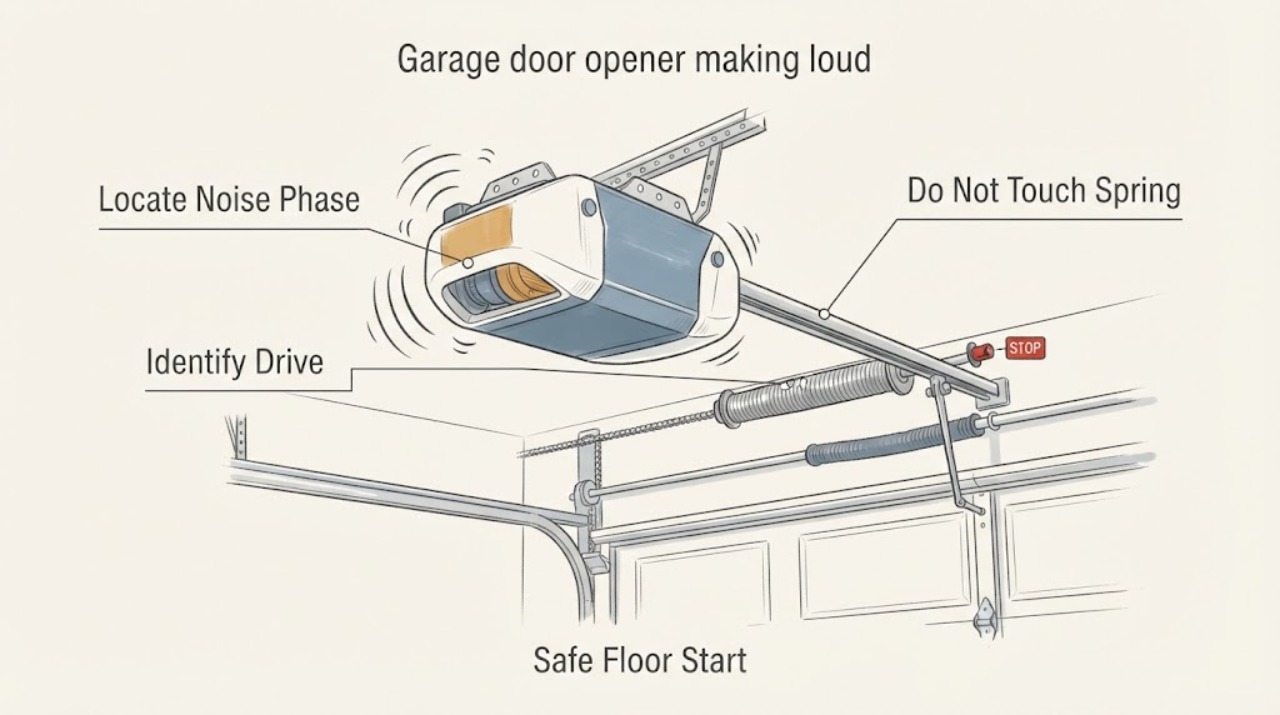
Genie garage door opener making loud noise: What to Check and What to Do Next
If a Genie garage door opener suddenly becomes loud, keep the door area clear and make only a floor-level observation of when the sound starts and where it comes from. Read the exact Genie model and identify the drive style from a safe label view; belt, chain, screw, and wall-mount systems have different normal characteristics and compatible guidance.
-
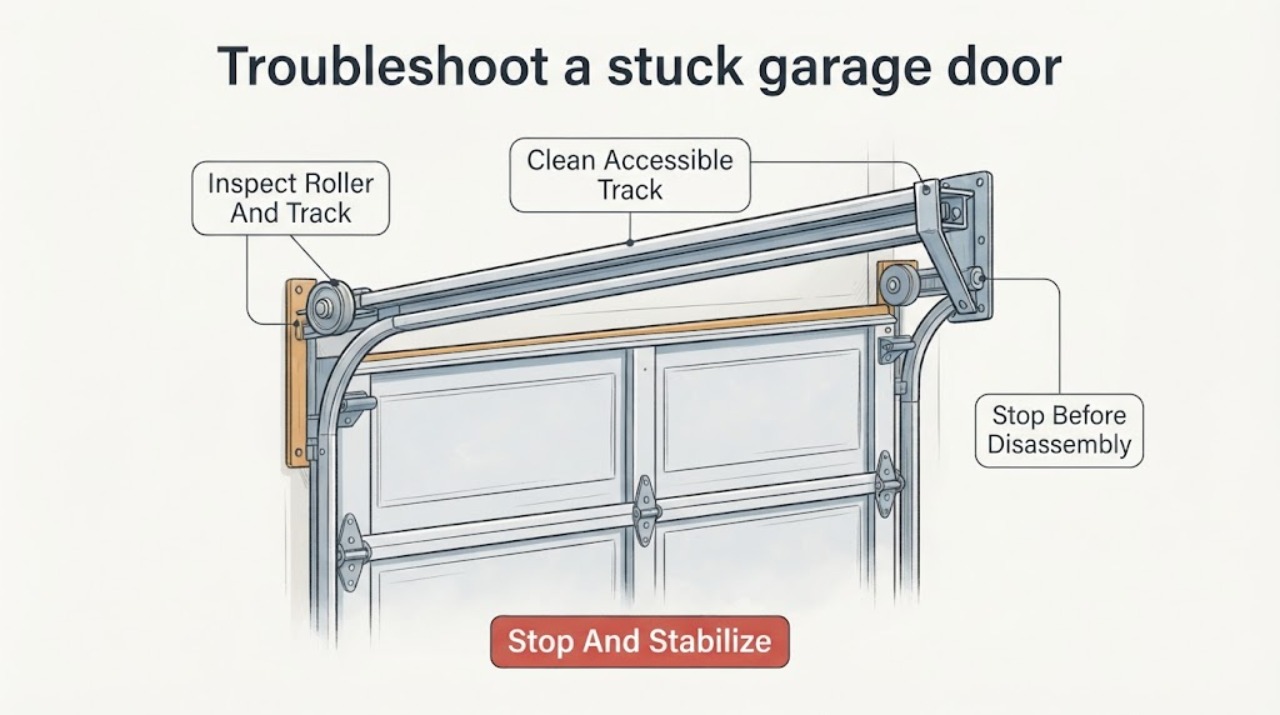
How to troubleshoot a stuck garage door roller
Stop the opener and keep people clear while the door is stationary. With the door closed, inspect the visible roller, track, and cable area for debris, a bent track, a broken roller, or frayed cable; do not force the door or remove brackets.
-
Liftmaster garage door opener making loud noise: What to Check and What to Do Next
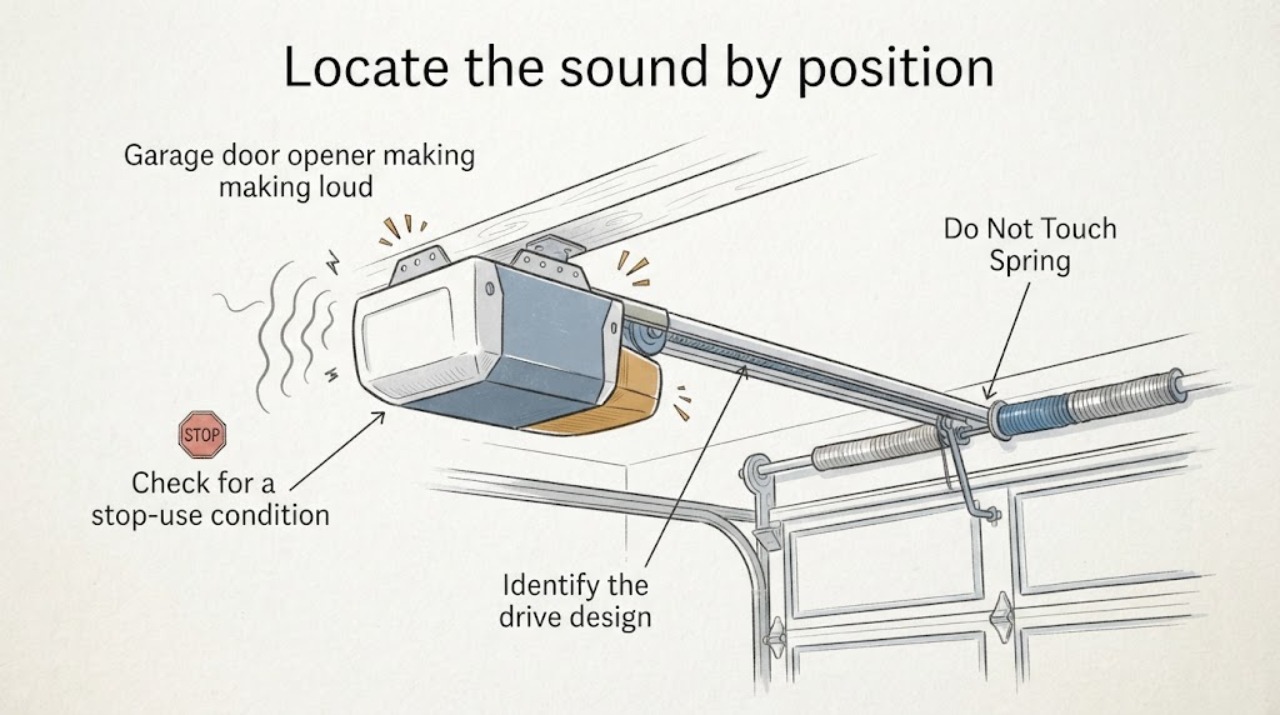
For a LiftMaster opener that suddenly makes loud noise, first decide whether the sound comes from the moving door hardware, the opener rail and trolley, or the opener motor and drive. From the ground, record the sound, door position, visible movement, drive type, model number, and any myQ health report.
-
Noisy garage door: What to check before calling for service
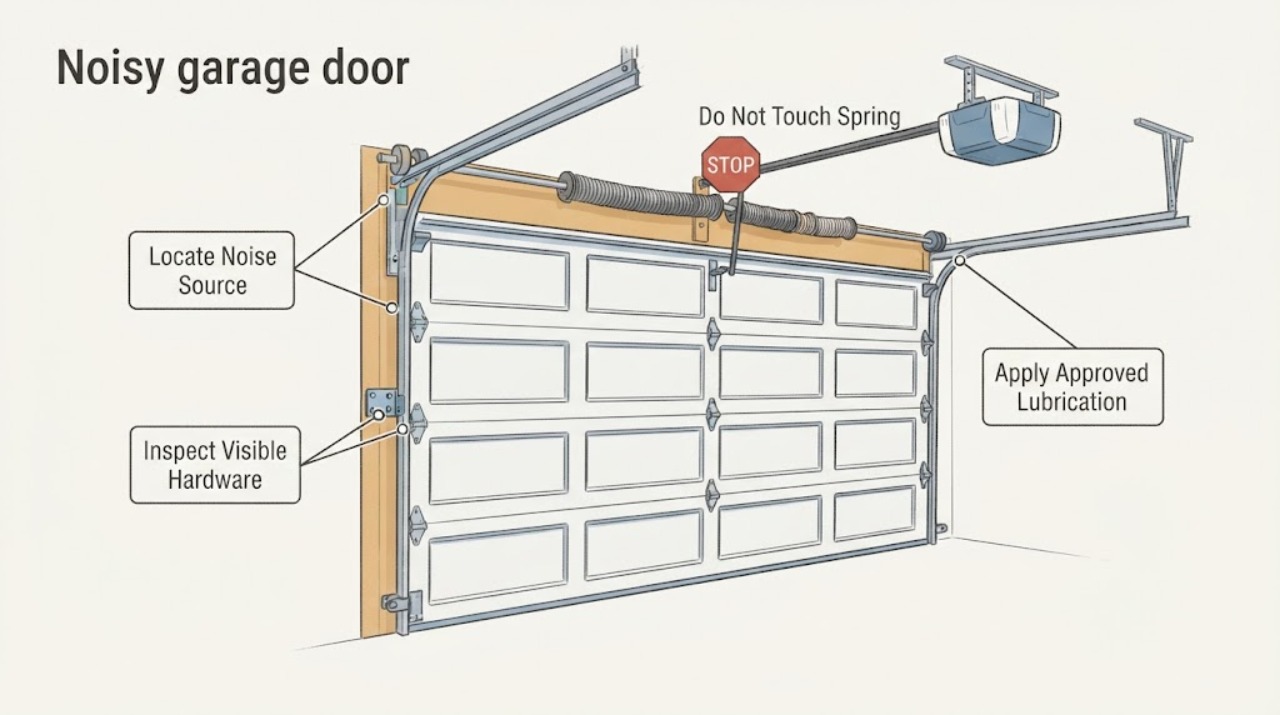
A noisy garage door is usually a door-motion or opener-maintenance clue, not a diagnosis by itself. Listen from a safe position for squeaking, rattling, grinding, scraping, banging, or opener vibration; note whether the sound follows the door along the tracks or comes from the opener.
-
Wayne dalton garage door opener making loud noise: What to Check and What to Do Next
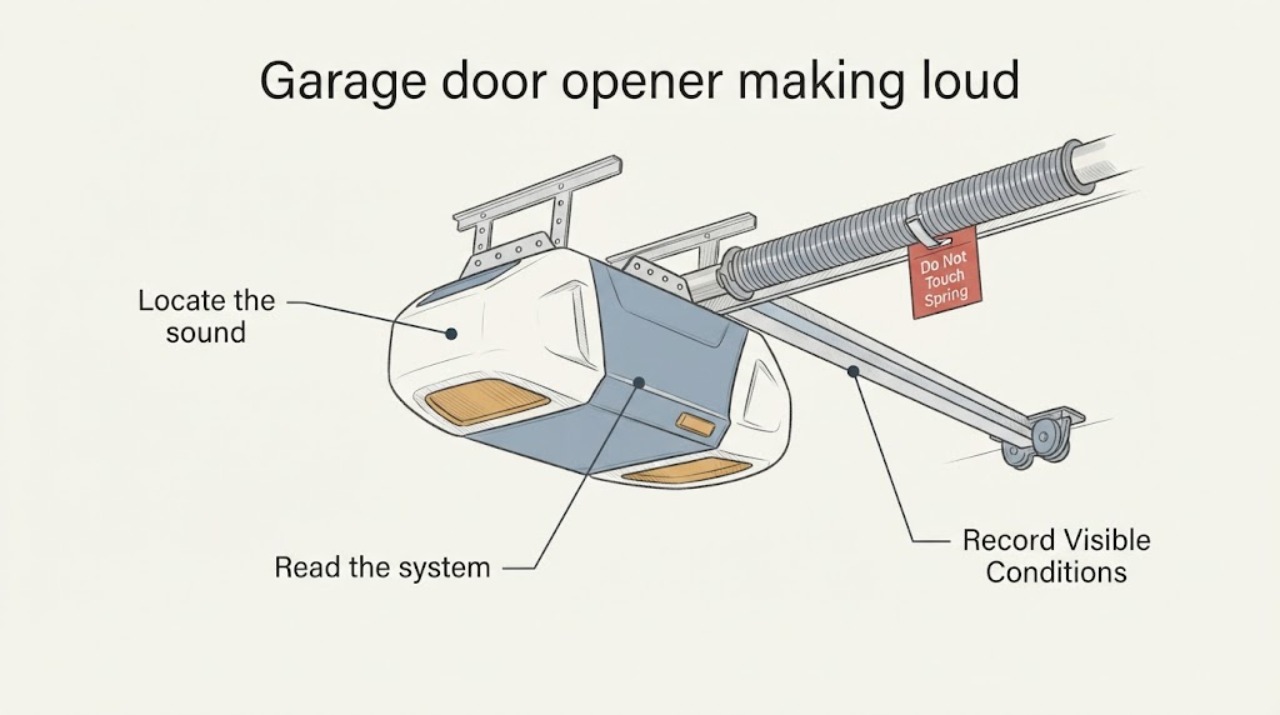
For a Wayne Dalton garage door opener making loud noise, first identify whether the sound comes from the opener, the door's visible track and rollers, or the Wayne Dalton counterbalance area, using only a safe ground-level view. Check the nameplate or manual for an iDrive, TorqueMaster, or TorqueMaster Plus configuration and record whether the door jerks, rubs, reverses, or appears unbalanced.
-
Wayne Dalton Garage Door Panel Damaged: What to Check and What to Do Next
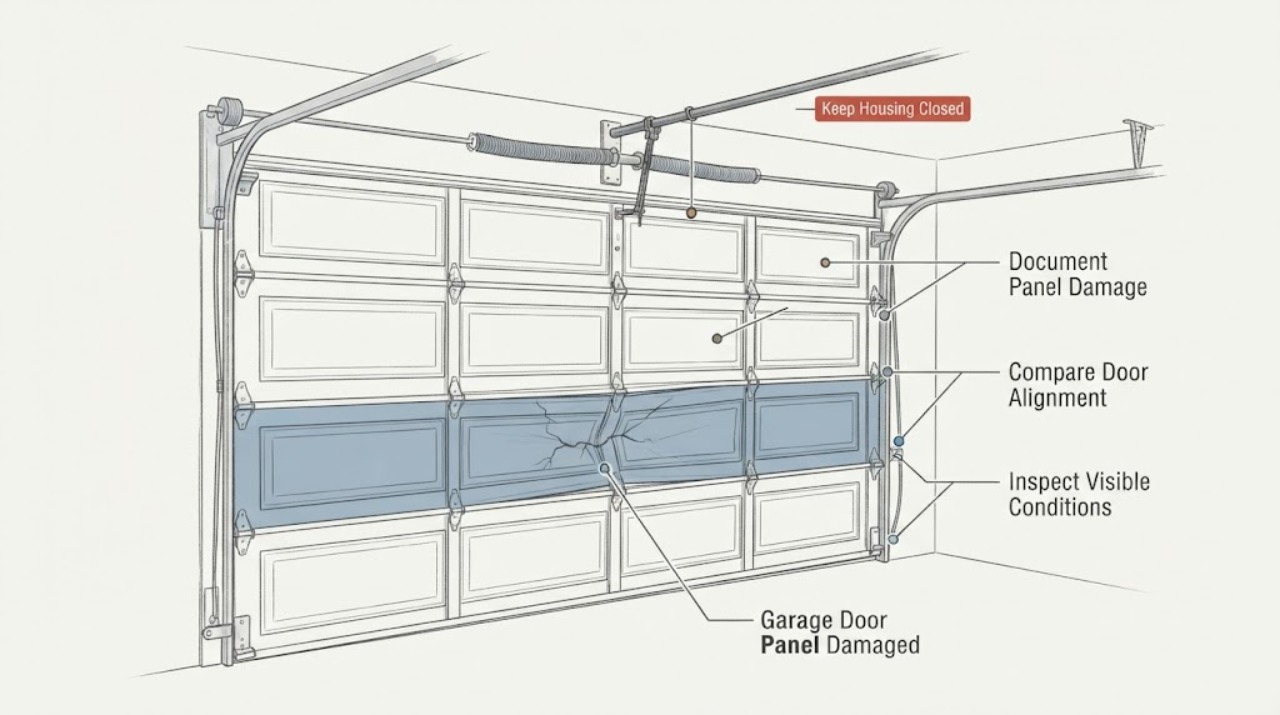
Do not keep operating a Wayne Dalton garage door with a bent, cracked, separated, or loose panel until the door and its connected hardware have been assessed. From a safe position, document the damage, compare the affected section with the others, and look without touching for a crooked door, binding, damaged hinges or tracks, frayed cables, a spring gap, or a door that is unusually heavy or drops.
-
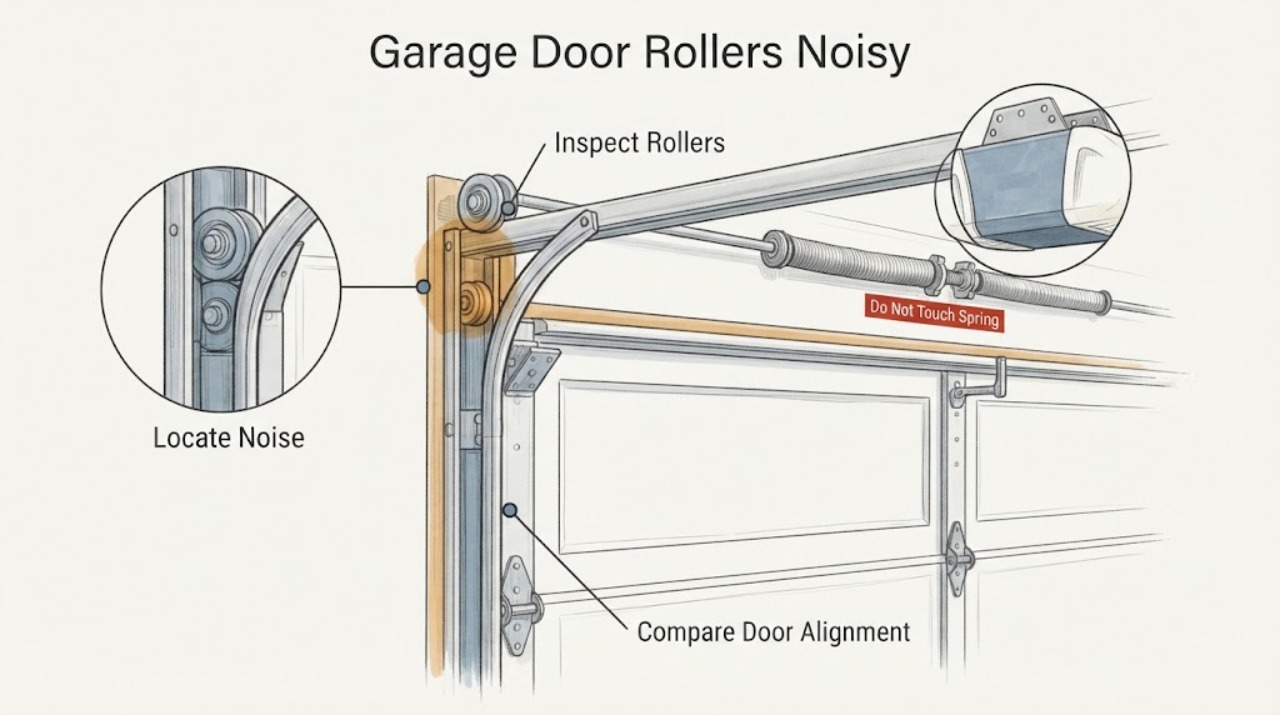
Wayne Dalton Garage Door Rollers Noisy: What to Check and What to Do Next
Noisy rollers on a Wayne Dalton garage door may be caused by a dry or worn roller, but loose hardware, a warped or dirty track, a hinge, the opener, or an unbalanced door can sound similar. If the door is aligned and moves normally, listen from outside the travel path for where the sound repeats, then make only the maintenance step allowed by the exact Wayne Dalton instructions.
-
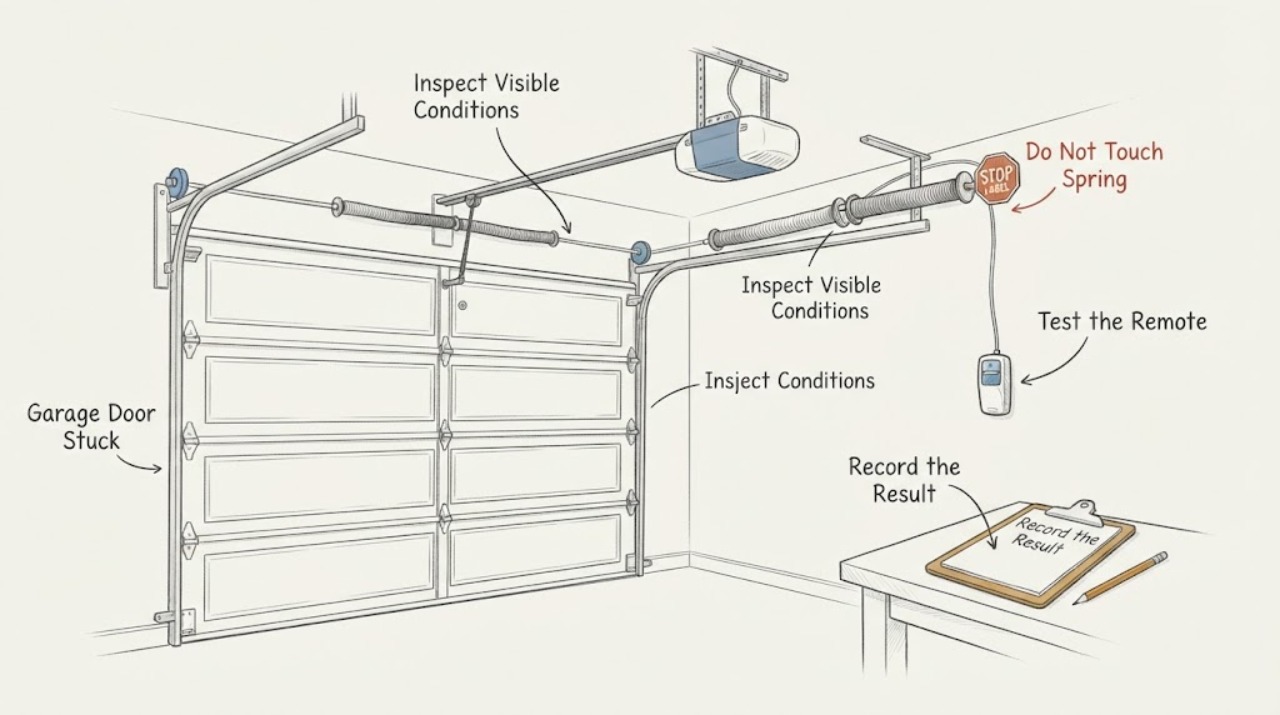
Wayne Dalton Garage Door Stuck: What to Check and What to Do Next
A stuck Wayne Dalton garage door may have a simple obstruction or opener-control problem, but a door that binds, is unusually heavy, sits crooked, has a broken or frayed cable, or stops partway can involve the counterbalance or other hardware under high tension. Keep people and vehicles out of the door path.
-
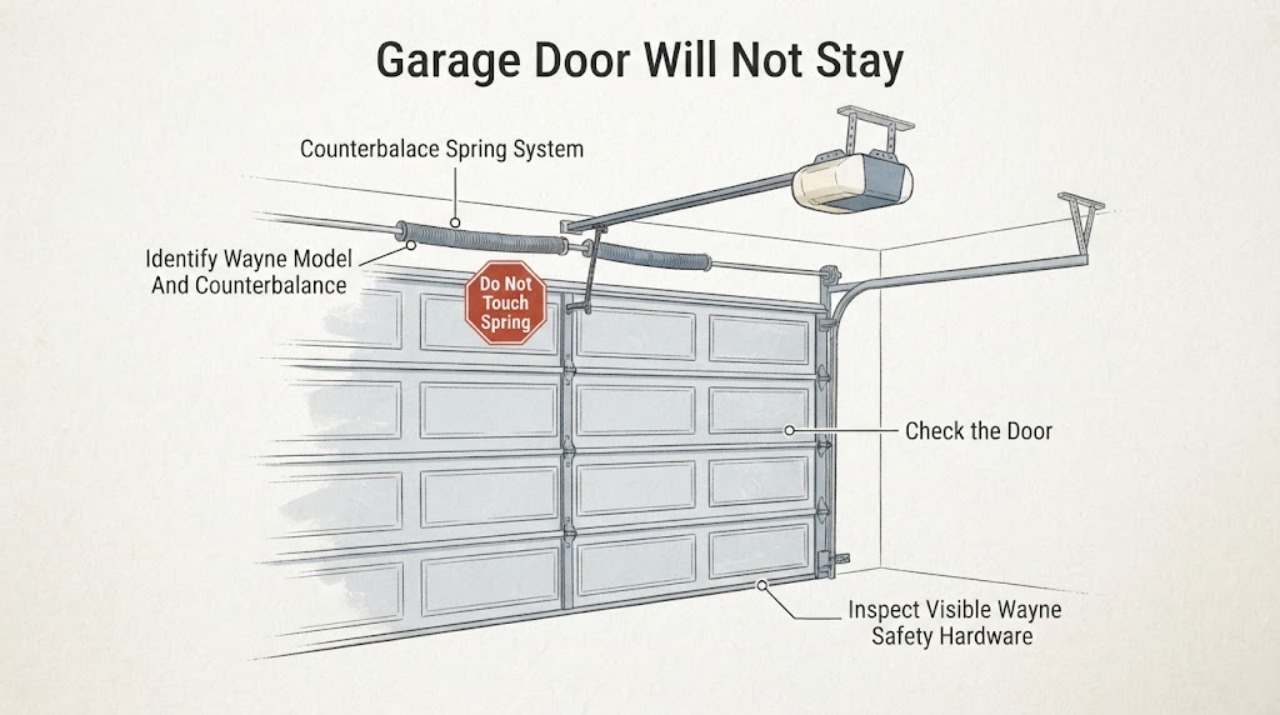
Wayne Dalton Garage Door Will Not Stay Open: Identify the Counterbalance System First
Do not assume a Wayne Dalton door uses the same spring or balance arrangement as another garage door. Start by recording the door model or code and selecting the matching Wayne Dalton installation/owner information; Wayne Dalton publishes separate documents for many model families and lift/spring arrangements.