
On this page
Start here
Quick answer
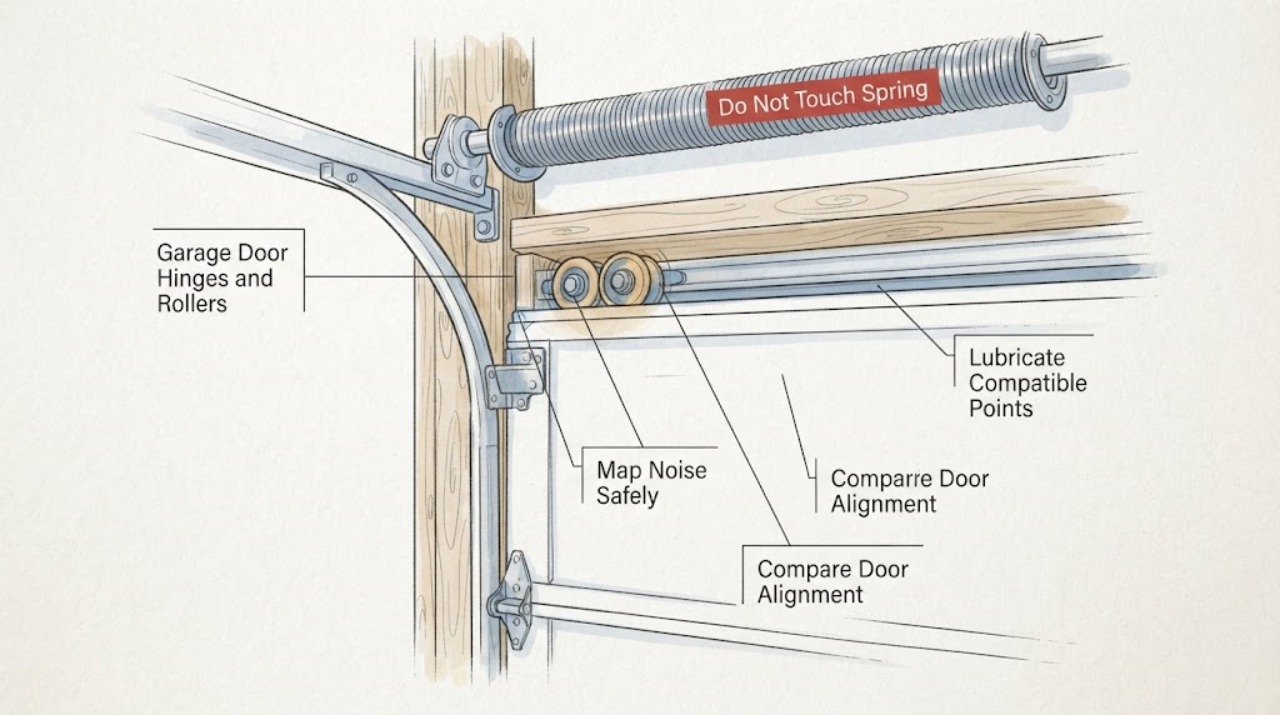
A noisy Clopay garage door often has friction, wear, or looseness at the rollers, hinge pins, hardware, or track alignment, but first identify whether the sound comes from the door or the opener. Watch and listen from a safe position with the door closed or during a normal supervised cycle; never put hands between sections or near rollers, springs, cables, or brackets. With the door closed and stable, inspect for dirty or worn rollers, bent hinges, loose hardware, or a bent or obstructed track. If the exact roller and lubricant instructions permit it, apply only a small amount of compatible garage-door lubricant to the roller bearing and hinge pin, never the track; nylon roller guidance can vary by design, so follow the Clopay manual. Persistent grinding, popping, binding, an unbalanced door, damaged hinges, frayed cables, broken springs, or noise that continues after safe maintenance needs a qualified garage-door professional.
Work through in order
Diagnostic checks
Use only checks that match the exact appliance or system and its official guide.
-
Check 1
From a safe position beside the closed Clopay door, listen during one normal supervised opening and closing cycle only if the door is moving smoothly and no hazard is visible. Keep hands, feet, tools, and people clear of the sections, rollers, cables, springs, and track.
Expected result: The sound is a light squeak or creak, a repeating rattle, a grinding or scraping sound, a sharp pop or bang, or mainly an opener hum; note where in the travel it begins.
Next step: Stop the cycle for grinding, scraping, popping, banging, sticking, or a crooked door and arrange a garage-door inspection. Continue only with a stationary visual check when the door remains stable and moves normally.
Stop if: Do not repeat the cycle if the door hesitates, drops, binds, shakes, comes off the track, or has a broken spring, frayed cable, or loose bracket.
Why this matters
Why: A localized squeak or creak supports a hinge or roller friction check. Rattle suggests loose hardware or track contact; grinding or scraping suggests wear, obstruction, or misalignment. A pop, bang, sudden change, or opener-only noise needs a more cautious professional branch.
-
Check 2
With the door fully closed and stable, inspect the visible hinges, hinge screws, roller wheels and shafts, track edges, track supports, and nearby hardware from the side. Use a flashlight and a cloth only from outside the moving path; do not remove a hinge, roller, bracket, track, or cable.
Expected result: A hinge is bent or broken, a roller is cracked, flattened, seized, or excessively worn, a wheel rubs the track, hardware is visibly loose, or the track is bent, dirty, or misaligned; or no defect is visible.
Next step: Photograph the exact part and keep the door out of service for a damaged hinge, roller, track, bracket, or cable. If only surface dirt is visible and the door is stable, clean accessible components without entering the track path, then use the compatible lubrication branch.
Stop if: Do not reach between door sections, lift the door to inspect, remove bottom brackets, loosen track fasteners, or handle springs and cables.
Why this matters
Why: Clopay links worn or dirty rollers, damaged hinges, loose hardware, and bent or misaligned tracks to noise and extra stress. A clean visual result does not rule out a bearing or internal opener fault, but a damaged or displaced part should not be lubricated as a substitute for repair.
-
Check 3
Only if the door is closed and stable, no wear or damage is visible, and the Clopay manual or component instructions identify the point as serviceable, apply a light coating of compatible garage-door lubricant to hinge pins and the roller bearing or shaft gap; wipe excess and keep lubricant off the track surface.
Expected result: The noise lessens during the next normal supervised cycle, remains unchanged, becomes louder, or the roller or hinge still binds or feels damaged; note whether a roller is nylon or has an accessible bearing.
Next step: Stop after one controlled application and arrange professional service if the noise persists, returns quickly, or the component is worn. Never lubricate the tracks themselves, and follow model-specific guidance where nylon or sealed rollers differ.
Stop if: Do not use WD-40 or an unapproved solvent as a diagnostic shortcut, spray springs or cables casually, or apply lubricant while the door is moving or unstable.
Why this matters
Why: Improvement supports friction at a serviceable hinge or bearing as a contributor. No improvement, worsening noise, or a roller type or bearing that cannot be identified points toward wear, alignment, or a hidden fault rather than permission to add more lubricant.
-
Check 4
From outside the moving path, inspect the door sections, hinge plates, roller brackets, track supports, and opener mounting for loose-looking, missing, bent, or vibrating hardware. Also note whether the door sits crooked, feels unusually heavy, or fails to remain in its normal position; do not release the opener or alter spring tension to test it.
Expected result: The noise is a rattle at a hinge or support, the door is crooked or heavy, the track is displaced, the opener mounting vibrates, or the hardware and door position look normal.
Next step: Record the location and keep the door closed for any instability, bent or missing hardware, or balance concern. Have a qualified technician inspect and correct the assembly; do not tighten or adjust components whose failure could release door weight.
Stop if: Do not adjust spring tension, remove or loosen bottom brackets, detach cables, reposition tracks, or lift a heavy or crooked door.
Why this matters
Why: Rattling hardware can transmit vibration, but a crooked or heavy door, displaced track, or opener movement can involve balance, spring, cable, or structural alignment. Clopay treats balance, springs, cables, tracks, and damaged hinges as professional concerns when adjustment or replacement is required.
-
Check 5
Compare the timing of the noise with the door's travel and the opener's operation without placing hands near moving parts. If the door is stable but the sound is clearly from the opener housing or drive, record its type and location; do not remove the cover or adjust the drive.
Expected result: Noise follows a roller or hinge at one section, occurs where the door contacts the track, or continues mainly from the opener while the door hardware appears quiet and aligned.
Next step: Give the technician the sound description, section or side, photos, door behavior, and any lubrication result. Arrange professional inspection for persistent noise, opener noise, damaged or worn parts, or any uncertainty about the door's balance or safe movement.
Stop if: Do not remove the opener cover, test energized components, bypass safety sensors, or continue operating a door that is binding, unbalanced, off track, or supported by damaged hardware.
Why this matters
Why: A repeatable point at one roller or hinge supports a component-specific service decision. Track contact suggests alignment or wear. Opener-only noise points to opener gears, chain, belt, or mounting and is outside a roller-and-hinge lubrication fix.
Use your observations
Decision map
Find the observation that best matches what you see, then follow the next safe action.
-
PATH 01Next step
What you see
The door travels squarely without binding, the sound is a localized squeak or creak at an intact hinge or roller bearing, and no wear or damage is visible.
Do this next
Use only the compatible, model-approved lubricant at the hinge pin or bearing and keep it off the track; stop and call a professional if noise remains or the point cannot be identified.
Why this path and its safety boundary
Why it matters: Friction at a serviceable hinge pin or roller bearing is more likely than a spring, cable, or structural fault.
-
PATH 02Next step
What you see
A roller is cracked, flattened, seized, excessively worn, or rubbing the track, or a hinge is bent, broken, or loose beyond a simple visual note.
Do this next
Keep the door closed and arrange qualified garage-door service for the roller or hinge; do not remove a hinge, roller, bottom bracket, or track hardware under door tension.
Why this path and its safety boundary
Why it matters: The noise is more consistent with a worn or damaged component than with a lack of lubricant.
-
PATH 03Next step
What you see
The noise is a repeating rattle or metal contact, with loose-looking hardware, debris, a bent track, a gap between roller and track, or vibration at a support.
Do this next
Keep people clear, document the track or support location, and have a garage-door professional inspect and secure or align the assembly; clean only accessible surface debris without moving the track.
Why this path and its safety boundary
Why it matters: Loose hardware, track condition, or alignment is more likely than a single dry hinge pin, and continued operation may add stress.
-
PATH 04Next step
What you see
There is a sharp pop or bang, a broken or stretched spring, frayed cable, crooked or unusually heavy door, sudden drop, or a door that will not stay in its normal position.
Do this next
Stop operating the door, keep people and vehicles clear, and obtain qualified garage-door service. Do not adjust, remove, disconnect, or replace springs, cables, brackets, or tracks.
Why this path and its safety boundary
Why it matters: A spring, cable, balance, or load-support problem is possible and the door can release substantial stored force.
-
PATH 05Next step
What you see
The door hardware is quiet and aligned but the sound continues mainly from the opener housing, chain, belt, or drive while the opener runs.
Do this next
Leave the door and opener adjustments to a qualified technician, especially if grinding, belt or chain strain, or unusual vibration is present; do not open the housing.
Why this path and its safety boundary
Why it matters: The noise is likely in the opener or its mounting rather than the Clopay hinges or rollers.
Helpful context
Understand the symptom
Locate the sound before applying anything
Squeaks and creaks can come from a dry hinge pin or roller bearing, while grinding, clanging, or repeated rattling can signal wear, loose hardware, track contact, or an opener problem. Listen from beside the door, not beneath it, and note whether the noise follows the moving door or continues from the opener after the door is disconnected only by a professional. A noise pattern narrows the check; it does not make a spring, cable, bracket, or track safe to adjust.
Clopay lubrication is targeted, not a spray-everything fix
Clopay recommends compatible garage-door lubricant for hinge pins and roller bearings while keeping lubricant off the tracks. Excess material attracts dirt, and roller construction matters: some Clopay guidance excludes nylon rollers while other product-specific instructions may differ. If the roller type, bearing location, or lubricant compatibility is uncertain, record the model and have a technician choose the procedure.
Only after diagnosis
Potential parts
- garage door roller assembly
Only consider this category when a roller is visibly worn, damaged, seized, or remains noisy after a compatible maintenance check.
Confirm the door model, roller construction, shaft, bearing, and track fit; do not infer compatibility from wheel appearance. - garage door hinge
Only consider this category when a hinge is bent, broken, loose, or confirmed by a professional as the source of the noise.
Hinge location and type must match the door section; Clopay recommends professional hinge replacement when tension or bottom hardware is involved. - garage door track or support hardware
Only consider this category when inspection finds bent or displaced track, damaged support, or persistent roller contact and a technician confirms the repair scope.
Track and support geometry is system-specific; do not order or reposition it from noise alone.
When checks do not resolve it
Need a professional?
Stop operating the Clopay garage door and call a qualified garage-door professional for grinding, scraping, popping, banging, binding, a crooked or heavy door, broken springs, frayed cables, bent or displaced tracks, damaged hinges, loose load-bearing hardware, an opener fault, or noise that remains after one compatible maintenance check. Do not adjust or remove springs, cables, bottom brackets, tracks, or opener covers. Keep people and vehicles clear until the door is inspected.
Common questions
FAQ
Why are my Clopay garage door rollers and hinges noisy?
Dry or worn roller bearings, hinge pins, loose hardware, dirt, track contact, and opener components can produce different sounds. Locate the sound from a safe position, inspect the closed door for visible wear, and use only the model-approved lubrication procedure when no damage or instability is present.
Can I lubricate a noisy garage door roller?
Only when the door is closed and stable, the roller and lubricant type are identified, and the Clopay instructions permit it. Apply a light amount to the bearing or shaft gap, keep lubricant off the track, and stop if the roller is worn, sealed, damaged, or still noisy.
Should I replace a noisy Clopay hinge myself?
A bent or broken hinge should not be treated with more lubricant. Clopay notes that hinge location and type matter and recommends professional help when replacement involves door tension or bottom hardware. Keep the door closed and have the correct hinge confirmed for the exact door model.
Read the exact guide
Official sources
- Garage Door Replacement Parts GuideClopay · Clopay garage door rollers, hinges, tracks, springs, cables, balance, and professional-service boundaries
- How to Fix a Noisy Garage Door: Comprehensive Guide for HomeownersClopay · Clopay garage door noise causes, hinge and roller lubrication, track observation, and service escalation
- How to Properly Lubricate Garage Door ComponentsClopay · Clopay residential garage door hinge, roller, track, and lubrication guidance
- Garage Door Components - A Complete GuideClopay · Clopay garage door rollers, hinges, tracks, cables, and noise troubleshooting
Community feedback
Share a repair observation
Share a plain-text repair observation. Accepted observations are published automatically; this page may take a moment to update.