
Repair problem
Garage Door Rollers Noisy Troubleshooting Guides
Published FixGraph guidance for diagnosing and responding to garage door rollers noisy.
Matching published guides
Choose a guide that matches the service, equipment, and conditions you are seeing.
-
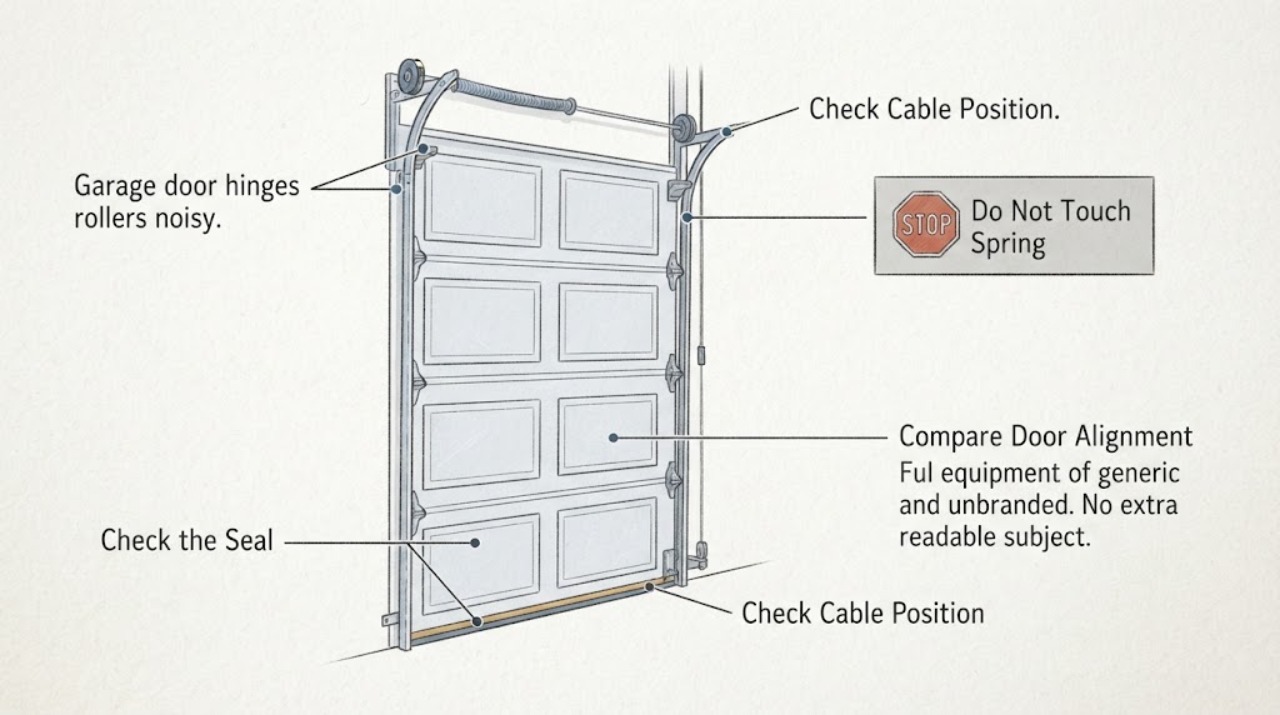
Amarr garage door hinges rollers noisy: What to Check and What to Do Next
Noisy Amarr garage-door hinges or rollers are often caused by dry moving joints, debris or misalignment in the tracks, worn rollers, loose hardware, or a door that is out of balance. First stop the door if the noise includes a snap, grinding with jerking, a cable coming off, a broken spring, scraping metal, or uneven movement.
-
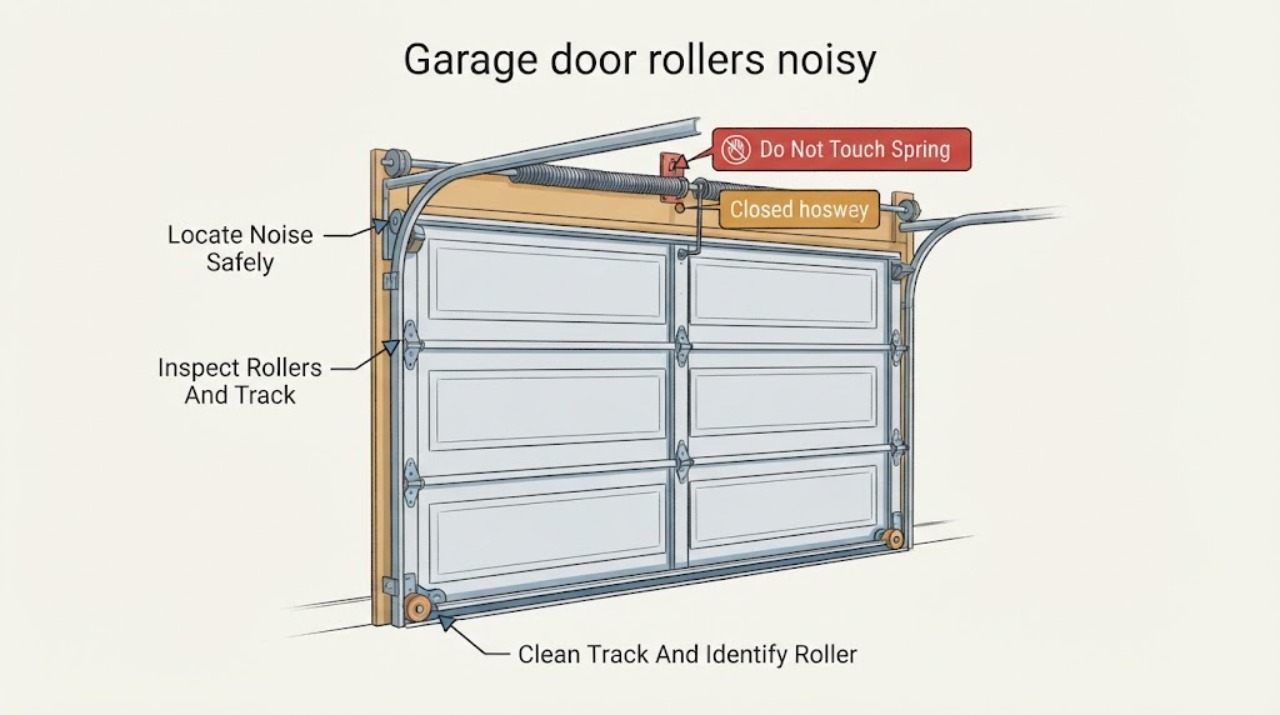
Amarr garage door rollers noisy: What to Check and What to Do Next
A noisy Amarr garage door is often caused by friction, dirt, a worn roller, loose hardware, a track problem, or an opener that is transmitting noise. With the door closed and stationary, note where the sound starts, inspect the rollers, hinges, track, cables, springs, and fasteners without touching tensioned parts, and clean the track with a damp cloth.
-
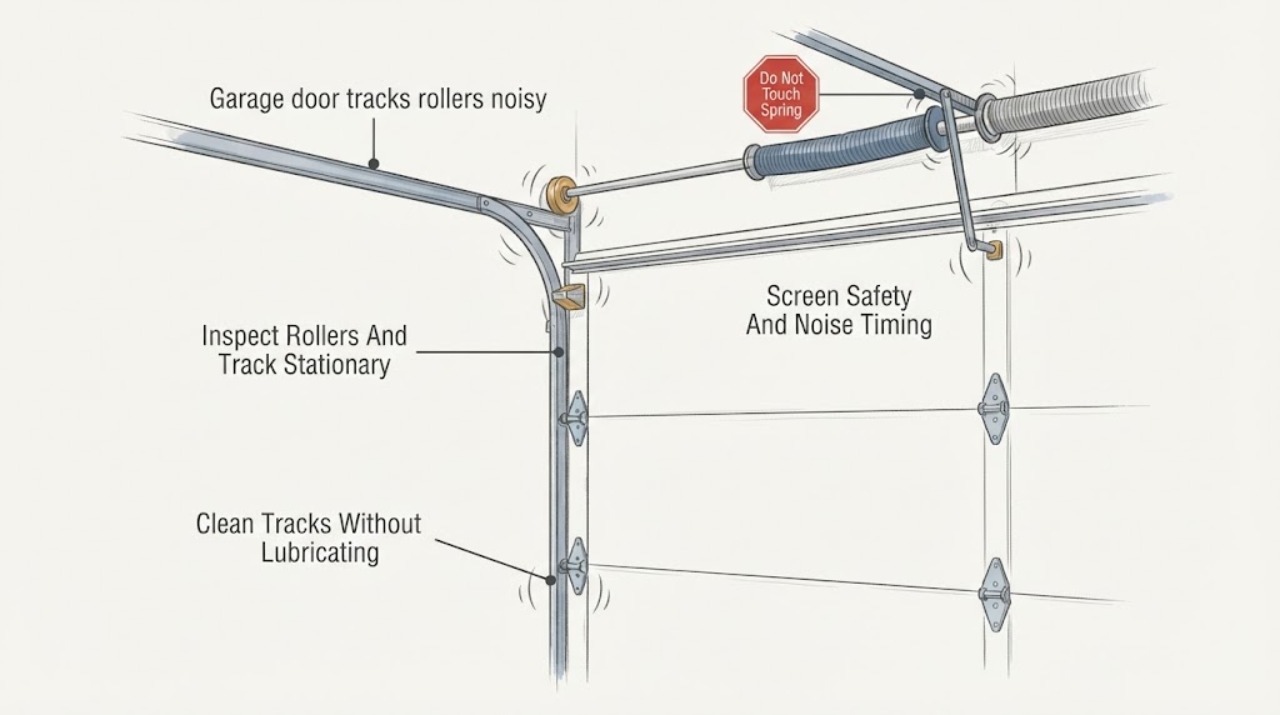
Amarr garage door tracks rollers noisy: What to Check and What to Do Next
Keep people and vehicles clear and watch the closed door from a safe position to identify when the noise occurs: at one track location, throughout travel, only during the opener's operation, or near springs and cables. Amarr says springs, rollers, and hinges can squeak with normal use, while dirt or debris in rollers, loose hardware, track misalignment, and damaged rollers can create excessive noise or jerky movement.
-
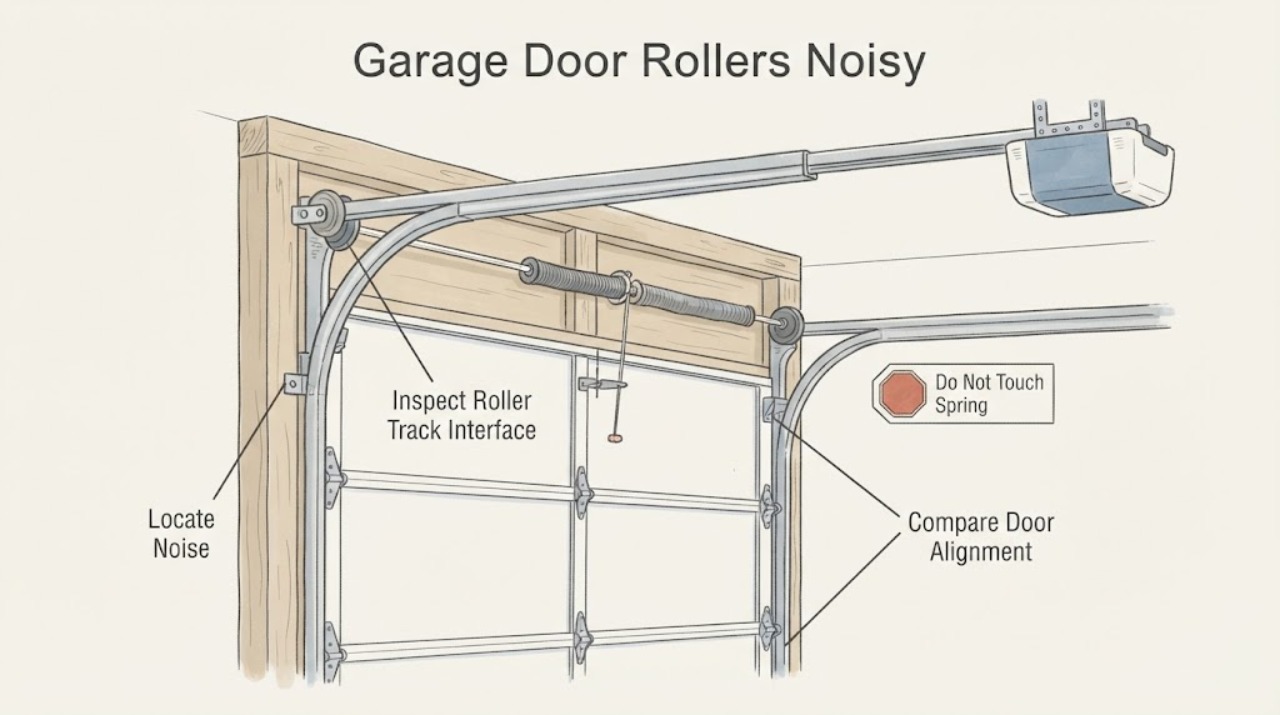
C.H.I. Garage Door Rollers Noisy: What to Check and What to Do Next
A noisy C.H.I. garage door is not automatically a bad roller.
-
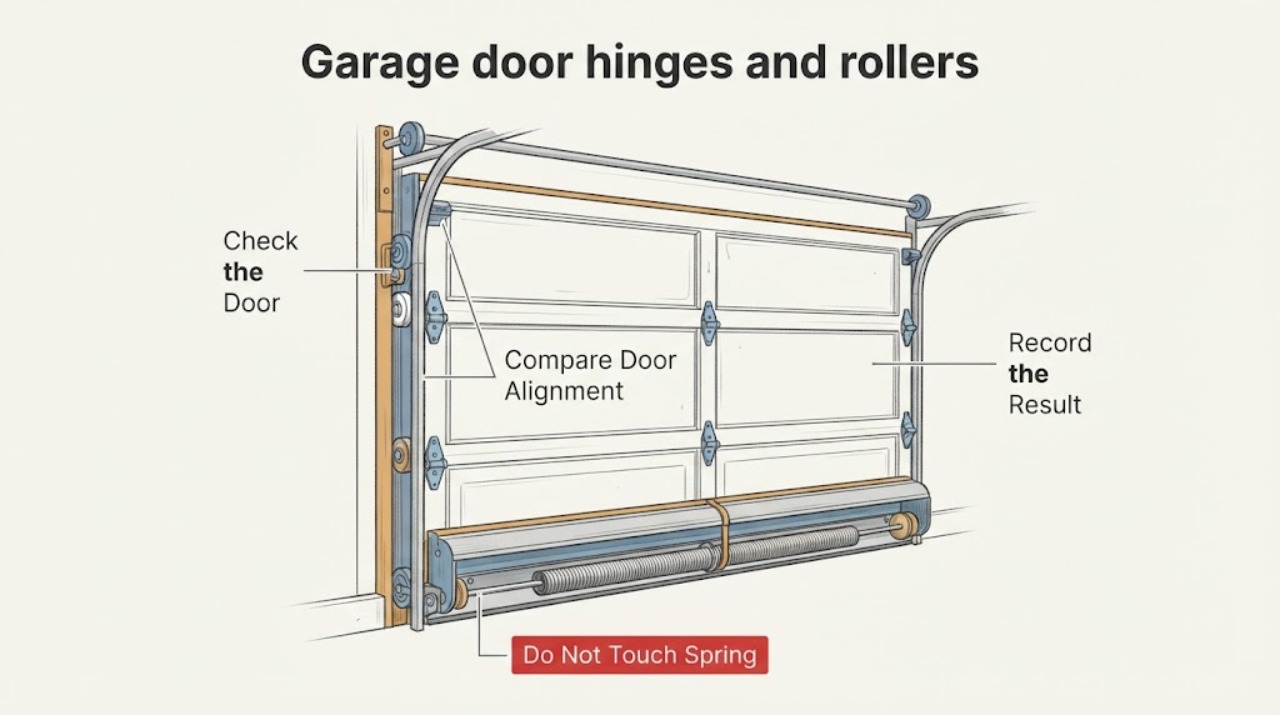
CHI garage door hinges and rollers noisy: What to Check and What to Do Next
A noisy CHI garage door is often narrowed by whether the sound follows the moving door, one hinge or roller location, the track, or the opener. With the door closed and people and vehicles clear, listen from a safe position and inspect only visible hinges, roller wheels, track edges, hardware, and debris; do not reach into a track, remove a roller or hinge, loosen brackets, or work on springs, cables, drums, or the opener.
-
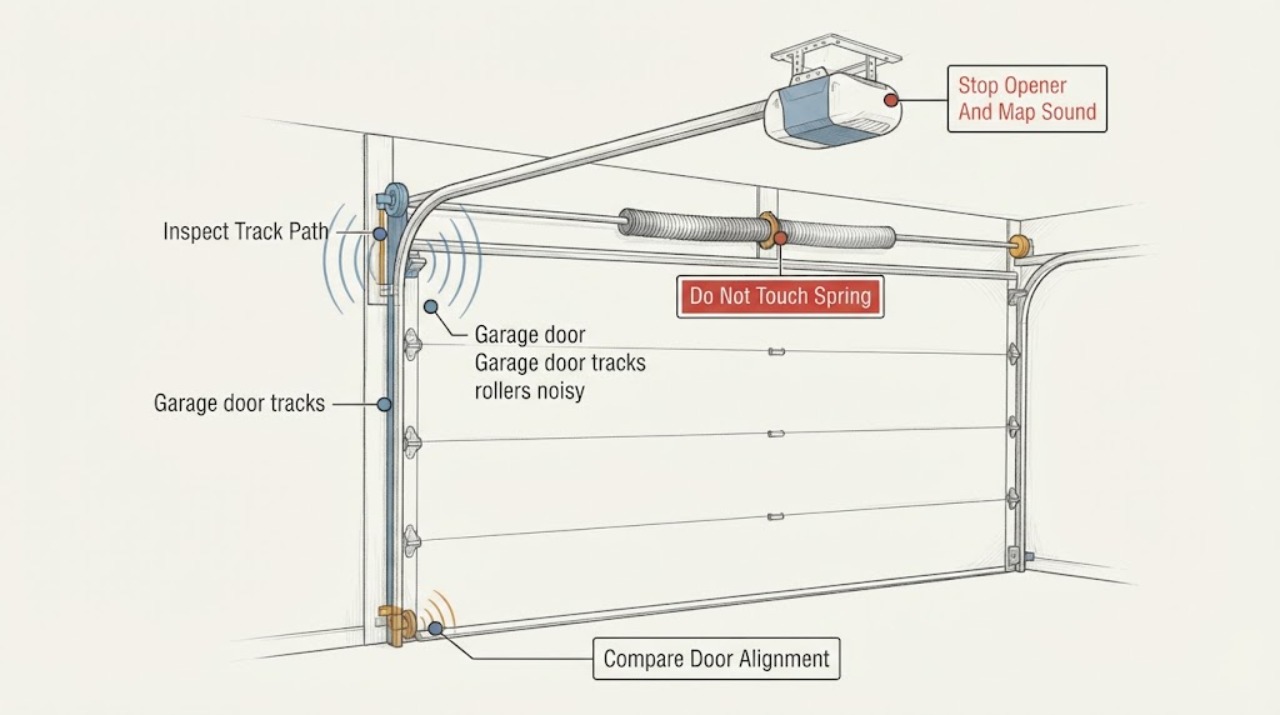
Chi garage door tracks rollers noisy: What to Check and What to Do Next
If your C.H.I. garage door rollers or tracks are noisy, first identify whether the sound is a squeak, rattle, scrape, grinding noise, or a bang and whether it follows one roller, one track side, the hinges, or the opener.
-
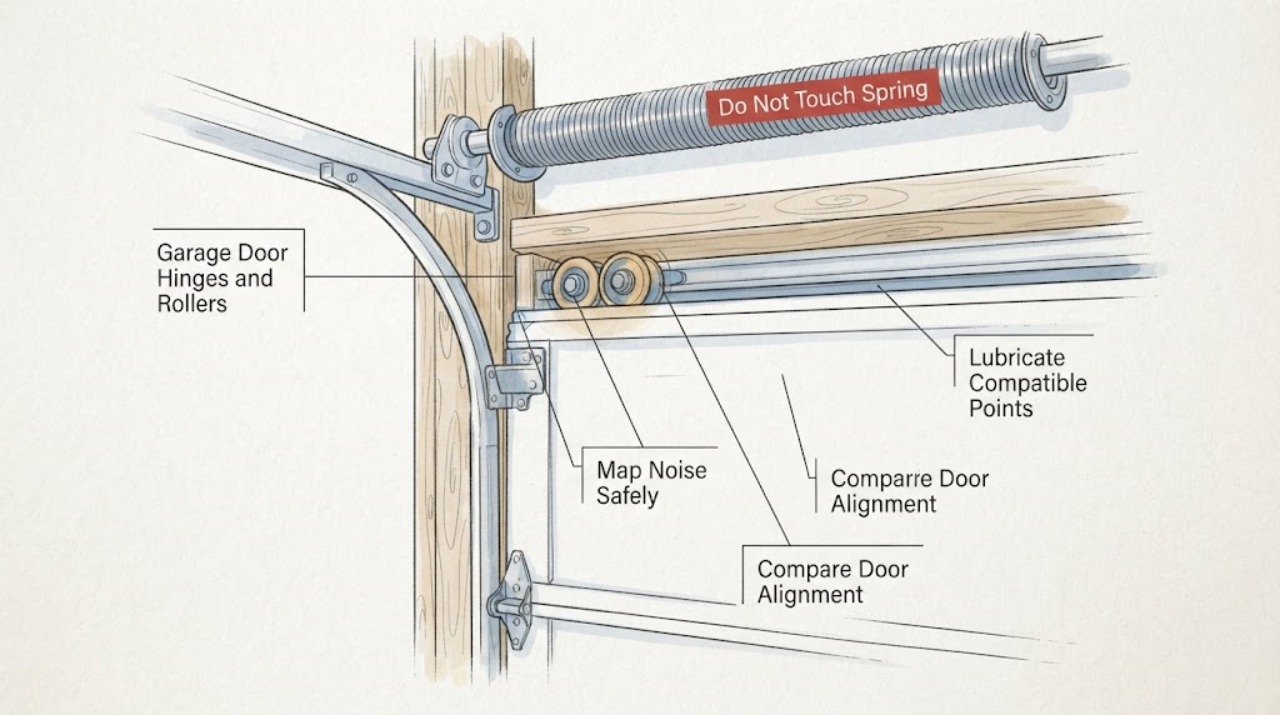
Clopay Garage Door Hinges and Rollers Noisy: What to Check and What to Do Next
A noisy Clopay garage door often has friction, wear, or looseness at the rollers, hinge pins, hardware, or track alignment, but first identify whether the sound comes from the door or the opener. Watch and listen from a safe position with the door closed or during a normal supervised cycle; never put hands between sections or near rollers, springs, cables, or brackets.
-
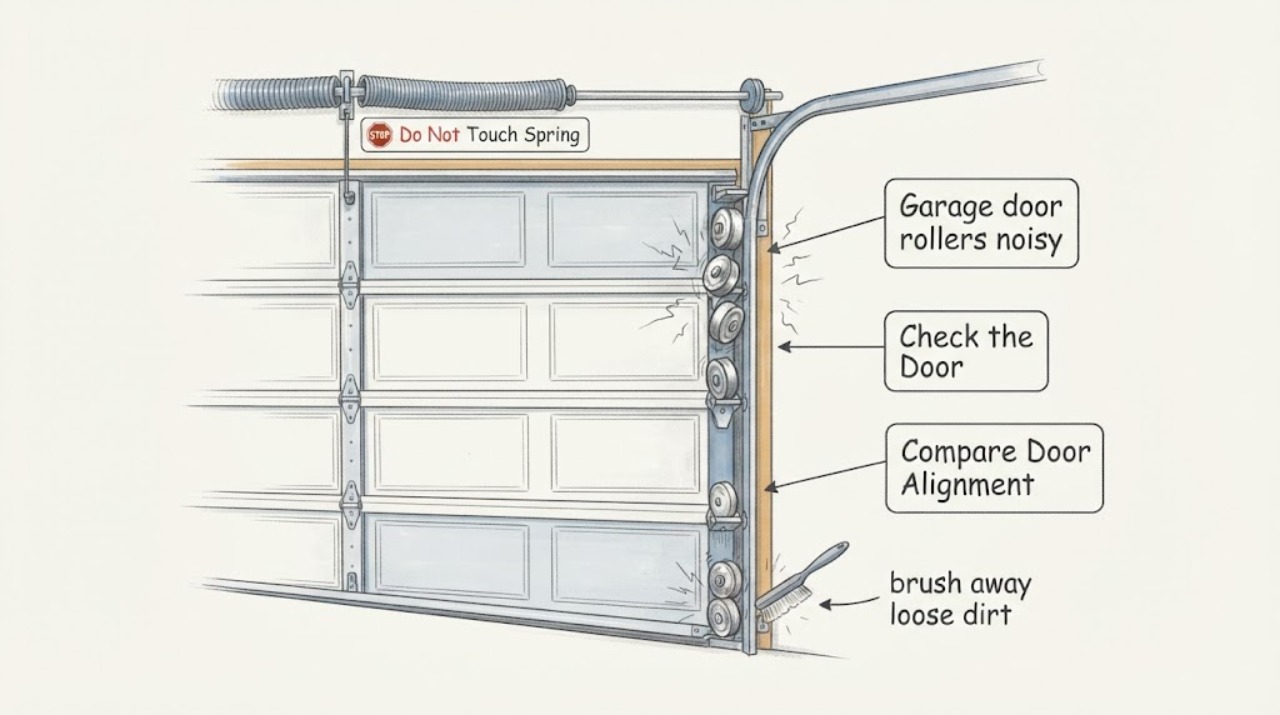
Clopay garage door rollers noisy: What to Check and What to Do Next
Noisy rollers on a Clopay garage door are often related to dirt, inadequate lubrication on rollers that require it, a worn or damaged roller, or a track or door alignment problem. Watch and listen from a safe position while the door moves: note whether the sound follows one roller, comes from a bent or dirty track, or appears with shaking, jerking, heavy movement, or an uneven door.
-
Clopay garage door tracks rollers noisy: What to Check and What to Do Next
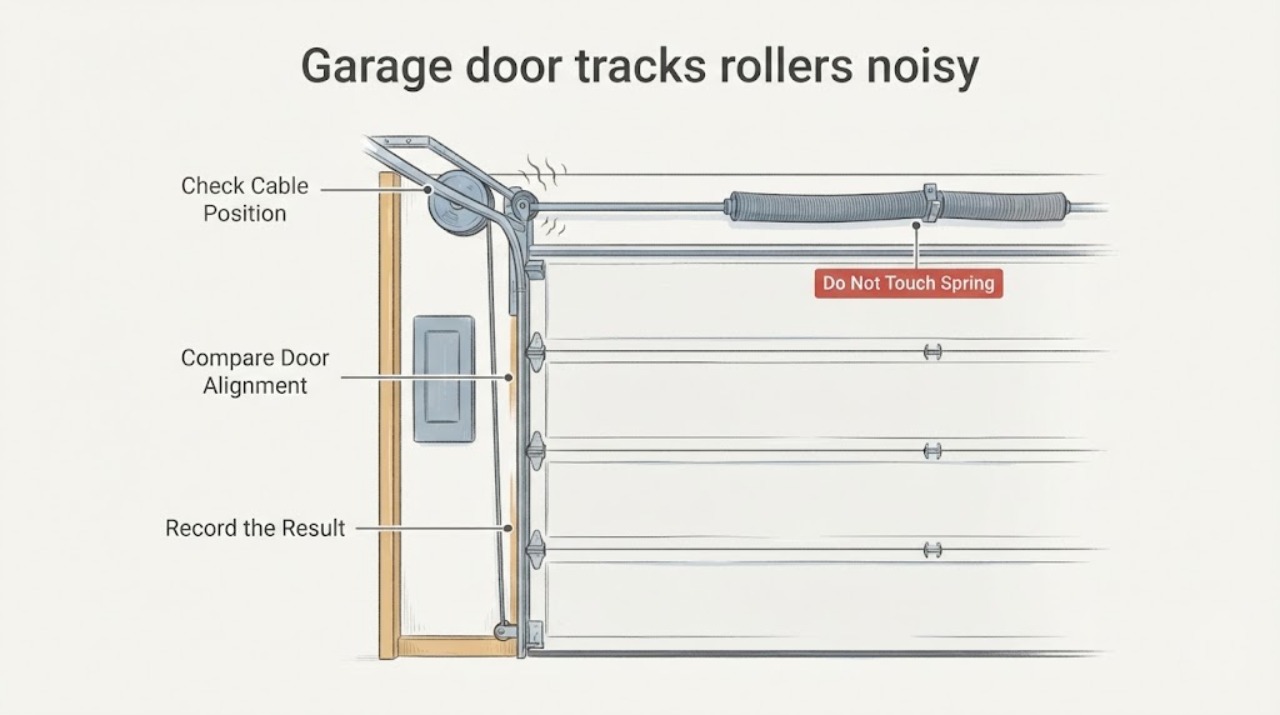
Noisy rollers or tracks on a Clopay garage door can result from dirt, a dry roller bearing, worn or damaged rollers, loose hardware, a bent or misaligned track, an unbalanced door, or an opener or spring problem that is being heard through the track. First keep people and vehicles out of the travel path, listen from a safe position to locate the sound, and inspect the closed door for debris, rubbing marks, roller gaps, cracks, displacement, or frayed cables.
-
Garage door hinges rollers noisy: What to Check and What to Do Next
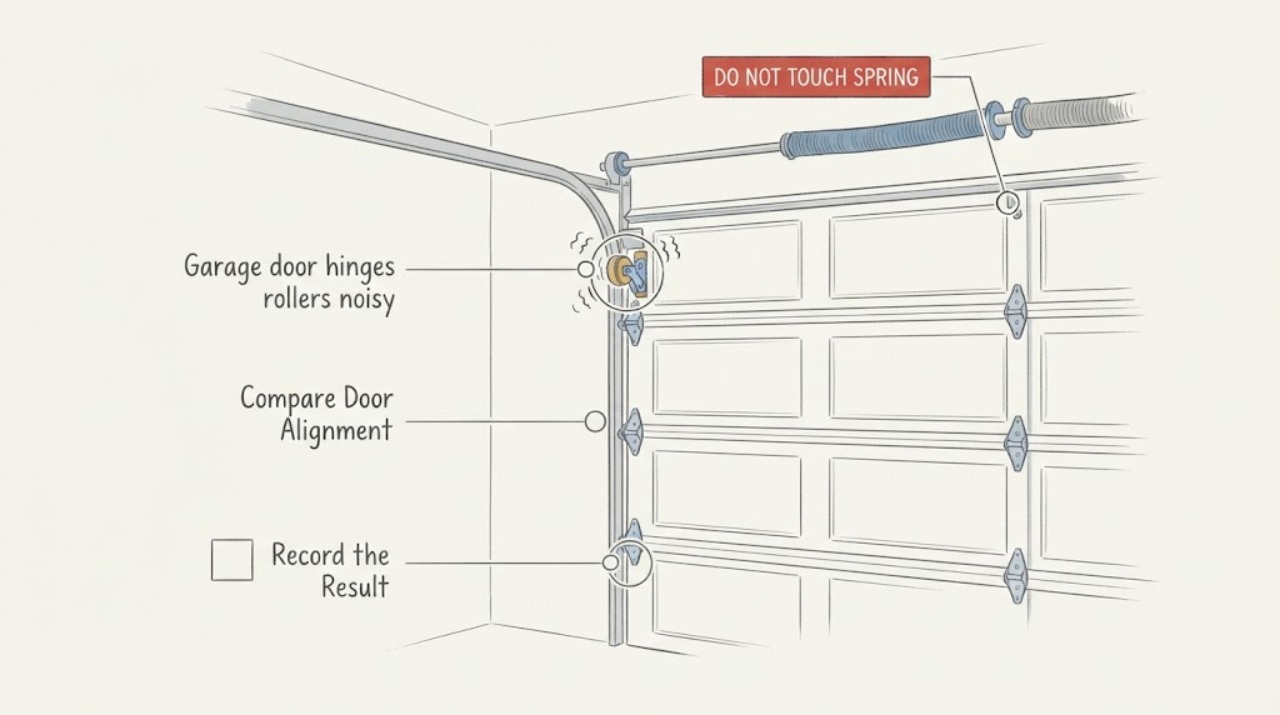
A noisy sectional garage door often needs the sound localized before anyone considers lubrication or a part. With the door closed and from a safe position, look for damaged hinges, rollers, panels, or a visibly obstructed track, then note whether the sound is a squeak, scrape, rattle, pop, or grinding noise and where it occurs.
-
Garage Door Rollers Noisy but the Door Remains Balanced: What to Check
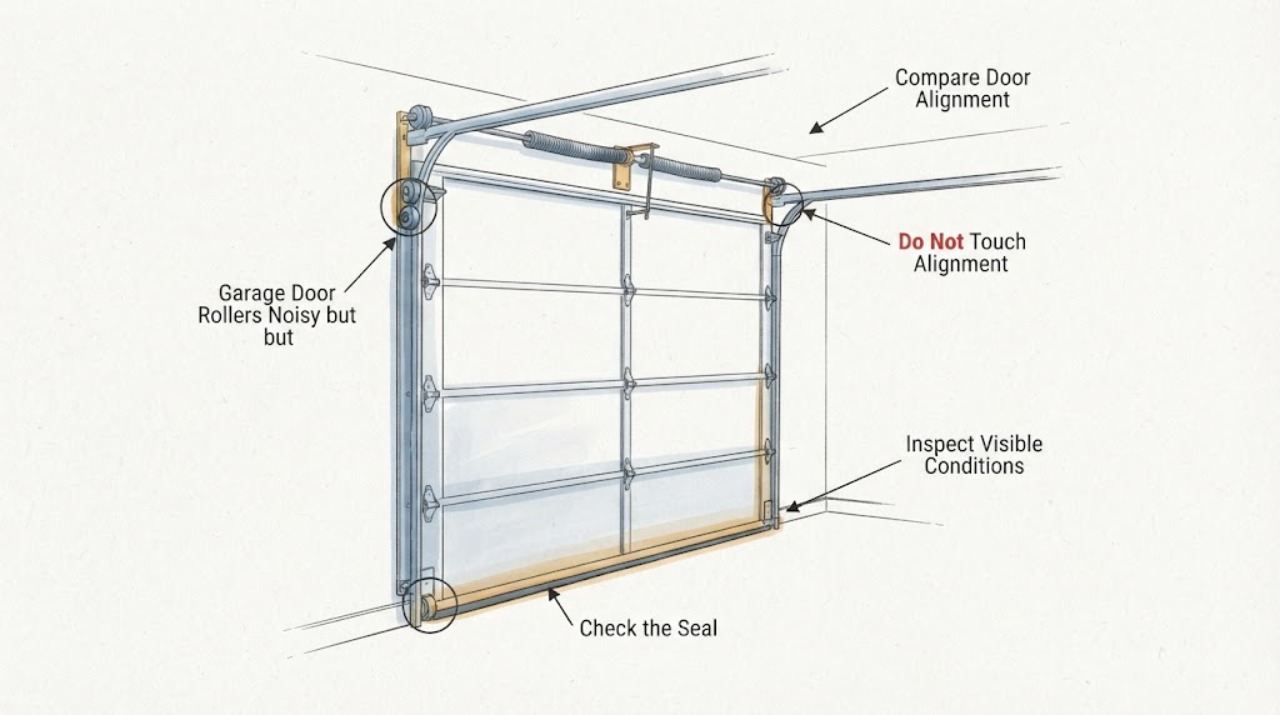
A balanced garage door with noisy rollers usually calls for a component-by-component check, not a spring adjustment. With the door closed, first identify whether the sound follows one roller, a hinge, or one point on the track.
-
Garage door rollers noisy: What to Check and What to Do Next
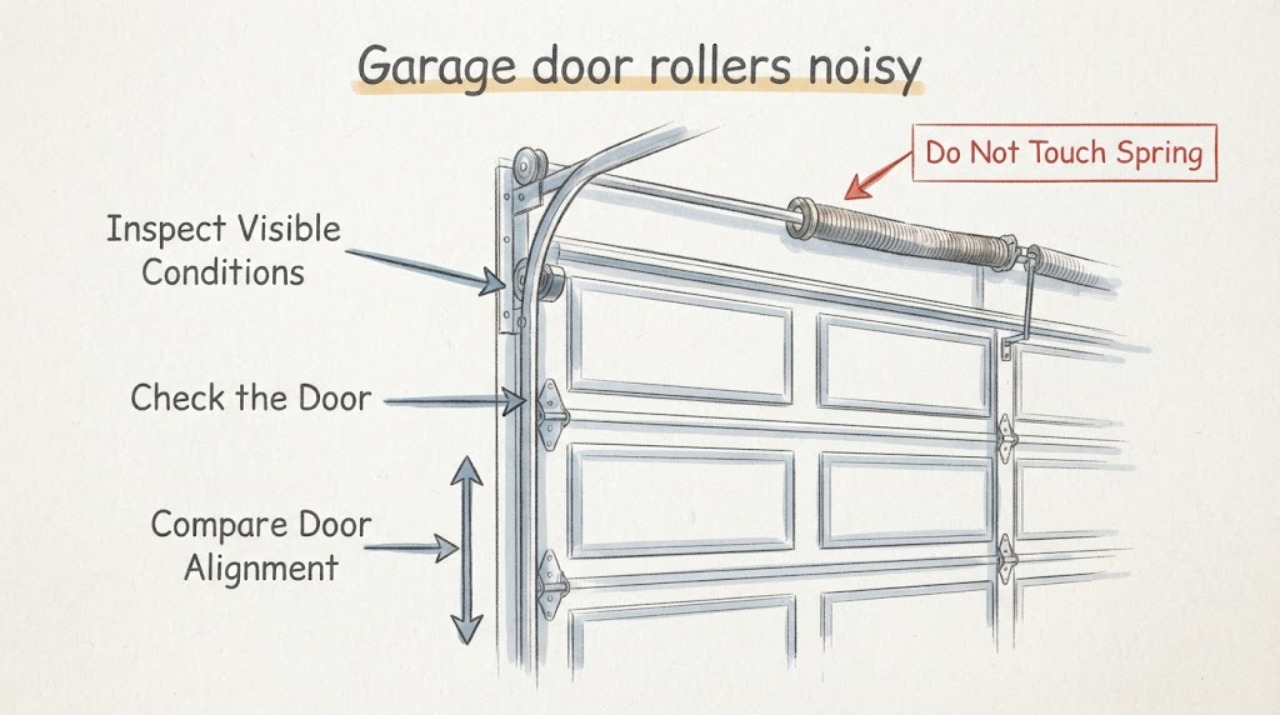
Noisy garage-door rollers are not always a roller failure: the sound may come from a worn or cracked roller, a hinge, track alignment, loose hardware, or the opener. From a safe distance, identify where the sound occurs and whether the door moves smoothly during one normal cycle.
-
Garage door tracks rollers noisy: What to Check and What to Do Next
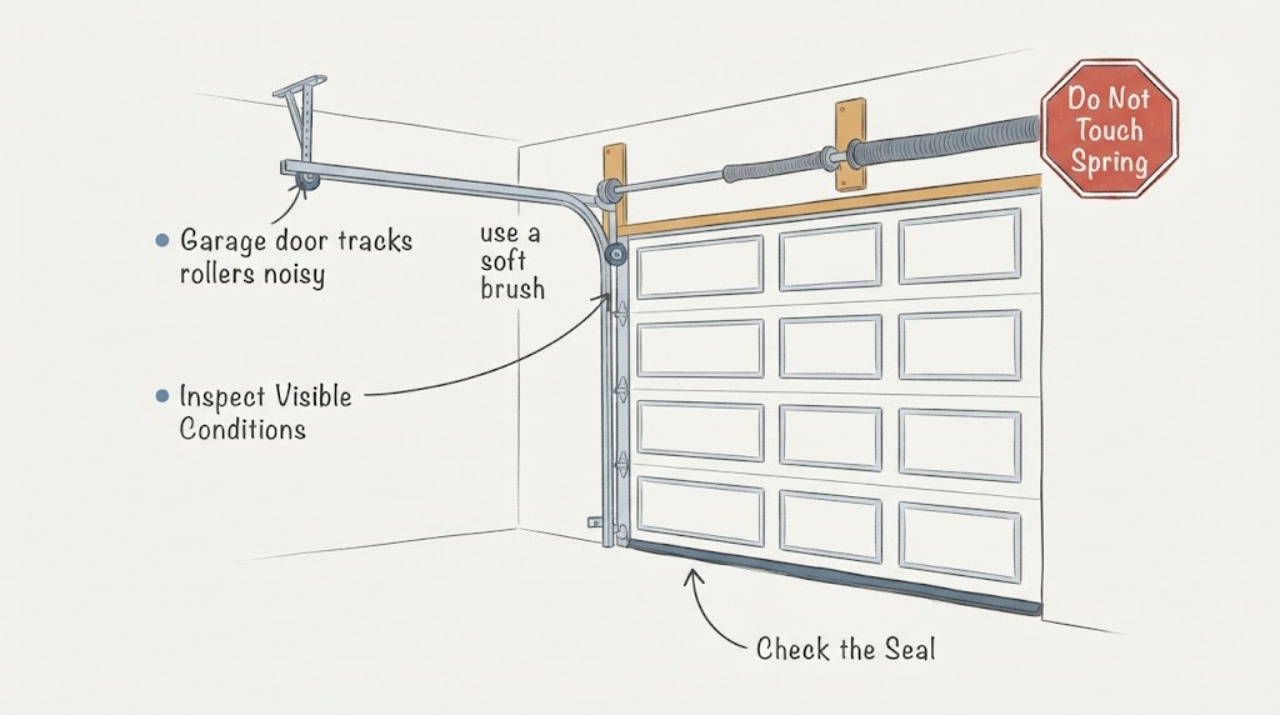
Noisy garage-door tracks or rollers can come from surface debris, a dry or worn roller, loose visible hardware, or a track that is bent or out of alignment. From a safe position, observe where the sound occurs, inspect only what is visible from the floor, and clean accessible track surfaces without reaching into the track.
-
Wayne Dalton Garage Door Rollers Noisy: What to Check and What to Do Next
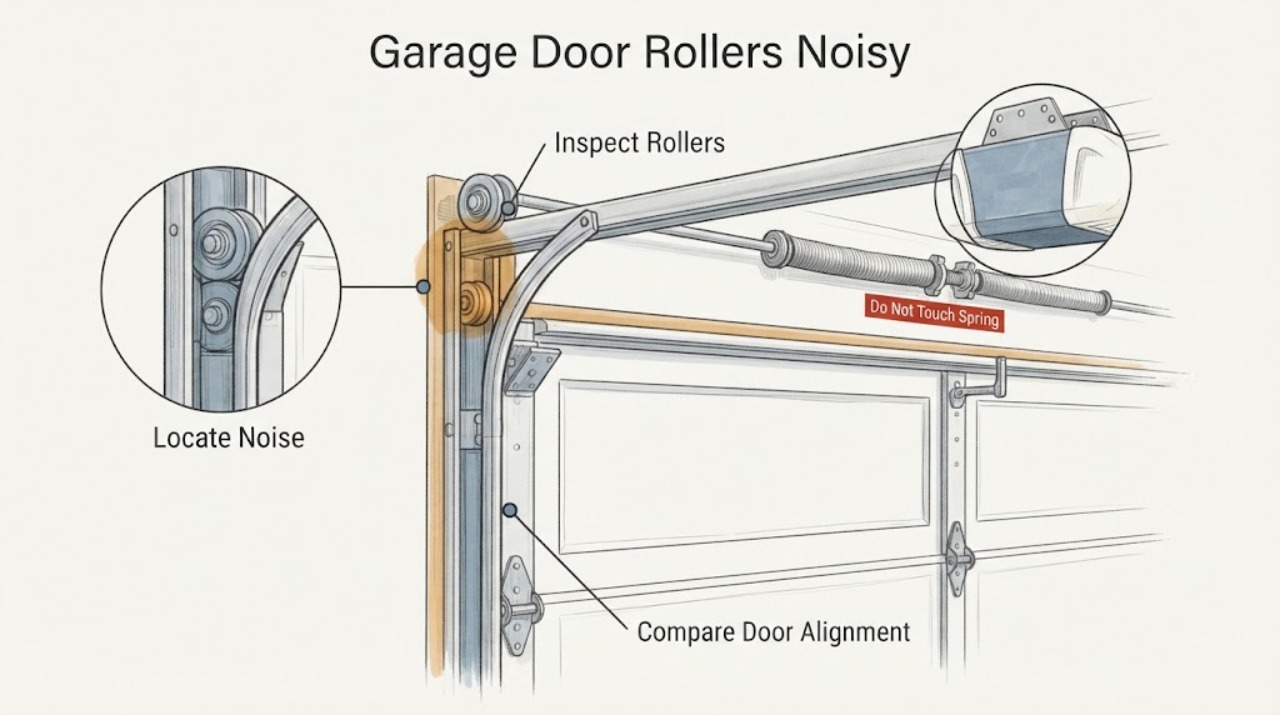
Noisy rollers on a Wayne Dalton garage door may be caused by a dry or worn roller, but loose hardware, a warped or dirty track, a hinge, the opener, or an unbalanced door can sound similar. If the door is aligned and moves normally, listen from outside the travel path for where the sound repeats, then make only the maintenance step allowed by the exact Wayne Dalton instructions.