
On this page
Start here
Quick answer
A noisy garage door is often caused by debris or damage in the track, worn or loose rollers and hinges, an unbalanced door, loose opener hardware, or a slack chain, belt, or carriage. With the door closed, disconnect the opener before inspecting the track, rollers, hinges, and fasteners. Clean loose debris and tighten only accessible, ordinary hardware; do not straighten a bent track, adjust springs, touch bottom roller brackets, or loosen fasteners marked for professional service. Lubricate only the moving parts and lubricant types allowed by the exact opener and door manual, not the track itself unless that manual specifically says otherwise. Stop using the door for a cable or spring problem, an off-track roller, a door that binds or drops, a grinding or scraping sound, or a failed reverse or photo-eye test, and call a qualified garage-door technician.
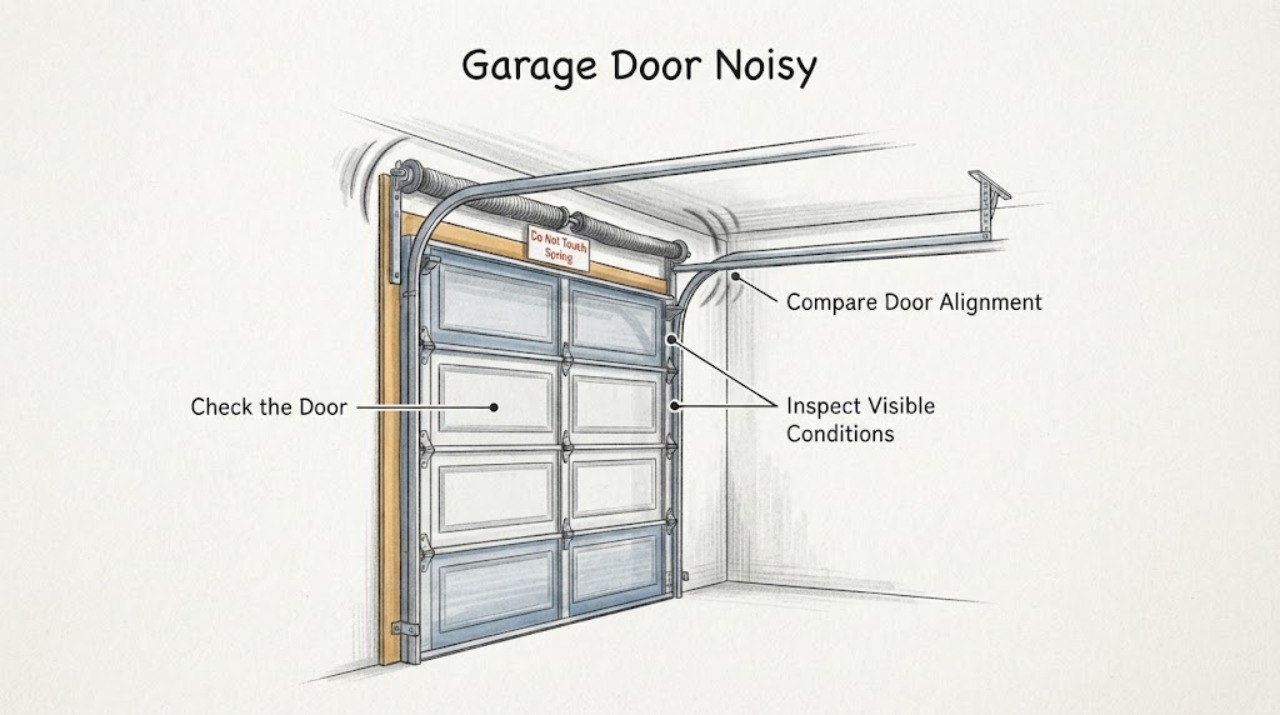
Work through in order
Diagnostic checks
Use only checks that match the exact appliance or system and its official guide.
-
Check 1
Close the garage door, disconnect the opener from power, and listen or gently inspect without moving the door. Identify whether the noise is a squeak, rattle, scrape, grind, slap, or vibration and whether it occurs at one track position or throughout travel.
Expected result: The noise is localized to a track transition, follows one roller or hinge, comes from the opener rail, or is accompanied by jerky motion, binding, or a door that drifts or drops.
Next step: Keep the door closed and continue only with the matching external check. If it binds, goes off track, drifts, drops, or grinds, stop operating it and arrange qualified service.
Why this matters
Why: Genie describes loud or unusual sounds, jerky motion, grinding, scraping, binding, and slow travel as signs that alignment, lubrication, balance, or a component may need attention. A door that drifts or drops is a balance or spring-safety problem, not a routine lubrication task.
-
Check 2
With the door closed, inspect both tracks from a safe standing position. Vacuum loose leaves and dirt, then look for a dent, crease, rust, loose bracket, missing bolt, or a track that is visibly out of line. Do not straighten the track or loosen its mounting hardware.
Expected result: Debris blocks the path, the track is visibly bent or damaged, a bracket or bolt is loose or missing, or the track appears clear and secure.
Next step: Remove only loose debris that is safely reachable with the door closed. If the track is bent, damaged, loose, or missing hardware, leave the door closed and call a technician; do not force the door through the damaged section.
Why this matters
Why: Genie identifies dirt and dried debris as obstructions and directs inspection for bending, rust, damage, and loose or missing bolts. A deformed or unsecured track can force rollers to bind and can make the door unsafe.
-
Check 3
Inspect the visible rollers and hinges without removing brackets. Check that each roller remains inside its track, and look for a cracked or chipped wheel, a bent shaft, a lopsided roller, a loose hinge, or a bearing that appears worn.
Expected result: A roller is out of the track, cracked, chipped, lopsided, or rubbing; a hinge is loose or bent; or the visible rollers and hinges look intact.
Next step: Do not operate with an off-track or damaged roller. Tighten only an ordinary accessible hinge fastener if the door remains closed and the manual permits it; otherwise arrange service, especially for a bottom bracket or tension-loaded part.
Why this matters
Why: Rollers guide the door along the track, and Genie lists broken, worn, cracked, warped, or damaged rollers and hinges as conditions to inspect. Bottom roller brackets and other tension-loaded hardware can injure someone if removed.
-
Check 4
Inspect the opener mount, rail, trolley, chain, belt, or screw drive from the floor with power disconnected. Look for a loose bracket, rail movement, excess chain or belt slack, rubbing, cuts, or a damaged carriage; do not adjust tension unless the exact opener manual explicitly provides a safe owner procedure.
Expected result: The opener or rail moves, the drive has visible slack or rubbing, the carriage is damaged, or the opener is secure and the noise remains at the door hardware.
Next step: Keep the opener disconnected and arrange service for a loose mount, damaged carriage, worn drive, or any adjustment that requires climbing or opening the powerhead. Continue only with safe door-hardware checks when the noise is clearly at the track.
Why this matters
Why: Genie identifies loose opener mounting, a belt or chain rubbing the rail, excess slack, and worn drive components as possible sources of groaning, slapping, grinding, or screeching. The noise location changes the repair path from track hardware to opener service.
-
Check 5
After the track is clear and the door hardware is visibly intact, consult the exact door and opener manuals for lubrication points. Apply only the specified light lubricant to permitted rollers, hinges, bearings, or drive components; keep lubricant off the track and away from the floor unless the manual says otherwise.
Expected result: A permitted lubrication point is dry and the noise improves without binding, or the sound persists or becomes a scrape or grind.
Next step: Wipe away excess and retest only from a safe position. If the noise persists, becomes harsher, or the door movement is not smooth, stop and book qualified service rather than adding more lubricant.
Why this matters
Why: Genie recommends lubrication for appropriate moving hardware and drive components but distinguishes drive systems and warns that unusual noises can indicate a part problem. Lubrication cannot correct a bent track, failed bearing, loose cable, unbalanced door, or damaged spring.
-
Check 6
With the opener still disconnected and the door fully closed, perform no spring or cable adjustment. If the manual permits a balance check, use only its stated procedure and keep clear of the door; separately confirm that the photo-eyes are clean, aligned, and undamaged before any powered safety test.
Expected result: The door is not balanced, a cable is frayed or damaged, a spring or red-marked fastener is involved, or a safety sensor or reverse test fails; or the balance and safety checks are normal.
Next step: Leave the door closed, disengage or disable the opener only as the manual directs, keep people away, and call a qualified technician for balance, spring, cable, off-track, or failed safety-system issues. Do not run another powered cycle.
Why this matters
Why: Genie states that an unbalanced door puts excess pressure on the opener and is a safety hazard, and that springs, cables, and marked fasteners require professional handling. CPSC says a garage-door opener that fails to reverse needs repair before safe operation.
Use your observations
Decision map
Find the observation that best matches what you see, then follow the next safe action.
-
PATH 01Next step
What you see
Loose debris is found in an otherwise straight, secure track and the door hardware is intact.
Do this next
Remove only loose debris with the door closed and retest from a safe position. Escalate if the noise remains or the door binds.
-
PATH 02Next step
What you see
A track is bent, creased, rusty, visibly damaged, out of line, or missing secure hardware.
Do this next
Keep the door closed and do not straighten, loosen, or force the track. Arrange qualified garage-door service.
-
PATH 03Next step
What you see
A roller is cracked, chipped, off track, rubbing, or visibly worn, or a hinge is bent or loose.
Do this next
Stop operating the door. Do not remove a bottom roller bracket or other tension-loaded hardware; have a technician inspect and repair it.
-
PATH 04Next step
What you see
The noise comes from a loose opener mount, rail, chain, belt, screw drive, or carriage rather than the track.
Do this next
Keep the opener disconnected and use the exact opener manual or qualified service for drive adjustment or replacement. Do not open the powerhead casually.
-
PATH 05Next step
What you see
The door is unbalanced, a cable or spring is damaged, the door drops or goes off track, or a safety reverse or photo-eye test fails.
Do this next
Keep everyone away, leave the door closed, and call qualified garage-door service. Do not adjust springs, cables, red-marked fasteners, or force a safety test.
-
PATH 06Next step
What you see
A scrape, grind, loud knock, binding movement, smoke, exposed wiring, or rapidly worsening noise remains after safe external checks.
Do this next
Stop using the opener and door, disconnect power if safe, and arrange qualified service. Do not keep adding lubricant or repeat powered cycles.
Helpful context
Understand the symptom
Locate the noise before lubricating
Listen with the door closed and the opener disconnected, then identify whether the sound comes from the vertical or horizontal track, a roller or hinge, the ceiling-mounted opener, or a spring and cable area. A noise that appears only at one position suggests binding or track alignment; a sound from the opener rail can instead be a chain, belt, screw, or carriage issue.
The track is a guide, not a safe spring-adjustment point
Keep the door fully closed while checking the track and never reach into moving rollers. Genie warns that springs and related components carry the door's weight and that torsion springs, red-marked fasteners, cables, and bottom roller brackets require professional handling. A quiet door is not worth a dropped door or released spring tension.
When checks do not resolve it
Need a professional?
Arrange service for any spring, cable, balance, bottom roller bracket, off-track, damaged track, opener-drive, or safety-system issue, or when safe external checks do not remove the noise.
Common questions
FAQ
Why is my garage door noisy along the track?
Check for track debris or damage, a roller that is worn or out of the track, loose hinges, and a door that binds or is not balanced. An opener rail, chain, belt, or carriage can also make noise, so locate the sound before lubricating.
Should I lubricate the garage-door track?
Do not assume the track itself should be lubricated. Follow the exact door and opener manuals for approved lubrication points, which may include rollers, hinges, bearings, or a drive component. Keep excess lubricant off the track and floor unless the manual specifically says otherwise.
Can I straighten a bent garage-door track or adjust the springs?
No. A bent or loose track, spring, cable, bottom roller bracket, or marked fastener needs qualified service. These parts can carry the door's weight or guide a heavy moving door.
When should I stop operating a noisy garage door?
Stop for binding, grinding, scraping, an off-track or dropping door, damaged cable or spring, smoke, exposed wiring, or a failed reverse or photo-eye test. Keep the door closed and call qualified service.
Read the exact guide
Official sources
- Maintaining Your Garage DoorThe Genie Company · General manufacturer guidance for garage-door systems; exact door and opener manuals control the permitted maintenance procedure.
- To Save Lives Homeowners Should Replace Non-Reversing Garage DoorsU.S. Consumer Product Safety Commission · General consumer safety guidance; the current opener manual and applicable local requirements control testing and repair.
- Genie Garage Door Openers: Summer Maintenance and Cleaning TipsThe Genie Company · Genie opener-specific examples; use the exact opener model manual for lubrication and adjustment details.
Community feedback
Share a repair observation
Share a plain-text repair observation. Accepted observations are published automatically; this page may take a moment to update.