
Repair problem
Bathroom Floor Replacement Troubleshooting Guides
Published FixGraph guidance for diagnosing and responding to bathroom floor replacement.
Matching published guides
Choose a guide that matches the service, equipment, and conditions you are seeing.
-
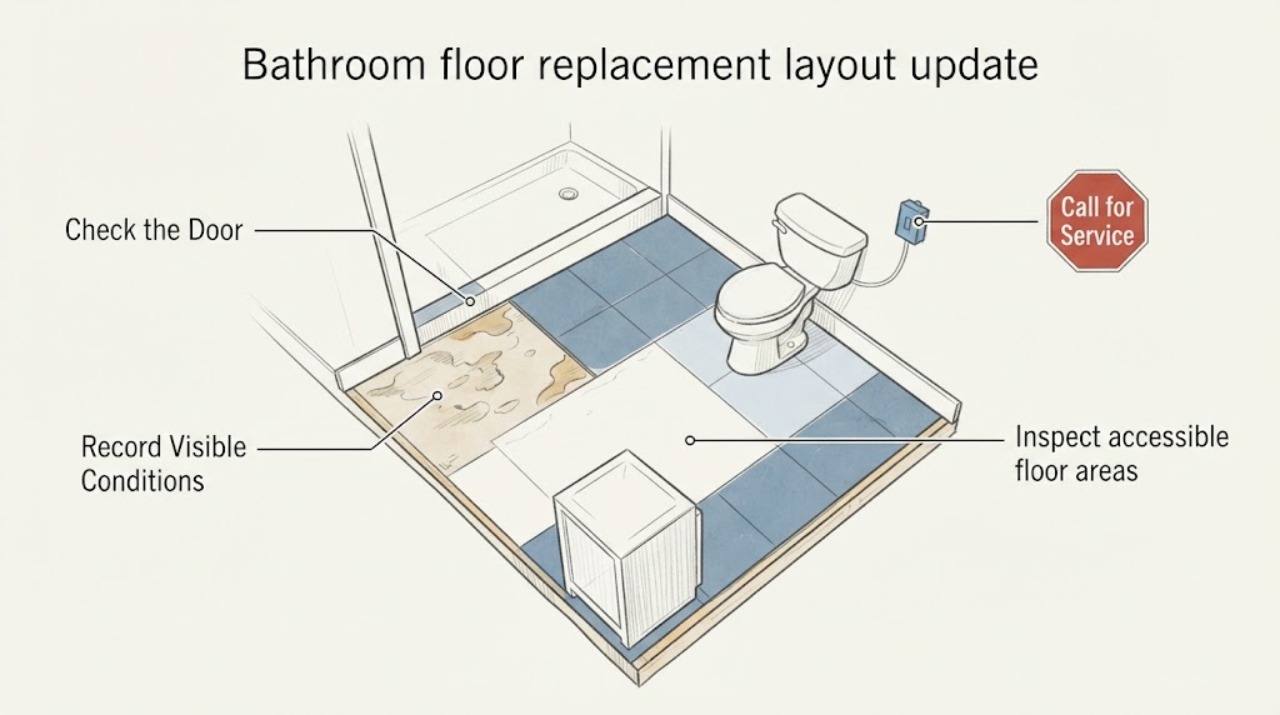
Bathroom floor replacement layout update: What to Check and What to Do Next
Plan a bathroom-floor replacement layout around the finished room and every fixed element, not just the tile pattern. Document the room shape, door swing, toilet/vanity/tub or shower footprints, drain and supply locations, existing transitions, finished-floor height, and substrate condition before any removal.
-
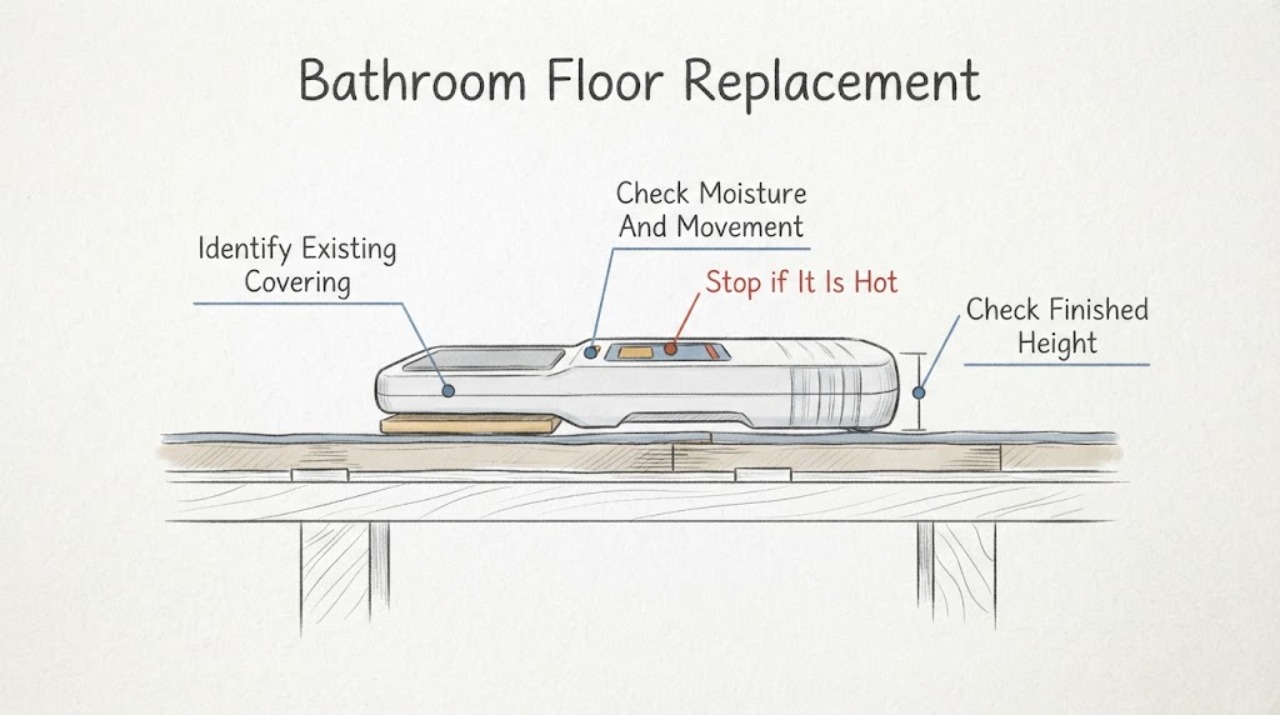
Bathroom Floor Replacement for an Outdated Finish: What to Check and What to Do Next
An outdated bathroom floor finish does not by itself mean the floor must be demolished. First identify the existing covering, check for movement or moisture, and confirm the finished height around the door and toilet.
-
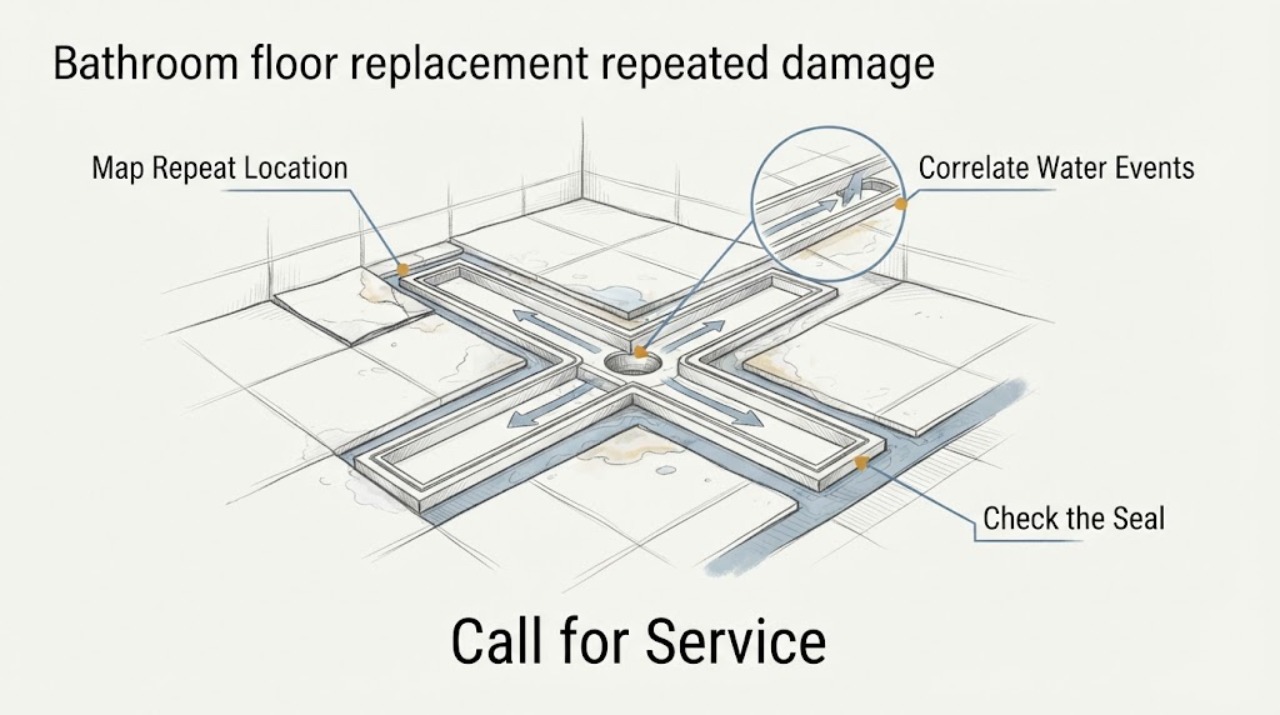
Bathroom floor replacement repeated damage: What to Check and What to Do Next
Repeated damage after a bathroom floor replacement is usually a moisture-management, movement, substrate, installation, or transition problem rather than a reason to replace the visible finish again. From safe dry positions, document where damage returns, whether it follows a shower, toilet, sink, or plumbing event, grout or joint opening, hollow or lifted areas, staining below, and the timing after cleaning or use.
-
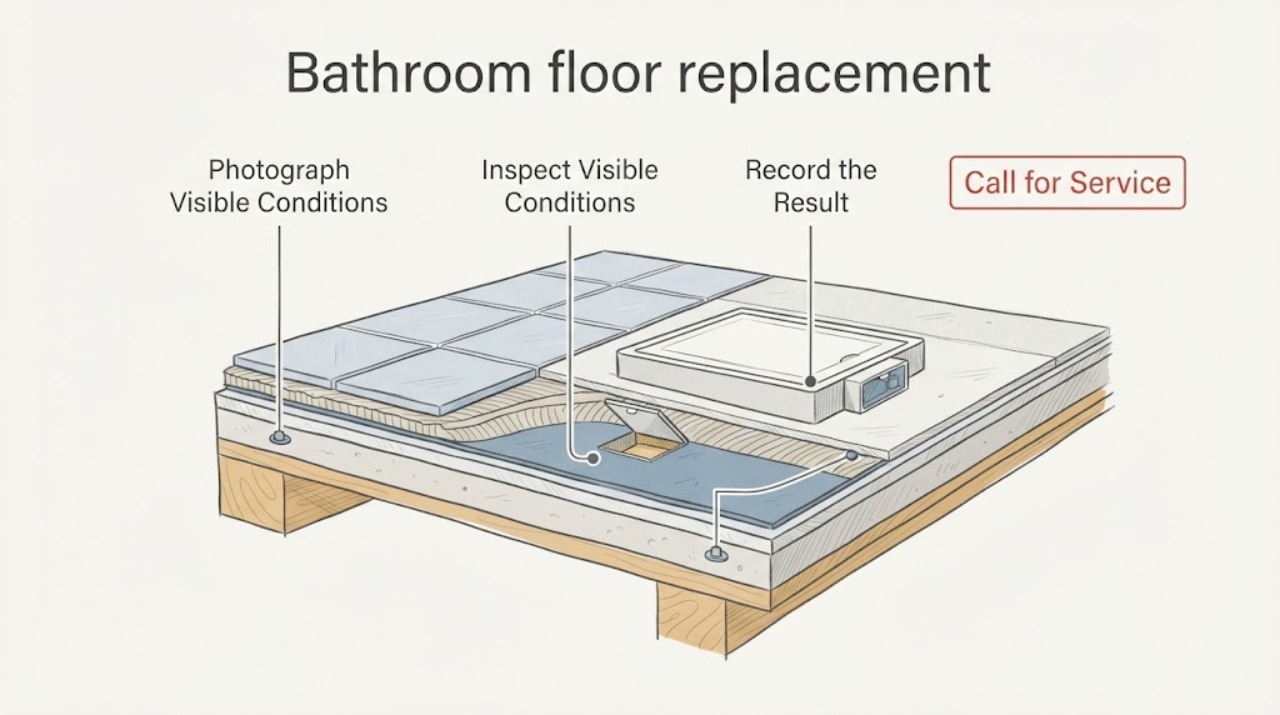
Bathroom floor replacement: What to Check and What to Do Next
Before arranging a bathroom floor replacement, determine whether you are dealing with surface wear, movement or softness, or an active moisture problem. A few low-risk observations can make the quote more useful: map the visible damage, check whether moisture returns after fixtures are used, confirm that bathroom ventilation is actually moving air, and document the room, fixtures, floor type, and transitions.
-
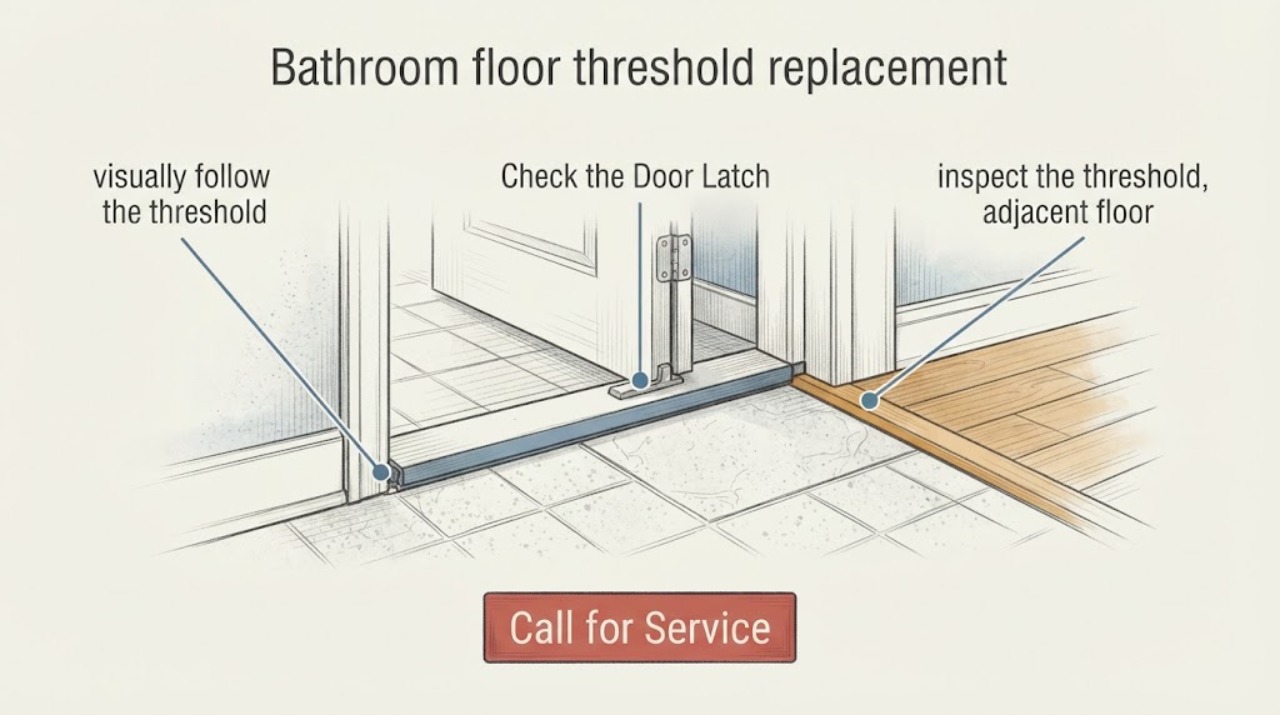
Bathroom floor threshold replacement: What to Check and What to Do Next
Do not pry up or cut out a bathroom floor threshold just because it looks worn. From a dry, standing position, document the transition height and edges, whether the door clears and latches normally, any visible moisture or soft-looking flooring, and whether the change catches a foot or mobility aid.
-
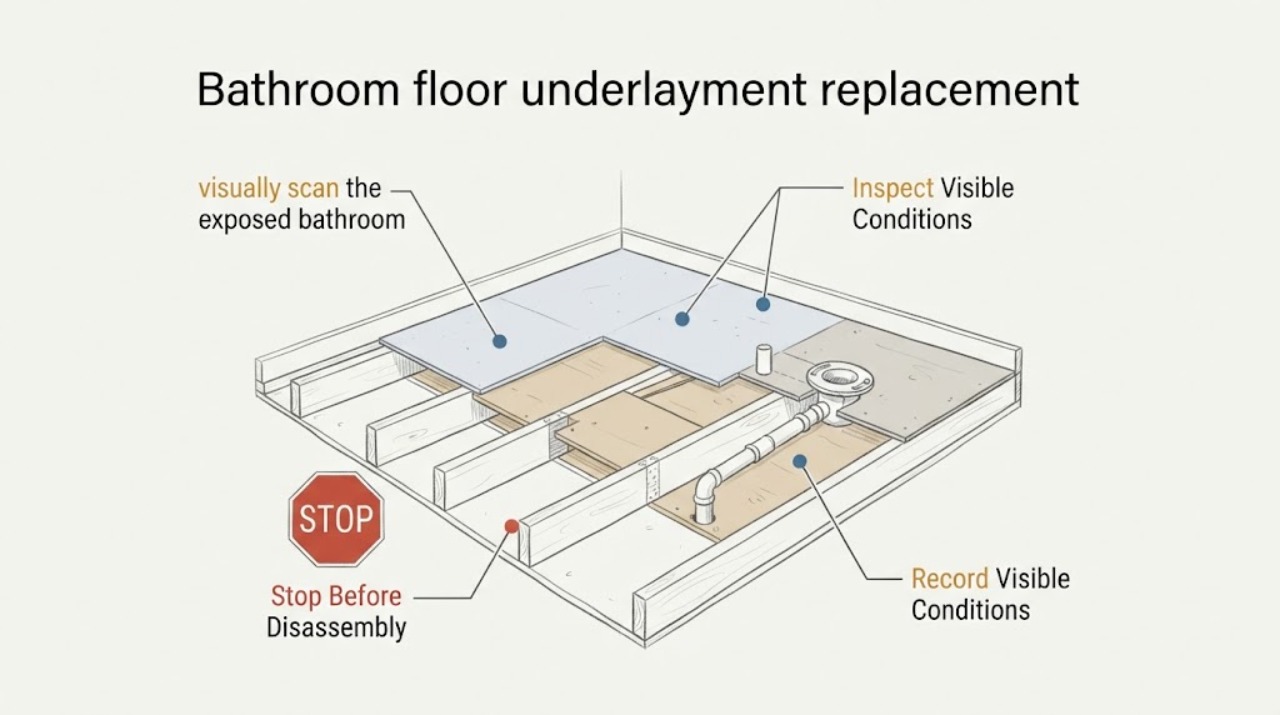
Bathroom floor underlayment replacement: What to Check and What to Do Next
A bathroom floor underlayment should be evaluated for replacement when the finished floor moves, feels soft, stays damp, or shows damage that may extend below the visible surface. Those signs do not identify the failed layer by themselves.