
Repair problem
Crawlspace Standing Water Troubleshooting Guides
Published FixGraph guidance for diagnosing and responding to crawlspace standing water.
Matching published guides
Choose a guide that matches the service, equipment, and conditions you are seeing.
-
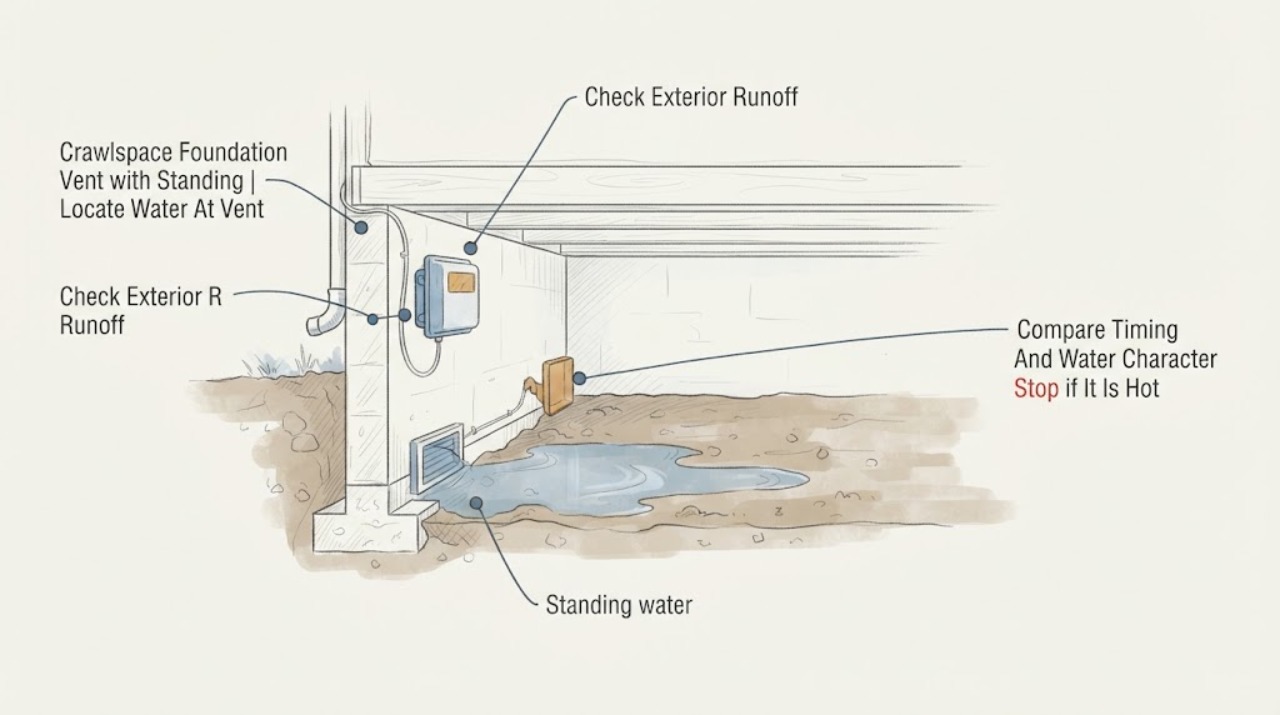
Crawlspace Foundation Vent with Standing Water: What to Check and What to Do Next
Standing water at or inside a crawlspace foundation vent usually means water is entering from a rain or drainage path, groundwater, plumbing leak, or flood condition; the vent itself is not proof of the source. From a dry, safe location, photograph where the water is relative to the vent, check exterior grading and downspouts, and record whether it appears after rain or plumbing use.
-
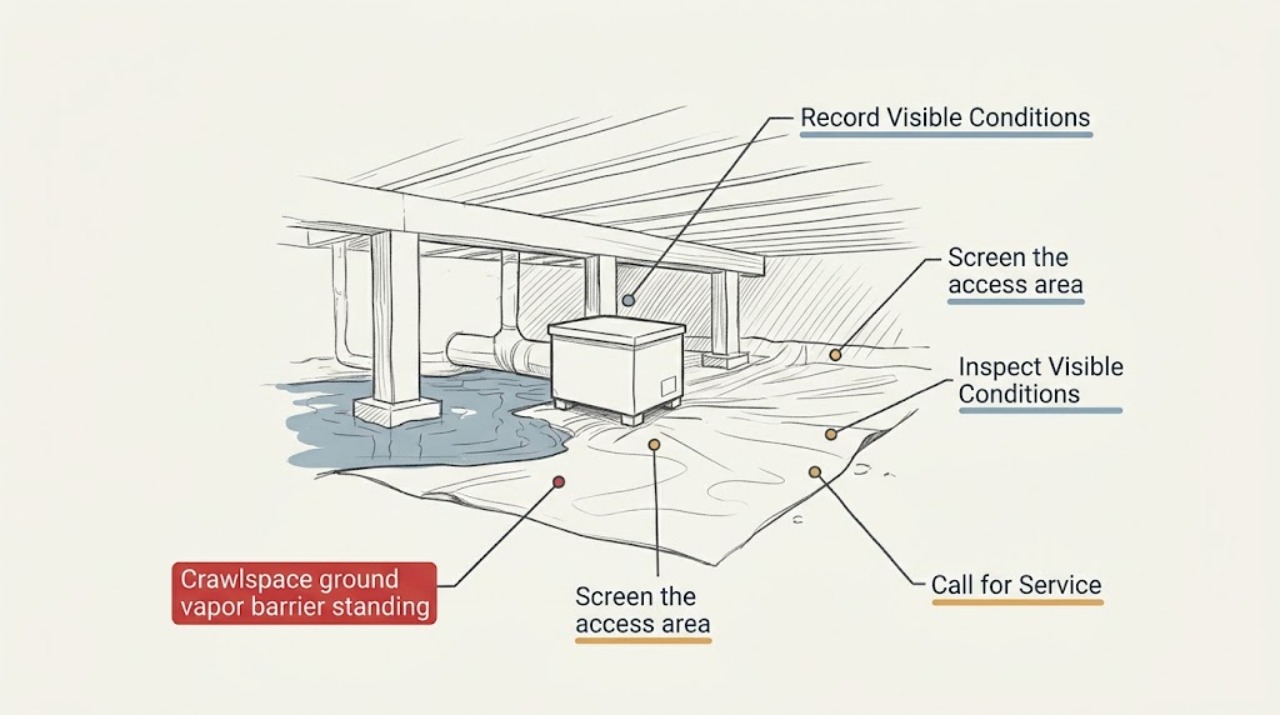
Crawlspace ground vapor barrier standing water: What to Check and What to Do Next
Standing water on or beneath a crawlspace ground vapor barrier means the water source and safety hazards must be assessed before the barrier is patched or replaced. From outside the crawlspace or its access opening, document the water location, apparent depth or spread without entering, barrier condition, visible plumbing or drainage clues, and any odor or structural concern.
-
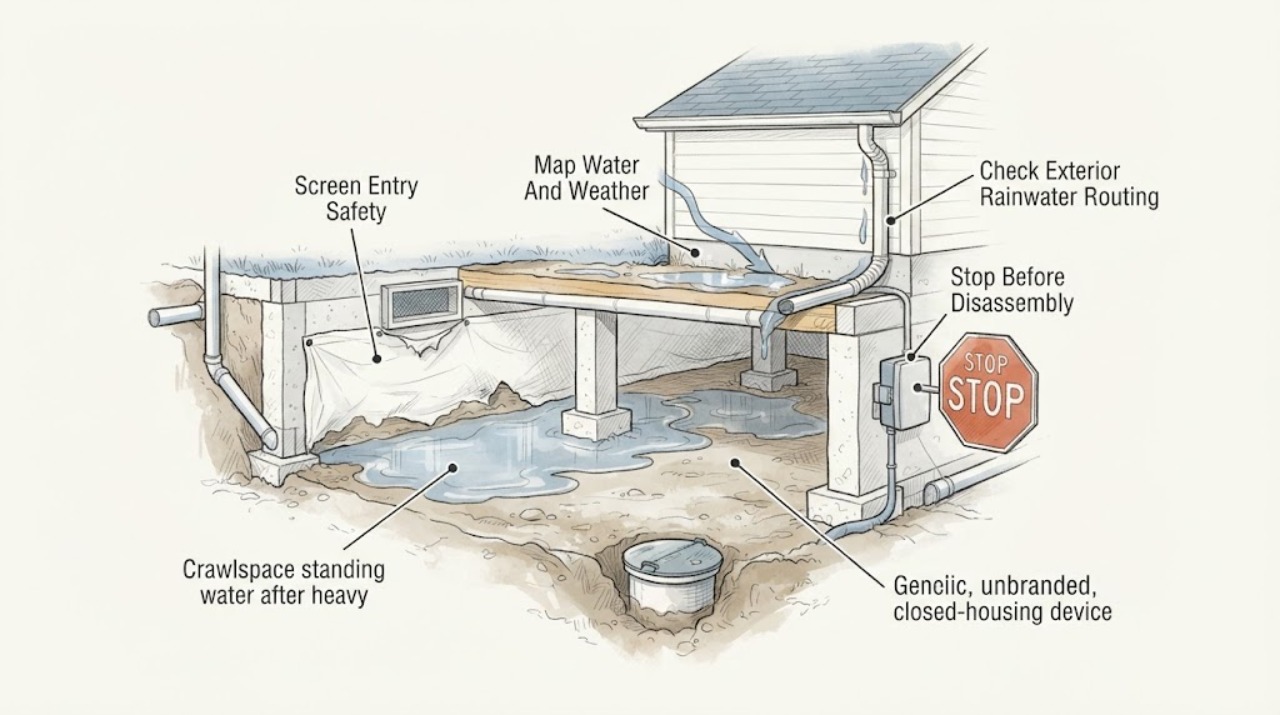
Crawlspace standing water after heavy rain: What to Check and What to Do Next
Standing water in a crawlspace after heavy rain is a water-entry and safety problem, not just a dampness issue. Before entering, confirm the building is structurally sound, keep electricity away from standing water, and treat floodwater as potentially contaminated.
-
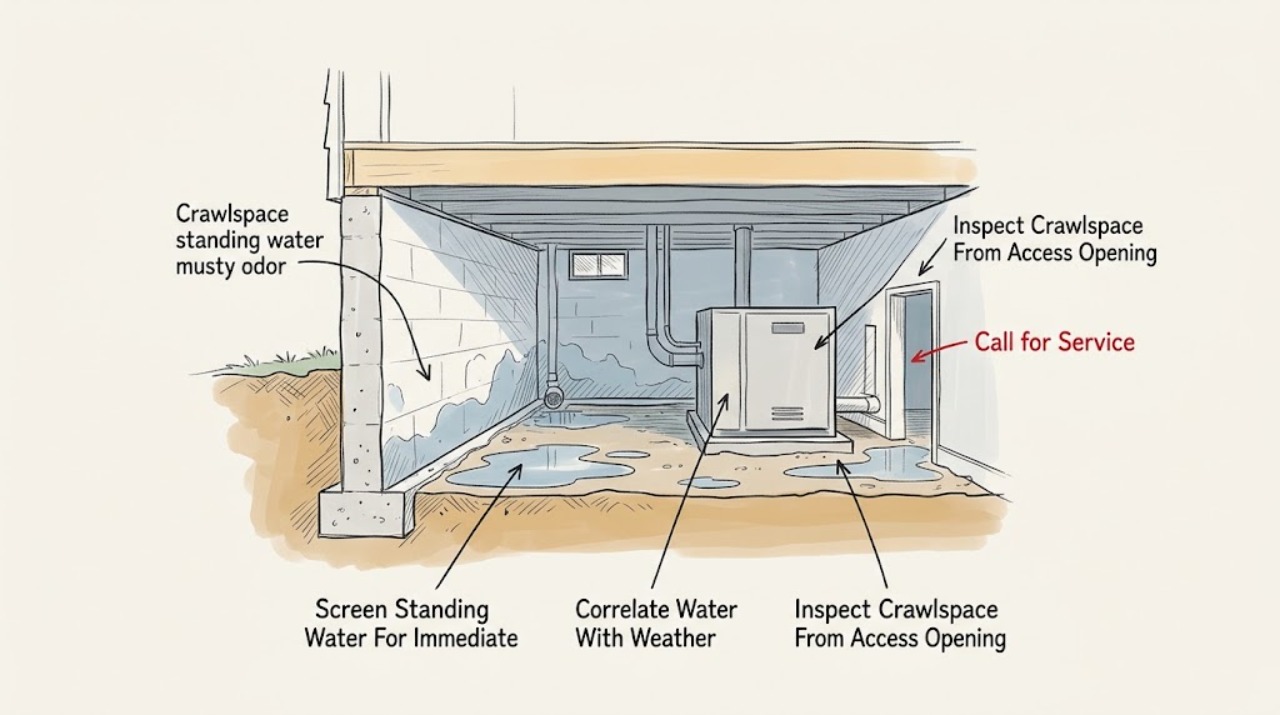
Crawlspace standing water musty odor: What to Check and What to Do Next
Standing water and a musty crawlspace odor usually indicate an unresolved moisture source, but the water may come from rain runoff, a plumbing leak, groundwater, condensation, or a drainage failure. Do not enter water or operate electrical equipment in it.
-
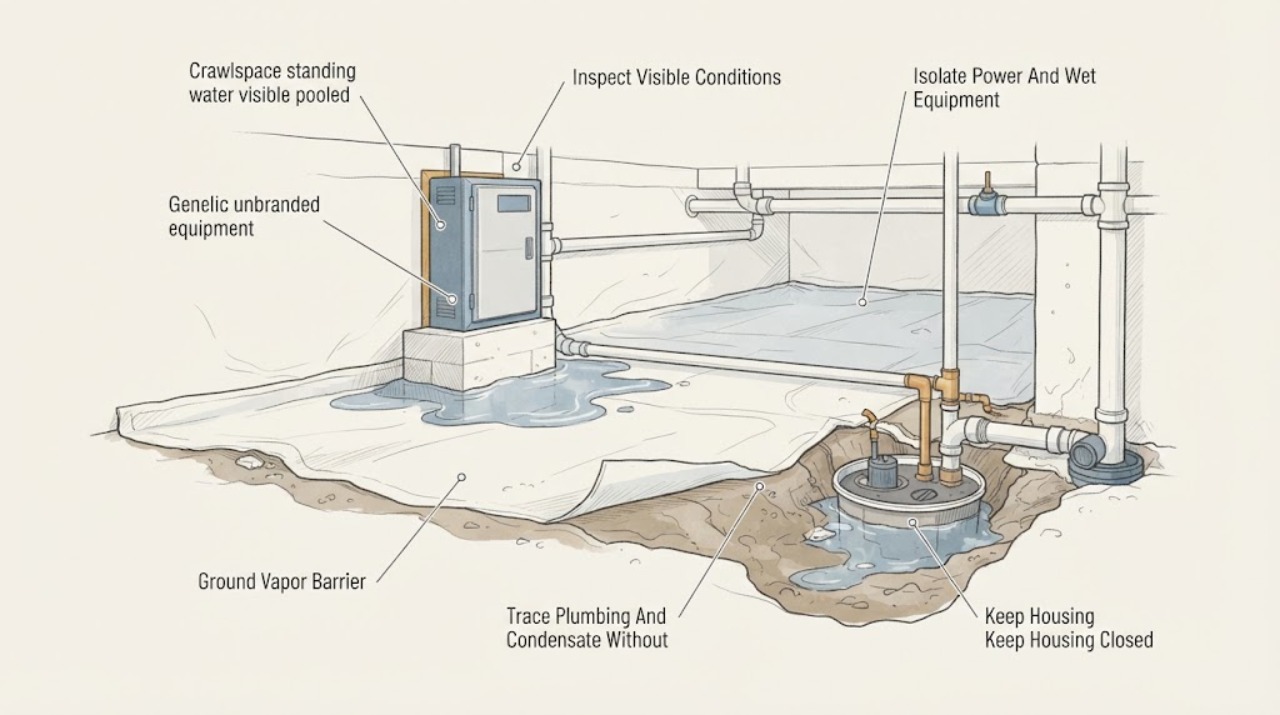
Crawlspace standing water visible pooled: What to Check and What to Do Next
Visible pooled water in a crawlspace is an active moisture problem, not normal dampness. Keep people and pets out, use only battery lighting, and do not enter water or touch a wet electrical device, pump or wiring.
-
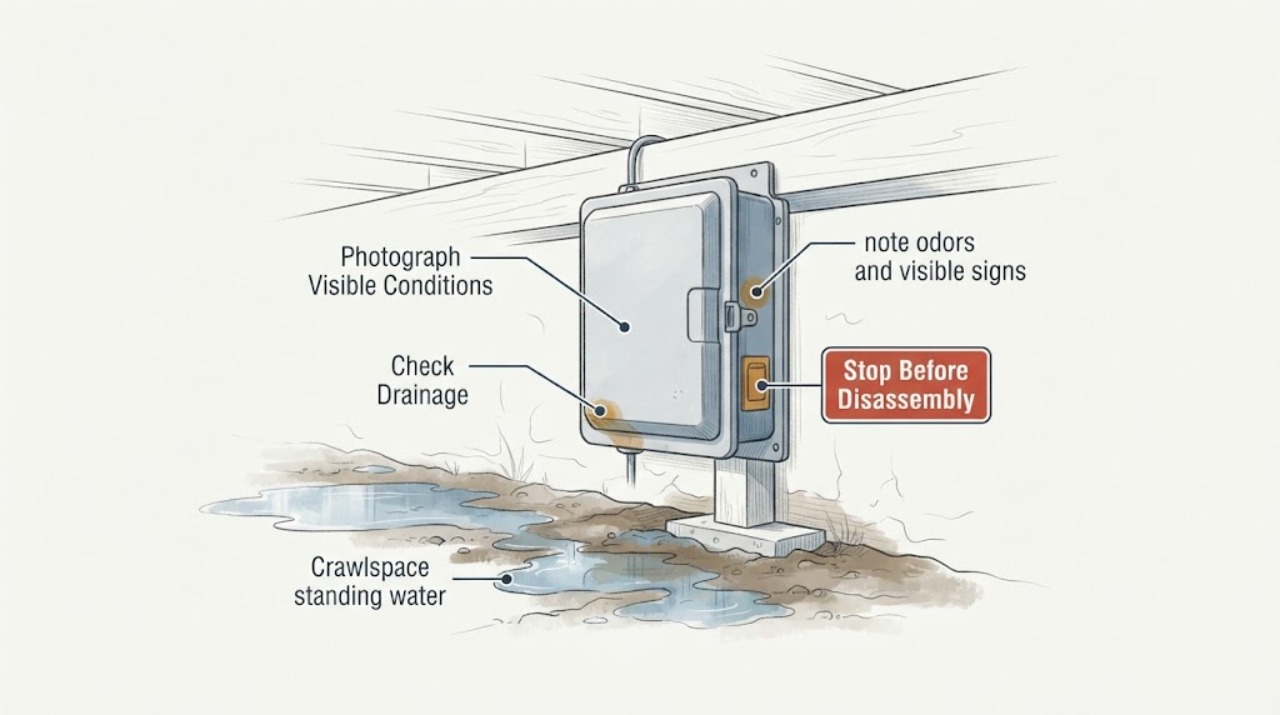
Crawlspace standing water: What to Check and What to Do Next
Do not enter a crawlspace or stand in its water to find the cause. From a dry, safe location, record how far the water appears to extend, whether it follows rain or a plumbing event, and whether there are sewage or musty odors, visible electrical equipment, sagging or settlement, or damage in adjacent rooms.