
On this page
Start here
Quick answer
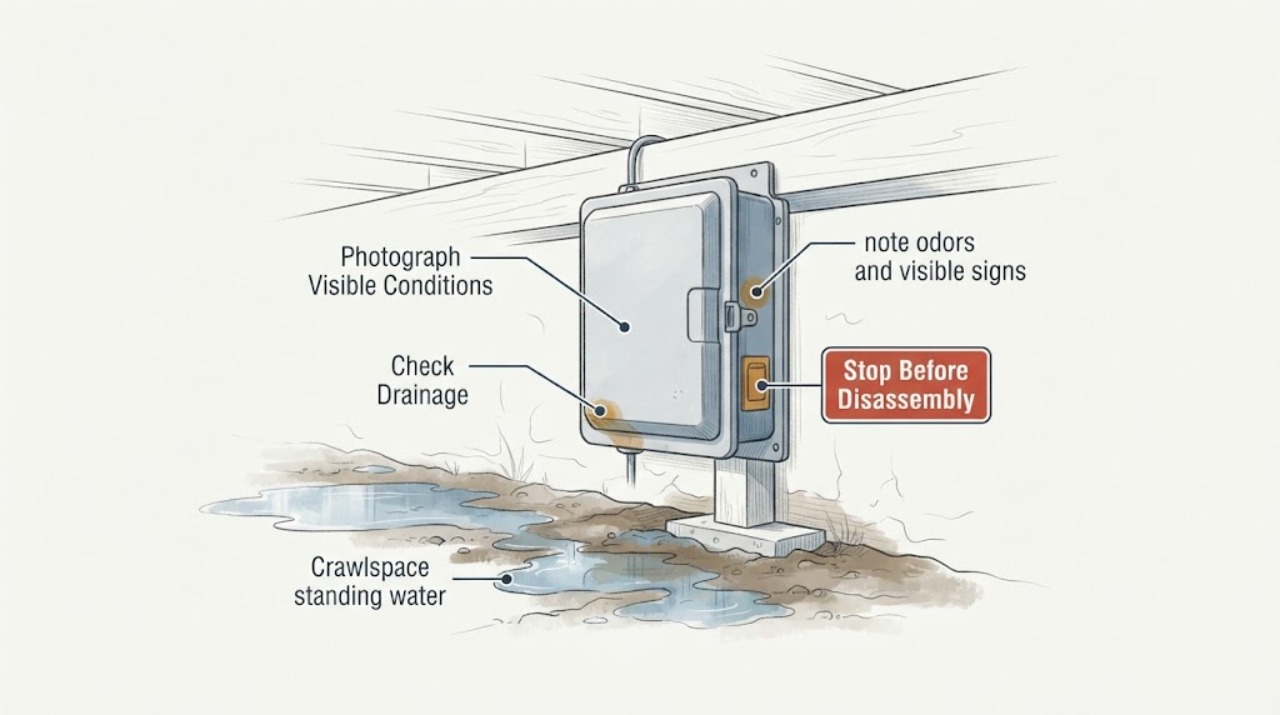
Do not enter a crawlspace or stand in its water to find the cause. From a dry, safe location, record how far the water appears to extend, whether it follows rain or a plumbing event, and whether there are sewage or musty odors, visible electrical equipment, sagging or settlement, or damage in adjacent rooms. Standing water can involve contamination, structural instability, or electrical shock risk. Keep people and pets away, avoid touching water or equipment, and arrange urgent water-damage and appropriate trade assessment; use any drying equipment only after professionals confirm that the area and electrical system are safe.
Before you begin
Safety first
- Do not enter the crawlspace, stand in water, touch wet electrical equipment, use powered tools or pumps there, remove materials, clean sewage or mold, or attempt to seal or repair the source.
Work through in order
Diagnostic checks
Use only checks that match the exact appliance or system and its official guide.
-
Check 1
From outside the access opening or another dry, stable location, look without entering and photograph the visible waterline, reflections, wet surfaces, and any area that appears to be covered. Do not open a low access hatch into water, step across the threshold, or stand in the crawlspace.
Expected result: Note whether water is limited to a small visible area, extends beyond the opening, appears to be rising, or has left a clear waterline or wet-material pattern.
Next step: Keep the access closed or guarded from children and pets, preserve the dated photos, and request an urgent water-damage professional assessment.
Stop if: Stop immediately if the opening is unstable, water blocks the only access, the floor or framing appears unsafe, or you would need to enter or touch water to see more.
Why this matters
Why: A broad or rising area suggests an urgent extraction and source assessment; a limited view still does not rule out hidden water, unsafe air, or saturated materials.
-
Check 2
From dry indoor or exterior positions, compare the time water was first noticed with recent rain, snowmelt, grading or runoff, appliance use, and any known plumbing event. Observe only visible exterior drainage and exposed pipe areas; do not remove covers or disassemble plumbing.
Expected result: Water that appears after rain or runoff differs from water that persists during dry weather or follows a plumbing event, but the visible timing cannot prove the source.
Next step: Write down the weather and household timeline and provide it with photos to the water-damage professional; arrange a licensed plumbing or drainage assessment when that pathway is plausible.
Stop if: Stop and keep clear if water is actively increasing, flowing toward the home, reaching a utility area, or requires contact with wet fixtures, valves, or wiring to investigate.
Why this matters
Why: The timeline helps the professional prioritize roof or surface drainage, groundwater, plumbing, or a continuing leak investigation without exposing you to confined-space hazards.
-
Check 3
From the access opening or nearby living space, note odors and visible signs without entering or disturbing materials: musty odor, sewage-like odor, fuel or chemical odor, insects or animals, discoloration, or visibly wet insulation or wood.
Expected result: A musty odor or damp material suggests prolonged moisture; sewage-like, fuel, chemical, or animal-related signs add contamination or exposure concerns.
Next step: Keep the area isolated and tell the responding professional exactly what was observed; do not clean, spray, remove insulation, handle waste, or disturb suspected mold.
Stop if: Stop, leave the vicinity, and seek urgent help for sewage or fuel odor, breathing or other illness symptoms, dead or live animals, heavy mold-like growth, or unknown chemical contamination.
Why this matters
Why: Odor and material clues change the required safety controls and may require water-damage, environmental, plumbing, or wildlife professionals rather than ordinary drying.
-
Check 4
From a dry location, visually identify whether water is near exposed outlets, wiring, service equipment, a sump or pump, HVAC equipment, lighting, or other electrical components. Do not touch water, enter the crawlspace, operate equipment, or approach a wet electrical component.
Expected result: Water near electrical equipment, a wet device, damaged insulation, arcing, smoke, or an unexplained loss of power is an electrical hazard rather than a routine drying task.
Next step: Keep everyone out of the affected area and contact an electrician or emergency service as appropriate from a dry, safe location. Do not attempt to restore power or use a pump or extension cord there.
Stop if: Stop observation immediately for sparks, smoke, heat, buzzing, exposed conductors, a gas odor, or any need to step in water or touch a wet electrical component.
Why this matters
Why: Electrical safety must be established before anyone enters or uses powered equipment; a water-damage contractor and qualified electrician may need to coordinate the response.
-
Check 5
From accessible rooms and the exterior perimeter, look for new floor or wall dampness, staining, cracks, sagging, settlement, sticking doors, or visible movement near the crawlspace without pressing, probing, opening finishes, or deliberately loading the floor.
Expected result: No visible change is different from widespread dampness, new cracking or staining, sagging, a settled area, or a floor that feels unsafe during ordinary access.
Next step: Keep people off any suspect area and request a qualified building or structural assessment alongside water-damage service, especially when the change is new or expanding.
Stop if: Stop and evacuate the affected area if there is sagging or collapse risk, significant settlement, falling material, unsafe flooring, or a threat to an occupied room or utility.
Why this matters
Why: These signs may indicate that water has affected building materials or support; they cannot be used to certify structural safety from a remote observation.
Use your observations
Decision map
Find the observation that best matches what you see, then follow the next safe action.
-
PATH 01Next step
What you see
Water is rising, spreading, near electrical equipment, or blocking safe access, or there is smoke, a gas or fuel odor, sewage, or structural instability.
Do this next
Keep people and pets away, leave the unsafe vicinity, and request urgent emergency, electrical, water-damage, plumbing, or structural help as indicated. Do not enter or operate equipment in the crawlspace.
-
PATH 02Next step
What you see
The water follows a recent storm or runoff event and no electrical, contamination, or structural warning is visible from a safe location.
Do this next
Preserve the weather timeline and photos, keep the area isolated, and arrange prompt water-damage and drainage assessment to identify and control the entry path.
-
PATH 03Next step
What you see
The water persists during dry weather or follows a plumbing event.
Do this next
Request coordinated water-damage and licensed plumbing assessment; do not open concealed plumbing or attempt extraction, drying, or mold work yourself.
-
PATH 04Next step
What you see
Only a limited, dry-looking view is available and no trend can be established.
Do this next
Treat the crawlspace as potentially wet and unsafe, keep the access restricted, and have a professional inspect it rather than entering to improve the view.
Helpful context
Understand the symptom
Water in a crawlspace can come from several different pathways, including rain and surface drainage, groundwater, or a plumbing failure. A view from the access opening or from the living space can document useful clues, but it cannot make the confined space safe to enter or establish a hidden cause.
Treat the water as potentially contaminated until its source is known. Do not wade, crawl, touch wet wiring or outlets, move stored materials, operate a pump in the wet area, or disturb suspected mold. A professional can coordinate water extraction, electrical safety, moisture drying, plumbing or drainage diagnosis, and any needed structural or mold assessment.
If water is rising, near electrical equipment, associated with sewage or fuel, or accompanied by sagging, settlement, unsafe flooring, smoke, gas odor, or illness symptoms, leave the area and keep others away. Share dated photos taken from safe ground and the timing of the event with the responding professionals.
Only after diagnosis
Potential parts
- moisture-meter
Consider only as supplemental information after a professional confirms a safe, accessible measurement location and the water source has been addressed.
Readings vary by material and instrument and do not certify a crawlspace as safe or diagnose hidden water, contamination, or structural conditions. - water-leak-alarm
A professional may consider monitoring after the area is dry, safe, and the appropriate sensing location is known.
Do not place, retrieve, or service a device in standing water or near suspect electrical equipment; confirm the device and environment are suitable first. - dehumidifier
Only consider drying equipment after the water source, electrical safety, contamination status, and ventilation plan have been assessed by professionals.
A dehumidifier is not a substitute for extraction or source control and must not be operated in an unsafe wet area or used to conceal ongoing damage.
When checks do not resolve it
Need a professional?
Arrange urgent water-damage service for any standing water in a crawlspace, especially when its extent or source is unclear, it persists, or materials are wet. Add emergency or trade-specific help for electrical, sewage, fuel, animal, rising-water, or structural warning signs.
Safety scope: Do not enter the crawlspace, stand in water, touch wet electrical equipment, use powered tools or pumps there, remove materials, clean sewage or mold, or attempt to seal or repair the source.
Common questions
FAQ
Is standing water in a crawlspace safe to inspect myself?
No. Treat it as a confined-space, contamination, structural, and possible electrical hazard. Observe only from a dry, safe location and arrange professional assessment.
How can I tell whether rain or plumbing caused the water?
Record when it appeared relative to rain, runoff, snowmelt, appliance use, and known plumbing events, and photograph visible patterns from outside. Timing provides a useful lead but cannot prove a hidden source without professional inspection.
Can I run a pump, fan, or dehumidifier in the crawlspace?
Do not operate powered equipment in or near standing water. Electrical safety, contamination, access, and the equipment plan should be confirmed by qualified professionals first.
What should make crawlspace water an emergency?
Rising or spreading water, sewage or fuel odor, smoke or sparks, water near electrical equipment, unsafe flooring or sagging, major settlement, animal contamination, breathing symptoms, or a threat to occupied rooms warrants leaving the area and seeking urgent help.
Read the exact guide
Official sources
- What are the main ways to control moisture in your home?U.S. Environmental Protection Agency · Supports explaining that leaks, seepage, ground moisture, drainage, and crawlspace moisture control need source-focused assessment.
- Mold Course Chapter 2U.S. Environmental Protection Agency · Supports separating visible standing water and damp-material observations from unsupported mold diagnosis and emphasizing moisture control.
- Safety Guidelines: Reentering Your Flooded HomeCenters for Disease Control and Prevention · Supports treating floodwater as potentially contaminated, avoiding electrical contact with water, obtaining electrical review, and coordinating safe drying and crawlspace drainage.
Community feedback
Share a repair observation
Share a plain-text repair observation. Accepted observations are published automatically; this page may take a moment to update.