
Repair problem
Mold Odor From HVAC Troubleshooting Guides
Published FixGraph guidance for diagnosing and responding to mold odor from hvac.
Matching published guides
Choose a guide that matches the service, equipment, and conditions you are seeing.
-
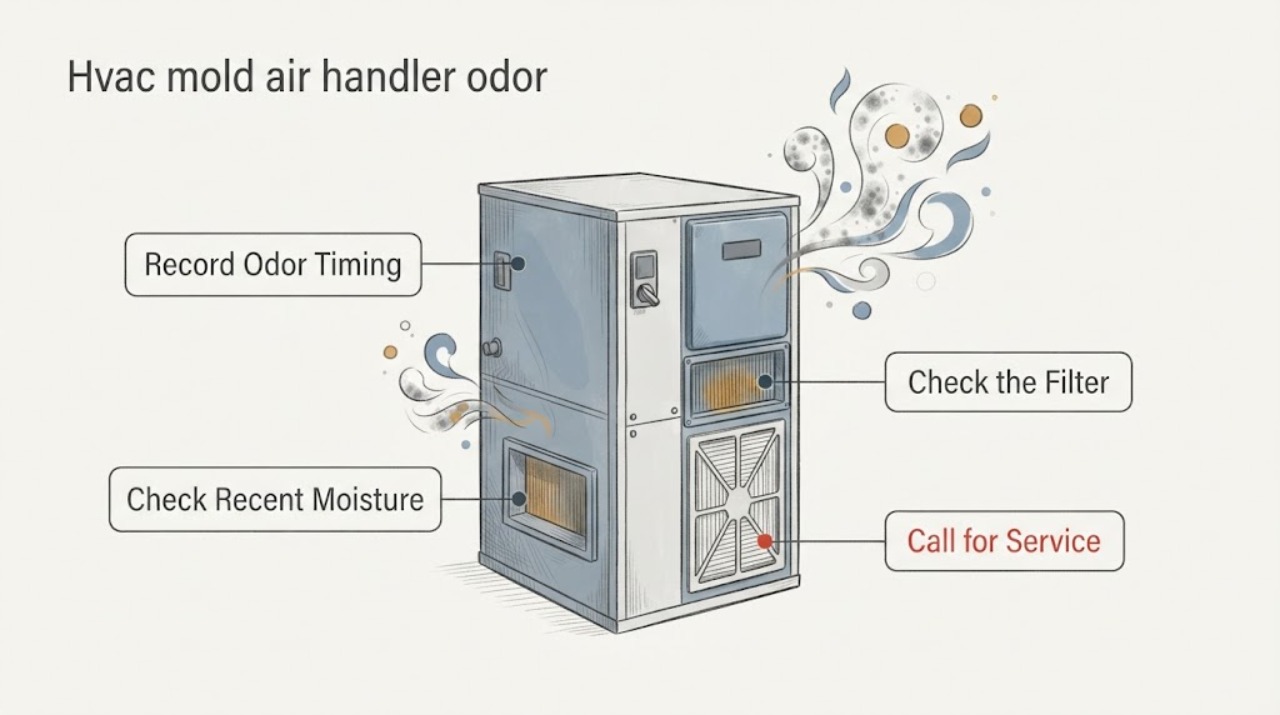
Hvac mold air handler odor from: What to Check and What to Do Next
A musty odor that appears when the air handler runs is a clue, not proof of mold. Note whether the smell comes from one vent or the return, whether it is present when the system is off, and whether there has been condensation, a leak, or visible growth near the unit. If mold is suspected inside the air handler, duct, insulation, or drain-pan area, stop using the system and arrange qualified HVAC/mold assessment; do not open the cabinet or spray into the system.
-
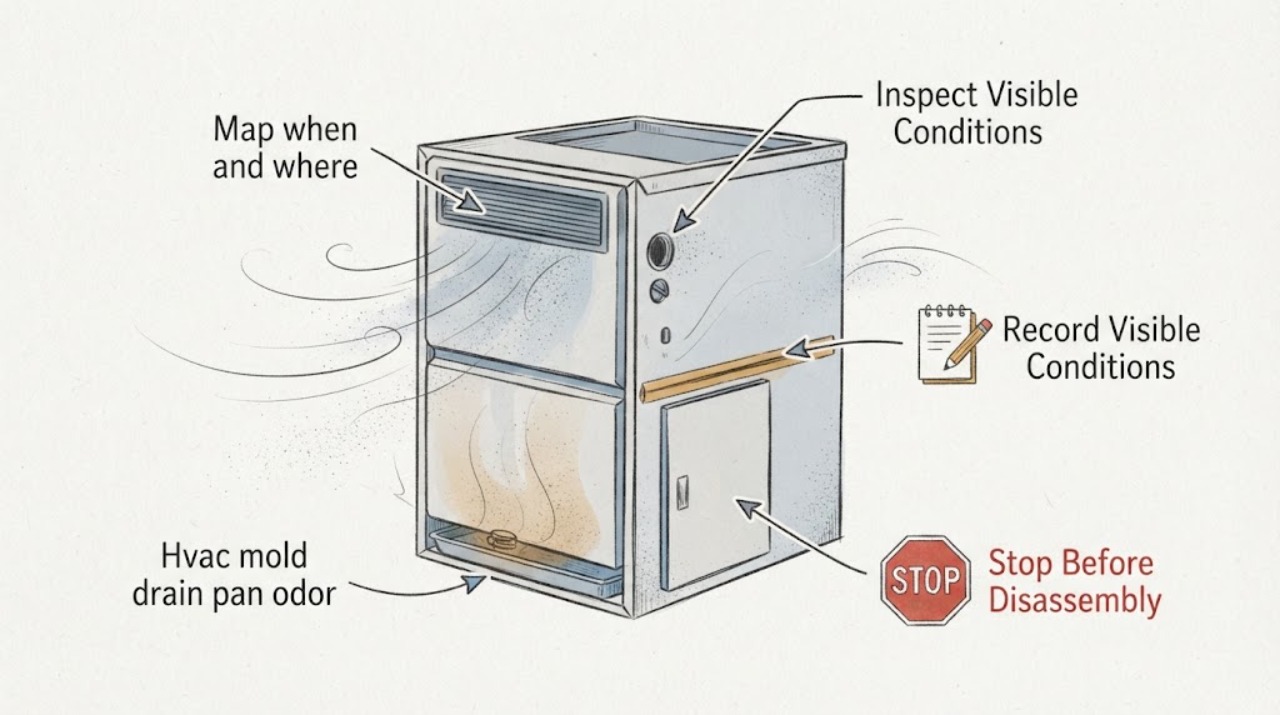
Hvac mold drain pan odor from: What to Check and What to Do Next
A musty odor that starts when the HVAC fan runs can come from moisture or microbial growth near a condensate drain pan, coil, filter, or duct. Treat this as an inspection problem, not a DIY duct-cleaning job: record when and where the odor appears, inspect only areas already visible without opening the equipment, and arrange qualified HVAC/mold assessment when there is standing water, visible growth, wet insulation, or an odor that persists.
-
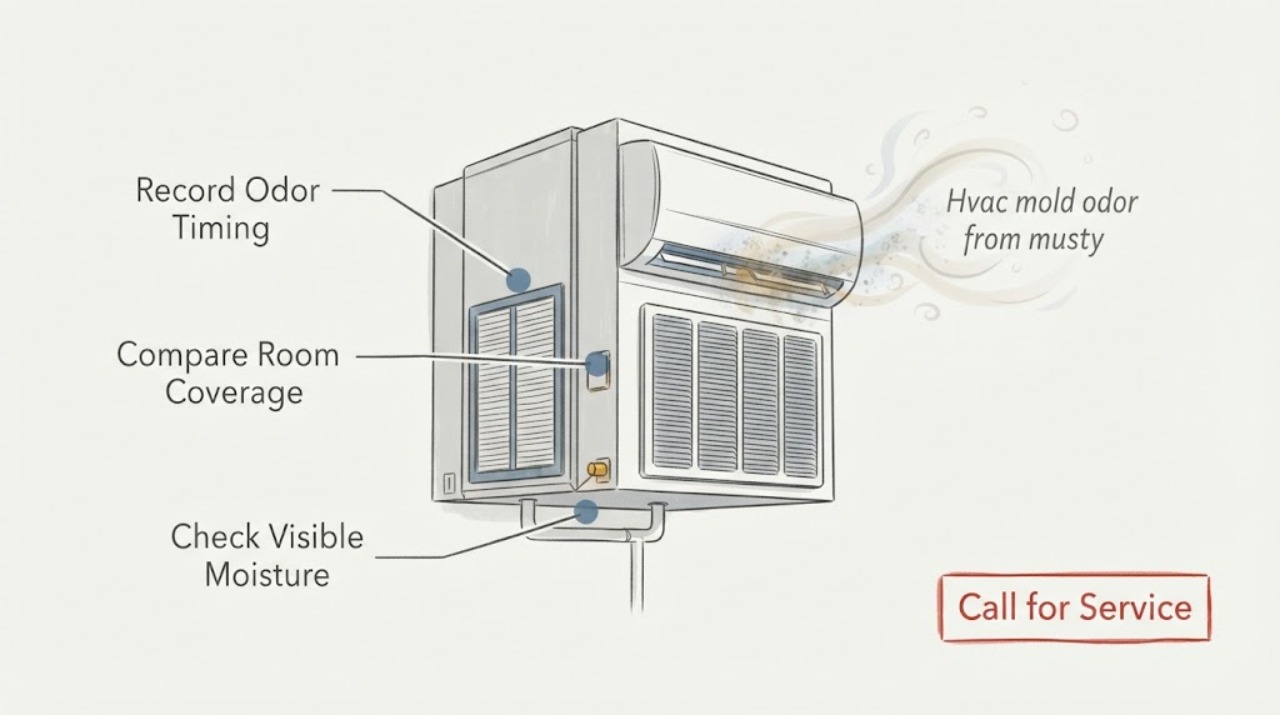
Hvac mold odor from musty air: What to Check and What to Do Next
A musty smell does not by itself prove mold or prove that the HVAC system is the source. First note whether the odor appears only when heating or cooling runs, whether it comes from one room or several vents, and whether you can see condensation, water, staining, or a wet filter or return area.
-
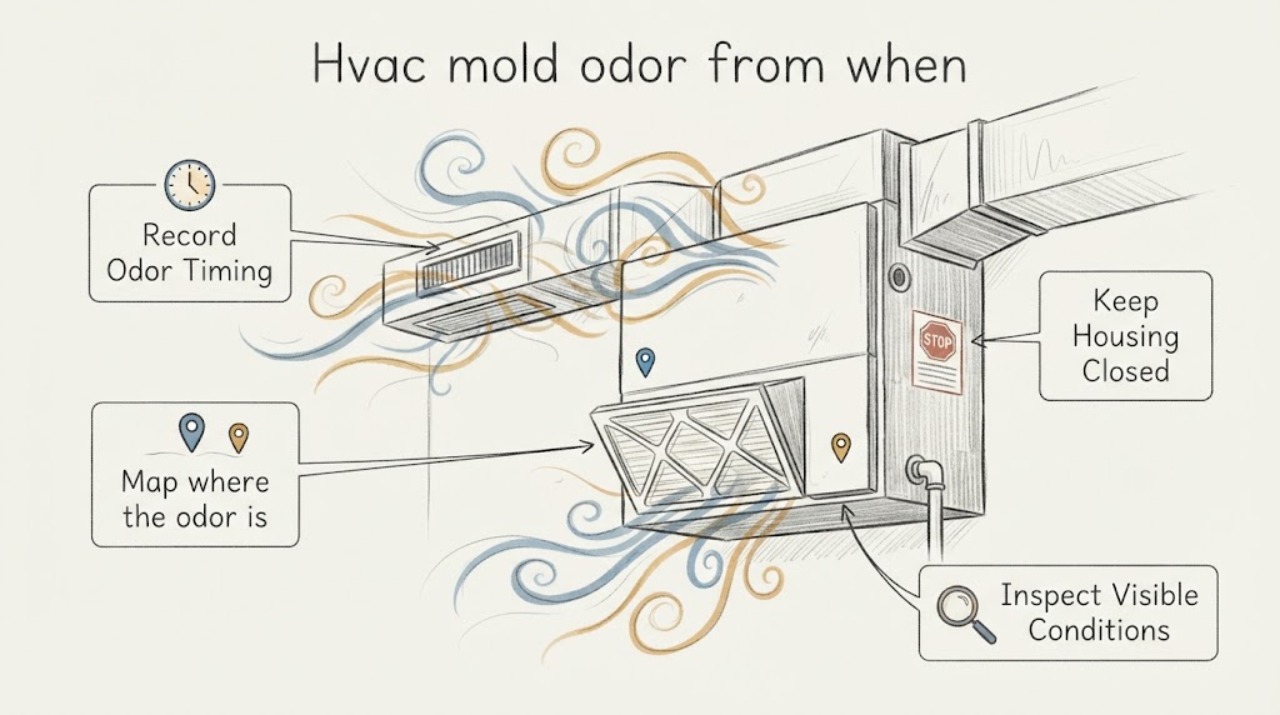
Hvac mold odor from when running: What to Check and What to Do Next
An odor that appears when HVAC starts or runs is a timing clue, not proof that the HVAC system contains mold. First record whether the smell occurs only during a call for heating or cooling, whether it starts at one supply vent or reaches several rooms, and whether it fades after the system stops.
-
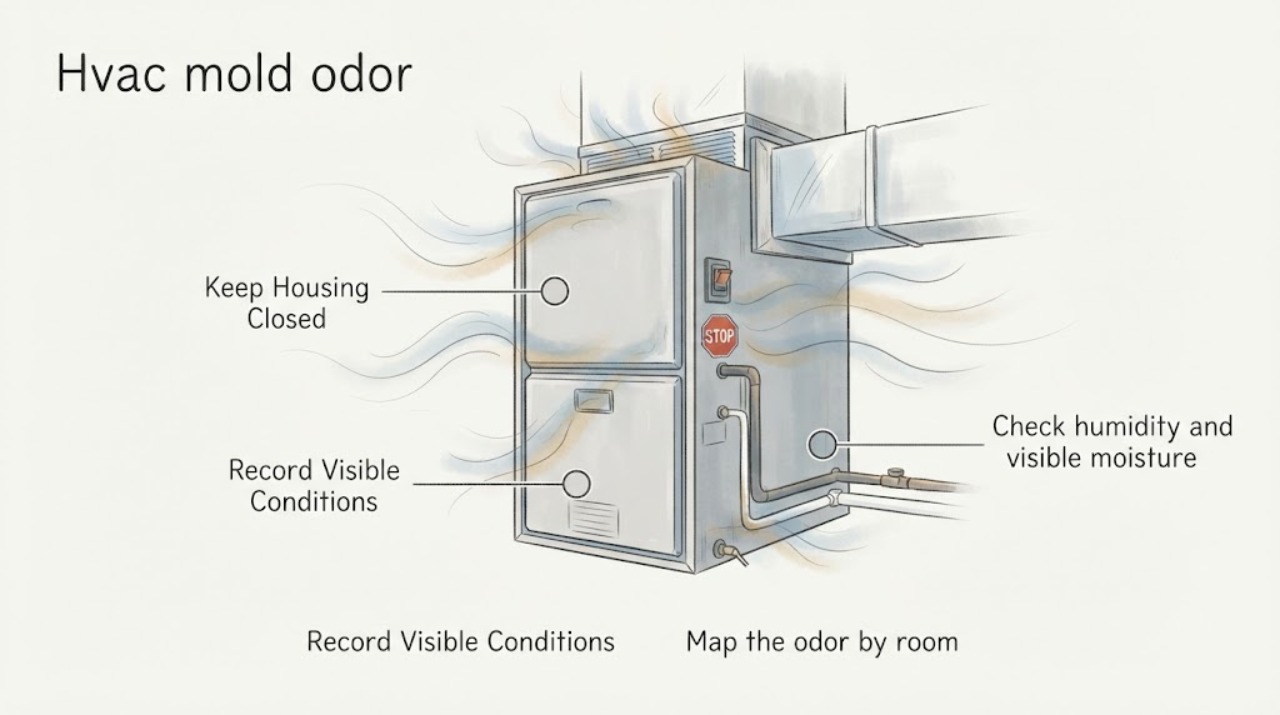
Hvac mold odor from: What to Check and What to Do Next
A musty odor that appears when heating or cooling starts suggests a moisture or contamination problem somewhere in the HVAC airflow path, but smell alone cannot identify the location or prove what the material is. Note when the odor starts, which rooms and vents are affected, indoor humidity, the visible filter condition, and any accessible moisture or condensation.
-
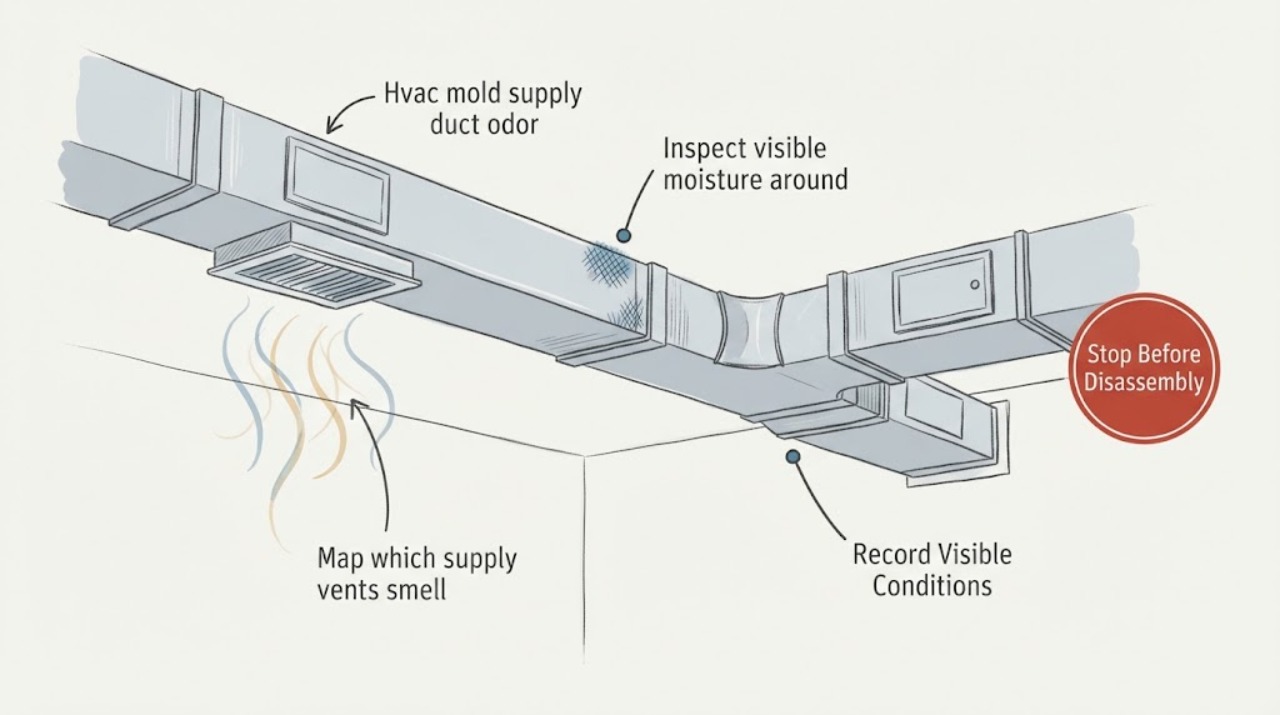
Hvac mold supply duct odor from: What to Check and What to Do Next
A musty smell from one or more supply vents can reflect moisture or contamination in a supply duct, the air-handler components feeding it, or nearby building materials. Map which vents smell and when the fan runs, inspect only visible grilles and surrounding surfaces, and arrange qualified HVAC/mold assessment when the odor repeats, moisture is present, growth is visible, or the system may be distributing material.