
Repair problem
Rodent Entry Hole Troubleshooting Guides
Published FixGraph guidance for diagnosing and responding to rodent entry hole.
Matching published guides
Choose a guide that matches the service, equipment, and conditions you are seeing.
-
Rodents entry hole chewed material: What to Check and What to Do Next
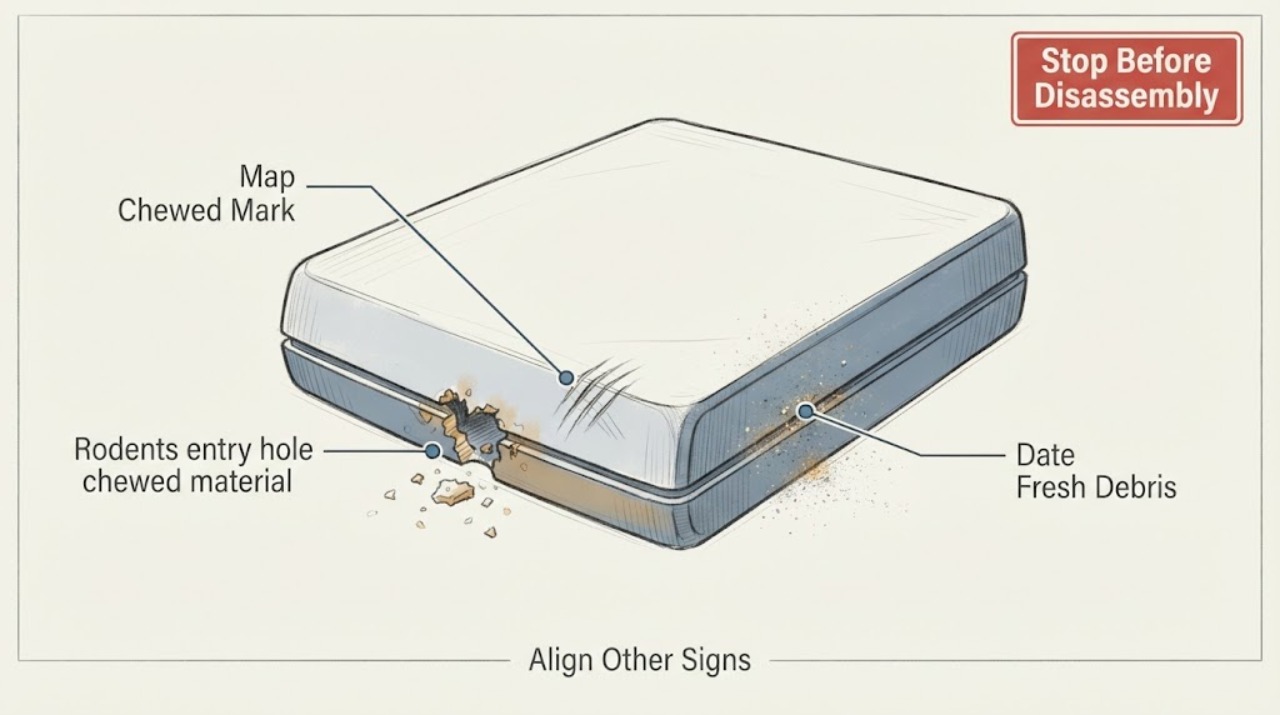
Chewed material is a clue, not proof of a rodent species or a currently used entry hole. From a safe, already accessible position, photograph the mark and record the material, location, fresh fragments, new droppings or nesting signs, food contamination, monitoring results, and any pipe, cable, vent, or shared-wall route.
-
Rodents entry hole repeated activity: What to Check and What to Do Next
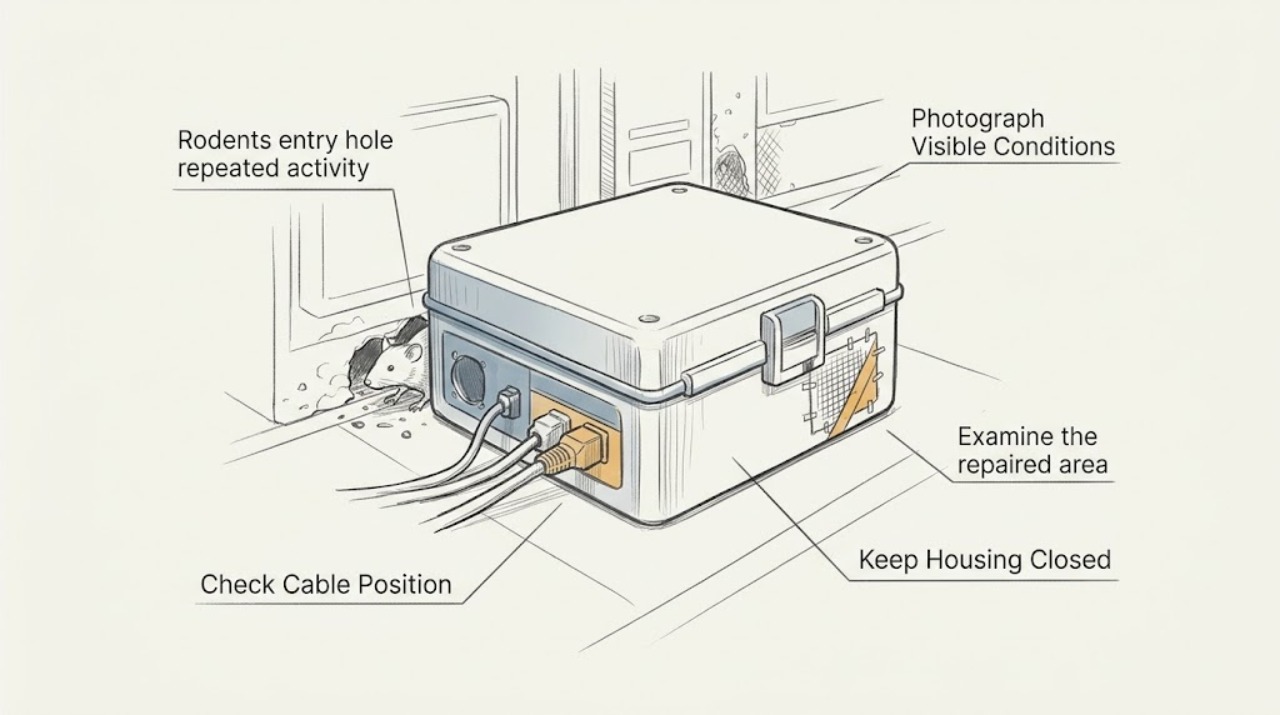
If rodents remain active after an entry hole was sealed, do not assume the first repair failed or immediately add more poison or sealant. First establish whether the new signs are fresh, then inspect every accessible route around the building—not only the repaired spot—for gaps around doors, vents, foundations, roofs, and utility lines.
-
Rodents entry hole: What to Check and What to Do Next
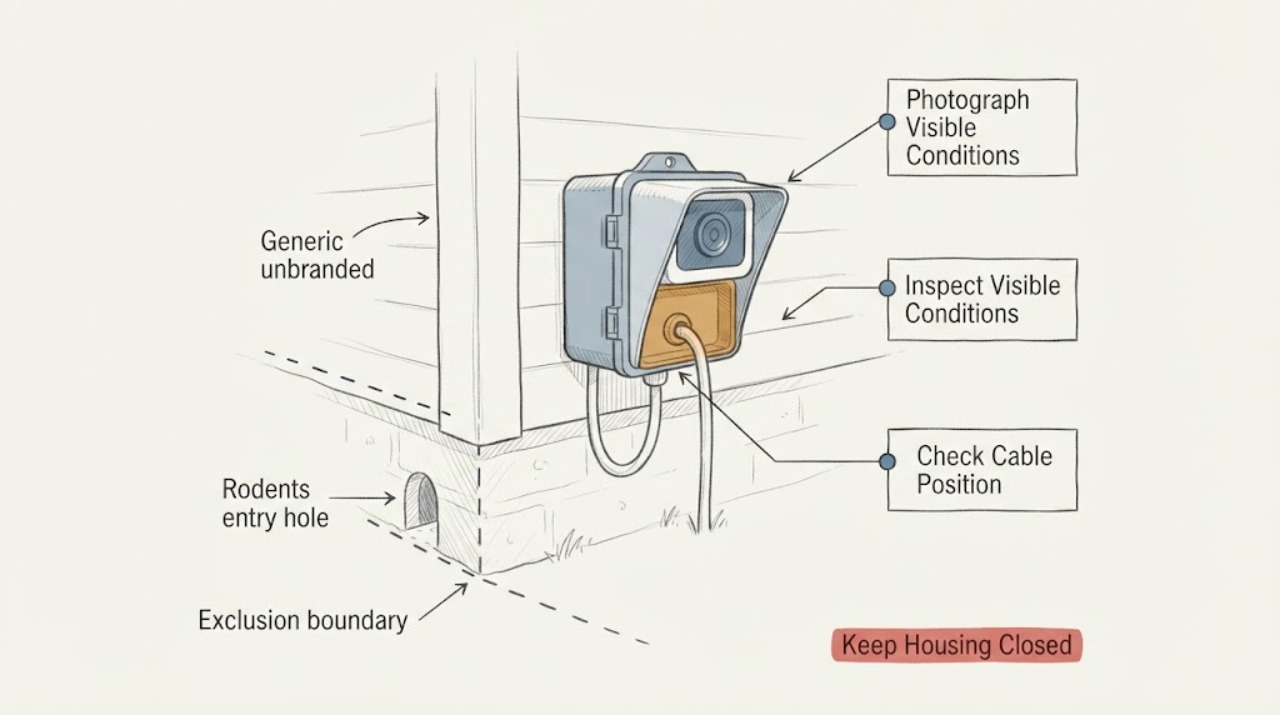
A hole near a foundation, door, vent, pipe, or utility line can be a rodent entry point, but closing it immediately can trap an animal inside or hide a larger building problem. From safe ground and clean interior surfaces, document the location, approximate opening, activity signs without touching them, nearby food or water, and any wiring or pipe damage.
-
Rodents foundation gap entry hole: What to Check and What to Do Next
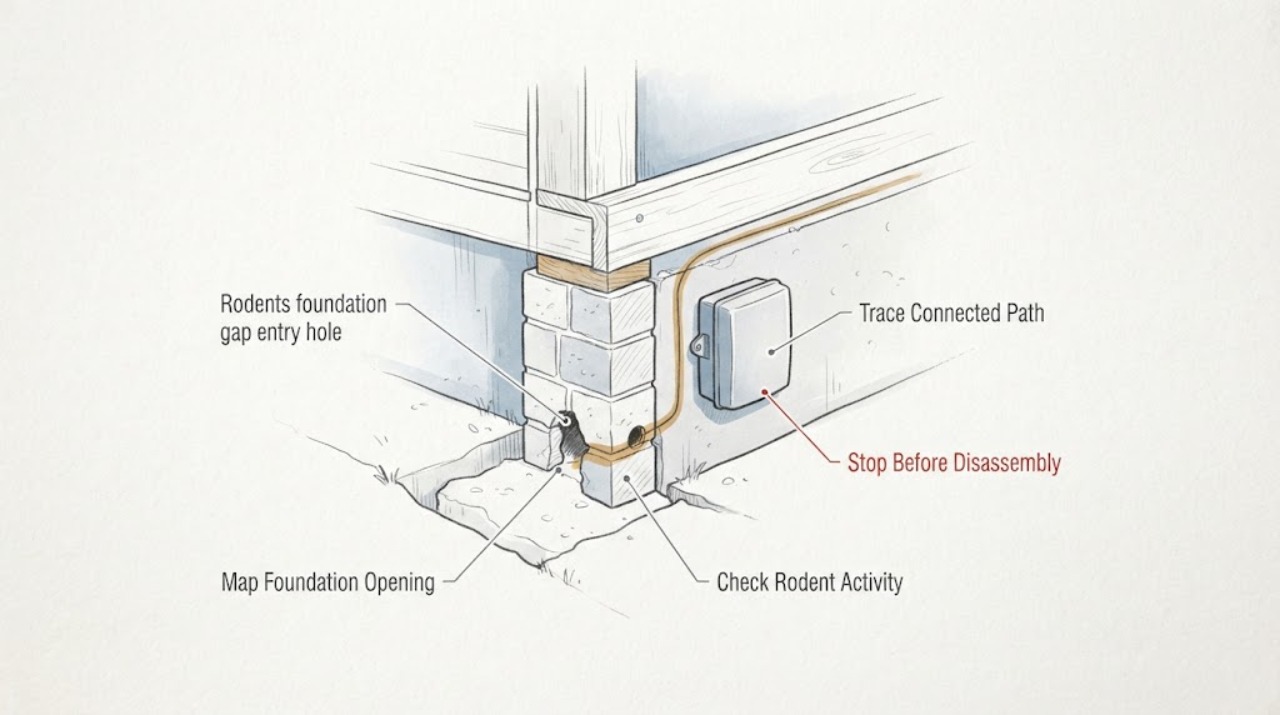
Inspect the foundation-to-ground seam and nearby utility or vent penetrations from a dry, stable position. Treat an opening about the width of a pencil (1/4 inch or 6 mm) as a possible mouse route, then look for fresh droppings, gnaw marks, nesting material, scratching, moisture, erosion, or a widening crack.
-
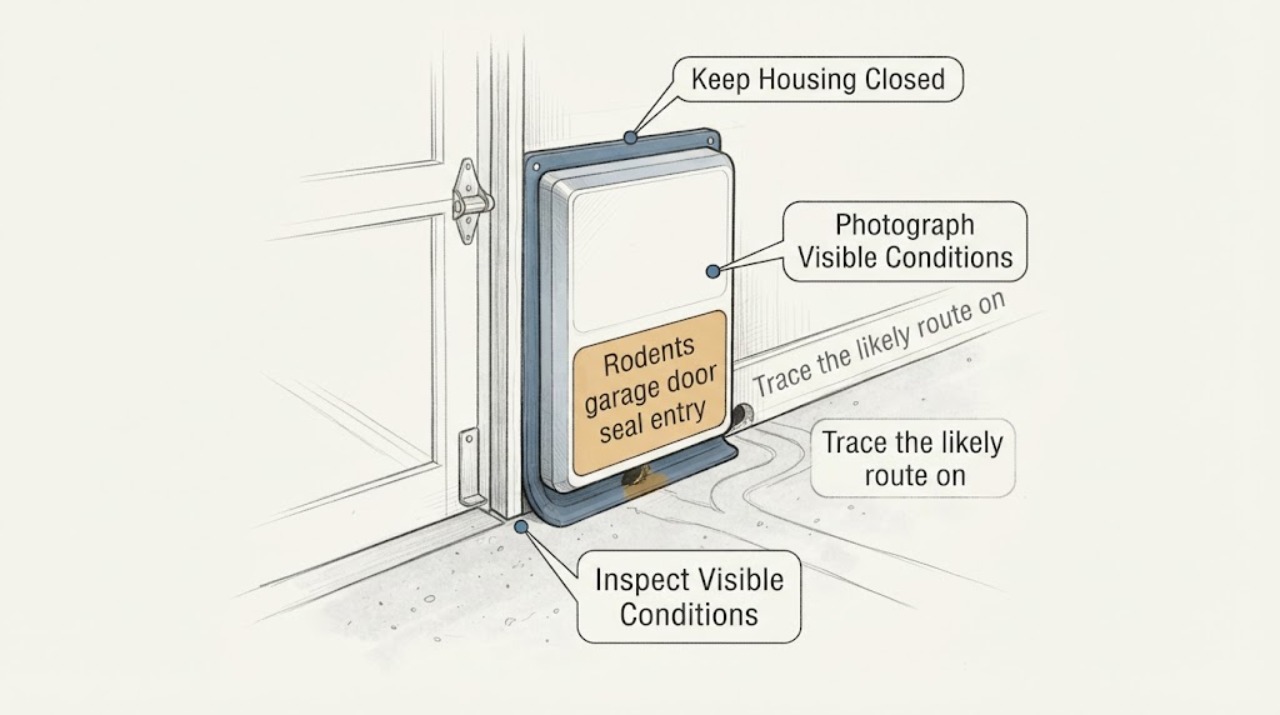
Rodents garage door seal entry hole: What to Check and What to Do Next
A gap at the garage-door seal can be a rodent entry route, but the visible gap may be only one part of a larger pathway. From a safe position, document the gap, droppings, gnaw marks, nesting material, tracks, and whether activity is current.
-
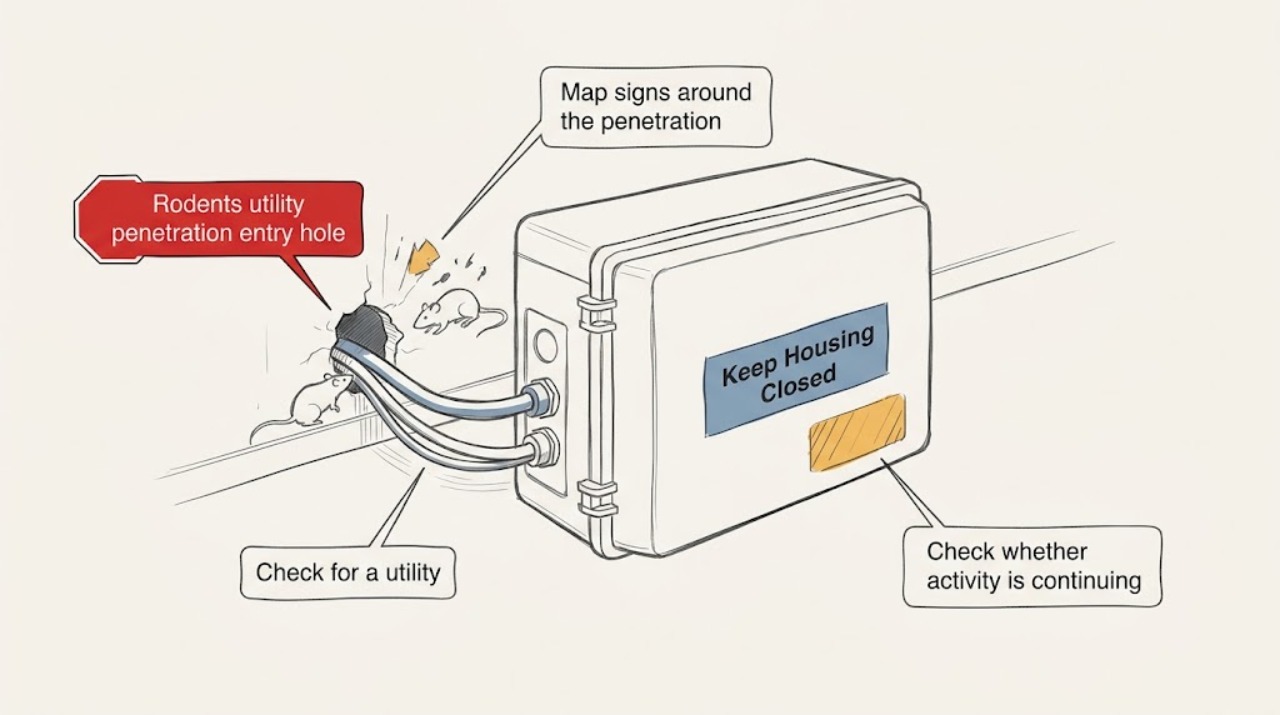
Rodents utility penetration entry hole: What to Check and What to Do Next
A hole where a pipe, cable, conduit, or service line enters the building can be a rodent route, but do not plug it blindly. From a safe, accessible position, document the opening, check for droppings, gnawing, grease marks, nesting, moisture, and live utilities, and note whether signs continue on both sides.