
On this page
Start here
Quick answer
A hole near a foundation, door, vent, pipe, or utility line can be a rodent entry point, but closing it immediately can trap an animal inside or hide a larger building problem. From safe ground and clean interior surfaces, document the location, approximate opening, activity signs without touching them, nearby food or water, and any wiring or pipe damage. Do not seal an occupied hole, open walls, handle droppings or animals, place poison or traps, or climb a ladder. Arrange a qualified pest-exclusion professional when activity continues, the hole enters a wall or attic, wiring is damaged, or the route cannot be inspected safely.
Work through in order
Diagnostic checks
Use only checks that match the exact appliance or system and its official guide.
-
Check 1
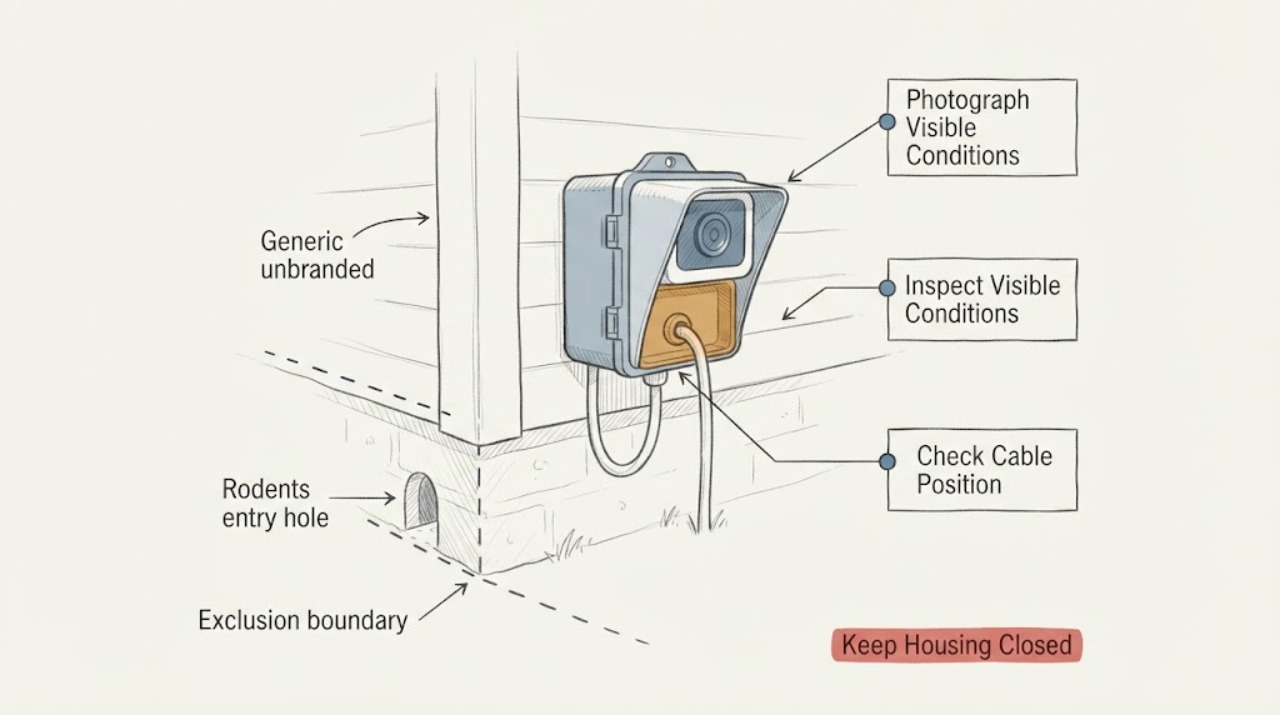
From level ground and without touching the opening, photograph the hole and the surrounding wall, foundation, door, vent, or utility penetration. Use a nearby familiar object only for visual scale and note whether the opening is round, irregular, gnawed-looking, or a gap at a joint.
Expected result: The opening may be a clean construction gap, an irregular damaged area, a chewed edge, a door or vent gap, or a void around a pipe or cable.
Next step: Save a wide photo and a close photo with the date and location. Send them to a pest-exclusion professional or building maintenance contact before any closure is attempted.
Stop if: Stop if the area is unstable, near live utilities, contaminated, occupied by an animal, or reachable only by a ladder, crawl, or wall opening.
Why this matters
Why: Shape and location help the provider decide whether the issue is a door, vent, foundation, or service-penetration defect and whether a larger concealed route may be present. Visual scale is not a species identification or proof that the hole is currently used.
-
Check 2
From a safe position, observe for signs of current activity near the hole and along accessible routes: fresh-looking gnaw marks, tracks or rub marks, nesting material, sounds, odors, or repeated sightings. Do not touch, sweep, vacuum, or move any material.
Expected result: There may be no current sign, one isolated sign, repeated sign at the same route, or activity appearing both outside and inside.
Next step: Record where and when each observation occurred and tell the provider whether the route appears active. Keep people and pets away from the area while waiting for assessment.
Stop if: Do not handle an animal, nest, droppings, urine, or contaminated material and do not disturb an occupied hole.
Why this matters
Why: EPA recommends monitoring and identification before selecting controls; a single sign does not prove the full extent of an infestation. Repeated or connected signs increase the need for professional inspection before exclusion.
-
Check 3
Walk only on safe, accessible surfaces and visually trace the entry route to nearby doors, vents, pipes, cables, drains, crawlspace boundaries, or wall and floor joints. Note whether the gap is inside, outside, or connected to a concealed space.
Expected result: The hole may be isolated at a door or foundation, surround a service penetration, connect to a vent or drain, or disappear into a wall, attic, or crawlspace.
Next step: Provide the route map and any accessible model or building information to the pest professional and relevant maintenance trade. Do not open the wall or remove a cover to follow it.
Stop if: Stop at electrical, gas, water, HVAC, attic, crawlspace, or wall access points that require handling, entry, or disassembly.
Why this matters
Why: A route through a service penetration or concealed space can involve building, electrical, plumbing, gas, or HVAC concerns and may require more than surface sealant. Concealed access also increases the chance that an animal is inside.
-
Check 4
Observe nearby food, water, and shelter conditions without handling contaminated material. Note exposed pet food, garbage, bird feed, leaks, standing water, brush, leaf piles, mulch, woodpiles, or clutter near the building.
Expected result: The area may be dry and clear, or it may offer one or more recurring food, water, or nesting sources near the entry route.
Next step: Document the sources and ask the pest professional or property manager to include them in the prevention plan. Store food and garbage as directed by public-health guidance without entering contaminated areas.
Stop if: Do not clean droppings or nests, move a woodpile, disturb an animal, or handle suspected contamination as part of this check.
Why this matters
Why: Rodent exclusion works better when access and attractants are addressed together. A hole can remain attractive even after a visible repair if food, water, or shelter continues nearby.
-
Check 5
From a safe location, note whether the opening is at a frequently used door, garage, vent, crawlspace, attic, food area, bedroom, or occupied room, and whether anyone has symptoms, allergies, pets, or other vulnerability that makes delay more concerning.
Expected result: The opening may affect a low-use exterior area, or it may be adjacent to living space, food storage, sleeping areas, children, pets, or a sensitive occupant.
Next step: Tell the provider the affected room, occupants, pets, access limitations, and any suspected wiring or HVAC involvement so the visit can be planned safely.
Stop if: Leave the area and seek prompt professional or medical guidance if there is an animal bite, suspected electrical hazard, strong contamination odor, or illness concern.
Why this matters
Why: Location and occupant context change the urgency and the need for coordinated inspection. Rodent evidence can involve property damage and health concerns, especially when contaminated material or chewed wiring is present.
Use your observations
Decision map
Find the observation that best matches what you see, then follow the next safe action.
-
PATH 01Safety boundary
What you see
The gap is visible, unoccupied-looking, and isolated from a concealed space, utilities, and current activity.
Do this next
Send photographs to a qualified exclusion provider or building maintenance contact and ask for a material-appropriate inspection before closure.
Why this path and its safety boundary
Safety stop: Do not seal solely from appearance if occupancy or the full route is unknown.
-
PATH 02Safety boundary
What you see
There are fresh or repeated signs, sounds, sightings, nesting material, or activity on both sides of the opening.
Do this next
Arrange pest-management assessment and exclusion planning. Keep people and pets away and do not disturb the route while waiting.
Why this path and its safety boundary
Safety stop: Do not seal an occupied hole, handle animals or droppings, or start poison or trapping work from this article.
-
PATH 03Safety boundary
What you see
The opening surrounds a pipe, cable, vent, drain, or HVAC penetration, or disappears into a wall, attic, or crawlspace.
Do this next
Coordinate pest exclusion with the relevant building-maintenance trade and request a concealed-route assessment without opening the wall yourself.
Why this path and its safety boundary
Safety stop: Do not remove panels, open walls, enter crawlspaces, or touch utilities to follow the route.
-
PATH 04Safety boundary
What you see
Food, water, brush, clutter, wood, or nesting material is near the opening.
Do this next
Document the attractants and ask the pest professional or property manager to include prevention and sanitation in the plan, using safe handling guidance.
Why this path and its safety boundary
Safety stop: Do not sweep, vacuum, handle droppings or nests, or move contaminated or heavy materials.
-
PATH 05Safety boundary
What you see
Chewed wiring, a gas or electrical concern, an animal bite, strong contamination, or an occupant health concern is present.
Do this next
Keep clear and arrange prompt qualified service; seek emergency or medical help as appropriate. Provide photos and location information without entering the hazard.
Why this path and its safety boundary
Safety stop: Do not touch wiring, handle the animal or waste, seal the route, or continue inspection from an unsafe position.
Helpful context
Understand the symptom
Find the route without disturbing it
Rodents can use small gaps around doors, foundations, vents, and service penetrations. A visible hole may be the outside end of a route that connects to a wall, attic, crawlspace, garage, or utility chase. The safest first step is a photo and location record, not a filler, poison, trap, or wall opening.
Exclusion follows inspection and occupancy assessment
A durable exclusion plan should account for current animals, entry routes, food and water, and the building material around the gap. Seal work may need coordination with pest management or building maintenance, particularly when the opening is connected to an inaccessible space or electrical, plumbing, gas, or HVAC penetration.
Only after diagnosis
Potential parts
- rodent-proof mesh
Only consider mesh after a qualified inspection confirms the hole's size, location, occupancy status, substrate, and a safe exclusion design.
Confirm material, corrosion exposure, attachment method, utility clearance, and local building requirements; do not use mesh to close an occupied route. - door sweep
Only consider a sweep if the inspection identifies a door-bottom gap as the entry route and the door remains safe and properly operable.
Confirm door type, threshold, weather exposure, clearance, and fit before ordering; a sweep does not address wall, vent, utility, or active nesting routes. - exterior sealant
Only consider sealant after a provider confirms that the opening is unoccupied, the substrate is suitable, and sealing will not trap an animal or hide a building defect.
Confirm substrate, movement, weather exposure, and compatibility with adjacent materials; softer sealants may not resist gnawing or structural movement.
When checks do not resolve it
Need a professional?
Call a qualified pest-exclusion professional when activity continues, the opening connects to a wall, attic, crawlspace, or utility route, the hole is occupied or uncertain, wiring is damaged, or safe access is not available.
Common questions
FAQ
Can I seal a rodent hole as soon as I find it?
Not if occupancy or the route is uncertain. Sealing can trap an animal inside a wall, attic, or crawlspace. Document the hole and arrange an exclusion assessment first.
What signs suggest a hole is still being used?
Repeated sightings, fresh-looking gnawing, tracks or rub marks, nesting material, sounds, odors, and signs on both sides of the opening are useful observations. Do not touch or disturb any sign.
What if the hole is around a wire, pipe, vent, or drain?
Treat it as a coordinated building and pest-exclusion issue. Photograph it from a safe position and have the appropriate qualified professionals assess the route; do not open walls or handle utilities.
Should I clean droppings or nesting material while checking the entry hole?
No. Do not sweep, vacuum, or handle rodent waste, nests, or animals as part of this inspection. Keep people and pets away and follow public-health or professional cleanup guidance.
Read the exact guide
Official sources
- How to Seal Up to Prevent RodentsCenters for Disease Control and Prevention · General residential rodent prevention; actual occupancy and building-specific exclusion should be assessed before closure.
- Identify and Prevent Rodent InfestationsU.S. Environmental Protection Agency · General household rodent identification and prevention guidance; it does not replace an on-site exclusion assessment.
- Pest Control: Resources for Housing ManagersU.S. Environmental Protection Agency · Housing-management IPM guidance applied here to observation and professional coordination, not DIY wall or pest-control work.
Community feedback
Share a repair observation
Share a plain-text repair observation. Accepted observations are published automatically; this page may take a moment to update.