
On this page
Start here
Quick answer
A dead tree with a new or worsening lean should be treated as a falling risk, especially when the root plate is lifting, soil is cracking, the crown is pulling to one side, or wind, rain, or saturated ground has changed its position. Observe only from a distant, secure ground position: do not approach the trunk, enter the likely fall area, climb, cut, touch the tree, or pull on branches. First identify whether the lean is changing and what could be struck. If the tree is moving, limbs are falling, the roots are lifting, or a target or power line is exposed, keep everyone away and contact an emergency tree-removal professional or the utility when a line is involved. A stable-looking lean still needs a qualified arborist's assessment before any removal plan.
Before you begin
Safety first
- This article covers distant ground observation and isolation only. A qualified arborist should handle climbing, cutting, rigging, removal, work near utilities, and any assessment that requires entering the fall area.
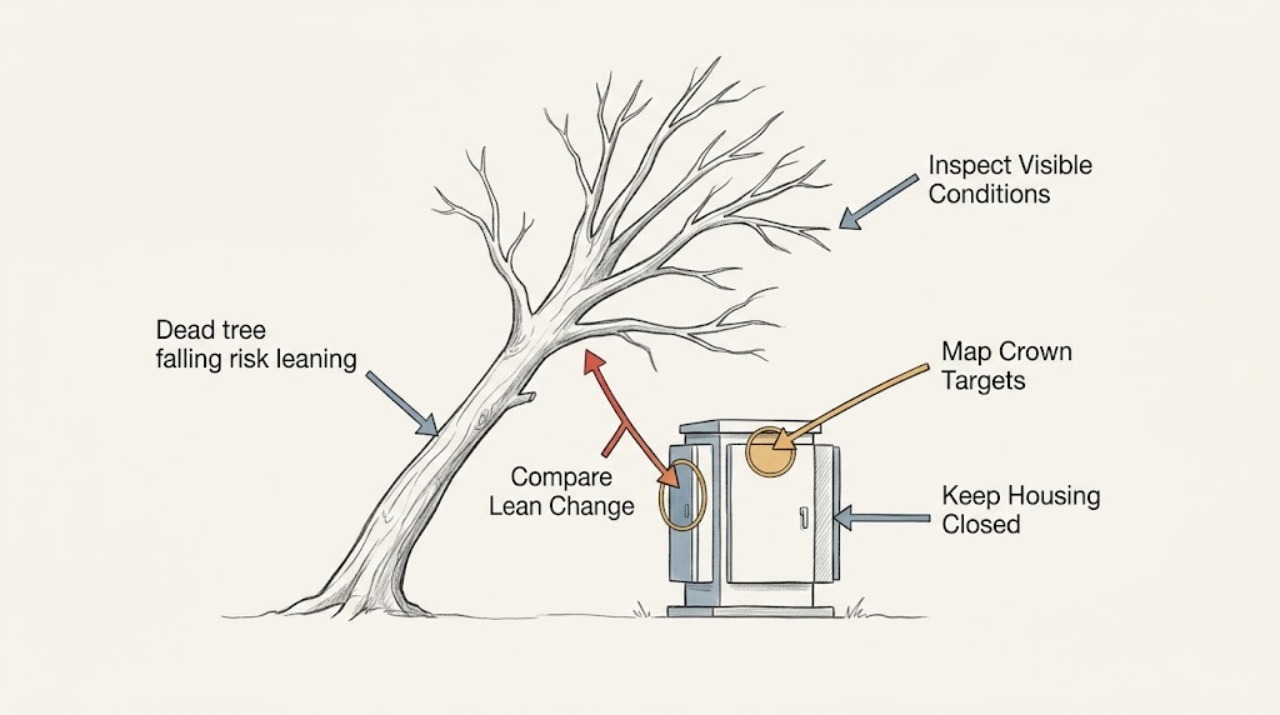
Work through in order
Diagnostic checks
Use only checks that match the exact appliance or system and its official guide.
-
Check 1
From a distant, secure ground position, compare the trunk and crown with an older photo or a fixed building, fence, or utility reference.
Expected result: Record whether the lean is unchanged, newly visible, increasing, or impossible to compare safely; note whether the crown has shifted to one side.
Next step: Keep everyone outside the suspected fall area and contact a qualified tree-removal professional; use the emergency path if movement or falling limbs are present.
Stop if: Do not approach the trunk, enter the canopy, touch the tree, climb, cut, or pull on a limb to improve the view.
Why this matters
Why: A new or worsening lean is a change in stability and raises the urgency beyond a routine dead-tree inspection.
-
Check 2
From the same distant position, visually scan the ground around the base without walking into the likely fall area or probing the soil.
Expected result: Look for a raised root plate or soil mound, fresh cracks, exposed roots, a new gap at the base, or soil slumping on the side opposite the lean.
Next step: Stop checking, keep the area empty, and request urgent arborist assessment rather than bracing or cutting the tree.
Stop if: Do not touch roots, fill cracks, drive stakes, attach a rope, or stand near the trunk to inspect the base.
Why this matters
Why: Root lifting or fresh soil displacement suggests movement at the base and a potentially imminent fall, even if the trunk has not visibly moved during this observation.
-
Check 3
From outside the hazard area, look along the lean direction and map the crown, heavy dead limbs, and anything the tree could strike.
Expected result: Record a crown pulled off-center, hanging or broken branches, buildings, vehicles, roads, walkways, occupied spaces, neighboring property, or overhead utility lines in the potential impact path.
Next step: Move people and pets away by a route that does not pass beneath the canopy and tell the arborist exactly what is exposed.
Stop if: Do not walk under the crown, move a vehicle from beneath it, remove a hanging limb, or approach an energized line.
Why this matters
Why: A target in the likely fall path increases the consequence and changes the response to immediate isolation and professional help; a clear area does not make cutting safe.
-
Check 4
Record whether the lean, root disturbance, or fallen material appeared or worsened after wind, heavy rain, flooding, freeze-thaw conditions, or nearby excavation.
Expected result: Note the latest weather or ground change and whether the tree is currently swaying, shedding limbs, or making contact with another tree, structure, or line; do not observe outdoors during active severe weather.
Next step: Use the urgent tree-arborist path for movement or fresh damage; otherwise provide the timeline to a qualified arborist for a prompt site assessment.
Stop if: Stay indoors or behind a secure barrier during wind, lightning, falling branches, or any worsening movement.
Why this matters
Why: A recent weather or ground trigger combined with movement makes the hazard time-sensitive and unsuitable for routine scheduling.
-
Check 5
Prepare a service handoff using distant photos and notes, without returning to the tree for a closer view.
Expected result: Include the direction and change in lean, root-plate or soil signs, crown and target exposure, weather trigger, nearby lines, and whether any limb or trunk is moving.
Next step: Tell the provider whether the situation is actively moving or only a stable observed lean, and follow their isolation instructions.
Stop if: Do not climb, cut, use a chainsaw, rig a rope, install a brace, or place a barrier by entering the suspected impact area.
Why this matters
Why: A complete remote description lets the arborist choose an urgent response and equipment plan without asking the homeowner to enter the fall zone.
Use your observations
Decision map
Find the observation that best matches what you see, then follow the next safe action.
-
PATH 01Next step
What you see
The tree is moving, limbs are falling, the root plate is lifting, the trunk has shifted suddenly, or a power line is involved.
Do this next
Move everyone away without passing under the canopy, keep the area isolated, and contact an emergency tree-removal professional; contact the utility for a line hazard. Do not approach the tree or downed line.
-
PATH 02Next step
What you see
The lean is new or worsening, or fresh soil cracks, root-plate lifting, exposed roots, or ground slumping are visible.
Do this next
Treat the tree as unstable and arrange urgent qualified arborist assessment. Do not wait for a calmer day to inspect it up close, brace it, or begin cutting.
-
PATH 03Next step
What you see
A dead crown or heavy limb is biased toward a home, vehicle, road, walkway, occupied area, neighboring property, or utility line.
Do this next
Keep the target area empty and tell the arborist what is exposed. Use professional emergency routing if movement, falling limbs, or line contact is present.
-
PATH 04Next step
What you see
The lean appears old and unchanged, with no observed root movement, active limb drop, weather-driven shift, or exposed high-consequence target.
Do this next
Keep people away from the canopy and schedule a qualified arborist assessment before removal. A stable appearance is not permission to climb, cut, or rig the tree yourself.
-
PATH 05Next step
What you see
The base or crown is hidden, weather prevents a view, the boundary of the fall area is unclear, or reaching a better angle would require approaching the tree.
Do this next
Do not improve the view by moving closer. Keep the area clear and request professional assessment, using the urgent path when any movement, fresh damage, or target exposure is suspected.
Helpful context
Understand the symptom
Treat a changed lean as the first decision
From a location well outside the suspected fall area, compare the tree with an older photo, a fixed building line, or another stationary reference. Record whether the trunk now leans farther, the crown has shifted, or the change followed wind, heavy rain, saturated soil, or nearby digging. Do not walk closer to improve the view: a leaning dead tree can shed limbs or move at the roots without warning.
Look for root movement from the ground
From the same distant position, look for a raised soil mound or root plate, fresh soil cracks radiating from the base, exposed roots, a newly opened gap, or soil that has slumped on the opposite side of the lean. These signs indicate the tree may be moving at its base, not merely growing at an angle. They are reasons to stop observation and arrange urgent professional assessment, not invitations to probe the soil or brace the trunk.
Map the crown and the exposed targets
Use the tree's current lean to identify the direction a trunk or heavy limb could reach. Note dead or hanging limbs, a crown pulled off-center, broken branches, buildings, vehicles, roads, walkways, play areas, neighboring property, and overhead lines in that direction. Keep people and pets out of the potential impact area; do not estimate a safe drop zone by standing beneath the canopy.
Let weather change the service urgency
Record whether the lean or root disturbance became visible after a storm, wind gusts, prolonged rain, flooding, freeze-thaw conditions, or nearby ground work. Do not inspect during active wind, lightning, or falling-branch conditions. If the tree is moving, shedding limbs, or has shifted toward a target, use an urgent tree-arborist path rather than waiting for a routine quote.
Separate emergency isolation from routine planning
An actively moving tree, a lifted root plate, a fresh crack, falling limbs, contact with a power line, or an exposed occupied target calls for immediate distance and professional response. A dry, stable-looking tree with no observed change still should not be cut by a homeowner; document it from afar and schedule a qualified arborist to assess removal. Barrier tape can support a safe boundary only when it can be placed without entering the hazard area and is never a substitute for distance or emergency help.
Safety boundary
Stop conditions
- Do not approach, touch, climb, cut, pull on, brace, or rig the leaning dead tree or its limbs.
- Do not enter the likely fall area, stand beneath the canopy, or move a vehicle or object from beneath it.
- Do not inspect outdoors during active wind, lightning, falling branches, or worsening movement.
- Keep people and pets away; treat any power-line contact as an electrical emergency and do not approach the line or tree.
Only after diagnosis
Potential parts
- barrier-tape
Consider only as a visual boundary when it can be placed without entering the suspected fall area and after a professional or emergency responder has set the safe perimeter.
Barrier tape does not stop a falling tree, replace an exclusion distance, or make climbing, cutting, or rope work safe.
When checks do not resolve it
Need a professional?
Call an emergency tree-removal professional immediately for movement, falling limbs, a lifted root plate, a sudden lean, a target in the likely fall path, or contact with a power line; contact the utility for a line hazard and do not approach it. For a stable-looking lean, schedule a qualified arborist before any removal work.
Safety scope: This article covers distant ground observation and isolation only. A qualified arborist should handle climbing, cutting, rigging, removal, work near utilities, and any assessment that requires entering the fall area.
Common questions
FAQ
Does a leaning dead tree always need emergency removal?
Not every old lean is actively failing, but a new or worsening lean, lifted root plate, fresh soil cracks, moving trunk, falling limbs, or an exposed target makes the situation urgent. Stay away and have a qualified arborist set the response; do not use a calm appearance as a reason to cut it yourself.
What do root-plate lifting and soil cracks tell me?
A raised mound, fresh radial cracks, exposed roots, a new gap, or soil slumping can indicate movement at the base of the tree. Observe these signs from a distance only, keep the area empty, and request urgent professional assessment rather than filling, probing, bracing, or digging.
How does weather change the falling risk?
Wind, heavy rain, flooding, saturated ground, freeze-thaw conditions, or nearby excavation can coincide with a new lean or root movement. Do not inspect during active severe weather; if the tree shifts or sheds limbs afterward, use emergency tree-arborist service.
Can I cut a dead tree or climb it if the lean looks stable?
No. Do not climb, use a chainsaw, cut limbs, pull on the trunk, rig a rope, or install a brace. Tree work carries falling-object, fall, and electrical hazards, and a qualified arborist should assess and plan removal.
What should I tell the tree-removal professional?
Provide distant photos, the lean direction and whether it changed, root-plate or soil signs, crown and heavy-limb condition, exposed buildings or lines, recent weather or ground work, and whether anything is moving or falling. Tell them whether the area is currently isolated.
Read the exact guide
Official sources
- Inspection Guidance for Tree Care and Tree Removal Operations | Occupational Safety and Health AdministrationOccupational Safety and Health Administration · Government safety guidance supporting distant hazard recognition and professional boundaries for tree-removal work.
Community feedback
Share a repair observation
Share a plain-text repair observation. Accepted observations are published automatically; this page may take a moment to update.