
Repair service
Tree Removal Guides
Tree removal, trimming, and yard-safety guidance.
Published tree removal guides
Choose the guide that best matches the service and problem you are seeing.
-
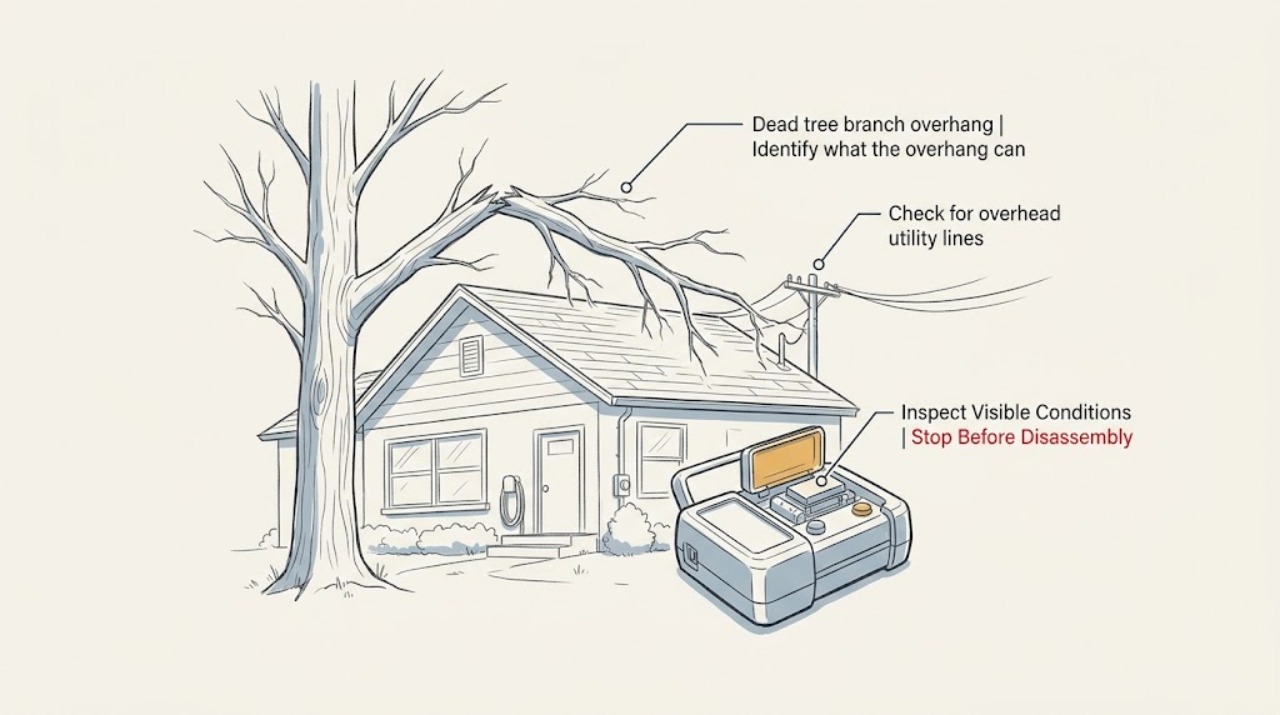
Dead tree branch overhang: What to Check and What to Do Next
Treat a dead branch hanging over a roof or other occupied area as a falling-object hazard, not a routine pruning job. Keep people, pets, vehicles, and movable items out of the drop zone, and do not climb, use a ladder, or cut the branch yourself.
-
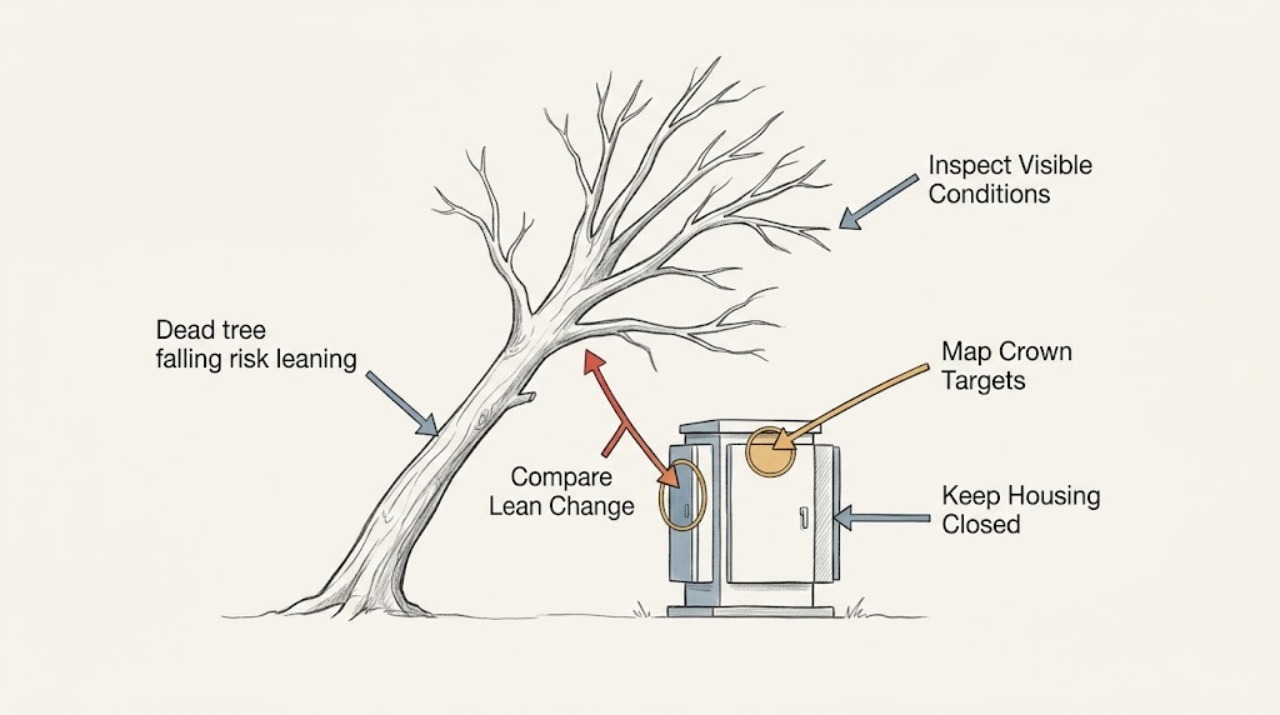
Dead tree falling risk leaning: What to Check and What to Do Next
A dead tree with a new or worsening lean should be treated as a falling risk, especially when the root plate is lifting, soil is cracking, the crown is pulling to one side, or wind, rain, or saturated ground has changed its position. Observe only from a distant, secure ground position: do not approach the trunk, enter the likely fall area, climb, cut, touch the tree, or pull on branches.
-
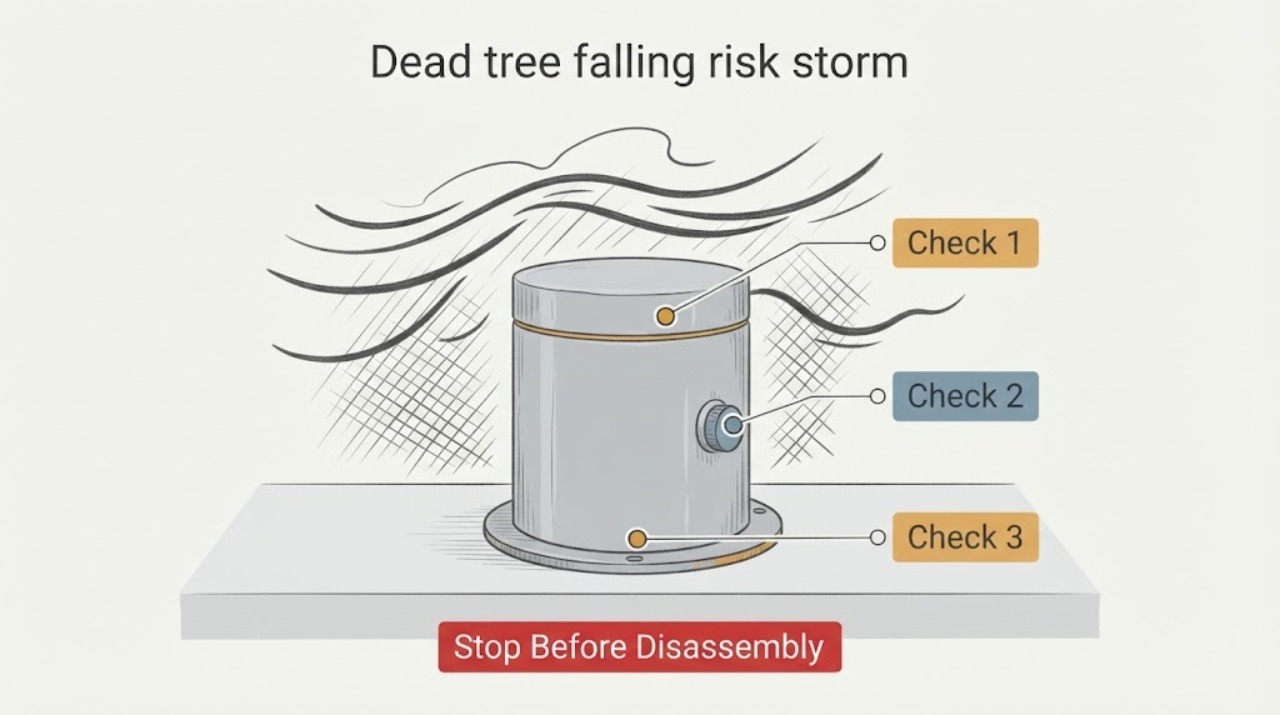
Dead tree falling risk storm wind: What to Check and What to Do Next
Treat a dead tree differently during and after storm wind. From a protected position and only when calm, look for new cracks, broken or hanging limbs, a changed lean, root-soil movement, and targets such as buildings, paths, vehicles, or utility lines.
-
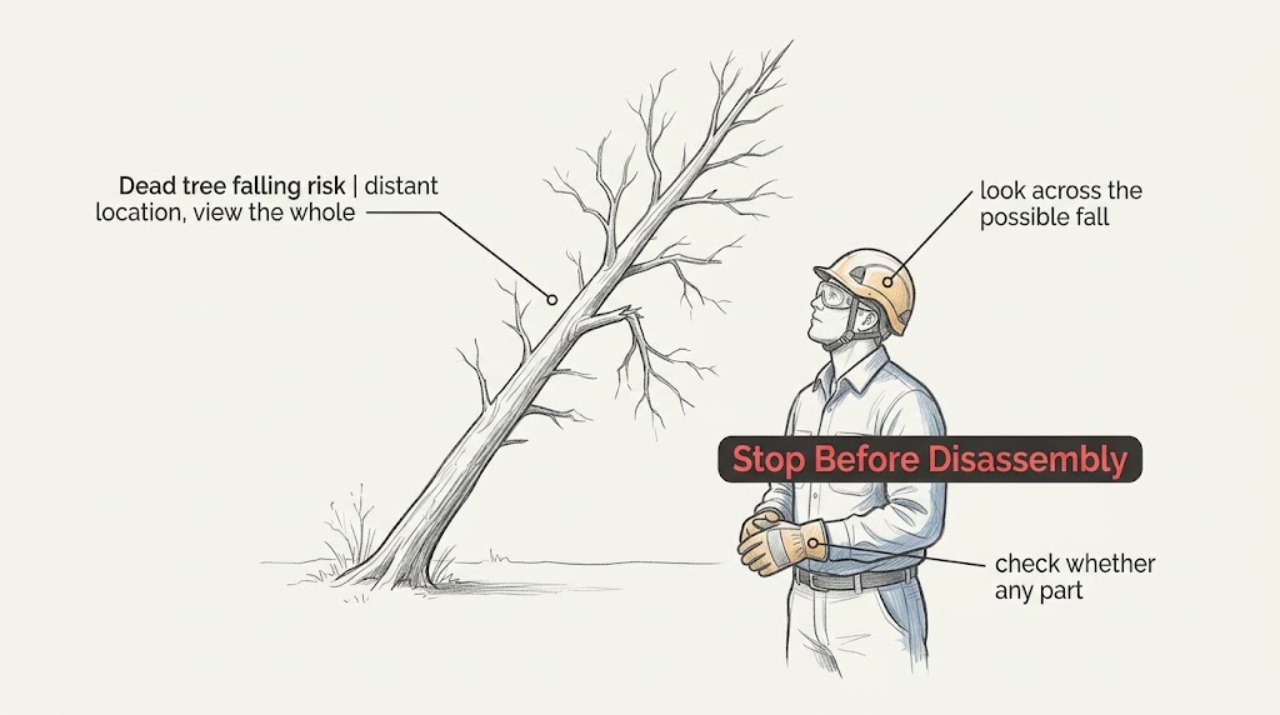
Dead tree falling risk: What to Check and What to Do Next
Treat a dead, badly leaning, storm-damaged, or freshly shifting tree as an urgent falling-object hazard. From a safe location, keep people, pets, vehicles, and bystanders outside a conservative exclusion zone around the possible fall path; do not approach, touch, strike, climb, cut, or use a ladder to inspect it.
-
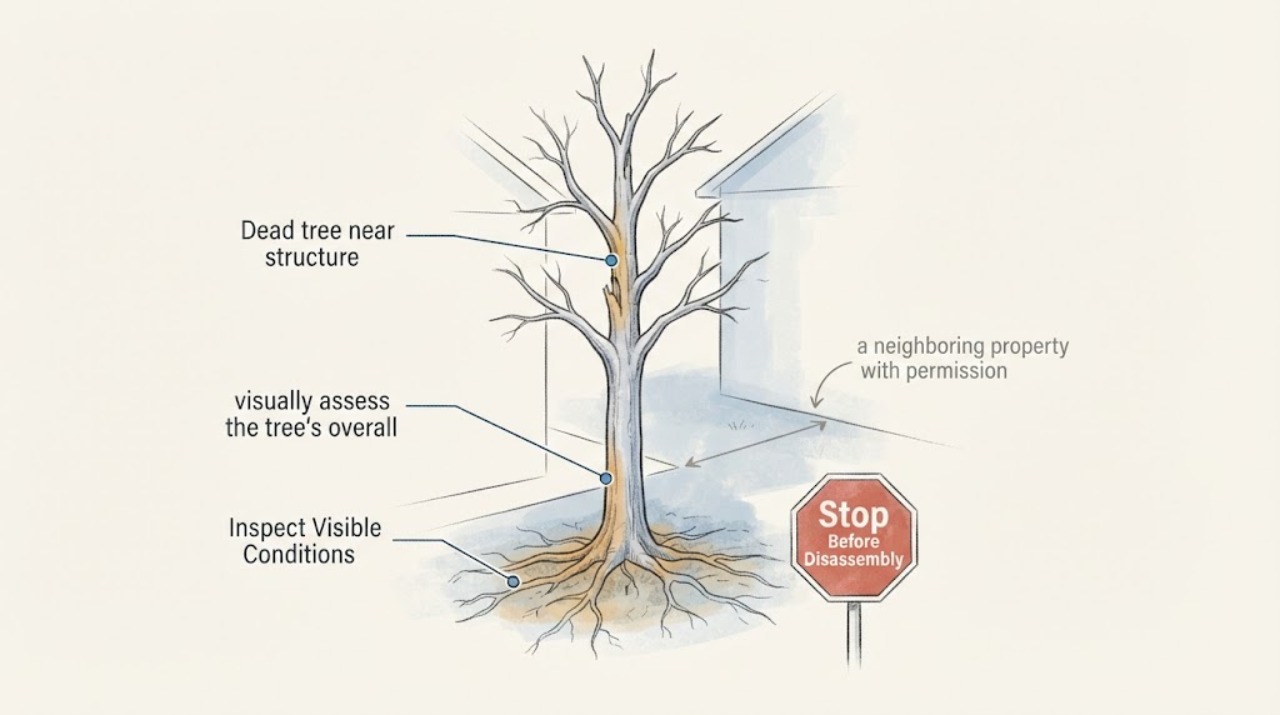
Dead tree near structure: What to Check and What to Do Next
A dead or declining standing tree near a house, outbuilding, road, vehicle area, utility, or other target should be treated as a hazard assessment request, not a DIY removal project. From a safe location outside the tree's potential fall and branch-drop area, document the target, tree height and lean, visible dead limbs or decay, root-zone disturbance, and current weather.
-
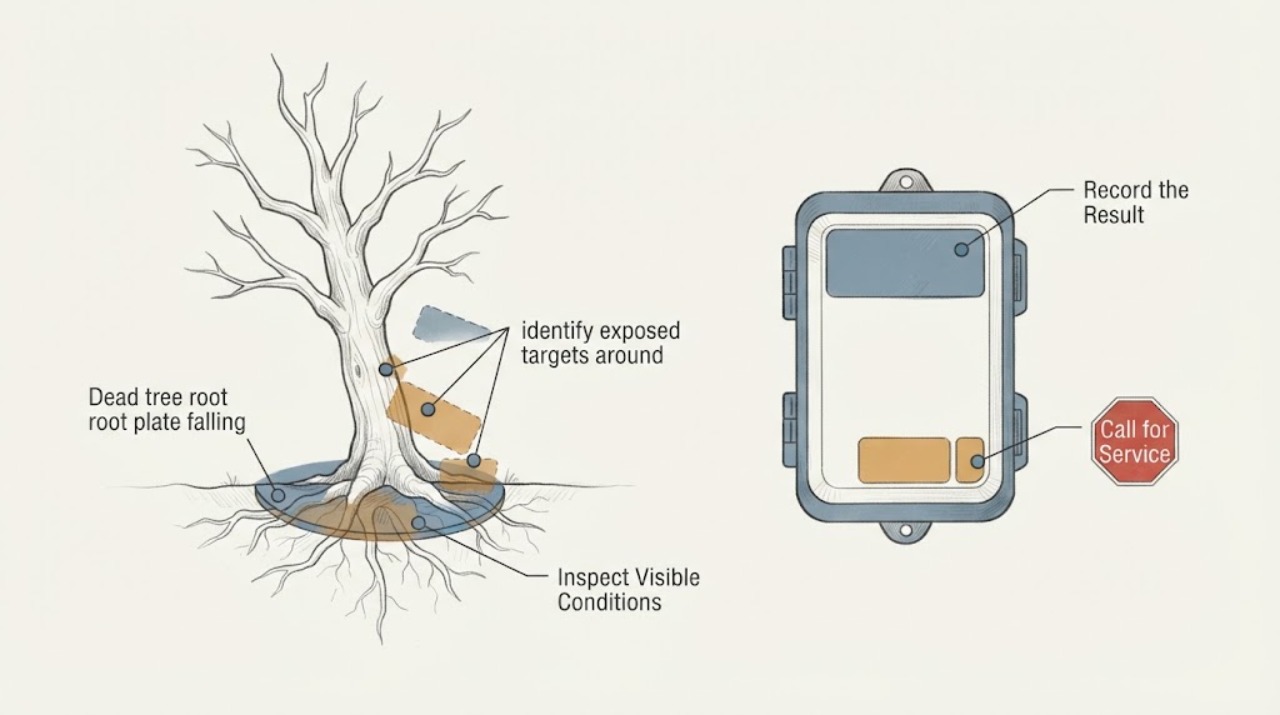
Dead tree root plate falling risk: What to Check and What to Do Next
Treat a lifted root plate or root wad on a dead tree as an urgent, unstable hazard. Keep people, pets, vehicles, and equipment well away; do not approach the root plate, climb the tree, cut the trunk, pull it with rope or a vehicle, or try to push it back.
-
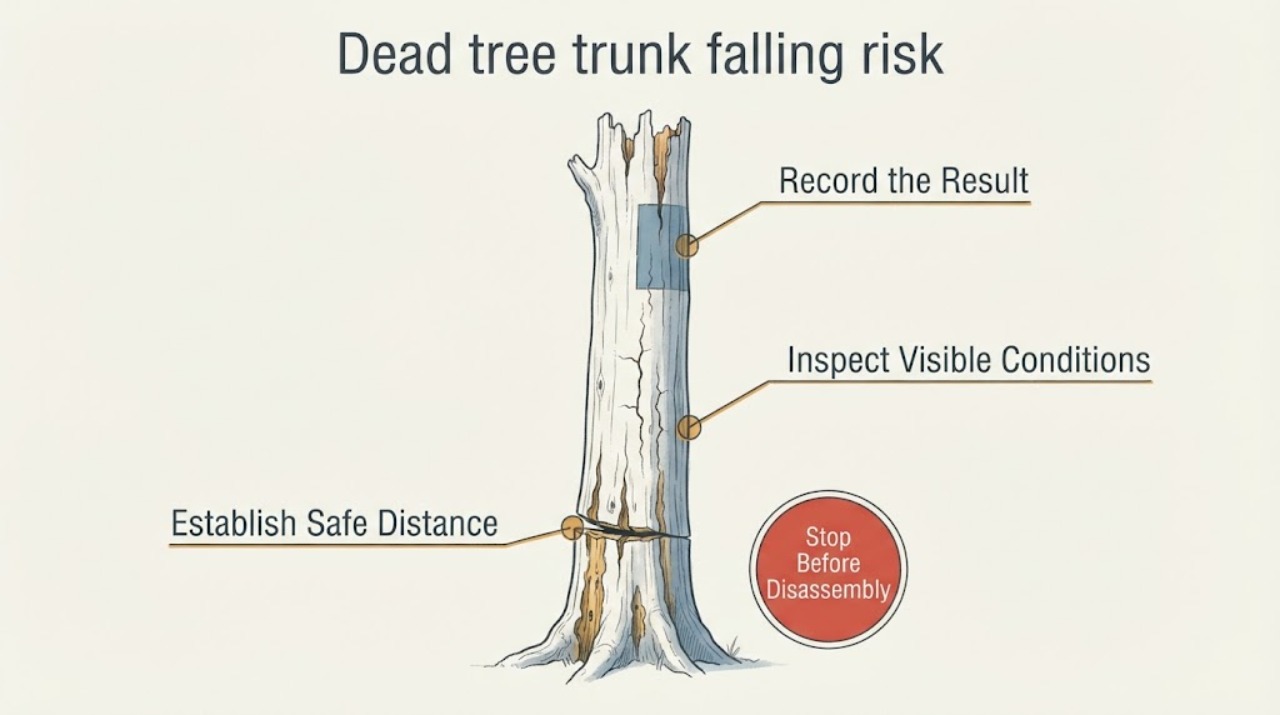
Dead tree trunk falling risk: What to Check and What to Do Next
A dead standing tree with a possible falling risk should be treated as an urgent professional-service issue. From well outside the tree's potential fall area, document the trunk's lean, cracks, cavities, missing bark, hanging limbs, recent movement, and the people, vehicles, buildings, and power lines that could be affected.
-
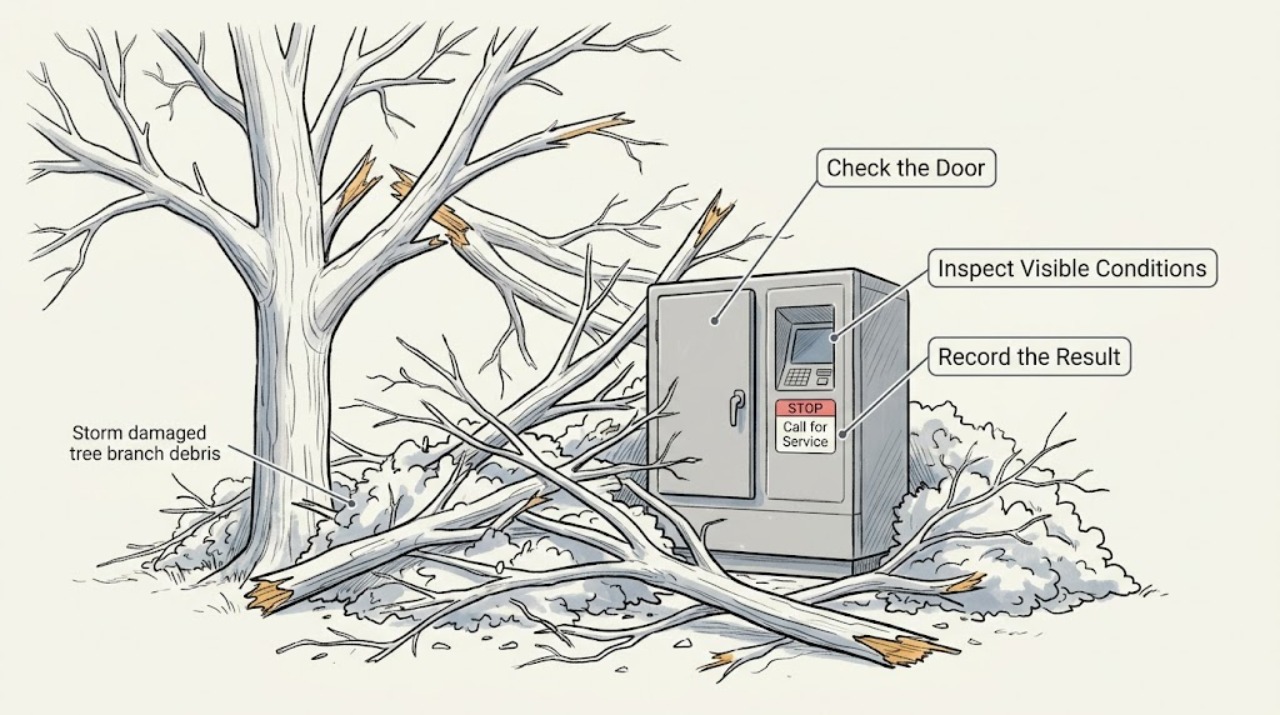
Storm damaged tree branch debris blocked access: What to Check and What to Do Next
For storm branch debris blocking access, isolate the blocked driveway, walkway, exit, road, or emergency route first from a distant, stable position. Identify whether any branch is hanging, supported, under pressure, moving, touching a structure, or near a power line; assume lines are energized and keep clear.
-
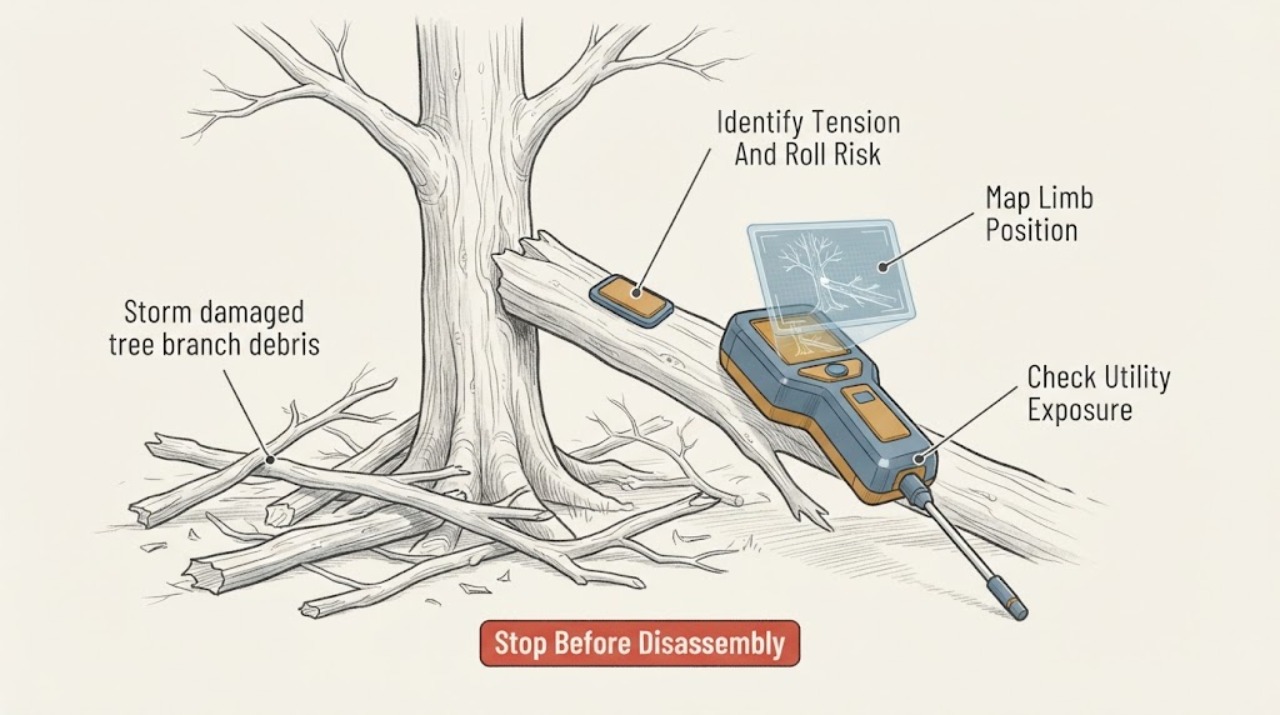
Storm damaged tree branch debris large limbs: What to Check and What to Do Next
Treat large limbs left by a storm as a live fall, crush, roll, and stored-tension hazard, not as ordinary yard debris. From inside, a vehicle, or another stable position outside the likely fall area, determine whether the limb is hanging, partly attached, wedged, bent, resting on a structure, or near a utility line.
-
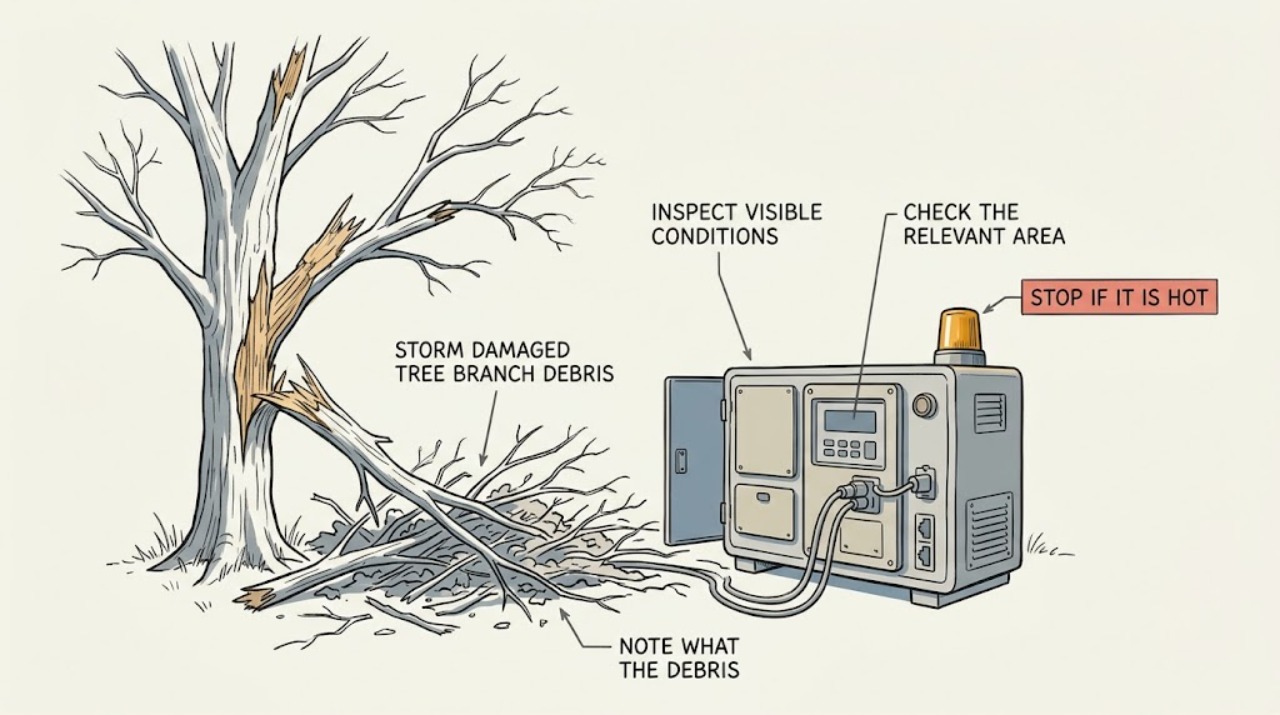
Storm damaged tree branch debris: What to Check and What to Do Next
Treat storm-damaged branches and tree debris as a professional cleanup and hazard-assessment job, not a routine yard chore. From inside or another protected vantage, look for downed or low-hanging wires, branches suspended in the canopy, split or leaning trees, and debris affecting a structure, road, driveway, or utility access.
-
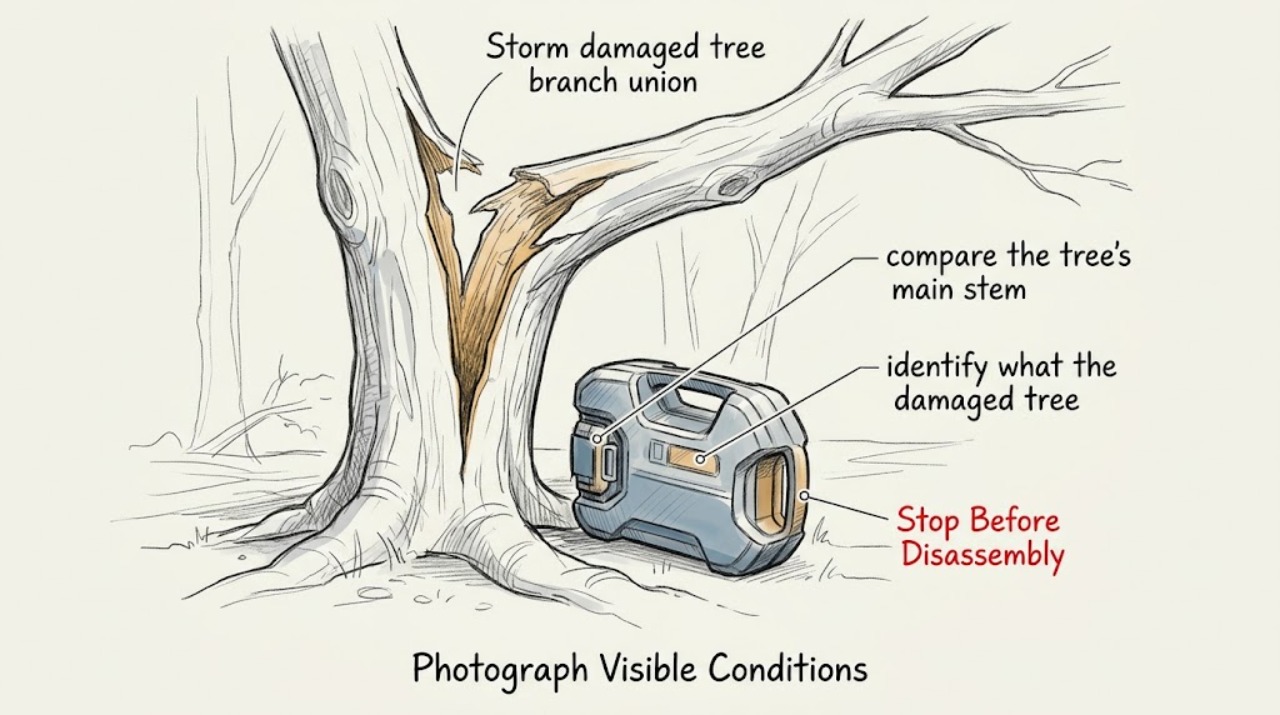
Storm damaged tree branch union split trunk: What to Check and What to Do Next
Treat a storm-split branch union or trunk as an urgent falling-tree hazard. From a distant, sheltered position, observe the split, tree lean, lifted soil or root plate, hanging limbs, threatened structures, and any nearby utility lines.
-
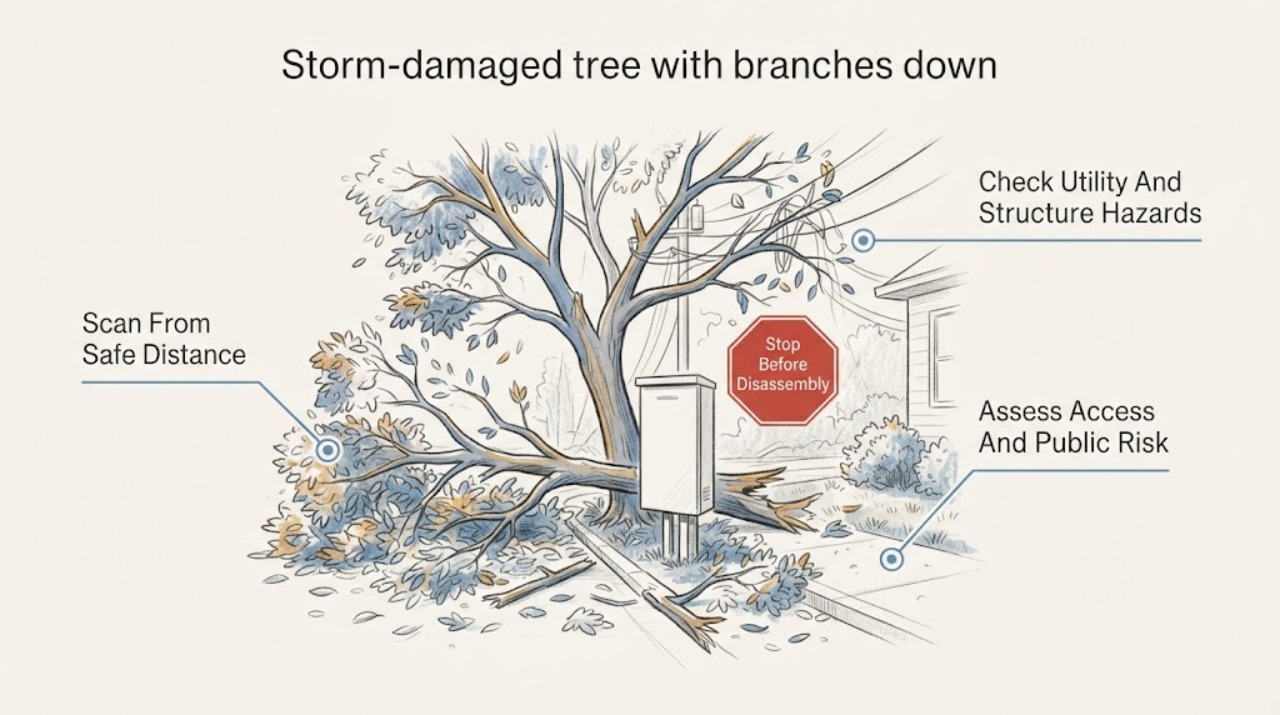
Storm-damaged tree with branches down: What to Check and What to Do Next
Keep everyone away from the fallen or hanging branches and do not cut, climb, pull, or move them. From a safe location, look for downed or contacted power lines, a leaning or suspended trunk, branches against a building or vehicle, blocked access, gas or structural damage, and any continuing weather risk.
-
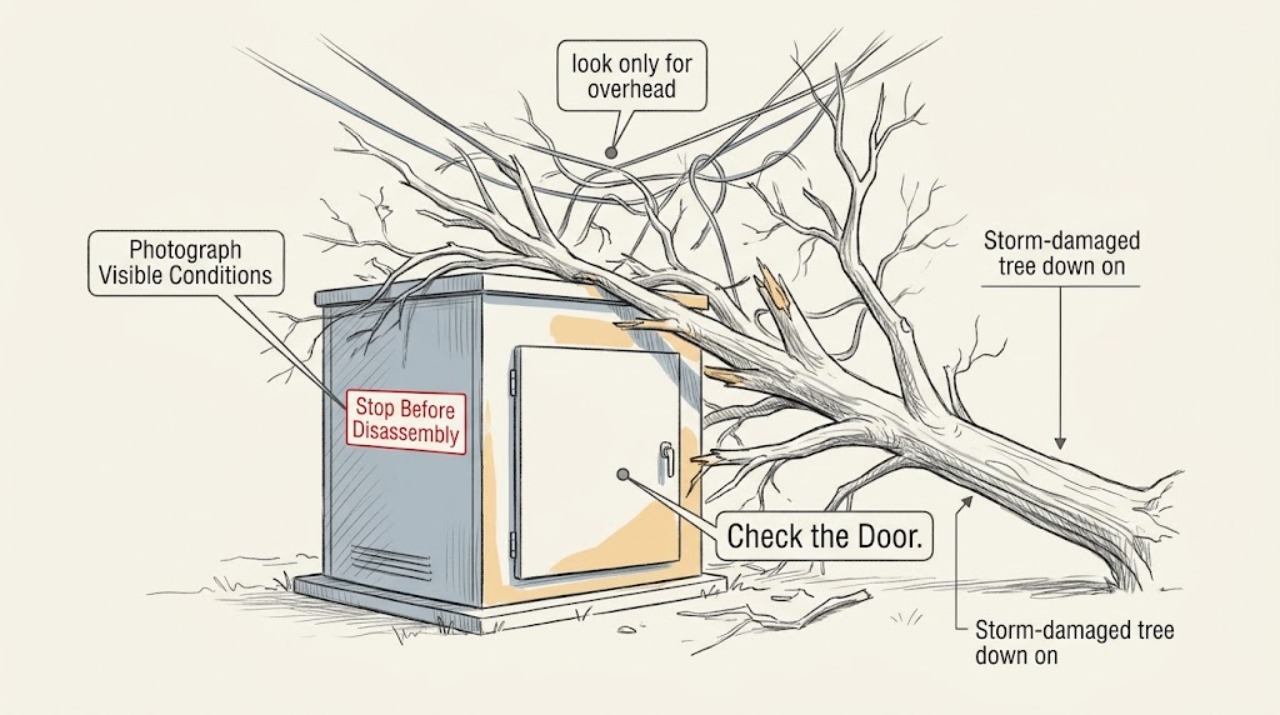
Storm-damaged tree down on a structure: What to Check and What to Do Next
A storm-damaged tree resting on a house, garage, shed, vehicle, or other structure is an emergency scene, not a homeowner chainsaw job. From a wide, stable location, check only whether power lines or gas infrastructure may be involved, whether the tree or structure is still moving, whether walls/roof/ceiling have shifted, and whether people can leave without passing the tree.
-
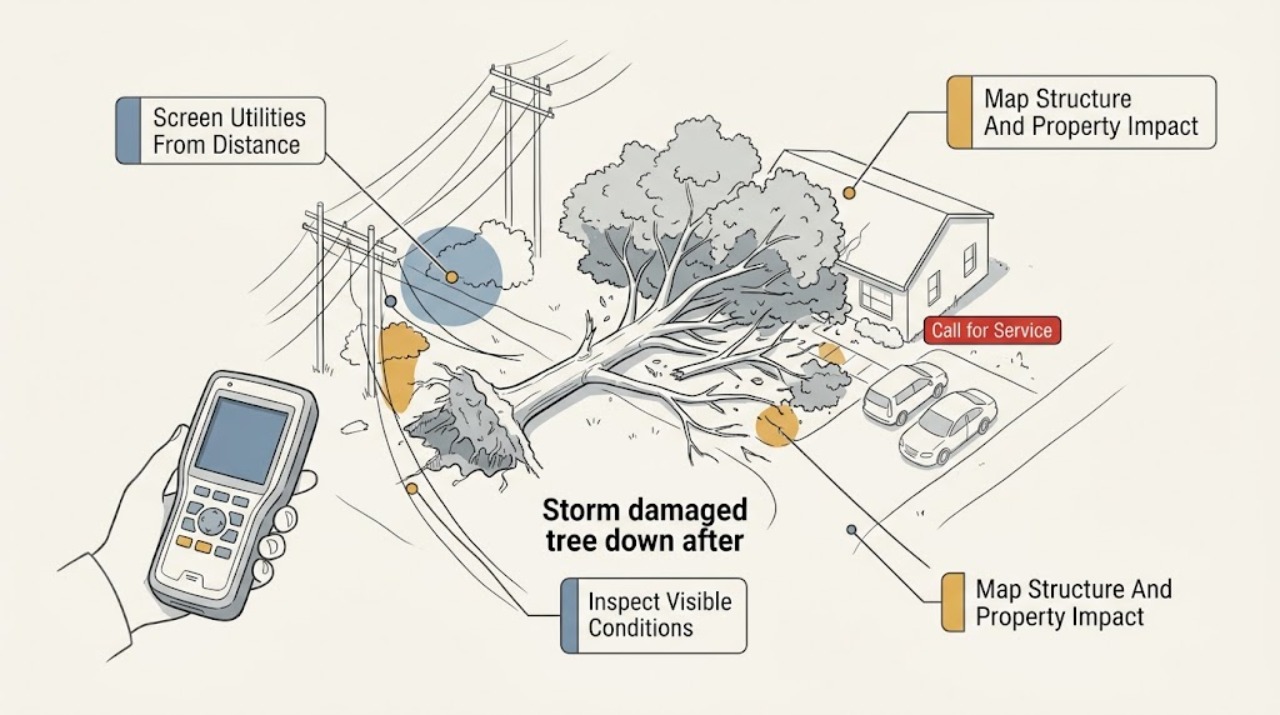
Storm damaged tree down after: What to Check and What to Do Next
Do not approach or work on a storm-damaged tree yourself. From a safe indoor location or the far edge of the property, document whether power or communication lines, gas or other utilities, a roof or structure, vehicles, a public road, or a blocked access route are involved.
-
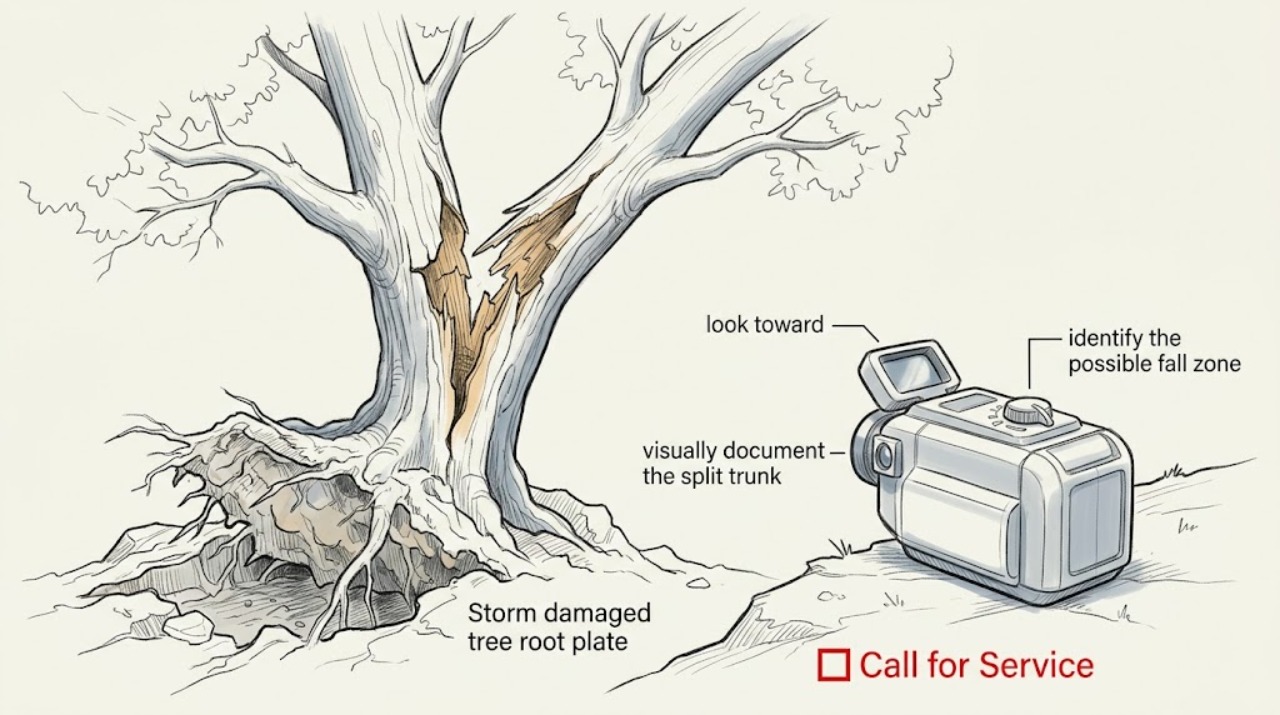
Storm damaged tree root plate split trunk: What to Check and What to Do Next
Treat a storm-damaged tree with a lifted or split root plate and split trunk as an urgent hazard, not a homeowner repair. From a distant, stable location, record soil cracking or lifting, the tree's lean and trunk split, the fall zone, nearby buildings and utilities, and any movement or noise.
-
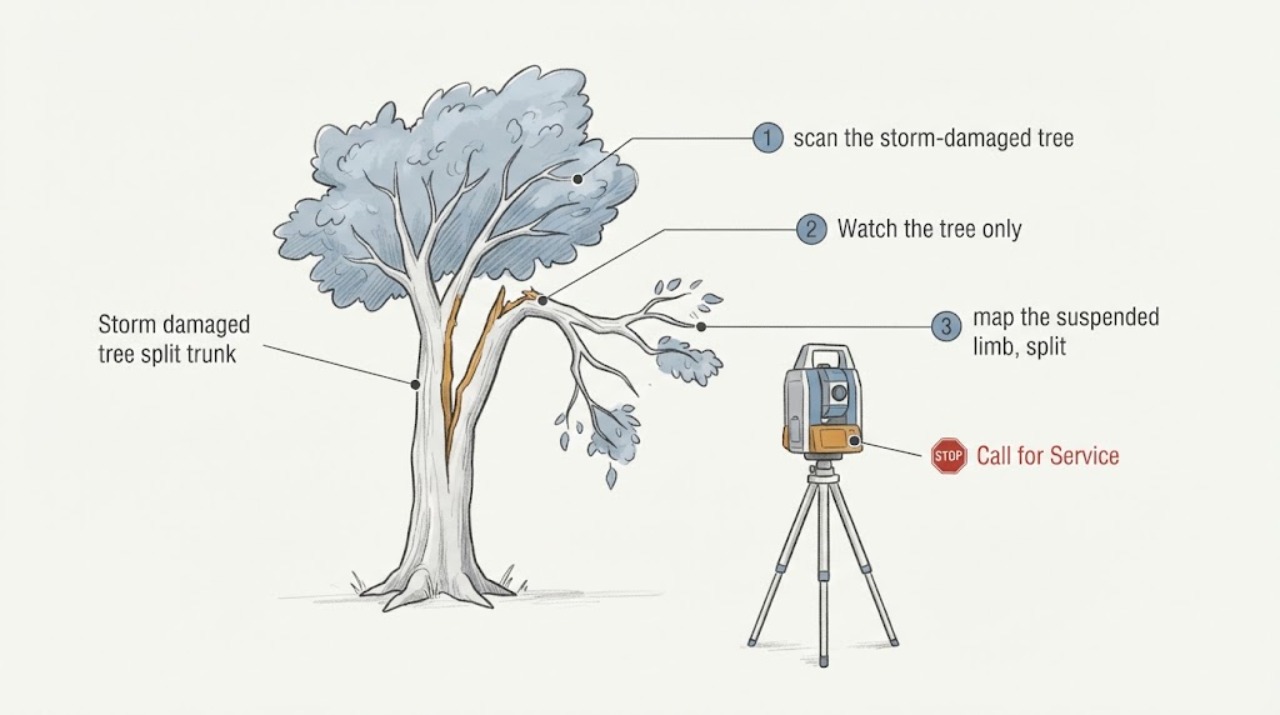
Storm damaged tree split trunk hanging limb: What to Check and What to Do Next
For a storm-damaged tree with a split trunk and hanging limb, first isolate the entire likely fall area from a distant ground position. Look for movement or falling debris, people and property below, blocked routes, and contact with overhead lines; assume any line or touching object is energized.
-
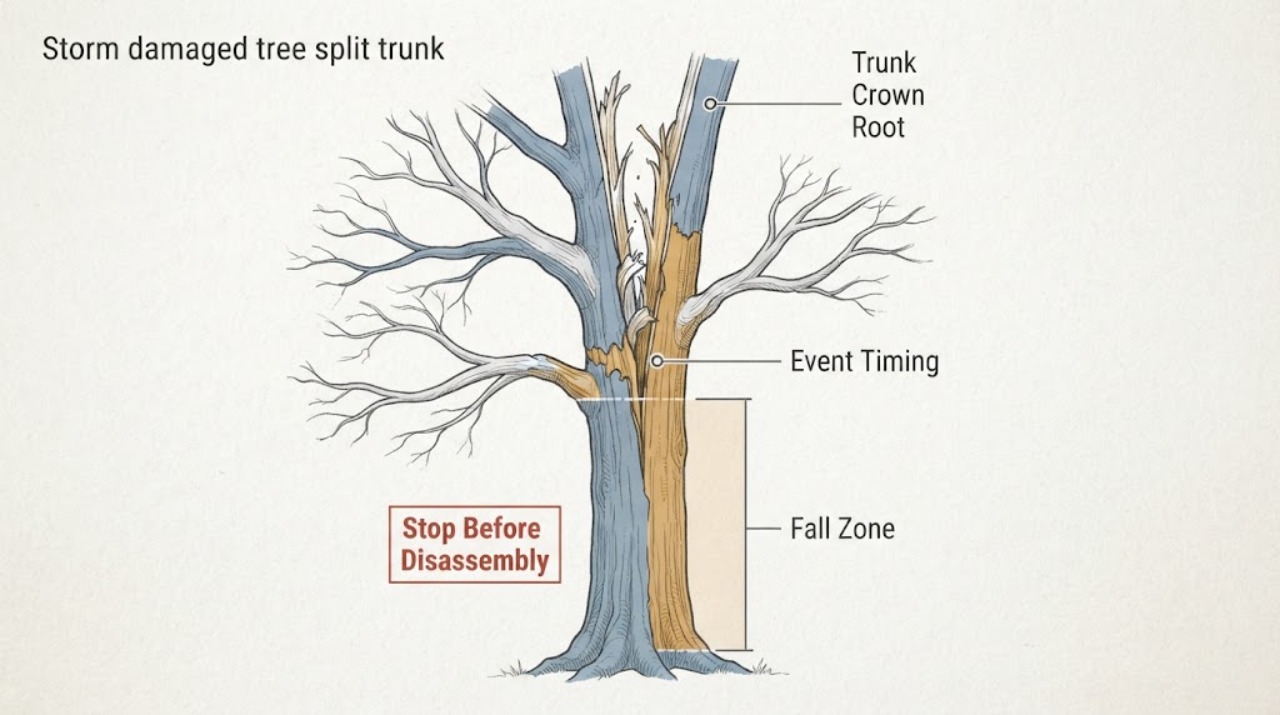
Storm damaged tree split trunk wind damage: What to Check and What to Do Next
A storm-damaged tree with a split trunk is a fall-zone and structural-stability emergency assessment, not a hanging-limb trimming job. From far away at ground level, record when the wind event occurred, whether the trunk or crown is still moving, the split's height and direction, the root plate and crown condition, overhead wires, nearby buildings, roads, and people or pets in the potential fall zone.
-
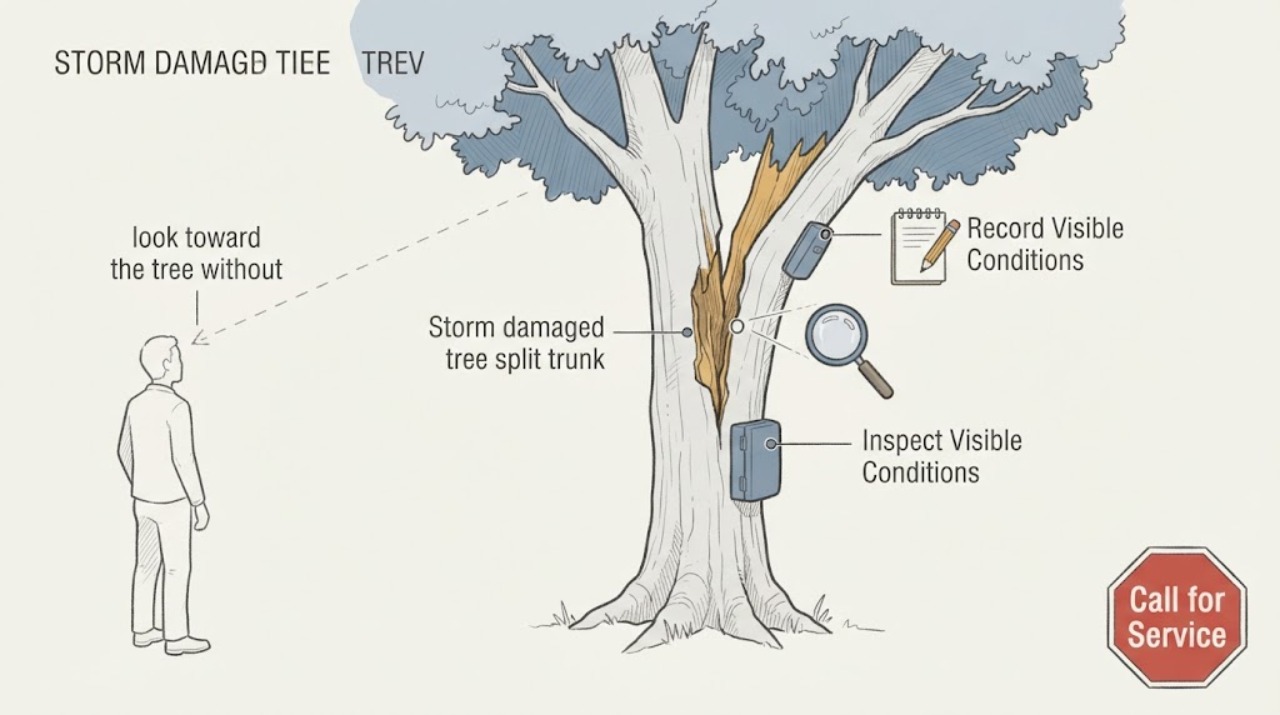
Storm damaged tree split trunk: What to Check and What to Do Next
Do not try to repair or remove a storm-damaged tree with a split trunk yourself. From inside a building or another already safe location, check only whether the tree or hanging parts are near people, structures, roads, or utility lines, and note whether the split trunk is leaning or still attached.
-
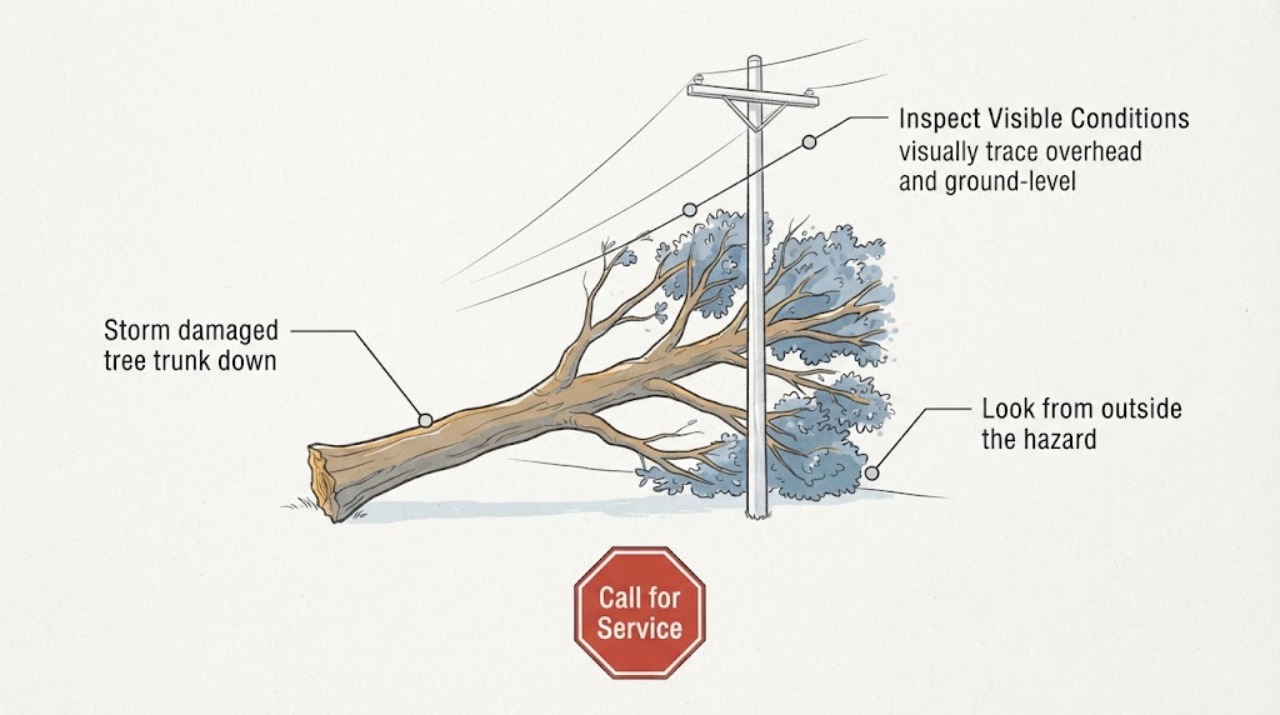
Storm damaged tree trunk down after: What to Check and What to Do Next
Treat a storm-downed trunk as unstable debris, not a normal cleanup project. Stay out of the fall area and do not cut, pull, climb, drive over, or move the trunk.
-
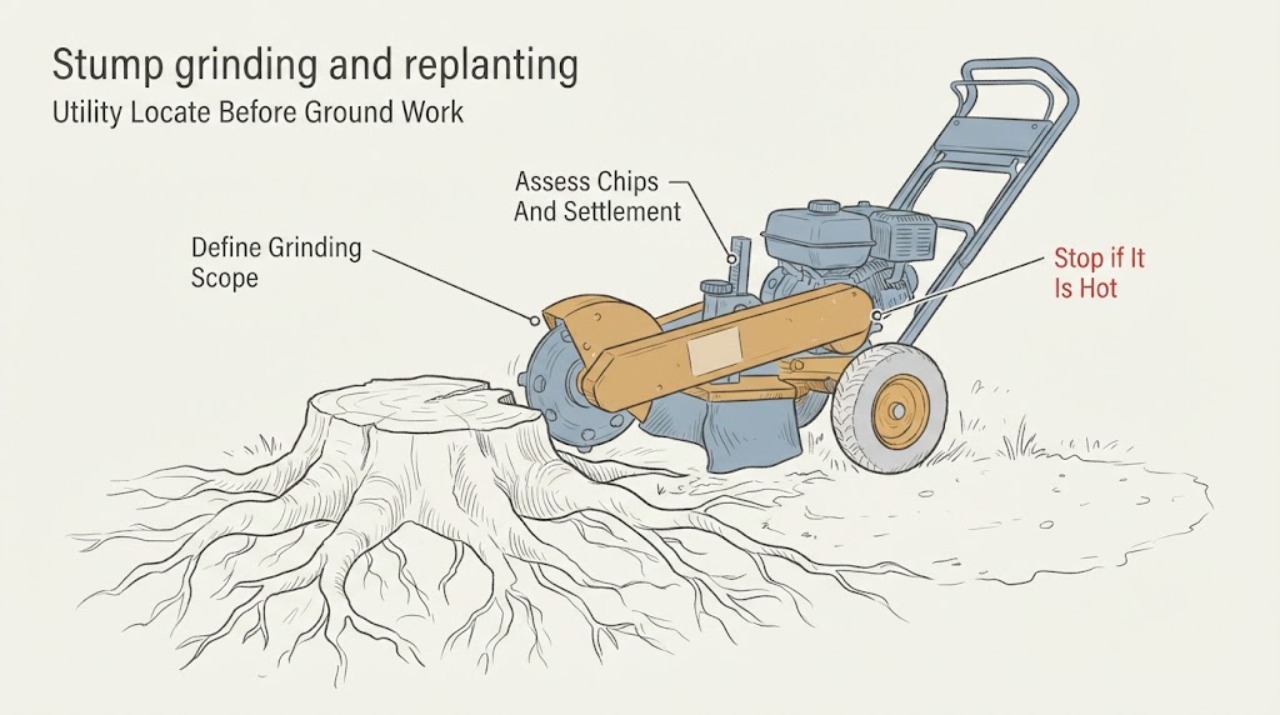
Stump grinding and replanting: What to do with roots, chips, and clearance
Stump grinding usually removes the visible stump and some exposed root material, but it is not the same as excavating the entire underground root system. Before any digging or planting, have buried utilities located through 811 or the applicable local service, and ask the tree professional exactly what was ground, what roots or wood remain, and who will remove the chips and restore the hole.
-
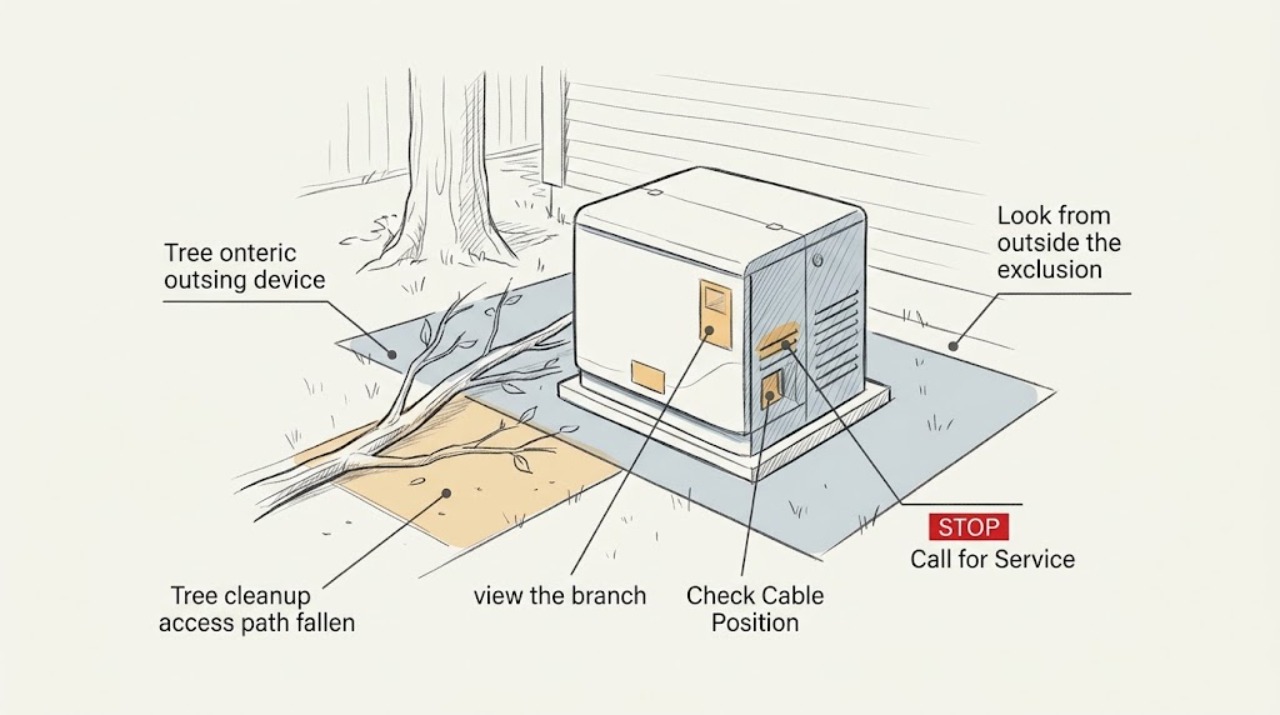
Tree cleanup access path fallen branch yard: What to Check and What to Do Next
Treat a fallen branch in a yard access path as a hazard survey first, not a carrying or cutting job. From stable ground, look for hanging or connected limbs, a bent or tensioned branch, a damaged tree, utility lines, structures, blocked public access, unstable soil, and whether the path can be isolated without approaching the debris.
-
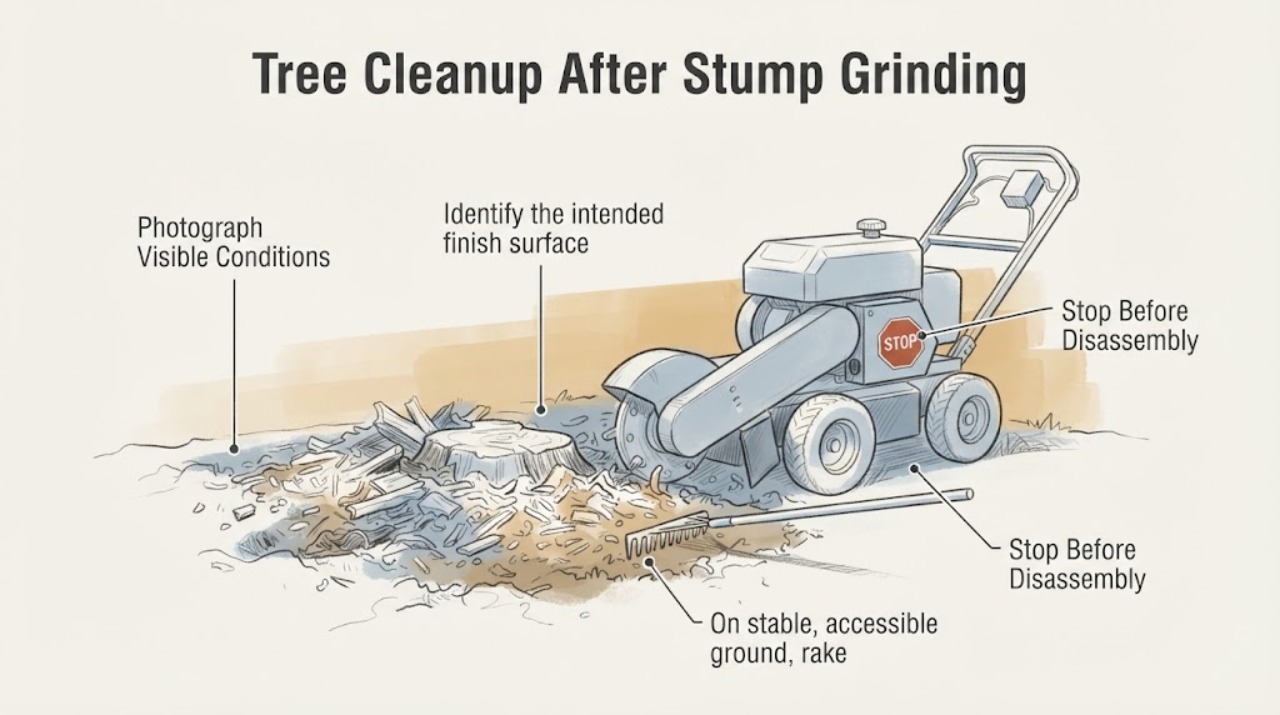
Tree Cleanup After Stump Grinding Leaves Wood Chips and Uneven Fill: What to Check and What to Do Next
Wood chips and sawdust left in a stump-grinding hole are not the same as stable topsoil. Buried wood debris and remaining roots can create voids as they decompose, tie up nutrients, dry the soil unevenly, and leave a low spot.
-
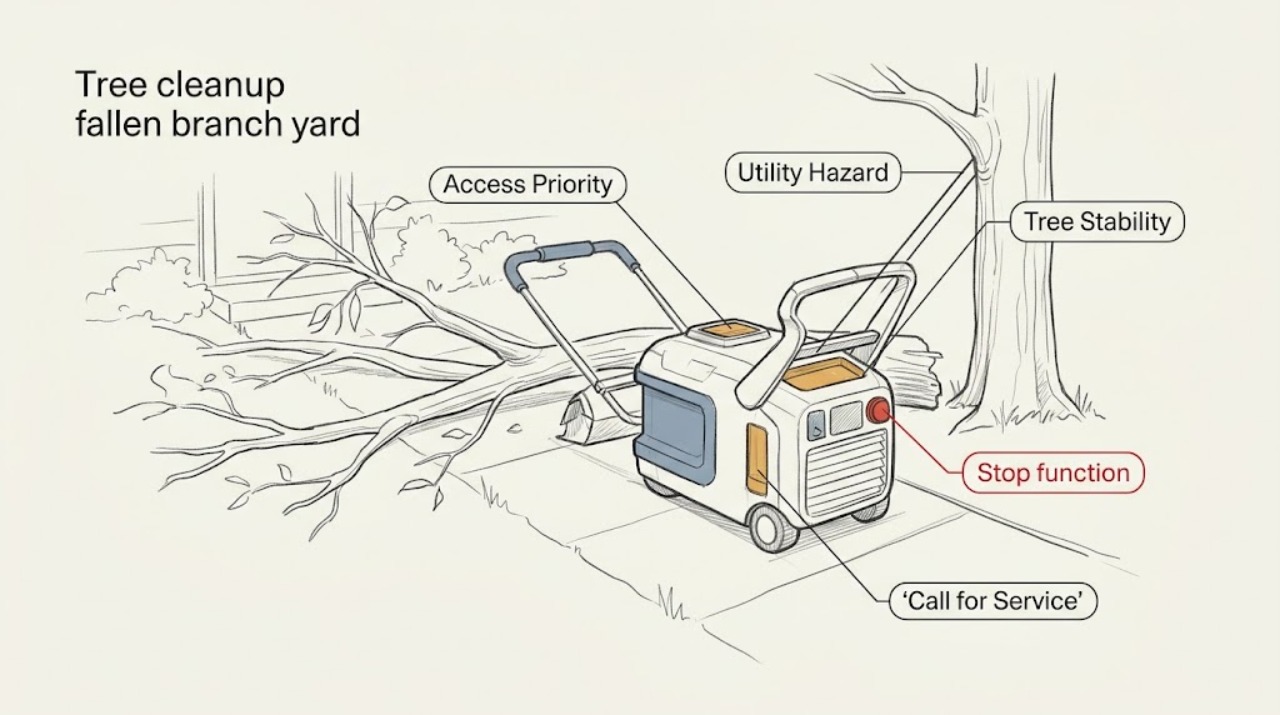
Tree cleanup fallen branch yard blocked walkway: What to Check and What to Do Next
A storm-fallen branch blocking a walkway is first an access and scene-safety problem, not ordinary yard waste. From a distant ground-level position, identify any downed or contacted power line, hung or tensioned limb, leaning tree, lifted root plate, saturated ground, and whether the route is a sole entrance or emergency exit.
-
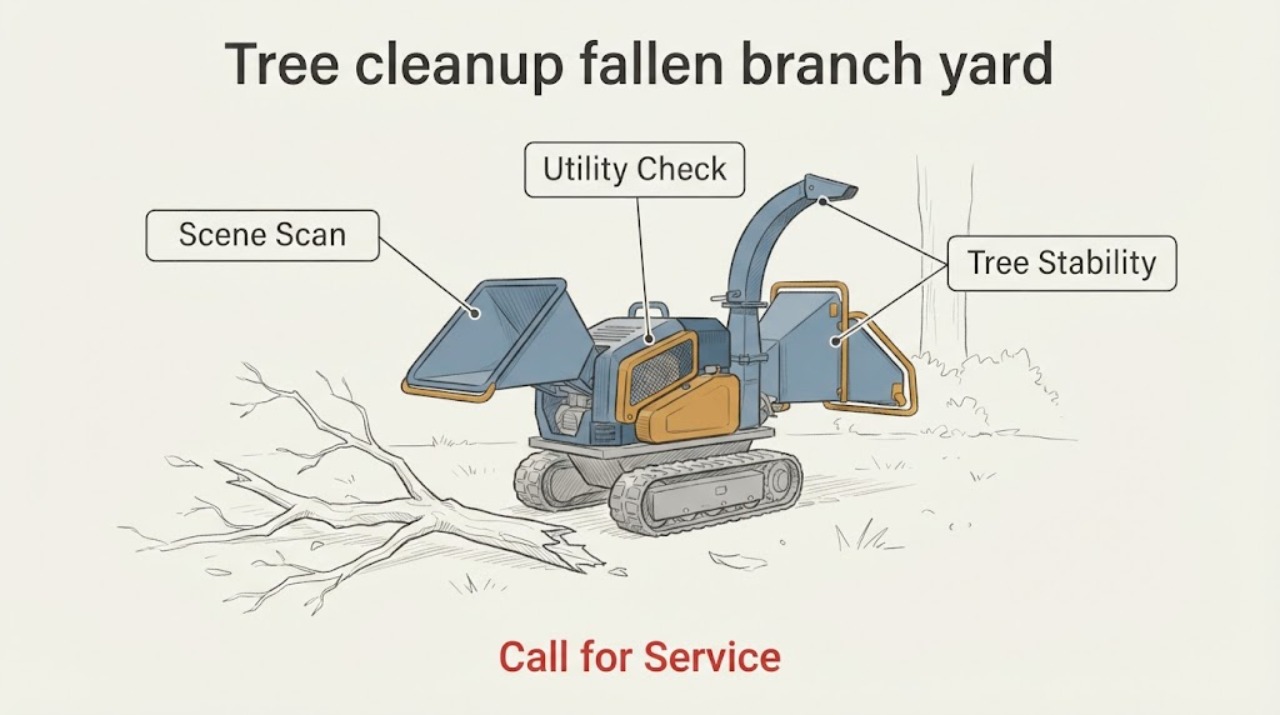
Tree cleanup fallen branch yard after storm: What to Check and What to Do Next
Storm-fallen branches are not automatically yard waste. From a distant ground-level position, first look for downed or touching power lines, a leaning tree or lifted root plate, branches still hung or under tension, saturated or unstable ground, and blocked access.
-
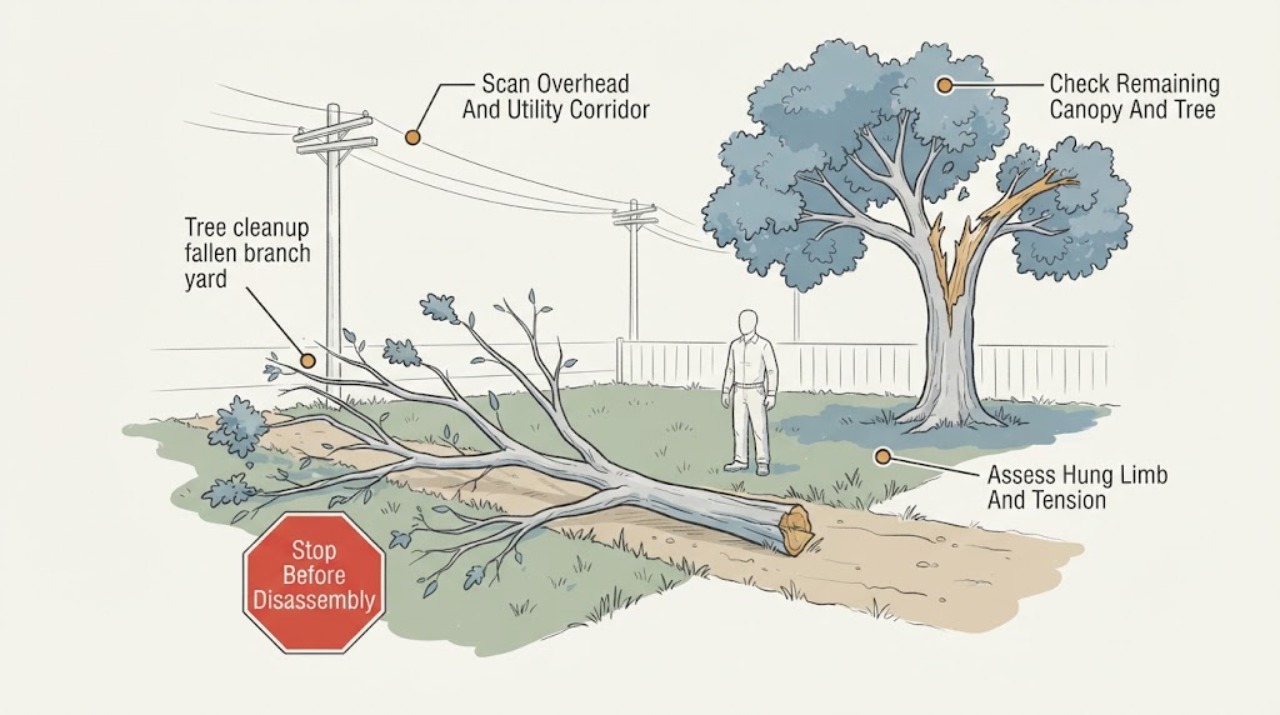
Tree cleanup fallen branch yard: What to Check and What to Do Next
Treat a fallen branch as a tree-hazard assessment before treating it as yard waste. From a safe distance, look for overhead or downed utilities, branches still hanging or supported by the fallen limb, visible tension or movement, damage to roofs or fences, blocked public access, and active or forecast severe weather.
-
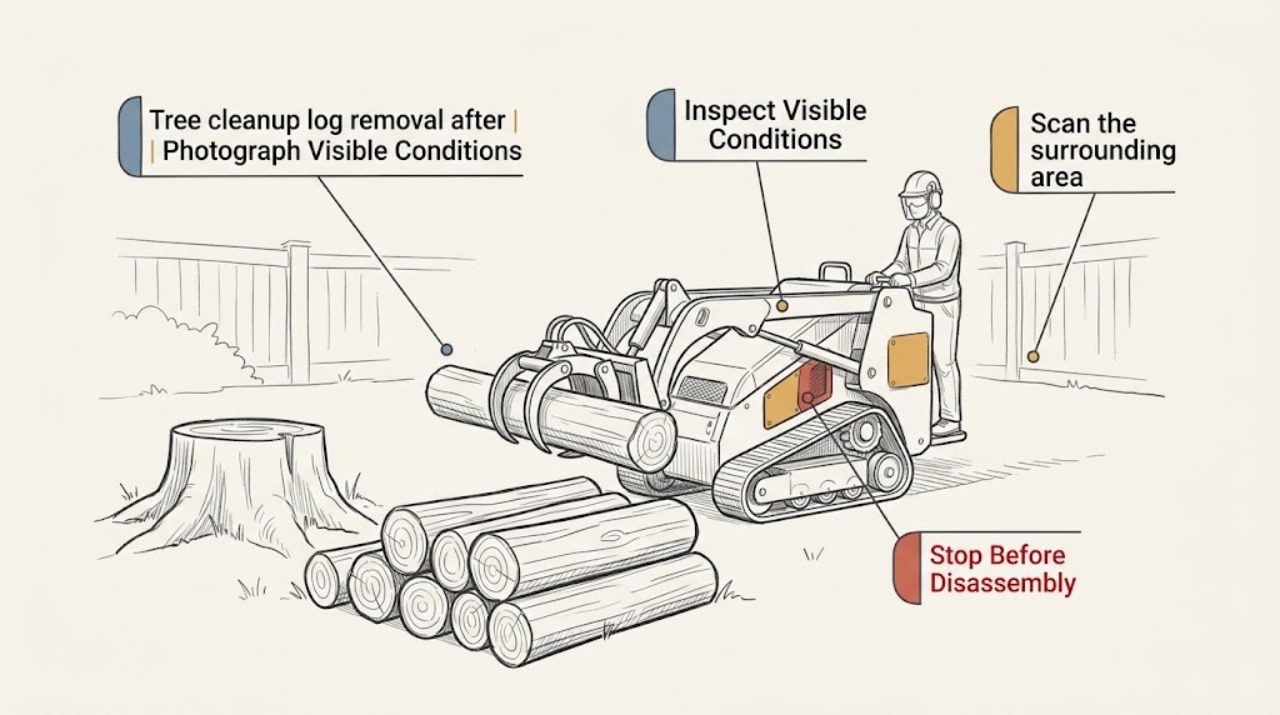
Tree cleanup log removal after cut accessible yard: What to Check and What to Do Next
For tree log removal after a cut in an accessible yard, treat accessibility as visibility and reachability, not permission to move the material. From a safe distance, classify size and weight, check slope and rolling potential, note residual tension or partial support, scan utilities and structures, and map equipment access.
-
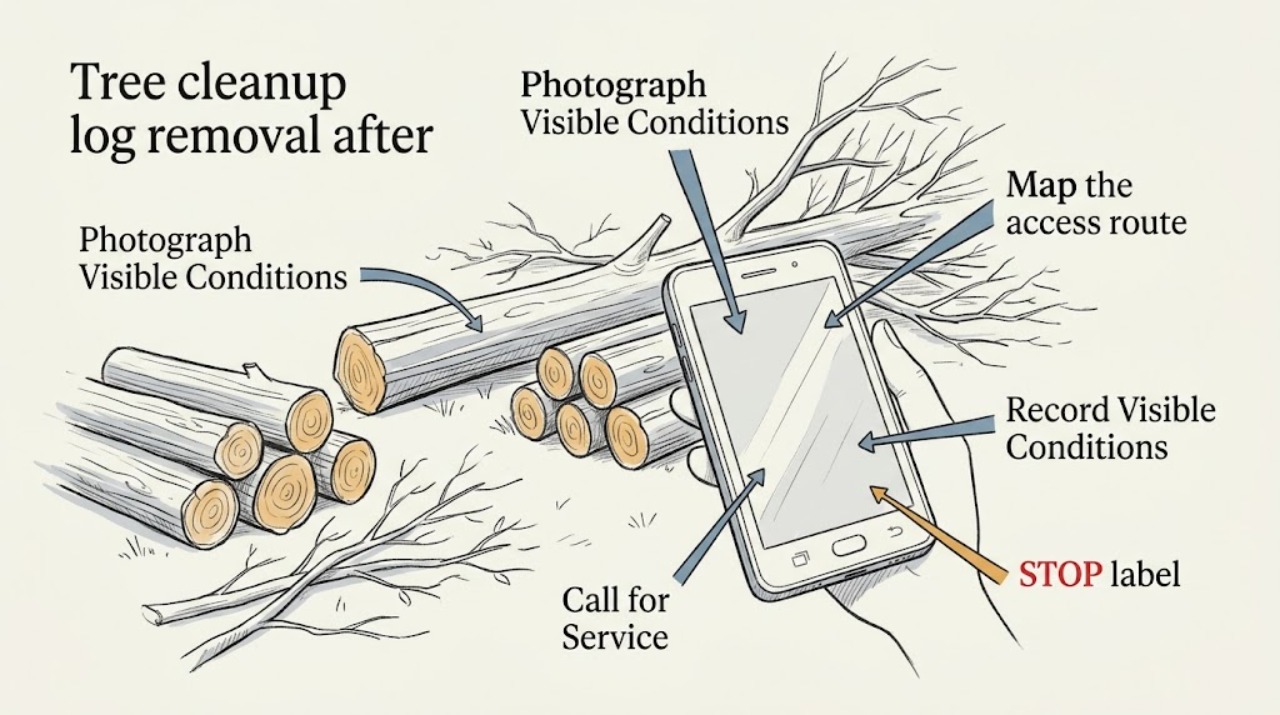
Tree cleanup log removal after cut already down: What to Check and What to Do Next
When a tree is already down and the remaining job is log removal, first confirm that every section is truly on stable ground and free of suspended limbs, root-wad tension, rolling risk, and power-line contact. Photograph and map the trunk, branches, stump, access path, structures, road or sidewalk, and utility lines before moving anything.
-
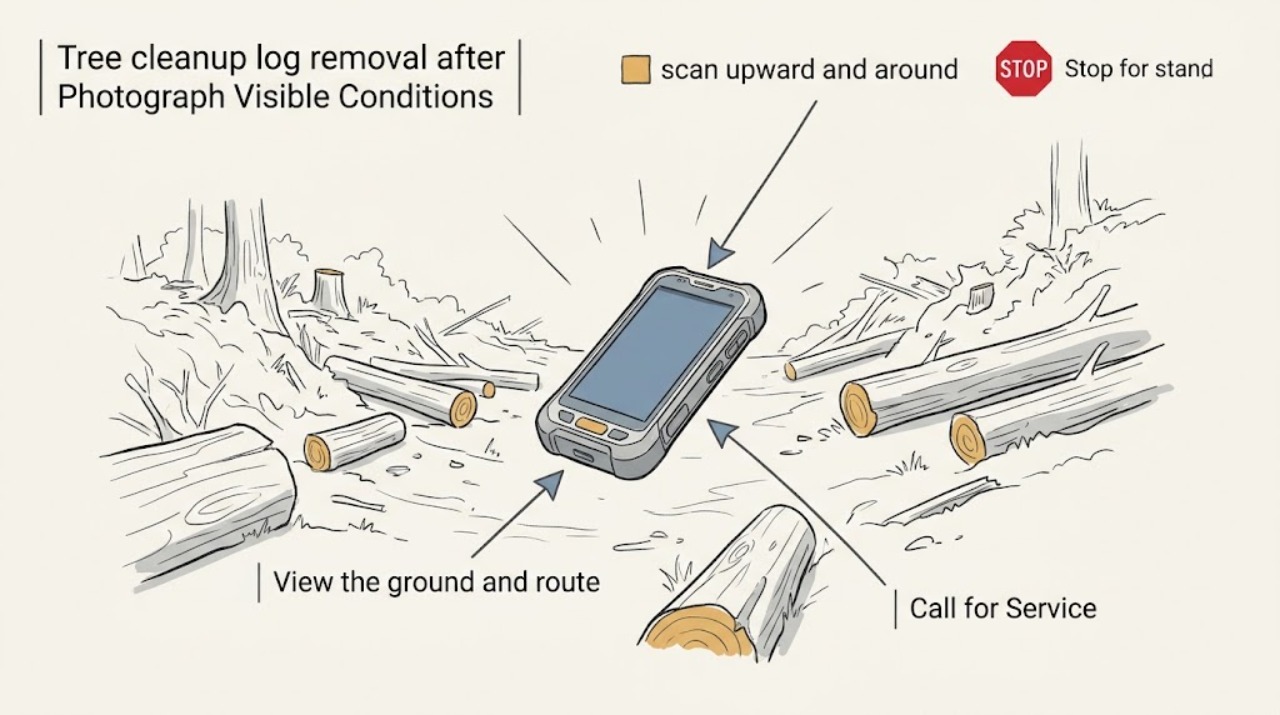
Tree cleanup log removal after cut: What to Check and What to Do Next
After a tree is cut, a log is not ordinary yard waste: its weight, rolling potential, slope, hidden limbs, utility proximity, and remaining tree hazards determine whether cleanup is safe. From a safe location, document the log's approximate size and position, the ground slope, property access, overhead or nearby utilities, and any attached or hanging limbs.
-
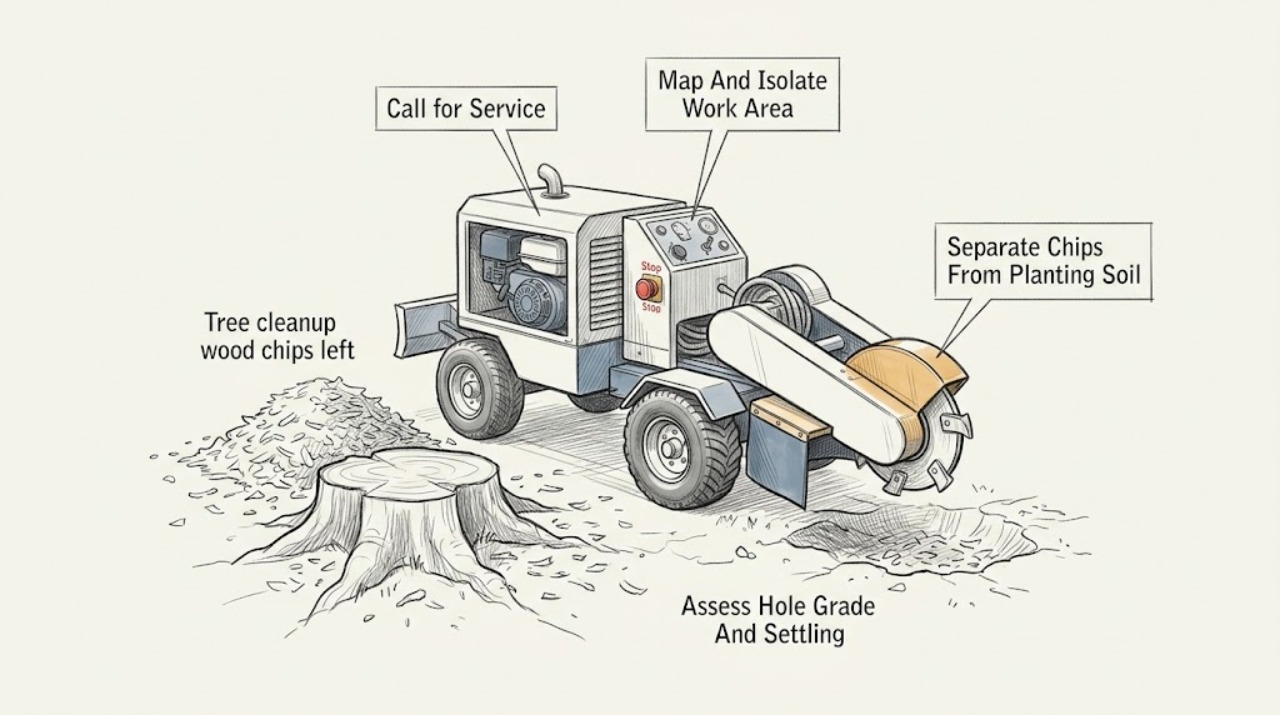
Tree cleanup wood chips left after stump grinding landscape replanting: What to Check and What to Do Next
Wood chips left after stump grinding should usually be removed from the planting zone before replanting. Mixed chips, sawdust, and root fragments can reduce usable soil volume, change moisture behavior, temporarily tie up nitrogen, and leave voids that settle.
-
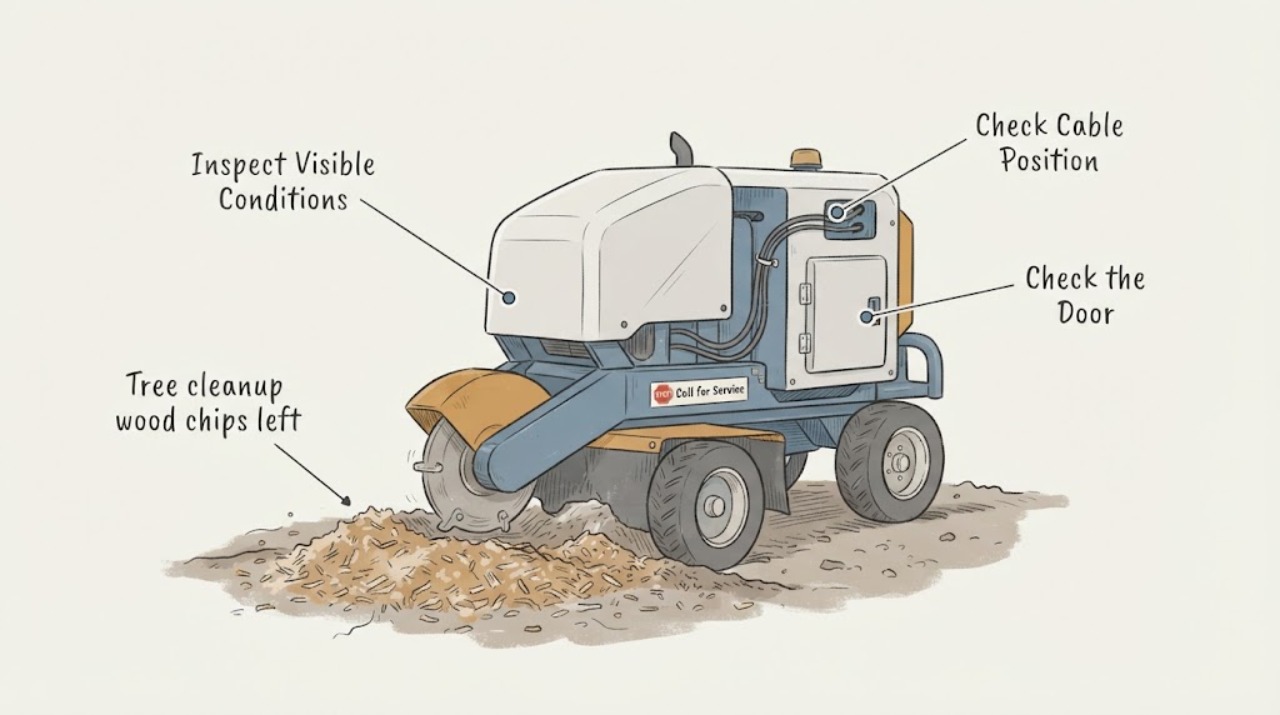
Tree cleanup wood chips left after stump grinding: What to Check and What to Do Next
First decide whether the chips are a safe, intentional mulch resource or unfinished contractor cleanup. From a dry, level, ground-level position, look for hidden holes, unstable soil, rocks, metal, wire, and chips crossing walkways or vehicle areas.
-
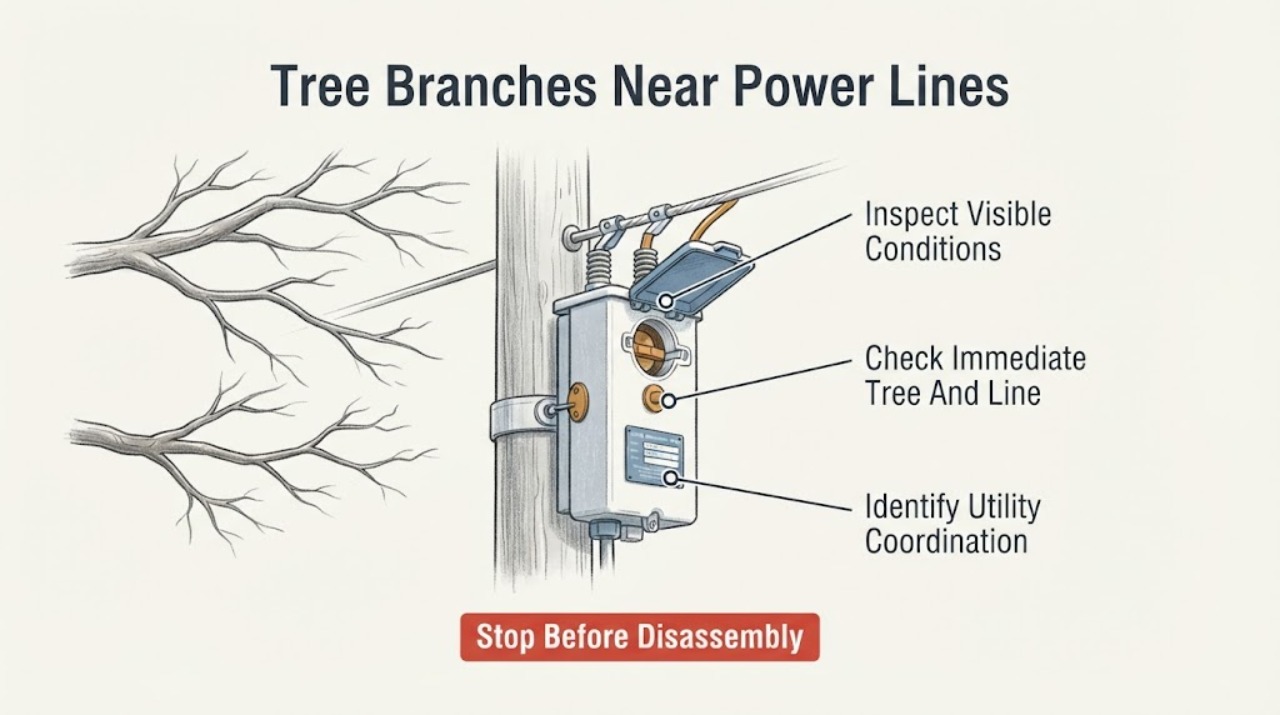
Tree Branches Near Power Lines: What to Check and What to Do Next
Treat any tree branch that touches, hangs over, or may fall onto a power line as an electrical and falling-object hazard, not a routine pruning job. From a safe ground position, document the branch and line without touching, climbing, using a ladder, or trying to measure the clearance.
-
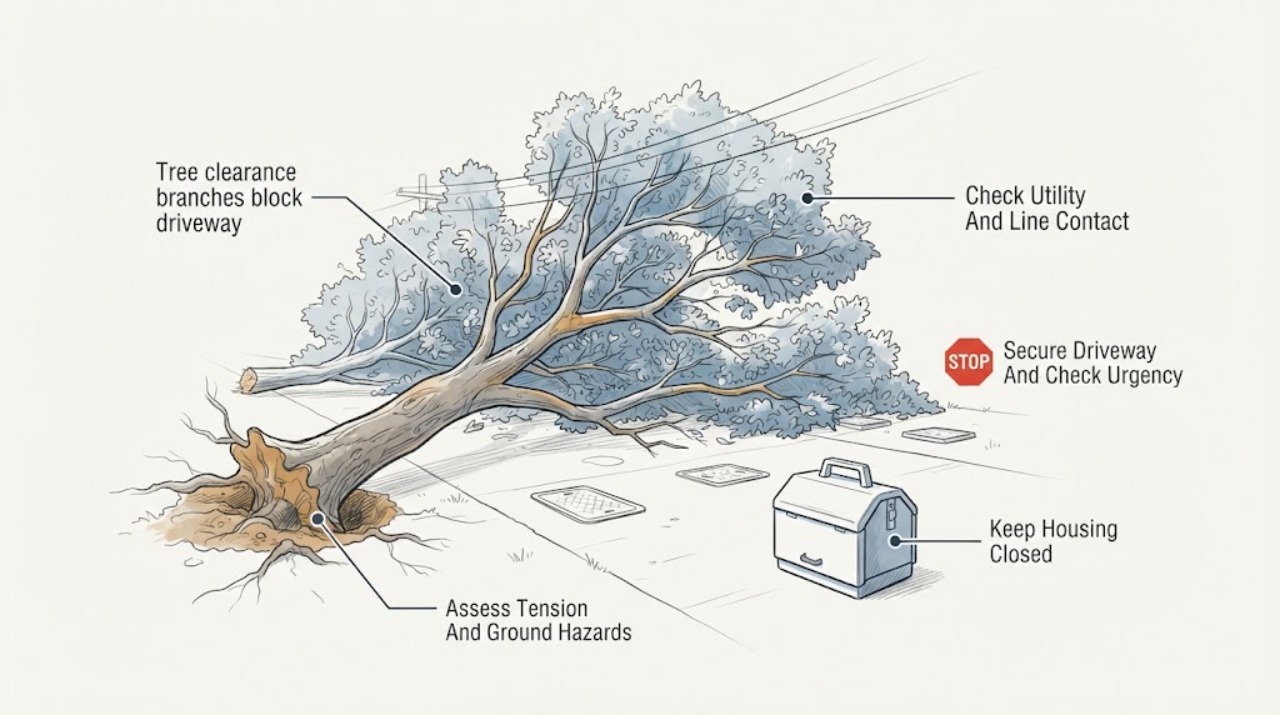
Tree clearance branches block driveway blocked access: What to Check and What to Do Next
A branch blocking a driveway is first an access and falling-object hazard, not a routine pruning job. Keep people, vehicles, and pets out of the drop zone; do not drive under or around a hanging branch, move a limb caught on a wire, or start a chainsaw.
-
Tree clearance branches block driveway low branch: What to Check and What to Do Next
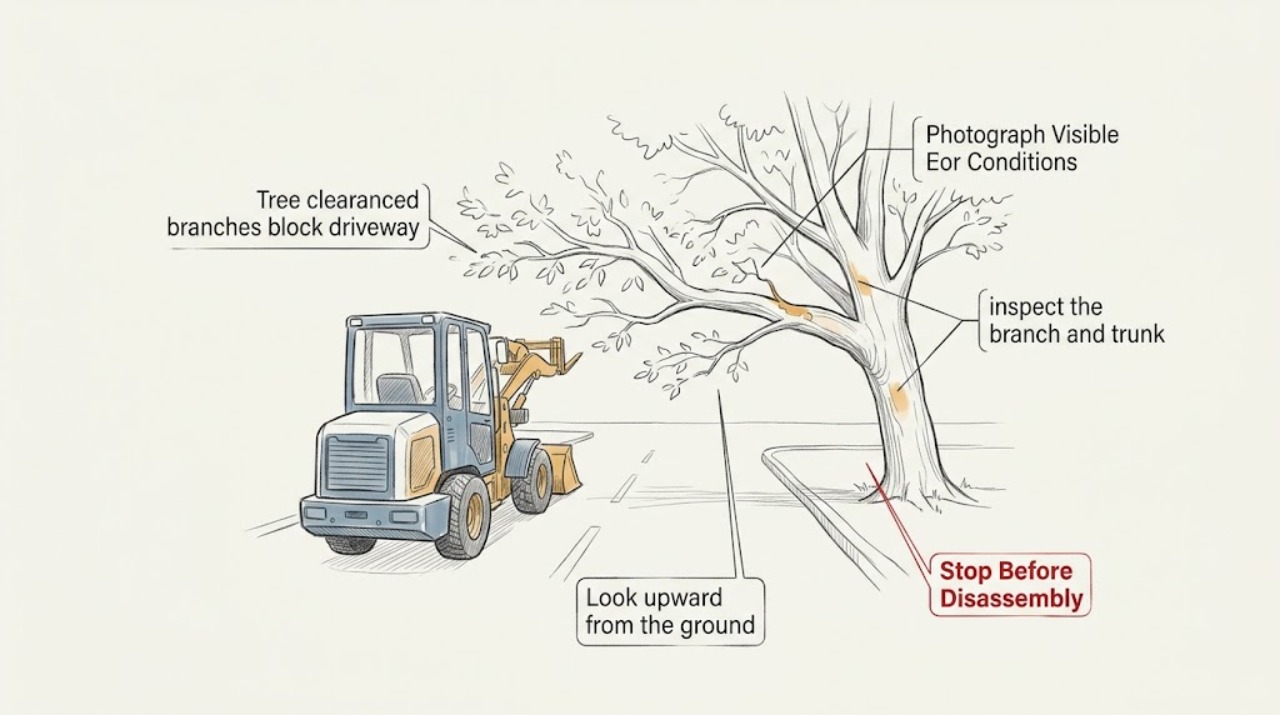
A low branch blocking a driveway is a clearance problem, but the safe next step depends on whether it is live and stable, broken after wind, close to utility lines, or on public or neighboring property. From a parked vehicle and a safe ground position, photograph the branch, check for cracks or hanging pieces, identify any overhead lines, and note whether it blocks only your parking space or also the roadway sight line.
-
Tree clearance branches block driveway: What to Check and What to Do Next
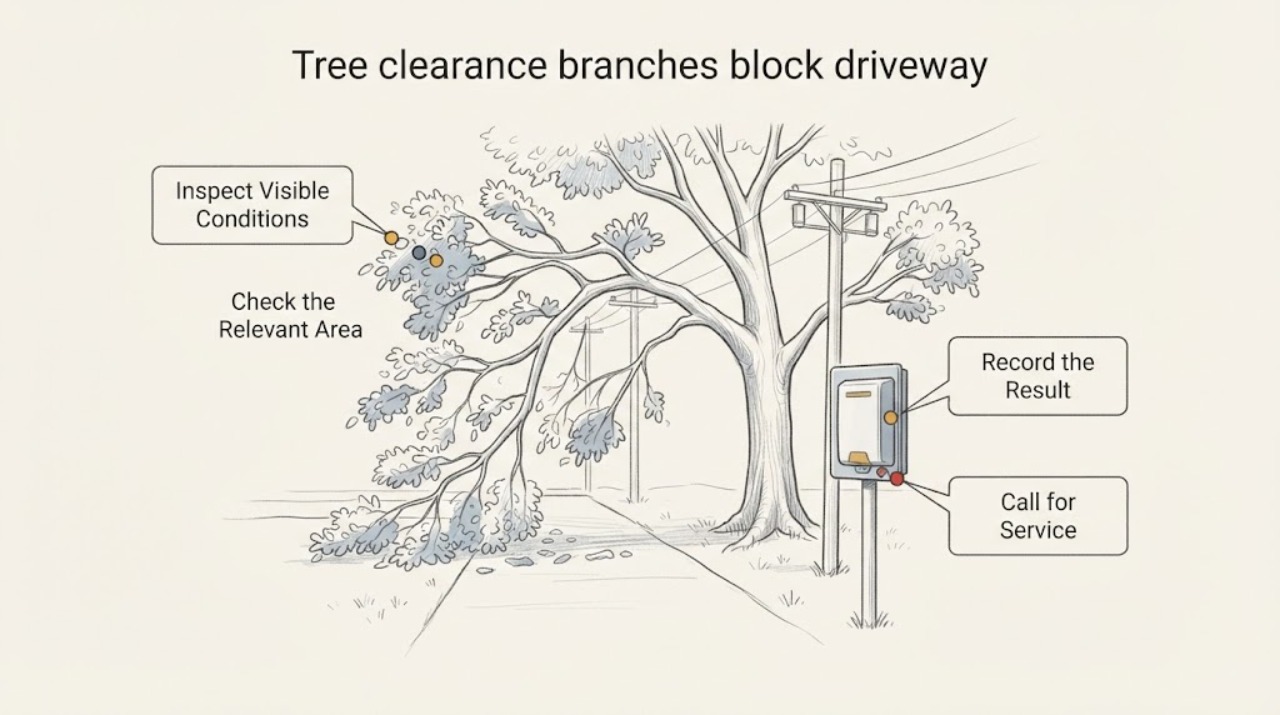
Treat branches blocking a driveway as a clearance and hazard assessment, not a do-it-yourself cutting task. From a safe position outside the driveway and tree-fall area, record the obstruction's location, apparent clearance, branch stability, utility-line proximity, and effect on vehicles, pedestrians, and emergency access.
-
Tree clearance branches near power lines wind movement: What to Check and What to Do Next
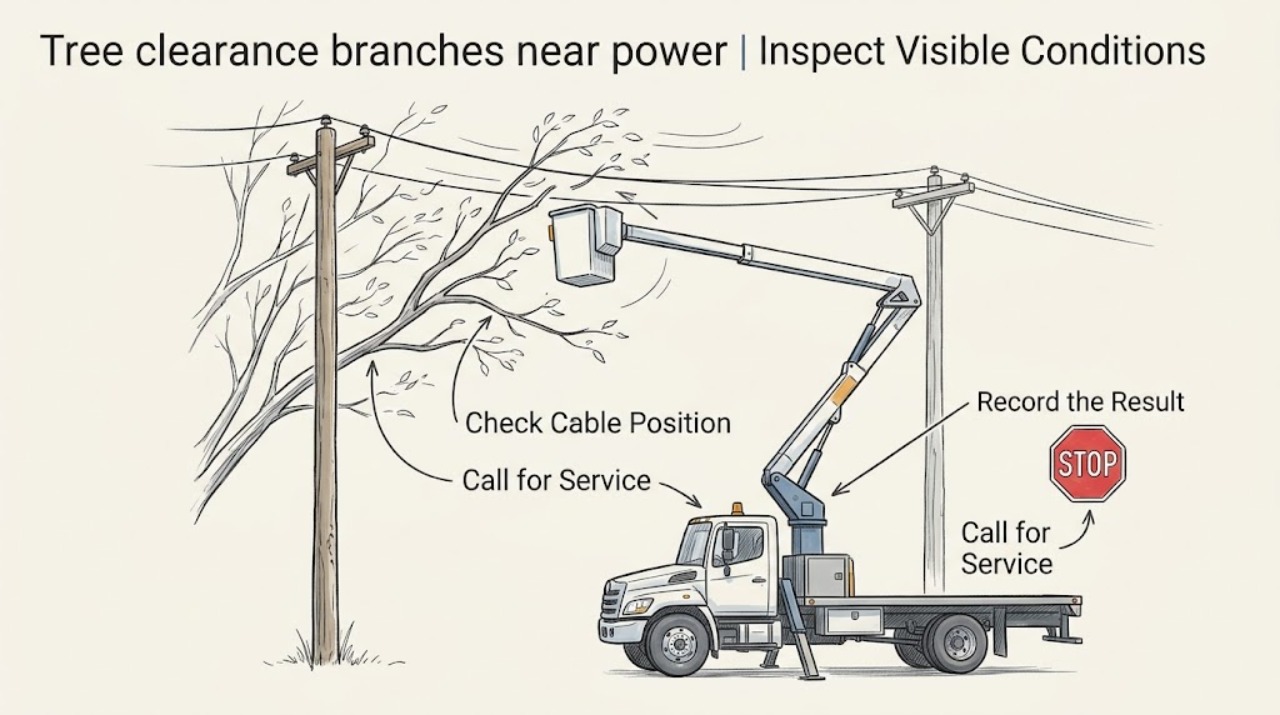
Do not trim, climb, touch, or measure a moving branch near an overhead power line. From a safe location, note whether the branch is merely moving near the line, touching it, caught on it, or has brought a line down.
-
Tree clearance branches near power lines: What to Check and What to Do Next
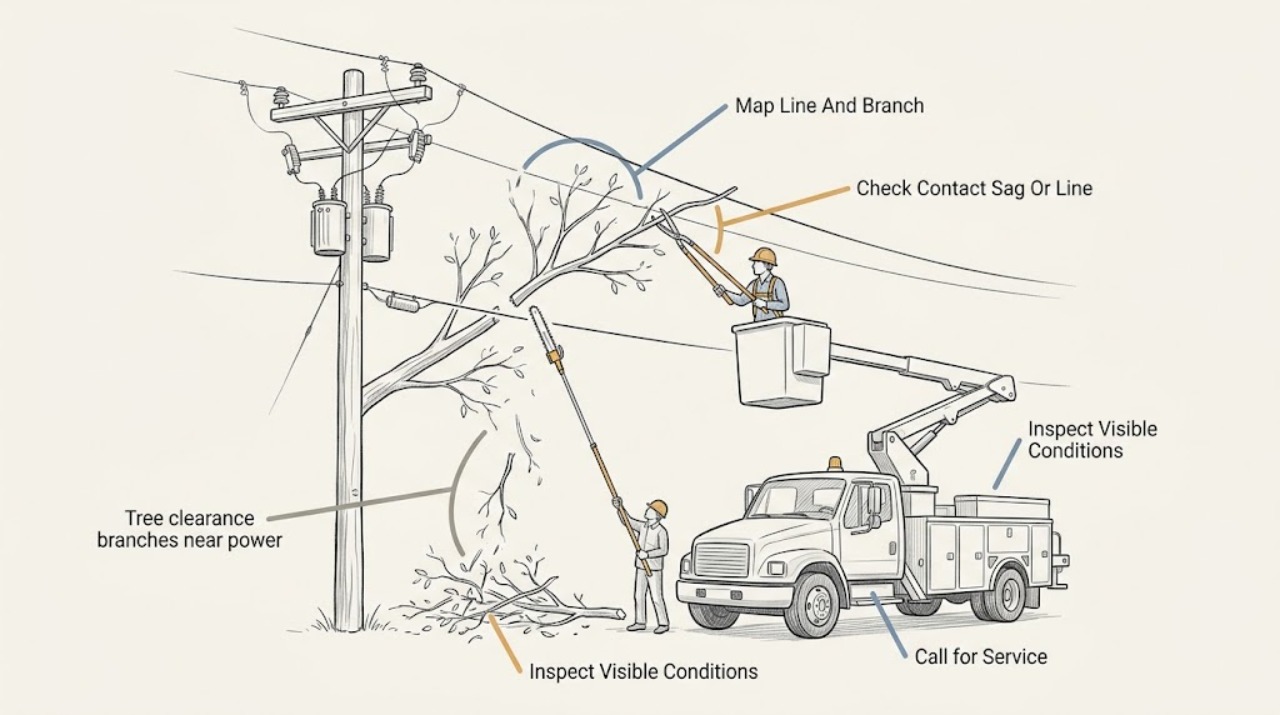
Branches near or touching a power line are an electrical hazard, not a DIY trimming job. From a distant, safe location, document which branches appear closest, whether a line is sagging or already contacted, and whether wind, ice, or a damaged tree changes the risk.
-
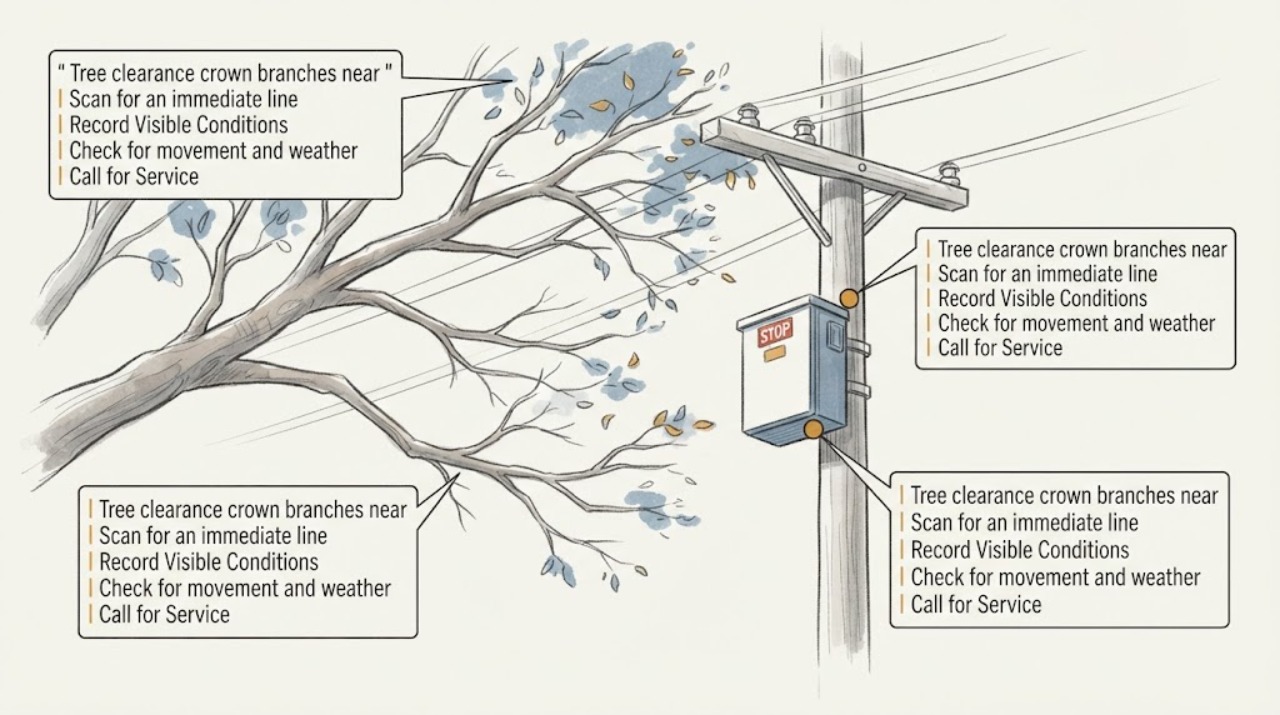
Tree clearance crown branches near power lines: What to Check and What to Do Next
Treat every overhead conductor as energized and keep people, tools, vehicles, and fallen limbs away. From a safe ground position, document which crown branches are close to or touching a line, whether a line is down, and whether weather or movement is changing the hazard.
-
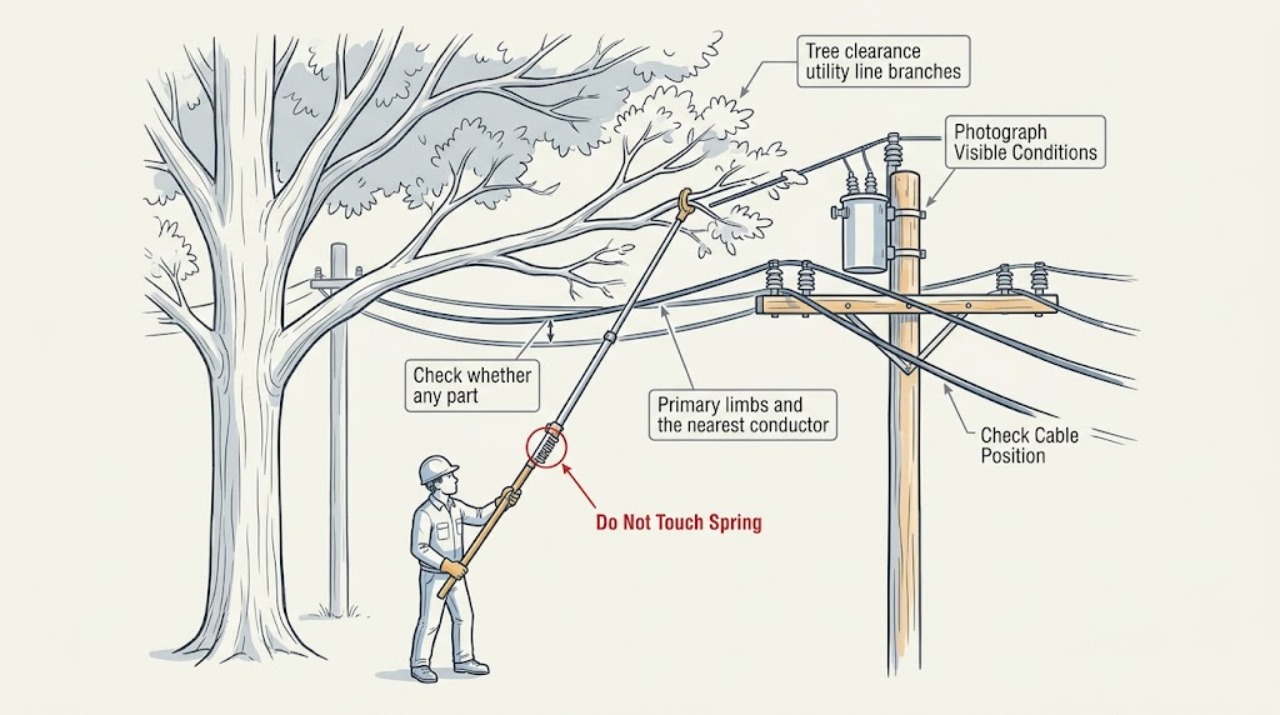
Tree clearance utility line branches near power: What to Check and What to Do Next
Treat every overhead power line as energized and keep people, ladders, tools, vehicles, and branches away. Do not trim, climb, tie back, cut, or pull a branch near a line, and do not assume a line is safe because it looks like a communications cable or because power is out.
-
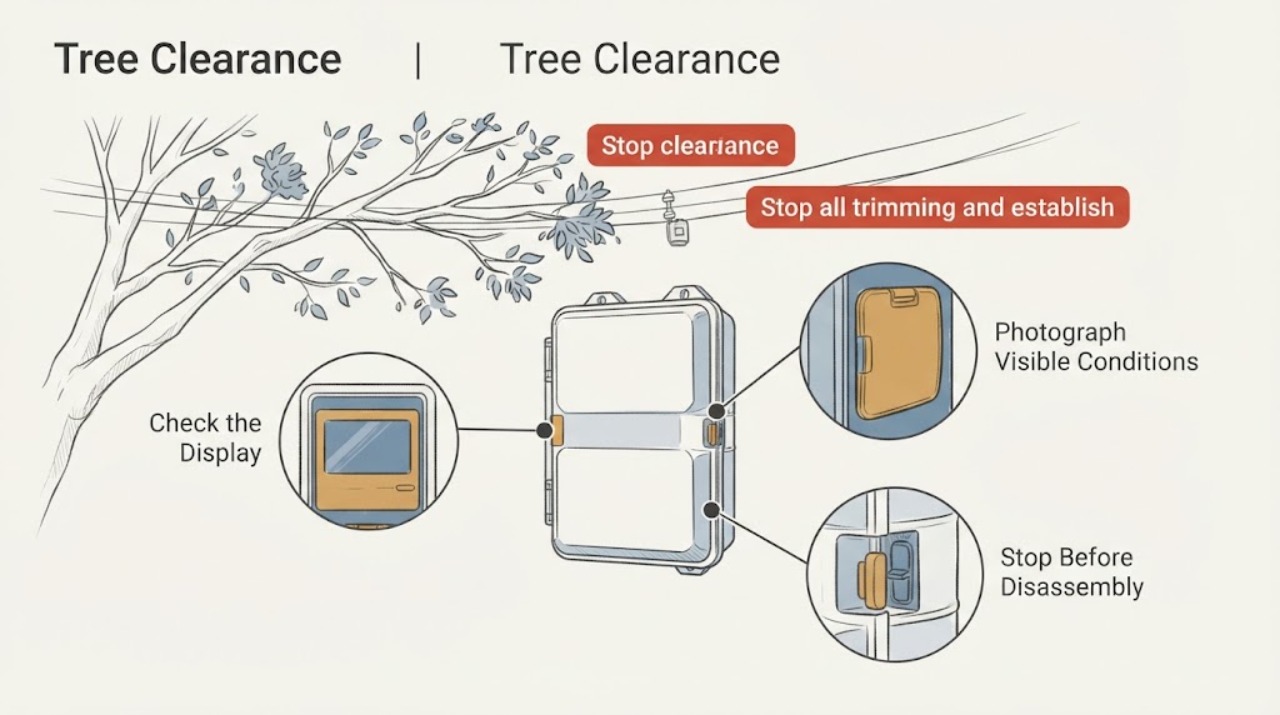
Tree Clearance: Branches Near Power Lines and Contact Risk—What to Check and What to Do Next
Treat every overhead power line as energized and keep people, branches, tools, ladders and equipment away. OSHA describes line-clearance tree work as work near energized lines and says unqualified workers must maintain at least 10 feet of approach distance for lines covered by that guidance; higher-voltage lines require greater, voltage-specific distances.
-
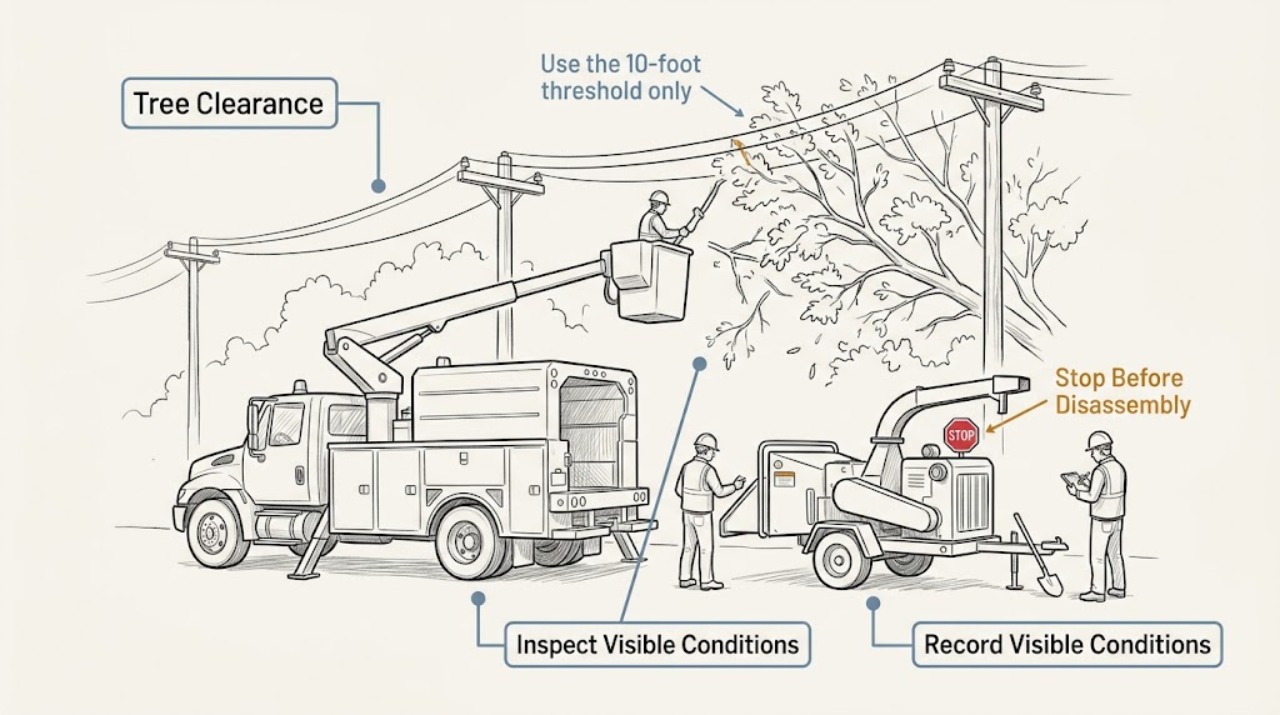
Tree Clearance: Branches Near Power Lines and Overgrowth—What to Check and What to Do Next
Treat branches or brush growing toward an overhead power line as an electrical hazard even when nothing is touching today. From the ground, identify whether the line is a neighborhood distribution line or a larger transmission line, note whether growth is dead, broken, moving, or already contacting the conductor, and stop if the distance is uncertain.
-
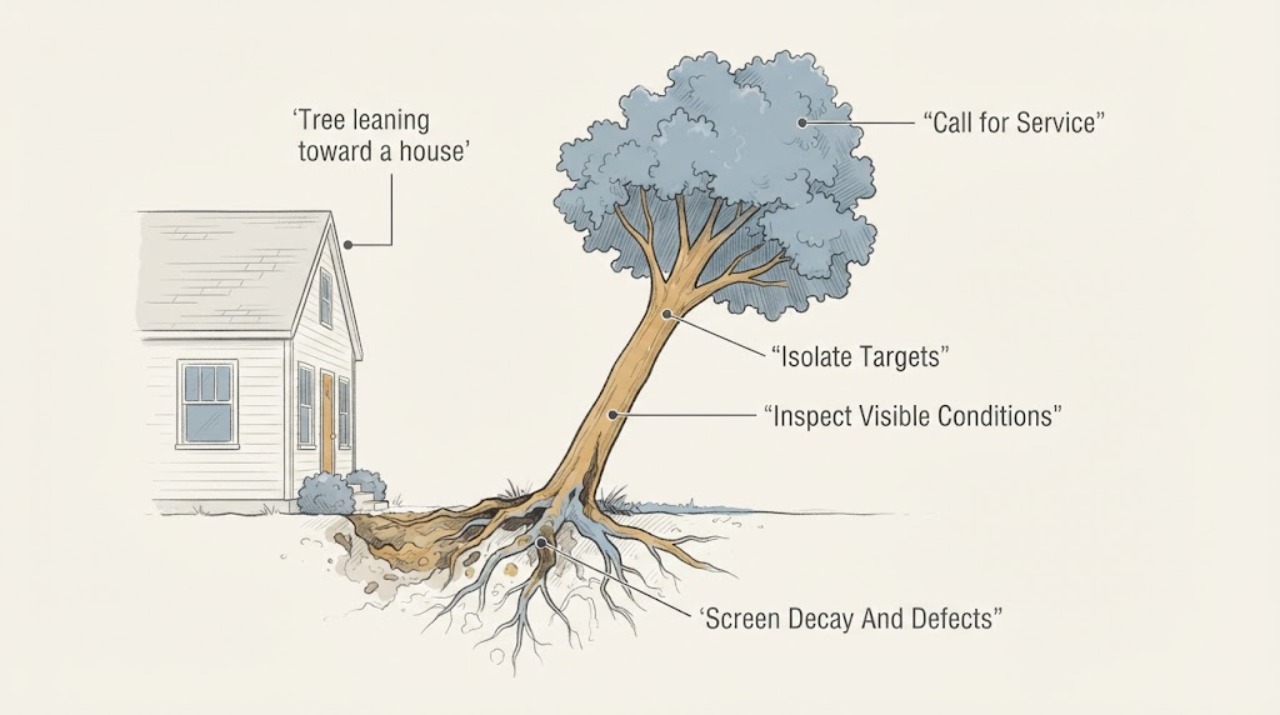
Tree leaning toward a house: Root decay, soil uplift, and the safe next step
A tree leaning toward a house is a target-and-stability problem, not a pruning or bracing project. Stay outside the likely fall area and keep people, pets, vehicles, and movable property away while you look from a distance for a recent lean, raised or cracked soil on the opposite side, exposed or broken roots, root-collar decay, cavities, trunk cracks, dead or hanging branches, and storm or construction changes.