
On this page
Start here
Quick answer
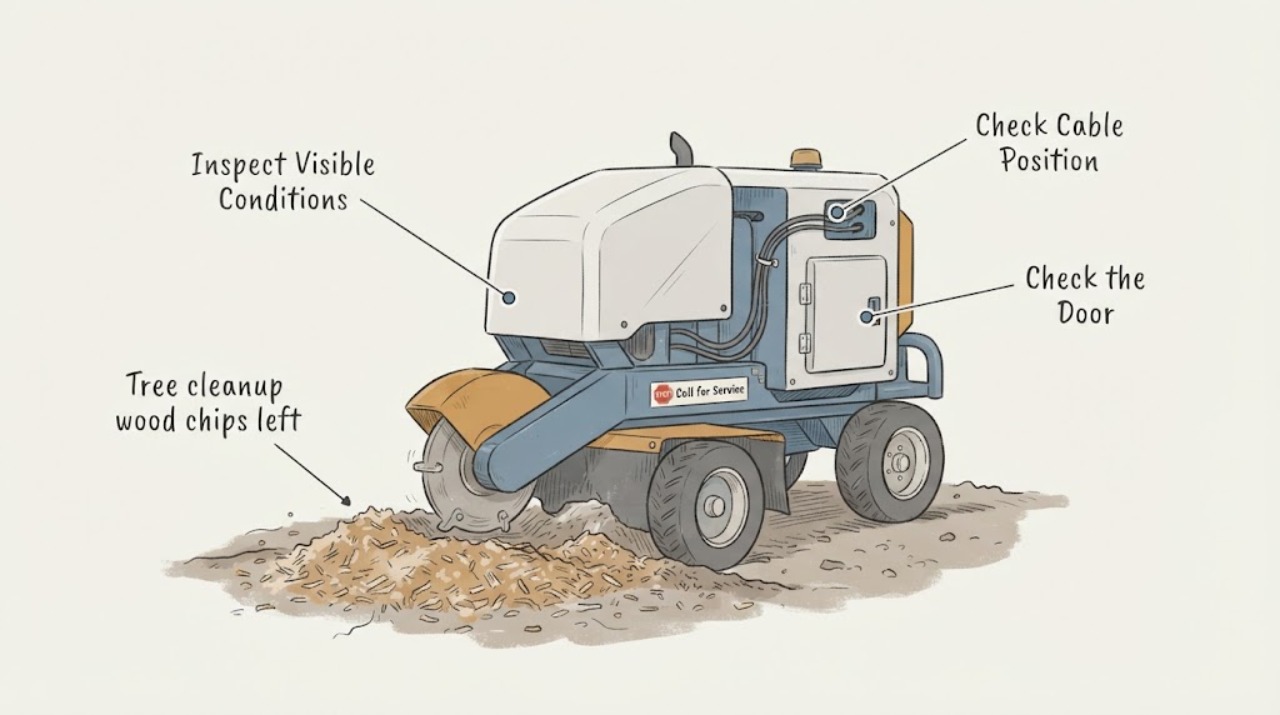
First decide whether the chips are a safe, intentional mulch resource or unfinished contractor cleanup. From a dry, level, ground-level position, look for hidden holes, unstable soil, rocks, metal, wire, and chips crossing walkways or vehicle areas. Light hand raking is reasonable only when the area is clearly safe and the work scope allows it; do not operate a stump grinder, dig into the ground, climb, or bring in heavy equipment. Keep loose chips away from living trunks and stems and do not spread an unknown or contaminated pile near a house or driveway. If the pile is large, the ground is uneven or steep, utilities may be nearby, hazardous debris is present, or haul-away was included in the job, pause and ask the tree service to finish or quote the cleanup.
Work through in order
Diagnostic checks
Use only checks that match the exact appliance or system and its official guide.
-
Check 1
From a dry, level position, visually map the chip pile and the ground around it before stepping into the area. Look for a depression, soft spots, exposed roots, a slope, pooling water, or a pile that hides the edge of the work zone.
Expected result: The surface is level and firm, or the chips conceal an opening, wet soil, unstable edge, or a route that is not safe to walk.
Next step: If the ground is clearly safe, continue with the debris and location checks. If it is not clear, keep people and pets out and ask the tree service to inspect and restore the area.
Stop if: Stop before entering when the surface is soft, sloped, undermined, or not visible enough to judge safely.
Why this matters
Why: A clear, firm surface supports a limited hand-cleanup decision. A hidden depression, unstable ground, or wet area means the chips are masking a site hazard rather than merely making a mess.
-
Check 2
From the edge, separate what is visibly clean chip material from larger wood chunks, rocks, metal, wire, glass, or other unfamiliar debris; do not reach into a concealed pile or handle a sharp or contaminated item.
Expected result: The pile is mostly uniform wood and bark, or it contains mixed objects, unusually fine dust, a chemical odor, animal waste, or material that cannot be identified safely.
Next step: Keep questionable material isolated and document its location for the tree service. Use only ordinary hand cleanup for clearly identified chips when the area and work agreement allow it.
Stop if: Stop handling the pile if sharp debris, suspected contamination, pests, or an unknown substance is visible.
Why this matters
Why: Clean, identifiable chips may be candidates for conditional reuse. Mixed, sharp, odorous, or unknown material should be treated as contractor cleanup or specialized waste rather than garden mulch.
-
Check 3
Walk the perimeter without climbing or digging and note whether chips cover a walkway, driveway, drain, door approach, foundation edge, parked-vehicle area, planting bed, or the base of another living tree.
Expected result: Chips are confined to a level soil area, or they have migrated onto hard surfaces, access routes, drainage paths, or against a trunk or stem.
Next step: Prioritize keeping access and drainage clear and keep mulch off trunks and stems. If moving the material would require machinery, repeated lifting, or entry into an unsafe area, request professional cleanup.
Stop if: Stop if the pile blocks an exit, drain, utility access, or a safe path and cannot be cleared without equipment.
Why this matters
Why: A contained soil area is the most plausible place for a reuse discussion. Chips on traffic or drainage surfaces are a slip and access concern, and chips touching trunks or stems should not be left as a mound.
-
Check 4
Check only visible markers and your existing site records for irrigation, landscape lighting, utility lines, or other buried services near the grinding area; do not probe, trench, or dig to find them.
Expected result: No buried-service concern is known, or a marker, exposed conduit, irrigation component, disturbed line, or uncertain service location is present.
Next step: Keep cleanup on the surface and ask the tree service or the relevant utility-locating service to identify the safe boundary before any excavation or grading is considered.
Stop if: Stop immediately if a line, conduit, marker, or suspected service is exposed or damaged; do not touch or cover it.
Why this matters
Why: An absence of visible evidence is not proof that the ground is clear. A marker or uncertainty changes the job from light surface cleanup to a utility-aware professional assessment.
-
Check 5
Review the written work scope and compare it with the remaining volume, access, and ground condition. If the scope says chips or debris will be hauled away, photograph the remaining pile and note whether a final grade or topsoil restoration was promised.
Expected result: The remaining work matches an agreed cleanup, or the pile is too large, spread out, steeply placed, or inaccessible for safe hand cleanup.
Next step: Send the tree service the location, condition, and scope details and ask them to complete or price the cleanup. If hand raking is clearly safe and permitted, work from the edge in small amounts and keep the area controlled.
Stop if: Stop light cleanup when the work becomes heavy, repetitive, dusty, unstable, or requires a grinder, loader, vehicle, digging, or climbing.
Why this matters
Why: A scope mismatch is a service follow-up, not a reason to operate equipment yourself. A small, safe surface scatter may be hand-raked; a large or inaccessible pile usually needs the crew and equipment that created it.
Use your observations
Decision map
Find the observation that best matches what you see, then follow the next safe action.
-
PATH 01Safety boundary
What you see
The chips are identifiable, the surface is firm and level, and the pile is on a suitable soil area.
Do this next
Discuss limited surface reuse or hand-rake only the amount that can be moved safely. Keep the layer even and keep it away from living trunks and stems.
Why this path and its safety boundary
Safety stop: Stop if the material becomes mixed, the ground changes, or the pile must be moved with equipment.
-
PATH 02Safety boundary
What you see
Chips touch a trunk or stem, cover a drain or access route, or spill onto a driveway or vehicle area.
Do this next
Treat placement as the immediate issue: keep trunks, drainage, and access clear and request tree-service cleanup if doing so safely would require more than light surface raking.
Why this path and its safety boundary
Safety stop: Stop when clearing would require climbing, heavy lifting, machinery, or entry into an uncertain surface.
-
PATH 03Safety boundary
What you see
A hole, soft ground, buried-service marker, exposed line, sharp object, or unknown/odorous material is present.
Do this next
Keep people and pets away, do not dig or handle the material, and ask the tree service or the appropriate utility or waste professional to assess it.
Why this path and its safety boundary
Safety stop: Do not continue surface cleanup in the affected area until the hazard is identified and controlled.
-
PATH 04Safety boundary
What you see
The written scope included haul-away, grading, or restoration and the promised work is incomplete.
Do this next
Provide the contractor with the pile location, a description of the remaining work, and clear photos; request a completion visit or a written change-order quote.
Why this path and its safety boundary
Safety stop: Do not substitute a stump grinder, loader, truck, excavation, or tree-climbing work for the contracted cleanup.
Helpful context
Understand the symptom
Why leftover chips need a quick check
A stump grinder turns the visible stump and some surrounding wood into a coarse, mixed pile. The result may contain bark, larger pieces, stones, or hidden objects, and the grinding area can leave a shallow depression that is not obvious under the chips. Treat the pile and the ground beneath it as an observation area first, not as a place to dig or run equipment.
Reuse versus haul-away
Clean arborist chips can be useful as a surface mulch in suitable landscape beds. Extension guidance describes wood chips as useful for weed suppression and moisture or soil protection, while also warning that a deep layer or a pile against a trunk can create plant-health problems. The cleanup decision should therefore account for the material, the location, and the original tree-service scope—not just the volume.
Only after diagnosis
Potential parts
- yard-waste bags
Only relevant for a small, clean, ground-level amount that can be handled without entering an unstable area and where local waste rules accept the material.
Confirm the bag's intended load and local yard-waste requirements; do not use bags to move sharp, contaminated, or unusually heavy debris. - landscape rake
Only relevant after the surface is visibly firm and level and the chips are clean enough for light surface raking.
Choose a hand tool appropriate for the user's reach and the material; it is not a substitute for equipment or a professional assessment of a hidden stump hole. - topsoil
Only relevant after the stump area has been inspected and any required removal, grading, and utility-safe boundary have been addressed.
Confirm the required soil type and restoration scope for the site before ordering; do not use soil to bury an unknown hole, line, or contaminated debris.
When checks do not resolve it
Need a professional?
Use a tree-service follow-up for unfinished haul-away, grading, or stump-area restoration; use a utility-locating professional before any digging; use a qualified waste professional for suspected contaminated or sharp mixed debris.
Have this ready
- Provide the job date, the agreed cleanup scope, the pile location, whether the area is level or soft, what unusual debris is visible, proximity to trunks, drains, structures or vehicles, and photos taken from a safe distance.
Common questions
FAQ
Can leftover stump-grinding chips be used as mulch?
Sometimes. Reuse is most reasonable when the chips are identifiable and clean, the surface is suitable, and the placement keeps them away from trunks, stems, structures, vehicle areas, drains, and access routes. Unknown or contaminated material should be removed or assessed rather than spread.
Should I cover the stump hole with more chips or soil right away?
Not before the area is visibly assessed. Chips can hide a depression, soft ground, debris, or a buried-service concern. Do not dig or cover an unknown hazard; ask the tree service to inspect and restore the stump area.
What if the tree company left the chips even though cleanup was included?
Check the written scope, photograph the remaining pile from a safe position, and request a completion visit or written quote for anything outside the scope. Do not operate a grinder, bring in heavy equipment, climb, or excavate to finish the job yourself.
Read the exact guide
Official sources
- Mulching woody ornamentals with organic materialsOregon State University Extension Service · The extension publication describes arborist mulch as coarse chipped tree material, notes possible large pieces, and explains placement, depth, settling, and source-quality considerations.
- Mulching and perennial overwinteringUniversity of Minnesota Extension · The extension article identifies wood chips as a common mulch for beds and trees and describes weed pressure, soil, root, and moisture considerations.
- Promote Plant HealthPenn State College of Agricultural Sciences Cooperative Extension · The fact sheet explains that excessive mulch can smother roots, mulch should not touch trunks or stems, and uncomposted wood chips should not be used near houses or vehicle parking.
Community feedback
Share a repair observation
Share a plain-text repair observation. Accepted observations are published automatically; this page may take a moment to update.