
On this page
Start here
Quick answer
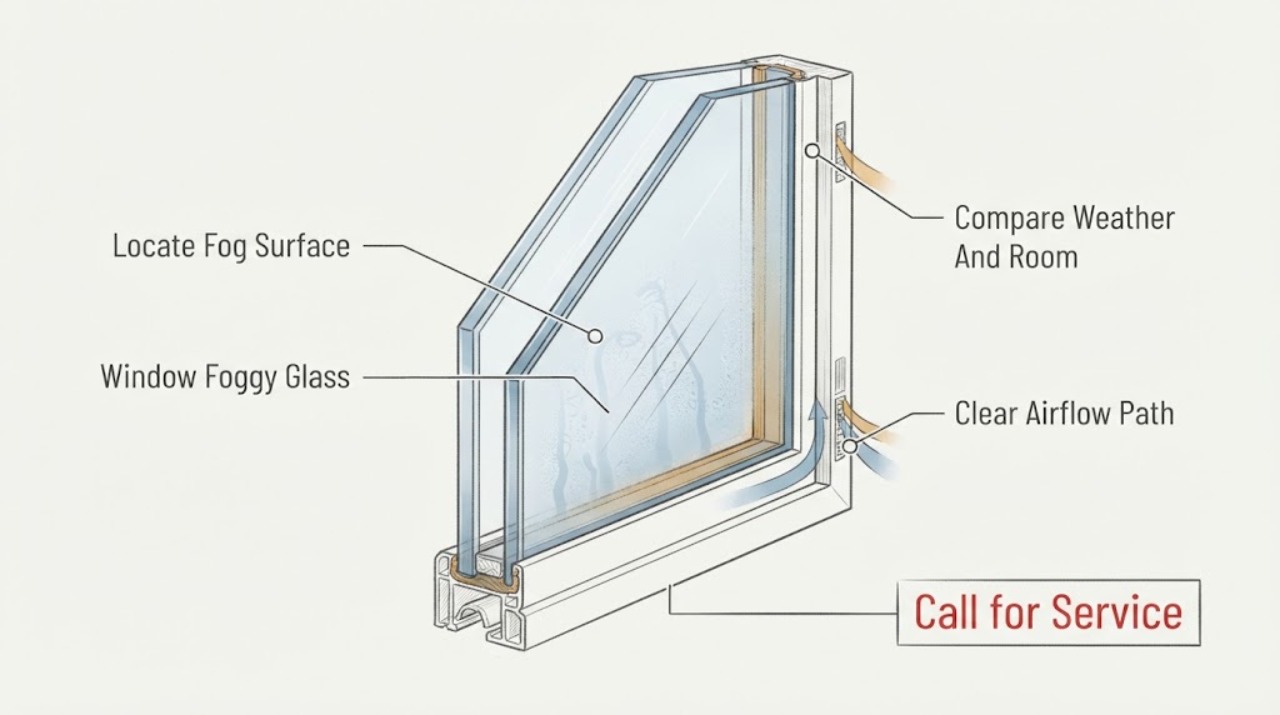
First locate the fog. Condensation on the room-side glass usually comes from indoor humidity meeting a cold surface; condensation on the outside can occur in some weather and does not automatically mean a failed seal. Fog, droplets, or a haze trapped between two panes cannot be wiped from either surface and points to the insulating-glass edge seal or glazing unit, while fog only around the frame or sash may be an air, water, or drainage issue. Dry the accessible surface, compare the same window on a dry day, inspect the frame, sash, gasket, and weep paths without prying the glass, and manage indoor humidity and airflow. Do not drill a pane, inject liquid into the glass cavity, scrape a gasket, pressure-wash the window, or apply film or sealant without manufacturer approval. Have the manufacturer or a qualified glazier assess persistent between-pane fog, water damage, cracked glass, a loose pane, failed drainage, or a sash that will not close or lock.
Before you begin
Safety first
- This article supports safe surface inspection, approved cleaning, and ordinary humidity or drainage care only. Do not drill or vent glass, inject a cavity, scrape seals, pressure-wash, use abrasive or petroleum cleaners, remove glazing, or work at height without qualified help.
Work through in order
Diagnostic checks
Use only checks that match the exact appliance or system and its official guide.
-
Check 1
From a safe interior position, inspect both accessible faces of the glass and the visible edge around the sash or frame. Wipe only the room-side surface with a soft approved cloth, then look from different angles without removing glazing beads or trim.
Expected result: Classify the fog as on the room side, on the outside, between two panes, around the frame or sash edge, or not clearly located; note whether it wipes away and returns.
Next step: Photograph the location while visible and continue with the matching humidity, seal, or frame inspection.
Stop if: Do not pry the glass, drill a pane, inject liquid, or lean outside to inspect the exterior.
Why this matters
Why: Room-side fog favors indoor humidity and a cold surface. Outside fog can be weather-related. Haze or droplets trapped between panes indicate an insulating-glass seal or glazing-unit question. Fog around a frame may indicate water or air infiltration.
-
Check 2
Record indoor and outdoor conditions when the fog appears, including recent cooking, bathing, laundry, humidifier use, closed curtains or blinds, cold weather, and whether nearby windows show the same pattern.
Expected result: Note whether the fog clears after ventilation or lower humidity, occurs only during cold weather, appears on one window, or persists regardless of room conditions.
Next step: Manage humidity and airflow as a controlled test for surface condensation, but preserve photos and observations for a service decision if fog is trapped between panes.
Stop if: Do not cover a wet frame, ignore recurring wall moisture, or assume humidity caused fog that is visibly inside a sealed glass cavity.
Why this matters
Why: A room-wide or weather-dependent room-side pattern supports condensation from indoor moisture and cold surfaces. A persistent between-pane pattern on one unit is less likely to be corrected by ventilation alone and needs glazing assessment.
-
Check 3
For room-side condensation, improve air movement around the glass by opening curtains or blinds during daylight, using kitchen and bath exhaust as needed, and managing the humidifier or dehumidifier according to the equipment instructions; do not direct a heater at the glass.
Expected result: Observe whether the room-side moisture decreases when indoor moisture is controlled and air can move over the glass, and whether the frame or sill remains wet or develops staining.
Next step: Continue normal ventilation and humidity management, and arrange a window or home-performance assessment if moisture damages the frame or does not respond.
Stop if: Do not seal over mold, wet framing, or active water, and do not use an unsafe heat source to dry the glass.
Why this matters
Why: Improvement supports surface condensation driven by indoor humidity and temperature. Persistent wetness, staining, mold-like growth, or moisture returning at low indoor humidity points toward a cold bridge, air leak, water intrusion, or window performance issue.
-
Check 4
With the window closed, inspect the visible sash, frame, gasket, corner joints, sill, and latch for cracked or missing seal material, gaps, loose glazing, staining, soft wood, or a sash that does not close squarely.
Expected result: Record an intact dry assembly, a worn or missing gasket, a frame or sash gap, moisture at the sill or corner, damaged glazing, or a door-like window that cannot lock or close.
Next step: Use the manufacturer care instructions for an accessible gasket or caulk check; document damage and arrange service before applying material around the glass.
Stop if: Do not scrape the seal, remove glazing beads, force the sash, or caulk over drainage or active water.
Why this matters
Why: A worn weatherstrip or caulk can reduce air and water performance, but between-pane fog is not repaired by sealing the exterior surface. A loose pane, damaged frame, active water, or failed latch needs professional diagnosis.
-
Check 5
Inspect the sill, track, and visible weep openings for dirt, paint, sealant, leaves, or other blockage. Remove only loose surface debris with a soft dry brush or vacuum attachment as the manufacturer permits; do not probe into a sealed cavity.
Expected result: Note whether water drains through the intended path, pools in the track, exits outside, or remains trapped; record any blocked or damaged opening.
Next step: Retest after safe cleaning during normal weather or with a manufacturer-approved method. Escalate persistent pooling, leakage, or damaged weep components.
Stop if: Do not drill, enlarge, fill, tape over, or oil a weep opening, and do not pressure-wash the window.
Why this matters
Why: A blocked drainage path can leave water around the sash or frame and can be mistaken for fogging. Clearing permitted debris may restore drainage, but water that remains or enters the wall indicates a water-management or frame problem.
-
Check 6
Clean the accessible glass and frame only with the manufacturer's approved method: use a soft cloth and mild compatible cleaner, rinse or wipe as directed, and dry the surface so trapped moisture can be distinguished from surface residue.
Expected result: Record whether the haze wipes away, whether it returns on one accessible face, remains visibly between panes, or appears with scratches, damaged edge sealant, or staining.
Next step: Stop cleaning once the accessible surfaces are clear; provide the photographs and window identity to the manufacturer or qualified glazier for persistent between-pane fog.
Stop if: Do not use a razor, steel wool, abrasive pad, petroleum solvent, pressure washer, or unapproved applied film.
Why this matters
Why: A removable surface film is a cleaning issue. Haze that remains between panes cannot be reached by surface cleaning and supports an insulating-glass service decision. Scratches or edge damage can worsen performance and should not be polished aggressively.
-
Check 7
Record the manufacturer, series, glass marking if visible, sash or frame dimensions, number of panes, location of the fog, and any warranty or installation information without removing the glass or trim.
Expected result: Determine whether the unit is single-pane, insulated double- or triple-pane, a storm or secondary panel, or an unknown assembly; note whether the fog is inside a removable storm panel or the primary sealed unit.
Next step: Use the exact manufacturer guidance or ask a qualified glazier to identify the glazing unit and compatible replacement or repair path.
Stop if: Do not dismantle the sash, cut an edge seal, remove spacers, or order a glass unit from appearance alone.
Why this matters
Why: A surface or secondary-panel issue can have a different cleaning or ventilation path than moisture trapped in the primary insulating-glass unit. Unknown construction or inaccessible markings makes generic seal repair unreliable.
-
Check 8
Prepare a service handoff when fog persists or damage is found: provide the window identity, pane location, photographs from both sides, weather and indoor-moisture pattern, drainage result, frame or gasket condition, and whether cleaning changed the haze.
Expected result: Escalation is indicated by persistent moisture between panes, cracked or loose glass, wet or rotten framing, blocked or failed drainage, air or water intrusion, a failed latch, or fog that does not match the humidity conditions.
Next step: Keep the window closed and secured where possible and arrange manufacturer, glazier, or home-performance service for diagnosis before ordering parts.
Stop if: Do not operate a loose or cracked pane, remove the sash, work at height, or leave a water-damaged frame unprotected.
Why this matters
Why: These results can involve an insulating-glass seal, glazing unit, gasket, sash, frame, installation, or water-management path. A surface sealant cannot establish or restore a safe sealed cavity.
Use your observations
Decision map
Find the observation that best matches what you see, then follow the next safe action.
-
PATH 01Safety boundary
What you see
Fog is on the room-side surface, wipes away, and decreases when indoor moisture and airflow are managed.
Do this next
Continue appropriate ventilation, humidity management, and airflow around the window; monitor the frame and sill for damage.
Why this path and its safety boundary
Why it matters: Surface condensation from humid indoor air and a cold glass or frame is more likely than a failed insulating-glass seal.
Safety stop: Stop cosmetic treatment if staining, mold-like growth, active water, or persistent wet framing appears.
-
PATH 02Safety boundary
What you see
Fog or droplets are on the exterior surface during weather or cooling conditions and clear as the surface conditions change.
Do this next
Keep the exterior drainage paths clear and monitor for moisture between panes, frame leakage, or damage.
Why this path and its safety boundary
Why it matters: Exterior condensation can occur on high-performing or cooled glass and does not by itself prove an interior seal failure.
Safety stop: Stop if the glass is cracked, loose, damaged, or moisture enters the frame or wall.
-
PATH 03Safety boundary
What you see
Haze or droplets remain trapped between two panes after both accessible surfaces are dry and clean.
Do this next
Document the unit and arrange manufacturer or qualified glazier evaluation for the appropriate unit or sash repair.
Why this path and its safety boundary
Why it matters: The insulating-glass edge seal or glazing unit needs a product-specific assessment; surface cleaner or caulk cannot reach the cavity.
Safety stop: Do not drill, vent, inject, scrape, or apply film or sealant to the glass cavity.
-
PATH 04Safety boundary
What you see
Fog is accompanied by wet track or sill, staining, soft material, blocked weep paths, or water entering around the frame.
Do this next
Clear only loose permitted debris, protect the interior, and arrange window or building-envelope service for persistent water.
Why this path and its safety boundary
Why it matters: A drainage, flashing, seal, installation, or frame problem may be damaging the assembly; humidity alone is not enough to explain it.
Safety stop: Do not caulk over active water, block weeps, pressure-wash, or leave wet framing concealed.
-
PATH 05Safety boundary
What you see
The pane is cracked or loose, the sash or frame is distorted, the window will not close or lock, or the fog is associated with physical damage.
Do this next
Keep the area clear and the window secured without forcing it, then arrange qualified glazier or window service.
Why this path and its safety boundary
Why it matters: Glass safety, weather resistance, and security require professional assessment rather than a seal-only repair.
Safety stop: Do not touch cracked glass, remove glazing beads, force hardware, or work at height.
-
PATH 06Safety boundary
What you see
Room-side condensation remains across multiple windows or returns despite ordinary ventilation and humidity management.
Do this next
Arrange a home-performance or HVAC assessment and provide the room pattern, humidity observations, and window photographs.
Why this path and its safety boundary
Why it matters: The home may have an indoor moisture, ventilation, thermal-bridge, or building-envelope issue rather than one failed seal.
Safety stop: Do not seal over wet surfaces, ignore damage, or use an unapproved coating to hide recurring condensation.
Helpful context
Understand the symptom
The side of the glass changes the diagnosis
Room-side condensation is a humidity and surface-temperature problem: moisture in indoor air reaches a cold glass or frame surface. Outside condensation can occur when the exterior glass is cooled by the weather or indoor air conditioning. Fog or moisture visibly sealed between panes is different because it is inside the insulating-glass cavity, where normal wiping cannot reach. A haze around a frame, sill, or sash may instead be water intrusion or a drainage issue.
Clean and ventilate without damaging the seal
Use a soft cloth and the manufacturer's approved cleaner on accessible glass, then dry it so the location and recurrence of moisture can be observed. FGIA warns against petroleum-based or abrasive cleaners, pressure washing, and tools that can scratch glass or weaken seals. Keep tracks, sills, and weep openings clear, but do not poke a hole in a pane or seal a drainage route to hide water.
Between-pane fog is usually a glazing-service decision
If moisture repeatedly returns between panes after the outside and inside surfaces are dry, the insulating-glass edge seal or glazing unit needs a product-specific assessment. The remedy may be a replaceable insulated glass unit, sash component, or another manufacturer-approved repair; a surface sealant cannot restore the sealed cavity. Persistent water, a cracked pane, loose glazing, or a frame that has deteriorated should be assessed before any cosmetic treatment.
Only after diagnosis
Potential parts
- insulating glass unit
Consider this category only when persistent moisture is confirmed between panes and the manufacturer or qualified glazier identifies the sealed unit as the serviceable failed component.
Match the exact opening, pane configuration, dimensions, spacer, coatings, glazing method, safety requirements, and manufacturer fit information; do not order from appearance alone. - window glazing gasket or seal
Consider this category only when a professional or exact manufacturer instructions confirm a worn or displaced accessible glazing gasket is causing the observed leak or fog path.
Confirm the window series, glass thickness, gasket location, compression, drainage, and installation method; do not cut or scrape a sealed insulating-glass edge. - window sash or frame component
Consider this category only when the frame or sash is distorted, rotten, damaged, or unable to hold the glazing and a qualified assessment shows that a component repair is appropriate.
Match the exact window series, opening size, operation, glazing system, weather seals, and structural or water-management requirements before ordering.
When checks do not resolve it
Need a professional?
Safety scope: This article supports safe surface inspection, approved cleaning, and ordinary humidity or drainage care only. Do not drill or vent glass, inject a cavity, scrape seals, pressure-wash, use abrasive or petroleum cleaners, remove glazing, or work at height without qualified help.
Common questions
FAQ
How can I tell whether window fog is on the surface or between panes?
Wipe each accessible face with a soft approved cloth and view the glass from different angles. Surface moisture or film should change when wiped; haze or droplets that remain trapped between two panes cannot be reached from either side and need a glazing assessment.
Does foggy window glass always mean the seal failed?
No. Room-side condensation can come from humid indoor air meeting a cold glass or frame, and exterior condensation can occur in some weather. Persistent moisture between panes is a different symptom that supports an insulating-glass or edge-seal assessment.
What can I do about condensation on the inside of a window?
Manage indoor humidity and improve airflow around the glass: use kitchen and bath exhaust, manage a humidifier or dehumidifier, and avoid keeping curtains tightly closed against the window. Arrange assessment if moisture persists at low humidity or damages the frame or wall.
Can I drill a hole in a foggy double-pane window to dry it?
No. Drilling, venting, injecting liquid, or applying a surface sealant can damage the glass and does not establish a safe repair for the sealed cavity. Document the unit and ask the manufacturer or a qualified glazier about the appropriate insulated-glass or sash repair.
When should a professional repair a foggy window?
Arrange service for persistent between-pane moisture, cracked or loose glass, water or rot at the frame, blocked or failed drainage, a sash that will not close or lock, recurring fog across the home, or any repair requiring glazing removal, exterior access, or unknown coatings.
Read the exact guide
Official sources
- Energy-Efficient Home Improvement Credit Insulation and Air-Sealing EssentialsU.S. Department of Energy · U.S. Department of Energy residential air-sealing guidance; exact window glazing and moisture repairs require product-specific assessment.
- Understanding Indoor Condensation: Tips & InsightsFenestration and Glazing Industry Alliance · FGIA homeowner condensation guidance; actual condensation depends on the building, climate, window, and indoor conditions.
- Residential Windows, Doors, & SkylightsENERGY STAR · ENERGY STAR residential window guidance; exact product instructions and building conditions control a particular window.
- Maximize Window, Door & Skylight LifespanFenestration and Glazing Industry Alliance · FGIA homeowner maintenance guidance; the installed product manufacturer's instructions control specific cleaning and repair methods.
Community feedback
Share a repair observation
Share a plain-text repair observation. Accepted observations are published automatically; this page may take a moment to update.