
On this page
Start here
Quick answer
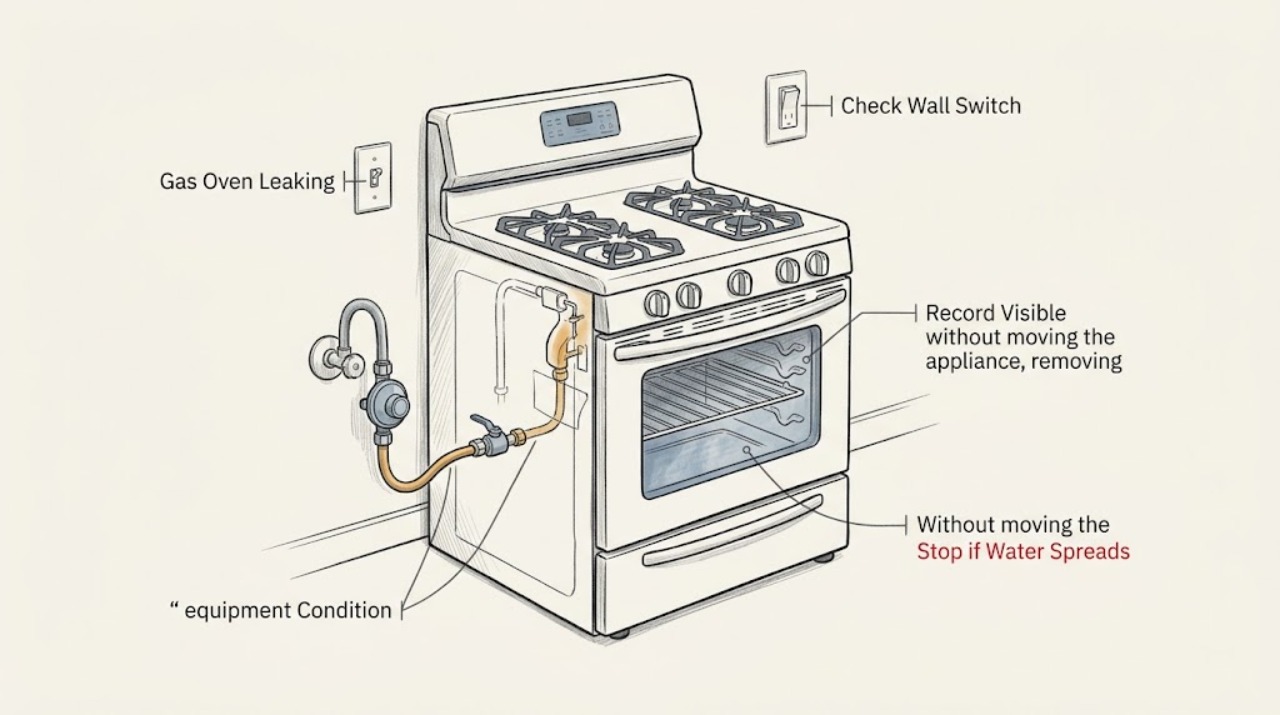
If an Amana gas oven or range smells like gas when the burners are not in use, do not troubleshoot the appliance in place: do not light anything, touch electrical switches, or use a phone inside the building. Leave the area and contact the gas supplier from a safe location; if the supplier cannot be reached, contact the fire department. Amana says gas leaks may not always be detectable by smell, and installation or service must be performed by a qualified installer, service agency, or the gas supplier.
Work through in order
Diagnostic checks
Use only checks that match the exact appliance or system and its official guide.
-
Check 1
If gas is smelled when the burners are not intentionally operating, or if there is hissing, illness, or any uncertainty about a leak, stop using the Amana range and leave the building or affected area immediately. Do not light an appliance, touch electrical switches, or use a phone inside.
Expected result: The odor is present away from normal burner use, is strong/persistent, or is accompanied by hissing, symptoms, or an unknown source.
Next step: From a safe location, contact the gas supplier and follow its instructions. If the supplier cannot be reached, contact the fire department. Do not re-enter or resume use until the responsible authority says it is safe.
Why this matters
Why: The appliance or its gas supply may be leaking fuel; the immediate risk is fire, explosion, or harmful exposure, not a routine ignition fault.
-
Check 2
Only after there is no current gas odor and the area has been declared safe, record when the smell occurred: during intentional cooktop use, during oven ignition/preheat, immediately after a recent installation/reconnection, or while all burners were off.
Expected result: The smell occurred only briefly during normal burner use, or it occurred with no burner on, persisted, or began after gas work.
Next step: Treat any no-burner or persistent odor as a service/supplier matter. For a brief odor during operation, stop if it is stronger than expected or does not clear and have the appliance checked before further cooking.
Why this matters
Why: Amana says a slight odor can occur while the cooktop is being used, but gas with no burner on or an unexplained/persistent odor needs gas-supply or qualified-service assessment. Recent reconnection can also leave air in a gas line, but that does not authorize working on the line yourself.
-
Check 3
Without moving the appliance, removing panels, turning on a burner, or touching a suspected gas connection, note any visible damage, displaced range, disturbed connector, flame outside the intended burner area, or signs of a recent installation/reconnection from a safe distance.
Expected result: A connector, valve, regulator, burner area, or surrounding installation appears damaged, displaced, or involved in the odor; or the condition cannot be safely seen.
Next step: Keep the appliance out of service and give the observations and exact model to the gas supplier or qualified appliance professional. Do not tighten fittings, relight burners, or remove covers.
Why this matters
Why: Gas-path and combustion components are safety-critical. The Amana manual requires installation and service by a qualified installer, service agency, or gas supplier; visual observations are information for that professional, not a DIY diagnosis.
-
Check 4
If the concern is an oven odor or poor combustion rather than a suspected fuel leak, and only when the range is fully cool and has been declared safe, check that the oven bottom and vents are not covered with foil or a liner and that packaging or heavy residue is not obstructing airflow.
Expected result: Foil/liner, packaging, or residue is blocking the oven bottom or airflow, or there is no such obstruction.
Next step: Remove only loose, accessible material as allowed by the model instructions, then have persistent odor, yellow flames, soot, or any suspected leak assessed by a qualified professional. If gas is smelled, return to the emergency response and leave.
Why this matters
Why: Amana warns that covering the oven bottom can block air or gas flow and may cause improper combustion; an obstruction may explain an odor but does not prove the gas system is sound.
-
Check 5
For a no-flame or ignition complaint after installation or reconnection, provide the professional with whether the main gas supply was recently connected, whether the cooktop works, whether the model uses natural or LP gas, and whether the power supply is properly grounded. Do not test the gas line or regulator yourself.
Expected result: The range was recently installed/reconnected, the cooktop and oven behave differently, or the fuel type/installation status is uncertain.
Next step: Have a qualified installer, gas supplier, electrician, or authorised appliance service provider verify the installation and appliance. Do not use an adapter, extension cord, or improvised gas-line fix.
Why this matters
Why: Amana distinguishes the home's main gas valve from the oven regulator shut-off and notes that ignition depends on a proper ground path; incorrect installation or fuel configuration can create unsafe operation.
-
Check 6
Stop all appliance troubleshooting and arrange qualified service when the odor returns, the oven or burner will not ignite normally, flames are yellow/sooting or outside the burner, the range has been moved or its connector is disturbed, or the source cannot be identified with certainty.
Expected result: The gas concern persists, recurs, or is paired with abnormal flame, ignition, pressure, installation, or connector symptoms.
Next step: Keep the appliance disconnected from use and follow the gas supplier's or fire department's safety instructions. A qualified installer, service agency, or gas supplier must perform diagnosis and repair before the range is used again.
Why this matters
Why: A gas leak, regulator/valve problem, incorrect fuel conversion, ignition fault, combustion problem, or damaged supply connection cannot be safely ruled out by user-level checks.
Use your observations
Decision map
Find the observation that best matches what you see, then follow the next safe action.
-
PATH 01Next step
What you see
Gas is smelled with no surface burner intentionally on, or there is hissing or illness
Do this next
Leave immediately; do not use switches, flames, or a phone inside. Contact the gas supplier from a safe location, or the fire department if the supplier cannot be reached.
-
PATH 02Next step
What you see
A slight odor occurs only while a cooktop burner is intentionally being used
Do this next
Do not assume this covers an oven leak. Stop if the odor is strong, persists, or appears away from normal operation, then use the gas-safety branch and arrange qualified assessment.
-
PATH 03Next step
What you see
The concern began after installation or reconnection
Do this next
Do not open the gas path or repeatedly relight. Tell the qualified installer or gas supplier about the timing and have the installation, fuel type, valves, and connector checked.
-
PATH 04Next step
What you see
There is foil/liner or material blocking the oven bottom/airflow but no current gas odor
Do this next
Once cool and safe, remove accessible obstruction only according to the model guidance; persistent odor, poor combustion, or any gas smell still requires professional assessment.
-
PATH 05Next step
What you see
The oven will not ignite while the cooktop works, without a current leak emergency
Do this next
A professional can use the model-specific checks for the regulator shut-off, main gas supply, grounded power, and ignition system; do not service gas or electrical internals yourself.
-
PATH 06Next step
What you see
The source is unknown, the smell returns, or the flame/connector appears abnormal
Do this next
Keep the range out of service and use the qualified-service boundary; a gas supplier or qualified service agency must clear the appliance before use.
Helpful context
Understand the symptom
First decide whether this is an emergency
“Leaking” around a gas oven is not a normal repair-at-home symptom. A gas or rotten-egg odor while the cooktop is off, a hissing sound, visible flame outside the burner area, dizziness, or a suspected damaged gas connection should be treated as a possible fuel leak. Do not remain inside to identify the source, test an igniter, move the range, or search for a valve. Exit, keep others away, and follow the gas supplier or fire department's instructions from a safe location.
A brief ignition odor is not permission to ignore a leak
Amana notes that a slight gas odor can occur while a gas cooktop is being used, but its safety guidance applies whenever gas is smelled with no burner intentionally in use. A new-oven odor, food residue, or combustion-related smell is a different possibility, yet a persistent, strong, or unexplained odor takes priority over appliance troubleshooting.
Why the model matters
Amana manuals cover multiple ranges and the locations of controls and shutoffs vary. A pressure-regulator shut-off is distinct from the home's main gas valve, and incorrect gas type, pressure, installation, or a damaged connector cannot be safely diagnosed from a generic article. Have the exact model and installation information ready for the qualified professional.
Only after diagnosis
Potential parts
- gas regulator or regulator shut-off assembly
Consider only if a qualified gas-appliance professional confirms a regulator or regulator shut-off fault after isolating the gas-safety issue.
Gas components are model-, fuel-, and certification-specific; match the exact Amana model and approved fuel configuration. - oven safety valve or burner valve
Consider only when a qualified technician confirms the valve is the cause of failed ignition or unsafe gas control.
Do not select or replace a gas valve from the symptom alone; exact model fit and professional installation are required. - igniter or burner assembly
Consider only for a confirmed ignition/burner fault when there is no active leak and a qualified technician has tested the system.
Ignition and burner parts vary by model and fuel type; confirm the exact model and approved replacement. - approved gas connector
Consider only if a qualified installer identifies a damaged, unsuitable, or improperly installed connector and specifies the approved replacement.
Never improvise, reuse, or alter a gas connector; local code, exact appliance, and fuel type determine suitability.
When checks do not resolve it
Need a professional?
Call the gas supplier or fire department immediately from a safe location for an active or suspected gas leak. Arrange qualified Amana appliance service or a qualified installer for any recurring odor, abnormal flame, failed ignition, disturbed connector, recent reconnection, uncertain fuel configuration, or suspected regulator/valve/control fault. Do not use the range until the responsible professional declares it safe.
Common questions
FAQ
Is a slight gas smell from an Amana gas range always a leak?
Amana says a slight odor can occur while using the cooktop, but gas smell when no burner is on must be treated as a safety concern. Leave and contact the gas supplier from a safe location rather than trying to locate the leak.
What should I do first if my Amana oven smells like gas?
Do not light an appliance, touch electrical switches, or use a phone inside. Leave the building or affected area and contact the gas supplier from a safe location; contact the fire department if the supplier cannot be reached.
Can I tighten the gas fitting or replace the oven valve myself?
No. Amana states that installation and service must be performed by a qualified installer, service agency, or gas supplier. Gas valves, regulators, connectors, and fuel configuration require professional diagnosis and installation.
Could foil on the bottom of the oven cause a gas odor?
Amana warns that foil or a liner can block air or gas flow and cause improper combustion in gas stoves. If there is any actual gas smell, however, leave first and use the gas-leak safety response; do not treat foil removal as a leak repair.
Read the exact guide
Official sources
- Oven Not Working - Cooktop Working - Not ClickingAmana · Official Amana product-help guidance; controls and component locations vary by model.
- Owner's ManualAmana · Official Amana owner manual covering several gas-range models; verify the exact model manual for controls and installation details.
- Range Troubleshooting: Cleaning, Maintenance and OdorsAmana · Official Amana range guidance; the model manual controls where model-specific instructions differ.
- Oven Not Working - GasAmana · Official Amana product-help guidance for gas ovens/ranges; model-specific installation instructions take precedence.
Community feedback
Share a repair observation
Share a plain-text repair observation. Accepted observations are published automatically; this page may take a moment to update.