
On this page
Start here
Quick answer
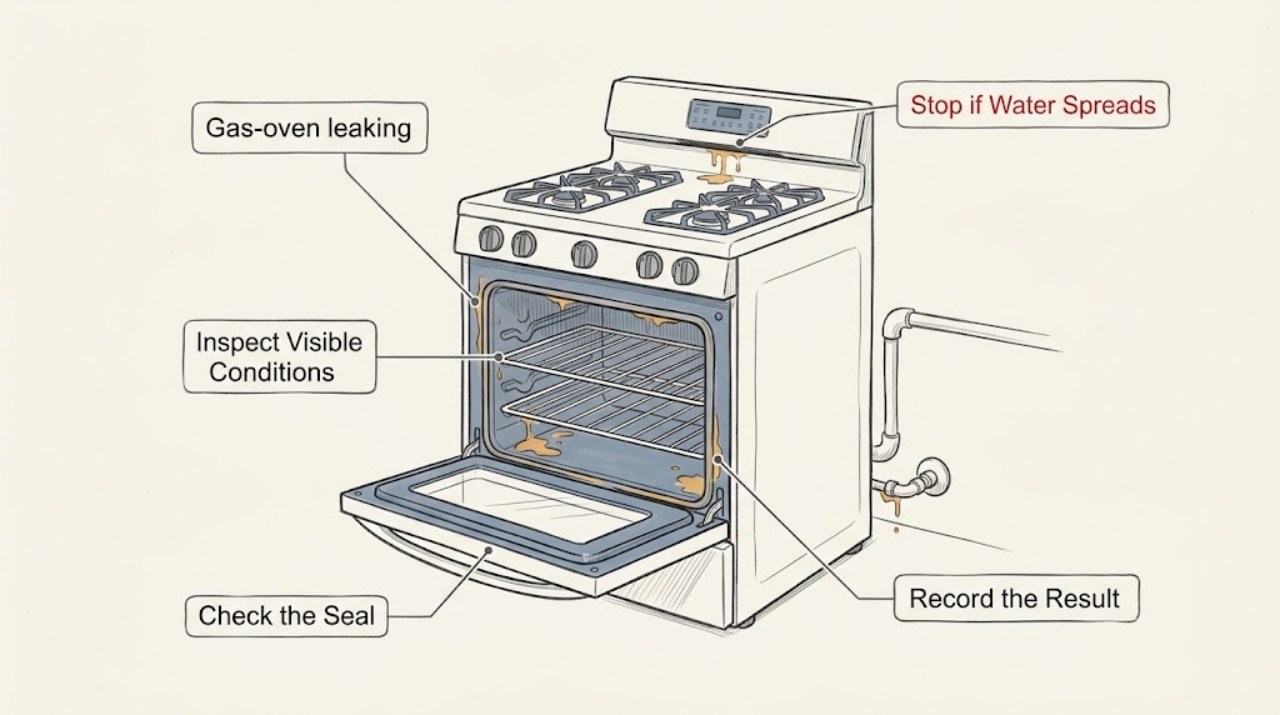
First identify what is leaking from a Frigidaire gas oven. Clear water or condensation near the vent or door can be related to cooking moisture, while grease or food liquid usually comes from a spill, a dripping load, or residue on the oven bottom. A gas smell, hissing, liquid reaching controls or wiring, pooling beneath the appliance, soot, or an abnormal flame is not a normal leak: stop using the oven, leave the area as appropriate, and contact qualified gas or appliance professionals from a safe location. Turn the oven off, let it cool, inspect only accessible surfaces, keep the oven bottom clear of foil and liners, and arrange service if the leak returns or its source is not obvious.
Work through in order
Diagnostic checks
Use only checks that match the exact appliance or system and its official guide.
-
Check 1
Turn all oven controls to Off and observe from a safe position. Identify the leaking material by appearance and odor without touching it, then note whether it is inside the cavity, at the door or vent, on the floor in front, or pooling underneath; also note smoke, soot, hissing, an abnormal flame, or liquid near controls.
Expected result: The material is water or condensation, grease or food liquid, cleaning residue, or it is accompanied by gas odor, hissing, soot, smoke, abnormal flame, or electrical symptoms.
Next step: For gas odor, hissing, smoke, soot, abnormal flame, or suspected electrical exposure, do not continue testing: leave the area as appropriate and contact emergency, gas, or appliance professionals from a safe location. Otherwise keep the oven off and let it cool before inspecting accessible surfaces.
Why this matters
Why: The location and material separate a cooking spill or moisture problem from a gas, combustion, or electrical safety issue. A gas odor or hissing can indicate fuel escaping; soot, smoke, or an abnormal flame can indicate combustion trouble; liquid near controls or underneath can reach components that are not user-serviceable.
-
Check 2
Once the oven is fully cool, inspect the cavity floor, racks, trays, door glass, and the lower door edge for a recent spill, grease trail, food residue, or a cleaning product film. Check whether the material is coming from the cavity or from outside the door rather than assuming the door gasket is the source.
Expected result: A spill or residue is visible inside the cavity, the door area is damp without a clear spill, or the cavity is clean while liquid continues to appear.
Next step: Wipe only accessible residue using the model-specific care instructions and keep the oven off until the source is understood. Do not pull on the gasket, remove panels, or use a high-heat cycle to evaporate an unknown liquid; arrange service for a clean cavity that still leaks.
Why this matters
Why: Food and grease can drip onto hot surfaces and later produce smoke or liquid residue. A clean cavity with recurring liquid suggests a seal, vent, installation, or internal issue that cannot be identified safely by wiping alone.
-
Check 3
Check the oven bottom and accessories for foil, liners, bakeware, or other items placed directly on the floor, and look for a tray or pan that allowed liquid or grease to drip onto a hot surface. Do not scrape a hot surface or put hands into the cavity while it is warm.
Expected result: The oven bottom is covered or obstructed, a tray has spilled or overflowed, or the bottom is clear and the leak continues.
Next step: After cooling, remove only the loose accessory or covering allowed by the model instructions and clean the accessible spill. If liquid continues to pool, reaches the controls, or the oven bottom or burner area is damaged, stop use and arrange professional inspection.
Why this matters
Why: Frigidaire says the oven bottom must remain clear so air can circulate and warns that drips and crumbs can burn or smoke. The CPSC also warns that covering the bottom of a natural-gas or propane oven can block combustion airflow and produce carbon monoxide.
-
Check 4
Observe the leak's timing without starting another cycle: note whether it appears only after a moist or greasy recipe, after the oven has been hot, near an oven vent, or while the room and range are otherwise cool. Keep towels, cookware, and storage items away from the oven vent and controls.
Expected result: The leak follows a particular load or hot cycle, appears as small clear moisture near the vent or door, or occurs with no cooking activity.
Next step: For a confirmed food spill, clean after cooling and follow the model instructions. For clear moisture that is excessive, recurring, or reaching controls, keep the oven off and arrange service rather than blocking the vent or moving the range.
Why this matters
Why: Moisture and grease from food can condense or drip during cooking, while a leak with no recent cooking is less likely to be a simple spill. A persistent leak from below, the rear, or a control area can indicate installation or internal damage.
-
Check 5
From outside the appliance, check for a gas odor, hissing, soot around the vent or door, a flame that looks abnormal, or signs that a gas connector or fitting could be wet or damaged. Do not move the range, loosen a fitting, or open a panel to locate the source.
Expected result: A fuel or combustion symptom is present, the connector area is uncertain, or no gas-related symptom is visible.
Next step: If gas odor or hissing is present, leave immediately and contact local gas or emergency authorities from outside; do not operate a phone, light, or other electrical equipment before leaving. If the connector or flame is uncertain without a gas odor, keep the oven off and arrange qualified gas-appliance service.
Why this matters
Why: The CPSC warns that moving an appliance can damage an older gas connector and that only a qualified professional should inspect or replace it. A gas odor or combustion symptom cannot be safely distinguished from a harmless liquid leak by repeated oven use.
-
Check 6
If the display shows an error or thermal warning, record it and turn the oven off. Allow the oven to cool and use the model's documented reset procedure only when there is no gas odor, smoke, soot, liquid near controls, or other safety concern.
Expected result: The warning clears and no leak returns, or the warning, liquid, odor, or unusual heat returns after cooling and reset.
Next step: Keep the oven out of use and arrange qualified service if the warning, leak, unusual heat, smoke, or odor returns. If anyone has possible carbon-monoxide symptoms or a CO alarm sounds, move outside to fresh air and contact emergency services.
Why this matters
Why: Frigidaire identifies F10 on standard range and wall ovens as detection of higher-than-normal temperatures and directs the oven to cool. A recurring warning with a leak can indicate overheating, a damaged seal, a blocked airflow path, or another internal fault.
Use your observations
Decision map
Find the observation that best matches what you see, then follow the next safe action.
-
PATH 01Safety boundary
What you see
The leaking material smells like gas, there is hissing, soot, an abnormal flame, a CO alarm, or possible CO symptoms.
Do this next
Stop using the oven, leave the area immediately as appropriate, and contact emergency or gas authorities from a safe location. Do not move the range, operate switches, or search for the leak.
Why this path and its safety boundary
Safety stop: Keep the oven off and classify the material as water, grease, food residue, cleaning residue, or an unknown liquid after the cavity cools.
-
PATH 02Safety boundary
What you see
A spill, dripping tray, foil, liner, or obstruction is visible inside the cool oven.
Do this next
Follow the model-specific care instructions, keep the oven bottom clear, and remove the accessible cause after cooling. Do not use high heat to burn off unknown residue.
Why this path and its safety boundary
Safety stop: A clean cavity with recurring liquid needs qualified service, especially if the liquid appears beneath the appliance or near controls.
-
PATH 03Safety boundary
What you see
The liquid appears only after a moist or greasy cooking cycle and is limited to an accessible cavity or vent area.
Do this next
Let the oven cool, wipe accessible moisture or residue according to the model instructions, and monitor without blocking the vent. Escalate if the amount increases or the leak reaches controls or the floor.
Why this path and its safety boundary
Safety stop: Liquid that appears with no recent cooking or continues after cleaning is not explained by a normal food spill; stop use and arrange service.
-
PATH 04Safety boundary
What you see
An error or thermal warning accompanies the leak, or the oven is unusually hot.
Do this next
Turn the oven off, let it cool, and arrange qualified service if the warning or leak returns. Do not repeatedly reset the control or adjust gas components.
Why this path and its safety boundary
Safety stop: A single accessible spill may be resolved after cooling and cleaning, but any recurring leak or unknown source needs professional inspection.
Helpful context
Understand the symptom
“Leaking” can mean very different things on a gas oven. Note whether the material is water, grease, food liquid, cleaning residue, or fuel; where it appears; and whether it happens during preheat, baking, broiling, cleaning, or after the oven has cooled. Do not taste or touch an unknown liquid, and do not move the range to inspect behind it.
A leak from the oven cavity can be a spill or condensation, but liquid under the appliance or near controls can create an electrical hazard. Gas and combustion symptoms are a separate emergency path. The checks below stay on the cool, visible, user-accessible side of the appliance; sealed gas, burner, wiring, and connector work belongs to qualified professionals.
Only after diagnosis
Potential parts
- oven door gasket or seal
Consider this only when a qualified technician confirms that a damaged or displaced seal is allowing liquid, heat, or vapor to escape during normal operation.
Confirm the complete Frigidaire model number and model-specific parts information before ordering. - oven vent or air-flow component
Consider this only when a professional identifies a damaged or obstructed vent path after confirming that the leak is not a food spill or external moisture.
Vent and airflow components vary by model and should be diagnosed and installed according to the model instructions. - gas burner or safety control component
Consider this only when a qualified gas-appliance technician diagnoses an abnormal flame, combustion, or gas-control fault; a liquid leak alone does not identify a part.
Fuel-system components are model-specific and require qualified diagnosis and installation.
When checks do not resolve it
Need a professional?
Stop using the Frigidaire gas oven and seek emergency or qualified gas service for a gas odor, hissing, soot, abnormal flame, CO alarm, possible CO symptoms, or liquid near a gas connection. Arrange qualified appliance service for liquid pooling beneath the appliance, liquid reaching controls or wiring, a recurring leak from a clean cavity, unusual heat, an error or thermal warning, smoke, or a damaged door or seal. Do not move the range, loosen gas fittings, open panels, or adjust burner components yourself.
Have this ready
- Frigidaire model number and whether the leak occurs in Bake, Broil, Air Fry, cleaning, or after the oven is off
- The material's appearance and odor, where it appeared, and whether it pooled beneath the appliance
- Any gas odor, hissing, soot, abnormal flame, smoke, unusual heat, error display, or CO alarm
- What was found on the oven bottom, racks, trays, door area, vent, and controls after the appliance cooled
Common questions
FAQ
Why is water coming from my Frigidaire gas oven?
It may be cooking moisture or a spill, but location matters. Turn the oven off, let it cool, inspect the cavity and vent area, and arrange service if liquid pools under the appliance, reaches controls, or returns with a clean cavity.
Can grease make a Frigidaire oven look like it is leaking?
Yes. Food and grease can drip from a tray or onto a hot oven bottom and later smoke or leave residue. Clean only after cooling and according to the model instructions; keep the oven bottom clear.
What should I do if my gas oven leak smells like gas?
Leave immediately and contact local gas or emergency authorities from outside. Do not operate lights, phones, or other electrical equipment before leaving, and do not move the range or inspect its connector yourself.
Is liquid under a Frigidaire gas oven safe to ignore?
No. Liquid beneath the appliance can reach gas or electrical components and is not an ordinary wipe-up diagnosis. Keep the oven off and arrange qualified inspection, especially if there is an odor, soot, smoke, or unusual heat.
Read the exact guide
Official sources
- Carbon Monoxide Fact SheetU.S. Consumer Product Safety Commission · Carbon monoxide from fuel-burning ranges and ovens, blocked combustion airflow, symptoms, alarms, and service boundaries
- Certain Older Gas Connectors May Be DangerousU.S. Consumer Product Safety Commission · Gas appliance connector safety, no appliance movement, and response to suspected gas leaks
- Air Fry Tray - How do I limit the amount of smoke when using the ReadyCook™ Air Fry Tray?Frigidaire · Frigidaire ranges, ovens, and wall ovens; drips, crumbs, grease, smoke, and keeping the oven bottom clear
- Ovens - Can you use aluminum foil in an air fryer oven?Frigidaire · Frigidaire ovens; oven-bottom airflow, foil, liners, bakeware, drips, and crumbs
- Oven Error Codes and Alarms GuideFrigidaire · Frigidaire standard range ovens and wall ovens thermal warnings, cooling, resets, and service boundary
Community feedback
Share a repair observation
Share a plain-text repair observation. Accepted observations are published automatically; this page may take a moment to update.