
On this page
Start here
Quick answer
The Amana NTW4516FW3 is the assigned model identity for this top-load washer topic; the opened Amana owner page identifies the NTW4516FW family as a 3.5 cu. ft. top-load washer with a dual-action agitator, while the public page does not expose the FW3 suffix-specific construction. During spin, first note whether the noise is a normal brief clunk at the wash-to-spin transition, a hose or nearby object tapping the cabinet, or repeated banging with a load gathered to one side. Stop with the normal controls, wait for the basket to stop, redistribute a safe load, check that the washer is level with all feet supported, and inspect only visible external contacts. If harsh grinding, violent movement, leaks, smoke, burning odor, exposed wiring or repeatable noise with a suitable load remains, keep the washer off and arrange Amana-qualified service; do not remove panels, suspension parts, belts, pumps or bearings as a general check.
Before you begin
Safety first
- Do not reach into a moving basket, force the lid, pull a full washer, remove panels, belts, pumps, suspension parts or bearings, run live electrical tests, or select a replacement part from the sound alone.
Work through in order
Diagnostic checks
Use only checks that match the exact appliance or system and its official guide.
-
Check 1
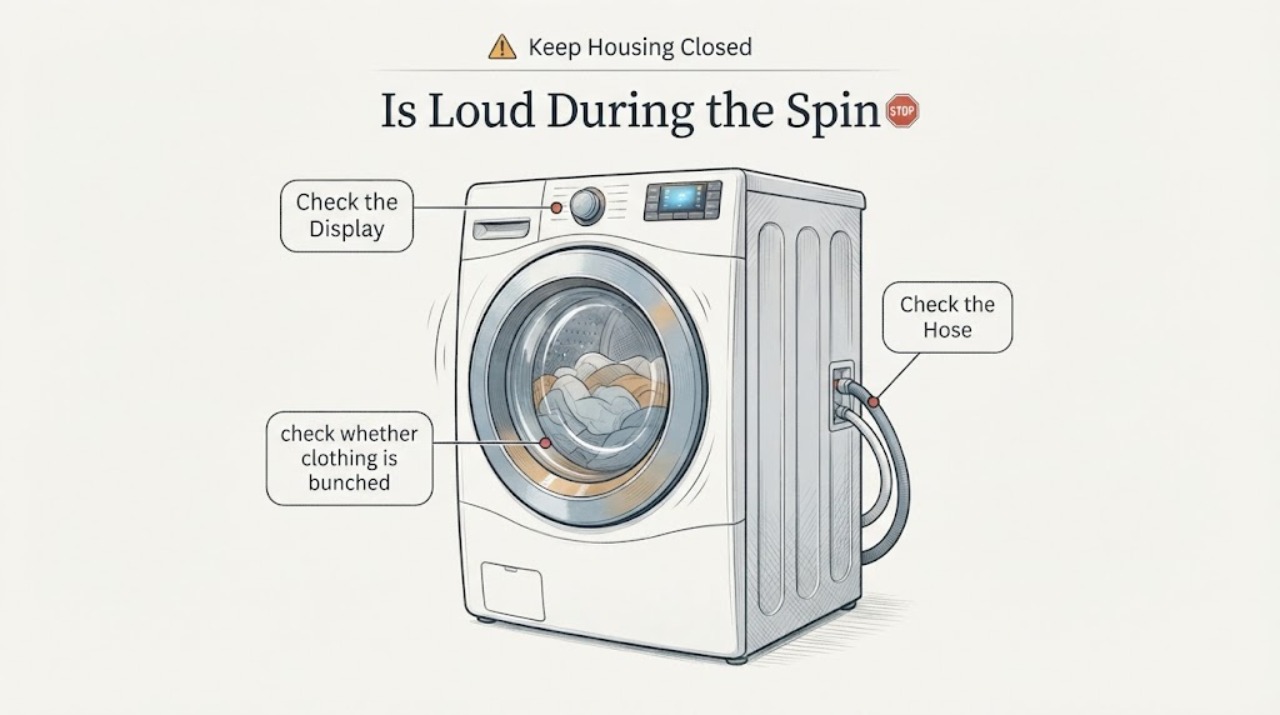
From a safe standing position, note whether the sound occurs only during a brief transition into or out of spin, while the basket accelerates, at high spin, during drain, or throughout the cycle. Use the normal pause/stop control if the cabinet begins moving abnormally; never reach into a moving basket.
Expected result: The sound is a short transition clunk with a stable cabinet, or it is a repeated bang, scrape, grind or roar that follows speed or increases with movement.
Next step: For a brief stable transition sound, continue with the external checks and monitor. For harsh, worsening or movement-linked noise, stop testing and continue only after the basket is fully stopped.
Stop if: Stop immediately for violent shaking, tipping, leak, smoke, burning odor, sparking, exposed wiring or a damaged cord.
Why this matters
Why: Amana identifies a drive-transition clunk as a possible normal sound. A speed-linked harsh or repeated sound is not explained by that normal transition alone and needs load, installation and service triage.
-
Check 2
After the basket has completely stopped and the lid can be opened normally, check whether clothing is bunched to one side, a single heavy item, bedding, a rug or another bulky load is present. Redistribute or reduce only as the NTW4516FW-family guide permits; do not pull a locked lid or handle wet clothing from a moving basket.
Expected result: The load is visibly lopsided or unsuitable, the washer was attempting to rebalance, or a suitable evenly distributed load produces the same loud noise.
Next step: Run one appropriate cycle only if the washer is stable and the noise was clearly load-related. If the sound remains harsh or the washer rocks, stop and arrange service rather than repeating heavy-load tests.
Why this matters
Why: Amana says an off-balance load can make the basket move, hit the cabinet, increase noise and vibration, lengthen the cycle or leave clothes wet. A repeatable sound with a suitable load makes imbalance less likely to be the whole cause.
-
Check 3
With the washer stopped on a firm, dry floor, gently test from the corners whether the cabinet rocks and visually confirm that all feet appear supported. Look around the cabinet for a wall, shelf, rack, drain pan, hanger or other object touching it; inspect visible inlet and drain-hose routing without disconnecting anything.
Expected result: The washer rocks, a foot is unsupported, a hose/object contacts the cabinet, or the cabinet is stable with clear space.
Next step: Follow the exact installation instructions for any leveling adjustment and move only a loose external object without pulling on plumbing or power. If the floor, support or cabinet is damaged or the noise persists, call service.
Stop if: Do not pull a full or water-filled washer, climb behind it, adjust hidden hardware or work near water and electrical connections.
Why this matters
Why: Amana says an unlevel washer can amplify spin noise and vibration, while hoses or nearby items can tap the cabinet as it moves. A stable washer with clear external space makes those explanations less likely.
-
Check 4
After the safe load and external checks, record whether water remains in the tub, clothes are unusually wet, the cycle time increases, or the noise is mainly during draining. Check only the visible drain-hose routing for a kink or obvious installation problem; do not remove a pump, filter or hose blockage from inside the appliance.
Expected result: Water remains, the load is wet, the washer is self-correcting or extending the cycle, or the drain path and cycle result are normal.
Next step: Correct only an accessible hose position allowed by the exact installation guide, then monitor one suitable cycle. If water remains or the noise persists with a stable load, keep the washer off and arrange qualified service.
Why this matters
Why: Amana links imbalance with reduced spin speed, longer cycles and wet clothes, and identifies drain-hose installation or blockage when water stands in the tub. These observations do not establish a failed pump or drive component.
-
Check 5
Record the complete model and serial, sound description, cycle stage, load type, cabinet movement, leveling/contact observations, water left in the tub and any display message. Arrange Amana-qualified service when the noise remains with a suitable load, is a scrape/grind/harsh roar, or any repair would require panels or internal parts.
Expected result: The noise stops after a safe load or external correction, or it remains repeatable with a balanced load and clear stable installation.
Next step: For persistent or hazardous noise, leave the washer off and provide the recorded pattern to service. Do not remove belts, suspension parts, bearings, pumps or panels, run live tests, or order a part from the sound alone.
Stop if: Stop immediately for violent movement, flooding, smoke, burning odor, sparks, exposed wiring, shock or a damaged power cord.
Why this matters
Why: A sound that stops after an external correction supports that condition but does not prove the internal assembly is fault-free. Persistent speed-linked noise with no external explanation is outside the public owner checks and needs diagnosis.
Use your observations
Decision map
Find the observation that best matches what you see, then follow the next safe action.
-
PATH 01Next step
What you see
The sound is a brief clunk only when the washer changes from agitation to spin, the cabinet is stable and the cycle completes normally.
Do this next
Monitor without putting hands near the machine, and use the exact NTW4516FW3 owner guide if the sound changes or begins affecting the cycle.
Why this path and its safety boundary
Why it matters: Amana identifies this drive-transition sound as potentially normal operation.
-
PATH 02Next step
What you see
The noise begins with a lopsided, single or bulky load and improves after a safe redistribution.
Do this next
Use the recommended load/cycle and stop testing if the washer still bangs, rocks violently, leaks or becomes loud with a suitable load.
Why this path and its safety boundary
Why it matters: The result supports an out-of-balance load as the immediate cause of that occurrence.
-
PATH 03Next step
What you see
The washer rocks, a foot is unsupported, or a hose or nearby object touches the cabinet and the sound changes when the contact is corrected.
Do this next
Follow the exact installation guide for leveling/clearance and arrange service if the support cannot be corrected safely or the sound returns.
Why this path and its safety boundary
Why it matters: The accessible installation or external-contact condition can explain the noise without proving an internal part failure.
-
PATH 04Next step
What you see
A harsh scrape, grind, roar or repeatable speed-linked bang remains with a suitable load and stable, clear installation, or water remains in the tub.
Do this next
Keep the washer off and arrange qualified Amana service. Do not remove the pump, suspension, belt, bearing or cabinet panels as a general user check.
Why this path and its safety boundary
Why it matters: The public guidance no longer narrows the cause to load, leveling, hose contact or normal transition; an internal or drain-related fault remains possible but unconfirmed.
-
PATH 05Next step
What you see
The washer moves violently, tips, leaks/floods, smokes, smells burnt, sparks, exposes wiring or has a damaged cord.
Do this next
Stop the washer, keep people and pets clear, and arrange qualified appliance service; use emergency help for active fire, shock or immediate danger.
Why this path and its safety boundary
Why it matters: This is a stop-use electrical, water or physical safety condition rather than routine noise troubleshooting.
Helpful context
Understand the symptom
A short transition clunk is different from repeated banging
Amana says a clunk as the drive system changes between agitation and spin can be a normal operating sound. A noise that becomes loud as the basket accelerates, repeats with impacts, or makes the cabinet move is a different observation. The assigned model is NTW4516FW3; Amana's opened owner page identifies the NTW4516FW family and top-load agitator design, but it does not expose suffix-specific internal parts, so this page stays with external checks and a service boundary.
Load balance and leveling are the first useful distinctions
Amana links spin noise and vibration with an uneven load, an overloaded or bulky item, and a washer that is not level. The correction is to pause normally, wait for the basket to stop, redistribute only a safe load as the owner guide permits, and check from a stable position that the cabinet does not rock and all feet contact the floor. A quieter cycle after this change supports an installation or load condition, not proof that every internal part is healthy.
Keep hoses and nearby objects outside the cabinet
Amana says drain and inlet hoses or objects leaning against the washer can tap the cabinet as vibration changes during spin. Inspect only from outside for hose contact, a rack, shelf, broom, hanger or other loose item. Do not reach behind a wet or energized washer, disconnect a hose, or remove an access panel to chase a noise; if the visible checks do not explain a harsh sound, service is the safer next step.
When checks do not resolve it
Need a professional?
Arrange Amana-qualified service when loud spin noise persists with a suitable load and stable level installation, changes to grinding/scraping/harsh roaring, is accompanied by standing water or cycle failure, or requires panels, drive, suspension, pump or bearing access.
Safety scope: Do not reach into a moving basket, force the lid, pull a full washer, remove panels, belts, pumps, suspension parts or bearings, run live electrical tests, or select a replacement part from the sound alone.
Have this ready
- Provide the complete NTW4516FW3 model and serial, sound description, cycle stage, load type, whether the basket/cabinet moves, leveling and external-contact observations, water left in the tub, wet-clothes result and any display message.
Common questions
FAQ
Is a clunk during spin always a failure on the Amana NTW4516FW3?
No. Amana says a clunk can occur when the drive system shifts between agitation and spin. Repeated banging, harsh grinding, cabinet movement or a sound that persists with a suitable load needs further checks and possibly service.
Can an unbalanced load make this Amana washer very loud?
Yes. Amana says an uneven or bulky load can make the basket move, hit the cabinet, increase noise and vibration, extend the cycle or leave clothes wet. Pause normally, wait for the basket to stop, and redistribute only as the manual permits.
How do I know whether the washer is level?
With the washer stopped on a firm floor, gently test whether the cabinet rocks and visually check that all four feet contact the floor. Follow the exact installation instructions for adjustment; do not pull the washer or adjust hidden hardware unsafely.
Could a hose or object outside the washer cause banging?
Yes. Amana says inlet/drain hoses and objects leaning against the cabinet can tap during vibration, especially at high spin. Inspect only from outside and move a loose object without disconnecting plumbing or power.
When should I stop troubleshooting and call service?
Call when noise remains with a suitable load and stable installation, becomes grinding or scraping, leaves water in the tub, affects cycle completion, or is accompanied by violent movement, leaks, smoke, burning odor, sparks or exposed wiring. Do not diagnose or replace internal parts from sound alone.
Read the exact guide
Official sources
- Sounds: Clunk or Clunking Noise During SpinAmana Product Help · Opened official Amana guidance for top-load washers. It supports the assigned top-load family symptom but does not diagnose a suffix-specific component or authorize internal repair.
- Knocking or Thumping - NoiseAmana Product Help · Opened official Amana top-load washer noise guidance. It supports external checks and service escalation for the assigned model family, not an internal part diagnosis.
- NTW4516FW | Amana Owner's CenterAmana · Opened official Amana Owner's Center page. It identifies NTW4516FW as a 3.5 cu. ft. top-load washer with a dual-action agitator and provides model support/service links; the page does not expose suffix-specific internal construction, so this article does not infer it.
- Not Spinning - WasherAmana Product Help · Opened official Amana top-load washer cycle guidance. It is used for the external relationship between imbalance, noise, wet loads, drain routing and leveling; it does not establish a failed pump or drive part.
Community feedback
Share a repair observation
Share a plain-text repair observation. Accepted observations are published automatically; this page may take a moment to update.