
On this page
Start here
Quick answer
First determine whether the sound is a normal spray or splash during the fill or a sharp knock, bang, grind, or rubbing noise. Amana says a spraying sound during fill can be normal, while a water-inlet or drain hose can move against the cabinet as water enters. Stop the cycle before moving anything, then check the hoses and objects around the cabinet from outside. If the noise is accompanied by a leak, burning smell, exposed wiring, a tub that strikes the cabinet, or a persistent grinding or rubbing sound, leave the washer out of service and arrange model-specific service.
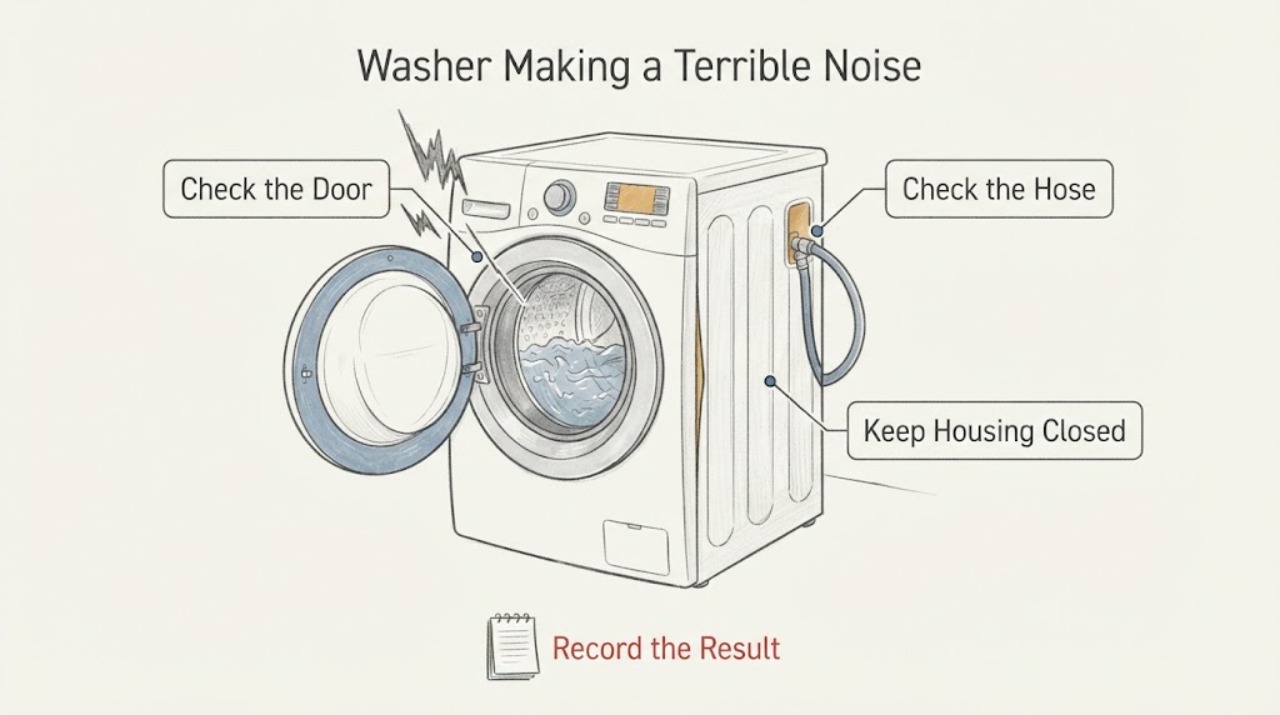
Work through in order
Diagnostic checks
Use only checks that match the exact appliance or system and its official guide.
-
Check 1
Stay beside the washer for one safe observation and note whether the sound starts exactly when water enters, after the fill ends, during agitation, or during drain or spin. Keep the lid or door closed and do not reach toward a moving basket.
Expected result: The sound is a spray or splash only while filling; a knock or bang occurs as water enters; or the noise continues when the basket, agitator, pump, or spin system operates.
Next step: If the sound is a normal spray or splash and there is no leak or unsafe symptom, continue with the hose and exterior checks. If it persists into other phases or sounds like grinding, stop the cycle and continue with the service boundary.
Why this matters
Why: A fill-only spray can be normal. A knock that matches water entry is consistent with a moving hose or an outside object, while noise that continues after filling belongs to a different cycle phase and cannot be diagnosed as a fill sound alone.
-
Check 2
Stop the cycle and disconnect the washer from power before inspecting the rear and sides. Look for the water-inlet hoses or drain hose touching the cabinet, a hose that is sharply kinked, and brooms, racks, detergent containers, or other objects leaning against the washer.
Expected result: A hose or outside object can touch the cabinet and move when water enters, or the outside is clear and the noise is still present.
Next step: Secure or reposition only the accessible hose or object without opening the washer, then make one supervised test. If the exterior is clear or the noise remains, do not order an inlet valve or other part based only on sound; arrange model-specific service.
Why this matters
Why: Amana says water movement can make a loose inlet or drain hose knock against the rear cabinet. If nothing outside can contact the cabinet, the cause is not established by this check.
-
Check 3
During the supervised test, listen for a gentle spray or splash versus a hard impact, scraping, or grinding sound, and watch the floor and hose connections for water. Stop immediately if the washer leaks, smells hot or burnt, smokes, or shakes violently.
Expected result: There is only a spray or splash with no leak, the hose correction removes the knock, or a harsh noise or unsafe symptom remains.
Next step: Continue normal use only when the sound is clearly the documented fill spray and the machine is stable and dry. Otherwise keep it unplugged, close the water supplies if there is a leak, and contact Amana or an authorized technician.
Why this matters
Why: Amana describes spray, splash, and slosh during fill as common operating sounds, but a persistent harsh noise or water on the floor needs a separate assessment. A burnt smell, smoke, or exposed electrical damage is not a normal fill sound.
-
Check 4
If the noise continues after filling, check from outside whether the washer rocks or whether the basket is striking the cabinet during agitation or spin; do not run an unbalanced or overloaded load just to reproduce the sound.
Expected result: The washer rocks, the basket strikes the cabinet, the load is uneven, or the noise is present even with no obvious load or leveling issue.
Next step: Stop using the washer until a visible load or leveling issue is corrected safely. If the machine remains noisy, leave it unplugged and provide the exact model and cycle details to service instead of diagnosing an internal drive part.
Why this matters
Why: Amana links excessive vibration or thumping during later phases with an unbalanced load or washer that is not level. That explanation does not prove the cause of a noise that begins during fill or a persistent grinding sound.
-
Check 5
Read the complete model number and record the cycle, water temperature, loader type, noise description, and whether moving the hose changed it. Use that information to retrieve the Amana manual or book service.
Expected result: The noise is resolved by an external hose or object correction, or it remains after those checks and its timing is documented.
Next step: Use the exact model documentation for any further user-permitted inspection. If the noise remains, request service and do not open the cabinet, bypass a lid or door lock, or test live wiring.
Why this matters
Why: A model number is needed to select the applicable Amana manual and distinguish a fill-sound explanation from a model-specific fault or service procedure.
Use your observations
Decision map
Find the observation that best matches what you see, then follow the next safe action.
-
PATH 01Next step
What you see
The sound is a soft spray, splash, or slosh only while the washer fills, with no leak, burning smell, violent movement, or change in operation.
Do this next
Monitor the cycle from outside and record the model if the sound changes. Stop and reassess if the noise becomes a hard knock, grind, or rubbing sound.
Why this path and its safety boundary
Why it matters: Amana documents spraying and splashing during fill as normal sounds that can vary by washer and dispenser.
-
PATH 02Next step
What you see
A water-inlet or drain hose, or an object leaning against the washer, moves and strikes the cabinet as water enters.
Do this next
With power disconnected, secure or move the accessible hose or object and make one supervised check. Use service if the contact cannot be corrected or the noise continues.
Why this path and its safety boundary
Why it matters: The impact is consistent with Amana's documented external hose-contact explanation rather than proof of an internal part failure.
-
PATH 03Next step
What you see
The sound is grinding, scraping, or a harsh repeated bang; it continues after fill; or the washer leaks, smells burnt, smokes, or shakes violently.
Do this next
Stop the cycle, unplug the washer when safe, close the water supplies if water is leaking, and arrange Amana or authorized service. Do not remove panels or run repeated tests.
Why this path and its safety boundary
Why it matters: The symptom is outside the normal fill-sound explanation and may involve a mechanical, installation, or electrical safety issue that cannot be identified from sound alone.
-
PATH 04Next step
What you see
The noise appears only during agitation or spin and the washer rocks or the load hits the cabinet.
Do this next
Stop using the washer until the visible load or leveling issue is corrected safely. If the sound remains, provide the model and cycle details to service.
Why this path and its safety boundary
Why it matters: Amana points to load balance and leveling for later-cycle thumping or vibration; this does not establish a fill-valve or motor diagnosis.
Helpful context
Understand the symptom
Separate normal fill sounds from a new mechanical noise
Amana's washer guidance says a spraying sound during fill can be part of normal operation, and the sound can vary with the dispenser and washer design. A terrible or suddenly changed sound still deserves observation: note whether it happens only while water enters, continues when the basket or agitator moves, or occurs during drain or spin. Do not identify a failed pump, valve, motor, or bearing from the description alone.
Check the outside before touching the washer
Amana identifies the drain hose and water-inlet hoses as possible sources of a knocking or banging sound during fill because water pressure can make them move against the rear cabinet. Household items leaning against the washer can also rattle. Stop the cycle, disconnect power before repositioning a hose, and keep the check outside the cabinet; do not remove panels or test an energized appliance.
Use the exact model for anything beyond an external check
The assigned topic has no model number. Amana's support pages cover several washer types and direct owners to model-specific manuals and service when the external checks do not resolve the noise. Record the full model label, loader type, cycle, and exact point in the cycle where the noise starts before asking for service; a similar-looking washer does not establish the same internal layout or repair procedure.
When checks do not resolve it
Need a professional?
Arrange service if the harsh noise remains after the external hose and object checks, occurs beyond the fill phase, comes with leaking, burning smell, smoke, exposed wiring, violent shaking, or a basket striking the cabinet, or if the washer needs a panel removed or a lock or electrical component tested.
Common questions
FAQ
Is a spraying sound while an Amana washer fills normal?
Amana says a spraying sound during fill can be normal and may vary with the washer and dispenser. It should still be separated from a hard knock, grinding sound, leak, or unsafe symptom.
Why does the washer knock when water starts entering?
Amana says water can make a loose drain or water-inlet hose move against the rear cabinet. Stop the cycle, disconnect power before repositioning an accessible hose, and use service if the noise continues after the outside check.
Should I replace the inlet valve or motor because the washer sounds terrible?
Do not choose a part from the sound alone. First identify when the noise occurs, check the hoses and surrounding objects from outside, and record the full model number. Persistent or harsh noise needs an exact-model service diagnosis.
Read the exact guide
Official sources
- Sounds: Spraying, Splashing, or Sloshing noiseAmana Product Help · Opened Amana family-level guidance. It supports distinguishing normal fill spray from excessive noise and does not identify an internal fault for an unknown model.
- Troubleshooting: Washer NoisesAmana · Opened Amana troubleshooting article. It supports the broad symptom categories and stop/service boundary without naming a part for an unidentified washer.
- Knocking or Thumping - NoiseAmana Product Help · Opened Amana top-load guidance. The fill branch supports external hose and cabinet-contact checks; later-cycle branches remain conditional because the assigned model is unknown.
Community feedback
Share a repair observation
Share a plain-text repair observation. Accepted observations are published automatically; this page may take a moment to update.