
On this page
Start here
Quick answer
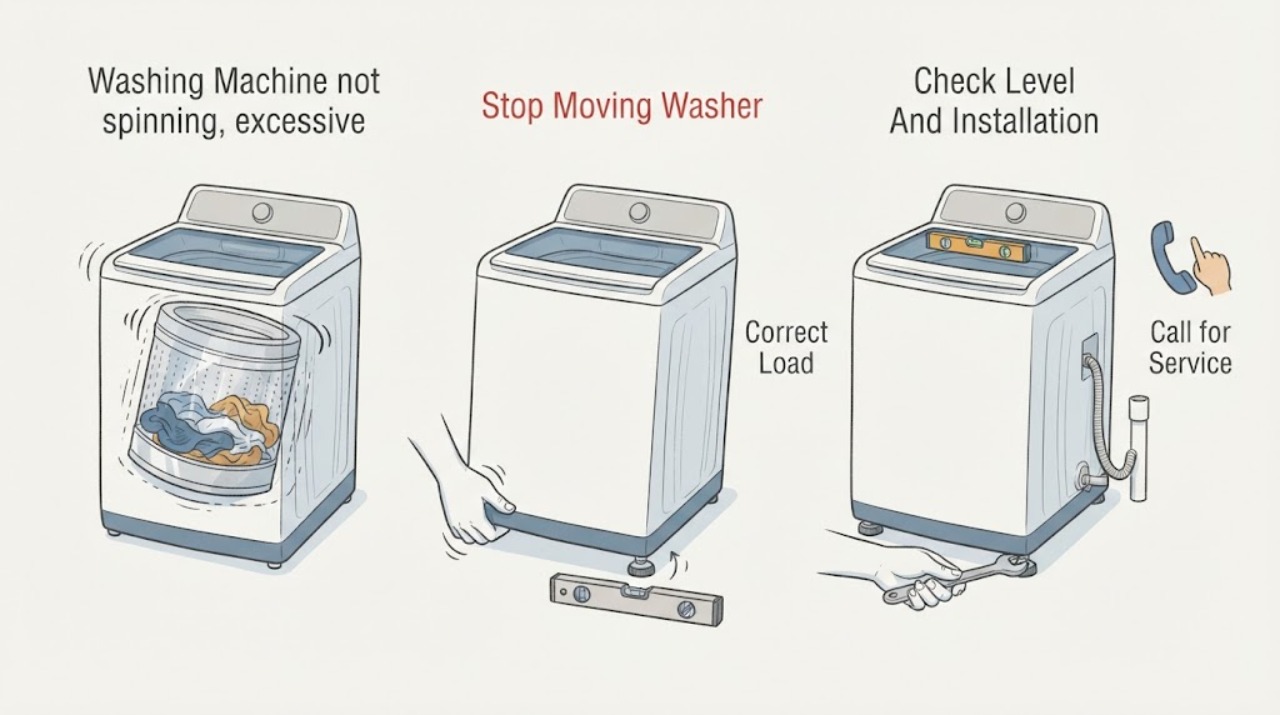
Amana says an uneven or overloaded load can cause excessive movement, noise, vibration, reduced spin speed and a washer to stop spinning. Stop or pause the cycle, keep clear if the machine is walking or striking nearby objects, and redistribute or reduce the load only when the washer is safely paused and the lid or door can be opened according to the model. Check that the washer is level and all feet are firmly on the floor. If water remains, check only the visible drain hose and drain path for kinks or clogs. A repeated problem with an empty or correctly loaded washer, persistent standing water, abnormal noise, a damaged cabinet, or an unresolved lid/door condition needs model-specific Amana service; do not infer a failed belt, motor, suspension, pump or control from movement alone.
Work through in order
Diagnostic checks
Use only checks that match the exact appliance or system and its official guide.
-
Check 1
Pause or cancel the cycle if the washer walks, strikes nearby objects or shakes violently, and wait for the basket to stop before approaching it.
Expected result: Movement stops after the cycle is paused, or the washer continues to move/has damaged the cabinet, hose or floor.
Next step: Keep the area clear and arrange service for persistent or damaging movement; do not reach into a moving basket or hold a lid/door open.
Why this matters
Why: Amana associates excessive movement with imbalance, but continued or damaging movement exceeds a simple load correction.
-
Check 2
With the washer safely paused and access permitted by the model, redistribute clothing in loose heaps, remove excess items, and select the cycle intended for the load.
Expected result: The problem follows one heavy, bulky or single absorbent item, or the load is tightly packed/uneven; after correction the next spin is stable.
Next step: Use the model-recommended cycle and load size. If movement or no-spin returns with ordinary balanced loads, continue to leveling and service checks.
Why this matters
Why: Amana says uneven or overloaded loads can reduce spin speed, create movement and stop spinning; bulky items may need a dedicated cycle or more balanced items.
-
Check 3
When the washer is stopped, verify that all feet are firmly on the floor and check for rocking; for a front-loader, verify shipping materials and pedestal installation against the exact manual.
Expected result: The cabinet rocks, a foot is not firmly seated, the floor flexes, or shipping materials/pedestal hardware are unresolved.
Next step: Correct only the accessible installation condition described by the model instructions. If the washer remains unstable or requires lifting/tilting, stop and arrange service.
Why this matters
Why: Amana says an unlevel washer can vibrate, move and fail to spin correctly; front-load shipping materials and installation can also cause walking.
-
Check 4
If water remains in the tub, inspect the visible drain hose and household drain path for a kink or accessible blockage without opening the washer cabinet.
Expected result: Water drains after the visible restriction is corrected, or water remains and the external path is clear.
Next step: Follow the model manual for the drain arrangement. If standing water remains, stop using the washer and arrange service rather than removing internal hoses or the pump.
Why this matters
Why: Amana lists standing water and drain-hose/drainpipe problems among conditions that can prevent proper spinning; a clear external path does not diagnose the internal pump.
-
Check 5
Record the model, configuration, cycle, load, water level, movement, footing and visible drain observations and give them to Amana or qualified washer service.
Expected result: No-spin or excessive movement repeats with a balanced load and stable footing, occurs with an empty washer, or is accompanied by abnormal noise, damaged housing or a lid/door condition.
Next step: Keep the washer out of use if movement is severe, water leaks or a safety interlock is damaged, and arrange service. Do not bypass a lid/door safety device or open internal panels.
Why this matters
Why: The remaining cause may require model-specific diagnosis; movement and no-spin alone do not identify a belt, motor, suspension, pump, lid/door switch or control failure.
Use your observations
Decision map
Find the observation that best matches what you see, then follow the next safe action.
-
PATH 01Next step
What you see
The problem appears during spin with one heavy, bulky or tightly packed load, and the washer is stable after the load is redistributed.
Do this next
Use the correct cycle and a loose, balanced load; monitor the next cycle without overloading.
Why this path and its safety boundary
Why it matters: The symptom is consistent with Amana's out-of-balance/load guidance rather than a confirmed internal failure.
-
PATH 02Next step
What you see
The washer rocks on its feet, is not level, or a front-loader still has shipping materials or unresolved pedestal installation.
Do this next
Use the model installation instructions for an accessible correction; arrange service if the appliance must be lifted, tilted or disassembled.
Why this path and its safety boundary
Why it matters: Installation stability can create excessive vibration and prevent correct spinning.
-
PATH 03Next step
What you see
Water remains in the tub and the visible drain hose or drain path is kinked or blocked.
Do this next
Correct only the accessible external drain condition according to the model instructions, then reassess; do not open the cabinet.
Why this path and its safety boundary
Why it matters: A drain condition can prevent the washer from completing a proper spin.
-
PATH 04Next step
What you see
The washer does not spin or moves excessively with a balanced load, stable footing and a clear visible drain path, or it moves violently or causes damage.
Do this next
Stop using it when movement is severe or damage/safety concerns exist and arrange Amana or qualified service with the recorded model and observations.
Why this path and its safety boundary
Why it matters: The accessible causes are not established; the symptom does not prove a particular internal part.
Helpful context
Understand the symptom
Stop the cycle if the washer is walking
If the washer is moving across the floor, striking cabinets, or shaking violently, pause or cancel the cycle and keep people clear until the basket stops. Do not hold the lid or door open while the basket is moving and do not reach into a moving washer. Amana identifies excessive shaking, movement, reduced spin speed, wet clothes and a stopped spin as possible results of an out-of-balance load, but a repeated or violent event still needs service if accessible checks do not correct it.
Redistribute or reduce the load
When the washer is safely paused and the model permits access, look at the load. Loose items evenly distributed around the basket are less likely to become unbalanced. Do not tightly pack the washer. For a single rug, blanket, coat or other absorbent bulky item, follow the model's Bulky or Sheets/Bedding guidance; Amana says a single absorbent article may be difficult to balance. Run a suitable cycle only after the load is corrected.
Check the washer's footing and installation
With the washer stopped, check that it sits level and that all four feet are firmly on the floor. Amana suggests rocking the washer diagonally to reveal instability. For a front-load model, also check whether shipping materials were removed after installation and whether any pedestal feet or mounting hardware are loose, using the exact installation instructions. Do not lift, tip or disassemble the washer to correct movement.
Separate a drain problem from a balance problem
If water is still standing in the tub, the washer may not spin because it cannot complete the drain condition. Inspect only the visible drain hose, drainpipe or utility-sink path for a kink or accessible blockage and confirm the hose is installed as the model instructions require. Amana documents drain installation as model-dependent; do not open the pump, remove internal hoses or assume a pump failure from a wet load.
Escalate when the symptom repeats
Record the model number, top-load or front-load configuration, cycle, load type, whether water remained, whether the washer was level, and whether it moved empty or only with laundry. Arrange Amana or qualified washer service if the basket continues to move with a balanced load, the machine will not spin after the accessible checks, there is a damaged cabinet or floor, the lid/door cannot safely latch, or the drain remains unresolved. The symptom alone does not prove a belt, motor, suspension, pump or control-board fault.
When checks do not resolve it
Need a professional?
Arrange Amana or qualified washer service when no-spin or excessive movement repeats after a balanced load, level footing and visible drain check; also call for violent movement, cabinet/floor damage, leaks, an unsafe lid/door condition or any internal access requirement.
Common questions
FAQ
Can an unbalanced load make an Amana washer stop spinning?
Yes. Amana says an unbalanced load can create excessive movement, reduce spin speed and, when the imbalance is significant, stop spinning until the load is redistributed.
Why is the washer moving even though the load is small?
Check whether the load is a single absorbent or bulky item, whether the washer is level with all feet firmly on the floor, and for a front-loader whether shipping materials or pedestal installation remain unresolved.
Does a wet load prove the pump or motor failed?
No. Amana also lists low/no-spin settings, imbalance, standing water and drain-hose conditions. A repeated problem after accessible checks needs model-specific service rather than a guessed part.
Read the exact guide
Official sources
- Washer Walking and/or Vibrating - Front Load WasherAmana Product Help · Official Amana front-load guidance for shipping materials, feet, leveling, floor, overload and bulky-item checks.
- Top Load HE Washer is Unbalanced or OverloadedAmana Product Help · Official Amana guidance for uneven/overloaded loads, excessive shaking, stopped spin, load redistribution, cycle selection and leveling.
- Washer Not Draining or Spinning? Troubleshooting GuideAmana Product Help · Official Amana guide linking standing water to no-spin and covering visible drain hose/drainpipe checks plus model instructions.
- Not Spinning - Washer - Product HelpAmana Product Help · Official Amana no-spin guidance covering imbalance, spin selection, bulky loads, standing water, level and power interruption.
- Vibration or Out of Balance loads - Product HelpAmana Product Help · Official Amana top-load guidance for vibration during spin, load distribution, bulky items and level feet.
Community feedback
Share a repair observation
Share a plain-text repair observation. Accepted observations are published automatically; this page may take a moment to update.