
On this page
Start here
Quick answer
Poor cleaning on an Amana washer is first a cycle, load, detergent, water-temperature, or washer-care question; it does not by itself prove that a pump, motor, or control has failed. Run a small, sorted load with the cycle and soil setting that match the fabric and soil, load it loosely, use the detergent type and amount required by the washer and detergent label, and clean the washer using the exact model's care instructions. If the same problem remains after those controlled checks, record whether clothes are still wet, the washer is noisy or shaking, water is not entering, or a light is flashing, and arrange qualified service rather than opening the cabinet or guessing a part.
Before you begin
Safety first
- Stop using the washer for a leak, burning or electrical odor, exposed damage, repeated abnormal noise, or repeated failure to fill, drain, or complete a cycle. Do not open the cabinet, bypass a lid/door lock, perform live electrical tests, or order a part without model confirmation.
Work through in order
Diagnostic checks
Use only checks that match the exact appliance or system and its official guide.
-
Check 1
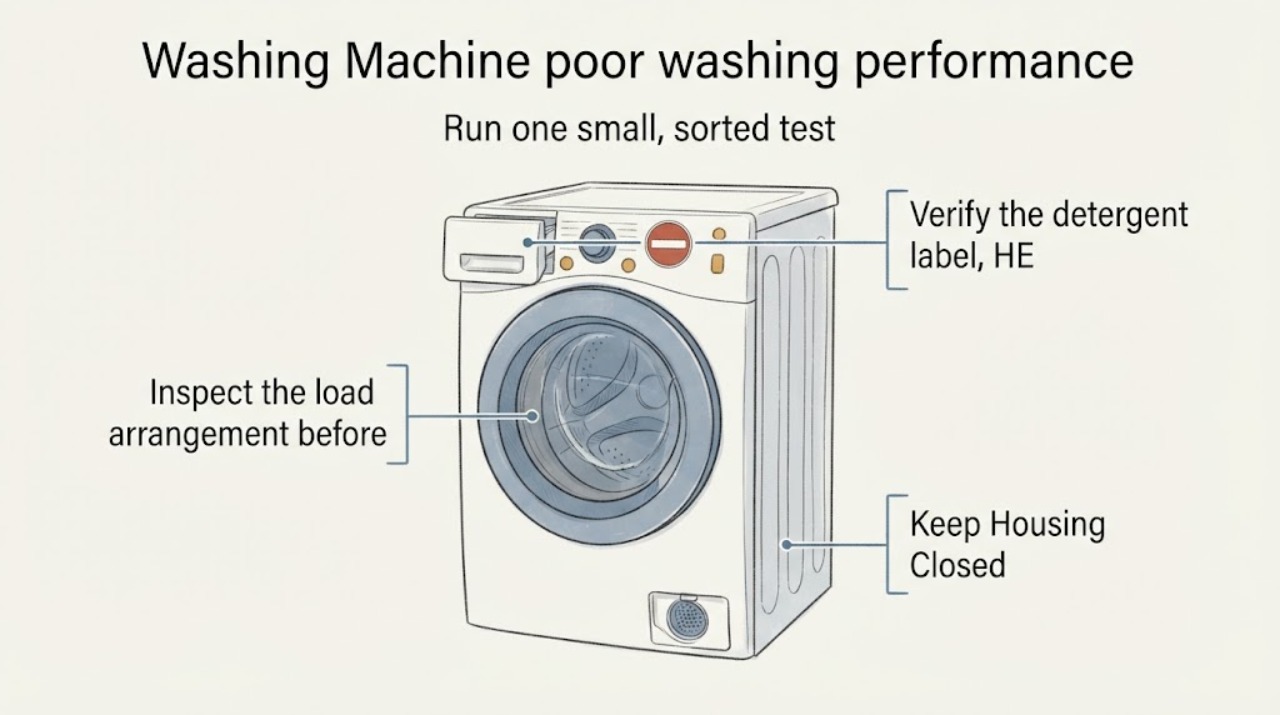
Run one small, sorted test load using the cycle, soil level, and temperature that the garment labels and your Amana owner's manual recommend.
Expected result: The test load cleans better, or the same soil remains despite a model-appropriate cycle.
Next step: Keep the successful cycle for similar loads. If results remain poor, continue with the loading and detergent checks before considering service.
Why this matters
Why: Improvement points toward load selection or cycle conditions; unchanged results keep detergent, loading, water temperature, washer buildup, or a service issue in consideration without proving a failed component.
-
Check 2
Inspect the load arrangement before starting and place sorted items loosely so they can move freely; do not pack the basket tightly.
Expected result: Items were tightly packed, trapped together, or left with poor movement; or the load was already loose and evenly distributed.
Next step: Reduce or redistribute the load and repeat the appropriate cycle. If the same result occurs with a loose test load, check detergent and washer care.
Why this matters
Why: Tight packing can reduce agitation, rinsing, and spinning. A loose load that still cleans poorly makes simple overloading less likely, but does not identify a particular internal fault.
-
Check 3
Verify the detergent label, HE requirement in the owner's manual, concentration or bulk-dispenser setting if present, and the measured amount for the actual load.
Expected result: There are excess suds, a detergent film, undissolved product, or a dose above the detergent maker's instruction; or the measured product and setting are correct.
Next step: Correct the dose and dispenser setting, then repeat a suitable load. Do not mix products or alter a bulk concentration setting unless the manual and detergent instructions support it.
Why this matters
Why: Excess or unsuitable detergent can cause oversudsing, poor rinsing, residue, and poor cleaning. A correct dose shifts attention back to cycle, water, load, and washer condition rather than just adding more detergent.
-
Check 4
Check the selected water temperature against the garment care label and note whether the washer has residue, odor, visible buildup, or a Clean Washer indicator; use the exact manual for the available cleaning cycle.
Expected result: Water or washer-care conditions are unsuitable, or the washer is clean and the temperature/cycle are appropriate.
Next step: Run the model-approved empty Clean Washer cycle and clean user-accessible dispenser areas as directed. Do not improvise chemicals, extra water, or internal cleaning.
Why this matters
Why: Amana identifies water temperature and routine cleaning as cleaning-performance factors; buildup can leave odor or residue and some top-load guidance links a Clean Washer cycle with sensed water-level performance.
-
Check 5
At the end of the test cycle, observe whether the clothes are unusually wet, the basket was loud or shaking, the washer failed to fill or drain, or a light flashed.
Expected result: Wet clothes occur with noise/shaking or a flashing indicator, or the cycle completes normally but soil remains.
Next step: Redistribute an imbalanced load once and follow the exact manual for any indicator. Stop and arrange qualified service for leaks, burning/electrical signs, repeated stopping, no fill/drain, abnormal noise, or persistent poor results after the external checks.
Why this matters
Why: Amana associates imbalance with reduced spin, longer cycles, wet clothes, noise, and possible stop behavior. A normal spin with persistent soil keeps the issue in the cleaning-performance path; fill, drain, leak, electrical, or code symptoms require model-specific service guidance.
Use your observations
Decision map
Find the observation that best matches what you see, then follow the next safe action.
-
PATH 01Next step
What you see
A small, loosely loaded test load cleans normally after the cycle and detergent are corrected.
Do this next
Use the matching cycle and measured detergent for similar loads, following the model's manual and garment labels.
Why this path and its safety boundary
Why it matters: The original poor result is more consistent with load size, sorting, cycle, temperature, or detergent conditions than with a confirmed washer component failure.
-
PATH 02Next step
What you see
Soil remains or residue returns with a loose test load even though the model-appropriate cycle and detergent amount are correct.
Do this next
Complete the model-approved Clean Washer care and record the exact load, cycle, detergent, temperature, and result. Arrange qualified service if the next controlled load is still poor.
Why this path and its safety boundary
Why it matters: A user-setting explanation is no longer sufficient; washer buildup, water conditions, or a washer fault may be involved, but the symptom does not identify a particular part.
-
PATH 03Next step
What you see
The washer leaves clothes wet and also makes loud noise, shakes, reduces spin, or flashes an indicator.
Do this next
Redistribute the load once and consult the exact model's indicator guidance; stop and request service if the pattern repeats or the washer leaks, smells electrical, or stops abnormally.
Why this path and its safety boundary
Why it matters: Amana describes these as possible signs of an out-of-balance load or a related cycle concern rather than proof of a cleaning-system failure.
-
PATH 04Next step
What you see
There is a leak, burning or electrical odor, repeated failure to fill or drain, visible damage, or a warning that persists after safe external checks.
Do this next
Stop using the washer and use the model manual or qualified Amana service; do not open the cabinet, bypass a lid/door safety, or choose a replacement part from the symptom alone.
Why this path and its safety boundary
Why it matters: The situation has moved beyond a general cleaning-performance adjustment and may create water, electrical, or mechanical risk.
Helpful context
Understand the symptom
Start by describing the result rather than naming a failed component. “Poor washing performance” can mean soil remains, residue is left behind, colors transfer, or clothes are still wet after an interrupted or poorly balanced spin. Amana's published cleaning guidance groups the first checks around water temperature, detergent, cycle choice, load arrangement, and routine cleaning. The exact control names and available cycles vary by model, so use the owner's manual for the washer's own cycle guide.
Use a controlled load and the matching cycle
Sort a small test load and choose the cycle, soil level, and temperature that fit the garments and their care labels. Do not judge a top-load high-efficiency washer by whether every item is submerged: Amana explains that sensing and low-water operation can be normal, and that the correct cycle depends on the load. If the test load cleans normally, the earlier problem was more likely load selection, packing, or cycle mismatch than a proven internal failure.
Check loading and detergent before suspecting a part
Load items loosely so they can move, and measure detergent for the load size and soil level. Use HE detergent whenever the washer requires it, and follow the detergent maker's dosage instead of adding more to compensate for stains. Amana says tight packing can reduce rinsing and spinning, while excess detergent can create suds, residue, longer cycles, and poor cleaning performance. A film or undissolved product points first to detergent amount, concentration, water temperature, or load conditions; it does not identify a failed pump or motor.
Clean the washer using its model instructions
If the washer has an odor, residue, visible buildup, or a Clean Washer cycle, run that cycle empty as directed in the owner's manual and clean the dispenser or other user-removable areas only as the manual permits. Amana recommends regular washer cleaning and describes a Clean Washer cycle as a way to remove detergent buildup; some top-load guidance also says the cycle can recalibrate sensed water levels. Do not add extra water, cleaners, or bleach unless the exact manual and product directions allow them.
Separate a cleaning complaint from a fill, drain, or spin symptom
At the end of the controlled cycle, note whether clothes are clean but unusually wet, whether the basket made loud noise or shook, and whether any light flashed. Amana says an out-of-balance load can reduce spin speed, extend the cycle, leave clothes wet, and sometimes stop spinning; redistribute the load and follow the model's error guidance. If the washer does not fill, leaks, repeatedly stops, or shows a code or flashing light, stop treating it as a simple cleaning-setting issue and use the model-specific troubleshooting path.
When to arrange service
If poor results persist with a correctly sized, correctly loaded test load, the proper detergent, the model-appropriate cycle, and a completed washer-cleaning cycle, gather the model number and the exact symptom pattern for service. A leak, electrical smell, burning odor, unusual mechanical noise, failure to fill or drain, repeated imbalance, or a flashing indicator warrants stopping use and following the manual's service instructions. This general page cannot select a compatible part or confirm an internal component without the full model and a matching service procedure.
When checks do not resolve it
Need a professional?
Arrange qualified service when a controlled, correctly loaded test cycle still leaves soil after the detergent and washer-care checks, or sooner for a leak, burning/electrical odor, exposed damage, repeated abnormal noise, repeated failure to fill or drain, or a persistent warning light.
Safety scope: Stop using the washer for a leak, burning or electrical odor, exposed damage, repeated abnormal noise, or repeated failure to fill, drain, or complete a cycle. Do not open the cabinet, bypass a lid/door lock, perform live electrical tests, or order a part without model confirmation.
Have this ready
- Model number, top-load or front-load format, load type and size, cycle/temperature/soil setting, detergent type and measured amount, whether there is residue or odor, and any wet-clothes, fill, drain, noise, leak, or indicator symptoms.
Common questions
FAQ
Why does an Amana washer look like it has too little water?
On top-load high-efficiency models, sensing and a low-water wash system can be normal, and the load may not be completely submerged. Use the cycle recommended for the load in the owner's manual; do not add water by guesswork because Amana warns that extra water can make clothes float and dilute detergent.
Can more detergent fix clothes that are not getting clean?
Usually do not add more than the detergent maker's measured amount. Amana says too much detergent can cause oversudsing, poor rinsing, residue, and poor cleaning performance. Verify the washer's HE requirement and any bulk-dispenser concentration setting instead.
Should I run a washer-cleaning cycle for poor cleaning results?
If the washer has odor, residue, visible buildup, or a Clean Washer cycle, run the model-approved empty cleaning cycle and follow the cleaner and owner's-manual directions. Cleaning can remove buildup, but it does not prove or repair an internal component fault.
When does poor washing performance need service?
Request service when the same poor result remains after a correctly loaded test cycle, correct detergent, appropriate settings, and washer-care cycle, or immediately for leaking, burning/electrical odor, abnormal noise, repeated fill/drain failure, or a persistent warning indicator. Keep the exact model available for the service decision.
Read the exact guide
Official sources
- Cleaning Washers with affresh® - Product Help | AmanaAmana Product Help · Amana washing machines; user-level washer-cleaning indications and Clean Washer cycle directions
- HE Detergent use in a Washer - Product Help | AmanaAmana Product Help · Amana washers; HE detergent selection, dosage, concentration, and washer-cleaning guidance
- Water Levels by Cycle - Washer - Product Help | AmanaAmana Product Help · Amana top-load HE washers; cycle-dependent water levels, sensing behavior, and water-level effect on wash performance
- Not Rinsing - Washer - Product Help | AmanaAmana Product Help · Amana washers; external cycle-result checks for wet clothes, imbalance, noise, shaking, reduced spin, and flashing indicators
- Not Rinsing Well - Product Help | AmanaAmana Product Help · Amana top-load washers; rinse/cleaning performance, Clean Washer cycle, load movement, and detergent guidance
- Not Cleaning Clothing - Front Load WasherAmana Product Help · Amana front-load washers; general cleaning-performance checks explicitly scoped to front-load guidance
Community feedback
Share a repair observation
Share a plain-text repair observation. Accepted observations are published automatically; this page may take a moment to update.