
On this page
Start here
Quick answer
Stop the cycle and keep the washer out of use while water is present. If it is safe and dry to reach, turn off the washer’s water faucets; do not step through standing water to touch a plug or outlet. From outside the wet area, note whether water comes from the washer drain hose connection, spills out of the standpipe/laundry tub, or leaks from another hose. Amana’s washer guidance separates a loose/kinked/clogged drain hose from a slow or blocked household drain that backs up. It also warns against sealing the drain hose to the standpipe and says the hose must use the model-appropriate form and insertion. Because Amana installation dimensions differ by washer style and model, use the exact manual rather than applying a universal depth or standpipe height. A wet outlet, damaged cord, recurring overflow, wall/household drain backup or any leak that needs a pipe or pump opened belongs to qualified service; do not run another load to test it.
Before you begin
Safety first
- Do not run repeated loads, open the washer cabinet, remove a pump, snake or dismantle a wall drain near standing water, tape/seal the hose, or apply a universal hose depth/height. Keep the water supply off while waiting when it can be reached safely.
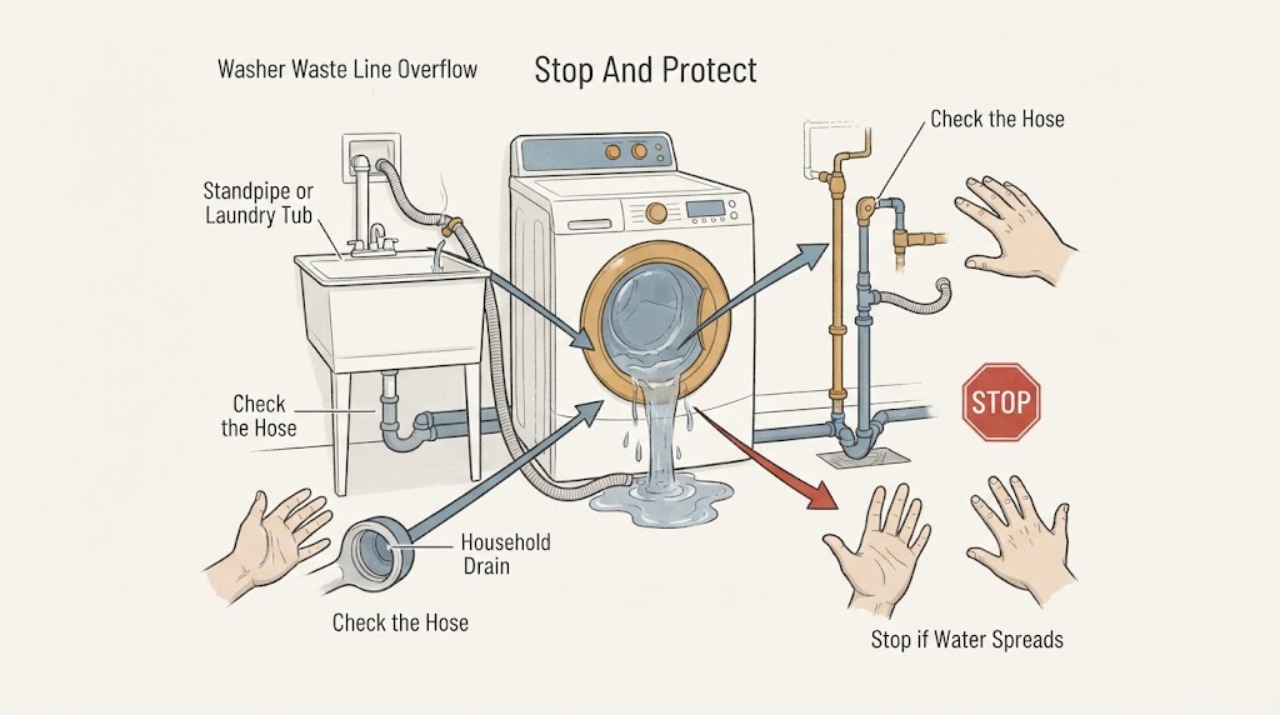
Work through in order
Diagnostic checks
Use only checks that match the exact appliance or system and its official guide.
-
Check 1
Stop or cancel the cycle if the controls and floor are dry to access, keep the washer off, and keep people away from standing water. Do not step through water to reach a plug or outlet.
Expected result: Water is near the washer base, cord, outlet or walking path, or the area is dry enough for safe control access.
Next step: If safe, close the washer’s water faucets; if power access is wet or unsafe, leave it alone and call qualified service/electrical help.
Why this matters
Why: Water and electricity create an immediate hazard; the washer must not continue discharging while the leak source is unknown.
-
Check 2
From a dry position, watch only after the washer is stopped and note whether water comes from the washer drain-hose connection, the standpipe/laundry tub opening, an inlet hose, or another household pipe.
Expected result: The discharge point is washer-side, drain-opening-side, or still unknown.
Next step: Use the matching hose, household-plumbing or service branch and do not restart the washer merely to reproduce the overflow.
Why this matters
Why: A washer-side leak and a household drain backup have different responsible systems; the symptom does not identify a pump or valve.
-
Check 3
When the floor and appliance are dry, inspect the visible drain hose for a kink, collapse, loose connection or obvious blockage without opening the washer cabinet.
Expected result: The hose is visibly kinked/loose/blocked, or it appears intact.
Next step: Correct only a clearly accessible hose position under the exact manual; otherwise arrange service and keep the washer off.
Why this matters
Why: Amana lists hose installation, kinks and clogs as drain concerns; an intact visible hose does not clear the household drain or internal pump.
-
Check 4
Look at the hose-to-standpipe or laundry-tub connection from outside the wet area. Confirm it is secured in the model-specified form and is not taped or sealed shut; do not push it deeper or apply a universal measurement.
Expected result: The hose is taped/sealed, inserted unusually deeply, not secured, or the installation matches the model manual.
Next step: Have the installation corrected using the exact model instructions; do not improvise adapters or retest a flooded setup.
Why this matters
Why: Amana says sealing or excessive insertion can remove the air gap and cause siphoning or drainage problems; the correct limit depends on the washer instructions.
-
Check 5
If water rises out of the standpipe or laundry tub, stop using that drain and inspect only for visible signs of a blocked or slow household drain; do not plunge, snake or dismantle plumbing while water is near electrical equipment.
Expected result: The household drain backs up during discharge, or it accepts water without rising.
Next step: Arrange qualified plumbing service for a recurring or significant backup, and have the washer installation checked afterward.
Why this matters
Why: Amana identifies household drain capacity/blockage as a separate source of water backup; this does not prove a washer pump failure.
-
Check 6
While the washer is not in use and only if the faucets are safely reachable from a dry area, turn off the washer water supply to limit further flooding; do not touch wet electrical parts.
Expected result: The supply valves are safely accessible, or water cannot be isolated without crossing water/unsafe equipment.
Next step: Leave the appliance off and call service/plumbing assistance if the valves or power cannot be reached safely.
Why this matters
Why: Amana recommends turning off the water when the washer is not used or while waiting for service to avoid flooding; unsafe access requires help.
-
Check 7
Give the technician the full model number, overflow location, cycle stage, hose arrangement, whether the standpipe backed up, and whether water reached the cord or outlet.
Expected result: The overflow recurs, the source is inside the washer, a drain opening backs up, or the installation cannot be verified.
Next step: Keep the washer out of use until the responsible professional clears the appliance and the household drain.
Why this matters
Why: A recurring overflow may require a qualified appliance technician, plumber or both; the task evidence is insufficient to name a pump, valve or pipe defect.
Use your observations
Decision map
Find the observation that best matches what you see, then follow the next safe action.
-
PATH 01Next step
What you see
Water escapes where the washer drain hose enters the standpipe or laundry tub, without the household drain visibly backing up.
Do this next
Keep the washer off and have the hose installed using the exact model instructions; do not tape, seal or force it deeper.
Why this path and its safety boundary
Why it matters: The visible connection, hose position, air gap or hose restriction is the first scope; this does not prove an internal washer fault.
-
PATH 02Next step
What you see
Water rises out of the standpipe or laundry tub while the washer discharges.
Do this next
Stop using that drain, keep the washer off and arrange qualified plumbing service; do not replace the washer pump based on this observation.
Why this path and its safety boundary
Why it matters: Amana identifies blocked or slow household drainage as a possible source of backup; responsibility may be in the wall/floor plumbing.
-
PATH 03Next step
What you see
Water is leaking from an inlet hose, valve connection or another pipe rather than the waste line.
Do this next
If safely reachable from a dry area, turn off the washer water supply and arrange qualified repair; do not disconnect wet hoses or open the cabinet.
Why this path and its safety boundary
Why it matters: This is a supply or household plumbing leak, not evidence that the waste line is overflowing.
-
PATH 04Next step
What you see
The drain hose is kinked, loose, taped/sealed or inserted beyond the model’s specified limit.
Do this next
Have the visible installation corrected to the exact manual and do not run a new load until the floor and electrical access are dry and safe.
Why this path and its safety boundary
Why it matters: Amana says these installation conditions can impair drainage, remove the air gap or cause siphoning; the correct dimension varies by washer instructions.
-
PATH 05Next step
What you see
Water reached the outlet, cord, controls or other electrical access, or the source remains unknown.
Do this next
Do not touch wet electrical parts or step through water; isolate power only through a safe dry method and call qualified appliance/electrical service.
Why this path and its safety boundary
Why it matters: The immediate issue is water/electrical safety and unresolved leakage, not a user-level pump diagnosis.
Helpful context
Understand the symptom
Stop and identify the exit point
Cancel or stop the cycle using the model’s controls if they are dry and responsive. Keep the washer off while water is on the floor. Without reaching through water, identify whether the discharge is escaping at the washer hose connection, rising out of the standpipe or laundry tub, or coming from an inlet hose, cabinet or another household pipe. That location determines whether the next handoff is appliance service or household plumbing.
Check only the visible washer-side drain path
After the area is safe and dry, look at the visible drain hose for a kink, collapse, loose attachment or obvious blockage. Amana says the hose should be secured with its intended U-shaped form, should not be taped or sealed into the drainpipe, and must leave an air gap. Do not pull the hose out of a full standpipe, force a tool into the pipe or open the washer cabinet.
Do not transfer a wall drain problem to the washer
If water rises from the standpipe or laundry tub while the washer discharges, Amana identifies a blocked or slow household drain as a possible cause. A hose can be correctly installed while the wall or floor drain still cannot carry the discharge. Stop using that drain and arrange qualified plumbing service rather than replacing a pump based on the overflow alone.
Use the exact model for dimensions
Amana’s public washer pages show different hose-insertion and standpipe-height guidance for different washer categories. With no model in this task, do not apply a remembered 4.5-inch, 5-inch, 30-inch, 39-inch or 96-inch value as universal. Record the model number and use its installation instructions or have the installer/service professional verify the drain setup.
When checks do not resolve it
Need a professional?
Arrange Amana appliance service for an internal leak, recurring overflow, inaccessible or damaged drain connection, pump concern or any condition that requires opening the washer. Arrange a qualified plumber when the standpipe, laundry tub or household drain backs up or cannot carry discharge.
Safety scope: Do not run repeated loads, open the washer cabinet, remove a pump, snake or dismantle a wall drain near standing water, tape/seal the hose, or apply a universal hose depth/height. Keep the water supply off while waiting when it can be reached safely.
Have this ready
- Provide the model number, top/front-load style, exact leak point, cycle stage, visible hose position, whether the wall drain rises, and whether water reached electrical equipment.
Common questions
FAQ
Is an overflowing standpipe proof that the Amana washer pump is bad?
No. Amana distinguishes a washer drain hose problem from a blocked or slow household drain that backs up. Observe where water rises and have the appropriate appliance or plumbing professional inspect it before naming a part.
Can I tape the washer drain hose to the standpipe?
No. Amana says the hose should be loose yet secure and an air gap must remain; the correct insertion and standpipe requirements depend on the exact washer model.
What should I do if water is near the outlet?
Stop the washer, keep clear of standing water and do not touch a wet plug, outlet or control. If power and water can be isolated through a dry safe method, do so; otherwise call qualified appliance/electrical help.
Which drain hose depth or standpipe height is correct?
Do not use a universal number from another Amana washer. Amana’s public pages show different requirements by washer category; use the exact model installation instructions or have a qualified installer verify the setup.
Read the exact guide
Official sources
- Not Draining - WasherAmana Product Help · Official Amana drainage guidance used for visible hose position, U-form, kinks/clogs and service; exact model limits still govern.
- Continuously Fills / Fills and Drains - WasherAmana Product Help · Official Amana guidance on air gap, siphoning and standpipe requirements; used as a caution that hose dimensions are model/category-specific.
- Safety and Installation Instructions — WasherAmana · Official Amana-hosted safety PDF used for non-use flooding precautions, water shutoff and power disconnection; exact model remains unknown.
- Leaking Water Underneath - WasherAmana Product Help · Official Amana washer leak guidance used for hose/household-drain distinction; no task model is supplied.
- Leaking Inside the Tub - WasherAmana Product Help · Official Amana page used only for the water-valve shutoff while the washer is unused and awaiting service.
Community feedback
Share a repair observation
Share a plain-text repair observation. Accepted observations are published automatically; this page may take a moment to update.