
On this page
Start here
Quick answer
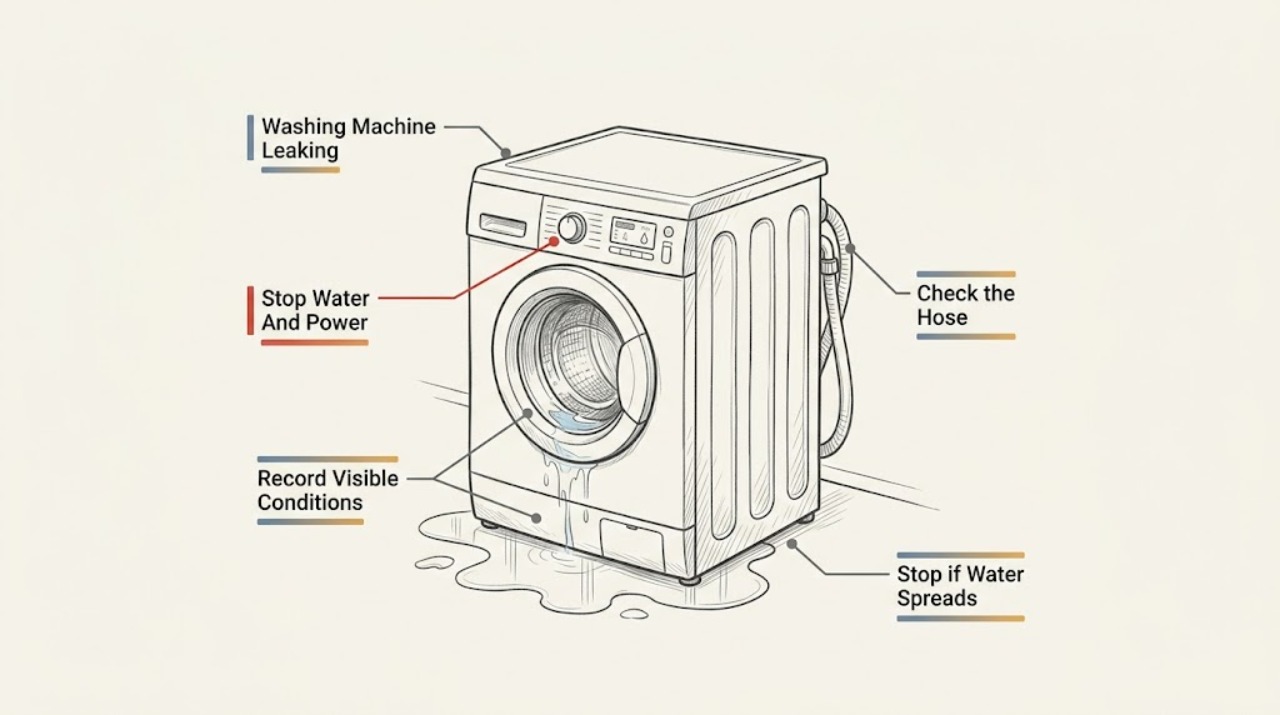
If a Bauknecht washing machine is leaking, close the water tap first, unplug the machine if it is safe to reach the plug, and keep nearby electrical equipment away from the water. Once the area is safe, note whether the leak appears at the inlet connection, door, detergent drawer, underneath the machine, or the drain hose, and whether it happens while filling, washing, or draining. Check only visible hose connections, a damaged or obstructed door seal, the drawer for detergent buildup, and a loose or kinked drain hose. Do not run another cycle to test a large leak, open the cabinet, or work near live electrics. A damaged hose or seal, water inside the cabinet, water leaking while the machine is off, or any leak that returns after a visible correction needs qualified Bauknecht service.
Work through in order
Diagnostic checks
Use only checks that match the exact appliance or system and its official guide.
-
Check 1
Turn off the washer's water tap and unplug the machine if the plug can be reached without stepping through water; move nearby electrical equipment out of the affected area only when safe.
Expected result: The water stops, or water continues despite the tap being closed; the plug area is dry, or electrical connections are wet or inaccessible.
Next step: If the area is safe, photograph the leak and continue with location/timing checks. If it is not safe, keep clear and arrange qualified plumbing or electrical assistance.
Stop if: Stop immediately for water at electrical connections, a sparking or hot outlet, smoke, a burning smell, or a plug that cannot be reached safely.
Why this matters
Why: Stopping the tap limits further flooding, while disconnecting power reduces shock risk. Continued flow with the tap closed or an unsafe electrical area requires urgent qualified help rather than more troubleshooting.
-
Check 2
With the washer isolated and the floor safe, identify the first wet point you can see and record whether the leak occurred while filling, during the wash, while draining, or when no programme was running.
Expected result: Water is at an inlet connection, front door, detergent drawer, drain hose/standpipe, underneath the cabinet, or appears while the washer is idle.
Next step: Use the matching location check below and do not restart a machine that is releasing a large amount of water or leaking from inside the cabinet.
Stop if: Stop if the source cannot be seen without moving a heavy or water-filled washer, removing panels, or reaching into a wet electrical area.
Why this matters
Why: The first wet point and timing separate the inlet, door-seal, drawer, drain, and internal-fault branches; water found only at the front edge may have travelled from a higher point.
-
Check 3
After the water tap is closed, inspect the accessible inlet hose and both visible connections for a kink, crack, looseness, or dampness; use a dry tissue on the outside of a connection rather than tightening with force.
Expected result: The hose or connection becomes damp, the hose is visibly damaged, or the inlet connection remains dry.
Next step: Leave a damaged hose or connection unused and arrange the correct model-specific repair. If only an obvious external connection was loose, have it corrected according to the model instructions and observe for recurrence without running an unattended cycle.
Stop if: Stop if the hose is split, the connection cannot be made secure without tools or force, water continues with the tap closed, or the leak is behind the cabinet.
Why this matters
Why: A damp or damaged inlet path can create a floor puddle during filling. A dry inlet path makes the door, drawer, drain, or internal leak branches more likely.
-
Check 4
Inspect the visible door glass, door seal, and seal groove for coins, hairpins, fabric, cuts, deformation, or dirt that prevents the door from closing evenly; remove only loose visible debris with the machine isolated.
Expected result: The seal has an obstruction but no damage, or it is torn, displaced, or the door does not close squarely.
Next step: If there is only loose debris, clean the visible seal and keep the washer out of use until the door closes evenly. If the seal is damaged or the leak returns, arrange service for seal/door inspection.
Stop if: Do not stretch, glue, puncture, or bypass the door seal, and stop if water is running from the door during a cycle.
Why this matters
Why: Bauknecht identifies hard objects as a cause of door-manchette damage and a front leak; a damaged seal or door that will not close correctly is not reliably repaired by wiping it.
-
Check 5
Look for a water trail directly below the detergent drawer and, with the washer isolated, remove and clean only the removable drawer and its visible residue according to the model instructions.
Expected result: The trail begins below the drawer and detergent buildup or crusting is visible, or the drawer area is dry.
Next step: If residue is the only visible cause, clean and reseat the drawer, then supervise a short test only after the leak area is dry and safe. If water returns, stop and arrange service.
Stop if: Stop if the drawer housing is cracked, the internal feed needs cabinet access, or water reaches electrical controls.
Why this matters
Why: Bauknecht explains that residue can obstruct flow through the drawer and make water run out of the front. A dry drawer area shifts the investigation to hoses, door, drain, or an internal leak.
-
Check 6
If the leak appears during draining, check the accessible drain hose for a kink, a loose connection, or a hose that has slipped from the drain; do not pull the washer out through standing water.
Expected result: The drain hose is kinked, loose, disconnected, or the household drain backs up; or the external drain path looks secure.
Next step: Correct only an obvious accessible hose position issue, then supervise the next drain with the water tap closed. If water backs up, the pump path is blocked, or the leak persists, stop and arrange service.
Stop if: Do not dismantle a wet drain connection, open a filter with a full hot drum, or reach under a moving or unstable appliance.
Why this matters
Why: Bauknecht identifies a loose or blocked drain route as a source of water escaping during pump-out. A secure external route with continuing leakage may involve the pump, filter, internal hose, or cabinet.
-
Check 7
With the washer unplugged and the water tap closed, determine whether water was entering or pooling while no wash programme was running, or whether the leak is visibly from underneath or inside the cabinet.
Expected result: Water appears while idle, the base or cabinet is the first wet area, or the leak occurs only at a visible external hose/door/drawer/drain point.
Next step: Keep the tap closed and the machine unplugged and arrange qualified appliance service for idle, base, or internal leaks. Do not remove the top or rear panel.
Stop if: Stop all user checks once an internal source, water in the base, a damaged cabinet, or a recurring leak is suspected.
Why this matters
Why: Bauknecht notes that water entering when no programme is running can indicate a defective inlet valve, while cabinet leaks need more technical knowledge. An external point still needs service if it is damaged or returns.
Use your observations
Decision map
Find the observation that best matches what you see, then follow the next safe action.
-
PATH 01Safety boundary
What you see
Water is near electrical connections or the plug cannot be reached safely.
Do this next
Keep clear, close the water tap if safely reachable, and have the affected electrical supply and appliance handled by qualified professionals.
Why this path and its safety boundary
Safety stop: Unplug the washer, document the leak, and continue with external location checks.
-
PATH 02Safety boundary
What you see
The first wet point is an inlet connection or water appears while the machine fills.
Do this next
Keep the tap closed and inspect the accessible hose and connections. A damaged hose or recurring connection leak needs service.
Why this path and its safety boundary
Safety stop: Use the door, drawer, drain, or internal-leak branch based on the first wet point and timing.
-
PATH 03Safety boundary
What you see
Water is first visible at the front door or directly below the detergent drawer.
Do this next
Inspect visible seal obstruction/damage or drawer residue with power and water isolated; a torn seal or recurring front leak needs service.
Why this path and its safety boundary
Safety stop: Check the drain route or underside only if it can be done without moving the appliance through water.
-
PATH 04Safety boundary
What you see
The leak appears when the washer pumps out.
Do this next
Check the accessible drain hose for a kink, loose connection, or backed-up household drain; persistent leakage needs service.
Why this path and its safety boundary
Safety stop: Do not assume the drain is at fault; use the timing and location evidence for another branch.
-
PATH 05Safety boundary
What you see
Water enters while no programme is running, or the first wet area is underneath/inside the cabinet.
Do this next
Keep the water tap closed and washer unplugged and arrange qualified appliance service; do not open the cabinet.
Why this path and its safety boundary
Safety stop: A visible external correction may be tested only under supervision, with the tap ready to close and the machine stopped at the first recurrence.
Helpful context
Understand the symptom
Make the leak safe before diagnosing it
Water and electricity are the first issue, not the brand or model. Turn off the water tap, unplug the washer only if the plug and surrounding floor are safely reachable, and isolate nearby electrical equipment from the affected area. Photograph the wet area and any property damage before cleaning. If water is near a socket, plug, or appliance connection and you cannot safely isolate it, leave the area and have the electrical supply handled by a qualified person.
When the timing of the leak gives you the branch
A leak during filling usually points toward the inlet hose or connection. Water at the front during a wash often points toward the door seal or detergent drawer. Water appearing during draining points toward the drain hose, drain connection, or a blocked drain path. Water that enters or leaks while no programme is running is not a normal user adjustment; it can indicate an internal inlet valve or another fault and should be serviced.
Keep the repair boundary clear
A visible loose connection or residue in a removable detergent drawer can sometimes be corrected after the machine is isolated. Replacing a door seal, opening the cabinet to inspect an internal hose or inlet valve, and diagnosing water in the base are service work. Never run the washer with a damaged hose, bypass a water-protection device, tilt a water-filled machine, or reach into a wet electrical area.
Safety boundary
Stop conditions
- Close the water tap and unplug if safe for water near electrical connections, sparks, smoke, heat, or a burning smell.
- Do not run another cycle to test a large, fast, or recurring leak.
- Do not open the cabinet, bypass a water-protection device, tilt a water-filled washer, or reach into a wet electrical area.
- Stop if the door seal, inlet hose, drain hose, cabinet, or connection is damaged or cannot be secured without force.
- Stop if water enters while no programme is running or the first wet area is underneath the cabinet.
Only after diagnosis
Potential parts
- door seal
Only consider this part if the leak is at the door and inspection confirms a torn, displaced, or otherwise damaged seal.
Confirm the exact Bauknecht model and manufacturer fit information before ordering; no generic seal is assumed to fit. - inlet or drain hose
Only consider a hose after the leaking hose and connection have been identified and the exact replacement requirement is confirmed.
Confirm the exact model, hose routing, connection type, and manufacturer fit information before ordering.
When checks do not resolve it
Need a professional?
Arrange qualified Bauknecht appliance service for a torn or displaced door seal, damaged inlet or drain hose, water entering while the washer is idle, water from underneath or inside the cabinet, a recurring leak after a visible external correction, a water-protection fault, or any situation where the appliance must be opened. Keep the tap closed and the washer unplugged when the source is internal or the area is hazardous.
Common questions
FAQ
What should I do first if my Bauknecht washing machine is leaking?
Close the water tap, unplug the washer if the plug is safely reachable, keep nearby electrical equipment away from the water, and document the damage. Do not start another cycle until the leak source is understood.
Why is my Bauknecht washer leaking from the front door?
Inspect the visible door seal for trapped hard objects, dirt, cuts, or displacement. A damaged seal or door that will not close evenly needs service rather than glue or a bypass.
Why does water leak from the detergent drawer?
Detergent residue or crusting can obstruct flow through the drawer and make water run down the front. With power and water isolated, clean only the removable drawer and visible residue; recurring leakage needs service.
What if the leak happens while the washer drains?
Check the accessible drain hose for a kink, loose connection, or a backed-up drain. Do not move the appliance through standing water or dismantle a wet connection; a persistent leak needs qualified diagnosis.
Is it serious if a Bauknecht washer leaks while it is off?
Yes. Keep the water tap closed and the washer unplugged. Water entering or leaking while no programme is running can indicate an internal inlet-valve or cabinet fault and should be handled by qualified service.
Read the exact guide
Official sources
- Waschmaschine startet nichtBauknecht · Bauknecht washing-machine troubleshooting and water-protection conditions
- Die Waschmaschine läuft aus: Was tun?Bauknecht · Bauknecht washing-machine leak troubleshooting
- Ersatzteile Waschmaschinen, Teile und ZubehörBauknecht · Bauknecht washing-machine component categories and door-seal applicability
- Warum pumpt die Waschmaschine das Wasser nicht ab?Bauknecht · Bauknecht washing-machine drain-path troubleshooting
- Waschmaschine anschließen - so einfach geht’sBauknecht · Bauknecht washing-machine hose, drain, and electrical connection guidance
Community feedback
Share a repair observation
Share a plain-text repair observation. Accepted observations are published automatically; this page may take a moment to update.