
On this page
Start here
Quick answer
Treat the two symptoms separately. Rinse aid is released during the final rinse to help water leave the dishes; it is not the main detergent that removes food soil. Wipe any visible spill, check that the rinse-aid cover closes and use only dishwasher rinse aid, then inspect the spray arms, loading, filter and detergent dispenser for the cleaning problem. Beko says the rinse-aid dosage should be adjusted from the result—raise it for water marks and lower it for bluish or rainbow streaks—but a dirty filter, blocked spray holes, damp detergent or an early-open dispenser lid can independently cause poor cleaning. If rinse aid keeps escaping, water is leaking from the door or hose, foam is excessive, or the next step would require opening the dispenser, pump or cabinet, stop the dishwasher, close the water supply when safe and use an authorized service agent. Exact dosage and controls are model-specific.
Before you begin
Safety first
- Limit owner work to stopping the cycle, wiping visible product, checking the visible dispenser closure, spray arms, loading, accessible filter, door seal and external hose connections. Keep water closed during an active leak when safe. Do not remove panels, open the dispenser housing, probe wiring, bypass leak protection or use unapproved chemicals.
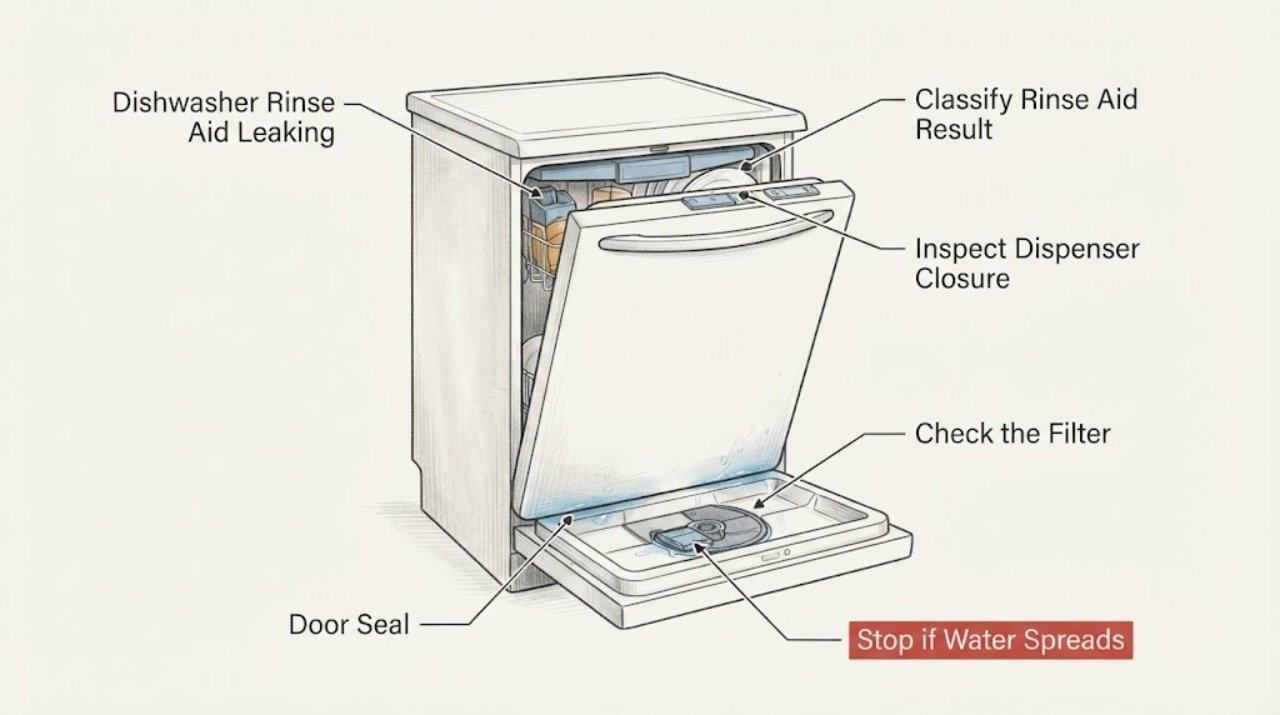
Work through in order
Diagnostic checks
Use only checks that match the exact appliance or system and its official guide.
-
Check 1
Stop the dishwasher and record whether the complaint is a visible rinse-aid spill, water marks, bluish/rainbow streaks, foam, food left on dishes or a combination; wipe only visible product from the door.
Expected result: The result is mainly water marks, bluish/rainbow streaks, or a liquid that reappears around the dispenser without a spill.
Next step: Use the exact model manual for any dosage change; if liquid reappears, the cover does not close, or foam escapes, stop using the dispenser and arrange service.
Why this matters
Why: Water marks or streaking can relate to dosage, while recurring liquid around the dispenser suggests a closure/seal or dispenser issue that dosage adjustment cannot prove or repair.
-
Check 2
With the cycle stopped, inspect the dispenser cover and surrounding door surface, wipe the visible spill, confirm the cover closes as documented and use only dishwasher rinse aid; do not remove the dispenser housing.
Expected result: The cover closes and the spill was a one-time overfill, or product leaks again while the appliance is idle/being filled.
Next step: Do not force the cover or run repeated tests with product leaking; use qualified Beko service for a recurring leak or damaged closure.
Why this matters
Why: A one-time spill can be cleaned externally; recurring leakage is not established as a dosage problem and needs model-specific inspection.
-
Check 3
Check the accessible spray-arm holes and free rotation, rearrange dishes so arms and the dispenser lid are unobstructed, clean the accessible drain filter, and keep detergent dry.
Expected result: A spray arm is blocked, the filter has food debris, dishes obstruct the arm/lid, or detergent is damp; otherwise these checks appear clear.
Next step: Correct the visible loading, spray-arm, filter or detergent condition and use the documented program; if cleaning remains poor, stop guessing at internal parts and request authorized service.
Why this matters
Why: Beko identifies each condition as a possible reason detergent is not released/dissolved or wash water does not reach the dishes; a clear external check does not diagnose a pump or heater.
-
Check 4
If dishes are otherwise clean but show water marks or bluish/rainbow streaks, adjust the rinse-aid setting only as described by the exact Beko manual.
Expected result: Water marks remain, or bluish/rainbow streaks appear after wiping.
Next step: Make only the model-documented adjustment and reassess the same type of result; for a recurring leak or persistent poor cleaning, arrange service.
Why this matters
Why: Beko says water marks support increasing dosage and bluish/rainbow coloration supports lowering it; these observations do not support changing dosage to cure a physical leak or food soil.
-
Check 5
Inspect only the visible door seal, door alignment and accessible hose/valve connections for wetness, cracks or looseness; if water is actively leaking, stop the dishwasher and close the water supply when safe.
Expected result: The seal or connection is visibly damaged/loose, water is actively escaping, foam exits the door, or no external cause is visible but the leak continues.
Next step: Keep the dishwasher out of service, do not remove panels or probe the dispenser/pump, and arrange model-qualified service.
Why this matters
Why: Beko supports visible seal/connection checks but routes damaged seals and suspected motor/pump-seal or unresolved technical faults to an authorized service agent.
Use your observations
Decision map
Find the observation that best matches what you see, then follow the next safe action.
-
PATH 01Next step
What you see
The only result is water marks or bluish/rainbow streaks, with no visible liquid escaping from the dispenser.
Do this next
Use the exact model manual to adjust the documented rinse-aid/water-hardness settings and use dishwasher rinse aid and salt as specified; reassess the same result.
Why this path and its safety boundary
Why it matters: Beko treats these as rinse-aid dosage or water-hardness results rather than proof of a leaking dispenser.
-
PATH 02Next step
What you see
Rinse aid reappears around the dispenser, the cover does not close, or foam escapes after the cycle.
Do this next
Stop using the affected dispenser and arrange authorized Beko service; do not force the cover, bypass it or add product directly to the tub.
Why this path and its safety boundary
Why it matters: A recurring dispenser/closure problem is not established by dosage guidance and may require a model-specific dispenser or seal diagnosis.
-
PATH 03Next step
What you see
Dishes remain dirty and the dispenser is not visibly leaking.
Do this next
Perform only those accessible checks, use the correct dishwasher detergent and program, and call service if poor cleaning continues without an external cause.
Why this path and its safety boundary
Why it matters: Beko lists blocked spray holes, loading, a dirty filter, damp detergent and an early-open dispenser lid as separate cleaning causes.
-
PATH 04Next step
What you see
Water is leaking from the door, hose or underside, or the dishwasher is malfunctioning while leaking.
Do this next
Stop the appliance, close the water supply when safe, isolate power only by a safe dry method and arrange authorized service. Do not open the cabinet or run another cycle to reproduce the leak.
Why this path and its safety boundary
Why it matters: The symptom has crossed from dispensing performance into a water-damage and electrical-safety concern; a hidden seal/pump fault cannot be diagnosed externally.
-
PATH 05Next step
What you see
The model number is unavailable or the exact dispenser controls differ from the instructions found online.
Do this next
Locate the rating plate and obtain the exact manual; until then limit work to visible cleaning/loading checks and send the model plus photos to authorized service.
Why this path and its safety boundary
Why it matters: Beko settings, dispenser mechanisms and available features vary by model; the opened DIS25840/DDS25840 manual cannot establish another model's dose range or part fit.
Helpful context
Understand the symptom
Separate rinse-aid loss from a wash-performance fault
Rinse aid is used at the final rinse to help water run off dishes and reduce water marks. It is not the detergent that removes food soil. If dishes remain dirty, record whether the result is food left on surfaces, water marks, streaks, foam or a visible liquid leak; each points to a different check. Do not conclude that a leaking dispenser caused every cleaning symptom.
Check the dispenser without opening the cabinet
With the dishwasher stopped, wipe visible rinse-aid from the door and surrounding surfaces. Check that the dispenser cover closes fully and that only rinse aid intended for dishwashers is being used. Do not force the cover, remove the dispenser housing or pour extra product into the tub. If the liquid reappears without a spill during filling, or the cover will not close, stop using the dispenser and arrange model-qualified service.
Use the result to set dosage, not to repair a leak
If the main result is water marks after otherwise clean cycles, Beko says the rinse-aid dosage may need to be increased. If glassware has a bluish or rainbow-like coloration, Beko says to lower it. These are model-dependent settings; use the exact manual and change only the documented control. A dosage change cannot correct a cracked cover, damaged seal or dispenser that leaks while idle.
Check the wash path for poor cleaning
Inspect the visible spray-arm openings for blockage and confirm the arms can turn freely after loading. Check that dishes are not overloading the racks or blocking the dispenser lid, clean the accessible drain filter, keep detergent dry and make sure the detergent lid closes. Beko says these conditions can prevent detergent from dissolving or water from reaching the dishes. Do not use hand dish soap, bleach, vinegar or other unapproved chemicals in the dishwasher.
Treat water leakage as a service boundary
Look only at the visible door seal, door alignment and accessible hose or valve connections for cracks, looseness or wetness. Beko routes damaged seals and suspected motor or pump seals to an authorized service agent. If water is actively leaking, foam is escaping, or the dishwasher is malfunctioning, stop the appliance and close its water supply when it is safe to do so; do not remove panels or test the pump, valve or dispenser wiring.
Match any setting or part to the exact model
No exact Beko model was supplied. Beko's public guidance says the manual is used to determine water-hardness and rinse-aid settings, and the opened official manual is for the DDS25840X/DIS25840 USA family only. Do not transfer its numeric dose range, button sequence or dispenser part fit to another Beko dishwasher. Provide the model and photographs of the leak and cleaning result to an authorized service agent if the symptom persists.
When checks do not resolve it
Need a professional?
Contact an authorized Beko service agent for recurring rinse-aid leakage, water/foam leakage, damaged seals, persistent poor cleaning or any internal dispenser, pump, valve, heater or control diagnosis.
Safety scope: Limit owner work to stopping the cycle, wiping visible product, checking the visible dispenser closure, spray arms, loading, accessible filter, door seal and external hose connections. Keep water closed during an active leak when safe. Do not remove panels, open the dispenser housing, probe wiring, bypass leak protection or use unapproved chemicals.
Common questions
FAQ
Can more rinse aid fix dishes that are still dirty?
Usually that is not the first conclusion. Beko describes rinse aid as a final-rinse and drying aid; poor cleaning can instead involve spray-arm blockage, loading, a filter, damp detergent or the dispenser lid. Check those accessible conditions before changing dosage.
What does a rinse-aid leak mean?
A visible spill after filling may be an overfill or closure issue, but recurring liquid around the dispenser is not proven by a dosage setting. Check the cover externally, stop using it if it keeps leaking and have the exact model assessed.
Should I use dish soap, bleach or vinegar to improve cleaning?
No. Beko says to use products intended for dishwashers and warns against dishwashing liquid, hand soap, bleach, vinegar and other unapproved chemicals.
Read the exact guide
Official sources
- How to fix a dishwasher that’s not cleaningBeko · Official Beko US family-level guidance for accessible spray-arm, loading, filter, detergent and dispenser checks.
- How to fix a dishwasher that’s leakingBeko · Official Beko US family-level leak guidance for visible door seals, water connections and authorized service escalation.
- How to stop water spots from forming on dishes in the dishwasherBeko · Official Beko US family-level troubleshooting guidance; settings and features remain model-dependent.
- How to refill dishwasher salt and rinse aidBeko · Official Beko US family-level guidance for the role, location and refill of rinse aid; it does not establish a leak diagnosis or model-specific dosage.
- Beko DDS25840X / DIS25840 USA Dishwasher User ManualBeko · Exact official Beko USA manual for DDS25840X/DIS25840 only; used to show model-specific dispenser safety and qualified-repair boundaries, not to transfer controls or dose ranges to an unspecified Beko model.
Community feedback
Share a repair observation
Share a plain-text repair observation. Accepted observations are published automatically; this page may take a moment to update.